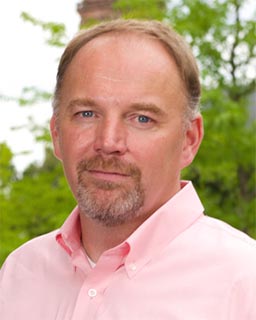
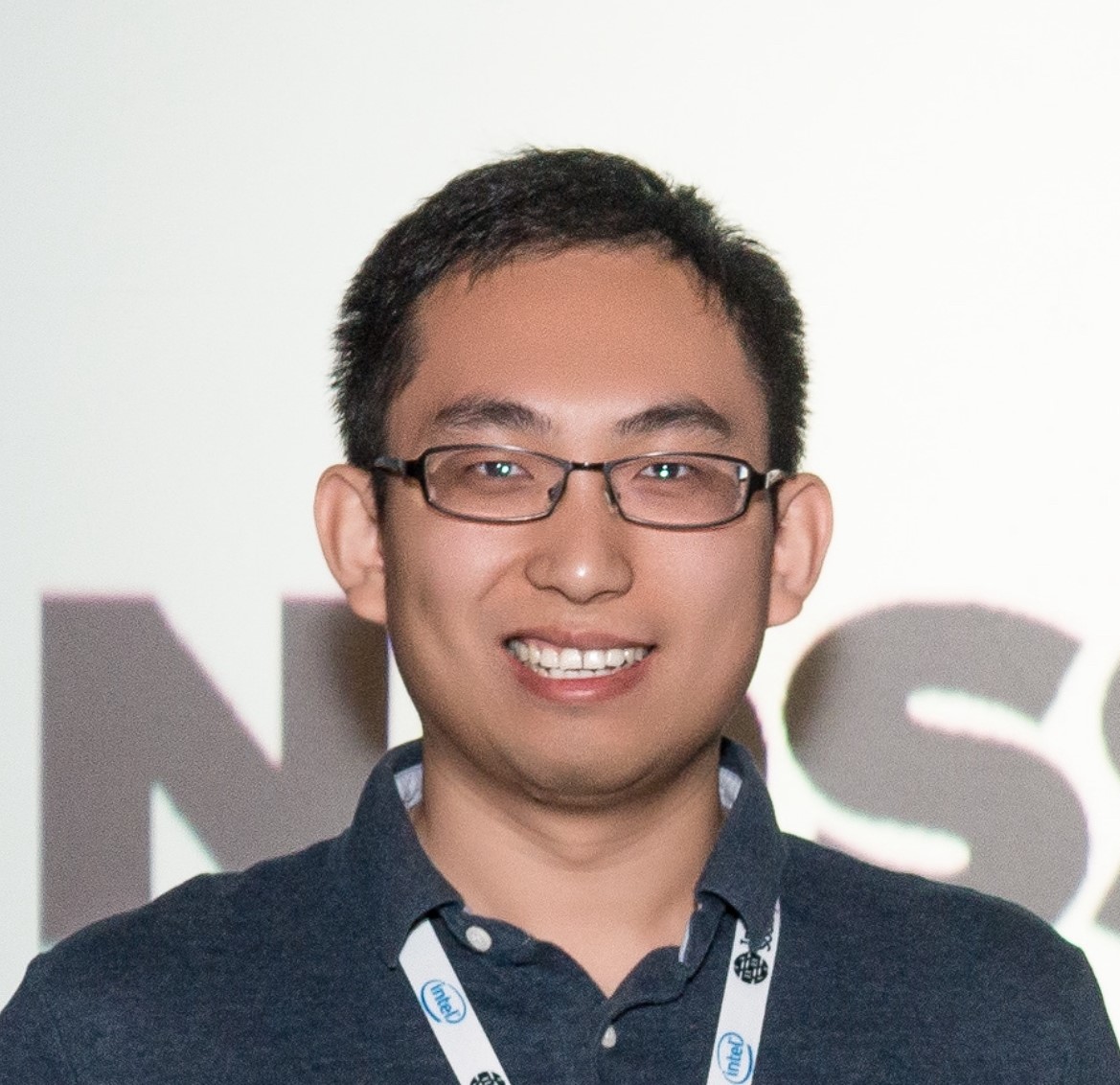
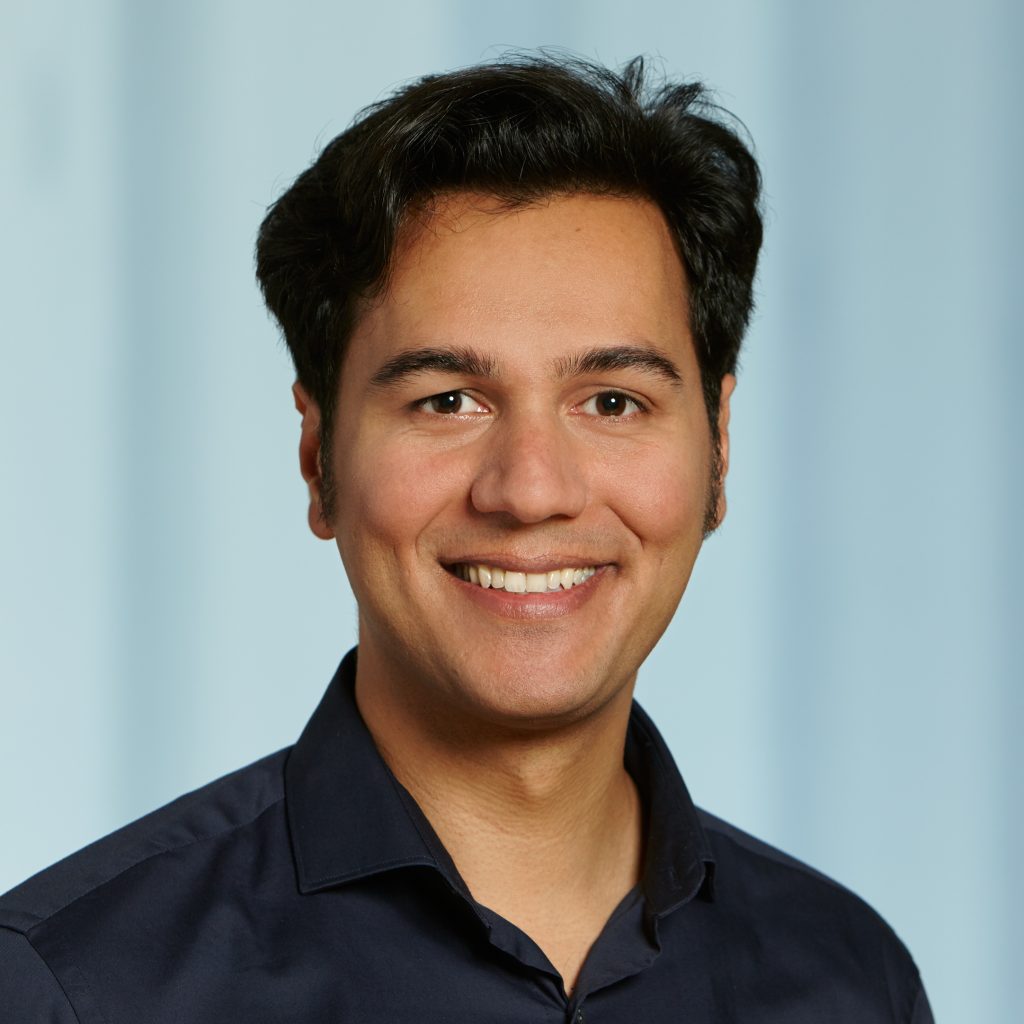
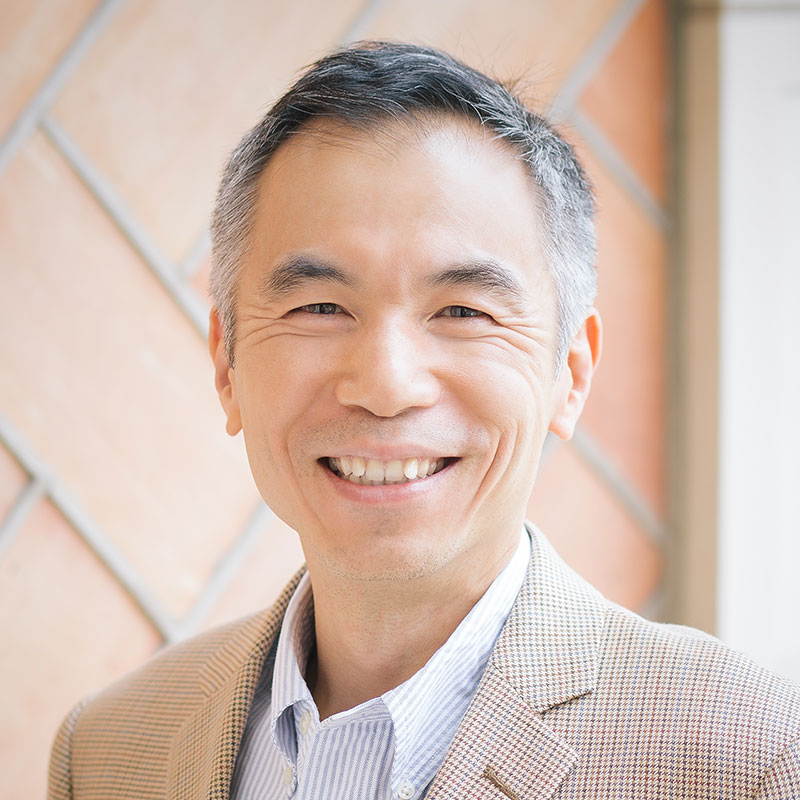
Patrick McDaniel is a Professor in the School of Computer, Data & Information Sciences at the University of Wisconsin-Madison. He is a Fellow of IEEE, ACM, and AAAS, and leads the MadS&P (UW-Madison Security and Privacy) group. His research spans computer and network security, adversarial machine learning, and technical public policy. Academic Affiliation : Tsun-Ming Shih Professor of Computer Sciences Key Research Areas : Mobile/IoT security, election systems security, AI policy Research Trends : His recent publications and funded projects focus on adversarial machine learning, SDN security, and robustness of AI systems. Keywords include cybersecurity, machine learning, network security, and privacy. Grants and Leadership : He has secured over $5M in NSF funding for end-to-end trustworthiness of ML systems and leads collaborative projects with Army Research and UW-Madison. Awards : Multiple best/most influential paper awards (ICSE 2015, PLDI 2014, ACSAC 2024, EthiCS 2023) Advising : Mentored 13+ PhD students and postdocs now at top institutions like Google, Purdue, and University of Toronto
Qi Alfred Chen is an Assistant Professor in the Department of Computer Science at the University of California, Irvine (UCI), within the Donald Bren School of Information and Computer Sciences. He also holds affiliations with the Department of Electrical Engineering and Computer Science (EECS), the Institute of Transportation Studies at UC Irvine (ITS-Irvine), the Center for Embedded and Cyber-physical Systems (CECS), the Institute for Software Research (ISR), and the UC Irvine Cybersecurity Policy & Research Institute (CPRI). His research focuses on network and systems security, with particular emphasis on autonomous vehicle and IoT security. Dr. Chen received his Ph.D. from the University of Michigan in 2018. His educational background has prepared him for his current research in security of critical computer systems. His work bridges theoretical security principles with practical implementations in real-world systems. Chen's research interests center on network and systems security , with a major focus on smart systems and IoT security , particularly in transportation and autonomous vehicle systems . His work addresses security challenges through systematic problem analysis and mitigation, discovering and mitigating security problems in next-generation transportation systems, smartphone OSes, network protocols, DNS, GUI systems, and access control systems. His research has high impact in both academic and industry contexts, with over 10 top-tier conference papers, a DHS US-CERT alert, multiple CVEs, and coverage in major news media like Fortune and BBC News. His publication record shows a clear evolution from foundational work on network protocols and smartphone security toward increasingly sophisticated security analyses of autonomous vehicle systems and AI-powered transportation technologies. The research trajectory demonstrates growing technical sophistication and real-world impact, with recent work focusing on physical-world adversarial attacks against autonomous driving perception systems, LiDAR spoofing, and security of multi-sensor fusion in autonomous vehicles. NSF CAREER Award (2022) on securing the AI stack in emerging autonomous and connected CPSs Chancellor's Award for Excellence in Undergraduate Research Mentorship, UC Irvine (2021) 5th place nation-wide at National CCDC competition (2021, as faculty advisor) 1st place (Gold Medal) at CCDC Western Regional competition (2021) ProQuest Distinguished Dissertation Award, University of Michigan (2019) Dr. Chen has mentored numerous successful students, including PhD candidates and undergraduates who have gone on to positions at major tech companies like Meta, Uber, Amazon, and Intel. His research group has secured significant funding, including an NSF CAREER award, and has made substantial contributions to the field through high-impact publications and vulnerability disclosures. He is also the co-founder of the ISOC VehicleSec Symposium and has organized the AutoDriving CTF contest at DEF CON. Chen leads the AV & IoAT Security Research Group at UCI, focusing on security challenges in autonomous vehicles and the broader Internet of Autonomous Things. His team has developed numerous attack demonstrations and security analyses that have received significant media attention and influenced industry practices. The group maintains an active YouTube channel showcasing their security research.
Matteo Sonza Reorda is a Full Professor at the Polytechnic University of Turin, affiliated with the Department of Automatic Control and Computer Science (DAUIN). He holds roles such as Partnership Agreement Coordinator with SMAT and has served as Vice-Rector for Research (2021–2024). His research focuses on fault tolerance, hardware reliability, and AI acceleration, with contributions to GPU/CNN reliability, self-test libraries, and defect-oriented testing. Education: M.S. in Electronics Engineering, Politecnico di Torino (1986) Ph.D. in Computer Engineering, Politecnico di Torino (1990) Research Interests: His work spans automatic test equipment, circuit reliability, GPU fault tolerance, neural network hardening, and embedded systems safety . He leads the Electronic CAD & Reliability Group and collaborates with institutions like the ISI Foundation and the National Research Council (CNR). Publications & Impact: With over 180 publications, his recent work emphasizes AI accelerator reliability, fault injection techniques, and safety-critical systems. Key trends include GPU resilience for CNNs, self-test library optimization, and radiation fault modeling in neural networks. Awards & Recognition: IEEE Fellow (2016–) Multiple best-paper awards at IEEE conferences (DDECS, DATE, etc.) Grants & Collaborations: Coordinator of EU projects (RESCUE, TUTORIAL) Partnerships with EDF, Marelli Europe, and SMAT Lead on National HPC/Quantum Computing Spoke 1 (2022–2025) Labs/Teams: Leads the CAD Group and collaborates with the French-Italian LIA LAFISI lab on hardware-software integration.
Kaveh Razavi is an Assistant Professor at ETH Zurich in the Department of Information Technology and Electrical Engineering, supervising the Computer Security Group. He is also affiliated with the Department of Computer Science. Research focuses on commodity hardware and operating systems security Teaching: Computer Engineering (BSc 2022–2025), Hardware Security (MSc 2016–2025), Advanced Operating Systems (MSc 2016–2019) Research Interests: Razavi's work bridges computer systems and security, emphasizing microarchitectural vulnerabilities, hardware exploitation, and security verification. His group develops tools for analyzing hardware-software interactions and mitigating memory attacks like Rowhammer. Scientific Awards: Distinguished/Best Paper Awards at IEEE S&P, USENIX Security, MICRO Five Pwnies Awards for innovative research Dutch Veni Grant, ERC Starting Grant Jochen Liedtke Young Researcher Award Golden Owl Teaching Award (2022) ETH Medal, Intel Bounty Reward, BlackHat USA Recognition
Bernhard J. Berger is a Lecturer in the Department of Computer Engineering at the Institute of Embedded Systems, Hamburg University of Technology (TUHH). His research focuses on software security, static code analysis, machine learning, optimization, and research data management. He has held significant roles such as Program Committee member for ICPC 2025 and MSR 2025, and has received awards including the Best Reviewer Award (ICPC 2023) and Best Engineering Paper Award (SCAM 2019). His work spans interdisciplinary applications including maritime systems security, GPU-accelerated AI, and evolutionary algorithms. Recent studies emphasize AI-driven security tools (e.g., ML-SAST) and domain-specific language approaches to optimization (EvoAl). He has contributed to over 30 peer-reviewed publications, with notable work in IEEE Transactions on Software Engineering and Science of Computer Programming. Berger collaborates closely with industry through DAAD review committees and serves on artifact evaluation boards for ISSTA and ARES conferences. Education: Doctoral Thesis (2022), Diploma in Computer Science (2007) Key Projects: ArchSec tool suite, Threat Modeling Frameworks, Bauhaus static analysis methodology Lab Affiliation: Embedded Systems Design Group His advisory roles include Deputy of TUHH's Election Verification Committee and Session Chair at IEEE Congress on Evolutionary Computation 2023. Current research trends integrate machine learning with static analysis for automated vulnerability detection, while also exploring explainable AI techniques for neural network optimization.
Mariano Scazzariello is a Lecturer at KTH Royal Institute of Technology, Sweden, affiliated with the School of Electrical Engineering and Computer Science and the Department of Network and Systems Engineering. He teaches the course 'Network Systems with Edge or Cloud Datacenters (IK2227)'. His research focuses on advanced networking topics including machine learning in networks, high-speed packet processing, network emulation, and software-defined networking innovations. His work spans contributions to network emulation tools like Kathará and Megalos, stateful packet processing at terabit scales, and leveraging large language models (LLMs) for network configuration and vulnerability detection. Recent research emphasizes low-latency protocols (e.g., SRv6/DetNet integration) and GPU-centric networking on commodity hardware. Mariano’s publications (2020–2025) highlight expertise in network function virtualization, ASIC-based switching, and optimizing network configurations through AI-driven approaches. He has pioneered frameworks for evaluating routing protocols and virtualizing large network scenarios at scale.
James C. Hoe is Professor of Electrical and Computer Engineering at Carnegie Mellon University (College of Engineering). He is on sabbatical at MangoBoost and directs research in computer architecture, reconfigurable computing, and high-level hardware design. Education Ph.D., Electrical Engineering and Computer Science, MIT (2000) M.S., Electrical Engineering and Computer Science, MIT (1994) B.S., Electrical Engineering and Computer Science, UC Berkeley (1992) Research Interests Professor Hoe’s work spans computer architecture , reconfigurable computing , FPGA architectures , and high-level hardware synthesis . His group created the CoRAM abstraction for virtualized FPGA computing and leads efforts in power-efficient accelerators, in-network computing, and security-oriented FPGA systems. Scientific Awards IEEE Fellow (2013) Intel Outstanding Researcher Award (2021) Research Funding & Projects Intel / VMware Crossroads 3D-FPGA Academic Research Center – co-leading exploration of FPGA roles in future datacenters. DARPA BRASS program ($2.7 M, 4 years) – ensuring long-lived software systems remain robust to resource changes. Pigasus open-source IDS – world’s fastest FPGA-accelerated intrusion-detection system (100 Gb/s on one server). Labs & Teams He heads activities within the Computer Architecture Lab at Carnegie Mellon (CALCM) , supervising graduate researchers on CoRAM++, SPIRAL autotuning, and FPGA overlays for stream processing.
Professor Ernest Foo is a distinguished academic at Griffith University's School of Information and Communication Technology, specializing in cybersecurity with a focus on industrial control systems and cryptographic protocols. With over 15 years of experience in computer networking, he has established himself as a leading expert in SCADA security and smart grid cybersecurity. His research has significant practical applications in critical infrastructure protection, and he has developed hands-on security training programs that have trained professionals from major Australian utilities and government agencies. Professor Foo's educational background includes: Bachelor of Engineering with Honours in Electronic and Computer Engineering from University of Queensland Doctor of Philosophy from Queensland University of Technology Professor Foo's research interests center around secure cryptographic protocols with specific applications in industrial control system security and cyber physical systems. His work spans SCADA security, smart grid protection, wireless sensor network security, and post-quantum cryptography. He has made significant contributions to understanding vulnerabilities in industrial protocols like Modbus and DNP3, and has pioneered the application of process mining and data mining techniques for attack detection in critical infrastructure systems. His research bridges theoretical security concepts with practical implementations in real-world industrial environments. Professor Foo's recent publications demonstrate a clear trajectory toward increasingly sophisticated security frameworks for critical infrastructure. His work shows a progression from foundational SCADA security research to advanced applications of artificial intelligence, machine learning, and formal methods in cybersecurity. A notable trend is the integration of zero trust principles with industrial control systems, alongside growing emphasis on post-quantum cryptographic solutions. His publications span high-impact journals and conferences in cybersecurity, with increasing focus on anomaly detection in cyber-physical systems and the application of graph-based machine learning techniques to network security challenges. Professor Foo's notable scientific achievements include: Best paper award at the 2nd International Cyber Resilience Conference for "Gap analysis of Intrusion Detection in Smart Grids" Professor Foo has secured significant research funding including an ARC Linkage grant with Powerlink Queensland focused on cyber security for electricity sub-stations. He currently leads multiple research projects including Westpac Micro-Credentials in Financial Crime Investigation, Digital Banking Micro-credentials with ANZ, and research on quantum-safe cryptography. As a dedicated educator, he serves as Program Director for multiple cybersecurity programs including the Master of Cyber Security, and has supervised numerous doctoral and masters students. His Cyber Security: Industrial Control System course, conducted annually from 2013-2018, featured innovative hands-on training with real-world participants from major Australian utilities. Professor Foo has been instrumental in establishing the SCADA security research laboratory with multiple vendor system miniatures running industrial PLCs. His work bridges theoretical security concepts with practical implementations, making significant contributions to the security of industrial control systems and critical infrastructure worldwide.
Deian Stefan is an Associate Professor at the University of California San Diego (UCSD) in the Department of Computer Science and Engineering . His research spans security , programming languages , and systems , with a focus on building principled and practical secure systems. He has served as a co-founder and Chief Scientist at Intrinsic (acquired by VMWare) and contributed to standards bodies like the W3C WebAppSec and Node.js Security Working Groups . His research interests include: Secure Systems : Web frameworks, browser designs, sandboxing, runtime systems Language-Based Security : Constant-time programming, memory safety, information flow control Verification : Security verification, static/symbolic analysis tools WebAssembly and JavaScript JITs security Deian Stefan has received multiple scientific awards , including several Distinguished Paper Awards at venues like POPL, ICFP, and USENIX Security, as well as the IEEE Cybersecurity Award for Practice (2022) and CSAW 2020 First Place for Applied Research. He has taught courses on Computer Security (CSE 127, CSE 227) and advanced topics in Building Secure Systems (CSE 291) using Rust, WebAssembly, and blockchain security. His work has been supported by collaborations with industry and academia, including projects like RLBox and COWL .
Xing Gao is an Assistant Professor at the University of Delaware, affiliated with the Department of Computer and Information Sciences and jointly with the Department of Electrical and Computer Engineering. His office is located at 316B FinTech Innovation Hub on the STAR Campus. He holds a PhD from the College of William and Mary (2018) and a BS from Beijing Institute of Technology (2011). Research Interests: Cybersecurity in Software Supply Chain, Web 3, High-Performance Computing, Large Language Models, with a focus on Security, Cloud Computing, and Mobile Computing. Education: PhD | 2018 | College of William and Mary BS | 2011 | Beijing Institute of Technology His recent work explores cybersecurity vulnerabilities in cloud gaming services (CCS'22), container registries (USENIX-SEC'22), and software supply chains, with specialized attention to GPU cache attacks (USENIX-SEC'24) and Ethereum smart contracts (WWW'24). His research spans theoretical and applied aspects of system security, including CI/CD pipelines (CCS'24), SDN backdoors (INFOCOM'23), and hardware-level threats (ACSAC'21). Scientific Awards NSF CAREER Award (2024) NSF CRII Award (2020) NDSS Distinguished Poster Award (2016) He serves as Registration Chair for ACM/IEEE Symposium on Edge Computing (2023) and Publicity Co-Chair for IEEE Conference on Communications and Network Security (2022). He is actively involved as TPC Member in multiple top-tier conferences including USENIX Security (2026,2025), CCS (2026,2025,2024), and IEEE DSN (2024). He has also reviewed for journals like IEEE Transactions on Dependable and Secure Computing. Labs & Teams X-Lab at the University of Delaware, a research group focused on cybersecurity in emerging technologies.
Marco Platzner is a Professor for Computer Engineering at Paderborn University , Germany. He serves as the Dean of Research for the Faculty of Computer Science, Electrical Engineering and Mathematics and heads the Department of Computer Science. Previously, he held research positions at ETH Zurich, Stanford University, GMD (now Fraunhofer IAIS), and Graz University of Technology. Education: Diploma and PhD in Telematics (Graz University of Technology, 1991 and 1996), Habilitation in Hardware-Software Co-Design (ETH Zurich, 2002) Research Interests focus on reconfigurable computing, approximate computing, self-* computing, and embedded systems. His work addresses hardware security, FPGA design, and sustainable AI in data centers. Current projects include energy-efficient AI through deep neural network approximation for FPGAs (EKI-App) and lifecycle sustainability of socio-technical systems (SAIL). Publication Trends show expertise in FPGA security, approximate circuit synthesis, robotics, and hardware acceleration. Collaborations span robotics (ROS 2 integration), AI (transformer optimization), and cybersecurity (Trojan detection). Scientific Awards: ACM SIGDA Hall of Fame (2020) Significant Paper Award (FPL 2015) Best Paper Awards at IEEE ISVLSI (2024), ARC (2018), IEEE ReConFig (2015), and others Weierstraß Prize for Teaching (2008) Leadership Roles include membership in the board of Paderborn Center for Parallel Computing (PC2) and the Jenny Aloni Centre for Early Career Researchers. He has contributed to EU FP7 FET project EPiCS and German priority programs on embedded systems and organic computing.
Wei Sun is an Associate Professor in the Department of Electrical and Computer Engineering at the University of Central Florida, where he also serves as the Director of the Siemens Digital Grid Lab. His research focuses on power system restoration, self-healing smart grids, cyber-physical security, and renewable energy integration. Dr. Sun received his Ph.D. from Iowa State University in 2011, and his M.S. and B.S. from Tianjin University in 2007 and 2004, respectively. Prior to joining UCF, he was an Assistant Professor at South Dakota State University (2013-2015), a power system engineer at Alstom Grid (2011-2012), a visiting scholar at the University of Hong Kong (2011), and an intern at California Independent System Operator (2010). His research interests include: Power System Restoration and Self-healing Smart Grid Resilient and Secure Critical Infrastructure Cyber-Physical Systems Renewable Energy and Microgrid Distributed Energy Resources Integration Dr. Sun's recent publications demonstrate strong focus on cyber-physical security in power systems, distributed energy resource integration, and resilient grid operations. His work shows increasing emphasis on AI and machine learning applications for grid security and resilience, particularly in the context of high renewable penetration. His notable scientific awards include: Microsoft Software Engineering Innovation Foundation Award (2014) Best Paper Award, 2019 IEEE PES ISGT Asia Mentor of the Year, UCF Graduate Student Association (2019) Dr. Sun has successfully secured multiple research grants totaling millions of dollars from agencies including the US Department of Energy, National Science Foundation, Florida Center for Cybersecurity, and Microsoft. He currently serves as PI or Co-PI on several major projects including "Secure and Resilient Operations Using Open-Source Distributed Systems Platform (OpenDSP)" funded by the Department of Energy. He leads the Siemens Digital Grid Laboratory at UCF, which is equipped with utility-grade software and hardware including Spectrum Power Microgrid Management System, Power System Simulator for Engineering, and Siemens Distribution Feeder Automation. The lab provides capabilities for both software modeling and hardware-in-the-loop testing of power systems.
Christof Paar is a Professor of Embedded Security at Ruhr University Bochum's Faculty of Computer Science. His work focuses on hardware security, cryptography, and embedded systems security. He leads the Embedded Security Group within the CASE Cluster of Excellence (Cyber Security in the Age of Large-Scale Attacks), addressing cutting-edge challenges in hardware Trojans, side-channel attacks, and cryptographic engineering. His research spans FPGA and IoT security, with contributions to physical-layer security, wireless jamming defenses, and tamper-resistant systems. Research Interests: Paar's expertise lies in hardware-software co-design for security, with a focus on embedded systems. His work includes analyzing vulnerabilities in FPGAs, developing countermeasures against side-channel attacks, and exploring physical-layer security mechanisms. He also investigates the human factors in hardware reverse engineering and the implications of adversarial machine learning on security systems. Notable Work: Recent publications highlight breakthroughs in detecting hardware Trojans across CMOS generations, breaking industry-standard IP protection mechanisms (IEEE 1735), and proposing novel defenses like IRShield against adversarial wireless sensing. His group actively contributes to standards for secure embedded systems and IoT devices, emphasizing practical implementations.
Debjit Pal is a Post-Doctoral Associate at the School of Electrical and Computer Engineering, Cornell University, and a member of the Computer Systems Laboratory. His research focuses on machine learning techniques for hardware verification, SoC validation, and FPGA optimization. Education: Ph.D. in Computer Engineering (University of Illinois at Urbana-Champaign, 2019) M.S. in Computer Science (IIT Kharagpur, 2012) B.E. in Electronics Engineering (Jadavpur University, 2008) Research Interests: Machine Learning for Electronic Design Automation (EDA) System-on-Chip (SoC) Verification Edge Intelligence as a Service Compiler Optimizations for Reconfigurable and High-Performance Computing Scientific Awards: IEEE CEDA Student Research Award (2016) Best Paper Nomination (ICCAD 2015, DAC 2018, ASP-DAC 2019) E. J. McCluskey Best Doctoral Thesis Competition Semi-Finalist (2020) Travel Grants for ICCAD/DAC/ASPDAC (2018-2019) Professional Roles: Technical Program Committee Member (DAC, VLSID), Reviewer (IEEE TVLSI, DATE, ICCAD). Collaborates with researchers like Zhiru Zhang and Shobha Vasudevan.
Dr. Xinwen Fu is a Professor in the Miner School of Computer & Information Sciences at the University of Massachusetts Lowell, where he also serves as Director of the iSAFER Center. He received his Ph.D. in Computer Engineering from Texas A&M University (2005), M.S. in Electrical Engineering from University of Science and Technology of China (1998), and B.S. in Electrical Engineering from Xi'an Jiaotong University (1995). Research Interests Dr. Fu specializes in Computer Security and Privacy , with particular focus on IoT Security , Mobile Security , Network Security , and Digital Forensics . His research has been published in all four top computer security conferences: IEEE Symposium on Security and Privacy (S&P/Oakland), ACM Conference on Computer and Communications Security (CCS), USENIX Security Symposium, and Network and Distributed System Security Symposium (NDSS), as well as prestigious journals like ACM/IEEE Transactions on Networking and IEEE Transactions on Dependable and Secure Computing. His work has gained significant media attention from CNN, Wired, Huffington Post, Forbes, Yahoo, MIT Technology Review, and PC Magazine, including multiple appearances on CNN Domestic and International. He has also served as TPC member for numerous prestigious conferences including ACM CCS, IEEE INFOCOM, and IEEE ICDCS. Scientific Awards Best paper award at IEEE International Conference on Industrial Internet (ICII) 2019 Best paper award, International Conference on Wireless Algorithms, Systems, and Applications (WASA), 2017 Teaching Excellence Award of Department of Computer Science, UMass Lowell, 2016 Best paper award, International Performance Computing and Communications Conference (IPCCC) 2016 Award of Excellence, GeekPwn 2016 Ethic Smart Life Hack Competition Erich Spengler Student Cyber Paper Award with students, The Colloquium for Information Security Education (CISSE), 2016 Spotlight Paper of the IEEE Transactions on Mobile Computing (TMC), February 2014 Best paper award, International Conference on Wireless Algorithms, Systems, and Applications (WASA), 2013 Best paper award, IEEE International Conference on Communications (ICC): Communications and Information Security Symposium, 2013 Teaching award, Department of Computer Science, University of Massachusetts Lowell, 2011