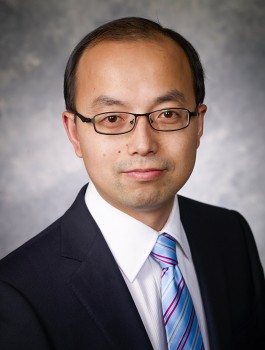
Prof. Dr.-Ing. Juraj Somorovsky is a faculty member at Paderborn University, serving as Head of the System Security department within the Faculty of Computer Science, Electrical Engineering and Mathematics. His work focuses on practical security analysis and censorship circumvention techniques. Academic Rank: Professor Department: Computer Science Office: F2.315, Fürstenallee 11, Paderborn Research Interests span multiple subfields of cybersecurity including: Internet censorship resistance TLS protocol security 3D printing vulnerabilities E-learning platform security Network traffic obfuscation Cyber-physical system threats Recent publications demonstrate expertise in combining applied cryptography with practical security analysis. He leads the System Security group and contributes to the NERD postgraduate research training group focused on digitalization challenges.
Chengnian Sun is an Associate Professor at the University of Waterloo's David R. Cheriton School of Computer Science. He holds a Ph.D. from the National University of Singapore (2013). His research focuses on software engineering, emphasizing software reliability, security, and developer productivity. His work spans compiler testing, program analysis, cybersecurity, and programming language tools. Key research trends include leveraging large language models (LLMs) for compiler testing and program reduction, probabilistic debugging techniques, and enhancing software security against ransomware and fuzzing attacks. His contributions address challenges in program simplification, fault localization, and vulnerability detection. Notable projects include frameworks like Perses (syntax-guided program reduction), T-Rec (language-agnostic program reduction), and tools like AddressWatcher for memory leak detection. His work bridges theoretical advancements with practical software engineering solutions. Chengnian advises on compiler reliability, cybersecurity, and developer productivity. His research has led to collaborations with industry on testing tools and security frameworks. He maintains an active lab focused on advancing software systems through rigorous analysis and innovation.
Jürgen Cito is an Associate Professor in the Department of Software Engineering at the Faculty of Informatics, TU Wien, where he leads research in probabilistic programming, security, and configuration management. His work is supported by major grants from the Austrian Science Fund (FWF), European Commission, and Meta Platforms, Inc., with active projects spanning 2022-2027. His research focuses on the intersection of software engineering and machine learning, particularly in static analysis of probabilistic programs, AI-driven penetration testing, and infrastructure security. Key contributions include identifying secret exposure in configuration files, grammar inference for ad hoc parsers, and performance prediction from source code, often combining empirical studies with tool development. Analysis of his 15 most recent publications (2020-2024) reveals three dominant trends: (1) Security vulnerabilities in configuration management systems, especially secret leakage in dotfiles; (2) Application of large language models to offensive security testing; and (3) Machine learning techniques for performance prediction and AutoML optimization in software contexts. Cito has supervised 22 Master's students on cutting-edge topics including AI security, infrastructure as code, and program analysis. His current research portfolio includes: Types4Strings (FWF, 2024-2027): Type systems for string processing Cloud Open Source Research Mobility Network (EU, 2023-2026): Open-source cloud infrastructure Software Assistants for Probabilistic Programming (Meta, 2022-2026): AI tools for probabilistic code He is embedded in TU Wien's Institute of Software Technology and Interactive Systems (E194), collaborating on cross-institutional projects focused on software security and developer tooling, with particular emphasis on empirical validation of security practices and configuration management systems.
Alexandru Nicolau is a Distinguished Professor and Chair of the Department of Computer Science at the University of California, Irvine (USA), where he has worked since 1992. He previously held positions as Associate Professor (1988–1992) and Assistant Professor (1984–1988) at UC Irvine and Cornell University, respectively. Education : B.A., Brandeis University (1980) MS (1981), Ph.D. (1984), Yale University Research Interests : A leading expert in parallelizing compilers , high-performance computing , and software-hardware co-design , Nicolau pioneered foundational techniques like Percolation Scheduling and Optimal Loop Parallelization . His work enables efficient exploitation of instruction-level parallelism in general-purpose programs, with applications in embedded systems , matrix algorithms , and GPU-based neural networks . He has also contributed to Electronic Design Automation (EDA) and lightweight synchronization protocols . Scientific Awards : IEEE Fellow (2014) ACM SIGPLAN Most Influential Paper (PLDI 20 years) EDAA/IEEE/ACM DATE Most Influential Paper (10 years) ACM ICS Most Influential Paper (25 years) 4 Best Paper awards (VLSI design 2003, ISHPC 2005, CASES 2008, IJCNN 2009) Advising & Grants : He has mentored notable scholars now at Stanford, McGill, and Google, and secured over $20M in funding from NSF , DARPA , and industry leaders like IBM and Intel . His professional service includes chairing ACM ICS’09 and PPOPP’13, and serving on steering committees for LCPC and ICS. Labs & Collaborations : His techniques have been adopted by IBM Watson, Siemens Munich, Fujitsu Labs Japan, and the open-source GCC compiler.
Jens Myrup Pedersen is a Professor at Aalborg University's Department of Electronic Systems within The Technical Faculty of IT and Design. He is affiliated with the Cyber Security Group and focuses on improving digital wellbeing through cybersecurity research. His primary research interests include botnets, network security, machine learning applications in cybersecurity, and cybersecurity education. He leads or participates in projects such as Cyber Safe Robotics , AI:SECURITY , and GAMESS , addressing topics like AI-driven security, gamification in education, and secure software development. Pedersen has contributed to over 235 publications since 2003, emphasizing cybersecurity threats, network analysis, and educational methodologies. His work extends to cybersecurity training platforms like Haaukins and The Privacy Universe , designed to enhance user awareness through gamification. Pedersen collaborates internationally, engaging in initiatives like the European Cyber Security Challenge and cybersecurity hackathons. He holds roles in professional organizations such as the Danish Cybersecurity Board and the IDA association. Recent research highlights include NLP security ethics, OT cyber resilience, and cryptocurrency forecasting tools. His projects often bridge academia and industry, focusing on real-world impact through student-driven projects and cross-disciplinary collaborations.
Dr. Zhiqiang Lin is an Associate Professor in the Computer Science Department at the University of Texas at Dallas (UT Dallas), affiliated with the Erik Jonsson School of Engineering and Computer Science. He holds a PhD in Computer Science from Purdue University (2011). His research focuses on software security, cloud computing security, and memory data analysis, with applications in vulnerability discovery, malware analysis, and virtualization security. He has received prestigious awards including the NSF CAREER Award and Air Force YIP Award. Education: PhD in Computer Science, Purdue University, 2011 Research Interests: Software Security: Binary code analysis, kernel malware detection, and vulnerability discovery. Cloud Computing: Virtual machine introspection, cloud security mechanisms, and data protection in distributed systems. Memory Analysis: Data structure identification in memory/disk, forensic recovery, and semantic data extraction. Teaching: CS 4393: Computer and Network Security (Spring 2013) CS 6324: Information Security (Fall 2012) CS 6V81: Systems Security/Binary Code Analysis (Spring 2012) CS 6V81: Advanced Digital Forensics (Fall 2011) Grants & Projects: Lead researcher on DARPA-funded project to transition legacy system data to secure platforms (collaboration with Purdue University). Developed "space travel" technique for cross-VM monitoring, enhancing cloud security. Air Force-funded framework to protect computer cores from advanced threats. Service & Leadership: NSF proposal review panel member (2012+) Publication Chair for IEEE IPCCC (2012) TPC member for ICDCS, AsiaCCS, CCGrid, and other conferences.
Dan MA is an Associate Professor of Information Systems at the School of Computing and Information Systems (SCIS), Singapore Management University (SMU). He holds a PhD from the University of Rochester (2006). His research focuses on Artificial Intelligence, Data Science, Cybersecurity, and Digital Transformation, with particular emphasis on software reliability, payment systems design, and cloud computing strategies. He advises PhD candidates in SMU-ZJU and SJTU-SMU DBA programs. Research interests include optimizing retail payment systems, analyzing bug bounty programs for software security, and evaluating cloud computing adoption readiness. His work bridges economic theory and technology management, addressing challenges in SaaS models, mobile payment ecosystems, and real-time financial infrastructure. Recent articles highlight trends in competitive content platform strategies, cybersecurity through crowd-sourced bug bounty programs, and the design of innovative payment systems. His contributions span over 40 peer-reviewed publications since 2002, with notable focus areas in fintech innovation and IT-enabled service economies. Teaching responsibilities include courses on advanced IS management and technology strategy. He has supervised three doctoral students and maintains active collaborations in cybersecurity and digital transformation research.
Jasmin Kennard serves as an Instructor in the Chemical, Biological, and Environmental Engineering department at Oregon State University's College of Engineering. A recent Cornell University Ph.D. graduate (2024), she holds advanced degrees in Chemical Engineering from both Cornell (M.S., 2021) and Oregon State University (B.S., 2018). Her educational credentials include: Ph.D. in Chemical Engineering, Cornell University, 2024 M.S. in Chemical Engineering, Cornell University, 2021 B.S. in Chemical Engineering, Oregon State University, 2018 Dr. Kennard specializes in high-throughput computational modeling of mesoscale self-assembly using chemistry-agnostic frameworks, with particular expertise in multicomponent systems, ordered assemblies, and solid solution formations. Her research integrates material science software development with policy analysis for microelectronic supply chain security, demonstrating cross-disciplinary applications from nanoscale physics to national security infrastructure. Analysis of her recent publications reveals a concentrated research trajectory in colloidal self-assembly phenomena, especially examining crystal formation in binary particle systems with size variations. Her work consistently bridges computational chemical engineering with soft matter physics, focusing on phase behavior, crystallographic structures, and demixing processes in complex colloidal compounds. Professional experience includes RAND Corporation's Homeland Security Operational Analysis Center where she assessed microelectronic supply chain vulnerabilities, and Schrödinger, Inc.'s Polymers team developing solvation pathway algorithms for Material Science Maestro software. Current academic responsibilities center on chemical engineering instruction within Oregon State's engineering college.
Jianliang Wu is an Assistant Professor in the School of Computing Science at Simon Fraser University. His research focuses on systems security and privacy, formal analysis, and machine learning security. He holds a PhD from Purdue University (2022), and MSc and BSc from Shandong University (2015 and 2012). His research interests include Bluetooth security, IoT privacy, and formal methods for protocol analysis. He teaches courses such as Network Security, Software Security, and Networks, including CMPT 403 (System Security and Privacy) and CMPT 479 (Special Topics in Computing Systems). His work spans both theoretical and applied cybersecurity, with a strong emphasis on real-world system vulnerabilities and mitigation strategies. Recent research highlights include systematic reviews of Bluetooth protection strategies, analyses of IoT data exposure via companion apps, and formal model-driven discovery of protocol design flaws. His contributions address critical challenges in wireless communication security and IoT ecosystem vulnerabilities. No scientific awards are explicitly mentioned in the provided text. Advising and grants details are not available here. He is affiliated with the School of Computing Science, which hosts labs like the Tangent Lab, though direct lab affiliations for Wu are not specified.
Dr. Kelvin Erickson is the Curators’ Distinguished Teaching Professor of Electrical and Computer Engineering and Undergraduate Coordinator at Missouri University of Science and Technology. He joined the faculty in 1986 and served as Department Chair from 2002 to 2014. His expertise spans control systems, factory automation, and programmable logic controllers (PLCs), with over 40 years of experience in industrial automation and process control. Education: PhD in Electrical Engineering, Iowa State University MS and BS in Electrical Engineering, Missouri University of Science and Technology (formerly University of Missouri-Rolla) Research Interests: Dr. Erickson focuses on manufacturing automation, PLC design and applications, advanced process control, and industrial control systems. He has authored multiple textbooks, including Programmable Logic Controllers: An Emphasis on Design and Application and Allen-Bradley PLCs: An Emphasis on Design and Application . Awards and Honors: International Society of Automation Fellow (2019) Curators’ Distinguished Teaching Professorship (2019) IEEE Region 5 Outstanding Engineering Educator Award (2015) Multiple UMR Outstanding Teacher Awards (1987–2015) Grants and Collaborations: He has led grants such as the Controls Laboratory Equipment project (co-PI with Jagannathan Sarangapani). His industry collaborations include work with Fisher Controls, Magnum Technologies, and Rockwell Automation. Labs and Affiliations: Dr. Erickson is affiliated with the Kent D. Peaslee Steel Manufacturing Research Center and serves as an ABET Evaluator and ETAC Commissioner.
Dr David Begg is a Senior Lecturer at the University of Portsmouth, affiliated with the Faculty of Technology and School of Civil Engineering and Surveying. He contributes to the Portsmouth Centre for Advanced Materials and Manufacturing and serves as a PhD supervisor. Academic Rank: Senior Lecturer University: University of Portsmouth School: Faculty of Technology Department: School of Civil Engineering and Surveying His research focuses on structural engineering, concrete technology, and smart systems. Key areas include: Structural Modeling, Monitoring, and Design Steel Fiber Reinforced Concrete Building Information Modeling (BIM) Optimization Seismic Analysis and Rehabilitation Intelligent Structural Systems Research trends show consistent contributions to concrete material properties, BIM integration, and seismic vulnerability assessment. Scientific awards are not explicitly mentioned in available data. He accepts PhD students but notes no current funding opportunities.
Dr. Nada Elnahla is an Assistant Professor/Lecturer at Maynooth University's School of Business, joining in 2022 after roles as an Instructor of Marketing at Carleton University (Canada) and Assistant Professor of English Literature at Alexandria University (Egypt). She holds dual PhDs in Management/Marketing (Carleton, 2021) and Comparative Literature (Cairo, 2012), alongside MA (Comparative Literature, Alexandria, 2008) and BA (English Literature, Alexandria, 2004) degrees. Her research bridges retail surveillance ethics, consumer behavior, and literary analysis, focusing on topics like smart surveillance in retail, loyalty programs, and the intersection of literature and marketing. Education: PhD in Management/Marketing, Carleton University (2021) PhD in Comparative Literature, Cairo University (2012) MA in Comparative Literature, Alexandria University (2008) BA in English Literature, Alexandria University (2004) Research Interests: Dr. Elnahla explores surveillance technologies in retail, consumer ethics, narrative theory, and marketing history. Her work often critiques how retail spaces monitor customers and employs literary frameworks to analyze consumer psychology and corporate practices. Awards & Grants: MUSSI Research Grants Scheme (2024) Maynooth University School of Business Seed Funding (2023) Paul R. Lawrence Fellowship (2017) Donald F. Dixon Scholarship (2019) Labs & Collaborations: She contributes to the Innovation Value Institute’s (IVI) Digital Retail Cluster and is a member of LERO, Ireland’s Science Foundation research center for software engineering. Her work integrates industry partnerships to study evolving retail technologies and consumer dynamics.
Gao Min is a Professor and Doctoral Supervisor at the School of Big Data and Software, Chongqing University. He is a member of IEEE, CCF, and CAAI, and has held visiting scholar positions at Arizona State University and Reading University. His research focuses on personalized recommendation systems, anomaly detection, and social media mining, with strong emphasis on security aspects such as shilling attacks and fake news detection. His research interests include: Personalized Recommendation Systems Anomaly and Attack Detection in Recommender Systems Social Media Mining and Fake News Detection Graph-based and Contrastive Learning for Recommendations Domain Adaptation and Meta-Learning Time Series and Behavioral Forecasting The recent articles highlight a consistent trend in adversarial and robust learning for recommender systems and misinformation detection. His team leverages contrastive learning, graph neural networks, and meta-learning to enhance model robustness against poisoning and shilling attacks. There is a growing focus on simulating user behaviors, modeling fine-grained discrepancies, and applying domain adaptation techniques, particularly in detecting fake news and securing recommendation platforms. His scientific awards are primarily reflected through the recognition of his students, including multiple recipients of the National Graduate Scholarship, Huawei Scholarship, and Chongqing Outstanding Master’s Thesis Award. National Graduate Scholarship (awarded to students: Tian Renli, Yu Junliang, Song Yuqi, Zhao Zehua, Zhang Junwei, Wang Jia, Peng Lin, Ma Hao) Huawei Scholarship (awarded to students: Tan Kan, Wang Jia, Huang Yinqiu) Chongqing Outstanding Master's Thesis Award (awarded to students: Yu Junliang, Zhao Zehua, Zhang Junwei) Aerospace Scholarship (awarded to student: Zhang Junwei) Gao Min has secured significant research funding as principal investigator, including two National Natural Science Foundation projects, a sub-project of the National Key R&D Project, two Chongqing Natural Science Foundation projects, and one China Postdoctoral Fund project. He has also contributed as a main researcher in major national programs such as the 973 Program, National Key R&D Program, and National Science and Technology Support Program. He advises a vibrant research group that values autonomy, academic freedom, and practical research, with students regularly publishing in top venues and securing top-tier industry and academic positions. His team has developed key research platforms including QRec (Recommendation Algorithm Experiment Platform), Yue (Music Recommendation), ARLib (Data Pollution Attack Platform), and SDLib (Shill Attack Detection Platform). He serves as a reviewer for major journals and is a PC member of top conferences including CIKM, IJCAI, and AAAI.
Gonzalo Esteban Costales is a researcher affiliated with the University of Leon from 2012 to 2025, specializing in Computer Science and Artificial Intelligence within the Robotics research group. His work bridges haptic simulation, robotics, and educational technology. Education: Ph.D. in Computer Science (2020), University of Leon, with a thesis on haptic simulators for expert knowledge transfer . Research Interests: Haptic simulation for surgical training and rehabilitation Robotics security in industrial environments Educational technology frameworks Version control analytics for student performance Open-source vulnerability detection tools Key Article Trends: Recent publications focus on haptic workspace optimization, threat modeling for robotic production plants, and security enhancements in continuous integration workflows. His work spans simulation design, cybersecurity, and educational applications of robotics.
Jatinder Singh is a Professor at the RC Trust and Principal Research Associate (equivalent to Research Professor) at the Department of Computer Science & Technology, University of Cambridge. He is primarily affiliated with the University of Duisburg-Essen, Germany, where he leads the Compliant and Accountable Systems research group within the Law department. His work operates at the critical intersection of computer science, legal frameworks, and societal impact, focusing on practical implementations that align technology with regulatory requirements while addressing user and community concerns. Research interests center on accountability mechanisms for AI systems, responsible development practices, data governance, and privacy/security in emerging technologies. He examines governance, agency, trustworthiness, and transparency gaps in algorithmic systems through interdisciplinary socio-technical lenses. Current work addresses bias in LLMs, stakeholder participation frameworks, and human rights implications in domains like healthcare, maritime enforcement, and consumer IoT, emphasizing contextual awareness and real-world applicability. His 15 most recent publications (2025-2024) reveal dominant trends in AI transparency, fairness proxy development, and legal-compliance engineering. Key focus areas include stakeholder involvement in AI governance, bias mitigation in language models, data justice applications for vulnerable populations, and operationalizing human-centered AI in clinical settings. The work consistently bridges technical implementation with regulatory frameworks like the EU Cyber Resilience Act and GDPR. Scientific Awards: No awards or fellowships were mentioned in the provided text. Advising and Grants: The text does not specify PhD/Master's students or grant details. As leader of an active research group publishing high-impact work on EU regulations and human rights, he likely directs funded projects and mentors early-career researchers, though concrete evidence is absent in the source material. His position suggests involvement in interdisciplinary grant consortia addressing socio-technical challenges. Labs and Teams: Singh leads the Compliant and Accountable Systems research group at University of Duisburg-Essen, which collaborates across university-wide clusters including Artificial Intelligence and Society, Human-AI Interaction, Trustworthy Human Language Technologies, and Verification of Machine Learning. The group develops frameworks for legal compliance in AI, focusing on demonstrable accountability through tools for transparency, bias auditing, and stakeholder engagement in real-world deployments.