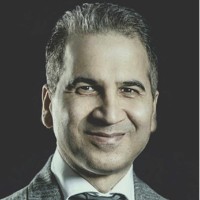
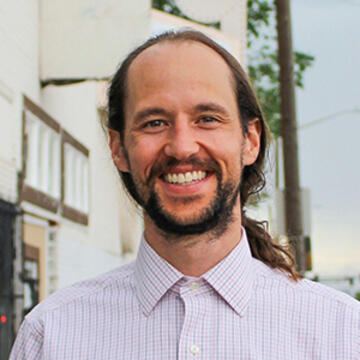
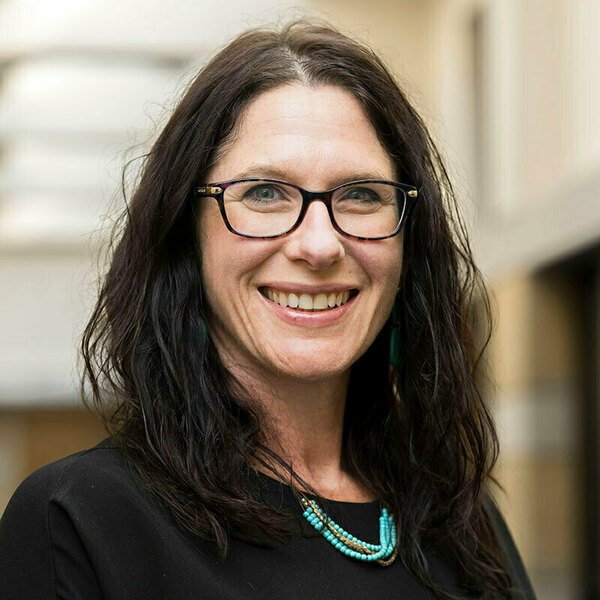
ÖMER ÇAKIR is a Lecturer at the College of Engineering , Karadeniz Technical University , Department of Computer Engineering. His work spans computer graphics, software engineering, and signal processing. Education: Undergraduate (2001) and Postgraduate (2004) in Computer Engineering at Karadeniz Technical University. Academic Positions: Lecturer (2002–Present), Research Assistant (2001–2002). Research focuses on Computer Graphics , Signal Processing , and Optimization Algorithms . His conference papers address topics like virtual surgery simulations , fractured object reassembly , and TDOA-based localization . Key publication trends include parallel computing , 3D reconstruction , and PSO optimization . He has contributed to 13 peer-reviewed conferences. His contact email is cakiro@ktu.edu.tr , and he teaches BİLGİSAYAR GRAFİKLERİ-I and DATA STRUCTURES .
Gil Bub is an Associate Professor in the Department of Physiology at McGill University, focusing on cardiovascular research and cardiac dynamics. His lab develops advanced imaging and computational methods for studying excitable cell networks in heart and brain tissues. Current research involves high-speed microscopy technologies (Temporal Pixel Multiplexing, RAP imaging, remote focusing) and optogenetic techniques to control and image cardiac excitation patterns. Teaching includes the course Mathematical Models in Biology (BIOL 309) , with supplementary tools like cellular automata and logistic map iterators. Research themes explore excitable media, spiral wave dynamics, and real-time optical control of cardiac tissue. The lab combines bioengineered myocyte sheets, co-cultures, and whole-heart models with novel microscopy and simulation programs. Instrumentation projects include ultra-fast sensors, three-photon microscope prototypes, and parallel imaging systems for high-throughput screening. Optogenetics work collaborates with Emilia Entcheva's COOL lab to sensitize tissues to light control, enabling precise manipulation of wave patterns and rhythms. Lab members include postdocs, PhD/MSc students, and undergraduate trainees. Prior students have pursued careers in academia, medicine, and industry. Collaborators span institutions including Oxford, UBC, and industry partners like Cordin Scientific Imaging.
Erivelton Nepomuceno is an Associate Professor at Maynooth University's Faculty of Science & Engineering , affiliated with the Hamilton Institute and Centre for Ocean Energy Research . He holds a PhD in Electrical Engineering from UFMG (2005) and has held visiting positions at Imperial College London, Saint Petersburg Electrotechnical University, and City, University of London. Educational Background BEng, UFSJ (2001) PhD, UFMG (2005) Research Interests Computer Arithmetic Chaotic Cryptography Green Computing Ocean Energy Sustainable Circuits and Systems System Identification His recent publications focus on computational chaos, reinforcement learning applications, and sustainable energy systems. His work bridges chaos theory , cybersecurity , and renewables , with a strong emphasis on energy transition and finite-precision arithmetic challenges. Scientific recognitions include Senior Member of IEEE and Chair-Elect of IEEE Technical Committee on Nonlinear Circuits and Systems . He has served as Deputy Editor-in-Chief for multiple IEEE journals and currently holds associate editor roles. Erivelton supervises 5 active PhD students and has advised 7 PhD completions. His funded projects include studies on hybrid wind-wave energy control (€587,975.18), green computing (€3,700), and chaotic system simulation (€7,500). He leads the Hamilton Institute's research group on computational chaos and sustainable systems.
Christopher E. Wilmer is an Associate Professor at the Swanson School of Engineering , University of Pittsburgh, specializing in computational materials discovery for energy applications. His work focuses on Metal-Organic Frameworks (MOFs) in gas separation, thermal conductivity, and sensor array design. PhD, Chemical & Biological Engineering, Northwestern University (2013) BASc, Engineering Science, University of Toronto (2007) Wilmer's research integrates computational modeling with hypothetical materials to advance carbon capture , gas sensing , and thermal transport in nanoporous systems. He pioneered genetic algorithms for MOF sensor optimization and studies defect impacts in MOFs like UiO-66. His 15 most recent publications (2024-2021) span Materials Science , Chemical Engineering , and Environmental Technology , emphasizing MOFs for CO2 capture , electronic nose development , and thermal property engineering . Key journals include Journal of Materials Chemistry A , ACS Sensors , and Chemical Science . Scientific honors include Forbes 30-under-30 , ACS Excellence Award , and NSF Visualization Challenge . He has advised co-authors on MOF-based projects but no formal students are listed in the provided data. Wilmer's cyber-physical systems work intersects with infrastructure security , as noted in his faculty profile. He developed MOFUN , an open-source Python tool for molecular design, and contributed to E-waste fraud modeling and light-harvesting MOFs .
Michal Zbigniew Pomianowski is an Associate Professor at the Department of Construction, Urban and Environmental Engineering, Faculty of Engineering and Science, Aalborg University. His primary research focus lies in energy systems within buildings, with specific expertise in district heating, thermal comfort, and energy performance optimization. Research Group for Energy in Buildings Key projects: PRELUDE, EDYCE, IDCS His work spans energy informatics, building physics, and sustainable urban infrastructure. Recent publications emphasize fault detection in district heating systems, thermal comfort analysis, and real-time energy optimization. Scientific awards include the prestigious Årets underviser (Year's Teacher) in 2018. He contributes to energy datasets, serves as principal investigator in multiple projects, and actively participates in international conferences like AIVC and Applied Energy.
Professor Ian Mitchell is a faculty member in the Department of Computer Science at the University of British Columbia's Faculty of Science. He received his B.A.Sc. and M.Sc. from UBC and PhD in Scientific Computing and Computational Mathematics from Stanford University. His research focuses on algorithms for hybrid systems, level set methods for Hamilton-Jacobi PDEs, control systems for cyber-physical applications, assistive technology development, and reproducible research practices. Key research contributions include the Toolbox of Level Set Methods Development of Dijkstra-like ordered upwind methods Advancements in safety-preserving control algorithms Applications in smart wheelchair navigation and user interface design His recent publications demonstrate expertise in Hamilton-Jacobi equation solving, robotics applications of level set methods, and assistive technology design. While no explicit awards are listed, his work spans multiple disciplines including computer science, control theory, and biomedical engineering. He teaches both graduate (CPSC 5xx) and undergraduate (CPSC 4xx and below) courses in computational robotics and parallel computing.
PD Dr. Josef Weidendorfer is a qualified private lecturer at Technische Universität München (TUM) and leads the Future Computing Group at the Leibniz Computing Centre (LRZ). He holds a dual affiliation with TUM's Department of Informatics, Chair of Computer Architecture and Parallel Systems (Prof. Schulz), and the Leibniz Rechenzentrum der Bayerischen Akademie der Wissenschaften. His work focuses on developing smooth migration strategies for future HPC systems and evaluating novel technologies to improve system-level and workload analysis tools. Weidendorfer's research interests encompass Parallel Computer Architectures, High Performance Computing, Multi-/Manycore architectures, GPGPU, Performance analysis and optimization, Cache Simulation, Virtual Machines, and dynamic code generation. He is particularly interested in strategies for improving computational efficiency across various hardware structures, including specialized accelerator hardware for HPC codes. He regularly organizes the UCHPC workshop (since 2010 with Euro-Par) about unconventional hardware for HPC computing and is co-organizer of the PSTI workshop series. His recent publications reveal a strong focus on HPC system optimization, with particular emphasis on load balancing techniques, cache partitioning, application malleability, and performance monitoring. The research trajectory shows increasing attention to practical implementation challenges in modern heterogeneous computing environments, especially regarding GPU utilization, resource partitioning under power constraints, and phase-aware system monitoring. Weidendorfer maintains the open-source tools Callgrind/KCachegrind for cache simulation and has supervised numerous student projects across bachelor's, master's, and guided research programs. He teaches courses including Virtualization Techniques, Parallel Programming Systems, and Advanced Computer Architecture, demonstrating strong commitment to both research and education in computer architecture and parallel systems. As principal investigator for multiple large-scale projects including EU Project SEANERGYS (2025-2028) and BMBF Project ScalNext (2022-2025), he leads significant research initiatives focused on future computing technologies and HPC system development.
Banu Aysolmaz is an Assistant Professor at Eindhoven University of Technology (TU/e) in the Information Systems group within the Industrial Engineering and Innovation Sciences school. She is affiliated with EAISI and actively supervises PhD candidates Paola Lara Machado, Montijn van de Ven, and Ginger Korsten. Her research focuses on business process management , digital innovation , and the integration of intelligent systems with organizational processes. She explores how organizations develop data analytics capabilities and align business models with operational processes. Her work includes process model visualization techniques like animation and virtual environments. Recent publications emphasize greenhouse gas emission management , network-based business models , and capability maturity models for data analytics. Her research spans process mining , sustainability in production , and critical success factors in digital transformation projects. Scientific Awards I3E 2024 Runner-up Best Paper Award Marie Curie Individual Fellowship NWO Creative Industry Grant (2020) Banu is involved in educational activities including Design of service operations , Business process management , and Green and digital transformation: sustainability in the era of AI . She contributes to academic peer-review for journals like International Journal of Production Economics and European Conference on Information Systems .
Dr. Lindsay Vickery is a Senior Lecturer and coordinator of the Composition and Music Technology Program at the Western Australian Academy of Performing Arts (WAAPA), part of Edith Cowan University. He has been active as a composer and performer globally since 1986, working across acoustic and electronic mediums in interactive, improvised, and fully notated settings. Education: Master of Music, University of Western Australia Doctor of Philosophy, Queensland University of Technology (2013) Research Interests: Vickery specializes in screenscores , interactive music systems, non-linear formal structures, new media integration, poly-tempo music, alternate controllers, and music analysis. His work bridges technological innovation with experimental composition techniques. Article Trends: His recent publications focus on digital notation systems, networked performance environments, and the intersection of visual and sonic representation. Key themes include the evolution of Cage's variations into digital formats, hybrid acoustic-electronic composition, and interactive score technologies. Scientific Awards: Sounds Australian Award (1989) Churchill Fellowship for electronic music research (1995) Australian Major Festivals Initiative Seeding Grant (2001) Supervision & Grants: He supervises PhD and Master's students in topics like deconstructed bassoon technique, meditative sonic praxis, and hybrid cultural composition. He has secured over $400,000 in grants from institutions like the Australia Council for the Arts, Feilman Foundation, and Nortel Networks. Performance & Collaborations: Vickery has performed at festivals including ISEA, SWR Tage für Neue Musik, and Shanghai International Arts Festival. He co-founded ensembles like Alea New Music Ensemble and Decibel, and has collaborated with artists such as Cat Hope and Stuart James on over 50 creative outputs since 2001.
Dr. Sam Qorbani is an Associate Professor in the Department of Computer Science at MacEwan University's Faculty of Arts and Science. His expertise spans communication technology, digital media studies, and virtual reality applications in education. Research focuses on human-centered computing and immersive learning environments Key projects: ScienceVR framework, VR medical training systems, and AR chemistry education tools Recent publications highlight his work in developing virtual simulations for STEM, physics, and chemistry education, emphasizing accessibility and cognitive engagement. His research bridges computer science with educational innovation through advanced visualization techniques.
Muhammed Fatih ADAK is an Associate Professor at Sakarya University's Faculty of Computer and Information Sciences, Department of Computer Engineering. His work spans software engineering, artificial intelligence, and sensor systems with applications in energy, healthcare, and industrial automation. Doctorate: Sakarya University (2016) - Electronic Nose Data Classification with AI Master's: Kocaeli University (2012) - Elevator Simulator Design Bachelor's: Dokuz Eylul University (2009) - Computer Engineering Research focuses on machine learning , software testing , fuzzy logic , anomaly detection , and decision support systems . His articles (2013-2024) explore AI-driven solutions for natural gas monitoring, medical diagnostics, and industrial processes. Recent publications include systematic reviews of AI integration in software engineering phases and predictive models for gas consumption and voice pathology. He supervises graduate students and contributes to academic projects like Smart Gas Sensor Systems and Adaptive Online English Placement Exams . Teaches courses: Data Structures, Fuzzy Logic, Software Testing, Java Programming Co-authored books: Principles of Programming Languages , Visual Programming Managed EU-funded projects like HOPE (street rehabilitation) and AI-Enhanced Performance Evaluation Platforms Develops applications for visually impaired education and workplace safety systems
William Martin is a PhD Researcher and Teaching Fellow at the Carnegie Mellon University School of Design, focusing on transdisciplinary strategies to create inclusive, equitable, and resilient futures. He works across physical and digital environments, utilizing tools like web applications, geospatial mapping, and documentary films to evolve communities. B.A. in International Studies in Economics from Middlebury College M.Arch and M.S. in Conservation from the University of Michigan Co-founding principal of Studiobvio (Denver-based architecture and urban research firm) Founder of the Architecture Lobby advocating for equitable labor practices His research spans urban design, data science, and community empowerment, with projects presented at institutions like MoMA, Yale School of Architecture, and the Architectural League of New York. He bridges economics, geography, and design to develop cooperative modes of practice. William’s publications demonstrate expertise in robotics, control systems, and facial recognition. His work includes algorithm development for bipedal locomotion on challenging terrain, optimal policy learning for compliant gaits, and component-based SVM approaches for biometric systems. He collaborates internationally through the Architecture Lobby and has worked at award-winning firms such as WXY (New York) and RNL (Denver). His career integrates design, activism, and technology to reimagine built environments.
Vincent Danjean is an associate professor at Grenoble Alpes University , specializing in parallel computing, high-performance computing, and bioinformatics. He earned his PhD in 2004 from École Normale Supérieure de Lyon under the supervision of Raymond Namyst. Research Interests: Vincent's work spans several critical areas in computational science: Parallel and Distributed Systems: Focus on task-based parallelism and hybrid cluster architectures. Performance Analysis: Development of visual frameworks for analyzing parallel applications. Bioinformatics: Application of computational methods to genetic and genomic data analysis. GPU Computing: Efficient scheduling and work stealing strategies for multi-GPU systems. Reproducible Research: Workflows using Git and Org-mode for scientific transparency. Publication Trends: His publications demonstrate a consistent focus on advancing parallel computing techniques, with significant contributions to GPU scheduling, cache-efficient algorithms, and visualization tools. Recent work includes interdisciplinary applications in genomics and cybersecurity protocols. Contact: vincent.danjean@imag.fr
Davide Pavia is a Researcher in Geography (SSD: GEOG-01/A) at Sapienza University of Rome's Department of Modern Literature and Culture. He teaches Environmental Regeneration and Geotechnologies for Ecological Transition to Geographical Sciences students, Human Geography to Linguistic and Intercultural Mediation students, and Fundamentals of Geography to Historical-Artistic Studies students. He earned his PhD in Geographical Studies from Sapienza University of Rome within the Documentary, Linguistic and Literary Sciences program. His academic qualifications include Associate Professor eligibility for SSD GEOG-01/A. His research centers on Geographic Information Systems (GIS) applications for spatial analysis of geographical phenomena, with expertise in environmental regeneration, cultural heritage documentation, public health interventions, and urban planning. He holds an Esri Associate certification for ArcGIS for Desktop and develops geospatial models for ecological transition, disease spread analysis, and submerged heritage rediscovery, emphasizing interdisciplinary approaches that bridge social and environmental sciences. Analysis of his 15 most recent publications (2023-2025) reveals a strong focus on practical GIS applications addressing societal challenges: optimizing defibrillator networks for cardiac emergencies, modeling pandemic dynamics, creating urban vegetation geodatabases, and promoting sustainable tourism through cultural heritage mapping. His work consistently demonstrates how geospatial technologies can transform theoretical geography into actionable solutions for urban resilience and ecological transition. His scientific recognition includes: Esri Young Scholars Award (2018) He has led significant research initiatives including projects on environmental risk management using GIS, 3D urban modeling for geospatial analysis, and the "Return to the House on the Hill" study investigating coronavirus-era migration patterns and cultural heritage preservation. As Scientific Director of university-funded projects, he has secured grants for applied geospatial research with societal impact. He contributes to academic discourse as Assistant Editor for the Scopus-indexed journal J-READING (Journal of Research and Didactics in Geography) and develops GIS laboratories for active digital citizenship education, fostering practical geospatial skills among students and community members.
Tracy Kijewski-Correa serves as the William J. Pulte Director of the Pulte Institute for Global Development and Professor of Engineering and Global Affairs at the University of Notre Dame's Keough School of Global Affairs. She directs the NSF-funded Structural Engineering Extreme Event Reconnaissance (StEER) network and maintains affiliations with the Kellogg Institute for International Studies, Environmental Change Initiative, and Real Estate Institute. Her educational background includes a B.S. (1997), M.S. (2000), and Ph.D. (2003), all from the University of Notre Dame. This foundation supports her interdisciplinary approach bridging engineering, social science, and policy development. Kijewski-Correa pioneers research in disaster risk reduction and resilient infrastructure for vulnerable communities. Her scholarship links scientific innovation with practical community needs, focusing on hurricane/earthquake engineering, coastal adaptation, and post-disaster recovery systems. She develops scalable solutions for civil infrastructure while addressing socioeconomic dimensions of resilience through homeowner behavior studies and policy engagement. Analysis of her 2024-2025 publications reveals three dominant trends: (1) development of standardized frameworks for cross-hazard data collection (evident in PVRRs and FAST datasets), (2) integration of computer vision and AI for rapid damage assessment, and (3) behavioral studies of homeowner adaptation in coastal zones. These works increasingly emphasize collaborative networks like StEER to accelerate knowledge translation for policymakers. Key recognitions include: Michael Gaus Distinguished Service Award from the American Association for Wind Engineering Provost's All-Faculty Team Award (2023) She leads major initiatives including Engineering2Empower and the NSF-funded StEER network, which coordinates over 70 engineers from two dozen organizations for post-disaster assessments. Her projects NJcoast and green resilience address critical gaps in coastal risk modeling and sustainable infrastructure. She has directed field missions following Hurricanes Harvey, Irma, Maria, and Florence, plus the Haiti earthquake and Indonesia tsunami. Kijewski-Correa co-founded Engineering2Empower and directs StEER's global reconnaissance operations. Her team developed the NJcoast geospatial platform and established standardized protocols for damage assessment across 20+ disasters. She conducts longitudinal recovery studies in Indonesia, Thailand, Haiti, and Caribbean nations, focusing on informal settlements and housing markets.