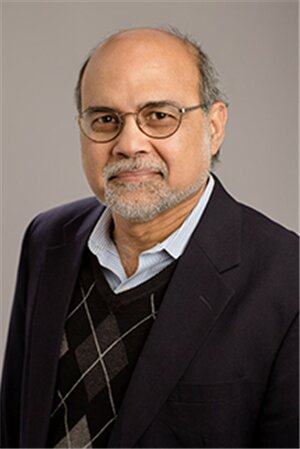
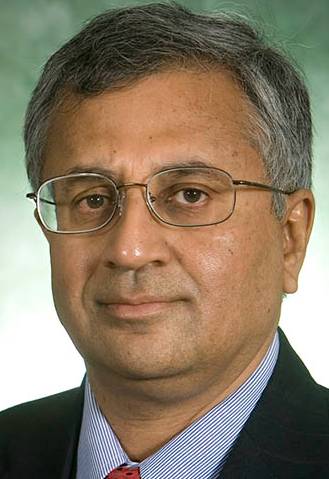
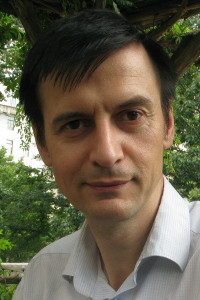
Arya Mazaheri is a Research Leader at PanocularAI, affiliated with the Technische Universität Darmstadt. His work bridges high-performance computing (HPC) and machine learning, focusing on optimizing large-scale computational systems. Based at Hochschulstr. 10, Darmstadt, Germany, he contributes to GPU acceleration, neural network pruning, and parallel processing. PhD in Performance Engineering of Data-Intensive Applications (2022) Key areas: HPC, Machine Learning, GPU Computing, Neural Network Pruning Research Trends: Mazaheri's publications from 2015-2024 reveal expertise in: Accelerating LLM inference through pipelined speculation Topology-aware network pruning with reinforcement learning GPU-based spacecraft trajectory simulations Performance portability in tensor operations Hardware-independent communication metrics for parallel systems
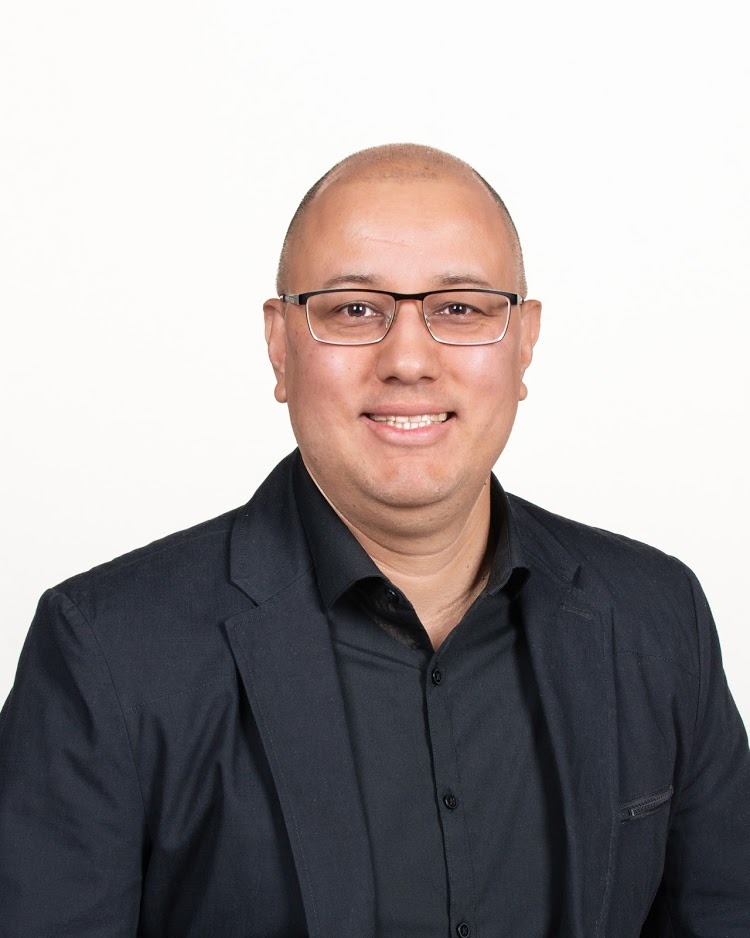
Dr. Jonathan M. Aitken is a Senior Lecturer in Robotics at the University of Sheffield's School of Electrical and Electronic Engineering. Previously a Research Fellow at the Autonomous Control Laboratory (ACSE), his work focuses on autonomous robotic systems with emphasis on quadcopters, computer vision, spatial awareness, and multi-robot collaboration. Expert in safe autonomous drone deployment Specializes in collaborative robotics (cobots) Qualified UK commercial drone pilot Research spans: Autonomous reconfiguration of robotic systems Dynamic risk assessment for systems-of-systems Visual SLAM for feature-sparse environments Formal verification of UAS systems Human-robot co-working interfaces Recent publications examine: Robust localization in sewer pipes Visual saliency algorithms for mobile robots Cobotic safety controller synthesis Modular digital twinning frameworks Spatial awareness for multi-robot teams Major grants include EPSRC Programme Grants for buried pipe sensing and Lloyds Registry Foundation funding for cobot safety integration.
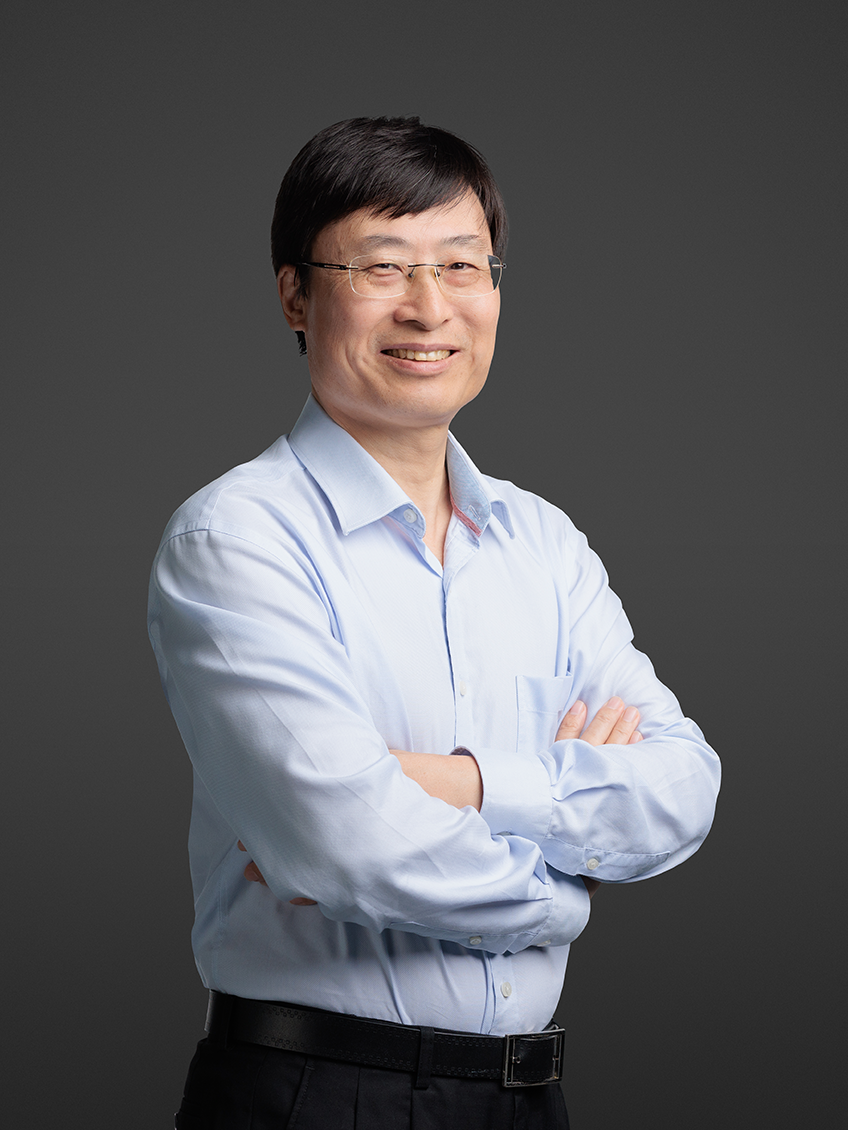
Rizwan Uddin is a Professor and Head of the Department of Nuclear, Plasma, and Radiological Engineering at the University of Illinois at Urbana-Champaign. He holds joint appointments as Professor of Computational Science and Engineering and is affiliated with the Institute for Sustainability, Energy, and Environment. His career spans over two decades, including roles at the University of Virginia prior to his current positions. Ph.D., Nuclear Engineering, University of Illinois (1987) M.S., Nuclear Engineering, University of Illinois (1983) B.S., Mechanical Engineering, Middle East Technical University (1980) His research focuses on Nuclear Engineering , Computational Biology , Nonlinear Dynamical Systems , Reactor Thermal Hydraulics , and Multi-Physics Modeling and Simulation . He specializes in advanced reactor designs, computational methods for reactor physics, and human factors in nuclear systems. Recent publications highlight his work in hybrid numerical methods , turbulence modeling in porous media , and application of digital twins for reactor simulation. His 2024 paper explores XR technologies for human factor studies, while 2022-2021 works refine nodal integral methods and code verification techniques. Scientific Awards : Fellow of the American Nuclear Society (2014), multiple Mark Mills Award advisor recognitions, Best Paper Awards, and teaching honors. Grants and Funding : National Center for Supercomputing Applications (NCSA) Fellow (2008-2009), collaborative projects with Nano Nuclear. He leads the Virtual Education & Research Laboratory and has served on university and departmental committees, including the Computational Science and Engineering Steering Committee.
Carlos Rubio-Medrano is an Assistant Professor of Computer Science specializing in Cybersecurity at Texas A&M University-Corpus Christi's College of Science and Engineering. He leads the Cybersecurity Research and Innovation Laboratory (CSRIL) and has established himself as a prominent researcher in access control, authorization systems, and cyber-physical security. Dr. Rubio-Medrano earned his Ph.D. in Computer Science from Arizona State University (2016), following an MS from The University of Texas at El Paso (2008) and BS from Instituto Tecnologico de Chihuahua II (2005). His research focuses on the intersection of cybersecurity and software specification, verification, and validation, with particular expertise in access control models and their implementation at the source-code level. His work spans multiple domains including mobile security, industrial control systems, drone security, and energy delivery systems. He has secured substantial research funding including a $500,000 site award as part of the $10 million CYBER-CARE Transportation Cybersecurity Center and multiple NSF grants totaling over $2 million for projects related to zero-trust access management, drone security, and high-performance computing infrastructure. His recent publications demonstrate a strong trajectory in top-tier security venues including IEEE Security & Privacy (S&P), USENIX Security, and ACM conferences. His research shows an evolving focus from traditional access control systems to emerging challenges in cyber-physical systems, reflecting the expanding scope of cybersecurity threats in interconnected environments. Cybersecurity Fellow by the Computing Alliance of Hispanic Serving Institutions (CAHSI), December 2024 Dr. Rubio-Medrano actively mentors students, with multiple current PhD candidates and numerous past MS and BS students who have completed their degrees under his supervision. His teaching portfolio includes graduate courses in Advanced Software Engineering, Computer Forensics, and Advanced Information Assurance. He has been featured in TAMU-CC's 'Why I Teach' series and has received positive student evaluations highlighting his teaching excellence. His laboratory, CSRIL, focuses on innovative approaches to cybersecurity challenges, particularly in authorization frameworks for emerging technologies and mission-critical cyber-infrastructures.
Michele Loreti is Full Professor in Computer Science at the University of Camerino within the School of Science and Technology and serves as Director of the School of Advanced Studies. His career includes roles as Research Associate at University of Firenze (2002-2017) and Visiting Professor at IMT Institute for Advanced Studies (2012-2016). He holds a PhD in Mathematical Logic and Theoretical Computer Science from University of Siena (2001) and a Computer Science degree from University of Rome 'La Sapienza' (1997). Research interests: Formal tools for concurrent/distributed systems Quantitative analysis of collective adaptive systems Spatio-temporal model checking Process calculi and modal logics Programming languages for network-aware applications Runtime verification and dynamic system adaptation Article trends: His work focuses on formal verification of cyber-physical systems, spatio-temporal properties, stochastic process calculi, attribute-based communication, and tools like CARMA and muG for collective system analysis. Editorial roles: Assistant editor for Elsevier Journal on Logical and Algebraic Methods in Programming and member of the Reproducibility Board for ACM Transactions on Modelling and Computer Simulation.
Steve Kremer is a permanent Researcher at Inria Nancy - Grand Est and LORIA , specializing in cryptographic protocol verification with a focus on privacy properties , equivalence verification , and e-voting security . He leads the SPOOC ERC Consolidator Grant (2015-2020) and PI of ANR ASAP (2020-2024) and Sequoia (2014-2019) projects. His research interests include Automated equivalence verification Privacy in distributed systems Formal security proofs Receipt-free e-voting protocols Untrusted platform analysis XOR-based cryptographic modeling He chairs steering committees for IEEE Computer Security Foundations Symposium (2010-2018) Principles of Security and Trust (2012-2016) European Joint Conferences on Theory and Practice of Software (2012-2014) and serves on program committees for Usenix Security'25 and CSF'24 . Scientific awards include Distinguished paper award at Usenix Security’23 Distinguished paper award at S&P’18 ACM Computing Reviews 21st Annual Best of Computing (2016) He advises PhD students : Charlie Jacomme Itsaka Rakotonirina and develops tools like AKISS and DEEPSEC , integrated into Tamarin for automated security proofs.
Jianying Zhou is a Professor and Centre Director for iTrust at Singapore University of Technology and Design (SUTD), where he leads research in cyber security. He received his PhD in Information Security from Royal Holloway, University of London, following an MSc from the Chinese Academy of Sciences and a BSc from the University of Science and Technology of China. Education Background: PhD (Information Security) - Royal Holloway, University of London MSc (Computer Science) - Chinese Academy of Sciences BSc (Computer Science) - University of Science and Technology of China Professor Zhou's research focuses on applied cryptography and network security, cyber-physical system security, and mobile and wireless security. His work spans theoretical foundations to practical implementations, with significant contributions to secure communication protocols, authentication mechanisms, and security architectures for emerging technologies. He has been instrumental in developing security solutions for industrial control systems, smart grids, and mobile platforms, with numerous patents resulting from his research. An analysis of Professor Zhou's recent publications reveals a strong focus on cyber-physical system security, privacy-preserving technologies, and blockchain security. His work demonstrates a consistent trajectory from foundational cryptographic research toward practical security implementations in real-world systems. Recent publications show increasing emphasis on securing industrial automation systems, developing privacy-enhancing technologies for cloud environments, and addressing emerging threats in 5G networks and blockchain systems. Scientific Awards: ESORICS Outstanding Contribution Award (2020) Professor Zhou has supervised numerous PhD students, including Chuadhry Mujeeb Ahmed, Hamid Ghaeini, John Castellanos, Flavio Toffalini, Andrei Bytes, Bowen Liu, and Teik Guan Tan, among others. His research has been supported by significant grants that have enabled the development of iTrust's world-class CPS testbeds, including MariOT, which offers testbed as a service with remote access. He has served as Principal Investigator on multiple major research projects focusing on cyber security for critical infrastructure. As Centre Director for iTrust at SUTD, Professor Zhou oversees a comprehensive research ecosystem dedicated to cyber security, with particular emphasis on securing cyber-physical systems. iTrust hosts world-class CPS testbeds that enable realistic security testing and validation. Under his leadership, the center has established itself as a leading research institution in Asia for applied cyber security research, with strong industry partnerships and significant contributions to security standards.
Professor Gabriele Taentzer serves at Philipps University of Marburg within the Department of Mathematics and Computer Science, holding key roles as Professor of Software Engineering and Deputy Executive Director of the Marburg Center for Digital Culture and Infrastructure (MCDCI). She leads the Software Engineering research group and contributes significantly to academic governance as a member of the MArburg University Research Academy Board and the Cooperative Doctoral Platform. Her research centers on Model-Driven Software Development with specialized expertise in Model Transformation, Software Quality Assurance, and Graph Transformation systems. She investigates formal methods for ensuring model consistency, developing rule-based approaches for graph repair, and integrating data quality perspectives into software engineering processes. Her work bridges theoretical computer science with practical applications in distributed systems and mobile application development. Professor Taentzer has demonstrated exceptional leadership in the academic community through extensive committee service. She chaired the ETAPS-conference 'Fundamental Approaches to Software Engineering (FASE)' Steering Committee (2011-2021), served as General Conference Chair for STAF 2017, and held PC chair positions for major conferences including MODELS 2023 and FASE 2010. Her editorial contributions include membership on the SoSym journal editorial board and reviewing for top-tier publications like IEEE TSE and ACM Computing Surveys. Philipps-Universität Marburg Teaching Award 2020 She actively mentors students and researchers in software engineering methodologies while leading collaborative projects through the Marburg Center for Digital Culture and Infrastructure. Her research group maintains strong connections with international conferences and workshops, particularly in graph transformation and model-driven engineering domains.
Oscar A. Mondragon is a Clinical Associate Professor in the Department of Computer Science at the University of Texas at El Paso . He currently serves as the Director of the Master of Science in Software Engineering (MSSwE) program and previously led the Online Master of Science in Systems Engineering (OMSSE) from 2014 to 2019. His work bridges systems engineering , software engineering , and smart cities , with publications in formal requirements specification, process improvement models, and verification & validation.
Phillip A. Laplante is Professor at Penn State University specializing in software engineering and real-time systems. His research addresses requirements engineering, IoT security, and software quality assurance. Recent work examines certification challenges for connected devices, automated requirements analysis, and blockchain applications. Publications include multiple textbooks on real-time systems design. He contributes to IEEE standards development and serves on editorial boards for leading software engineering journals. Current projects focus on safety-critical system verification methodologies.
Kanad Ghose is a Distinguished Professor and Director of the Center for Energy-Smart Electronic Systems (ES2) at SUNY Binghamton's School of Computing. His research focuses on computer architecture, power-aware systems, high-performance computing, and cybersecurity. He leads projects in data center energy management, secure processor design, and flexible electronics for wearable health monitoring. Education: BTech/M.Tech from University of Calcutta; MS/PhD from Iowa State University Awards: SUNY Chancellor's Award, IBM Faculty Award, National Science Talent Search Research interests include energy-efficient microarchitectures, cybersecurity at the hardware level, and autonomous systems. Notable projects involve data center cooling optimization, secure execution validation, and wearable ECG sensors. His lab collaborates with industry partners like Intel, Lockheed Martin, and UC Berkeley's Arias group. Current projects include DC-powered data centers, FPGA accelerators, and flexible electronics for clinical-grade health monitoring. Past work includes the MARSSx86 simulator and ARINC-compliant avionics systems.
Marius Minea is an Associate Professor at the Department of Computer and Software Engineering, Politehnica University of Timișoara. He holds a Dr. Eng. degree and specializes in formal verification, cybersecurity, and software engineering. His work focuses on model checking, security protocols, and embedded systems design. Research interests include formal verification techniques, software analysis, and security modeling. Notable projects include the EU-funded SPaCIoS and AVANTSSAR initiatives, which address automated validation of security in service-oriented architectures. He has organized major conferences like CRiSIS 2011 and contributed to workshops such as MoDeVVa. Awarded the Merit Award in 2025, Minea teaches courses on computer security, formal verification, and programming. His work bridges theoretical foundations with practical applications, emphasizing automated testing and model-driven engineering.
Moreno Falaschi is a Professor at the University of Siena's Department of Information Engineering and Mathematical Sciences. He teaches Programming Fundamentals for Biotech Engineering, Models and Languages for Bioinformatics for Artificial Intelligence Engineering, Programming for Mathematics, and Information Processing Systems, with current responsibilities extending to the 2025/2026 academic year. His research centers on Reaction Systems as formal models for biochemical processes, applying rewriting systems, concurrency theory, and constraint logic programming to analyze biological systems. Key applications include comorbidity treatment strategies, hemostasis pathways, and T cell differentiation, bridging theoretical computer science with medical bioinformatics. Recent publications (2023-2025) demonstrate consistent innovation in dynamic slicing techniques, guarded reaction systems for medical applications, and quantitative extensions using SOS semantics. His work spans formal verification, computational biology, and biomedical AI, with significant contributions to journals like the International Journal on Software Tools for Technology Transfer.
Stephan Haarmann is a doctoral researcher at the Digital Engineering Faculty (DEF) of the University of Potsdam and the Hasso Plattner Institute. His research focuses on transparent business process management, decision support systems, and blockchain applications. He completed his Master's degree in IT Systems Engineering at DEF in 2018 and began his PhD in 2018. His work addresses challenges in knowledge-intensive processes, case management, and data-driven compliance, with contributions to frameworks like fragment-based case models and DMN integration with blockchain. Awarded the 2019 Graduate Award for his master's thesis on decision-aware compliance checking. Published extensively on topics including process modeling, blockchain for decision execution, and data-object cardinality constraints. Developed tools like fcm-js for fragment-based case management. His research emphasizes system-wide integration of IT solutions with organizational processes, leveraging blockchain for transparency and formal methods for compliance verification. Key areas include decision modeling (DMN), flexible process choreography, and knowledge worker objectives.
Stefan Schupp is a postdoctoral researcher affiliated with RWTH Aachen University's Theory of Hybrid Systems Group , led by Professor Dr. Erika Ábrahám. He is temporarily working in the AG Sicherheitskritische Systeme group in Münster but plans to return to RWTH's Hybrid Systems Group. His research focuses on reachability analysis for linear hybrid systems, state set representations (via the Hypro project), and contributions to SMT-solving through the SMT-RAT library's ICP module. He is also part of the UnRAVeL research training group, investigating state set representations for hybrid systems analysis. Teaching involvement includes lecturing on Modelling and Analysis of Hybrid Systems (2015–2019) and Data Structures and Algorithms (2014). He has organized practical terms on state set techniques, robotic exploration, solar power plant calibration, and web applications for exercise generation. He co-organized the Schüleruni 2013 and MINT Camp events. His publications emphasize automotive safety verification, hybrid systems competition methodologies, and controller code validation. Current projects include Hypro (C++ library), SMT-RAT (constraint solver), and contributions to formal verification tools.