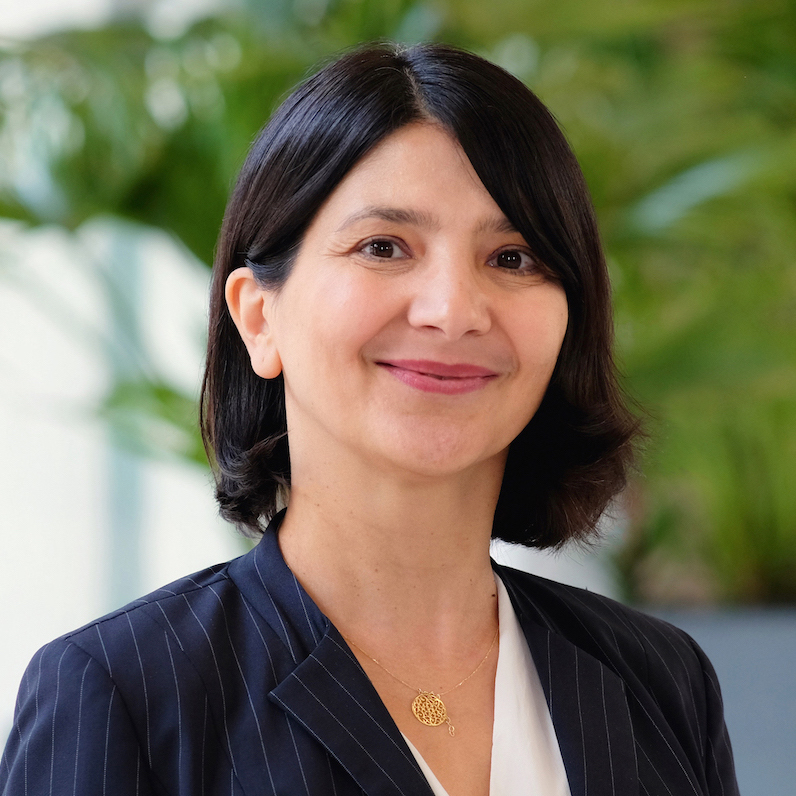
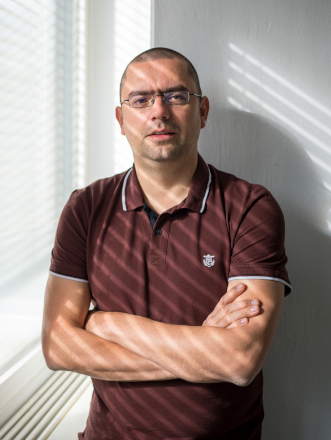
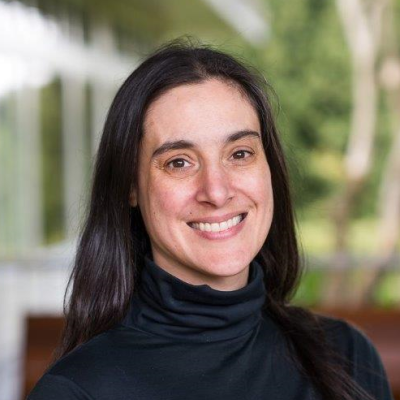
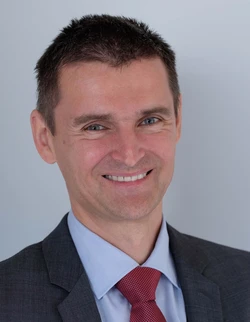
Alina Lungeanu is an Assistant Professor at Northeastern University, with dual appointments in the College of Arts, Media and Design (Communication Studies) and the D'Amore-McKim School of Business (Management and Organizational Development Group). She is a Core Member of the Network Science Institute (NetSI) and studies team dynamics in scientific collaborations and space exploration contexts. Research Interests : Team network configurations, cross-boundary collaboration, leadership structures, computational modeling, and extreme team performance in space missions. Grants : Funded by NASA, National Science Foundation (Award #1856090), and National Institute of General Medical Sciences (Award #1R01GM137410). Awards : Sage Publishers Award (2025). Article Trends : Focus on team composition in space analog missions, expertise diversity, shared mental models, network science methodologies, and multiteam systems in extreme environments. Her work bridges social science and network science, emphasizing innovation in interdisciplinary teams and NASA partnerships.
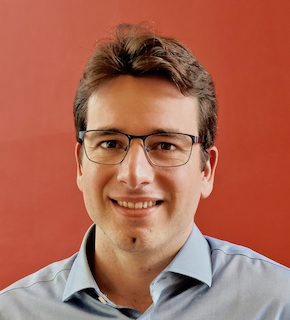
Dr Athanasios Angeloudis is a Reader (Associate Professor) and Director of Impact in the School of Engineering at the University of Edinburgh. He is affiliated with the Institute for Infrastructure and the Environment, leading research on hydro-environmental applications and offshore renewable energy systems. His academic roles include coordinating the Edinburgh Fluid Dynamics Group and serving as a member of NERC’s Peer Review College. Dr Angeloudis holds a PhD in Hydro-environmental Engineering (2014) and an MEng in Civil Engineering (2010) from Cardiff University. He is Chartered with the Technical Chamber of Greece (CEng) and a member of the Institution of Civil Engineers. His research focuses on environmental fluid mechanics, coastal processes, numerical methods, and data analytics. His teaching responsibilities include courses like Civil Engineering Hydraulics and Water Engineering Transport and Treatment . He has secured significant research funding, including the NERC Industrial Innovation Fellowship, and leads projects such as CoTide (tidal stream energy optimization) and ILIAD (maritime data services). Key research contributions span tidal energy systems, climate change impacts on river flows, and computational modeling frameworks like Thetis-SWAN . His work emphasizes collaboration with industry and international partners to advance sustainable energy solutions and environmental resilience.
Dr. Wanja Hofer is a former research staff member at the Department of Computer Science 4 (Distributed Systems and Operating Systems) at Friedrich-Alexander-Universität Erlangen-Nürnberg (FAU). She specialized in embedded systems, real-time operating systems, and aspect-oriented programming. Her research focused on optimizing hardware-centric systems like Sloth and CiAO, addressing challenges in interrupt handling, scheduling, and software product line variability. Her academic journey includes a PhD in 2014 titled Sloth: The Virtue and Vice of Latency Hiding in Hardware-Centric Operating Systems . She contributed to key projects such as Sloth (time-triggered RTOS) and CiAO (aspect-oriented OS family), emphasizing scalability and configurability for automotive and embedded domains. Hofer also held roles like Web chair for EuroSys 2009 and co-maintained the EuroSys Research Directory. Her teaching involved Basics of Systems Programming in C and OS-related seminars. She advised over 15 graduate students on topics ranging from MPU-based task isolation to filesystem-level variability management. Notable contributions include hardware-accelerated interrupt handling, aspect-oriented OS design, and embedded system energy optimization. Hofer currently works at Brose Fahrzeugteile, applying her expertise in embedded systems and real-time computing to automotive technologies. Her work bridges academic innovation with industrial applications, particularly in safety-critical and resource-constrained environments.
Nadeem Abbas is a Senior Lecturer at the Department of Computer Science and Media Technology, Faculty of Technology, Linnaeus University, Sweden. He earned his PhD in Computer and Information Science from Linnaeus University and has been working with software systems since 2001. His primary research interests include Self-Adaptive Software Systems, Dynamic Software Product Lines, Software Reuse, Requirements Engineering, Software Architecture and Design, and Architectural Analysis and Reasoning. He is actively involved in multiple research groups including: AdaptWise - focusing on foundations and engineering of self-adaptive software systems Engineering Resilient Systems (EReS) Research Lab - investigating system resilience Smart Industry Group (SIG) - an interdisciplinary group focusing on production and product innovation His recent publications show a strong trend in self-adaptive systems with expansion into health inequality research and environmental monitoring applications. His work bridges theoretical software engineering with practical industrial applications, particularly evident in his survey of industry practices in self-adaptation. Nadeem teaches several courses including: 1DV532 - Starting Out with Java 1DV533 - Structured programming with C++ 1DV534 - Object-Oriented Programming with C++ 2DV600 - Foundations of Software Technology 4DV610 - Adaptive Software Systems 2DV604 - Software Architectures 1DV607 - Object-Oriented Analysis and Design using UML He currently supervises multiple research projects related to self-adaptive systems, architectural analysis tools, and health inequality mitigation through digital solutions. His research portfolio demonstrates strong connections between academic research and practical industry applications, particularly in software architecture and adaptation techniques.
Jorge Camba is an Associate Professor at the School of Engineering Technology and holds a courtesy appointment in the Department of Computer Graphics Technology at Purdue University . He also serves as a Senior Research Scientist (by courtesy) in the Department of Industrial Engineering at the University of Naples Federico II , Italy. PhD in Systems and Engineering Management (Universidad Politécnica de Valencia, Spain) MSc in Digital Media (East Tennessee State University) MSc in Computer Science (Universidad de Vigo, Spain) His research explores intelligent CAD systems , digital manufacturing , and mixed reality environments , focusing on model quality assurance , design intent communication , and collaborative design tools . Recent work investigates spatial cognition in CAD education , geometric variability analysis , and annotation-driven knowledge management . Key trends in his publications include parametric modeling strategies , 3D annotation systems , and XR applications in design evaluation. Awards include the Purdue Faculty Scholar (2021) and I3B Fellow (2021). He has presented at conferences on topics like Industry 4.0 , space habitat design , and digital product quality .
Navid Constantinou is a Senior Lecturer at The University of Melbourne, specializing in Climate & Ocean Geoscience. His research focuses on physical oceanography, geophysical fluid dynamics, and climate modeling, with a particular emphasis on machine learning applications in these fields. He is affiliated with the University of Melbourne and contributes to collaborative projects like Oceananigans.jl and regional-mom6. Research Interests: His work explores ocean circulation dynamics, fluid mechanics, and the interplay between atmospheric and oceanic systems. Key areas include surface wave effects, turbulence decay, and parameterization of ocean mixing processes. He actively develops computational tools to enhance climate modeling accuracy and resolution. Publications: His recent work addresses topics like meridional heat transport in the Atlantic, GPU-based ocean modeling, and the impact of climate change on Antarctic currents. These studies often involve interdisciplinary collaborations with institutions like MIT and the Scripps Institution of Oceanography. Awards: While no explicit awards are listed, his research has been highlighted in prominent journals and media outlets like The Conversation and Nature Climate Change . Advising & Grants: He supervises students such as Dhruv Bhagtani and collaborates on projects funded by initiatives like the Australian Research Council. His software contributions, including OceanBioME.jl and SpeedyWeather.jl, underscore his commitment to advancing computational methods in geosciences. Labs/Teams: Involved in global climate modeling teams and open-source software development communities focused on ocean and atmospheric dynamics.
Dave Tompkins is an Associate Professor in the David R. Cheriton School of Computer Science at the University of Waterloo. He holds a PhD in Computer Science and a MASc in Electrical Engineering from the University of British Columbia, along with a BESc and BSc from Western University. His primary research focuses on Stochastic Local Search (SLS) algorithms for the Satisfiability Problem (SAT) and MAX-SAT. Research Interests: His work spans Stochastic Local Search Algorithms SAT and MAX-SAT problem solving Dynamic Local Search techniques Heuristic algorithm design and optimization Data compression and image coding Genetic algorithms and game theory Scientific Awards: He has received Best Paper Award (2006, CCAI) Best Poster Awards (2003, ASI; 1999, ASI) Gold and Silver Medals in SAT Competitions (2004) Incomplete Solver Track Awards (2012, MAX-SAT) Projects: He is known for developing the UBCSAT framework and the Captain Jack SAT solver. He has also contributed to standards like JBIG2 and JPEG-2000.
Marsha Chechik is a Professor in the Department of Computer Science at the Faculty of Arts and Science, University of Toronto. She previously served as Department Chair from 2019-2022 and as Acting Dean in the Faculty of Information from July-December 2022. Her academic career spans numerous research contributions and leadership roles within the software engineering community. Professor Chechik's primary research interests focus on software engineering with emphasis on formal methods to enhance software quality. Her work encompasses scalable automated verification techniques including model-checking and theorem-proving, formal specification languages, verification of protocols, non-classical logics, and reasoning under inconsistency. She has made significant contributions to model management, software product lines, safety and security assurance, and automotive safety systems. Her research bridges theoretical foundations with practical applications, particularly in managing uncertainty in software models and developing techniques for automotive safety verification. Her recent publications demonstrate a strong focus on model management and transformations, software product lines and variability analysis, safety and security assurance cases, and semantic analysis of software evolution. The integration of formal methods with practical software engineering challenges, especially in safety-critical domains like automotive systems, represents a consistent theme throughout her work. Professor Chechik has been recognized with multiple prestigious awards including a Best Paper Award at RE'12, a SIGSOFT Distinguished Paper Award at ICSE'12, a Best Student Paper Award at CASCON'07, and a Distinguished Paper Award at ICSE'07, highlighting the impact and quality of her research contributions. She actively supervises graduate students and has successfully guided numerous Ph.D. candidates to completion. Her group has produced graduates who predominantly pursue research careers in both academic institutions and industrial research labs. She currently leads several funded projects including the Automotive Safety project (in collaboration with General Motors) and the Software Evolution project, focusing on practical applications of her research interests. Professor Chechik leads the Software Engineering Lab at the University of Toronto, where innovative projects like Matchmakers (a serious game for software engineering) are developed. Her collaborative network extends across institutions, with notable partnerships including Julia Rubin at the University of British Columbia, demonstrating her commitment to interdisciplinary research and academic collaboration.
James Shackleford serves as Associate Professor and Interim Associate Dean for Enrollment Management and Graduate Education in the Department of Electrical and Computer Engineering at Drexel University. His research bridges medical image processing, high performance computing, and emerging neuromorphic architectures with significant contributions to radiation therapy applications. Education: PhD in Electrical Engineering, Drexel University, 2011 MS in Electrical Engineering, Drexel University BS in Electrical Engineering, Drexel University Research Focus: Professor Shackleford's work centers on GPU-accelerated medical image registration (forming the core of the open-source Plastimatch software), real-time tumor motion management for radiation therapy, and digital spiking neuromorphic systems . His research integrates computer vision, machine learning, and embedded systems to solve clinical imaging challenges. Publication Trends: Recent work (2020-2024) reveals dual research trajectories: (1) advancing deformable image registration through CycleGAN-based domain adaptation for CT auto-segmentation in radiation oncology, and (2) pioneering neuromorphic computing with configurable hardware architectures, dataflow-based compilers, and resource-aware neural network mapping. These streams converge on high-performance solutions for medical imaging and efficient neural processing.
Sven Apel is Professor of Computer Science at Saarland University, where he holds the Chair of Software Engineering and directs the Saarbrücken Graduate School of Computer Science within the Saarland Informatics Campus. His research aims to advance software engineering into an era of intensive automation by developing methods, tools, and theories for building efficient, reliable, and maintainable software systems, with a strong emphasis on the human factor and interdisciplinary inquiry. His primary research interests include software variability and configuration, AI-based program generation and optimization, socio-technical software analysis, and the application of empirical and neurophysiological methods to study program comprehension. He actively collaborates with industry partners such as Siemens AG, Bosch Engineering, and Airbus Helicopters to apply his research in real-world contexts. His recent publications demonstrate a strong trend towards integrating artificial intelligence and neurocognitive methods into software engineering, focusing on configurable systems, performance modeling, debugging processes, and the scientific validity of empirical studies. His work spans top venues like ICSE, FSE, ASE, and IEEE TSE. ERC Advanced Grant “Brains On Code” ASE Fellow ACM Distinguished Member Hugo Junkers Award for Research and Innovation Heisenberg Professorship (DFG) Emmy-Noether Fellowship (DFG) Best Doctoral Dissertation Awards (University of Magdeburg, Ernst-Denert Foundation, 2007) Most Influential Paper Awards (SPLC'19, ICPC'22, GPCE'23) ACM SIGSOFT Distinguished Paper Awards (ICSE'15, ICSE'21) Best Paper Awards (SPLC'11, Modularity'15, Academy of Management'18) Distinguished Reviewer Awards (ASE'18, ICSE'24, FSE'24) Sven Apel has secured significant research funding, including an ERC Advanced Grant (€2.5M) and multiple DFG grants as Principal Investigator and Project Leader. He has advised numerous PhD and Master’s students and is actively involved in the academic community through program committees for major conferences like ICSE, FSE, and ASE. His work is conducted within a collaborative environment that includes close partnerships with researchers at the Max Planck Institute for Informatics and other institutions within the Saarland Informatics Campus.
Elisa Baniassad is a Teaching Professor in the Department of Computer Science at the University of British Columbia (UBC), within the Faculty of Science. She specializes in software engineering education and has received numerous teaching accolades including the UBC Killam Teaching Prize and CS-Can/INFO-CAN Excellence in Teaching Award. Her courses focus on software construction, engineering principles, and advanced software design. Dr. Baniassad has taught CPSC 310 (Introduction to Software Engineering), CPSC 210 (Software Construction), and CPSC 410 (Advanced Software Engineering) across multiple terms since 2000. Her research interests span educational methodologies in software engineering, aspect-oriented programming, and the design of effective learning tools. Notable contributions include studies on team dynamics in software development, automated assessment techniques, and pedagogical frameworks for large-scale programming courses. She has authored over 50 peer-reviewed articles on topics ranging from mutation analysis in student tests to the efficacy of online learning environments. Awards include recognition for teaching excellence at UBC and contributions to computer science education. Her work emphasizes practical applications of software engineering principles in academic settings, with a focus on fostering student mastery through innovative assessment strategies and feedback mechanisms.
Dimitri Mavris is a Professor at the School of Aerospace Engineering , Georgia Institute of Technology, holding distinguished titles including Boeing Chair in Advanced Aerospace Systems Analysis and S.P. Langley Distinguished Professor . He directs the Aerospace Systems Design Laboratory (ASDL) and serves as Executive Director of the Professional Master’s in Applied Systems Engineering (PMASE) . Education B.S., Aerospace Engineering, Georgia Institute of Technology (1984) M.S., Aerospace Engineering, Georgia Institute of Technology (1985) Ph.D., Aerospace Engineering, Georgia Institute of Technology (1988) Dr. Mavris specializes in advanced design methods , aircraft preliminary design , and non-deterministic design theory , focusing on multi-disciplinary optimization and system of systems architecting . His work spans propulsion systems, space exploration, and sustainable aviation technologies. Recent research trends include machine learning for aerospace safety , hybrid-electric propulsion analysis , and digital twin applications in energy systems. His lab produces 100+ annual publications, reflecting leadership in MBSE , UAS certification , and lunar operations modeling . Scientific Awards Class of 1934 Distinguished Professor Award (2024) NSF CAREER Award (1997) Fellow of AIAA (2009-present) NASA Blue Marble Award (2017) SGA Faculty of the Year (2012-2013) As an advisor to Georgia Tech's AIAA student chapter, Dr. Mavris mentors 1,484 alumni (300 Ph.D., 1,184 M.S.) and leads industry partnerships with FAA , Airbus , and Siemens . His labs include the Vertical Lift Research Center and Strategic Energy Institute , with global initiatives like the ICAS presidency (2023-2024).
Prof. Ondrej Vaculin, Ph.D., is a Professor at Technische Hochschule Ingolstadt (THI), specializing in passive vehicle safety, mechatronic systems, and automated driving. He joined THI in 2018 and previously held roles at TÜV SÜD Prague (2008–2018) as Vice President for Safety and Security in Automotive, and as a researcher at Czech Technical University (2005–2008) and DLR Oberpfaffenhofen (2000–2005). His research focuses on enhancing vehicle safety through advanced simulation, sensor integration, and machine learning applications. Education: Ph.D. in Mechanics of Solids, Deformable Bodies and Continua from Czech Technical University in Prague (2001), and a degree in Technical Cybernetics from the Faculty of Electrical Engineering at the same university (1991). His work bridges theoretical research and practical implementation, addressing challenges in automated driving systems, crash simulation, and human body diversity in safety design. Research interests include passive safety systems, autonomous vehicle dynamics, and infrastructure integration for safety enhancements. Recent publications emphasize collaborative smart infrastructure, sensor fusion for free space detection, and machine learning in crash detection. He actively contributes to FISITA, serving as a Council Delegate and member of technical committees. Awards/memberships: Active in FISITA, holding leadership roles in technical committees. No explicit awards listed, though his contributions to automotive safety standards are notable. Grants and advising: While no specific grants or students are detailed, his extensive industry and academic collaborations (e.g., IN2Lab testing field projects) highlight his role in applied research and development.
Professor Tomoji Kishi is a distinguished faculty member at Waseda University's School of Creative Science and Engineering, where he has been serving since 2009. Previously, he held academic positions at Japan Advanced Institute of Science and Technology (2003-2009) following a 21-year career at NEC Corporation (1982-2003). He earned his Ph.D. in Information Science from Japan Advanced Institute of Science and Technology in 2002, building upon his earlier engineering graduate studies at Kyoto University. Professor Kishi's research focuses on software engineering, particularly in software product line development, model checking, formal verification, and aspect-oriented modeling. His work bridges theoretical formal methods with practical applications in embedded systems, automotive software, and IoT technologies. He has made significant contributions to scalability challenges in model checking for configurable systems and has pioneered approaches to variability management and approximate modeling techniques. His publication record demonstrates remarkable consistency and evolution, with 42 papers and 153 citations according to Scopus data (h-index: 7), spanning from foundational work in software architecture in the 1990s to cutting-edge research on AI-enhanced verification methods in 2025. His recent work shows increasing application of machine learning techniques to traditional formal methods problems, particularly in the context of highly configurable systems and IoT applications. ITS Standardization Activity Merit Prize (2022) from Society of Automotive Engineers of Japan IPSJ/ITSCJ Standardization Contribution Award (2017) IPSJ/ITSCJ Project Editor Award (2016 and 2013) Information Processing Society of Japan Society Activity Contribution Award (2010) IPA/SEC Journal Best Paper Award (2007) Information Processing Society of Japan Yamashita Memorial Research Award (1998) Professor Kishi has led multiple JSPS-funded research projects, including recent work on 'variability management methods prioritizing usability through variability mining' (2020-2023) and 'utility-first modeling method' (2017-2020). His industry collaborations, particularly with automotive systems developers, demonstrate the practical impact of his research. He maintains active membership in major professional societies including IEEE Computer Society, ACM, and the Information Processing Society of Japan.
Ben Hermann is a Professor for Secure Software Engineering at Technische Universität Dortmund, Germany, with research focusing on the intersection of programming languages and security. His work primarily centers on vulnerability detection using static analysis, risk assessment of software libraries, security guarantees in type systems, and language-based security. His academic journey includes a doctoral degree from Technische Universität Darmstadt in 2016, followed by postdoctoral work in Eric Bodden's Secure Software Engineering Group at the Heinz Nixdorf Institute. Since 2020, he has held a tenure-track professorship at TU Dortmund, after serving as an interim Professor for IT Security at Paderborn University from October 2019 to September 2020. Hermann's research portfolio demonstrates consistent output in static program analysis frameworks, particularly with contributions to Soot and PhASAR. His work spans vulnerability detection, analysis reusability, and research quality in computer science, with emphasis on artifact evaluation. His recent publications show progression from framework development toward security applications and research methodology. Hermann has been actively involved in numerous conferences including ASE, ICSE, ECOOP, and SPLASH, often serving in program committees and as session chair. His research group at TU Dortmund includes students like Maximilian Krebs who presented work on energy consumption prediction of programs. He maintains an active presence in the academic community, advocating for research quality and reproducibility, and serves in various organizational roles including Doctoral Symposium Chair and Diversity & Inclusion Chair for conferences.