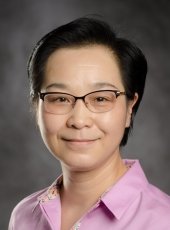
Sanchuan Chen is an Assistant Professor in the Department of Computer Science and Software Engineering at Auburn University's College of Engineering. His research focuses on Machine Learning Security, Trusted Execution Environments, Software Security, and Programming Languages. He holds a Ph.D. from The Ohio State University, an M.E. from the Chinese Academy of Sciences, and a B.E. from the University of Science and Technology of China. His work addresses critical challenges in secure computing, including enclave vulnerabilities, speculative execution attacks, and data privacy preservation. Key research contributions include defenses against SGX enclave leaks (e.g., SGXpectre attacks), data flow tracking techniques, and hardening strategies for binary code. His publications span topics like side-channel mitigation, speculative execution exploits, and privacy-preserving data publishing. Chen collaborates on hardware-software co-design solutions to enhance system security without compromising performance.
Professor Peter Chin is a Professor of Engineering at Dartmouth College and Director of the Learning, Intelligence + Signal Processing (LISP) Lab. He holds affiliations with the Thayer School of Engineering and serves as Associate Editor of IEEE Transactions on Computational Social Systems. His research bridges signal processing, machine learning, game theory, and differential geometry, with applications in cybersecurity, healthcare, and network analysis. Education: Bachelor of Science in Electrical Engineering, Computer Science, and Mathematics from Duke University (1993) Doctor of Philosophy in Mathematics from MIT (1998) Research Interests: Chin’s work focuses on fundamental questions at the intersection of machine learning, game theory, and signal processing. His lab explores topics like adversarial defense mechanisms, topological machine learning, and computational neuroscience. Recent projects include cybersecurity resilience modeling, medical imaging enhancements via GANs, and multi-agent reinforcement learning frameworks. Publications Trends: His most recent articles address cutting-edge challenges in cybersecurity (e.g., autonomous defense systems), medical AI (e.g., Alzheimer’s classification), and adversarial robustness. A notable 2025 focus is on quantitative resilience modeling for cyber defense, reflecting growing demand for AI-driven security solutions. Awards: Faculty Scholar Award, Duke University George Sherred III Award, Duke University Julia Dale Memorial Award, Duke University Grants & Leadership: Recipient of DARPA cybersecurity research grants Co-chair for SPIE/DSS Cyber Sensing Conference (2013–2020) Developed novel compressive sensing microscope for biological imaging LISP Lab: This interdisciplinary lab pioneers projects like nFlip (multiplayer security game models) and topological machine learning frameworks, emphasizing practical applications of theoretical advancements.
Dong Li is an Associate Professor at the University of California, Merced , where he directs the Parallel Architecture, System, and Algorithm Lab (PASA) and co-directs the High Performance Computing Systems and Architecture Group . He co-founded Yotta Labs Inc. and previously held research roles at Oak Ridge National Laboratory (2011-2014) and a PhD from Virginia Tech. Research Interests: Dong's work focuses on High performance computing (HPC) Memory heterogeneity and non-volatile memory Systems for machine learning and AI Fault tolerance in large-scale systems His innovations include heterogeneous memory optimization for recommendation models and GNNs, CXL memory integration, and persistent memory debugging tools. Recent Publications highlight advancements in CXL-based inter-node communication Memory tiering for laminography reconstruction ML-guided memory optimization for DLRM and GNN Fault tolerance benchmarks and error analysis Awards & Recognition: NSF CAREER Award (2016) Oracle Research Award (2022) ASPLOS Distinguished Artifact Award (2021) Virginia Tech Early Career Alumni Award (2023) Advising & Funding: Dong has mentored 22 students (8 PhD, 6 Master’s, 8 undergraduates) and secured grants from NSF, NVIDIA, Meta, and national labs (Argonne, Lawrence Berkeley, Lawrence Livermore). Collaborations include Microsoft (DeepSpeed, Intel PMDK), AMD, SK Hynix, and Intel/MICRON hardware donations.
Tsung-Yi Ho is a Professor in the Department of Computer Science at National Tsing Hua University, Taiwan. He holds the Hans Fischer Fellowship at the Technical University of Munich's Institute for Advanced Study (TUM-IAS). His primary research focuses on design automation for microfluidic biochips and nanometer integrated circuits, emphasizing reliability, optimization, and interdisciplinary applications in bioengineering. Ho received his Ph.D. in Electrical Engineering from National Taiwan University in 2005. He has held positions at National Cheng Kung University and National Chiao Tung University before joining National Tsing Hua University. His work bridges algorithmic design with practical biochip fabrication, addressing challenges like contamination control, routing optimization, and fault tolerance in microfluidic systems. His research interests span design automation for emerging technologies, including paper-based biochips and 3D microfluidic architectures. He has pioneered methods for integrating hardware-software co-design principles into biochip development, enhancing both functionality and reliability. His contributions include novel routing algorithms, contamination mitigation techniques, and reliability-aware synthesis frameworks. Ho has authored over 100 publications, including influential papers in IEEE Transactions on CAD and ACM journals. He serves on the editorial boards of multiple top-tier journals and chairs professional chapters for ACM and IEEE. His awards include the Humboldt Research Fellowship, Dr. Wu Ta-You Memorial Award, and Best Paper Awards at VLSI Test Symposium and IEEE Transactions on CAD. His current projects involve optimizing control-fluidic co-design for paper-based biochips and developing AI-driven frameworks for microfluidic functionality prediction. He collaborates widely, leading cross-disciplinary initiatives at TUM-IAS and Taiwan's academic institutions.
Dr. Vasileios Vasilakis is a Senior Lecturer in Cyber Security at the University of York's Department of Computer Science. He holds a PhD in Electrical & Computer Engineering from the University of Patras, Greece. His research focuses on IoT Security, Mobile Network Security, and SDN Security, with contributions to projects like the EC H2020 SESAME and RIFE initiatives. He has supervised numerous PhD students and contributed to academic service roles such as Guest Editor in IEICE Transactions and Program Committee member for IEEE ICC and GLOBECOM. His work spans secure systems design, network protocols, and cybersecurity defenses, with recent publications addressing SDN-based intrusion detection, IoT attack mitigation, and ransomware analysis. Affiliations: York Interdisciplinary Centre for Cyber Security (YiCS), University of York Education: PhD in Electrical & Computer Engineering (University of Patras, 2011) Research Interests His research emphasizes practical cybersecurity solutions for modern networks, including: IoT Security: Developing authentication and intrusion detection mechanisms for RPL-based networks SDN/NFV Security: Designing defenses against ransomware and distributed attacks Wireless Network Security: Analyzing vulnerabilities in 5G and UAV communication systems Academic Contributions He has organized special sessions at IEEE conferences, co-authored over 120 publications, and reviewed PhD theses at multiple institutions. Current projects include secure edge computing in 5G networks and lightweight authentication schemes for IoT protocols like MQTT.
Hokeun Kim is an Assistant Professor in the School of Computing and Augmented Intelligence (SCAI) at Arizona State University (ASU), part of the Ira A. Fulton Schools of Engineering. He previously held positions at Hanyang University (2021-2023) and worked in industry roles at Google, LinkedIn, and HP Labs. His research focuses on cyber-physical systems, IoT security, and computer architecture, with a particular emphasis on safety and security aspects of time-sensitive systems. Education: Ph.D. in EECS, University of California, Berkeley (2017) M.S. in EECS, Seoul National University (2012) B.S. in Computer Science and Engineering, Seoul National University (2010) Research Interests: Kim’s work spans secure IoT frameworks, real-time embedded systems, and edge computing. He develops tools like the Secure Swarm Toolkit (SST) and Lingua Franca, addressing challenges in distributed system security, interoperability, and performance. Key Contributions: Authored over 30 peer-reviewed publications in top venues like IEEE Transactions, ACM Conferences, and DATE. Received the ACM/IEEE Best Paper Award (IoTDI 2017) and IEEE Micro Top Picks Honorable Mention (2017). Active in organizing conferences (e.g., DATE, FDL) and serves on technical committees for top journals/conferences. Teaching: Courses include Computer Architecture I/II, Real-Time Embedded Systems, and IoT design at both undergraduate and graduate levels.
Stefan Marr is a faculty member at the University of Kent, United Kingdom, focusing on Concurrent Programming , Language Implementation , and Virtual Machines . His research spans projects like optimizing interpreters, improving concurrency models, and enhancing profiling tools for dynamic languages. Projects : Royal Society Industry Fellowship (FastStart), EPSRC-funded CaMELot, Oracle Labs-funded Automatic Superinstructions. Collaborations : With students and researchers across institutions, including Shopify, Vrije Universiteit Brussel, and Johannes Kepler University Linz. His recent work emphasizes profiling reliability for Java, interpreter performance , and tooling for complex concurrent systems . Projects like SOM (Simple Object Machine) and its variants (SOM++, TruffleSOM, PySOM) highlight his commitment to language implementation research and education. Scientific Awards include fellowships and grants from the Royal Society, EPSRC, and Oracle Labs. His contributions to conferences as program committee member , steering committee , and workshop organizer further underscore his academic leadership.
Kaiyi Ji is an Assistant Professor in the Department of Computer Science and Engineering at the University at Buffalo, SUNY. He earned his PhD in Electrical and Computer Engineering from Ohio State University in 2021 and completed a postdoctoral fellowship at the University of Michigan. His research focuses on large-scale optimization, machine learning, and foundation models. PhD: Electrical and Computer Engineering, Ohio State University (2021) Postdoc: University of Michigan (2022) BSc: University of Science and Technology of China (2016) Research interests include bilevel optimization, multi-task learning, continual learning, and AI4Science, with applications in robotics and crystal property prediction. Recent work explores efficient algorithms for LLM training and optimization. His publications span top venues like ICLR, ICML, NeurIPS, and IEEE Transactions on Information Theory. He received the CSE Junior Faculty Research Award (2023) and NSF CAREER Award (2025). He advises PhD students and actively participates in departmental service as Associate Chair for Graduate Student Admissions and organizer of academic workshops.
Nuno Pereira Lopes is an Associate Professor at Instituto Superior Técnico , part of Universidade de Lisboa , and a researcher at INESC-ID . He also serves as an advisor at FuriosaAI , focusing on tensor contraction processors for AI workloads. Research Interests : Compilers, formal verification of LLVM optimizations, machine learning frameworks, undefined behavior exploitation, probabilistic model checking, blockchain security, and many-core code generation. Teaching : Compilers and Computer/Informatics Engineering projects. Funding : Supported by Google, Matter Labs, NLnet, Oracle, PRACE, RNCA, and Woven by Toyota. Recent Publications focus on LLVM backend validation , PyTorch pipeline parallelism , C++ dynamic cast optimization , undefined behavior in C/C++ , and AI tensor processors . His work bridges compiler design, formal methods, and AI hardware. Academic Service includes representing Portugal in ISO/IEC JTC 1/SC 22 (C++), organizing FLoC'26 , and serving on program committees for PLDI, EuroLLVM, and CGO.
Hironori Washizaki is a Professor at Waseda University's School of Fundamental Science and Engineering, Department of Information and Computer Science, and serves as Director of the Global Software Engineering Laboratory. He also holds a visiting professorship at the National Institute of Informatics and serves as outside director at SYSTEM INFORMATION CO.,LTD. and eXmotion Co., Ltd. With a Doctorate in Information and Computer Science from Waseda University (2003), he has established himself as a leading researcher with 384 publications and an h-index of 36 according to Google Scholar. His research spans multiple domains including software engineering methodologies, security patterns, programming education, and the application of machine learning to software development. His work has significantly contributed to the fields of software patterns, quality assurance, and educational tools for programming. With over 20 years of academic experience, his career progressed from Research Associate (2002-2004) to Assistant Professor (2004-2008), Associate Professor (2008-2016), and Professor (2016-present). Washizaki's recent publications demonstrate a strong focus on applying AI and machine learning techniques to software engineering challenges, including prompt engineering patterns, program repair methods, and vulnerability assessment. His work bridges theoretical research with practical applications in both educational and industrial contexts, particularly in B2B software development and programming education for diverse age groups. KDDI Foundation Award (2022) Spirit of the Computer Society Award (2022) Distinguished Contributor, IEEE Computer Society (2022) IEEE Computer Society Golden Core Member (2022) Fellow, International Academy, Research, and Industry Association (2022) Computer Research Contribution Award, APSCIT (2016) Washizaki has served as chair of the IEEE CS Japan Chapter and SEMAT Japan Chapter, director of ACM-ICPC 2014 Asia Regional Tokyo Contest, and Convenor of ISO/IEC/JTC1/SC7/WG20. His editorial work includes positions at IEICE Transactions on Information and Systems and International Journal of Software Engineering and Knowledge Engineering. His leadership extends to programming education initiatives like SamurAI Coding, demonstrating his commitment to developing the next generation of software engineers.
Rakesh Kumar is an Associate Professor in the Department of Computer Science (IDI) at the Norwegian University of Science and Technology (NTNU) , affiliated with the Computer Architecture Lab (CAL) within the Faculty of Information Technology and Electrical Engineering . Prior to joining NTNU, he held postdoctoral and research associate positions at Uppsala University and the University of Edinburgh, and interned at Intel Barcelona Research Center. Research Interests include improving large-scale datacenter efficiency through microarchitecture and memory system optimizations, hardware/software co-designed processors, dynamic code translation, vectorization, and serverless function execution. His work explores ready-aware instruction scheduling, branch prediction organization, and address translation mechanisms. Scientific Contributions span publications at top-tier conferences like MICRO (2024, 2023, 2018, 2016) HPCA (2020, 2019, 2023, 2022) ASPLOS (2018) DATE (2019, 2021) Journal articles appear in ACM Transactions on Computer Systems and IEEE Computer Architecture Letters . Awards include Intel Spontaneous Level II/Excellence Award (2014) Best Presentation Award at HiPC-SS08 (2008) Best Paper Award at National Conference on High Computing Technologies (2008) Distinguished Artifact Award at MICRO 2023 PhD Supervision involves advising students like Roman Kaspar Brunner, Elias Orrem, and Truls Asheim on topics spanning microarchitecture, vector units, and runahead execution policies.
Manos Athanassoulis is an Associate Professor in the Department of Computer Science at the College of Arts and Sciences, Boston University. He is the Founder and Director of the BU Data-intensive Systems and Computing (DiSC) lab and a member of the BU MiDAS group. His research focuses on data systems, particularly cloud data management, hybrid transactional/analytical workloads, and integration with emerging hardware such as non-volatile memory and heterogeneous computing. His educational background includes a PhD from EPFL (2014), an MSc in Computer Systems Technology, and a BSc in Informatics and Telecommunications from the University of Athens, Greece. Prior to BU, he was a Postdoctoral Researcher and Research Associate at Harvard University, supported by a SNSF Postdoc Mobility Fellowship. His research interests span data systems, database architectures, LSM trees, indexing, storage systems, and performance optimization. He explores how novel hardware can be leveraged to improve data management efficiency and scalability, especially in cloud environments. His recent publications (2021–2025) predominantly focus on LSM trees, covering topics such as compaction policies, Bloom filter tuning, DPU offloading, adversarial resilience, and sustainable caching. Earlier works include foundational contributions on access methods (RUM Conjecture) and optimal key-value stores (Monkey). The trend shows a consistent focus on data system efficiency, adaptability, and robustness under varying workloads and hardware constraints. Scientific Awards: NSF CAREER Award (2022) Facebook Faculty Research Award (2020) NSF CRII Award (2019) Best of VLDB 2017 and Best of SIGMOD 2017 SIGMOD Most Reproducible Paper Award (2017) Multiple ACM SIGMOD Distinguished PC Member recognitions (2018–2025) VLDB 2023 Best Demo Award RedHat Collaboratory Research Incubation Awards (multiple, 2021–2023) SNSF Postdoc Mobility Fellowship (2015–16) IBM PhD Fellowship (2011–12) Dr. Athanassoulis has advised numerous students and collaborators, evident from his co-authorship on works with researchers such as Niv Dayan, Stratos Idreos, and A. Ailamaki. His grants include major awards from NSF, Facebook, and RedHat, supporting research in robust data systems, hardware-software co-design, and learned cost models. He has also been recognized for teaching excellence at Harvard University. He leads the DiSC lab at Boston University, which focuses on data-intensive computing and systems research. The lab explores next-generation data architectures, particularly in cloud and hardware-aware environments. Collaborations with the BU MiDAS group enhance interdisciplinary research in data science and AI.
Bo Chen is a Professor in the Department of Mechanical Engineering – Engineering Mechanics and the Department of Electrical & Computer Engineering at Michigan Technological University. She directs the Intelligent Mechatronics and Embedded Systems (IMES) Laboratory, focusing on advanced controls, optimization, and artificial intelligence for connected and autonomous vehicles, electric vehicle–smart grid integration, and smart mobility. PhD in Mechanical and Aeronautical Engineering from the University of California, Davis (2005) Visiting Professor at Argonne National Laboratory (2014–2015, 2016) Sabbatical at Oak Ridge National Laboratory (2022–2023) Dr. Chen's research spans Mechatronics , Embedded Systems , Hybrid Electric Vehicles , and Cyber-Physical Systems . Her work includes vehicle-to-grid integration , battery control systems , and cybersecurity for automotive systems . Recent publications highlight advancements in predictive control algorithms for hybrid vehicles, consensus-based frequency regulation , and plausibly deniable encryption systems for mobile devices. Funded by the National Science Foundation, Department of Energy, and industry partners, her research has secured over $10 million in grants. ASME Fellow Best Paper Award (2008 IEEE/ASME MESA Conference) Top Cited Article Award (Journal of Computers & Graphics) Best Survey Paper Award (IEEE Transactions on ITS) Co-recipient of four Best Student Paper Awards Dr. Chen has held leadership roles as Chair of the Technical Committee on Mechatronics and Embedded Systems (IEEE ITS Society), Chair of the ASME Design Engineering Division's Technical Committee, and Associate Editor for IEEE Transactions on Intelligent Transportation Systems (2012–2019). She organized multiple international conferences and co-edited special issues on intelligent transportation systems.
Tanvir Arafin serves as an Assistant Professor in the Department of Cyber Security Engineering at George Mason University, where his research focuses on hardware security and trust mechanisms for emerging computing platforms. With publications in premier venues including IEEE Transactions on Very Large Scale Integration Systems, IEEE Transactions on Computers, and ACM International Conference on Computer-Aided Design, he addresses critical security challenges in next-generation systems through rigorous hardware-software co-design approaches. His research portfolio spans Hardware Security, Trusted Computing, and IoT Security, with specialized expertise in Side-Channel Attacks and Secure Hardware Design. Dr. Arafin investigates electromagnetic side-channel vulnerabilities in O-RAN networks, develops countermeasures for autonomous vehicle cybersecurity, and pioneers RRAM-based security solutions for memory-constrained devices. His work bridges theoretical security models with practical implementations, emphasizing real-world applicability in edge computing environments and autonomous navigation systems. Current projects explore machine learning integration for anomaly detection in connected vehicles and secure acceleration of cryptographic operations. Analysis of Dr. Arafin's 2022-2025 publications reveals strategic focus areas: electromagnetic fingerprinting for radio units in O-RAN (2025), spatial acceleration of Kolmogorov-Arnold Networks (2025), and NTT-based cryptography accelerators (2024). His research demonstrates consistent innovation in securing autonomous navigation systems and edge devices, with emerging work on in-memory computing architectures using resistive memory technologies. Key trends include hardware-centric defense against model inversion attacks, voltage overscaling for lightweight authentication, and robust multi-robot coordination in dynamic environments. Scientific Awards: No scientific awards, fellowships, or medals were documented in the source materials. Dr. Arafin leads significant collaborative research, including the NSF CISE-MSI grant (DP: CNS) for edge-based robust multi-robot systems. His educational initiatives feature Capture-the-Flag competitions targeting underrepresented students in cybersecurity. Current grant activities emphasize practical security solutions for autonomous navigation, multi-robot coordination, and IoT edge devices, with demonstrated focus on translating research into deployable countermeasures for real-world threats in dynamic operational environments.
Manuel Rigger is an Assistant Professor at the National University of Singapore in the School of Computing and leads the Trustworthy Engineering of Software Technologies (TEST) Lab . His research focuses on improving data-centric systems , particularly their reliability, having found over 1,000 unique bugs in database systems. Education : PhD in Computer Science (2019) and MSc in Software Engineering (2015) from Johannes Kepler University Linz; MPhil in Chinese Philosophy (2015) from Xiamen University Research Highlights : Developed SQLancer – an automated testing framework that found 500+ bugs in DBMSs; created Query Plan Guidance (QPG) for efficient logic bug detection; received best paper awards at ICSE '23 and EuroSys '24 Scientific Awards : Recipient of 6 distinguished artifact/reviewer awards Major industry support from Google, AWS, and Microsoft Developed tools adopted by Oracle GraalVM and SQLite Teaching : Lecturer for CS3213 Foundations of Software Engineering and CS6223 Advanced Topics in Software Testing . Supervises multiple PhD/MSc theses on database testing and compiler reliability.