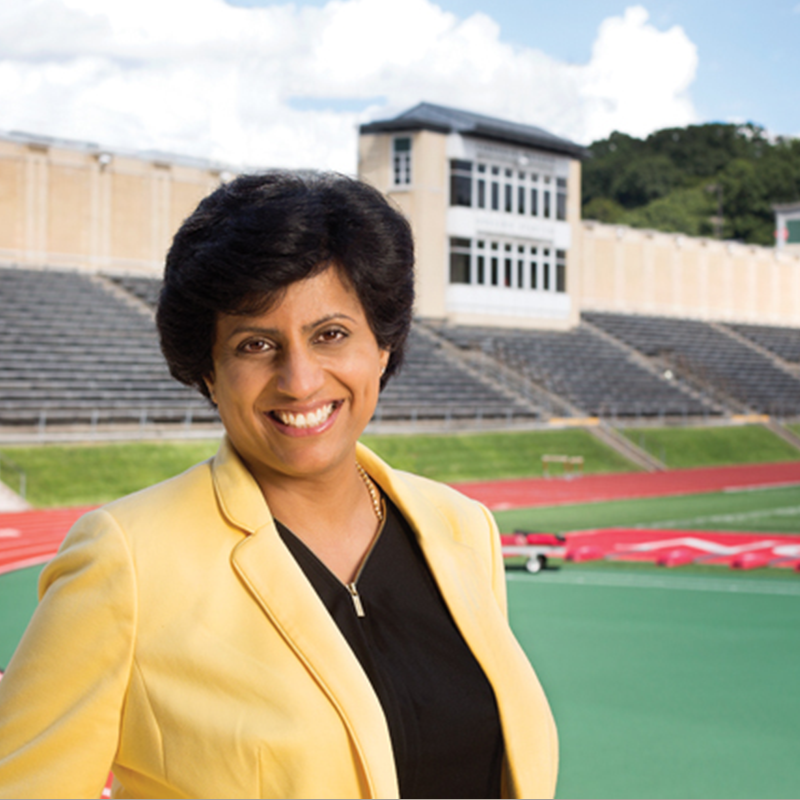
Shao-Fang Wen is an Associate Professor at the Department of Information Security and Communication Technology, Faculty of Information Technology and Electrical Engineering, Norwegian University of Science and Technology (NTNU). Their work focuses on integrating artificial intelligence with cybersecurity, secure software development, and socio-technical systems. Research Interests: Artificial Intelligence and Cybersecurity Secure Software Development Semantic Web and Ontology Socio-Technical Systems System Security Assurance Publications and Contributions: Shao-Fang Wen has contributed significantly to developing frameworks for AI security assurance, quantitative security evaluation models (e.g., SAEOn metamodel), and contextualized learning systems for software security. Their work spans journal articles, conference papers, and book chapters, emphasizing ontology-based approaches and open source community dynamics. Teaching: IIKG2001 - Software Security
Dr. David Cock is a Senior Lecturer and Senior Researcher at ETH Zürich's Department of Computer Science, affiliated with the Systems Group. He holds a PhD from UNSW (2014) and a B.Sc. (hons) from UNSW (2004). His research focuses on formal verification, trustworthy systems, and hardware-software co-design, with notable contributions to projects like Enzian (a CPU/FPGA platform) and seL4 (formally verified kernel). He teaches Advanced Operating Systems and Informal Methods courses. Key achievements include the ACM Software System Award (2022) for seL4 and leadership in projects addressing hardware complexity and security. Research interests include formal methods for hardware modeling (Sockeye project), runtime verification, and mitigating timing channels. His work bridges theoretical foundations with practical systems, emphasizing secure and reliable computing platforms. Projects like Trustworthy BMC aim to enhance baseboard management systems' assurance. Collaborations span academia and industry, with open-source contributions to hardware designs and formal tools. Publications span formal verification, hardware modeling, and secure systems, with recent focus on heterogeneous computing and declarative hardware specifications. Teaching emphasizes practical formal techniques and OS design, leveraging real-world hardware (e.g., Barrelfish). His lab, the Systems Group, explores cutting-edge challenges in systems software and architecture.
Dirk Koch is an Associate Professor in the Department of Computer Science at the University of Manchester. He specializes in reconfigurable computing, FPGA architecture, and hardware acceleration. His research addresses challenges in field-programmable gate arrays (FPGAs), high-level synthesis, and stream processing. He leads the Advanced Processor Technology group and contributes to the Digital Futures Institute for Data Science and AI. Education: Doctorate in Computer Engineering Affiliations: Centre for Digital Trust and Society, EPSRC Functional Oxide Reconfigurable Technologies Programme His work focuses on optimizing FPGA performance, reducing power consumption, and advancing reconfigurable hardware systems. Recent projects include bitstream manipulation frameworks, runtime stream processing pipelines, and FPGA fabric optimization techniques. He has collaborated extensively with industry partners like AMD-Xilinx. Dirk Koch has supervised 11 research projects, including work on clock region process variation analysis and FPGA virus scanning. He holds grants from EPSRC and has published 62 peer-reviewed works.
Lingming Zhang is an Associate Professor at the Department of Computer Science, University of Illinois Urbana-Champaign, affiliated with the Grainger College of Engineering. His research focuses on the intersection of Software Engineering, Programming Languages, and Machine Learning, with a particular emphasis on automated program repair, compiler testing, and large language model (LLM) applications in software engineering. He has published over 100 papers, achieving an h-index of 50+, and holds an ACM Distinguished Member status. Research Interests: LLM-based software testing, repair, and synthesis Fuzzing of deep-learning libraries and compilers Open-source code LLMs (e.g., StarCoder2, Magicoder) with over 1M downloads Automated program repair systems (e.g., AlphaRepair, ChatRepair, Agentless) Recent Contributions: Developed TitanFuzz for coverage-guided compiler fuzzing Released Agentless , an LLM-based coding tool adopted by OpenAI and DeepSeek Proposed SWE-RL to enhance LLM reasoning via reinforcement learning Service Roles: Program Co-Chair for ASE 2025 and LLM4Code 2025 Associate Chair for OOPSLA 2024 and Area Chair for ICSE 2025/2026 Recipient of NSF CAREER Award and ACM SIGSOFT Early Career Award Lab/Teams: Develops open-source tools like UniAPR for efficient patch validation Active in releasing industry-adopted LLM-based software engineering tools
Kari M. Koskinen is a University Lecturer at Aalto University's Department of Information and Service Management. His research focuses on cybersecurity, digital ecosystems, and technology management with applications in healthcare, agriculture, and smart cities. He frequently collaborates with scholars like Hadi Ghanbari and Sonja Hyrynsalmi on topics ranging from ransomware mitigation to sustainable mobility solutions. His work emphasizes real-world case studies, such as analyzing the Vastaamo psychotherapy clinic data breach and examining supply chain attacks in manufacturing. Key contributions include frameworks for cloud-based integration platforms, risk management in digital ecosystems, and the socio-technical implications of autonomous vehicles. Koskinen also explores visibility labor in NFT markets and how digital platforms address development challenges in the Global South. His teaching cases, published in the Journal of Information Technology Teaching Cases, bridge theoretical concepts with practical cybersecurity scenarios.
Christopher T. Bavitz is the WilmerHale Clinical Professor of Law and Vice Dean for Experiential and Clinical Education at Harvard Law School. He serves as Managing Director of the Cyberlaw Clinic at the Berkman Klein Center for Internet & Society and is a Faculty Co-Director of the Center. His expertise spans intellectual property, media law, AI governance, and technology policy. Bavitz teaches courses like Music & Digital Media and Counseling and Legal Strategy in the Digital Age . His research focuses on algorithmic fairness, intermediary liability, and regulatory frameworks for emerging technologies. Bavitz holds a B.A. from Tufts University and a J.D. from the University of Michigan Law School. Before joining HLS, he was Senior Director of Legal Affairs at EMI Music and practiced litigation at Sonnenschein Nath & Rosenthal. Key initiatives include work on the Lumen Database for transparency in content takedowns, the AGTech Forum for state attorneys general, and policy analysis on AI ethics, facial recognition, and algorithmic risk assessment tools. He advises on startup legal strategy, digital finance, and generative AI accountability.
Lokukaluge Prasad Perera is a Professor in Maritime Technology at UiT The Arctic University of Norway and a Senior Research Scientist in Smart Data at SINTEF Digital . He holds a BSc in Mechanical Engineering from Oklahoma State University (1999), MSc in Systems & Controls from the same institution (2001), and a PhD in Naval Architecture and Marine Engineering from Technical University of Lisbon (2012). His research focuses on Maritime and Offshore Systems , Advanced Data Analytics , Autonomous Navigation , Energy Efficiency , and Digital Twin Applications . He has published over 100 peer-reviewed papers and was recognized in the World's Top 2% Scientists (2021-2022) by Stanford University. Key professional experiences include roles at SINTEF Ocean (2014–2017), Center for Marine Technology and Engineering in Portugal (2008–2012), and Wärtsilä Finland (2012–2014). He has also held academic positions at Naval & Maritime Academy and Ocean University of Sri Lanka . His work addresses challenges in emission reduction , renewable energy integration , and safety-critical systems for maritime operations. Current projects emphasize trustworthiness of autonomous ships and data-driven decision frameworks for energy efficiency.
Roozbeh Razavi-Far is an Assistant Professor at the Faculty of Computer Science and the Canadian Institute for Cybersecurity at the University of New Brunswick. His research focuses on machine learning, big data analytics, and cybersecurity of cyber-physical systems and IoT devices. He has authored/co-authored over 150 publications and is listed by Stanford as among the top 2% of most cited researchers (2022). His work spans federated learning, transfer learning, quantum machine learning, and dependable AI systems. He serves as an Associate Editor for Neurocomputing, Machine Learning with Applications, and IEEE Transactions on Industrial Cyber-Physical Systems, among others. As an IEEE Senior Member, he chairs IEEE Computational Intelligence and Systems, Man, and Cybernetics Societies. Previously, he directed the Learning System and Cybernetics Group at the University of Windsor (2016–2022). His research interests emphasize security in non-stationary environments, adversarial machine learning defenses, and real-time analytics for smart grids. Awards include NSERC-DG, NSERC-ECR, and USRG grants. He has mentored students who received NSERC Alexander G. Bell, MITACS, and Ontario Graduate Scholarships. His recent publications highlight advancements in privacy-preserving split learning, blockchain-based federated learning security, and graph-based malware detection. He also explores quantum computing applications in AI and cybersecurity frameworks for cyber-physical systems.
Priya Narasimhan is a Professor of Electrical & Computer Engineering at Carnegie Mellon University (CMU), affiliated with the College of Engineering. Her research focuses on dependable distributed systems, fault-tolerance, embedded systems, mobile systems, and sports technology. She leads the Intel Science and Technology Center in Embedded Computing (ISTC-EC) and founded YinzCam, a CMU spin-off providing mobile live streaming to sports venues. She holds multiple awards, including the Sloan Fellowship and NSF CAREER Award. Education: Ph.D. and M.S. in Electrical & Computer Engineering from UC Santa Barbara. Notable roles include former CTO of Eternal Systems, Director of Intel Labs Pittsburgh, and Director of CMU's CyLab Mobility Research Center. Research spans failure diagnosis in distributed systems, live upgrades, mobile cloud computing, football technology, assistive tech for the blind (Trinetra), and civic tech (iBurgh). Over 30+ students advised across Ph.D., M.S., and undergraduate programs. Active in entrepreneurship, teaching (courses like 18-349 Embedded Systems), and industry collaborations.
Yulia Gel is a Professor in the Department of Statistics at Virginia Tech and serves as a Part-Time Program Director-Expert at the National Science Foundation (NSF). She holds a MSc (summa cum laude) and PhD in Mathematics from Saint Petersburg State University (Russia) and completed a postdoc in Statistics at the University of Washington. Her research focuses on uncertainty quantification in AI, statistical foundations of data science, spatio-temporal processes, and applications in climate science, healthcare, and blockchain analytics. She has received prestigious awards including the NSF Director’s Award (2023), ASA Distinguished Achievement Medal (2018), and TIES Abdel El-Shaarawi Award (2014). Gel has led grants on wildfire prediction, climate informatics, and blockchain data science. She serves on editorial boards of Statistica Sinica, Electronic Journal of Statistics, and Technometrics, and organizes workshops on AI for climate sustainability and fragile Earth systems. Her research group develops topological and geometric methods for graph neural networks, with applications to digital twins, environmental justice, and public health. Education: MSc (1997), PhD (2000) in Mathematics from Saint Petersburg State University; Postdoc in Statistics at University of Washington (2001–2003). Past roles include Professor at University of Texas at Dallas (2015–2024) and Associate Professor at University of Waterloo (2004–2014). Selected visiting positions include NASA Jet Propulsion Lab (2016–2017) and Isaac Newton Institute (2016–2017). She has pioneered statistical software packages like snowboot and funtimes for network inference and time-series analysis. Awards highlight her contributions to environmetrics and statistical methodologies. Current projects include NSF-funded research on AI-driven wildfire prediction and blockchain analytics for climate resilience. Her lab’s recent work emphasizes topological methods (e.g., zigzag persistence) for graph-based forecasting and adversarial robustness.
Professor John D. Kubiatowicz is a faculty member at the University of California at Berkeley in the Department of Electrical Engineering and Computer Sciences since 1998. He holds a PhD in Electrical Engineering and Computer Science (minor in Physics) from MIT (1998), an M.S. in EECS (1993), and a double B.S. in Electrical Engineering and Physics (1987) from MIT. His research interests span Quantum Computing Architectures Distributed Systems and Storage Network Security and Peer-to-Peer Protocols Introspective and Manycore Operating Systems Edge and Fog Computing Hardware-Assisted Security He has pioneered systems like OceanStore , a global-scale distributed file system, and Tessellation , a manycore OS with continuous adaptation. The scientific awards he has received include Presidential Early Career Award (PECASE, 2000) Scientific American 50 (2002) Diane S. McEntyre Teaching Award (2003) IEEE ICRA Best Paper (2025) George M. Sprowls Award for MIT PhD thesis (1998) Okawa Research Grant (1998) Best Paper at International Conference on Supercomputing (1993) His recent publications focus on Quantum Circuit Design and Optimization Edge/Fog Computing Architectures Secure Runtime Systems Distributed Garbage Collection Manycore OS Innovations Hardware-Assisted Security Mechanisms He leads the Quantum Architecture Research Center and co-founded the SWARM Lab at Berkeley, advancing a vision of self-adapting, secure systems from the chip level to internet scale.
Chris Peikert is a Professor in the Department of Computer Science and Engineering at the University of Michigan's College of Engineering. He received his Ph.D. from MIT's Computer Science and Artificial Intelligence Laboratory in 2006 under the supervision of Silvio Micali. Peikert is a leading researcher in cryptography, particularly known for his foundational work in lattice-based cryptography. His research interests span cryptography, lattices, coding theory, algorithms, and computational complexity, with a particular focus on cryptographic schemes whose security can be based on the apparent intractability of lattice problems. Peikert has made significant contributions to the development and analysis of lattice-based cryptographic primitives, including ring-LWE, fully homomorphic encryption, and zero-knowledge proofs. Peikert's recent work demonstrates continued leadership in post-quantum cryptography, with publications in top venues like CRYPTO, EUROCRYPT, and STOC. His research spans theoretical foundations of lattice problems to practical implementations of lattice-based cryptographic systems, including hardware acceleration for fully homomorphic encryption. IACR Fellow (2024) Test-of-Time Award from Crypto 2008 (2023) TCC Test-of-Time Award (2017) Patrick C. Fischer Development Professor of Theoretical Computer Science (2017) Best Paper Award at Eurocrypt 2010 Best Paper Award at STOC 2009 Alfred P. Sloan Foundation Fellowship Google Research Award Peikert has been actively involved in the cryptographic research community, serving on program committees for major conferences including CRYPTO, EUROCRYPT, FOCS, and TCC (where he was program co-chair in 2021). He has also developed educational resources, including extensive lecture materials on lattice-based cryptography and teaching courses on cryptography and theoretical computer science at both the undergraduate and graduate levels.
Dr. George Chalhoub is a Lecturer (Assistant Professor) in Human-Computer Interaction at the UCL Interaction Centre (UCLIC), Department of Computer Science, University College London (UCL). He is also an Associate Member at the Department of Computer Science, University of Oxford, and a 2024–2025 Berkman Klein Fellow at the Berkman Klein Center for Internet & Society, Harvard Law School, Harvard University. His multidisciplinary research bridges cybersecurity, privacy, and human-centered computing, focusing on real-world technology use. DPhil in Cyber Security, University of Oxford (supported by Information Commissioner’s Office) MSc in Computer Science, University of Southampton (supported by Lloyd’s Register) BS in Computer Science, Lebanese American University His research centers on the security, privacy, and safety of digital technologies through a user-centered lens. Key areas include AI-powered systems (e.g., LLMs, smart assistants), emerging technologies in the wild (e.g., smart homes, IoT), embedded devices (e.g., routers), marginalized communities, data workers in AI, and online content creators. His work integrates UX principles to improve data protection in healthcare (e.g., NHS records) and children’s apps, with implications for GDPR compliance and responsible AI innovation. The analysis of his recent publications reveals a consistent focus on empirical studies of user experience in security and privacy, particularly in smart homes and data-intensive applications. His work spans design interventions, ethical frameworks, and policy-relevant findings, published in top venues like CHI, CSCW, SOUPS, and IJHCS. Themes include consent design, communal privacy, vulnerability patching, and developer support for privacy. UK Global Talent Visa recipient, UK Research and Innovation 2024–2025 Berkman Klein Fellow, Harvard University Dr. Chalhoub has advised on research projects related to secure networking by design and responsible AI (e.g., EWADA, RoboTIPS). He has received grant support from the Information Commissioner’s Office for his doctoral work. He is available for consultancy, collaborative research, grant assessment, and supervision of research degrees. His professional experience includes internships at Microsoft Research (Calc Intelligence) and Nokia Bell Labs (Social Dynamics), contributing to projects in AI and social computing. He is affiliated with research groups including the Human-Centered Computing group at Oxford, the UCL Interaction Centre (UCLIC), and the Berkman Klein Center at Harvard. His work is supported by tools and frameworks developed in collaboration with interdisciplinary teams focused on cybersecurity ethics, data governance, and platform accountability.
Dr Robin Crockett is the University Academic Integrity Lead at the University of Northampton, based in the Academic Registry. He is a mathematician-ethicist actively engaged in research and professional development in academic integrity, document forensics, and the detection of contract cheating and AI-generated text. He is a member of the European Network for Academic Integrity (ENAI), co-founder of the Midlands Integrity Group (UK), and has advised UK policymakers on legislation to ban essay mills. He holds Chartered Scientist and Chartered Mathematician status. MPhil, The Management of Electricity Supplies via Storage as Hydrogen, Cranfield University Master, Energy Conservation and the Environment, Cranfield University PhD, Electrostatic Damage to Semiconductor Devices, University of Southampton Master, Natural & Electrical Sciences, University of Cambridge Bachelor, Natural & Electrical Sciences, University of Cambridge Dr Crockett's research centers on document forensics and academic integrity, with core interests in Fourier theory, time-series analysis, and stylometry for identifying contract cheating. His work increasingly addresses the challenges posed by generative artificial intelligence in education. He applies mathematical and statistical methods to analyze linguistic cues, writing styles, and embedded information in student submissions. His recent publications highlight a strong trend toward understanding and mitigating academic misconduct in the AI era. Topics include AI-text detection uncertainties, forensic stylometry, and policy development for generative AI misuse. Earlier work includes environmental research on radon remediation and signal processing applications in telecommunications. Chartered Scientist Chartered Mathematician Dr Crockett has supervised PhD students, including Believe Nwamae in Computing. He has secured internal research funding, such as the Small Grants Scheme for Early Career Researchers at the University of Northampton for a project on AI-synthesized text detection. He has been an Academic Visitor at Loughborough University and served on the Turnitin Advisory Board, indicating active collaboration and external engagement. He frequently presents at academic events and contributes to policy discussions. He is affiliated with research networks including the European Network for Academic Integrity (ENAI) and the European Geosciences Union (as a former Scientific Officer). His work is supported by institutional and collaborative projects focused on advancing machine discernment of academic misconduct.
Prof. Freek J. Beekman is a Full Professor and head of the Biomedical Imaging section within the Department of Radiation Science & Technology at Delft University of Technology (TU Delft), Faculty of Applied Sciences. He is a leading figure in biomedical imaging, with extensive contributions to nuclear imaging technologies, including SPECT, PET, and CT. His research spans detector development, image reconstruction algorithms, hybrid photonic imaging, and the application of artificial intelligence in medical imaging. Research Interests: His work focuses on advancing imaging modalities through innovations in hardware (e.g., multi-pinhole collimators) and software (e.g., deep learning for attenuation correction). He has pioneered ultra-high-resolution imaging systems, particularly for preclinical and clinical SPECT, and has developed integrated platforms like U-SPECT-BioFluo. His recent research explores glymphatic delivery of nanoparticles, infection imaging, and AI-driven reconstruction techniques, reflecting a strong translational focus. Publication Trends: His most recent publications (2021–2023) emphasize deep learning in SPECT, multi-isotope imaging, high-resolution ex vivo systems, and applications in neuroimaging and oncology. The articles demonstrate a consistent focus on improving image quality, resolution, and clinical utility through physics-informed and AI-enhanced methods. Scientific Awards: NWO Physics Valorization Prize Innovation of the Year Award by the World Molecular Imaging Society (2015, 2018) Edward Hoffman Memorial Award (2017) Bruce Hasegawa Memorial Award (2021) FOM Valorization Award (2013) TU Delft Entrepreneurial Award (2010) Advising and Grants: While specific student names are not listed, his leadership in large collaborative projects and supervision of numerous publications suggests active mentoring. He has secured significant funding through national and international grants, evidenced by his invention of over 20 patent families and successful technology transfer. His founding and leadership of MILabs BV (sold to Rigaku) highlights his impact on commercialization and industry-academia collaboration. Labs and Teams: He leads the Biomedical Imaging research group at TU Delft, which develops cutting-edge imaging systems such as VECTor (SPECT-PET) and EXIRAD-HE. His teams have produced technologies used globally in academic and pharmaceutical research, contributing to tracer development and therapeutic innovation.