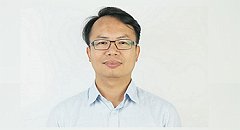
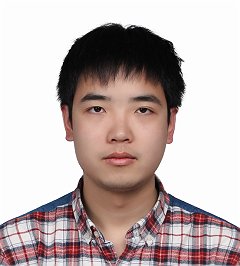
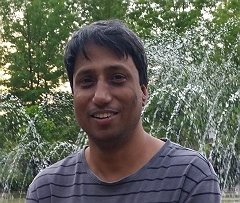
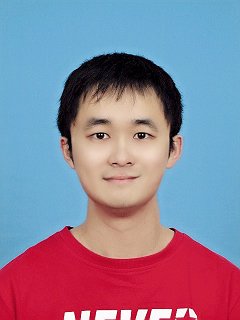
Justus Bogner is a researcher at the Institute of Software Engineering (ISTE) and leads the division for Software Engineering for AI- & Microservice-Based Systems (SE4AI&MS) at the University of Stuttgart. His work focuses on empirical software engineering , microservices , AI-based systems , and software evolvability . He has contributed extensively to understanding architectural migration, technical debt in AI systems, and quality assurance methodologies. His research spans various subfields including service-oriented architecture , RESTful API design , design patterns , and software maintainability metrics . Recent publications highlight empirical comparisons between JavaScript and TypeScript, frameworks for microservice migration, and systematic studies on AI engineering challenges. Bogner's work often bridges academic research with industry practices through collaborations with IEEE and Springer, though no specific awards or student advisories are mentioned in the provided text.
Zaiwen Feng is a researcher actively contributing to data governance, semantic modeling, and causal inference. His work focuses on knowledge graphs, graph-based methods, and service-oriented architectures through collaborations with institutions like the University of Queensland and universities in China. Research Focus : Graph Differential Dependencies, Entity Resolution, Causal Effect Estimation, and Ontology Alignment Methodologies : Machine Learning, Variational Autoencoders, Prompt Engineering, and Semantic Retrieval Application Areas : Biomedical Data, Property Graph Recommendation, and Process Model Repositories Key trends in his publications include automated semantic modeling , neural approaches for entity resolution , and causal inference with graph structures . He frequently collaborates with researchers like Keqing He, Wolfgang Mayer, and Selasi Kwashie across conferences such as HPCC, BIBM, and WISE.
Thorsten Vitt is a Researcher at the Chair of Computational Philology and Modern German Literary History within the Faculty of Philosophy at the University of Würzburg . His role includes academic advising for Digital Humanities degree programs, IT support for the Chair, and technical leadership in digital edition projects such as the Faust Edition and TextGrid . He is affiliated with the ZPD (Zentrum für Philologie) and works on computational methods for literary analysis. Current Projects : Faust Edition, ESF-ZDEX, TextGrid, DARIAH-DE Technical Expertise : Markup Languages, Linguistic Query Languages, Database Systems Research Interests : Digital Humanities, Computational Philology, Authorship Attribution, Topic Modeling, Digital Editions, Data Visualization, Software Development for Humanities. His work bridges computer science with literary studies, focusing on algorithmic analysis of historical texts and digital scholarly editions. Publications highlight his contributions to computational analysis of Goethe's Faust, topic modeling tools, and distance measures like Burrows' Delta. He has developed software libraries for stylometric analysis and collaborates on infrastructures like TextGrid and DARIAH-DE. Education : Completed a diploma thesis on "Queries to Complex Corpora" (2005) and a student research paper on "Storing Linguistic Corpora in Databases" (2004) at Humboldt University Berlin. Technical Leadership : Deputy IT support for the Chair, contributor to GitHub repositories including pydelta and faust-web , and developer of tools for topic modeling and digital editions.
Hoa Khanh Dam is Professor and Deputy Head of School (Research) & Head of Postgraduate Studies in the School of Computing and Information Technology at the University of Wollongong, Australia. He serves as Co-Director of the Decision System Lab where he leads research at the intersection of Software Engineering and Artificial Intelligence. His research focuses on developing AI-driven solutions for software quality, cybersecurity, and productivity enhancement. Key interest areas include: AI/IoT autonomous and cyber resilient systems Software Analytics and Mining Software Repositories Large Language Models for software engineering tasks Defect prediction and vulnerability analysis Agile project management optimization Analysis of Dam's 12 publications from 2018-2025 reveals consistent application of machine learning to software engineering challenges. His work shows progressive evolution from traditional ML techniques toward LLM-based frameworks, with major contributions in defect prediction (DeepJIT), vulnerability analysis, microservice recommendation, and agile effort estimation. The research demonstrates strong industry relevance through practical implementations in code review, component prediction, and security systems. Dam co-leads the Decision System Lab at UOW, which develops intelligent decision support systems using AI and data analytics. The lab's work bridges theoretical AI advancements with real-world software engineering applications, particularly in cybersecurity and autonomous systems development.
Mahmoud Alfadel is an Assistant Professor at the University of Calgary, Canada, actively contributing to software engineering research through program committee roles at ASE, ICSE, and ESEC/FSE conferences from 2021-2025. His research centers on Software Ecosystems, Release Engineering, and Empirical Software Engineering, with specific focus on build systems, continuous integration pipelines, dependency management, and software quality metrics in open-source environments. Methodologically, he employs large-scale empirical studies of real-world development practices. Analysis of his 2021-2025 publications reveals consistent investigation into build technology evolution (particularly Bazel), dependency-induced waste in NPM, and testing practices like fuzzing adoption. His work bridges theoretical software engineering concepts with practical industry challenges, often through case studies of major open-source projects like Kubernetes.
Xavier Devroey is an Assistant Professor of Software Engineering at the University of Namur in Belgium. He co-leads the SNAIL Team with Benoît Vanderose, focusing on innovative approaches to software testing and automation. His work bridges academic research with practical applications in the software engineering community. His educational background includes a Ph.D. and Master's in Computer Science from the University of Namur, plus a Bachelor's in Analyst Programming from Haute Ecole de Bruxelles, Belgium. This comprehensive academic training informs his research and teaching approach. Devroey's research interests center on Software Testing , with particular emphasis on Search-Based Software Engineering and Software Variability . His specific focus areas include: Search-Based Testing and Fuzzing Model-Based Testing Mutation Testing Variability Modeling Software Product Line Testing Test suite augmentation DevOps integration These interests reflect his commitment to advancing automated approaches for test case design, generation, selection, and prioritization. His recent publication portfolio (2019-2025) demonstrates consistent contributions to software testing research, with particular focus on crash reproduction, API testing, and innovative approaches to test automation. The articles reveal a strong emphasis on practical applications of search-based techniques across various testing domains. Devroey maintains active engagement with the academic community through conference participation, having served on program committees for major software engineering conferences including ASE, ICSE, ISSTA, and ICST across multiple years (2019-2025). He also contributes to educational aspects of software engineering, with publications examining testing education approaches and tools for programming exercise assessment. His personal website (xdevroey.be) and GitHub profile demonstrate his commitment to open academic practices and community engagement.
Davide Fucci is an Assistant Professor in the Software Engineering department at Blekinge Institute of Technology (BTH) in Sweden. His academic career spans multiple prestigious software engineering conferences where he serves on program committees for ESEM, EASE, ICSSP, and PROFES. Dr. Fucci received his Ph.D. (cum laude) from the Department of Information Processing Science at the University of Oulu, Finland. He earned his B.Sc. in Computer Science from the University of Bari, Italy, and his M.Sc. in Information Processing Science from the University of Oulu, Finland. Davide Fucci's research focuses on empirical software engineering with particular emphasis on requirements engineering, human aspects of software engineering, and agile software development methodologies. His work explores psycho-cognitive studies in software engineering and Green software engineering. He has a strong commitment to methodological rigor and empirical approaches, advocating for open science practices in software engineering research. His research often bridges theoretical frameworks with practical applications in industry settings. Dr. Fucci's publication record demonstrates a consistent focus on improving software engineering practices through empirical validation. His recent work addresses emerging challenges in integrating AI technologies like Large Language Models into software development processes, security concerns in modern applications, and quality assessment of requirements. He has made significant contributions to understanding experimental design in software engineering research and promoting reproducibility in the field. As an active member of the software engineering research community, Dr. Fucci serves on numerous program committees and has organized workshops focused on open science and requirements engineering. He is a member of both ACM and IEEE Computer Society, reflecting his standing in the international computer science community. Davide Fucci has advised numerous research projects and has been involved in various collaborative efforts exploring the human dimensions of software engineering. His work on crossover designs in experiments, requirements quality assessment, and threat modeling for AI-integrated applications demonstrates his commitment to advancing methodological rigor in empirical software engineering research.
Irina Nikishina is a postdoctoral researcher at the University of Hamburg's Department of Informatics, working in the Language Technology Group under Prof. Chris Biemann. As a researcher in computational linguistics and natural language processing, she contributes to projects like ACQuA-2.0, focusing on semantics, argument mining, taxonomies, and knowledge graphs. PhD in Computational and Data Science and Engineering (2022), Skolkovo Institute of Science and Technology Bachelor's and Master's degrees from National Research University Higher School of Economics (NRU HSE) Her research spans taxonomy enrichment, comparative question answering systems, and biomedical concept representation. She organizes shared tasks like RUSSE’2020 and RuArg-2022, and co-founded the RusNLP semantic search engine for Russian NLP conferences. She chairs the Network Analysis track at the International Conference on Analysis of Images, Social Networks and Texts (AIST) and has served as secretary for AIST 2020 and 2021. Recent publications focus on large language models' performance in lexical semantics, multilingual comparative argumentation systems, and knowledge graph integration for QA tasks. Her work includes developing tools like TaxFree for candidate-free taxonomy enrichment and exploring cross-modal approaches for taxonomic graph expansion.
Prof. Dr. Sandro Schulze is a Professor in the Department of Computer Science and Languages at Anhalt University of Applied Sciences. His research focuses on software engineering, particularly in areas such as software architecture analysis, software product line engineering, and variability management. He leads efforts in developing tools for visualizing fork ecosystems and tracking architecture smells. His work bridges theoretical research with practical applications in open-source systems and industrial software. Responsibilities include overseeing the Software Engineering research group within the department. He is actively involved in academic activities, including organizing workshops like WSRE and contributing to initiatives like the Software Reengineering Body of Knowledge (SREBOK). Publications highlight advancements in fork ecosystem visualization (e.g., VisFork toolsuite), empirical studies on architecture smells, and techniques for feature extraction from requirements. His work often emphasizes tool development and empirical validation of software engineering practices.
Mihaela Vela is a Senior Lecturer at the Department of Language Science and Technology at Saarland University. Her research focuses on machine translation evaluation, post-editing strategies, and translation technologies. Prior to her academic role, she worked as a researcher at the Language Technology Lab of DFKI (2007–2011), contributing to projects like ontology schema extraction from financial news. She holds a PhD in Computational Linguistics (2011) from Saarland University, supervised by Hans Uszkoreit and Thierry Declerck, and a Licentiate degree in Linguistics from West University of Timisoara. Her teaching portfolio includes courses such as Translation and Content Management , Applied Language Technologies , and Machine Translation , reflecting her expertise in integrating computational methods with translation practice. She has developed tools like TeLeMaCo (a collaborative teaching repository) and Catalog (a post-editing interface). Her work emphasizes improving translation workflows through better CAT tool design, metadata preservation, and cognitive load analysis in post-editing tasks. Key contributions include the SubCo corpus of learner translations and studies on post-editing effort in low-resource languages. Her research bridges theoretical linguistics with practical applications, addressing challenges in legal text classification, parliamentary discourse analysis, and neural post-editing systems.
Chuanyi Li is an Assistant Professor at the Software Institute, Nanjing University, affiliated with the State Key Laboratory for Novel Software and Technology. His office is located in Room 917, Fei Yimin Building, 22 Hankou Road, Gulou District, Nanjing, China. Education: Ph.D. in Computer Science, Nanjing University (2012-2017), supervised by Professor Bin Luo Visiting Scholar at Southern Methodist University, Dallas, Texas (2016-2017), collaborating with Associate Professor Liguo Huang B.Sc. from Nanjing University (2008-2012) Research Focus: Dr. Li's work bridges Software Engineering, Natural Language Processing, and Business Process Management. He specializes in applying NLP and machine learning techniques to software engineering challenges including code summarization, program repair, code completion, and software maintenance. His research emphasizes empirical validation and practical tool development for real-world software systems. Publication Trends: Recent work (2021-2025) demonstrates strong focus on large language model applications in software engineering, including code generation, program repair, and benchmarking. Publications frequently involve empirical comparisons, dataset creation, and efficiency optimization techniques for code-related tasks. Professional Service: Active contributor to top software engineering venues (ASE, ICSE, ESEC/FSE) as author and committee member. Recent roles include Program Committee membership for ICSE 2025 Research Track and SANER 2025 Research Papers track.
Jiachi Chen is an Associate Professor at the School of Software Engineering, Sun Yat-sen University, China. He received his Ph.D. from Monash University, Australia, and has established himself as a leading researcher in blockchain security and Web3 technologies. His educational background includes: Ph.D. in Information Technology from Monash University (2019-2022) Research Assistant at Hong Kong Polytechnic University (2016-2018) Dr. Chen's research spans software security, program analysis, smart contracts, and Web3 technologies. His work bridges traditional software engineering with blockchain, focusing on security vulnerabilities, large language models for code generation, and empirical studies of smart contract development. Recent publications show increasing integration of AI techniques to address blockchain security challenges. His publication trends reveal deep expertise in smart contract security, with numerous papers on vulnerability detection and code analysis. Recent work has expanded into LLM applications for software engineering, particularly examining code generation quality and security implications in Web3 contexts. Dr. Chen has received significant recognition: Multiple ACM SIGSOFT Distinguished Paper Awards (ICSE 2025, ISSTA 2024, Internetware 2024) Best Paper Award at IEEE CSCloud/EdgeCom 2023 Best Paper Award at IEEE INFOCOM 2018 Best Paper Award at ISPEC 2017 He serves on program committees for top software engineering conferences (ICSE, FSE, ASE, ISSTA) and is actively recruiting students in Web3/Blockchain/Smart Contract research areas. His work appears consistently in premier venues including IEEE Transactions on Software Engineering and ACM conferences, demonstrating sustained research impact.
Ajay Jha is an Assistant Professor in the Department of Computer Science at North Dakota State University (NDSU), where he leads the Software Testing and Maintenance (STAM) Lab. His academic journey began with industry experience, followed by graduate studies and postdoctoral research that shaped his current focus on software engineering research. His educational background includes: Ph.D. in Computer Science from Kyungpook National University (2017) Master's degree from Kyungpook National University (2013) Over five years of industry experience before graduate studies, including co-founding two startups Postdoctoral research at University of Alberta (over two years) and Kyungpook National University (three years) Dr. Jha's research focuses on software engineering, particularly in the areas of software testing, maintenance, and evolution. His work centers on mining large-scale software repositories to uncover real-world issues in software quality, reliability, and maintainability. He develops innovative tools and techniques to address challenges in regression testing, library migration, and mobile application development. His research has significant practical implications for improving software development processes and enhancing the reliability of modern software systems, particularly in mobile and Python environments. His publication record shows a clear progression from Android-focused research to broader software engineering challenges, with recent work emphasizing Python library migration and large language models for software engineering tasks. His research methodology typically involves empirical studies of real-world software repositories combined with tool development to address identified challenges. Dr. Jha is actively involved in academic service, serving on program committees for major software engineering conferences including MSR, ICSME, SANER, ASE, and ICSE. He also reviews for prestigious journals such as IEEE Transactions on Software Engineering and ACM Transactions on Software Engineering and Methodology. At NDSU, he teaches a range of courses from undergraduate to graduate level, including Mobile Software Engineering, Software Development Processes, and Software Project Planning and Estimation. He also leads graduate seminars on specialized topics like 'LLMs for Software Testing and Maintenance' and 'Code Smell and Refactoring.' He leads the Software Testing and Maintenance (STAM) Lab at NDSU, which focuses on mining software repositories to identify quality issues and developing practical tools to address software maintenance challenges. The lab's research has produced several benchmarks (PyMigBench, JTestMigBench) and tools (TRec) that have been shared with the research community.
Zhe Liu is an Assistant Scientist at the Institute of Software, Chinese Academy of Sciences, and is affiliated with the University of Chinese Academy of Sciences. With a PhD from the University of Chinese Academy of Sciences, Liu focuses on innovative research at the intersection of software engineering, mobile testing, and artificial intelligence. Liu's research interests span multiple areas including: Software Engineering Mobile Testing Deep Learning Human-Computer Interaction Machine Learning Computer Vision UI Testing Crowd Testing Liu applies AI and lightweight program analysis technology in several key directions: AI/LLM-assisted automated mobile app development (requirement elicitation, app GUI testing, usability, bug replay) Human-machine collaborative testing (testing guides for testers) AI-empowered mining of software repositories (issue report mining) Liu has published 15 papers at top international Software Engineering and Human-Computer Interaction conferences/journals (CCF-A) with over 1,300 Google Scholar citations. The research shows a strong trend toward leveraging large language models for mobile app testing, with significant contributions in automated GUI testing, crash reproduction, and text input generation. Notable scientific achievements include: ACM Student Research Competition (SRC) 2023 Grand Finals Winners, 1st Place, Graduate Category Best Paper Honourable Mention in CHI'24 ACM Student Research Competition (SRC) at ICSE 2022, 1st Place ACM Student Research Competition (SRC) at ASE 2020, 1st Place Excellent Doctoral Dissertation of Chinese Academy of Sciences in 2024 Liu has served as a program committee member for ASE 2025 and has been involved in multiple research projects funded by the National Key Research and Development Program of China, National Natural Science Foundation of China, and Populus Innovation Research Funding. Current research focuses on advancing the integration of large language models with mobile application testing frameworks to improve app quality and user experience.
Xiang Chen is an Associate Professor at the Department of Software Engineering, School of Artificial Intelligence and Computer Science, Nantong University, China. He received his B.Sc. degree from Xi'an Jiaotong University in 2002 and his M.Sc. and Ph.D. degrees in computer software and theory from Nanjing University in 2008 and 2011 respectively. He is an editorial board member of Information and Software Technology and serves as a program committee member for prestigious conferences including FSE 2026 and ASE 2025. Chen is also a senior member of the China Computer Federation (CCF) and active in various academic committees. Chen's research focuses on empirical software engineering, mining software repositories, and software testing and maintenance, with particular emphasis on applying AI techniques to software engineering problems. His work spans large language models for software engineering, security vulnerability analysis, code change representation, and regression testing. He has published over 110 papers in top-tier journals and conferences including IEEE Transactions on Software Engineering and ACM Transactions on Software Engineering and Methodology. His recent publications demonstrate a strong trend toward integrating AI techniques, particularly large language models, with traditional software engineering practices. The research spans code generation evaluation, deep learning framework testing, vulnerability detection, and automated program repair, showing a consistent focus on improving software quality through innovative testing and analysis techniques. ACM SIGSOFT Distinguished Paper Award (ICSE 2021) ACM SIGSOFT Distinguished Paper Award (ICPC 2023) Top 1% CNKI Highly Cited Scholar (2024) Top 2% Scientist by Stanford University (2023-2025) NASAC 2019 Prototype Competition First Prize Chen has successfully advised numerous graduate and undergraduate students who have gone on to prestigious institutions including Nanjing University, Tsinghua University, and Zhejiang University. Many of his students have won national programming competitions and received scholarships. His research group, smartSE, actively works on projects funded by the Natural Science Foundation of China and various provincial research programs. Chen also serves as a reviewer for top journals including IEEE Transactions on Software Engineering and ACM Transactions on Software Engineering and Methodology.