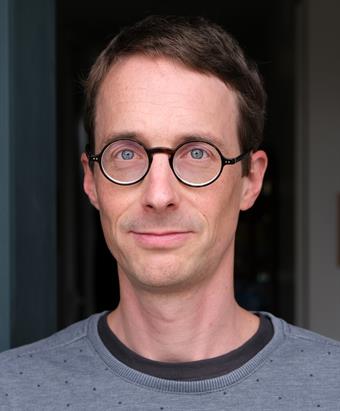
Dr. Arnaud Blouin is an Associate Professor at INSA Rennes (University of Rennes) and researcher at IRISA/Inria. He leads projects in software engineering including Interacto (user interaction framework) and HyperAST (large-scale code analysis). His research focuses on improving developer productivity through human-computer interaction engineering, domain-specific languages, and software maintenance techniques. He currently supervises PhD candidates working on web testing, scientific computing, and heterogeneous modeling. Dr. Blouin teaches human-computer interaction, object-oriented programming, and web engineering. He serves on program committees for major software engineering conferences including FSE and ASE.
Olga Baysal is Director of Carleton University Institute for Data Science and Associate Professor in the School of Computer Science. Her research applies data mining, machine learning, and NLP techniques to software engineering challenges, focusing on mining software repositories, empirical studies, and human aspects of development. She directs the Software Analytics (SWAN) research group and collaborates with industry partners including IFS Canada and Ericsson. Education includes PhD from University of Waterloo (2014), MMath from Waterloo (2006), and BSc from Vyatka State University (2001). Prior appointments include Université de Montréal and Ryerson University. Research analyzes software artifacts to synthesize knowledge from development activities. Current work examines code review practices, API evolution, and developer collaboration patterns using repository mining and qualitative methods. Recent publications explore release cadence patterns, API documentation summarization, and terminal interface innovations. Longitudinal work investigates developer behavior in Stack Overflow and GitHub ecosystems. Extensive academic service includes program co-chair for ICPC and MSR conferences. Teaching includes courses in Mining Software Repositories and Introduction to Data Science.
Candace Thille is an Associate Professor (Teaching) at the Stanford University Graduate School of Education . Her work bridges the science of human learning with educational technology design, focusing on data-driven course redesign and open web-based learning environments for college-level education. She leads initiatives like LearnSphere , a collaborative educational data infrastructure, and EdHub , integrating learning sciences with practical educational challenges. PhD in Higher Education (University of Pennsylvania, 2013) MS in Information Technology (Carnegie Mellon, 2005) BA in Sociology (University of California, Berkeley, 1980) Her research interests span Learning Analytics , Educational Equity , Technology-Enhanced Learning , and Data-Driven Pedagogy . She applies Bayesian optimization and adaptive learning to improve educational outcomes across multiple institutions. Recent publications analyze neural responses to speech accents, reinforcement learning in education, and ethical considerations in educational data systems. The 2021 article in Scientific Reports explores cognitive processing of language variation , while 2020 work with ACM examines adaptive scheduling algorithms . Scientific Awards Fellow, International Society for Design and Development in Education (2010-Present) As advisor, she mentors postdoctoral researchers like Yunsung Kim and graduate students including Jennifer Lin and Luna Laliberte . Her lab (Stanford Lytics Lab) and projects like OARS dashboard enable instructors to use fine-grained learning data for teaching improvement.
Dr. Jaydeb Sarker (he/him/his) serves as a Tenure Track Assistant Professor in the Department of Computer Science at the University of Nebraska at Omaha since Fall 2024. He previously completed his Ph.D. (2024) and MSc (2022) in Computer Science at Wayne State University, with a BS (2016) from Rajshahi University of Engineering and Technology. Research Focus : Human Factors Software Engineering, Empirical Software Engineering, Natural Language Processing, Human-Computer Interaction Current Work : Antisocial behavior analysis in software engineering platforms His publications appear in top-tier venues including FSE, TOSEM, ASE, and ESEM. He has received multiple travel grants (SIGSOFT CAPS, ACM SIGSOFT, NSF) and fellowships (Thomas C. Rumble). As a reviewer for journals like TSE and TOSEM, and committee member for conferences like Mining Software Repositories, he actively contributes to the academic community.
Dr. Julia María Clemente Párraga is a Full Professor at the Universidad Autónoma de Madrid (UAM), affiliated with the Department of Automatic Control. She leads research in the GITA Teledetección Ambiental (Environmental Remote Sensing) group. Her academic background includes a Doctorate from the Universidad Politécnica de Madrid (2011), where her thesis focused on ontology-based student modeling and cognitive diagnosis, supervised by Dr. Angélica de Antonio Jiménez and Dr. Jaime Ramírez Rodríguez. Her research spans educational technology, artificial intelligence applications in learning systems, remote sensing for environmental monitoring, and ontology engineering. Notable contributions include adaptive recommender systems for competency-based learning, semantic web tools for student monitoring (e.g., STSIM), and visualization frameworks for post-fire ecosystem analysis (RPI Engine). She also explores virtual environments for space training and multilingual ontology development. Recent work (2023) leverages convolutional neural networks to analyze photoplethysmographic signals for stress detection. Prior efforts (2014–2018) emphasized student modeling through non-monotonic diagnosis and ontology networks. Early contributions (2005–2009) focused on integrity constraints in knowledge bases and SCORM-compliant course development. Her research bridges computer science and education, with applications in both academic and environmental domains. Collaborations include interdisciplinary projects on intelligent tutoring systems and geospatial data analysis.
Eray Tüzün is an Associate Professor of Computer Engineering at Bilkent University, leading the BILSEN Research Group focused on Software Engineering and Data Analytics. He holds a PhD in Information Systems alongside bachelor's and master's degrees in Computer Science. With over 20 years of industry experience, he previously worked at Havelsan, Microsoft, Howard Hughes Medical Institute, and CWRU Genomics Center in roles spanning software engineering and project management. His research emphasizes software analytics, mining software repositories, and empirical software engineering practices. He actively contributes to the International Software Engineering Research Network (ISERN) and holds certifications such as PSM, PSPO, and MCSD. Tüzün advocates for bridging educational and industrial gaps through interactive teaching methods and serious games for developer training. His work on code review practices, traceability tools (e.g., RSTrace+), and bus factor estimation (BFSig, Bus Factor Explorer) highlights practical software engineering challenges. He explores applications of AI in code generation evaluation and process improvement. Tüzün's BILSEN Lab engages in projects like BugCraft (bug reproduction) and SmartDelta (automated QA). He maintains active IEEE and ACM SIGSOFT memberships and contributes to conferences like ICSSP and ICGSE. His educational initiatives include board games (ToolStackers) and plugins for teaching DevOps and version control. Current research trends focus on LLM applications in code review, data cleaning impacts, and developer productivity metrics. Grants and collaborations involve industrial partnerships and national/international research networks. He supervises graduate students in masters/PhD programs and undergraduate volunteers, emphasizing empirical studies and tool development. Future work includes expanding AI-driven software analytics and educational technology integration.
Steven Gray is a Teaching Professor in Spatial Computation at the Centre for Advanced Spatial Analysis (CASA) , University College London (UCL). He has held various academic roles at UCL since 2009, including Director of UCL Digital Humanities and leadership positions at The Alan Turing Institute. His work focuses on spatial software development, mobile applications (especially iOS), and real-time data visualization tools for academia and policymakers. He is a Fellow of the Higher Education Academy (HEA) and has contributed to projects like QRator and Textal. Education: Master of Science, University of Strathclyde (2008) Bachelor of Science, University of Glasgow (2006) PGCE in Higher Education, Institute of Education (2014) Research Interests: Gray specializes in distributed computing, real-time data analysis, and democratizing geospatial tools. His work bridges software engineering and digital humanities, emphasizing tools like Textal for text analysis and QRator for IoT in museums. He advocates for accessible visualization techniques through Google Maps API and Fusion Tables workshops. Key Projects: City dashboards for urban monitoring Ipad video walls for real-time data Open-source spatial simulation tools Awards: HEA Fellowship (2014) Grants & Leadership: EPSRC-funded Open Interface project (2008-2009) Turing Fellow at The Alan Turing Institute (2021-present) Labs & Teams: Core contributor to CASA's spatial computation research group and the UCL Digital Humanities team.
Finn Årup Nielsen is an Associate Professor at the Technical University of Denmark (DTU), affiliated with the Cognitive Systems department under Applied Mathematics and Computer Science. His career spans neuroinformatics, text mining, and social media analysis, with a focus on integrating neuroscience and computer science. Education : Master in Engineering (1993-1996), Technical University of Denmark Research Interests : Neuroinformatics: Developing software and databases for brain imaging data and neuroscience text analysis Social Media Analysis: Mining Twitter and Wikipedia for citation patterns, sentiment, and topic trends Knowledge Graphs: Wikidata integration, lexeme alignment, and semantic representation Environmental Informatics: Applying AI to sustainable assessment through projects like DreamsKG Project Supervision : Supervised PhD projects on federated learning, neural network explainability, and big data analytics at DTU Contributed to foundational neuroimaging research in the Human Brain Project since 1994
Dr. Stephen Swift is a Reader in the School of Information Systems, Computing and Mathematics at Brunel University London within the College of Engineering, Design and Physical Sciences. His research spans multiple domains including bioinformatics, ophthalmology, and software engineering, with a focus on developing computational methods for analyzing complex data. B.Sc. in Mathematics and Computing from University of Kent M.Sc. in Artificial Intelligence from Cranfield University Ph.D. in Intelligent Data Analysis from Birkbeck College, University of London Dr. Swift's research centers on multivariate time series analysis, heuristic search algorithms, data clustering techniques, and evolutionary computation methods. His work applies these computational approaches to real-world problems in bioinformatics (particularly gene expression analysis), ophthalmology (glaucoma progression modeling), and software engineering (code quality metrics). His interdisciplinary research bridges computer science with medical and biological applications, developing novel algorithms for complex data analysis tasks. Analysis of Dr. Swift's recent publications reveals a strong focus on applying computational intelligence to healthcare challenges, particularly in diabetes management, glaucoma progression, and genetic disorders. His work consistently combines machine learning techniques with domain-specific knowledge to develop practical solutions for medical diagnostics and treatment personalization. The publications also demonstrate his continued interest in software engineering methodologies and computer vision applications. Dr. Swift has secured research funding from major UK research councils including EPSRC (Engineering and Physical Sciences Research Council) and BBSRC (Biotechnology and Biological Sciences Research Council), supporting projects such as 'Modelling Short Multivariate Time Series' and 'Analysing Virus Gene Expression Data to understand Regulatory Interactions.' His research has been conducted through collaborations with multiple institutions including University College London, Moorfields Eye Hospital, and Birkbeck College, demonstrating his ability to work across disciplinary boundaries to address complex scientific challenges.
Georgia M. Kapitsaki is an Associate Professor at the Department of Computer Science, University of Cyprus since 2021, with prior roles as Assistant Professor (2015-2020) and Lecturer (2011-2015). She holds a PhD and MSc from National Technical University of Athens (NTUA) and a Diploma in Electrical and Computer Engineering from NTUA. Education: PhD in Computer Science (NTUA), MSc Technoeconomical Systems (NTUA), Diploma in Electrical and Computer Engineering (NTUA) Her research focuses on Software Engineering , particularly Open Source Software licensing, Privacy Enhancing Technologies , and Context-Aware Systems . She leads the Software Engineering and Internet Technologies Laboratory (SEIT lab) and has developed tools like findOSSLicense for license recommendation. Recent publications highlight her work on GitHub repository analysis for privacy law compliance (GDPR/CCPA) Context-aware recommender systems Software reuse methodologies Privacy adaptation in web applications Scientific recognitions include Best paper at International Conference on Software Reuse (2015) Best paper in MODELS 2008 Doctoral Symposium Greek National Institute of Scholarships PhD scholarship National Bank of Greece honors for academic excellence She advises PhD students in privacy compliance, IoT privacy languages, and postdoctoral researchers in lawful text mining. Her teaching spans programming principles, software engineering, and advanced software reuse topics.
Marc Roper is a Professor in the Department of Computer and Information Sciences at the University of Strathclyde, specializing in applying machine learning to software engineering challenges. His work spans academic research and industrial collaborations. Oversee MEng Group Projects (CS546) Teach Software Architecture (CS409) and Advanced Software Engineering (CS547) Previously taught Machine Learning for Data Analytics (CS985) and Evolutionary Computation (CS971) Research interests focus on: Machine learning for software testing and debugging Anomaly detection in high-dimensional datasets Search-based software engineering Cross-domain applications in healthcare and transportation Testing AI systems Software analytics through repository mining His recent publications highlight trends in healthcare systems (cardiac surgery decision support, ICU outcome prediction), logistics (drone-based networks), and network engineering (VNF optimization). Notable recognition includes the Best Paper Award (2023) for his work on SLA-aware network optimization. Key industrial projects include: KTP with Coolside Ltd (counterfeiting detection) EPSRC IAA contract pricing analysis Hypervine blockchain-AI integration Active travel confidence systems Maths DTP research
Prof. Dr. Florian Huber serves as Professor of Data Science and Visual Analytics at the Department of Media, Faculty of Media, Hochschule Düsseldorf University of Applied Sciences (HSD), a position held since September 2021. He is additionally affiliated with the Center for Digitalization and Digitality (ZDD), where he bridges data science methodologies with real-world applications in scientific and cultural domains through machine learning and visualization techniques. His academic foundation includes: Diploma in Physics, University of Leipzig PhD in Biological Physics, University of Leipzig (2012), thesis: "Emergent structure formation of the actin cytoskeleton" Prior to HSD, he worked as a postdoctoral researcher at AMOLF (Amsterdam) and TU Delft, founded the sustainable sweets company KÄNDI, and served as Data Scientist at the Netherlands eScience Center (2018-2021). Huber's research focuses on developing data science algorithms for comparative analysis of complex datasets, combining machine learning with domain expertise to enable meaningful comparisons through latent space transformations. Key areas include mass spectrometry-based metabolomics (chemical identification/similarity prediction), natural language processing (e.g., lyrical evolution analysis), and audio data science, with emphasis on interpretable and reproducible computational approaches for biology, medicine, and cultural studies. Analysis of his 2023-2025 publications reveals dominant themes in mass spectrometry data science (tools like matchms, MS2Query, Mass2SMILES) and NLP applications in musicology. His work increasingly integrates deep learning for cross-domain similarity prediction while creating educational resources, reflecting a trend toward versatile open-source solutions for interdisciplinary data challenges. Huber actively contributes to open science through GitHub repositories and reproducible pipelines, suggesting collaborative funding models centered on software sustainability. His teaching includes the "Data Science" module (MMI 05.35) with practical components for engineering programs, offered in German or English. He leads initiatives within HSD's Center for Digitalization and Digitality, fostering collaborations between data scientists and domain experts. Current projects involve interdisciplinary teams tackling metabolomics, cultural analytics, and educational tool development using Python-based open-source ecosystems, with future work likely expanding into new application domains while advancing methodological rigor.
René Witte is a Professor at Concordia University in Montreal, Canada with a distinguished career in computer science research spanning over two decades. His work bridges the gap between natural language processing, semantic technologies, and practical applications in bioinformatics and software engineering. Dr. Witte's research focuses on developing innovative approaches to semantic technologies, natural language processing, and knowledge management. His work has significantly contributed to the fields of semantic search, user profiling, ontology engineering, and text mining systems. He has pioneered methods for extracting structured information from unstructured text, particularly in the bioinformatics domain, and has developed frameworks for representing scholarly communication in semantic formats. His research combines theoretical foundations with practical implementations, often resulting in open-source tools and systems that advance the state of the art in knowledge representation. Witte's publication record demonstrates a consistent focus on semantic technologies and natural language processing, with recent work emphasizing semantic search for biological datasets, user profile transparency, and knowledge base construction. His research shows a clear evolution from foundational work in fuzzy logic and belief systems to sophisticated applications of semantic web technologies in specialized domains like bioinformatics and scholarly communication. The interdisciplinary nature of his work is evident in the diverse venues where he publishes, spanning computer science conferences and journals focused on semantic technologies, natural language processing, and bioinformatics. Throughout his career, Professor Witte has mentored numerous researchers who have become significant contributors in their own right, including Bahar Sateli, Felicitas Löffler, and Fateme Shafiei. His collaborative approach is reflected in his extensive co-authorship network across multiple institutions and disciplines, demonstrating his ability to bridge theoretical computer science with practical applications in diverse domains.
Paul Hübner is a Researcher affiliated with the Institute of Computer Science at the University of Heidelberg . His work focuses on source code and requirements traceability , software analytics , and knowledge management in requirements engineering . Education : Master's degree in Computer Science from the University of Ulm Key Research Areas : Traceability, Software Repository Analysis, Interaction Data Utilization His 14 publications (2012–2025) examine trace link creation using interaction logs, commits, and issue tracking systems. He has taught advanced software engineering courses at Heidelberg and collaborated extensively with Barbara Paech and others. Teaching Roles : Contributed to courses like "Introduction to Software Engineering" and "Software Practicum: Advanced Software Engineering" (2012–2018).
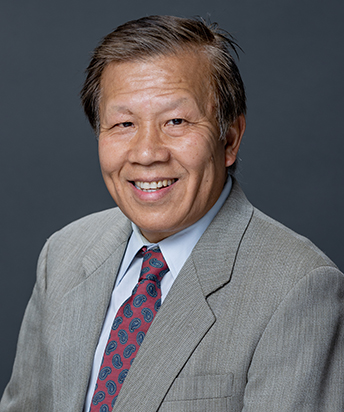
Wen-Chen Hu is an Associate Professor in the Department of Computer Science at the University of North Dakota's School of Electrical Engineering and Computer Science. He has held academic positions at Auburn University (Assistant Professor, 1998–2002) and the University of North Dakota (Assistant/Associate Professor since 2002). His teaching spans courses like .NET/Web Programming, Computer Architecture, Electronic Commerce Systems, and Advanced Database Systems, with over 100 graduate students advised. Education PhD in Computer and Information Science and Engineering, University of Florida (1998) MS in Computer Science, University of Iowa (1993) ME in Information Science and Electronic Engineering, National Central University, Taiwan (1986) BE in Computer Science, Tamkang University, Taiwan (1984) Research Interests : Dr. Hu's work focuses on handheld/mobile/smartphone/spatial computing, location-based services (LBS), web-enabled information systems (e.g., search engines, web mining), database-driven systems (electronic/mobile commerce), and web technologies. His publications emphasize privacy-preserving LBS, spatial trajectory prediction, mobile security, and big data applications. Publication Trends : His recent work (2020–2023) explores pandemic response via mobile analytics, privacy in LBS, and smartphone computing. Earlier (2014–2017), he addressed geometric LBS algorithms, cognitive radio networks, and super-resolution image processing. Foundational work (1998–2005) includes XML search engines, handheld programming languages, and mobile commerce security. Scientific Awards : Best Paper Award, MICS 2015 Best Paper Award, ACM Southeast Conference 2003 Best Reviewer Awards Community Service Awards Advising & Academic Leadership : Dr. Hu has advised over 100 graduate students and served as General Chair for ICETA 2018 and Associate Editor for the Journal of Information Technology Research . He has organized editorial/review roles for over 100 journals and conferences.