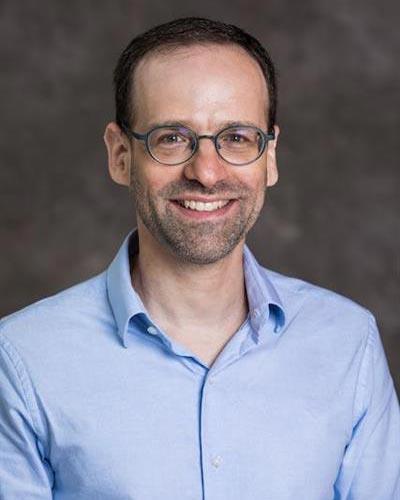
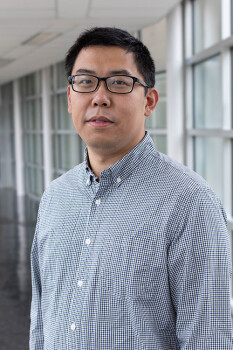
Felix Fischer is a Researcher at the Professorship of Cyber Trust within the Department of Computer Science, Technical University of Munich, affiliated with the School of Computation, Information and Technology. His work focuses on the intersection of information security , privacy technologies , and human-computer interaction . Research interests include: Usability and acceptance of security systems Machine learning applications for secure coding Cryptographic implementation challenges in software development Code reuse vulnerabilities in Android applications Recent publications demonstrate his focus on developer security behavior and machine learning interventions across platforms like GitHub and Stack Overflow. He actively contributes to empirical security studies through software tools such as APDG (Attributed Program Dependency Graph generator) and FixTest. Contact: flx.fischer@tum.de | GitHub | Twitter
David Walker is a Professor and Director of Undergraduate Studies in the Department of Computer Science at Princeton University, where he joined in 2002, earned tenure in 2008, and was promoted to full professor in 2013. His educational background includes: Ph.D. in Computer Science from Cornell University (2001) Master's degree in Computer Science from Cornell University Bachelor's degree from Queen's University in Kingston, Ontario Professor Walker's research centers on programming language theory, design, and implementation with specialized focus on domain-specific languages. His work bridges formal theoretical frameworks with practical compiler development, advancing both foundational knowledge and real-world language engineering applications in systems programming and software reliability. His scientific contributions have been honored with prestigious recognitions: NSF Career Award Sloan Fellowship 2015 ACM SIGPLAN Robin Milner Young Researcher Award 10-year retrospective award for ACM POPL 1998's most influential paper Best paper award at ACM PLDI 2007 Community Award at USENIX NSDI 2013 Professor Walker has secured significant research funding through his NSF Career Award and held influential academic service roles including Associate Editor for ACM TOPLAS (2007-2015) and Program Chair for ACM POPL 2015. His sabbatical appointments included visiting researcher positions at Microsoft Research (Redmond 2008, Cambridge 2009) and Associate Visiting Faculty at the University of Pennsylvania (2015-2016).
David Šaur is an Assistant Professor at the Department of Mathematics within Tomas Bata University's Faculty of Applied Informatics. His work bridges meteorology, applied informatics, and crisis management, focusing on severe convective storms and flash flood risk forecasting for regional governance. Developed FLAPRIS , a system for flash flood risk forecasting in the Zlín Region. Collaborated on X-band radar applications for real-time precipitation monitoring. Teaches mathematics-related courses for Software Engineering and Industrial Automation programs. Research Interests include: Predictive modeling of convective precipitation using radar and station data Integration of NWP (Numerical Weather Prediction) models with regional crisis management systems Development of algorithms for 24-hour quantitative precipitation forecasting Quantitative risk assessment for flash floods and storm phenomena His 15 most recent publications (2022-2016) focus on improving convective precipitation forecasting accuracy through algorithm validation, data mining techniques, and hybrid radar/station measurement thresholds. These works underpin practical crisis management tools for municipalities. Project Leadership : Principal Investigator for FLAPRIS (2022-2023) - Ministry of Interior, Czech Republic Principal Investigator for Improved Convective Precipitation Forecast (2019-2022) Researcher for CEBIA-Tech (2018-2020) - National Sustainability Program Advising Experience : Supervised 6 theses (2016-2022) at Tomas Bata University Mentored Master's works on flood risk software tools and hazardous material incident analysis Labs & Teams : CEBIA-Tech Research Center - Advanced ICT for crisis management Working Group for Digitization - Tomas Bata University Sustainability Working Group - Tomas Bata University
Michael Ian Shamos is a Distinguished Career Professor at Carnegie Mellon University's School of Computer Science, with appointments in the Language Technologies Institute and Software and Societal Systems Department. His career spans academia, law, and technology entrepreneurship, with expertise in experimental mathematics, artificial intelligence, and legal aspects of technology. Dr. Shamos earned his educational credentials through an impressive multidisciplinary path: A.B. in Physics from Princeton University (1968) under John Wheeler M.A. in Physics from Vassar College (1970) M.S. in Technology of Management from American University (1972) M.S. and M.Phil. in Computer Science from Yale University (1973-1974) Ph.D. in Computer Science from Yale University (1978) J.D. from Duquesne University (1981) His research interests bridge multiple domains with exceptional depth. In experimental mathematics, he develops computational systems that automatically generate and prove novel mathematical theorems, particularly in number theory, having contributed hundreds of new results to the field. As a leading expert in electronic voting security, he has examined over 120 voting systems for seven states and testified before Congress multiple times. His work uniquely integrates legal expertise with technical knowledge, especially regarding intellectual property in the digital age. He directs the M.S. in Artificial Intelligence and Innovation program at CMU, advising 74 students in this cutting-edge field. His publication trajectory reveals an evolution from foundational computational geometry (co-authoring the seminal "Computational Geometry: An Introduction") to contemporary issues in voting security and experimental mathematics. The consistent thread is applying computational methods to solve real-world problems with careful attention to legal and societal implications. His notable recognitions include: Industry Service Award of the Billiard and Bowling Institute of America (1996) Black and White Scotch Achiever's Award for contributions to bagpipe musicography (1991) As an educator and mentor, Dr. Shamos directs the M.S. in Artificial Intelligence and Innovation program and teaches courses including "AI & Future Markets" and "The Law of Computer Technology." He has served as an expert witness in over 360 legal cases involving computer technology and has been a statutory examiner of computerized voting systems for Pennsylvania since 1980. His extensive industry experience includes founding technology companies and serving as General Counsel for an AI company. Dr. Shamos is actively involved with the Universal Library project, which has scanned over 1.5 million books. He also serves as faculty advisor to the Carnegie Mellon Pool Team and is Curator of The Billiard Archive, reflecting his deep commitment to preserving billiards history alongside his academic pursuits.
Karl Crary is an Associate Professor at the Computer Science Department of Carnegie Mellon University , where he also serves as Director of Doctoral Programs . His research focuses on Programming Languages , Security and Privacy , and Mechanized Metatheory , with emphasis on applying Type Theory to software verification and compiler design. Research Type Safety Proofs Certified Code Compiler Implementation His recent publications explore Substructural Parametricity , Hashgraph Consensus Verification , and Focused Logic applications. He has advised students including Derek Dreyer , Chris Martens , and Tom Murphy , with software projects like Istari proof assistant and CM-Lex/CM-Yacc for hygienic code generation. Current teaching includes Constructive Logic (15-317/657) and HOT Compilation (15-417).
Leonidas Lampropoulos is an Assistant Professor of Computer Science at the University of Maryland, with an appointment in the University of Maryland Institute for Advanced Computer Studies (UMIACS). He leads research in Programming Languages and Software Engineering, focusing on formal verification, proof assistants, and scalable software development methodologies. His work addresses challenges in formalizing security properties, optimizing proof workflows, and advancing verified software for critical systems like distributed systems and autonomous vehicles. He received the NSF CAREER Award in 2022 and co-led a $540K NSF-funded project (2021) to improve proof engineering tools and protocols. His academic contributions span programming language design, type systems, and testing frameworks, with notable collaborations through the Maryland Cybersecurity Center (MC²). Advised PhD students: Segev Elazar Mittelman, Alperen Keles, Oliwia Kempinski, Jacob Prinz, Finn Voichick. Key honors: NSF CAREER Award (2022), NSF Award for Proof Engineering (2021). Research partnerships: Collaborates with institutions like the University of Texas at Austin on proof assistant scalability. His grants emphasize bridging software engineering practices with formal verification to enhance reliability in large-scale projects. Current efforts include improving proof assistant usability and integrating formal methods into mainstream software development.
Maire O'Neill is a Professor at the School of Electronics, Electrical Engineering and Computer Science at Queen's University Belfast, affiliated with the Secure Digital Systems (SDS) group and the Institute of Electronics, Communications & Information Technology (ECIT). Her research focuses on hardware security, cryptography, and secure embedded systems. She has held significant leadership roles and pioneered work in FPGA security, approximate computing, and post-quantum cryptography. Dr. O'Neill's academic journey includes over 20 years of contributions to secure digital systems, with a particular emphasis on cryptographic hardware, side-channel analysis, and IoT security. She has led major research projects such as the EU-funded 'TruDetect' initiative for hardware Trojan detection and the 'Secure IoT Processor Platform' project. Her work bridges theoretical research with practical applications, emphasizing real-world security challenges in electronics and computing. Education: Background in electrical engineering and computer science (details not explicitly stated in the text) Research Interests: Her work spans hardware security primitives, FPGA-based cryptographic solutions, and energy-efficient computing. She explores vulnerabilities like Rowhammer attacks and side-channel leaks while developing defenses through approximate computing and machine learning techniques. Her research addresses emerging threats in IoT, 5G networks, and post-quantum cryptography. Publications Trends: Recent work emphasizes machine learning applications in security (e.g., ML-KEM accelerator designs), hardware Trojan detection, and energy-efficient approximate computing. She frequently publishes in top-tier venues like IEEE Transactions and ACM conferences, with a focus on practical implementations and FPGA demonstrators. Awards: 2007: BFIIN ITEC Platinum Award, British Female Inventor of the Year, European Union Women Innovators 2015: Fellow of the Irish Academy of Engineering 2015: INVENT Award for collaborative innovation Advising & Grants: Supervised 8 PhD students (explicitly stated). Active in securing research grants (18 projects listed), including EU and industry collaborations. Engages in academic service roles like IEEE Distinguished Lecturer and international conference organization. Labs/Teams: Leads the Secure Digital Systems (SDS) group, collaborating with global partners on hardware security and IoT initiatives. Maintains strong ties with industry through projects like NIO New Deal Cyber Bid and TruDetect.
Dr. Ali Hasnain is a Lecturer in Computational Biology and Data Analytics at the Royal College of Surgeons in Ireland (RCSI), School of Pharmacy and Biomolecular Sciences. He holds a PhD from the National University of Ireland Galway and has over 15 years of experience in academia and the software industry, including roles as a Senior Researcher at University College Dublin and Adjunct Lecturer at the Insight Centre for Data Analytics. His research focuses on Artificial Intelligence in Healthcare, Digital Health, Bioinformatics, and Semantic Web technologies, with expertise in data analytics for life sciences and healthcare management. Education: PhD in Bioinformatics & Data Analytics, National University of Ireland Galway MSc in Engineering and Management of Information Systems, Royal Institute of Technology (KTH), Sweden MSc in Project Management and Operational Development, KTH, Sweden BSc (Honors) in Computer Science, Pakistan Institute of Engineering and Applied Sciences Research Interests: Dr. Hasnain’s work bridges computational biology, data science, and healthcare. Key areas include developing algorithms for biomedical data integration, AI-driven query systems for healthcare knowledge graphs, and optimizing pesticide efficacy through genomic analysis. His recent projects address challenges in dementia care technology and environmental stress impact on organisms . Awards & Recognition: Best Paper Awards at ESWC 2017, ISWC2018, and ESWC 2018 Young Scientific Researchers Grant from SWSA/NSF (2012, 2015) Grants & Collaboration: Led the Dementia and Technology (DaTe) project (2021–2023), funded by the Irish Research Council. Collaborations include work on federated SPARQL query systems and semantic web solutions for large-scale biomedical data. Labs & Teams: Active in RCSI’s Pharmacy & Biomolecular Sciences labs, contributing to interdisciplinary projects. Previously led research initiatives at Insight Centre and UCD’s School of Computer Science.
Xiaojun Shang is an Assistant Professor in the Department of Computer Science and Engineering at the University of Texas at Arlington. His research focuses on distributed computing environments, including edge computing, quantum computing, and network optimization for AI applications. PhD in Computer Engineering from Stony Brook University (2023) MS in Electrical Engineering from Columbia University (2016) BS in Information and Communication Engineering from Zhejiang University (2014) Research interests span computer networks , edge computing , edge AI , and quantum computing , with emphasis on algorithm development for distributed environments. Recent work includes quantum interconnection networks and edge AI co-design , with applications in connected vehicles and 6G systems. Publications demonstrate trends in service function chain deployment , quantum entanglement routing , and mobility-aware edge computing . His team's work on blockchain-based O-RAN optimization and distributed quantum computing topology has won Best Paper Awards at ICDCS 2024 and INFOCOM 2020. Best Paper Award, IEEE ICDCS 2024 UT System STARs Award 2023 Best Paper Award, IEEE INFOCOM 2020 As a Faculty Mentor for OurCS Workshop and committee member for CSE PhD Admissions, he advises PhD students including Wei Lin and Wentao Dexter Gao . Reviewer roles include IEEE TPDS, ACM Computing Surveys, and IEEE IoT Journal.
Nikola I. Mitrovic is a Lecturer at the Faculty of Electronic Engineering, University of Niš, specializing in Microelectronics and Microsystems. His academic career began with a Master's degree (2018) and undergraduate degree (2017) in Electronic Components and Microsystems from the same institution. He has been actively involved in teaching and research since 2020, focusing on semiconductor device reliability and renewable energy technologies. Education Bachelor's Degree: Electronic Components and Microsystems, Faculty of Electronic Engineering, University of Niš (2017) Master's Degree: Electronics and Microsystems, Faculty of Electronic Engineering, University of Niš (2018) Research Interests His research emphasizes semiconductor device modeling, particularly in power VDMOSFETs under stress conditions, and solar energy systems. He explores failure mechanisms in microelectronics and develops practical educational tools for engineering students. His work bridges theoretical analysis (e.g., NBTS/NBTI effects) with applied technologies like solar tracking systems and RFID-based access controls. Publications He has published extensively in IEEE journals and international conferences, focusing on topics such as device reliability, solar cell characterization, and embedded system design. His work demonstrates a blend of semiconductor physics, mathematical modeling (e.g., Least Square Method applications), and practical engineering solutions. Awards and Activities Received First Prize for the project 'RFID-Based Access Control System' at the 11th Student Projects Conference (2018) Member of the Secretariat for the IEEESTEC Student Project Conference Current involvement: 1 national research project Labs/Teams His affiliation with the Department of Microelectronics positions him within a research group focused on advanced semiconductor technologies and renewable energy systems. Collaborations include work with colleagues on device modeling and educational technology development.
Devanshi Upadhyaya is a Researcher at the Institute of Computer Architecture and Computer Engineering under the University of Stuttgart. Her work focuses on hardware security, cryptographic circuit protection, and formal methods for analyzing vulnerabilities in embedded systems. She is actively engaged in advancing secure hardware design principles through research in side-channel attacks, fault injection, and logic locking mechanisms. Her research interests include cryptographic circuit security, formal verification of hardware systems, and securing neural network accelerators. She has contributed to developing frameworks that assess vulnerabilities in mixed-signal and approximate computing architectures, emphasizing practical defenses against both software and hardware-based attacks. Notable projects include optimizing waveform accurate fault attacks and enabling power side-channel simulations for AI hardware accelerators. Her work bridges theoretical security models with real-world hardware implementation challenges. Devanshi holds a M.Sc. degree and is affiliated with the Hardware Oriented Computer Science department at the University of Stuttgart, where she collaborates on interdisciplinary projects involving cryptography, embedded systems, and machine learning hardware.
Jeffrey Foster is a Professor and Chair of the Department of Computer Science at Tufts University's School of Engineering. He holds a Ph.D. in Computer Science from the University of California, Berkeley (2002). His research focuses on programming languages, software engineering, and security, with notable contributions to program synthesis, static analysis, and formal verification. He leads efforts in developing tools like Dafny-based synthesis frameworks and Ruby type systems. His work emphasizes practical applications of formal methods, including security policy analysis for Android systems and improving software reliability through automated testing and machine learning-driven triaging. He has been recognized with awards such as the Outstanding Director of Graduate Studies Award (2017). Foster’s research spans theoretical advancements (e.g., abstract interpretation-guided synthesis) and empirical studies (e.g., REST API design practices). His publications address challenges in dynamic languages, static analysis, and ethical considerations in algorithmic systems like hiring tools. He actively contributes to the academic community through conference organization and pedagogical innovations in computer science education.
Kaouther BENGUESSOUM is a Doctoral researcher at the University of Luxembourg's Interdisciplinary Centre for Security, Reliability and Trust (SnT), specifically within the SerVal department. Her research focuses on cybersecurity, formal methods, and systems reliability, aligning with SnT's mission to advance interdisciplinary security and trustworthiness in technology. Her affiliations include the SerVal team, located at Bureaux modulaires bloc G, 6, rue Coudenhove-Kalergi, L-1359 Luxembourg. She is based in office BLG, E02 003. While no specific publications or awards are listed, her work contributes to advancing methodologies in software verification and systems security. No advising roles or grants are explicitly mentioned in the provided information.
Claudio Mandrioli is a Postdoctoral Researcher at the Interdisciplinary Centre for Security, Reliability and Trust (SnT) at the University of Luxembourg, where he joined the Software Verification and Validation (SVV) research group led by Prof. Lionel Briand and Prof. Domenico Bianculli in January 2023. His educational background includes a PhD in Automatic Control from Lund University (Sweden, 2022), a Master's degree in Automation and Control Engineering from Politecnico di Milano (2017), and a Bachelor's degree in the same field from Politecnico di Milano (2015). Mandrioli's research centers on bridging software engineering and control theory for Cyber-Physical Systems (CPS), with emphasis on verification challenges arising from their interdisciplinary nature. His work integrates control-theoretical perspectives into software testing, particularly for feedback-based systems and self-adaptive software, while addressing real-time execution non-idealities. This approach enables more robust validation frameworks for safety-critical CPS applications. His recent publication trends highlight a strong focus on model-based CPS testing methodologies, as evidenced by the 2025 ASE conference paper on fault injection techniques for Simulink models, reflecting his ongoing commitment to enhancing verification practices through cross-disciplinary collaboration. SIGBED-SIGSOFT Frank Anger Memorial Award (2022) Marie Skłodowska-Curie Actions Postdoctoral Fellowship for ConTestCPS project (2024) Mandrioli actively contributes to the academic community through program committee roles at EMSOFT, SEFM, and FSE conferences, while advising doctoral research via the Software Engineering Doctoral Symposium. His research is supported by competitive grants including the MSCA-PF ConTestCPS project, which develops control-theoretical testing frameworks for CPS. He operates within the Software Verification and Validation research group at SnT, collaborating closely with Prof. Domenico Bianculli and Prof. Lionel Briand, and maintains partnerships with institutions including Lund University, Politecnico di Milano, and Fondazione Bruno Kessler.
Shiyi Wei is an Associate Professor in the Department of Computer Science at the University of Texas at Dallas (UT Dallas), affiliated with the Erik Jonsson School of Engineering and Computer Science. He holds a Ph.D. in Computer Science from Virginia Tech (2015) and a B.E. in Software Engineering from Shanghai Jiao Tong University (2009). His postdoctoral research was conducted at the University of Maryland, College Park's PLUM Lab. His research focuses on enhancing software security and reliability through automated analysis, testing, and static/dynamic tool development. Key areas include configurable systems analysis, machine learning-driven static analysis, and fuzz testing benchmarking. Wei has received prestigious awards, including the NSF CAREER Award (2021) and a USENIX Security Distinguished Paper Award (2022). He teaches courses such as Compiler Construction (CS 6353), Compiler Design (CS 4386), and Software Maintenance and Evolution (CS/SE 6356). Current research projects involve improving fuzz testing methodologies, AI-driven vulnerability修复, and evaluating static analysis tools. His group has developed frameworks like ECSTATIC for configurable tool testing and FIXREVERTER for realistic bug injection. Wei has advised numerous students, including Austin Mordahl (Assistant Professor at UIC) and Zenong Zhang (Software Engineer at Google). His work is supported by NSF grants and AWS research credits. Notable recent contributions include studies on nondeterministic static analysis tools and feature-based fuzz testing benchmarking.