Nesime Tatbul is a Senior Research Scientist at Intel Labs and MIT's Computer Science and Artificial Intelligence Lab (CSAIL). She leads Intel's Data Systems and AI Lab (DSAIL) and previously held a faculty position at ETH Zurich. She holds a PhD and MS from Brown University and BS/MS from Middle East Technical University (METU). Her research focuses on large-scale data management systems, learned systems, time series analytics, and observability. Key contributions include the Aurora/Borealis and S-Store systems. She has served on program committees for SIGMOD, VLDB, and CIDR, and holds roles as an ACM Distinguished Member and IEEE Senior Member. Her work spans over 70 publications, including influential contributions to stream processing and query optimization. Awards include the PVLDB Distinguished Editor Award (2023), CIDR Test of Time (2025), and ACM SIGMOD Best Paper (2021). Current projects include DSAIL, Exathlon, and Mach, advancing observability and AI-driven data systems. She also contributes to editorial roles at VLDB and PVLDB.
Dr. Asieh Salehi Fathabadi is a Lecturer (Assistant Professor) in the Cyber-Physical Systems (CPS) group at the University of Southampton, UK. She specializes in formal methods for software engineering, with a focus on Event-B methodology for designing safe and secure systems. Her research addresses challenges in autonomous systems, responsible AI, and human-AI trust dynamics. She leads the Verifiably Safe and Trusted Human-AI Systems (VESTAS) and HANA-HAIP projects as Principal Investigator and contributes to initiatives like HD-Sec and HICLASS . Her work integrates formal verification into critical system development, emphasizing security and safety. Recent publications explore exception handling in secure hardware (CHERI), socio-technical trust frameworks for defense systems, and human intervention in self-driving vehicles. She supervises two PhD students in Computer Science and actively participates in the Rodin formal methods community. Dr. Salehi Fathabadi has over 13 years of research experience, applying formal methods to aerospace systems, embedded software, and cybersecurity. Her interdisciplinary approach bridges theoretical rigor with practical engineering solutions for modern complex systems.
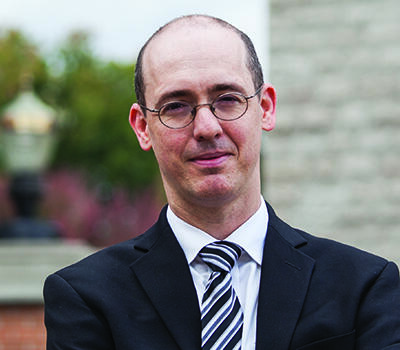
Nicolas Vermeys is a Full Professor at the Université de Montréal’s Faculty of Law, serving as Director of the Centre de recherche en droit public (CRDP) and Associate Director of the Cyberjustice Laboratory. He holds advanced degrees (LL.D. and LL.M.) from Université de Montréal and is a certified CISSP (Certified Information Systems Security Professional). His work focuses on intersections between technology and law, particularly cybersecurity, AI governance, and cyberjustice innovation. Education: LL.D. and LL.M. (Université de Montréal) Affiliations: Cyberjustice Laboratory, CRDP, Regroupement stratégique Research Interests: Cyberjustice systems, AI ethics in law, information security obligations, civil liability in digital contexts, and legal frameworks for emerging technologies. He frequently advises governments, legal professionals, and international organizations on these topics. Recent Article Trends: Explores cybersecurity challenges in judiciary systems, AI’s role in judicial processes, and privacy implications of smart technologies. Key themes include ODR systems, digital evidence reliability, and regulatory strategies for autonomous systems. Grants & Projects: Lead researcher on initiatives like Lex Electronica (digital law research) and Human-Centric Cybersecurity Partnership. Co-leads projects on judicial data processing, blockchain arbitration, and AI-driven legal tools. Labs & Teams: Directs CRDP (Canada’s largest legal research center) and co-manages the Cyberjustice Lab, which develops software solutions for justice system challenges. Collaborates internationally with institutions like William & Mary Law School and the University of Fortaleza.
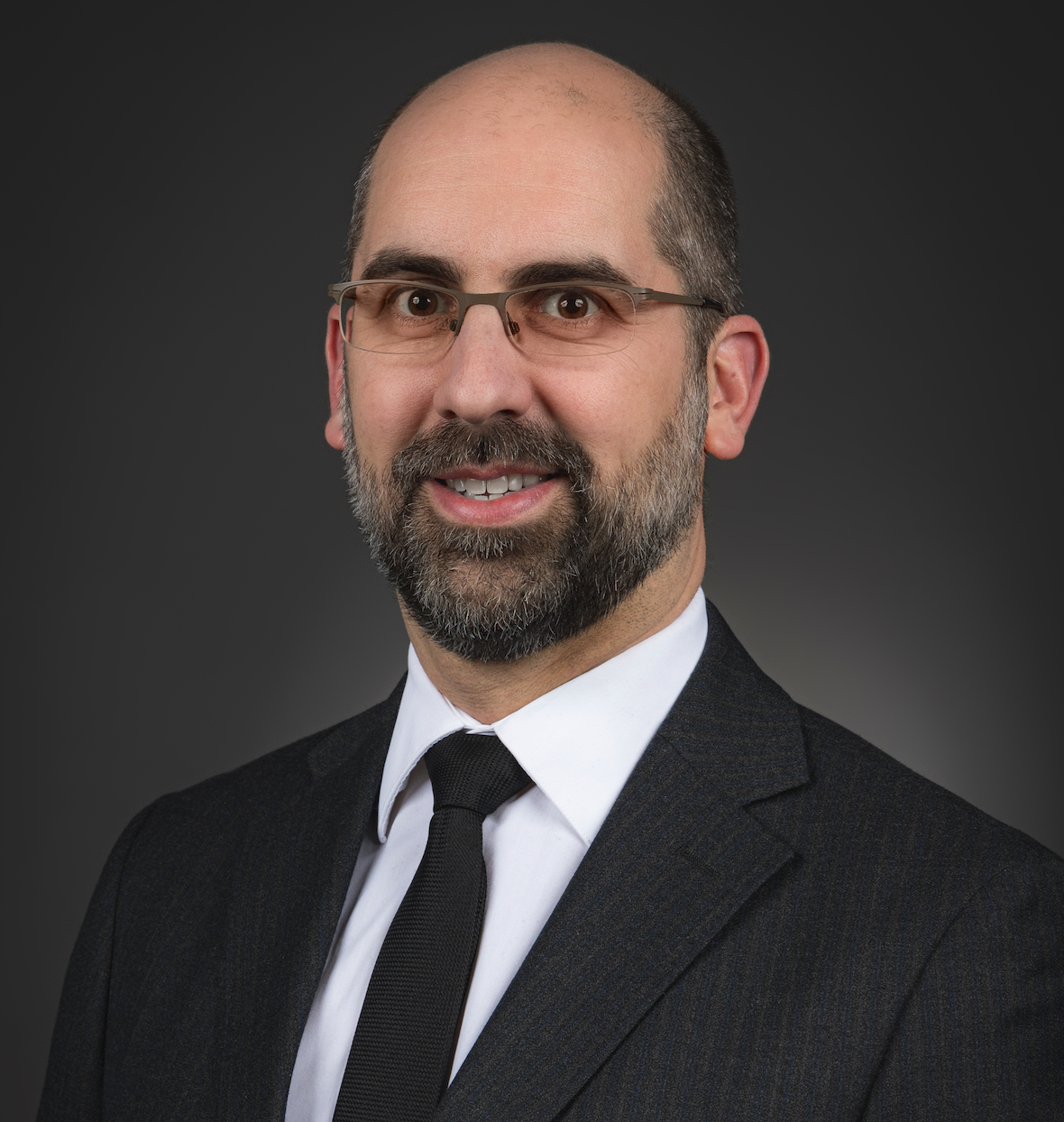
Stephen Ramsey, an Associate Professor at Oregon State University, holds dual appointments in the School of Electrical Engineering and Computer Science (College of Engineering) and the Department of Biomedical Sciences (Carlson College of Veterinary Medicine). With a PhD in Physics from the University of Maryland, his postdoctoral training in computational genomics at the University of Washington, and professional experience at the Institute for Systems Biology and Center for Infectious Disease Research, Ramsey bridges computational methods with biomedical applications. Education : Ph.D., Physics, University of Maryland; M.S., Physics, University of Maryland; Sc.B., Mathematical Physics, Brown University Ramsey specializes in computational systems biology , focusing on bioinformatics , biomedical knowledge graphs , and precision medicine . His research integrates machine learning , gene regulatory network modeling , and multi-omics data analysis to address challenges in rare disease diagnostics , drug monitoring , and inflammatory disease mechanisms . Current work includes AI-driven biomedical translation and electrochemical biosensor development for non-invasive diagnostics . Recent publications highlight knowledge graph applications in translational biomedicine , causal network inference in clinical-environmental data integration , and cross-species cancer transcriptomics . His team develops tools like RTX-KG2 and PloverDB to standardize biomedical data sharing and semantic reasoning . Scientific Awards : 2019 Zoetis Award (Carlson College of Veterinary Medicine) 2016 NSF CAREER Award 2016 PhRMA New Investigator Award 2010 NIH K25 Mentored Quantitative Research Award Ramsey advises in computational biology courses (CS 446/546) and contributes to biomedical AI through projects like mediKanren for rare disease diagnostics . His NSF-funded research explores gene expression noise and regulatory network dynamics , while NIH and PhRMA grants support his translational medicine initiatives. He leads the Ramsey Laboratory , which develops graph-based reasoning tools for biomedical data translation and multi-omics integration . The lab's work spans comparative oncology models, electrochemical biosensors , and knowledge graph infrastructure for clinical decision support .
Lukasz Ziarek is an Associate Professor in the Department of Computer Science and Engineering at the University at Buffalo, and serves as the Associate Dean for Academic Affairs in the School of Engineering and Applied Sciences. His research focuses on concurrency, real-time systems, distributed systems, and formal verification. He holds a PhD from Purdue University (2011) and a BS from the University of Chicago (2003). His research explores topics such as real-time Java implementations, session types for distributed protocols, and visual debugging techniques. Recent work includes formal models for secure multiparty computation, IoT device validation, and optimizing visual SLAM systems for robotics applications. He has contributed to frameworks like Juav (a Java-based UAV autopilot) and RTDroid (a real-time Android extension). Ziarek has received notable awards including the 2023 IEEE Technological Innovation Award, 2022 Meyerson Teaching Award, and 2018 NSF CAREER Award. His grants include collaborative research on UAV software infrastructure and real-time communication protocols. He actively develops tools like PTDETECTOR for JavaScript library analysis and Anodize for mixed-criticality systems. His work integrates formal methods with practical systems, addressing challenges in embedded systems security, compiler optimization, and real-time programming language design. He maintains a lab focused on advancing reliable software for autonomous systems and distributed computing environments.
Dr. Seongmin Lee is a researcher at the Max Planck Institute for Security and Privacy, specializing in software security and program analysis. Their work bridges theoretical and practical aspects of software testing, with a particular focus on automated testing techniques, dependency modeling, and genetic improvement. Research interests include: Software Security Software Testing and Fuzzing Program Analysis and Slicing Machine Learning Applications in Software Engineering Genetic Algorithms for Code Optimization Statistical and Causal Analysis of Code Behavior Recent publications (2016–2025) demonstrate a trajectory from foundational work on GPU parameter optimization to cutting-edge research on LLM-driven regression testing. Key trends include: Statistical modeling of software behavior Machine learning for bug classification and optimization Approximate analysis techniques for scalability Advancements in greybox fuzzing and coverage prediction Application of causal inference to mutation testing
Fuyuan Zhang is a Postdoctoral Researcher at the Max Planck Institute for Software Systems, specializing in advanced software testing methodologies and formal verification techniques. His research focuses on improving the reliability and security of AI systems, quantum computing frameworks, and concurrent systems through innovative testing criteria, adversarial attacks, and compositional reasoning. Key areas of expertise include: Large Language Model (LLM) testing and validation Quantum program analysis and security Adversarial machine learning and neural network robustness Formal verification of concurrent and cyber-physical systems Automated bug detection in complex software systems His work bridges theoretical foundations with practical applications, addressing critical challenges in AI safety, quantum software reliability, and system-wide security certification.
Ali Jannesari is an Associate Professor and Director of the Laboratory for Software Analytics and Pervasive Parallelism (SwAPP Lab) at the Department of Computer Science, Iowa State University. His research focuses on the intersection of High-Performance Computing (HPC) and AI, aiming to advance reliable and efficient software for modern parallel computing platforms. He has held academic and research roles including Senior Research Fellow at UC Berkeley and leadership positions in Germany's Technical University of Darmstadt and RWTH Aachen University. He holds a Habilitation in Computer Science (2016, TU Darmstadt), PhD (2010, KIT), and M.S. (2005, University of Stuttgart). Education: Habilitation in Computer Science, Technical University of Darmstadt, Germany (2016) Ph.D. in Computer Science, Karlsruhe Institute of Technology (2010) M.S. in Computer Science, University of Stuttgart (2005) Research Interests: High-Performance Computing (HPC), Machine Learning, Parallel Computing, Software Analytics, AI-driven compiler optimization, federated learning, and cross-language code analysis. His work bridges HPC and AI to enhance computational efficiency and scalability in data-driven applications. Recent Contributions: Leading research in GNN-based code parallelization (AutoParLLM), federated multimodal learning, and HPC performance optimization via graph-based methods. His lab's work has been published in top venues like NAACL, ICS, and NeurIPS. Lab & Team: The SwAPP Lab develops tools for software analytics and pervasive parallelism, with a focus on HPC-AI integration. Current projects include optimizing distributed training systems and improving code migration with LLMs.
Nan Yang is a University Researcher in the Mathematics and Computer Science department at Eindhoven University of Technology, specializing in empirical software engineering with focus on embedded systems and log analysis methodologies. Her work bridges theoretical models with industrial software development practices through collaborations with leading technology companies. Her research expertise centers on Software Engineering , Embedded Systems , and Log Analysis , employing rigorous empirical methods including developer interviews and case studies. She investigates how execution logs are utilized in real-world embedded software engineering contexts, developing model-driven approaches for protocol inference and system maintenance. Her work reveals critical insights into developer workflows and industrial software practices. Analysis of her publication record (2018-2023) demonstrates a progressive research trajectory from foundational protocol inference techniques to comprehensive embedded systems engineering frameworks. Her work consistently integrates log analysis with model-driven approaches, yielding practical tools for software maintenance in resource-constrained environments. This research has significant implications for improving reliability in industrial embedded software development. Nan Yang has supervised academic work as evidenced by her documented supervised projects, contributing to the development of next-generation software engineering researchers.
Blagoja Markovski is an Assistant Professor at the Faculty of Electrical Engineering and Information Technologies (FEIT), Ss. Cyril and Methodius University in Skopje. He holds a PhD (2019), MSc (2012), and BSc (2009) in Electrical Engineering from FEIT. His research focuses on electromagnetic compatibility, grounding systems analysis, lightning protection, and power systems engineering. He has contributed to projects assessing electromagnetic impacts on infrastructure and public exposure to electromagnetic fields from energy equipment. His work emphasizes the analysis of grounding systems under lightning and transient conditions, with applications in transmission lines, wind turbines, and pipelines. He has developed novel methodologies for efficient grounding system analysis using circuit models, GPU parallelization, and analytical approximations. His recent studies include optimizing grounding configurations for communication towers and evaluating human exposure near high-voltage systems using finite-element methods. Collaborations span international conferences and industry projects, addressing challenges in electromagnetic compatibility and renewable energy systems. His publications span IEEE journals and conferences, focusing on grounding systems, lightning protection, and computational electromagnetics.
Ali José Mashtizadeh is an Associate Professor at the Cheriton School of Computer Science, University of Waterloo. His research focuses on operating systems, distributed systems, and storage, with expertise in system reliability, network optimization, and concurrent programming. Education: Ph.D., Computer Science, Stanford University (2017) M.S., Computer Science, Stanford University (2017) M.Eng., Electrical Engineering and Computer Science, MIT (2007) B.S., Electrical Engineering, MIT (2006) His research centers on designing scalable and reliable systems, with recent publications exploring TCP network frameworks, in-memory data persistence, and microsecond-scale scheduling. Key themes include optimizing tail latency, neutralization-based memory reclamation, and fault-tolerant distributed services. His articles consistently demonstrate innovations in low-latency networking, operating system architecture, and cloud infrastructure, with recent emphasis on serverless benchmarks and processor customization. No scientific awards or advising relationships are detailed in the provided materials.
Chengnian Sun is an Associate Professor at the University of Waterloo's David R. Cheriton School of Computer Science. He holds a Ph.D. from the National University of Singapore (2013). His research focuses on software engineering, emphasizing software reliability, security, and developer productivity. His work spans compiler testing, program analysis, cybersecurity, and programming language tools. Key research trends include leveraging large language models (LLMs) for compiler testing and program reduction, probabilistic debugging techniques, and enhancing software security against ransomware and fuzzing attacks. His contributions address challenges in program simplification, fault localization, and vulnerability detection. Notable projects include frameworks like Perses (syntax-guided program reduction), T-Rec (language-agnostic program reduction), and tools like AddressWatcher for memory leak detection. His work bridges theoretical advancements with practical software engineering solutions. Chengnian advises on compiler reliability, cybersecurity, and developer productivity. His research has led to collaborations with industry on testing tools and security frameworks. He maintains an active lab focused on advancing software systems through rigorous analysis and innovation.
Dr. Jesper Andersson is a Professor of Computer Science and Dean of the Faculty of Technology at Linnaeus University. He holds a PhD from Linköping University (2007) and has extensive leadership experience, serving as Department Chair from 2013–2020. His research focuses on self-adaptive software systems, software reuse, and cyber-physical systems. He has published widely in top venues like ACM Transactions on Autonomous and Adaptive Systems and Computing , and actively contributes to organizing international conferences. Education: Responsible for advanced courses in software design and development processes. Engaged with industry through technical advising for global companies. Completed major projects include developing a master’s program in computer science and the PROSSES project on self-protecting systems. Current research projects include Digital Twin of Organizations (DTO), DIACCESS for sustainable cities, and Aladino for adaptable architectures. His work emphasizes resilience frameworks, decentralized control, and industrial adaptation practices. Key collaborations include leading the AdaptWise research group and co-chairing SEAMS 2023. His articles span self-adaptive patterns, trust-aware systems, and IoT applications, reflecting a strong focus on both theoretical and applied software engineering challenges.
Ingrid Bouwer Utne is a Professor in the Department of Marine Technology at the Norwegian University of Science and Technology (NTNU). Her research focuses on risk assessment, autonomy, safety, and maintenance management of marine and maritime systems. She leads the Risk Group at NTNU and has been a main supervisor for numerous PhD students in areas like autonomous systems safety and risk modeling. She is actively involved in research projects such as the ERC AdG BREACH (Risk-Based Rationality in Autonomous Systems), SFI Autoship (Center for Autonomous Ships), and SAFEGUARD (Intelligent autonomous systems for safeguarding ocean infrastructure). Her work emphasizes risk-based control systems, online risk monitoring, and human-autonomy collaboration in maritime operations. Key publications include 'Risk and Interdependencies in Critical Infrastructures' (Springer) and 'Online Probabilistic Risk Assessment of Complex Marine Systems' (Springer). She has advised over 20 PhD students and contributed to industry-funded projects like UNLOCK and ORCAS, focusing on safer autonomous systems design and verification.
Andrea Mocci is a Lecturer at the Faculty of Informatics of the Università della Svizzera italiana (USI). His work focuses on software engineering methodologies, developer productivity, and IDE interaction analysis. He is affiliated with the Software Institute and actively contributes to academic events such as the IEEE International Workshop on Mining and Analyzing Interaction Histories (MAINT). His research explores empirical software engineering techniques, including developer behavior analysis, code documentation improvement, and the application of natural language processing to software artifacts. Key areas of investigation include: IDE interaction and navigation efficiency Code redundancy and quality metrics Video tutorial analysis for educational content Runtime systems and annotation APIs Defect prediction and software maintenance Publications from 2016-2020 highlight trends in developer-centric tools, holistic recommender systems, and visualization techniques for software evolution. His work often bridges theoretical formal methods with practical developer workflows, aiming to improve both software quality and developer productivity through empirical studies and tool development.