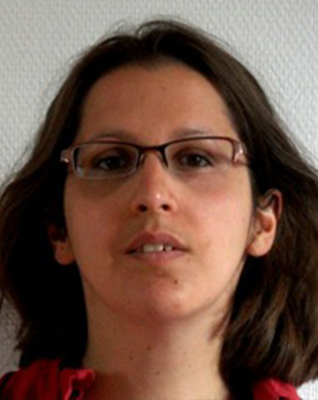
Prof. Dr.-Ing. Robert Müller is a faculty member at the Faculty of Computer Science and Media of Leipzig University of Applied Sciences (HTWK Leipzig). His expertise lies in Multimedia Databases , with a focus on advanced data modeling and workflow integration techniques. Collaborated on industry projects like FoodBroker for synthetic datasets in business analytics Pioneered graph-grammar approaches for medical context representation Developed rule-based workflow systems for healthcare domains His research spans Workflow Systems , Knowledge-Based Modeling , and Graph-Based Analytics , as evidenced by publications in both computer science and health informatics. He actively contributes to academic projects through his technical leadership in database and process engineering.
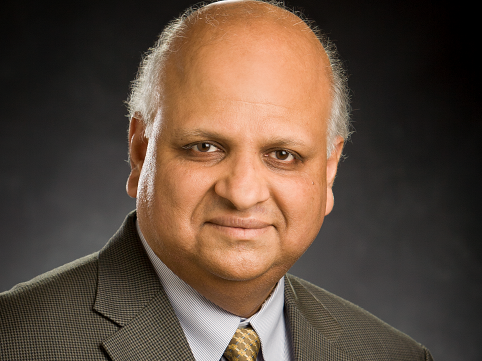
Munir Mandviwalla is a Professor in the Department of Management Information Systems at the Fox School of Business and Management, Temple University. He also serves as the Milton F. Stauffer Senior Research Fellow and Executive Director of the Institute for Business and Information Technology (IBIT). His research focuses on digital transformation, IT workforce development, and systems thinking, with a pending patent for novel software platforms. He has secured over $9 million in grants from organizations like NSF, IBM, and Microsoft. Education : BSc in Systems Engineering (Boston University), MBA (Peter F. Drucker School), Ph.D. in Information Science (Claremont Graduate University) Mandviwalla's research bridges business and information technology, emphasizing digital transformation in small businesses, social media's impact, and educational technology. He has pioneered programs like the IS Job Index and co-founded PRO Community, LLC, a Temple University spinoff focused on engagement. His recent publications address IT governance, generative AI transparency, and resilient system design. Over the past five years, his work has centered on SME digitization, workforce analytics, and collaborative tools. Scientific Awards : AIS Award for Outstanding Contribution to Education AIS Technology Challenge Award IBM E-Business Award Claremont Alumni Hall of Fame Fox School Musser Faculty Service Award Mandviwalla has led industry collaborations through IBIT's Digital Innovation Foundry and corporate sponsors. He teaches user experience design and systems thinking, including executive education for Fortune 50 companies.
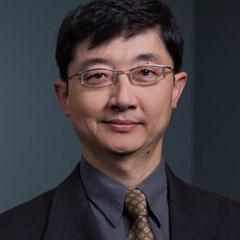
Konstantinos Vergidis is a Professor at the Department of Applied Informatics, School of Information Sciences, University of Macedonia. With a PhD in Business Process Optimisation from Cranfield University (2008), he has established himself as a leading expert in business process management, enterprise architecture, and process modeling. His academic career spans over a decade at the University of Macedonia, where he has held various administrative roles including Director of the Doctoral Studies Coordination Committee and member of the University's Research Committee. PhD in Business Process Optimisation (2008), Cranfield University MSc in IT for Product Realisation (2005), Cranfield University Degree in Applied Informatics (2003), University of Macedonia Professor Vergidis' research focuses on Business Process Intelligence (BPI), with particular expertise in BPMN modeling, process optimization, and decision modeling with DMN. His work bridges theoretical frameworks with practical applications in both public and private sectors, examining process quality metrics, resilience, and the integration of emerging technologies like low-code platforms and AI. He has pioneered research on process modeling in the public sector and the impact of Large Language Models on BPMN-based process modeling. His publication record includes 21 scientific journal articles, 22 conference papers, and 8 books, demonstrating consistent scholarly output across multiple venues. Recent work shows a clear trajectory toward integrating AI technologies with traditional business process management, particularly examining how LLMs can transform process modeling practices and exploring low-code development platforms for process-driven application development. Teaching Excellence Award (2022-2023) Research Award 2022 (14th cycle) Research Award 2021 (13th cycle) Teaching Excellence Award (2020-2021) Thatcher Bros Prize (2008/09) Professor Vergidis has secured multiple research grants, including projects with Expertise France/European Commission on digital public services and with the National Research Foundation on process modeling for public administration. He leads the Business Process Intelligence research group and has coordinated significant projects including MODA (Multi-Omics Data Analysis) and Science Data and Analytics Platform. His administrative contributions include directing doctoral studies and serving on numerous university committees related to research, curriculum development, and digital transformation initiatives. His work with the National Process Registry (mitos.gov.gr) demonstrates his commitment to applying academic research to real-world public sector challenges, developing tools and methodologies that enhance process transparency and service delivery for Greek citizens.
Anne ETIEN is a Professor of Computer Science at the Faculty of Science and Technology (FST) of the University of Lille, where she conducts research at the CRIStAL laboratory and is a member of the joint CRIStAL/Inria EVREF team. She previously served as a Maître de Conférences at Polytech'Lille from 2007 to 2020 and has maintained continuous academic appointments since completing her PhD in 2006. Her educational background includes a PhD defended on March 13, 2006 at Université Paris 1 Panthéon Sorbonne titled "Ingénierie de l'alignement : Concepts, Modèles et Processus. La méthode ACEM pour la correction et l'évolution d'un système d'information aux processus d'entreprise" and an HDR (Habilitation à Diriger des Recherches) defended in June 2016 titled "Metamodelisation to support Test and Evolution". Dr. ETIEN's research focuses on analysis and reengineering of complex legacy systems with particular expertise in software evolution, maintenance, meta-modeling, and refactoring techniques. Her current research themes include Evolution, Maintenance, Meta-modeling, Reengineering, Refactoring, Architecture Remodularization, and Debugging. Previously, she specialized in Model-driven engineering, Model transformation, Alignment engineering, and Requirements engineering. She has supervised numerous PhD candidates including Gustavo Santos, Vincent Blondeau, and Brice Govin, with recent theses defended as recently as November 2023. Her supervision extends to Master's level students through internships at institutions like Universitad de los Andes and University of Lviv. Dr. ETIEN has secured significant research funding through industrial partnerships including a €200K project with Berger-Levrault (2017-2021), €150K with WorldLine (2014-2017), and €150K with Thales TRT (2015-2018), as well as academic collaborations with universities in Belgium, Ireland, and Norway. She has also participated in ANR and European projects including OpenEmbeDD (€200K, 2006-2009) and ModEasy (€250K, 2006-2008). She is actively involved in the academic community serving on numerous thesis committees as reviewer, president, or member, and has held organizational roles in conferences including program committee co-chair for IWST (2015-2018) and participation in SCAM 2017 and VISSOFT committees.
Jaime Font Burdeus is a Professor at the School of Architecture and Technology of Universidad San Jorge, where he serves as Director of the Computer Engineering degree program and teaches courses in both Computer Engineering and Video Game Design and Development degrees. His educational background includes: Doctoral student at the University of Oslo (Norway) Master's in Advanced Software Technologies for Mobile Devices from Universidad San Jorge Bachelor's in Computer Engineering from Universidad San Jorge His research centers on software variability extraction through reverse engineering techniques, model-driven development, and model-based software product lines. He specializes in applying evolutionary computation to identify and formalize model variability as fragment-based software product lines, with significant contributions to feature localization and software reengineering. He is an active member of the Government of Aragón-recognized Emerging Research Group "Software Variability for Internet of Things" (T92 reference). His current research funding includes the European project "REVAMP 2" (Round-trip Engineering and Variability Management Platform and Process) and the National Research Project "VARIAMOS" (Model-Driven Variability Extraction for the Adoption of Software Product Lines), following prior industry collaboration with BSH on "Variability Management in Inductive Software".
Dr. Manjunath Kamath is a Professor in the Department of Industrial Engineering and Management at Oklahoma State University's College of Engineering, Architecture and Technology, where he has served since 1989. He directs the Center for Computer Integrated Manufacturing Enterprises and previously led the NSF Center for Excellence in Logistics and Distribution (CELDi) as Associate Site Director (2002-2012) and Site Director (2012-2013). His academic credentials include a Ph.D. in Industrial Engineering from the University of Wisconsin-Madison (1989), a Master of Engineering in Automation from the Indian Institute of Science, Bangalore (1984), and a Bachelor of Technology in Mechanical Engineering from the Indian Institute of Technology, Madras (1982). Dr. Kamath's research centers on stochastic modeling, queuing theory, and performance evaluation of manufacturing and supply chain systems. He utilizes object-oriented modeling, Petri nets, and simulation to develop methodologies for freight movement, supply chain networks, and knowledge work environments. His work bridges analytical frameworks with practical enterprise applications, emphasizing discrete-event systems and enterprise modeling. His publication record reveals a progression from manufacturing systems to broader supply chain and logistics applications, with increasing focus on decision support tools like TISCSoft and RAQS. Recent work integrates transportation infrastructure modeling with supply chain optimization, reflecting evolving industry needs. His accolades include: Regents Distinguished Teaching Award (2013) Lockheed Martin Aeronautics Teaching Excellence Award (2013) Halliburton Excellent Teacher Award (2012, 2003) CELDi Success Award (2011) ASR Best Paper Award (2006) Phoenix Award for Outstanding Graduate Faculty (2005) Outstanding Advisor Award (2004) Pritsker Outstanding Faculty Award (1999, 1996) IIE Transactions Award (1993) As an advisor, he earned the Outstanding Advisor Award (2004) while securing five NSF grants (1993-2003) and recent funding from Oklahoma Transportation Center and ODOT. His projects produced modeling tools for manufacturing systems and supply chains, along with new graduate courses in enterprise modeling. He leads the Center for Computer Integrated Manufacturing Enterprises and has driven CELDi's industry-academic partnerships in logistics innovation for over a decade.
Dr. Vijaya Murthy is a Senior Lecturer at the University of Sydney Business School, specializing in management accounting, management control systems, and sustainability accounting. She holds a BCom (Hons) from Macquarie University, an MCom from the University of Madras, an MPhil from Madurai Kamaraj University, and a PhD. Her research focuses on non-financial information use in management decisions, qualitative methodologies, and historical accounting practices like those in ancient India's Arthasastra. Dr. Murthy teaches undergraduate and postgraduate courses in management accounting, financial accounting, and accounting systems design. She has coordinated management accounting units and supervised Honours students. Her research collaborations span institutions like Copenhagen Business School and University of Innsbruck, with publications in leading journals such as Accounting, Auditing & Accountability Journal and Journal of Business Ethics . Awarded the Emerald Literati Award twice for her work on intellectual capital. Recipient of a 2018 grant for educational innovation in management accounting education. Active in research areas including ERP systems in education, ancient Indian economic history, and performance measurement in accounting schools. Her work bridges historical accounting practices with modern challenges, such as integrating technology in learning (e.g., TEAL initiatives) and analyzing IT workforce dynamics. She also explores ERP systems' impact on student learning and the evolution of service-centric business models in financial institutions.
Dr. Harry Keeling is an Associate Professor in the Department of Electrical Engineering and Computer Science at Howard University's College of Engineering and Architecture. His research focuses on computer science education, industry-academic partnerships (notably the Google Tech Exchange program), socially relevant computing, and intelligent educational systems. His publications emphasize diversity in tech education and curriculum innovation. No awards, students, or lab affiliations are documented in available sources.
Icheng Robert Chiang is a Professor and Marta Mooney Distinguished Research Scholar in Business at Fordham University's Gabelli School of Business, Department of Information, Technology, and Operations. He joined Fordham in 2008 and holds a PhD in Information Systems from the University of Washington, alongside master's degrees in Electrical Engineering and Computer Science from the University of Southern California, and a bachelor's in Engineering Science from National Cheng-Kung University (Taiwan). His research focuses on software process improvement, information systems economics, and e-commerce design. Notable areas include strategic alignment of IT projects, cloud content distribution optimization, and reverse logistics networks. His work has been published in top journals like Information Systems Research , Operations Research , and IEEE Transactions on Software Engineering . Dr. Chiang has extensive consulting experience in business process reengineering, project management, and system development for global industries such as finance, healthcare, transportation, and energy. His recent research trends emphasize applying economic principles to digital content distribution and sustainable logistics solutions. He has contributed to over a dozen peer-reviewed articles since 2002, addressing topics from software defect management to cloud resource allocation. His work bridges theoretical frameworks with practical industry challenges, particularly in optimizing operational and technical systems.
Dr. Rawad Hammad is Senior Lecturer at University of East London's School of Architecture, Computing and Engineering. His research develops educational technologies including chatbot frameworks, multimodal learning analytics systems, and blockchain applications for education. Recent projects include Edubot (educational chatbot framework), CrossMMLA (multimodal analytics), and studies on AI-generated media detection. His publications demonstrate consistent focus on technology-enhanced learning, evidenced by edited volumes on chatbot trends and multimodal analytics. Collaborative research includes COVID-19 impacts on surgical education and sustainable production process reengineering. He serves as editorial contributor for IGI Global books on blockchain and chatbot technologies, reflecting leadership in educational technology innovation.
Dr. A.C. Sahoo is a Teaching Professor in Information Systems and Operations Management at UT Arlington. With 30+ years industry experience in telecommunications and defense systems, his research focuses on data analytics and agile software methodologies. Teaching includes courses on data warehousing, business intelligence, and programming. His 2016 publication addresses agile approaches to software reengineering.
Lotfollah Najjar is an Associate Professor in the Department of Information Systems and Quantitative Analysis at the University of Nebraska at Omaha’s College of Information Science and Technology. He has been with UNO since 1989, holding a Ph.D. in Industrial and Management Systems Engineering from the University of Nebraska-Lincoln with supporting areas in MIS and Operations Management. His research focuses on Quality Information Systems, Business Process Reengineering, Analytics, and Total Quality Management (TQM) in both service and manufacturing industries. Education: Ph.D. in Industrial and Management Systems Engineering, University of Nebraska-Lincoln (2002). Teaching Interests: Quality Information Systems, Data Mining, Management Information Systems, Statistics, and Mathematics. His research emphasizes Data Quality, Software Reliability, and IT integration in service and manufacturing sectors. Awards: Recipient of the Excellence Teaching Award (2006). Professional Affiliations: Member of ASQ (American Society for Quality), IIE (Institute of Industrial Engineers), ASA (American Statistical Association), and AIS (Association for Information Systems). He has served on numerous committees, including UNO’s Graduate Council, UCAT, Judiciary Committee, and College-level DPC and Personnel Committees. Contact: Office PKI 174F, email lnajjar@unomaha.edu , personal website here .
Hong Woo is an Associate Professor and Faculty Director of Partnerships and International at Middlesex University's Faculty of Business and Law. He previously served as Head of Department and actively engages with UK and international universities to promote global education access through transnational education (TNE) and fostering a global learning community. His research focuses on gender and work dynamics, cross-cultural management practices, and operational strategies in Chinese enterprises. He teaches Business Simulation and Experiential Learning, emphasizing hands-on learning methodologies. Woo's research explores gender equality in China's corporate environment, ERP implementation challenges in family-owned enterprises, and organizational structures in project-driven companies. His work bridges Eastern and Western business practices, particularly in negotiation dynamics and cross-cultural management. He has contributed significantly to understanding the interplay between cultural factors and business processes in China. His publications span over two decades, addressing topics from supply chain optimization to quality management strategies. While no specific awards are mentioned, his extensive academic output reflects sustained contributions to management and organizational studies. His current role as Director of Partnerships underscores his commitment to institutional collaboration and expanding educational opportunities globally.
Jim Buckley is a Professor in the Department of Computer Science & Information Systems at the University of Limerick, and a Principal Investigator at Lero – the Irish Software Research Centre. He holds a BSc in Biochemistry from the National University of Ireland, Galway (1989), followed by an MSc (1994) and PhD in Computer Science (2002) from the University of Limerick. His research focuses on software reengineering, empirical software engineering, and source code analysis, with notable contributions to clone detection, software architecture recovery, and AI-driven code generation. He led the TREES Centre, a €6M industry-funded initiative, and currently oversees three research teams at Lero investigating large-scale clone detection, deep learning architecture recovery, and AI-generated source code. His work intersects technical innovation with societal impact, such as ethical software engineering and pandemic response technologies like contact tracing apps. Key research themes include software architecture consistency, feature location, and developer experience optimization. He has published over 118 peer-reviewed articles and received a Research Impact award from Lero. His contributions span open-source tool development, empirical studies in software practices, and interdisciplinary projects addressing global challenges like public health and cryptocurrency equity. Education: BSc Biochemistry, National University of Ireland, Galway (1989) MSc Computer Science, University of Limerick (1994) PhD Computer Science, University of Limerick (2002) Awards: Research Impact Award, Lero (2021) Labs/Teams: TREES Centre (Trustworthy, Responsible, Efficient Engineering of Software) Three core Lero teams: Clone Detection, Architecture Recovery, and AI-Code Generation
LillAnne Jackson is an Associate Teaching Professor and Associate Dean of Undergraduate Studies in the Department of Computer Science at the University of Victoria. She holds a PhD from the University of Calgary and has dual roles in academic leadership and teaching innovation within the Faculty of Engineering and Computer Science. Dr. Jackson’s research focuses on memory consistency for multiprocessor architectures, computational geometry, and pedagogical strategies for teaching concurrency in computer science. Her educational work emphasizes improving retention in STEM fields through innovative teaching methods and curriculum design. She has contributed to accreditation-driven curricular reforms and explored the efficacy of video-based instruction in technical education. Her technical research addresses challenges in parallel computing systems, including memory coherence models for architectures like Itanium and Sparc. Earlier work includes computational geometry projects such as polygon reconstruction algorithms and visibility analysis. Her articles span both technical computer science topics and educational methodologies, reflecting her dual expertise in technical systems and academic innovation. In her administrative role as Associate Dean, she oversees undergraduate academic policies and program development. She collaborates with faculty to enhance student experiences through curriculum modernization and pedagogical research. Dr. Jackson’s work bridges theoretical computer science with practical educational strategies to strengthen undergraduate education and technical workforce development.