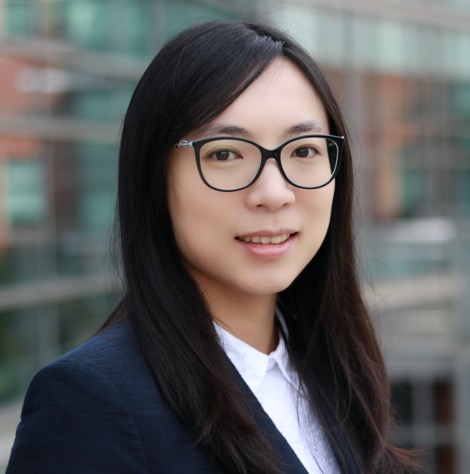
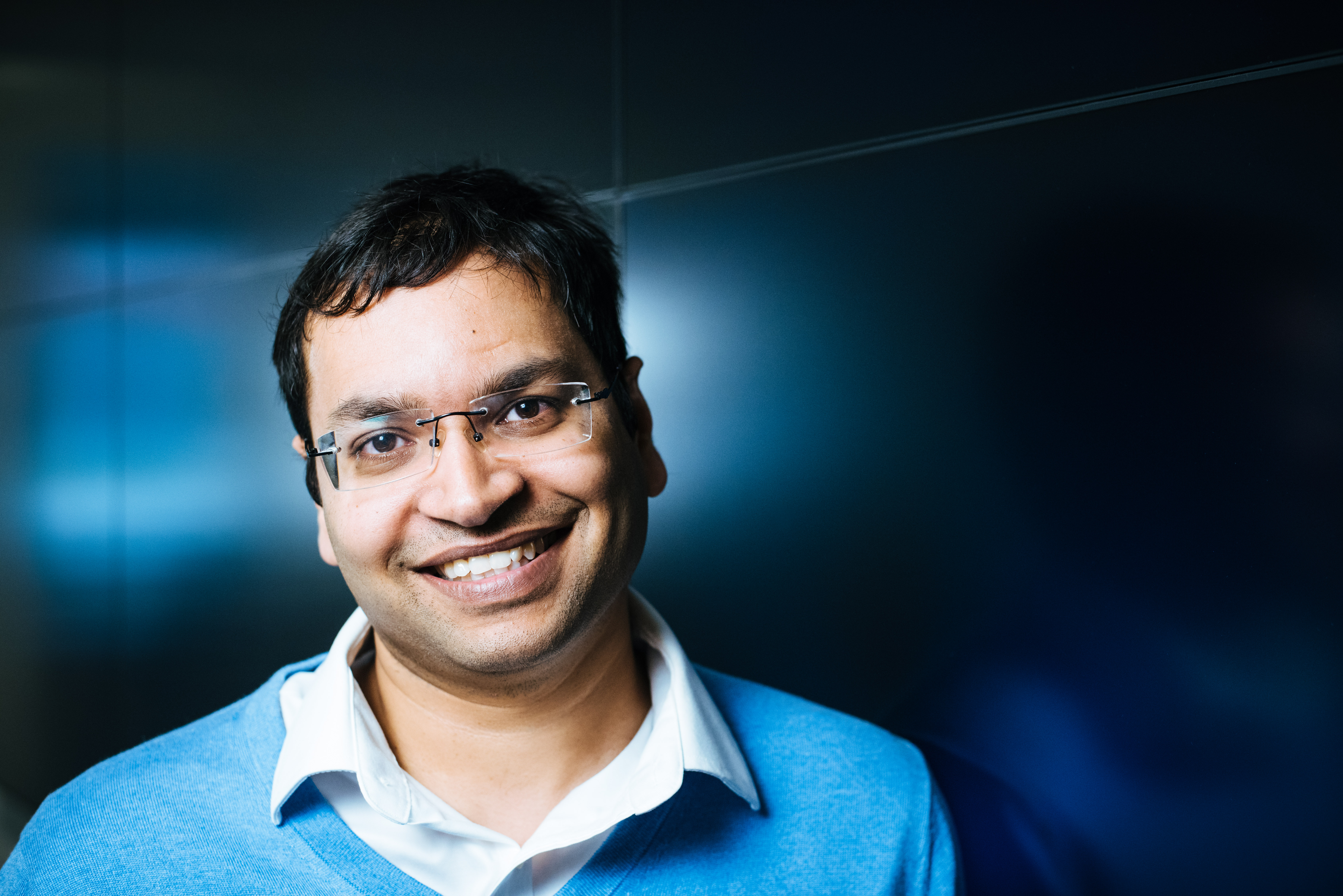
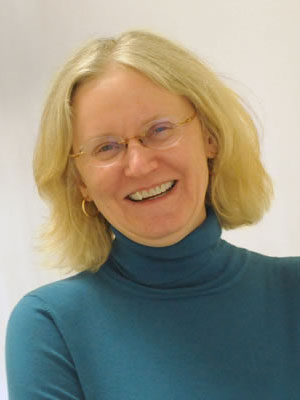
Bo Li is an Associate Professor at the University of Illinois at Urbana-Champaign, affiliated with the Siebel School of Computing and Data Science. Her research focuses on trustworthy machine learning, emphasizing robustness, privacy, and security in AI systems. She leads the Secure Learning Lab (SL²), exploring adversarial attacks and defenses across digital and physical domains. Key contributions include foundational work on adversarial examples, robust learning frameworks, and privacy-preserving techniques. Her academic roles include advisory board positions at the Center for Artificial Intelligence Innovation (CAII) and membership in the Information Trust Institute (ITI). She collaborates with institutions like the Advanced Digital Science Center (ADSC) and the Quantum Information Science and Technology Center (IQUIST). Notable recognitions include the IJCAI Computers and Thought Award (2022), MIT Technology Review's 35 Innovators Under 35 (2020), and multiple best paper awards. Recent work addresses AI safety through frameworks like ShieldAgent and AutoRedTeamer, aiming to enhance system resilience against adversarial threats. Her research spans theoretical guarantees, practical defenses, and ethical AI deployment. Students advised include Chulin Xie, Linyi Li, and Boxin Wang, who have received prestigious fellowships such as the IBM PhD Fellowship and Rising Stars in ML Awards. Advising: Guides PhD students in adversarial ML, privacy, and security. Labs/Teams: Secure Learning Lab (SL²), collaboration with ALERT program. Grants/Funding: NSF CAREER Award, Amazon/Google Faculty Awards, and industry partnerships.
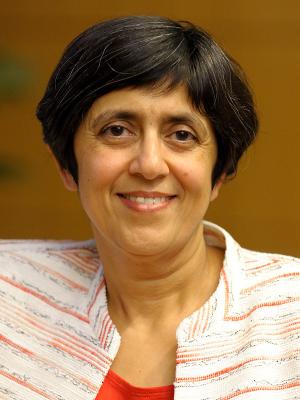
Sarita V Adve is the Richard T. Cheng Professor of Computer Science at the University of Illinois at Urbana-Champaign, where she conducts research spanning hardware, programming languages, operating systems, and applications with a focus on domain-specific systems. Her work bridges theoretical foundations and practical implementations, particularly in extended reality and heterogeneous computing. Her educational background includes a Ph.D. and M.S. in Computer Science from the University of Wisconsin-Madison (1993, 1989) and a B.Tech in Electrical Engineering from the Indian Institute of Technology Bombay (1987). Prior to joining Illinois, she served on the faculty at Rice University from 1993 to 1999. Adve's research centers on generalizable and scalable specialization for domain-specific systems, with current emphasis on extended reality (XR) systems including virtual, augmented, and mixed reality. She chairs the ILLIXR consortium to democratize XR research and developed the first fully open-source XR system (ILLIXR). Her foundational contributions include memory consistency models for C++ and Java programming languages, the Spandex coherence framework for heterogeneous systems, and software-driven approaches for hardware reliability. Her work spans hardware reliability (SWAT and RAMP projects), power management (GRACE system), and instruction-level parallelism. Recent publications reveal a strong focus on energy-efficient XR systems, hardware-software co-design for AI workloads, and resilience analysis. Her team explores rendering offload, visual-inertial odometry optimization, and compositional error injection frameworks, often targeting tradeoffs between energy, latency, and accuracy in mobile and edge environments. Fellow of the American Academy of Arts and Sciences Fellow of the ACM and IEEE ACM/IEEE-CS Ken Kennedy Award Anita Borg Institute Woman of Vision in Innovation Award ACM SIGARCH Maurice Wilkes Award Alfred P. Sloan Research Fellowship UIUC University Scholar University of Illinois Campus Award for Excellence in Graduate Student Mentoring Adve actively mentors students and has received multiple teaching awards. She co-founded the CARES movement to address discrimination in CS research events and chairs CS@Illinois CARES. Her service includes leadership roles in ACM SIGARCH (2015-2019), DARPA/ISAT study group, ACM Council, and Computing Research Association. She has secured significant funding including DARPA initiatives and Google Faculty Research Awards. She leads the ILLIXR consortium and has established collaborative research programs such as the $8.3M DARPA Joint University Microelectronics Program. Her lab focuses on open-source XR development, heterogeneous system architectures, and reliability-aware designs, with strong industry and government partnerships.
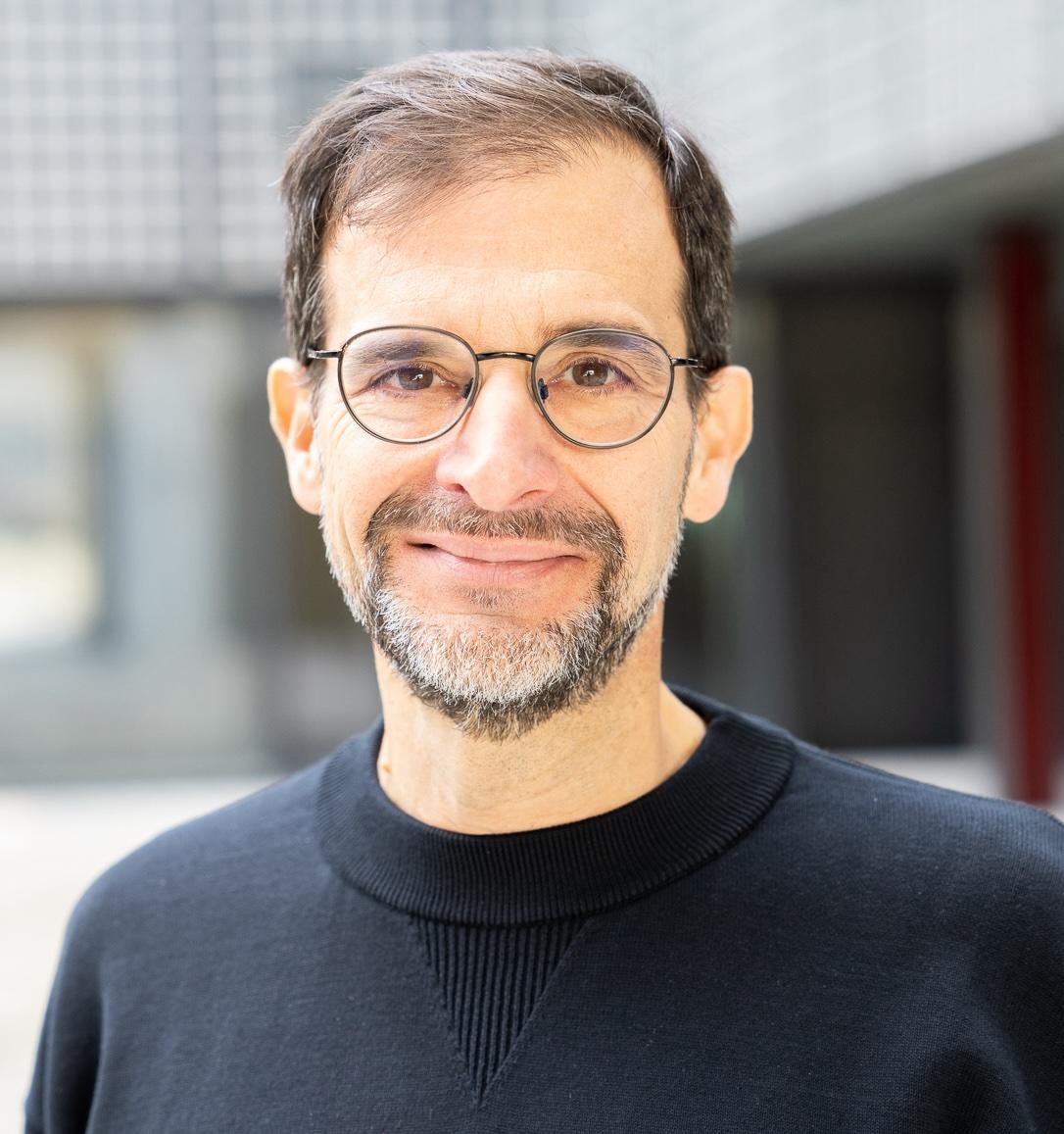
Dr. Fei Teng is an Associate Professor in the Department of Electrical and Electronic Engineering at Imperial College London and Director of Education at the Energy Futures Lab, a pan-university hub for interdisciplinary energy research. He holds visiting positions at MINES ParisTech, PolyU Hong Kong, and KTH Sweden. His research focuses on software-defined power networks, stability-constrained optimization, cyber-resilient decision-making, and privacy-preserving data exchange in low-inertia grids. Dr. Teng has authored over 100 publications in top-tier journals and conferences, with funding from EPSRC, Innovate UK, the Royal Society, and industry partners like Hitachi and National Grid ESO. His work addresses critical challenges in grid stability, cybersecurity, and renewable energy integration. He has received prestigious awards, including the IEEE Early Career Award and Royal Society Kan Tong Po Fellowship. Research interests include high-penetration power electronics, uncertainty modeling in power systems, and data privacy in smart grids. His interdisciplinary approach integrates machine learning, quantum computing, and cyber-physical systems to enhance grid resilience and efficiency. Key contributions include frameworks for stability-constrained optimization, cyber-resilient control, and synthetic inertia from electric vehicles. He advocates for software-defined grids to revolutionize decision-making frameworks for NetZero systems.
Dr. Arkaprava Basu is an Associate Professor at the Indian Institute of Science (IISc), Bangalore. He received the ACM India Early Career Researcher (ECR) Award 2024 for his innovative contributions to efficient memory management in GPUs and CPUs through cross-stack software-hardware research. Affiliation: Indian Institute of Science (2018–present) Prior Roles: Full-time Research Staff at AMD Research (Austin, USA, 2014–2018) Education: PhD in Computer Science from University of Wisconsin-Madison (2013) His research focuses on optimizing AI hardware systems by integrating compiler, runtime, and OS design with hardware architecture. Collaborations include long-term consultancy with tech giants, emphasizing practical implementations of his theoretical work. Recognitions: ACM India ECR Award (2024) for "creative and impactful contributions toward efficient memory management for GPUs and CPUs"
Fabian Fagerholm is an Assistant Professor in the Department of Computer Science at Aalto University. His work bridges software engineering, human-computer interaction, and empirical research methodologies. He actively participates in research groups such as Software and Service Engineering (SSE) and Human-Computer Interaction and Design (HCID). Fagerholm's research explores: Continuous experimentation in software development Developer cognition and mental models Agile methodologies and team dynamics Low-code platforms and end-user programming Software engineering education and pedagogy His publications reflect a strong empirical focus, with recurring themes of human factors in technical systems and educational innovation. He has received notable awards including: Journal of Systems and Software Best Paper Award (2018) EUROMICRO SEAA Distinguished Paper Award (2017) Teacher of the Year (2013) Nokia Foundation Scholarship (2013) Fagerholm contributes to software engineering infrastructure through tools for experimentation and boundary artifacts, enhancing collaboration in distributed teams.
Dr. Anna Dubiel is a Senior Lecturer in Marketing at King's Business School, King's College London. Her research focuses on the intersection of innovation and R&D management with international markets, particularly in emerging economies. She teaches a broad range of Marketing topics in postgraduate and executive programmes covering International Marketing and Digital Marketing. Dr. Dubiel obtained her PhD from WHU – Otto Beisheim School of Management, Vallendar, Germany, where she previously served as Assistant Professor of International Innovation Management. Her academic journey includes visiting researcher positions at Boston College, Judge Business School, and London Business School, as well as a Visiting College Research Associate position at Wolfson College, University of Cambridge in 2017. Her research expertise centers on Innovation Management , New Product Development , R&D Management , International Marketing , and Emerging Economies . Dr. Dubiel's work particularly examines how businesses can develop better products and services for consumers and businesses at the subsistence market ends. Her current research project focuses on 'Risk Management in Emerging Economies: A Marketing Perspective. The Context of Human-Wildlife Conflict (HWC) Insurance,' which studies how to reach buyers of complex new services in subsistence marketplaces and raise insurance literacy. Dr. Dubiel's publications reveal a consistent focus on innovation in emerging markets, with significant contributions to journals such as the Journal of Product Innovation Management, Industrial Marketing Management, Journal of Business Research, European Journal of Marketing, and International Marketing Review. Her work often explores frugal innovation, new product development strategies, and international market adaptation, demonstrating how businesses can succeed in resource-constrained environments while creating social impact. Her notable scientific achievements include: Highly Commended Paper Winner of the Journal of Indian Business Research (2014) Finalist for the Thomas P. Hustad Best Paper Award for the Journal of Product Innovation Management (2016) Academy of Marketing Teaching Excellence Award (2020) British Academy of Management Early Career Education Practice Award (2021) Finalist for the Academy of International Business Teaching Innovation Award (2021) HEA Fellowship (2019) Multiple Case Writing Competition awards from AESE Business School (2010, 2011) Dr. Dubiel has received research funding from several intramural grants as well as the British Academy/Leverhulme Trust. Her teaching methodology emphasizes practical application through managerial guest lectures and consulting projects conducted by students for real organizations. While she is not currently accepting new PhD students, her research group focuses on marketing financial services to first-time buyers in emerging markets, with evidence from Human-Wildlife Conflict (HWC) Micro-Insurance in Kenya.
Professor Simon Buckingham Shum is a leading academic in Learning Informatics at the University of Technology Sydney (UTS), serving as inaugural Director of the Connected Intelligence Centre since 2014. His work bridges Human-Computer Interaction, Educational Technology, and Learning Analytics to develop AI-driven tools like OnTask that enhance student belonging through personalized feedback. Key research areas: Human-Computer Interaction, Learning Analytics, AI in Education, Collective Intelligence Recent work focuses: LLM-augmented qualitative analysis, Belonging Analytics frameworks, and ethical AI implementation in education CIC received the 2024 Vice-Chancellor’s Student Experience Award for scaling OnTask across multiple faculties. His contributions span over 30 years, including founding roles at The Open University’s Knowledge Media Institute and innovations in Open Educational Resources (OER), SocialLearn, and FutureLearn platforms. Notable awards: 2024 Student Experience Award (OnTask), Fellow of the Royal Society of Arts (RSA), DEFI STRI Researcher at University of Cambridge Education: B.Sc. in Psychology (York), M.Sc. in Ergonomics (UCL), PhD in Human-Computer Interaction (York) He leads multidisciplinary collaborations with teams across Business, Law, and Education faculties, pioneering tools like Theme Explorer and Qreframer bot. His recent focus on the "metacrisis" reframes educational technology’s role in addressing global systemic challenges through transdisciplinary approaches.
Joel Goh is Associate Professor at the Department of Analytics and Operations, NUS Business School, National University of Singapore. He serves as Director of the J.Y. Pillay Comparative Asia Research Centre (under NUS Global Asia Institute) and PhD Program Director at the Institute of Operations Research and Analytics (IORA). Previously, he was Assistant Professor at Harvard Business School (2014-2017) and Visiting Scholar (2017-2022). BSc, MSc, PhD in Operations, Information, and Technology from Stanford University His research focuses on healthcare analytics (preventing health conditions, hospital operations, frailty assessment), supply chain analytics (digital business models, platform leakage), and service platform operations (hospital-at-home programs, incentive design). He co-created the Robust Optimization Made Easy (ROME) software. Recent publications analyze workplace psychological safety (2024), hospital-at-home models (2024), and platform leakage dynamics (2023). His work spans 18+ journals with 740+ citations for burnout cost studies (2022) and 606+ citations for physician well-being research (2017). Teaching Honors : 2023: Best MBA Teaching & Skinner Innovation Award 2021: NUS Annual Teaching Excellence Award 2020: Early Career Research Excellence Award & 40 Under 40 Best MBA Professors Advising & Grants : Served as PhD Program Director. Received NUS Start-Up Grant R-314-000-110-133 (2021) and Humanities & Social Sciences Fellowship (2021). Editorial roles include Associate Editor at Management Science , Manufacturing & Service Operations Management , and Senior Editor at Production and Operations Management .
John Lygeros is a Full Professor and Head of the Institute for Automatic Control at ETH Zurich's Department of Information Technology and Electrical Engineering. He received his B.Eng. (1990) and M.Sc. (1991) from Imperial College London, and Ph.D. (1996) from UC Berkeley. Before joining ETH Zurich in 2006, he held academic positions at the University of Cambridge and University of Patras. His research focuses on: Modeling and control of hierarchical hybrid systems Large-scale dynamical systems applied to biochemical networks Control of automated transportation systems via wireless networks Energy systems and advanced manufacturing control His research demonstrates strong emphasis on optimization methods, distributed control architectures, and machine learning applications in control systems, with significant contributions to real-time optimization algorithms and data-driven control methodologies. Major scientific awards include: HSCC Test of Time Award (2024) ERC Advanced Grant (2018) O. Hugo Schuck Best Paper Award (2018) IEEE George S. Axelby Paper Award (2016) Three Golden Owl teaching awards from ETH Zurich He leads the Automatic Control Laboratory at ETH Zurich and serves as Director of the National Centre of Competence in Research 'Dependable Ubiquitous Automation'. He has advised over 60 doctoral candidates since 2017, with research spanning optimization algorithms, power systems, autonomous systems, and machine learning applications.
James R. Eagan is an Associate Professor in the Computer Science and Networks Department (Infres) at Télécom Paris , part of the Institut Polytechnique de Paris. He is also a Visiting Professor at the University of Colorado, Boulder for the 2024–25 academic year. His research focuses on making computers more expressive tools for human interaction, emphasizing malleable software, collaborative dynamic media, and multi-surface environments. His work spans Human-Computer Interaction , Data Visualization , and User Interface Programming . A key theme involves adapting software for user-driven customization, exemplified by projects like Webstrates (shareable dynamic media) and SchemeLens (semantic zoom for technical diagrams). He also explores uncertainty in data analytics and gesture-based interfaces for experts. Recent publications from 2020–2024 address Explainable AI (XAI) , Financial Crime Detection , and Interactive Data Analysis . His tools Tarantula and SchemeLens have received acclaim, including the 2015 ACM SIGSOFT Impact Award and Best Paper at UIST 2015. Scientific accolades include: Prix de l’Impact 2015 d’ACM SIGSOFT Best Paper Award at UIST 2015 Honorable Mention at CHI 2017 He teaches courses in Mobile Application Development , Human-Computer Interaction , and Data Visualization . His lab, DIVA (Design, Interaction, Visualization & Applications), operates within the Information Processing and Communication Laboratory (LTCI). He actively recruits PhD candidates and postdocs for research in these domains.
David Wentzloff is a Professor of Electrical Engineering and Computer Science at the University of Michigan, where he has been on faculty since 2007. He directs the Wireless Integrated Circuits and Systems (WICS) group and serves as Director of the Michigan Integrated Circuits Laboratory (MICL). Wentzloff received his B.S.E. from the University of Michigan in 1999 and his S.M. and Ph.D. from MIT in 2002 and 2007. Wentzloff's research focuses on low-power integrated circuits for wireless communication in energy-constrained and volume-constrained applications. His work spans three primary areas: Synthesizable all-digital radios and radio building blocks Wireless body sensor networks (channel modeling, radios, and antennas) Radios and interfaces for millimeter-scale computing devices His innovations have significantly reduced power consumption in wireless communication for IoT devices, impacting standards including Bluetooth, WiFi, and 5G/6G. Analysis of his publication record reveals a consistent focus on ultra-low power wireless communication, with recent work emphasizing back-channel communication techniques that achieve 500x power reduction compared to conventional approaches. His research bridges theoretical circuit design with practical applications in healthcare, industrial monitoring, and consumer electronics. Wentzloff's scientific recognition includes: 2024 University of Michigan Faculty Recognition Award NSF CAREER Award (2012) DARPA Young Faculty Award (2009) Multiple best paper awards Two-time recipient of the Eta Kappa Nu Professor of the Year Award As an educator and mentor, Wentzloff has graduated 21 doctoral students and mentored dozens of master's and undergraduate researchers. He has taught courses ranging from introductory circuits to advanced graduate topics in analog and RF design. His entrepreneurial impact includes co-founding three successful companies: Everactive (formerly PsiKick), Movellus, and CubeWorks, which commercialize technologies developed in his research lab. Wentzloff leads the WICS research group, which operates within the Michigan Integrated Circuits Laboratory. His team develops cutting-edge technologies for batteryless sensing systems, millimeter-scale computing platforms, and ultra-low power wireless communication solutions that enable the next generation of Internet of Things applications.
Jian Huang is an Associate Professor of Electrical and Computer Engineering at the University of Illinois at Urbana-Champaign (UIUC), holding a 100% appointment since August 2024. He is also an affiliated Associate Professor in Computer Science and serves as the Y. T. Lo Faculty Fellow in ECE. Huang leads the Systems Platform Research Group and received his Ph.D. in Computer Science from Georgia Institute of Technology in August 2017, where his dissertation earned the College of Computing Dissertation Award. His research focuses on Computer Architecture, Memory and Storage Systems, AI Infrastructure, Distributed Systems, and Systems Security . Huang has pioneered work in sustainable AI infrastructures, modular data centers, neural processing unit virtualization, and ransomware-aware storage systems. His research has been featured in top-tier conferences including ISCA, MICRO, ASPLOS, OSDI, SOSP, and USENIX ATC, with over 50 publications and multiple patents issued worldwide. Huang's research has significant industry impact, with some work transferred into products and featured in popular media outlets including ACM CACM, TechXplore, and Science Daily. His work on non-volatile memory and storage systems has received extensive coverage, with some projects generating over 50 media reports. Among his notable achievements are the ACM SIGMICRO Early Career Award, NSF CAREER Award, IEEE Micro Top Picks (three times), USENIX Best Paper Award, and the MICRO Best Paper Runner Up in 2024. He has secured over $4.01M in grants ($11.12M with collaborators) from NSF, DARPA, Army Research Office, and industry partners. ACM SIGMICRO Early Career Award NSF CAREER Award IEEE Micro Top Picks (three times) USENIX Best Paper Award MICRO Best Paper Runner Up (2024) Google Faculty Research Award NetApp Faculty Fellowship Award Huang actively contributes to the academic community as program co-chair of NVMW'23 and organizer of HotInfra'23. He currently advises 12 Ph.D. students, 1 master student, and multiple undergraduates. His teaching innovations include developing ECE522: Emerging Memory/Storage System and revising ECE511: Computer Architecture with cutting-edge content.
Rakesh Kumar is a Professor and John Bardeen Faculty Scholar in the Electrical and Computer Engineering Department at the University of Illinois at Urbana-Champaign. His work focuses on computer architecture, system-level design automation, and low-power computing. PhD in Computer Engineering from University of California, San Diego BS in Electrical Engineering from IIT Kharagpur His research spans all layers of the computing stack, with key contributions to flexible computer systems , waferscale computing , error-resilient architectures , and approximate computing . He has pioneered work on voltage-reliability tradeoffs and peak power management techniques. Recent publications highlight trends in space microdatacenters , printed microprocessors , and neural graph accelerators . His work on plastic chips was recognized as one of the three biggest semiconductor headlines of 2022 by IEEE Spectrum. IEEE Fellow (2024) ISCA Influential Paper Award MICRO Test-of-Time Award ICCAD Ten Year Retrospective Most Influential Paper Award Best Paper Awards at CASES, SELSE, HPCA He has received teaching accolades including the Stanley H. Pierce Faculty Award and Ronald W. Pratt Outstanding Teaching Award . His research group explores hardware-software co-design for emerging applications in AI, IoT, and sustainable computing.
Professor Jiyuan Tu is a Professor in the Department of Mechanical and Automotive Engineering at RMIT University's School of Engineering. He specializes in computational fluid dynamics (CFD), multiphase flows, and their applications in renewable/nuclear energy, biomedical engineering, and built environment systems. His research has led to over 500 peer-reviewed articles, 9 books, and $10M+ in ARC grants. He has supervised over 50 postgraduate students and received prestigious awards such as the RMIT Research Excellence Award (2012) and Fulbright Senior Scholar Award (2008). Research interests include CFD modelling of bioaerosol transport, drug delivery systems, and thermal energy storage. He pioneered numerical models for multiphase flows, contributing to software implementations in industries. Notable works include books on CFD and multiphase flow analysis, and leadership in international conferences like COBEE 2018. He holds honorary professorships at Tsinghua University and is Editor-in-Chief of the Experimental and Computational of Multiphase Flow journal. Industry experience includes roles at ANSTO (1996-2001). Awards span fellowships from JSPS, KOSEF, and Fulbright programs. Grants include ARC Discovery, Linkage, and LIEF projects. His work ranks him among the world’s top researchers in pebble bed reactors and airborne infection studies (SciVal 2016-2025).
Gail E. Kaiser is a Professor of Computer Science and the Director of the Programming Systems Laboratory (PSL) in the Computer Science Department at Columbia University. She has been with Columbia University since 1985, becoming a full Professor in 1998. Prof. Kaiser's research spans software engineering, program analysis, software testing, and software security, with recent focus on addressing challenges in AI/ML systems testing and security. Prof. Kaiser received her PhD in Computer Science from Carnegie Mellon University in 1985 and her ScB in Computer Science and Engineering from MIT in 1979. Her dissertation at CMU was titled "Semantics for Structure Editing Environments" under advisor Nico Habermann, and at MIT she completed "Automatic Extension of an Augmented Transition Network Grammar for Morse Code Conversations" under advisor Al Vezza. Prof. Kaiser's research interests primarily focus on software engineering following a systems building approach, with recent emphasis on static and dynamic program analysis techniques to improve software reliability and security. Since 2005, she has investigated testing "non-testable" programs, particularly in machine learning, data mining, and scientific computing applications where traditional testing oracles are insufficient. She has developed novel techniques and tools for detecting bugs and verifying repairs in complex systems. Concurrently, she has worked on collaboration environments for computational scientists, creating knowledge sharing and domain-aware environments to support scientific workflows. Prof. Kaiser's recent publications demonstrate a strong focus on the intersection of software engineering and artificial intelligence. Her work addresses critical challenges in testing AI systems, code understanding through deep learning, vulnerability detection, and educational tools for computational thinking. There's a clear evolution from traditional software engineering topics toward AI/ML applications, with particular emphasis on metamorphic testing for non-testable systems, code similarity analysis, and educational applications. Prof. Kaiser has received numerous prestigious awards throughout her career: Distinguished Journal Award (10 Years) from 18th IEEE International Conference on Software Testing, Verification and Validation (ICST), April 2025 Best Research Paper Award at 24th IEEE International Conference on Source Code Analysis & Manipulation (SCAM), October 2024 Distinguished Reviewer Awards for ASE 2024 and FSE 2024 ACM SIGSOFT Distinguished Paper Award for "CONCORD: Clone-aware Contrastive Learning for Source Code", July 2023 Best Student Paper Award at ICCE 2021 Multiple ACM SIGSOFT Distinguished Paper Awards dating back to 2014 Presidential Young Investigator in Software Engineering and Software Systems from NSF (1988-1993) Prof. Kaiser has chaired Columbia's doctoral program since 1997 and served on editorial boards including IEEE Internet Computing and as a founding associate editor of ACM Transactions on Software Engineering and Methodology. Her lab has been continuously funded by major agencies including NSF, NIH, DARPA, ONR, NASA, and numerous companies. Current grants include significant NSF funding for secure containers architecture, learning semantics of code for software assurance, and finding semantic security bugs. As Director of the Programming Systems Laboratory (PSL), Prof. Kaiser leads research in software systems, program analysis, and software testing. The lab has developed numerous tools and techniques for software reliability and security, with recent focus on challenges in AI/ML systems. Her work bridges theoretical foundations with practical applications, often resulting in deployable tools that address real-world software engineering challenges.