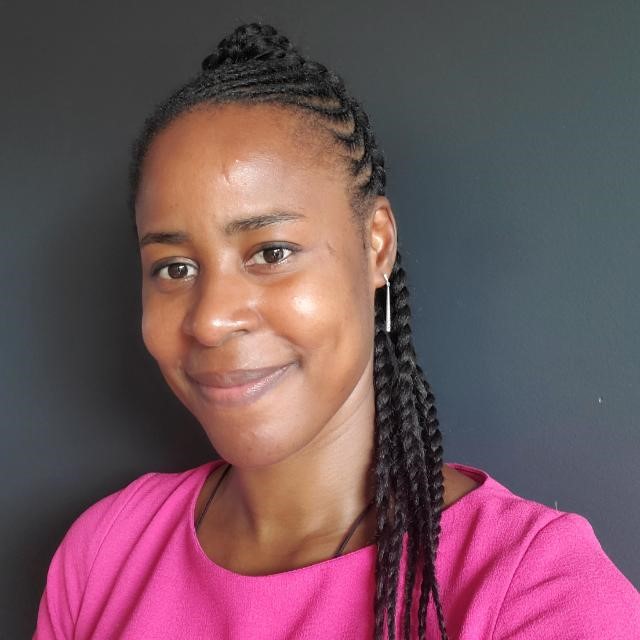
Yaping Luo is a part-time Assistant Professor at the Mathematics and Computer Science school of Eindhoven University of Technology (TU/e) , Netherlands. She also serves as the Research Lead of the Software Engineering and Automation team at ING Tech R&D since 2018. Her academic journey includes a PhD from TU/e (2016) and MSc/BSc degrees in Computer Science from Beihang University , China. PhD in Computer Science (2016) - Eindhoven University of Technology MSc in Computer Science - Beihang University BSc in Computer Science - Beihang University Her research spans two major domains: automotive safety engineering and software engineering methodologies . She pioneered model-based techniques for functional safety assessment in automotive systems and developed systematic approaches for safety evidence collection and metric design. Her recent work focuses on: Conceptual modeling and meta-modeling Low-code development platforms Business process modeling (BPM) Test automation and model-based testing Her publications demonstrate interdisciplinary applications of: Goal Structuring Notation (GSN) for safety cases Automotive architecture design ISO26262 safety standards Systematic evidence collection frameworks GSN pattern categorization She collaborates across sectors while maintaining her academic affiliation at TU/e.
Steffen Becker is a Professor at the University of Stuttgart's Faculty of Computer Science, Electrical Engineering and Information Technology, affiliated with the Institute for Software Engineering's Software Quality and Architecture group. His work focuses on software engineering, cloud systems, model-driven engineering, and cybersecurity. He leads research in architectural modeling tools like Slingshot, GUI testing frameworks (ViMoTest), and hardware security analysis. Recent studies explore AI integration in testing, education, and automotive systems (CARISMA). Research interests include elasticity modeling, self-adaptive systems, and educational technology. His 2025 publications address issues like end-user hardware comprehension, FPGA security, and LLM-driven test generation. Notable tools developed include the Slingshot Simulator for cloud-native systems and Gropius for cross-component issue management. Becker contributes to both theoretical advancements and practical implementations in software quality, security, and cloud infrastructure. Key Areas: Software Architecture, Cyber-Physical Systems, Testing, Reverse Engineering Tool Developments: ViMoTest, Slingshot, Gropius Education Focus: Online programming pedagogy and curriculum innovation His work bridges foundational research with industry applications, addressing challenges in automotive computing, cloud elasticity, and human-centric security awareness. Recent efforts emphasize explainable hardware (XHW) and AI's role in qualitative analysis automation.
Dr. Kevin Lano is a Reader in Software Engineering at King's College London's Department of Informatics, part of the Faculty of Natural, Mathematical & Engineering Sciences. He serves as Editor of the Software Systems Modelling journal and has held roles as Principal Investigator in multiple EPSRC-funded projects. Education: PhD (Doctor of Science) in Mathematics of Vagueness and Approximate Reasoning from the University of Bristol (1989) and BSc from the University of Reading (1984). Research focuses on model-driven engineering, software sustainability, UML, and FinTech applications. Key interests include model transformations, agile methodologies, and applying AI (LLMs) to requirements engineering. His work on frameworks like AppCraft and MathOCL demonstrates expertise in mobile app development and financial modeling. Notable awards include the Best Paper Award (2022) and Highly Ranked Scholar (Lifetime) (2024) . His research spans 152 publications, with recent work on sustainable software re-engineering and LLM applications in reverse engineering. Grants/Projects: Led projects such as Financial Model Specification and Validation (EPSRC, 2024), Model Transformation Engineering and Verification Network (2016–2019), and VeriTrans (2013–2016). Current work emphasizes sustainable software practices and FinTech integration. Labs/Teams: Active in the Sustainability Hub and Finance Hub, advancing research in software sustainability and computational finance.
Antoine Beugnard is a Professor in the Computer Science Department at IMT Atlantique. He received his PhD in Computer Science from the University of Rennes 1 (1993) and accreditation to supervise research in 2005. His career spans academia and industry, including roles at ENST-Bretagne, Telecom Bretagne (now IMT Atlantique), and Michael Jackson France. Education: PhD in Computer Science (University of Rennes 1, 1993), Accreditation to Supervise Research (2005) Affiliation: IMT Atlantique, Lab-STICC (UMR 6285), P4S team Beugnard's research focuses on software modeling, particularly digital twins, model federation (via Openflexo/FML), and late-binding semantics in heterogeneous object-oriented languages. He explores interoperability challenges in multi-language systems and advocates for unified semantics to improve component compatibility. Key trends in his publications include model-driven engineering, digital twin architectures, and formal modeling notations. His work bridges theoretical foundations with industrial applications, notably in telecom systems for Orange and multi-level modeling frameworks. Advising and grants highlight his mentorship of 10+ PhD candidates and leadership in projects like Openflexo. He actively contributes to academic discussions on modeling methodologies and software development processes.
Diego di Bernardo is a Full Professor of Biomedical Engineering at the University of Naples Federico II and Principal Investigator at TIGEM, serving as Coordinator of the Genomic Medicine Program and Head of the Bioinformatics Core. His work bridges engineering and biological sciences to advance disease understanding and therapeutic development. His educational background includes a Laurea cum laude in Electronic Engineering from the University of Naples Federico II (1997) and a PhD in Medical Physics from the University of Newcastle School of Medicine (2001), funded by a European Commission Marie Curie Fellowship. Postdoctoral training followed at the Wellcome Trust Sanger Center and Boston University. Di Bernardo's research integrates Biomedical Engineering, Control Engineering, and Molecular Biology to pioneer Biomolecular Control. His lab develops microfluidics platforms for real-time cellular analysis and computational approaches for gene network reverse engineering and drug repositioning. Current work focuses on single-cell transcriptomics to combat drug resistance in cancer and engineer stress-response pathways for bioproduction optimization. His publication record demonstrates consistent innovation in computational biology, with recent work emphasizing pan-cancer transcriptomics, microfluidics-based cell control, and bioinformatics tool development for pathway analysis. The research trajectory shows increasing integration of engineering principles with genomic medicine. Scientific recognition includes: Marie Curie Fellowship He advises PhD students including Clarissa Poles and Virginia Fusco, leading a multidisciplinary team of postdocs and bioinformaticians. Major funding sources include Telethon, AIRC, Italian Ministries, HFSP, and EU programs such as Re-MEND (2023-2027) for mental health resilience and iPC (2019-2023) for pediatric cures. His TIGEM laboratory operates cutting-edge microfluidics and bioinformatics facilities to engineer living systems, with current projects targeting super-producer cell lines for biological drugs and viral vectors while reducing production costs through stress-response re-engineering.
Houari A. Sahraoui is a Full Professor at the Department of Computer Science and Operations Research (GEODES Lab) at Université de Montréal. His research focuses on software visualization, model transformation, software metrics and quality, reverse engineering, and applications of artificial intelligence in software engineering. He has authored nearly 200 publications and three books, and frequently delivers invited seminars. He has held leadership roles in major conferences, including General Chair of IEEE Automated Software Engineering (2003) and VISSOFT (2014). Education: PhD in Computer Science (1995), Université Pierre et Marie Curie - LIP6, Paris, France (specializing in object-oriented meta-modeling and model transformation) Engineering Diploma (1990), Institut National d'Informatique, Algiers, Algeria Research Interests: Application of AI techniques to software engineering Object-oriented software metrics and quality Software visualization methodologies Reverse engineering and re-engineering strategies Awards and Recognition: Excellence in Science Teaching Award (2003-2004) ACM SIGSOFT Distinguished Paper Award (2005) Multiple best paper awards at CASCON and BM-FA (2010) Advising & Grants: Supervised over 40 PhD, MSc, and Postdoc students. Active in organizing conferences and serving on program committees (e.g., ASE, VISSOFT, LMO steering committees). Labs/Teams: Member of the GEODES Lab (Génie Logiciel et Ingénierie des Connaissances) at Université de Montréal.
Le Guan is an Associate Professor at the School of Computing, University of Georgia. His research focuses on embedded systems security, IoT security, and software engineering. He holds a PhD from the Chinese Academy of Sciences and a BEng from the University of Science and Technology of China. His work includes groundbreaking contributions to firmware security, hardware-assisted defense mechanisms, and vulnerability detection in cyber-physical systems. Education: PhD in Information Technology, Chinese Academy of Sciences (2015) BEng in Computer Science, University of Science and Technology of China (2009) Research Interests: Embedded Systems Security Firmware Integrity and Analysis Cyber-Physical System Defense Hardware-Software Co-Security Automated Vulnerability Detection Recent Research Trends: Recent articles highlight innovations in firmware emulation, hybrid fuzzing for IoT devices, and hardware-assisted security mechanisms for microcontrollers. His work frequently bridges theoretical frameworks with practical implementations for real-world embedded systems. Awards: NSF Career Award (2023) Student Career Success Influencer Award (2022) Grants and Collaborations: Co-PI on the 2023 Presidential Interdisciplinary Seed Grant on Deep Fakes. His NSF Career Award supports research into data protection in embedded systems. Collaborates widely with industry and academia on firmware security and automotive systems.
Aurélien Francillon is a full professor in the Networking and Security Department at EURECOM, France. His research focuses on embedded systems security, software security, and telecom fraud. He holds a PhD from INRIA Grenoble and previously worked as a postdoc at ETH Zurich's System Security Group. Education & Experience: PhD in Computer Science, INRIA Grenoble Postdoctoral Researcher, ETH Zurich (2013-2015) Current Position: Full Professor at EURECOM Research Interests: His work addresses critical challenges in securing embedded systems, firmware analysis, side-channel attacks, and telecom fraud. He pioneers tools like Avatar2 for firmware analysis and explores vulnerabilities in Bluetooth, TLS, and CI/CD systems. His methodologies emphasize reproducibility (BEERR framework) and automation (LibAFL QEMU). Labs & Collaborations: Collaborates with industry partners like Intel Labs, SAP Security Research, and Cisco Talos. His lab leads open-source projects including SymCC, LibAFL, and X-Ray-TLS. Advises over 20 PhD/Master students and postdocs, many now in academia and industry. Awards & Recognition: (No explicit awards listed, but extensive contributions to top-tier security conferences and open-source frameworks.) Grants & Funding: Secures funding through European Research Council grants and industry partnerships for projects on firmware security, IoT vulnerabilities, and CI/CD pipeline integrity.
Dr. Gurram Gopal serves as an Industry Professor at Illinois Institute of Technology and a Visiting Professor at ISM. He has held roles as a strategy consultant, manager at ZS Associates, and supply chain executive at Tellabs. His research focuses on business strategy, supply chain optimization, sustainability, and corporate social responsibility. He has published over 50 papers and presented globally at conferences like PRME. Dr. Gopal has received prestigious honors including the Fulbright Scholar Award (2011-2012) and selection as a Fulbright Specialist Candidate (2013-2018). He teaches courses in operations management, supply chain analytics, and global business processes. His work integrates technology applications with ethical business practices, emphasizing innovation in process management and B2B marketing. Notable contributions include studies on blockchain in humanitarian logistics, AI adoption in retail, and sustainable marketing's impact on customer loyalty. He leads educational initiatives in Ireland, India, and Turkey, advocating for global supply chain resilience and data synchronization strategies.
Dr. Mahmoud H. Qutqut is an Assistant Teaching Professor in the Faculty of Computer Science at the University of New Brunswick (UNB) in Fredericton, Canada since September 2023. Previously, he served as Chair of the Cybersecurity and Cloud Computing Department at Applied Science University in Jordan (July 2022–August 2023) and was promoted to Associate Professor there in December 2019. He has held academic positions since 2014, including a visiting role at Queen’s University (2017–2019) where he contributed to research and teaching. His educational background includes a Ph.D. (2014) and M.Sc. (2008) in Telecommunication Systems, and a B.Sc. (2004) in Computer Systems. Research interests focus on smart city technologies, IoT, cybersecurity, and data-driven networks. He actively publishes in top-tier venues such as IEEE Access and has served on technical committees for conferences and journals. Notable achievements include a Teaching Excellence Award nomination (2018) and founding the Cisco Academy at Applied Science University (2015). Dr. Qutqut’s academic career spans teaching roles at Queen’s University, where he instructed courses on computer networks and computing fundamentals. His research bridges theoretical advancements with practical applications in network security, machine learning, and IoT systems. He has supervised impactful student projects, such as winning entries in graduation competitions (2017).
Mariano Ceccato is an Associate Professor in the Department of Computer Science at the University of Verona, Italy. With a PhD in Computer Science from the University of Trento (2006), he has led numerous publicly funded and industrial research projects. His expertise includes security testing, penetration testing, code hardening, and empirical studies. Principal Investigator in multiple research initiatives Visiting Research Scientist at the University of Luxembourg Author/co-author of over 100 peer-reviewed papers Research Focus His work spans Android security, Ethereum smart contracts, REST APIs, and software protection techniques. Key contributions include: Security testing frameworks using reinforcement learning Advanced static analysis for Ethereum bytecode Novel obfuscation strategies for Java/Android Empirical studies on security report usability Comparative analysis of malware detection techniques Scientific Contributions He has received multiple awards including the Best Paper at IEEE ICST 2022, Best Research Paper at IEEE/ACM ICSE 2023, and ACM Distinguished Paper awards.
Dr. Alvine Boaye Belle is an Assistant Professor in the Department of Electrical Engineering & Computer Science at Lassonde School of Engineering, York University. She leads the DARE! research group and serves on multiple international committees, including ICSE and RE conferences. Her work bridges software engineering with equity, diversity, and inclusion (EDI) initiatives. PhD in Software Engineering (École de Technologie Supérieure, University of Quebec) 2-year Industrial Postdoctoral (University of Ottawa) Graduate Diploma in Public Administration & Governance (McGill University) Dr. Belle's research focuses on system assurance for autonomous systems, generative AI applications in software engineering, and EDI in computing . She applies machine learning to safety case automation and vulnerability detection, as shown in her publications with high-impact journals. Her recent work explores deep learning and SVM models for Android malware detection with 99% accuracy. She mentors a diverse group of students across Bachelor's, Master's, and PhD levels, emphasizing accessibility and social impact in technology. Keynote speaker at Black History Month events Moderator of EDI-focused panels at ICSE conferences Editorial board member for journals like IEEE Software and Information and Software Technology
Wesley Klewerton Guez Assuncao serves as an Associate Professor in the Department of Computer Science within the College of Engineering at North Carolina State University. Previously, he held positions as a University Assistant/Senior Researcher at Johannes Kepler University Linz in Austria, Postdoctoral Researcher at Pontifical Catholic University of Rio de Janeiro in Brazil, and Assistant/Associate Professor at Federal University of Technology - Paraná in Brazil. His academic journey includes a Ph.D. in Computer Science from the Federal University of Paraná with a visiting period at Johannes Kepler University. Dr. Assuncao's research spans several critical areas in modern software engineering. His primary interests include Software Modernization (reverse engineering, re-engineering, and migration), Variability Management (variability mechanisms, software customization, and software reuse), and Software Quality (technical debt, code smells, and software refactoring). He also investigates Model-Driven Engineering (model inconsistency detection, repair generation, and change propagation), Collaboration in Systems Engineering (change synchronization, tool flexibility, and conflict awareness), Software Testing (regression testing, integration testing, and test case selection/prioritization), and AI4SE (Generative AI, Machine Learning, and Evolutionary Algorithms for Software Engineering). His recent publications reveal a strong focus on software modernization challenges, particularly regarding legacy systems transformation, microservices architecture, and the application of AI techniques in software engineering. The research shows increasing integration of Large Language Models in addressing software evolution problems, with emphasis on empirical validation through industrial collaborations. His work consistently bridges theoretical foundations with practical applications, as evidenced by multiple industry partnerships and real-world case studies. Dr. Assuncao has received numerous prestigious awards including Distinguished Reviewer Awards from FSE and SANER conferences, a Young Researcher Award from Johannes Kepler University, and multiple Best Paper Awards from top software engineering conferences. His research has been recognized with ACM SIGSOFT Distinguished Paper Awards and IEEE Computer Society TCSE Distinguished Paper Awards. In terms of academic service, he serves as Co-editor of the In Practice track at the Journal of Systems and Software and has held various leadership roles in major conferences including ICSE, SANER, MSR, and SPLC. He has successfully secured substantial research funding totaling approximately USD 1.91 million from sources including the Austrian Science Fund, Brazilian National Council for Scientific and Technological Development, and state-level Brazilian research foundations. Dr. Assuncao leads the Wolfpack Innovations in Software Engineering Research (WISER) Lab at NC State University, where he supervises graduate students working on cutting-edge software engineering research problems. His lab maintains strong collaborations with international institutions and industry partners including Dynatrace and ITPRO Consulting & Software GmbH.
Sebastian Krieter is a researcher in software engineering and product-line systems, affiliated with Otto-von-Guericke University Magdeburg, Germany. He completed his PhD in 2022 with a dissertation focused on efficient interactive and automated product-line configuration. His research spans software variability, feature modeling, configuration management, and automated software configuration. Research Interests: Software Product Lines and Variability Management Feature Modeling and Analysis Automated Configuration and Sampling Algorithms Combinatorial Testing and Feature Interaction Knowledge Compilation and SAT-based Analysis His recent work includes developing methods for T-wise interaction coverage, improving sampling efficiency in configurable systems, and integrating AI techniques into software variability management. He has contributed to the development of tools like FeatureIDE and UVL (Universal Variability Language). Scientific Contributions: Over 70 peer-reviewed publications in top-tier venues such as ICSE, SPLC, GPCE, and ASE. Key organizer of workshops including the 1st International Workshop on Reverse Variability Engineering (Re: Volution). Active contributor to open-source tools and datasets for benchmarking feature model analyses. Collaborations: He has collaborated extensively with Thomas Thüm, Gunter Saake, Thomas Leich, and a network of international researchers in software engineering and AI.
Vincent Naessens is a Professor at the Department of Computer Science within KU Leuven's Faculty of Engineering Technology, leading the Subdivision Mobility and Security at the Distributed and Secure Software (DistriNet) research group across Ghent and Aalst campuses. His work bridges academic research and industrial applications in critical security domains. Research Focus: Dr. Naessens specializes in secure mobile platforms , advanced authentication systems , privacy-enhancing technologies , and industrial control system security . His research addresses real-world vulnerabilities in IoT ecosystems and develops novel anonymization techniques that balance data utility with privacy protection. Current work emphasizes self-healing embedded systems and secure smart building infrastructures. Publication Trends: Recent publications (2024-2025) reveal three dominant threads: (1) Advanced dataset anonymization methods addressing temporal data and k-anonymity limitations; (2) Deep security analysis of commercial IoT products exposing critical vulnerabilities; (3) Privacy-preserving collaborative data sharing architectures. His work consistently targets practical implementations with measurable privacy-utility tradeoffs. Research Leadership: As principal investigator for major projects including Towards Self-Healing Embedded Systems (2025-2029) and BUGATTI: Embedded Security Testing (2025-2028), he directs teams exploring exploit prevention and adaptive patching. Key funding sources include FWO and EU programs supporting his work on secure SCADA systems and privacy middleware. Research Environment: Leading DistriNet's Mobility and Security subdivision, Naessens oversees a dynamic team publishing at top venues like WOOT and ARES. The group maintains strong industry ties through projects like TRUSTI (IoT security updates) and SolidLab Flanders, with active participation in the Computer Science Department Council and Faculty Advisory Committee.