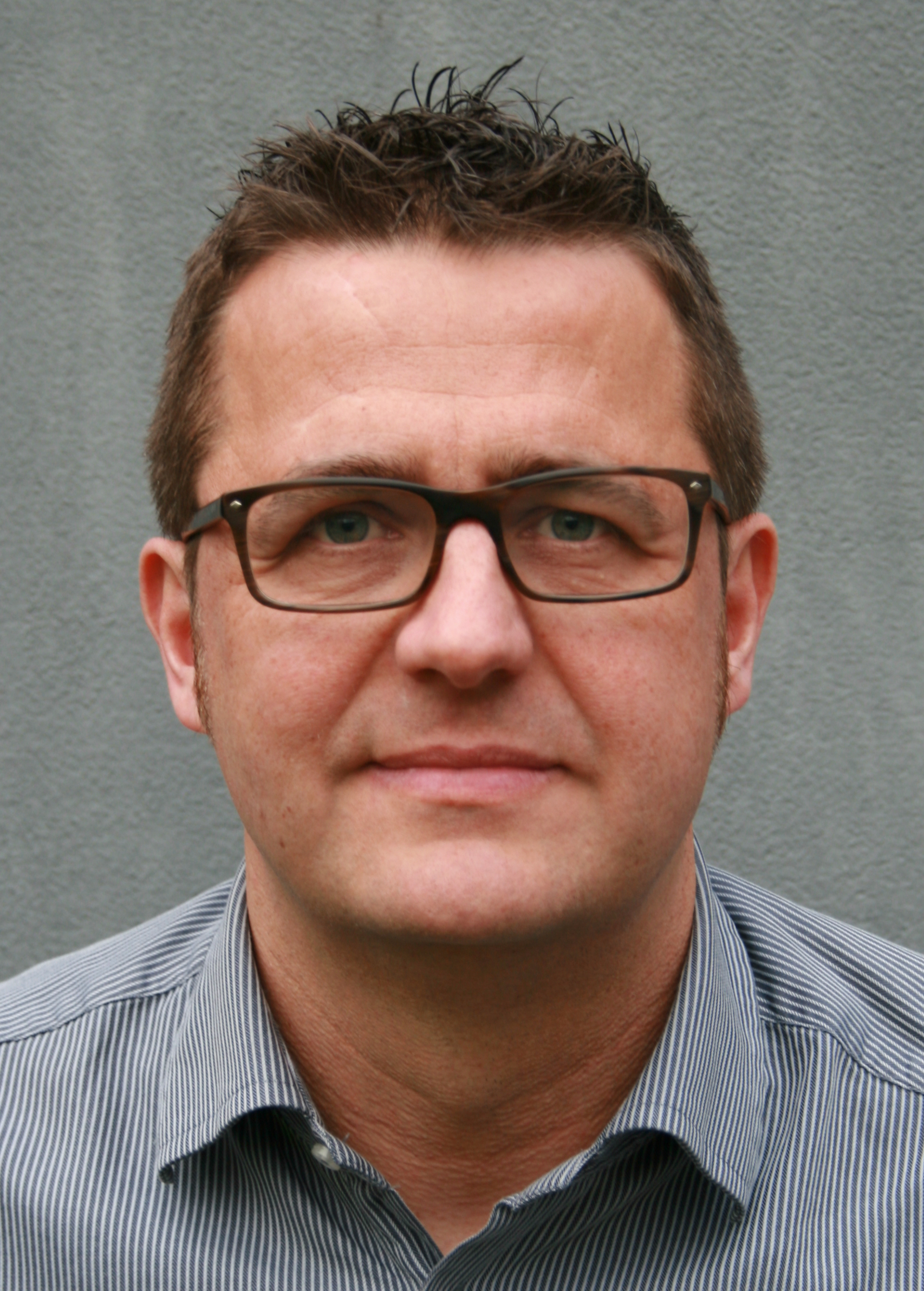
Geert Deconinck is a full professor at KU Leuven , leading the Electrical Energy Systems and Applications (ELECTA) research group within the Department of Electrical Engineering (ESAT). He also serves as scientific leader of the EnergyVille research center's algorithms domain, focusing on smart electrical networks and thermal systems. M.Sc. and Ph.D. from KU Leuven Head of ELECTA since 2012 (10 professors, 8 postdocs, 70+ PhDs) Over 8 million EUR research budget in last 5 years 44 completed PhDs and 10 current advisees IEEE Transactions editorial board member His research spans smart grid architectures , distributed control , and cyber-physical security , with recent focus on EV-grid integration , renewable energy democratization , and multi-carrier energy systems . Current projects include: Smart Charging - E-Mobility meets Renewable Energy Early Detection and Defense Systems for Smart Grids Open-source P2P energy sharing platforms Microgrid control strategies for PV-battery systems Awarded IET Fellow and IEEE Senior Member status, his work combines machine learning with power systems engineering through both theoretical modeling and experimental validation . He has contributed over 575 publications with 9800+ Google Scholar citations.
Johan Driesen is a full Professor at KU Leuven's Faculty of Engineering Sciences, where he serves as Department Head of Electrical Energy Systems and Applications (ELECTA) and Director of the KU Leuven Institute for Energy and Society (KIEM). He also holds leadership positions at EnergyVille as Division Head and Subdivision Head. His work spans both academic and applied research in electrical energy systems. His research interests focus on renewable energy integration, power electronics, electrical drives, electric vehicles, and smart grids. Driesen's work particularly emphasizes distributed generation of electricity, with significant contributions to floating photovoltaics, offshore wind integration, and low-voltage DC systems. His research group actively investigates the optimization of grid integration for renewable energy sources and the development of advanced power electronic converters. Driesen's recent publications reveal a strong emphasis on practical applications of renewable energy systems, with particular focus on reliability analysis of low-voltage DC systems, optimization of PV-battery systems, and integration of electric vehicles with renewable energy sources. His work bridges theoretical analysis with real-world implementation challenges. Laureate prize of the Belgian Royal Society of Electrotechnics (KBVE/SRBE) 'Research and Development' for master theses 1996 2nd place in final round IEEE Region 8 Student Paper Contest 1997 in München, Germany Laureate biannual prize 'R.Sinave' of the Belgian Royal Society of Electrotechnics (KBVE/SRBE) for best PhDs 2002 Driesen has supervised numerous students and researchers, including J. Despeghel who completed work on residential PV-battery system optimization. His current research portfolio includes substantial projects such as Flux50 (working on the future energy system), solar and wind energy in the Belgian marine zone, and smart charging solutions that integrate e-mobility with renewable energy. He serves as promoter or co-promoter on multiple major research initiatives with funding extending through 2028. At EnergyVille, Driesen leads research teams working on cutting-edge energy solutions, with particular focus on DC systems, grid integration challenges, and the development of innovative power electronic solutions for renewable energy applications. His work has significant industrial relevance and practical implementation potential.
Frank Piessens is a Full Professor in the Department of Computer Science at KU Leuven's Faculty of Engineering Science, where he leads the Distributed and Secure Software (DistriNet) research group. His research focuses on cutting-edge security challenges at the hardware-software interface. His research interests span: Hardware-software co-design for end-to-end security Confidential computing architectures Microarchitectural side-channel mitigation Secure IoT development Compiler-based security mechanisms Control-flow integrity techniques Recent publications (2024-2025) demonstrate strong focus on: Hardware security cost/performance tradeoffs Processor-level security enhancements (RISC-V, high-end CPUs) IoT device lifecycle security Control-flow leakage prevention Microcontroller IP protection He currently supervises PhD students including M. Bognár and H. Winderix, and leads major research initiatives such as: Hardening confidential computing through vertically integrated system design (2025-2031) Designing secure hardware for software-exploitable attacks (2025-2029) Compiler-based mitigations for microarchitectural side-channels (2023-2027) Security Arms Race at the Hardware-Software Boundary (2020-2025)
Hakan Ergun serves as an Associate Professor at KU Leuven's Faculty of Engineering Science within the Department of Electrical Engineering (ESAT). He leads the Subdivisie EnergyVille Electa - Ergun and holds key roles in EnergyVille initiatives, including membership in the Division EnergyVille and the Council of the Faculty of Engineering Science. His research focuses on power systems engineering with specialization in HVDC grid technology, renewable energy integration, and stochastic optimization. Current projects include predictive maintenance for wind farms, congestion management for offshore HVDC grids, and development of hybrid AC/DC grid software tools. His work addresses critical challenges in grid resilience, uncertainty modeling, and multi-national offshore grid coordination. Recent publications demonstrate strong trends in hybrid AC/DC grid optimization under uncertainty, with emphasis on stochastic programming, polynomial chaos expansion, and risk-based operational models. Key themes include offshore grid protection, frequency stability with energy storage, and spatio-temporal variability in power system planning. Ergun actively supervises doctoral candidates including K. Phillips and C.K. Jat. His research portfolio includes significant EU-funded projects such as CROCODILE (Cross-border Coordination of Offshore Grids) and advanced HVDC grid development initiatives with multi-year funding through 2028-2029. He directs the EnergyVille Electa subdivision focused on electrical energy systems applications, collaborating with industry partners on real-world grid implementation challenges. Current work emphasizes practical solutions for multi-GW offshore energy hubs and resilient power systems leveraging HVDC transmission flexibility.
Dimitri Van Landuyt serves as an Associate Professor in the Department of Computer Science at KU Leuven , affiliated with the Information Systems Engineering Research Group (LIRIS) . He leads and co-promotes multiple high-impact research projects focused on security and privacy engineering, including initiatives on model-driven security risk analysis , privacy by design , and IoT security . His work spans GDPR compliance, synthetic data management, and threat modeling innovations. Academic Leadership : Member of the Council of FEB and Campus Council Leuven/Kortrijk Research Pillars : Privacy threat modeling, security automation, IoT systems, GDPR technical implementation His publications demonstrate expertise in privacy-enhancing technologies, with recent work analyzing LLM applications in threat modeling, developing tree-based privacy analysis frameworks, and creating adaptive trust management architectures. He explores serious games for security training, synthetic data quantification standards, and runtime threat assessment mechanisms. Dimitri contributes to educational programs through courses in ICT Service Management , Security & Privacy by Design , and Research Methodologies . He supervises student research while collaborating with industry and academia on data protection challenges.
Amélie Lachapelle serves as Assistant Professor at the University of Namur's Faculty of Law, with cross-appointments in the Faculty of Economic, Social and Management Sciences. Her primary research affiliations include the Centre de Recherche Information, Droit et Société (CRIDS) and Namur Digital Institute (NaDI), with additional membership in UCLouvain's Centre de Recherche sur l'Etat et la Constitution (CRECO). She currently teaches Comparative Law, Environmental Law, Sustainable Development Law, and Economic Law across multiple faculties while leading research at the intersection of digital governance and ecological transition. Her educational background includes a Bachelor of Laws from FUNDP (2011, High Distinction), Erasmus exchange at USAL Salamanca (2013, Matricula de honor), and Master's in State and European Law from UCLouvain (2013, High Distinction), culminating in a Doctorate in Legal Sciences from UNamur (2020) on tax whistleblowing mechanisms. Lachapelle's research synthesizes whistleblowing law , digital governance , and sustainable development , focusing on tensions between fundamental rights (privacy, freedom of expression) and fiscal transparency requirements. Her work examines how EU directives like 2019/1937 reshape tax whistleblowing while navigating GDPR constraints, with particular attention to digital reporting channels and cross-border implications. Recent scholarship explores sustainable IT frameworks where digital law intersects with circular economy principles. Analysis of her 15 most recent publications reveals three dominant trajectories: (1) Evolution of tax whistleblowing in digital environments (40% of output), (2) Sustainable digital transition legal frameworks (35%), and (3) Fundamental rights protection in automated tax administration (25%). Her work consistently bridges Belgian implementation challenges with European legal developments. 1st prize in 2011 Eloquence Tournament (Young Bar of Namur) TFR-prijs 2018 for Foreign Tax Case Law commentary UNamur MT180 Finalist (2019) TFR Doctoral Grant 2020 FRS-FNRS Doctoral Fellowship (2015-2019) Lachapelle actively advises governmental bodies as expert for Deputy Prime Minister Georges Gilkinet's office (democratic renewal) and leads EU directive implementation studies. She serves as Editorial Secretary for the Journal of Information Technology Law and sits on the Management Board of INCUEBRUX. Her research group at CRIDS/NaDI develops practical frameworks for sustainable IT governance, recently contributing to Belgium's 4th Sustainable IT Charter signing. Current projects examine the twin green-digital transition through legal lenses, with emerging work on AI governance in public administration.
Thibaut Vandervelden is a Researcher at Vrije Universiteit Brussel's Faculty of Engineering, Department of Electronics and Informatics. His work focuses on hardware security, embedded systems, and cryptographic implementations for resource-constrained environments. With an h-index of 4, he has produced significant research output since 2019, primarily in Sensors, IEEE Access, and Future Generation Computer Systems. His research interests center on practical security implementations for IoT devices and embedded systems, with particular expertise in Rust programming for secure embedded development, cryptographic protocol optimization, and network security for low-power wireless networks. His work bridges theoretical security concepts with practical implementation challenges in constrained environments. Analysis of his recent publications reveals a strong trend toward secure embedded systems development, with increasing focus on Rust programming language applications, zero-knowledge proofs for privacy-preserving systems, and optimization of cryptographic operations for IoT devices. His research demonstrates consistent collaboration with colleagues including Ruben De Smet, An Braeken, and Kris Steenhaut. Scientific recognition includes: IACR RWC'21 Cryptohackathon on Functional Encryption: 2nd prize (2021) Vandervelden actively participates in research community building through organizing workshops like RustIEC and presenting at events focused on embedded systems security. His work has been referenced in Wikipedia pages and garnered attention across academic and professional platforms, with media contributions on cybersecurity research in Flanders. He leads and participates in research teams focused on wireless community development and the Internet of Batteryless Things, contributing to both theoretical frameworks and practical implementations in hardware security.
Bjorn De Sutter is a Full Professor in the Computer Systems Lab within the Department of Electronics and Information Systems at Ghent University, Belgium. His research spans software protection/security (obfuscation, side channels, diversity) and code generation for accelerators like GPUs. Research interests include: Software protection mechanisms against reverse engineering and attacks Compiler techniques for heterogeneous architectures Multi-variant execution and software diversity Cryptographic key extraction and protection modeling Publications focus on software security (67%), systems (20%), and compilers (13%), with recent work in protection evaluation methodologies, GPU compilation, and diversified execution. Key trends include empirical security validation and adaptive protection techniques. Awards and honors: Barco Award for Graduation Dissertations (1998) HiPEAC Technology Transfer Awards (2013, 2018) ACM SIGSOFT Distinguished Paper & Best Paper Award at ICPC 2017 Advises 4 PhD students and 6 Master's candidates. Secured €2M+ funding from: EU FP7 (ASPIRE coordinator) FWO projects on software protection/compilers VLAIO industrial fellowships Leads the Computer Systems Lab focusing on secure compilation and architecture-aware optimization.
Maciej Otmianowski is a researcher at the Vrije Universiteit Brussel (VUB) , affiliated with the Faculty of Law and Criminology and active in data protection, AI regulation, and EU policy frameworks. PhD Candidate: Law, Science, Technology & Society Key Collaborations: d.pia.lab, Data Protection Law Scholars Network Research Foci: GDPR, AI Act, stakeholder dialogues, risk-based compliance Research Themes include: Data protection governance under EU law AI risk assessment methodologies Participatory frameworks for digital regulation Software tools for privacy compliance Stakeholder value mapping in policy design Interdisciplinary legal-technical approaches Recent Publications highlight: AI Act high-risk classification mechanisms RedIntoGreen software for data governance Stakeholder engagement in EU policy DPIA templates for GDPR compliance Risk analysis case studies Interdisciplinary regulatory proposals
Jules Dejaeghere is a Researcher at the Faculty of Computer Science, University of Namur, working within the Namur Digital Institute. They hold an ORCID ID (0000-0002-4970-3730) and have established research expertise in cybersecurity with particular focus on distributed networks and privacy-enhancing technologies. Research interests include: Cybersecurity Distributed Networks Anonymous Communication WebAssembly Traffic Analysis Computer Security Dejaeghere's publication portfolio demonstrates evolving expertise in privacy technologies, with recent work focusing on merging traffic for improved privacy, flexible anonymous networks, and security comparisons between emerging technologies like eBPF and WebAssembly. Their research consistently addresses the tension between privacy requirements and system performance in networked environments. Currently active in the CYBEREXCELLENCE project (2022-2027), a cybersecurity excellence initiative within the Walloon Region plan, Dejaeghere contributes research focused on security tools development and computer code analysis. The project shows strong alignment with their expertise in security (100%), tools (80%), and computer codes (73%). Professional activities include presentations at the 23rd Workshop on Privacy in the Electronic Society (2024), the Belgium-Netherlands Software Evolution Workshop (2024), and upcoming participation in the Next Generation Internet Forum 2025, demonstrating active engagement in the cybersecurity research community.
Jean-Michel Dricot is an Associate Professor at the Université libre de Bruxelles (ULB) , where he has been affiliated since 2010. He is a founding member of the Belgian Master of Sciences in Cybersecurity (2016) and the ULB Cybersecurity Research Center (2017) . Education: M.Sc. in Computer Engineering (2001), PhD in Engineering (2007) from ULB His research focuses on cybersecurity for mobile/wireless networks and IoT , with expertise in network security , PUFs , and adversarial machine learning . Recent publications highlight interdisciplinary work on smart grid security , blockchain-based systems , and IoT privacy . Key article trends include: PUFs for authentication , adversarial attack mitigation , smart grid cryptography , and blockchain privacy . He has supervised multiple theses on topics like CubeSat security , Modbus/TCP protection , and ICS protocol analysis .
Jo Van Bulck is an Assistant Professor in the Department of Computer Science at KU Leuven's Faculty of Engineering Science, where he leads research in the Distributed and Secure Software (DistriNet) lab. His work focuses on security at the hardware-software boundary, particularly examining trusted execution environments and microarchitectural side-channel vulnerabilities. Dr. Van Bulck completed his Master's thesis on 'Secure Resource Sharing for Embedded Protected Module Architectures' at KU Leuven in 2015, receiving both the VASCO and BELCLIV thesis awards. He earned his PhD in 2020 with the dissertation 'Microarchitectural Side-Channel Attacks for Privileged Software Adversaries,' which received multiple prestigious awards including the ACM SIGSAC Doctoral Dissertation Award, ERCIM STM PhD Award, and FWO/IBM Innovation Award. His research primarily investigates vulnerabilities in trusted execution environments like Intel SGX, with seminal work on attacks such as Foreshadow, LVI, and ZombieLoad. His publications consistently appear in top security venues including IEEE S&P, USENIX Security, and ACM CCS. His research group has made significant contributions to understanding memory isolation failures, interrupt handling vulnerabilities, and developing principled approaches to validate enclave security properties. Dr. Van Bulck's work has profoundly impacted both academia and industry, with multiple CVE assignments for discovered vulnerabilities and direct influence on hardware and software security practices. His recent research focuses on extending security principles to low-end microcontrollers and developing automated validation frameworks for trusted execution environments. ACM SIGSAC Doctoral Dissertation Award (2021) FWO/IBM Innovation Award (2021) ERCIM WG STM Best Ph.D. Thesis Award (2021) Best Paper with Artifacts Award (SysTEX 2025) Distinguished Paper Award (EuroS&P 2025) Cybersecurity Artifacts Competition and Impact Award (ACSAC 2023) Dr. Van Bulck advises multiple PhD students including Márton Bognár (completed 2025) and Fritz Alder (completed 2023), and regularly supervises numerous master's theses. He leads several major research projects including 'Cross-Layer Systems Security for Trusted Execution Environments' (2025-2029) and 'Trustworthy Execution Environments for Secure Computing' (2024-2029). His research has been supported by competitive funding from KU Leuven and collaborative industry partnerships. As a member of the Council of the Faculty of Engineering Science, Dr. Van Bulck actively contributes to academic governance. He maintains the DistriNet research group's focus on practical security research with real-world impact, evidenced by numerous open-source contributions including the influential SGX-Step framework. His work bridges theoretical security principles with practical implementation challenges in modern computing systems.
Guillaume Nguyen is a researcher affiliated with the Faculty of Computer Science at the University of Namur and part of the Namur Digital Institute . Active in cybersecurity and cyber-physical systems research, he focuses on fuzz testing, Android security, and legislative compliance frameworks within the European Union context.
Florentin Rochet is a researcher at the Namur Digital Institute , Faculty of Computer Science, focusing on cybersecurity, anonymity, and transport protocol design. He actively contributes to the CYBEREXCELLENCE project (2022-2027) under the Walloon Region plan and has participated in international workshops like Privacy Enhancing Technologies Symposium (2024) . Research Interests : Cybersecurity, Tor network optimization, topological defense mechanisms, and secure transport protocols (TCP/TLS integration, QUIC). Key Projects : CYBEREXCELLENCE (co-investigator), REPHRAIN (2022 EU project). Scientific Contributions include 15+ publications on anonymity systems, path selection in Tor, and secure execution environments. His work aligns with UN Sustainable Development Goals (SDG 9, 16, 17). Notable awards: Alan Berman Research Publication Award (2020) Best Community Award (2021) Usenix Security Noteworthy Reviewer (2023)
Sofie Smismans is a Research Fellow and lecturer at the Department of Movement and Sport Sciences (MOSS) within the Faculty of Physical Education at Vrije Universiteit Brussel (VUB). She is an active member of the SPLISS (Sports Policy factors Leading to International Sporting Success) research group, contributing to both research and teaching activities in sport sciences with a focus on elite sport success factors and societal impact. Her educational background includes: Master in Management, Vrije Universiteit Brussel (2016-2017, Cum Laude) Master in Sports Management, Vrije Universiteit Brussel (2011-2016, Magna Cum Laude) Sofie's research spans the intersection of sport management, policy, and sociology with particular emphasis on elite sport systems. Her work examines high performance management frameworks, athlete career transitions, and the societal implications of sport participation. She investigates how elite sport success operates across micro, meso, and macro levels while exploring gender dynamics, economic aspects, and the inspirational effects of athletes as role models. Her methodological approach combines qualitative and quantitative techniques to address complex sport policy questions. Her publication portfolio demonstrates consistent growth from 2016 through 2024, with increasing output in recent years. Her research focuses primarily on athlete transitions, societal impact of sport, and elite performance systems, with strong connections to European sport policy development. The 2024 publications particularly emphasize practical applications of research findings for sport organizations and policymakers. Her recognition includes: Gaston Beunenprijs (December 11, 2020) Sofie coordinates the 'Event and project management in sport' course, assists in 'High Performance Management,' and supervises master's theses related to SPLISS. She supports students during Sport Management internships at both bachelor's and master's levels. Her research has been supported through significant international projects including B-WISER (2017-2018), Mind the Gap (2018-2020), Ecology of Dual Careers (2018-2019), Athletes for Society (2020-2022), and ongoing projects through 2026, funded by the European Commission and International Olympic Committee. Within the SPLISS research group, Sofie contributes to developing frameworks for understanding international sporting success while translating research findings into practical policy recommendations. Her work bridges academic research with real-world applications in sport management and policy development, particularly through her involvement in European Commission projects that directly influence sport governance across multiple nations.