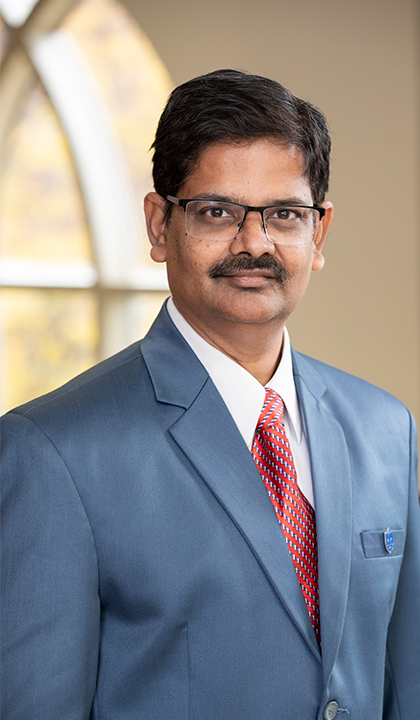
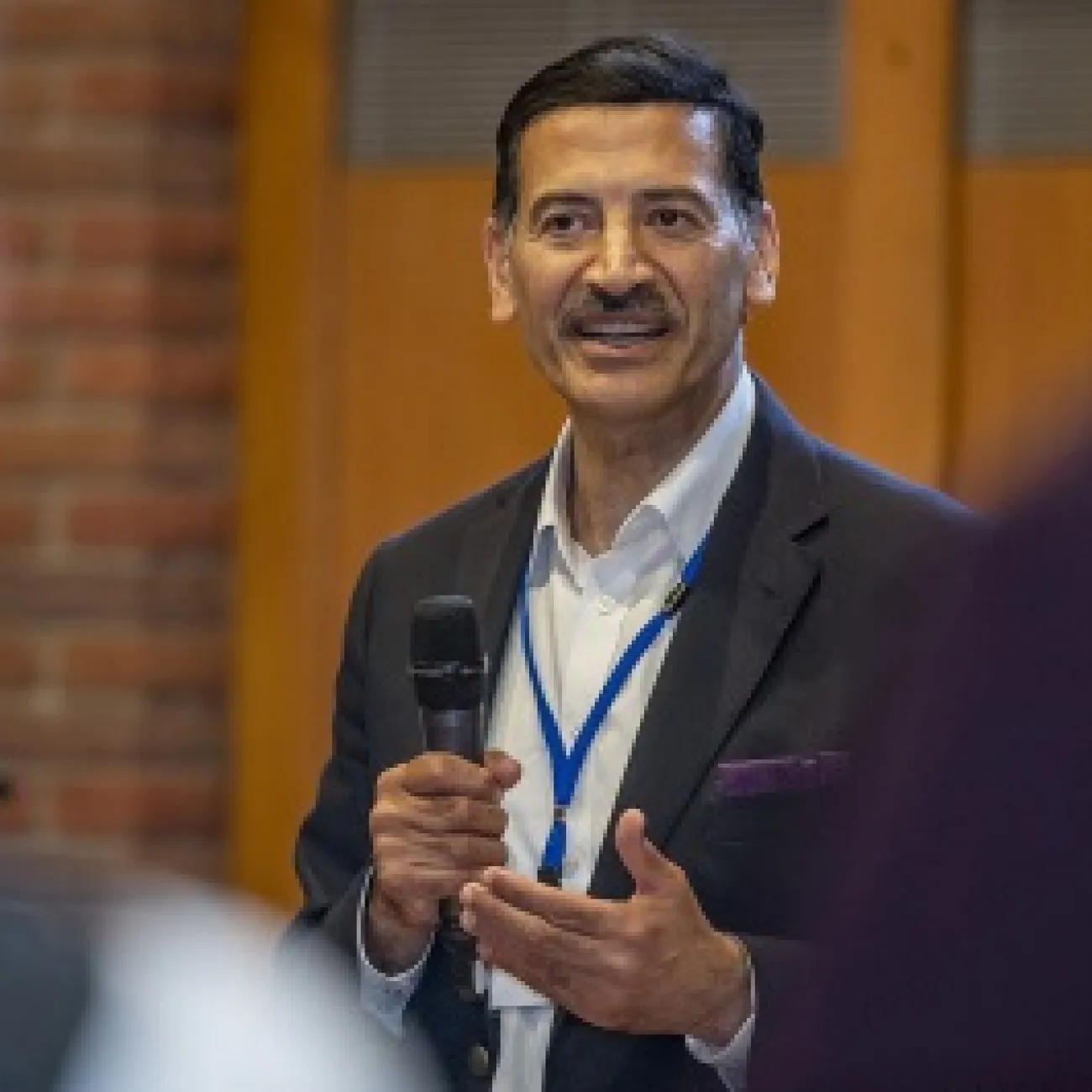
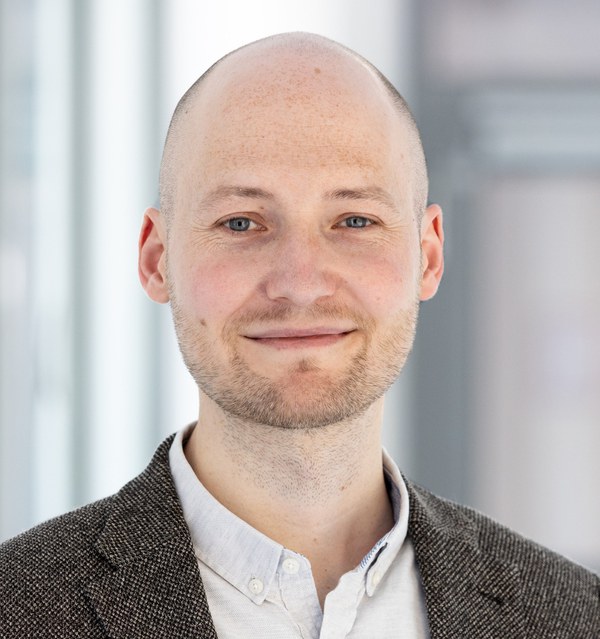
Palash Bera is Professor and Chair of Operations and IT Management at Saint Louis University's Chaifetz School of Business. His research develops analytical methods for conceptual modeling, requirements engineering, and business intelligence systems. Bera employs eye-tracking technology to study how users comprehend models, revealing cognitive patterns that inform better design practices. Bera's recent work bridges conceptual modeling with agile software development, creating tools that automatically generate test cases from behavioral requirements. He has secured funding from SERDP, USDA, and other agencies for projects on supply chain analytics and resource recovery. Bera directs the Business Analytics Practicum, connecting students with industry partners like Nestlé Purina. His research has appeared in MIS Quarterly, Information Systems Research, and other leading journals.
Dr. Jonathan Clark is a Professor and Director of the CISCOR at the FAMU/FSU College of Engineering's Department of Mechanical Engineering. His research focuses on bioinspired robotics, legged locomotion, and mechanical design, emphasizing robots for unstructured environments. He holds a Ph.D. (2004), M.S. (2000), and B.S. (1998) in Mechanical Engineering from Stanford University and Brigham Young University, respectively. Key research areas include dynamic climbing robots, compliant leg design, and shape deposition manufacturing. Notable projects involve the Sprawl family of robots and the development of multimodal robots like STARQ and Aquaclimber. His work bridges biomechanics and robotics, with applications in rescue, exploration, and industrial automation. Publications emphasize gait optimization, material science for robotics, and energy-efficient locomotion. Recent trends include bioinspired swimming robots and terrain-adaptive systems. Clark collaborates with biologists and engineers to advance robotics in complex environments. He advises on grants relating to dynamic systems and robotics education, and leads CISCOR's initiatives in advanced manufacturing and robotics innovation. Labs and teams include the CISCOR facility, focusing on prototyping and testing next-generation robotic platforms.
Bret Windom is Associate Professor of Mechanical Engineering at Colorado State University's Walter Scott, Jr. College of Engineering, specializing in combustion science and alternative fuels. He directs research on physiochemical fuel characterization, laser diagnostics, and energy conversion systems. Research investigates combustion dynamics of sustainable fuels, propulsion systems, and emission reduction strategies. Recent projects include oxymethylene ethers as low-sooting biofuels, hydrogen production systems, and hybrid SOFC-engine power generation. Funded by DOE, ONR, and Caterpillar, his work advances low-carbon energy technologies. Recipient of the SAE Teetor Educator Award (2018) and multiple research fellowships. Leads the Chemical Energy Conversion Laboratory, mentoring graduate students in combustion research. Current industrial collaborations focus on marine engine decarbonization and lubricant ignition behavior. Recent Publications demonstrate strong focus on sustainable fuels (hydrogen, LPG, OMEs), advanced diagnostics (laser spectroscopy, NMR), and energy system integration (SOFC hybrids, scramjets). Article keywords frequently include combustion optimization, emissions reduction, and alternative fuel characterization.
Pekka Abrahamsson is a Professor at the Faculty of Information Technology and Communication Sciences at Tampere University , Finland. He actively contributes to research in Software Engineering , Artificial Intelligence , and AI Ethics , with recent work focusing on generative AI, multi-agent systems, and ethical software design. Published over 42 research outputs (2016–2025) Editorial roles in multiple international conferences (2016, 2019, 2022–2024) His research emphasizes practical applications of AI in software development, including tools like ChatGPT for full-stack coding, multi-agent systems for requirements engineering, and frameworks for AI ethics in software practices. He also explores challenges in continuous software engineering and quantum computing architecture. Key publication trends (2024–2025) include: Agile methodologies enhanced by AI Ethical alignment in AI systems Autonomous software development platforms AI tool adoption in programming education Quantum software architecture reviews Technical debt in embedded systems Awards and recognitions : PlumX Metrics highlight 1 scientific prize (unspecified) High readership on platforms like Mendeley (up to 211 readers) Multiple citations in Scopus (up to 53 citations for quantum computing work) Grants and collaborations include global studies on work-from-home impacts, AI tool usage in programming courses, and projects like CodePori for autonomous development. His work influences policy and industry practices, particularly in AI ethics and multi-robot systems.
Douglas Nychka is a Professor in the Department of Applied Mathematics and Statistics at Colorado School of Mines since 2018. He holds an emeritus position at the National Center for Atmospheric Research (NCAR), where he previously directed the Institute for Mathematics Applied to Geosciences (IMAGe) from 2004 to 2017. Nychka earned his PhD in Statistics from the University of Wisconsin-Madison and a BA in Mathematics (with Physics emphasis) from Duke University. His research focuses on spatial statistics, nonparametric regression, and computational methods for large datasets, particularly applied to environmental and geophysical problems. He has developed influential R packages like fields and LatticeKrig , which are widely used for spatial data analysis. Nychka received prestigious awards including the Jerry Sacks Award for Multidisciplinary Research (2004) and recognition as a Fellow of both the American Statistical Association and the Institute of Mathematical Statistics. His work bridges statistical theory, computational innovation, and real-world applications in climate science and renewable energy. His academic career includes 14 years as a faculty member at North Carolina State University and roles at the National Institute of Statistical Sciences. Nychka's research emphasizes spatial statistics for climate data, statistical downscaling, and uncertainty quantification, with contributions to solar radiation modeling and extreme event analysis. He actively engages in interdisciplinary projects, collaborating with experts in climatology, environmental science, and data science. Professional service includes roles on committees for the National Research Council and leadership in statistical societies. His teaching focuses on modernizing curricula to integrate data science with applied statistics. Nychka’s work is characterized by a commitment to open-source software and reproducible research, exemplified by his R package contributions.
Lucy Bastin is a Professor in the School of Computer Science and Digital Technologies at Aston University, part of the College of Engineering and Physical Sciences. She holds academic roles since 2003, including leadership in the Digital Observatory for Protected Areas (DOPA) project at the European Commission. Her research focuses on biodiversity informatics, remote sensing, and citizen science, with applications in conservation planning and sustainable development. She advises PhD students on topics like GIS, remote sensing, and citizen observatories. Education: BSc Zoology (University of Nottingham), MSc GIS (University of Leicester), PhD in Spatial Population Ecology (University of Birmingham). She also holds a Postgraduate Certificate in Teaching and Learning in Higher Education. Research Interests: Essential Biodiversity Variables, metadata standards for citizen science, uncertainty in conservation models, disease mapping (e.g., MRSA), and environmental policy support. She developed the DOPA toolkit for protected area monitoring and co-authored the Bari Manifesto for biodiversity variables. Key Projects: DOPA Explorer 2.0, FLIERS EU project, EuroGEOSS initiatives Recent Awards: Midlands Women in Tech Finalist (2021), Best Paper Award (2018) Teaching: Software Engineering, Professional Ethics in Computing, GIS modules Labs/Teams: Part of the Computer Science Research Group and Aston Centre for Artificial Intelligence Research and Application. Collaborates with global partners on initiatives like BIOPAMA and the Green Deal Data Space.
Professor Sir Bashir M. Al-Hashimi is currently Vice President (Research & Innovation) at King’s College London and holds the ARM Professorship in Computer Engineering there. He is also a Visiting Professor in Electronics and Computer Science at the University of Southampton. Prior to academia, he worked in the electronics design industry for eight years before joining the University of Southampton in 1999, where he became a personal Chair holder in 2004. His research focuses on energy-efficient computing systems, low-power testing, and energy-harvesting technologies, with a strong emphasis on smart city applications and wearable computing. He has led numerous interdisciplinary projects funded by the EPSRC and industry, including the PRiME Programme Grant and the EPSRC-funded Spatial Computational Learning consortium. He has supervised 45 PhD students and authored/co-authored nearly 400 technical papers, earning eight best paper awards and contributing to five books. His honors include a CBE (2018), knighthood (2025), Fellowship of the Royal Society (2023), and roles on the Research Excellence Framework panels. He founded the Arm-ECS industry-academia center in 2008, promoting energy-efficient computing research.
Dr. Indratmo is an Associate Professor and Chair of the Department of Computer Science at MacEwan University. He holds a PhD from the University of Saskatchewan, an M.Sc. from the University of Manitoba, and a B.Eng. from Petra Christian University. His research focuses on information visualization, human-computer interaction, and social computing, with a particular emphasis on developing tools for analyzing social media data. He has contributed to projects like a visual analytical tool for sentiment analysis in Edmonton's traffic-related social media data and studies on multimedia content effectiveness in communication strategies. Indratmo teaches a range of computer science courses, emphasizing student engagement through transparent pedagogical practices. His work bridges technical innovation with social impact, aiming to enhance communication strategies for organizations through data-driven insights. He has published extensively in journals like Big Data Research and Visual Informatics , and his research spans topics from educational visualization tools to smart mirror applications and geospatial heritage systems. Outside academia, he enjoys outdoor activities in the Canadian Rockies. Notable collaborations include work on stacked bar chart efficacy, web-based course registration models, and exploratory browsing frameworks. His research portfolio demonstrates a commitment to both theoretical advancement and practical applications in computing.
Professor Daniel Angus is a faculty member at Queensland University of Technology (QUT), holding the position of Professor of Digital Communication in the School of Communication and serving as Director of QUT's Digital Media Research Centre (DMRC). His research focuses on computational methods applied to communication and media studies, with a particular emphasis on AI, automation, misinformation, and digital societal impacts. He holds a PhD in computer science from Swinburne University of Technology and has extensive experience in interdisciplinary research across computer science, design, communication, linguistics, and journalism. Affiliations: ARC Centre of Excellence for Automated Decision Making & Society, ARC Centre of Excellence for the Dynamics of Language. Research Projects: Leads projects like 'Using Machine Vision to Explore Instagram’s Everyday Promotional Cultures' and 'Evaluating the Challenge of ‘Fake News’ and Other Malinformation'. Research Interests: Daniel’s work bridges technology and society, exploring AI ethics, algorithmic transparency, social media governance, and computational methodologies for analyzing communication patterns. He develops tools like Discursis and PauseCode to study discourse and conversational dynamics in healthcare, aged care, and media contexts. Grants & Awards: Principal Investigator on multiple ARC grants and collaborates with industry stakeholders to address challenges like unhealthy food advertising and platform accountability. His research has informed policy submissions to parliamentary committees on social media regulation and AI adoption. Supervision: Current PhD students focus on topics like algorithmic transparency, computational methods for meme analysis, and AI in publishing. Labs/Teams: Directs the Digital Media Research Centre, fostering interdisciplinary projects on digital culture and platform studies.
Professor Raja Jurdak is a leading academic in distributed systems and applied data sciences at Queensland University of Technology (QUT), where he directs the Trusted Networks Lab. He holds dual roles as Professor of Distributed Systems and Chair in Applied Data Sciences, alongside leadership in the Centre for Data Science. His research focuses on dynamic network modeling, blockchain-based trust frameworks, and IoT applications, with particular emphasis on cybersecurity, energy efficiency, and mobility-driven diffusion processes. Jurdak formerly led CSIRO's Distributed Sensing Systems Group and maintains a visiting scientist role there. Education: PhD in Information and Computer Science, University of California, Irvine MS in Computer Networks and Distributed Computing, University of California, Irvine BE in Computer and Communications Engineering, American University of Beirut Research Interests: Network science, blockchain technology, IoT security, sustainable energy systems, and data-driven decision-making. His work bridges theoretical advancements with practical applications in smart grids, health surveillance, and urban mobility. Awards: Finalist for the 2019 Eureka Prize, multiple CSIRO accolades, and IEEE Senior Member status. His research has received industry recognition for interdisciplinary innovation, including the DiNeMo project's real-time disease surveillance system. Advisory & Grants: Leads high-impact projects funded by government and industry partnerships. Supervises PhD candidates in areas like decentralized data processing and privacy-preserving AI. Holds editorial roles at journals such as Ad Hoc Networks and PLoS ONE . Labs & Teams: Directs the Trusted Networks Lab at QUT, fostering collaborations with institutions like Oxford University and MIT. His work emphasizes cross-disciplinary teams to address global challenges in cybersecurity and sustainable systems.
Professor Linda Newnes is a faculty member in the Department of Mechanical Engineering at the University of Bath, leading the Made Smarter Innovation: Centre for People-Led Digitalisation (£5M) and the TRansdisciplinary ENgineering Design (TREND) research group (£1.8M). Her work focuses on transdisciplinary engineering, whole life value analysis, and sustainable manufacturing. She directs The Foundry: Centre for Digital, Manufacturing & Design, emphasizing people-centric digitalization and cross-sector collaboration. Her research integrates natural/social sciences and industry stakeholders to address challenges in aerospace, defense, and energy sectors. Notable projects include models for whole life value (cradle-to-cradle) and tools for transdisciplinary working. She actively promotes Equality, Diversity & Inclusion (ED&I), leading the University’s Aurora programme and Athena SWAN submissions. Recent publications explore digital skill premiums, transdisciplinary frameworks, and AR deployment challenges. She advocates Industry 5.0 principles, emphasizing human-centric innovation and resilience in socio-technical systems. Current grants focus on net-zero transitions and cellular agriculture manufacturing. Her advising spans doctoral students in transdisciplinary engineering, Industry 5.0, and future manufacturing. She collaborates with industry partners like Airbus and Innovate UK to advance cost estimation, decision support tools, and lifecycle analysis.
Stefan Haefliger is Professor of Strategic Management & Innovation at Bayes Business School, City, University of London. His research focuses on business model innovation, open strategy, and organization theory in technology-driven environments. Key research streams: Business model portfolios and corporate strategy diversification Organization theory and technology-mediated regulation Open strategy and innovation ecosystems His work examines how technology transforms organizational practices, with empirical studies on compliance systems in investment banks and digital infrastructure governance. Recent projects explore modularity in R&D teams, digital resilience, and human-AI interaction in organizations.
Dr. Jean-Philippe Couderc is a Research Assistant Professor of Medicine in the Cardiology Department at the University of Rochester Medical Center and Chief Technology Officer of iCardiac Technology Inc. He holds a PhD in Biomedical Engineering from the French National Institute of Applied Sciences (1997), an MBA in Healthcare Management from the Simon School of Business (2003), and an MS in Medical Specialties from a French institution (1994). His research focuses on quantitative electrocardiography, ventricular repolarization, and cardiac safety, with contributions to clinical study design and medical software development. He leads the Heart Research Follow-up Program Laboratory and serves on the editorial board of Annals of Non-Invasive Electrocardiology . Notable awards include the Frost & Sullivan Technology Innovation Award (2006) and the Mirowski-Moss Career Development Award (2003). His work spans federal grants, industry collaborations, and over 100 peer-reviewed articles. Research Interests: Dr. Couderc’s work integrates computational science, electrophysiology, and clinical cardiology to address challenges in cardiac safety, drug evaluation, and wearable health technologies. His lab develops novel ECG analysis tools and evaluates their application in arrhythmia monitoring, drug-induced QT prolongation, and non-invasive diagnostics. Publications: His recent work includes advancements in video-based cardiac monitoring, demographic factors in ECG patch usage, and biomarker identification for epilepsy and heart conditions. He co-authored key consensus statements on mHealth in arrhythmia management, emphasizing digital tools for heart rhythm professionals. Awards & Grants: Dr. Couderc has secured NIH and industry grants, leading projects on repolarization dynamics and cardiac resynchronization therapy. He advises on FDA drug evaluation and contributes to international clinical guidelines.
Giovanna Tinetti is a Professor of Astrophysics and Vice Dean (Research) at King's College London's Faculty of Natural, Mathematical & Engineering Sciences. She leads the European Space Agency's Ariel mission, a space telescope surveying exoplanet atmospheres, set to launch in 2029. As co-founder of the London Centre for Space Exochemistry Data and Blue Skies Space Ltd, she pioneers satellite technology for scientific data collection. She holds a PhD in Theoretical Physics from the University of Turin, with prior affiliations at Caltech/JPL, the Institute of Astrophysics in Paris, and University College London (UCL), where she was a Royal Society University Research Fellow. Her research focuses on exoplanetary atmospheres, molecular spectroscopy, and advanced data science techniques. With over 300 publications, her 2019 paper on water vapor in K2-18b's atmosphere achieved the highest altmetric score in Physical Sciences that year. She has delivered over 350 international talks and lectures. Education: PhD in Theoretical Physics (University of Turin) Affiliations: King's College London, UCL (past), ESA's Ariel Mission, Blue Skies Space Ltd Research Interests: Exoplanet atmospheres, molecular spectroscopy, space science, data-driven analysis methodologies, and atmospheric modeling. Her work bridges observational astronomy with computational chemistry to interpret exoplanet compositions and climates. Awards: Royal Society University Research Fellow Highest Altmetric Score (2019 Physical Sciences) Grants & Projects: Principal Investigator for ESA's Ariel mission Co-leader of the Ariel Data Challenge 2025 Labs/Teams: London Centre for Space Exochemistry Data, Blue Skies Space Ltd technical team, and the international Ariel collaboration network.
Dr. Jann Michael Weinand is the head of the Integrated Scenarios department at the Institute of Climate and Energy Systems (ICE-2) within Forschungszentrum Jülich GmbH. He leads a team of 30 scientists, PhD students, and master students focusing on energy system analysis, complexity management, and AI integration. His work addresses regional and international energy systems, emphasizing renewable energy resource assessment and techno-economic feasibility. Dr. Weinand holds a Dr.-Ing. from the Karlsruhe Institute of Technology (2020) and a Mechanical Engineering and Business Administration degree from RWTH Aachen University (2016). His research spans energy autonomy, renewable resource optimization, and the socio-technical challenges of energy transitions. Key research areas include energy system modeling, geothermal and wind energy potential, and data-driven methodologies. He coordinates interdisciplinary projects with academic and industrial partners, contributing to high-impact journals like Nature Energy and Joule. His team develops open-source tools (e.g., ETHOS workflows) for reproducible energy assessments and advocates for spatially disaggregated energy planning. Publications highlight trade-offs in energy system design, AI risks, and land-use conflicts for renewables. He emphasizes integrating social, technical, and environmental factors into energy policy frameworks.