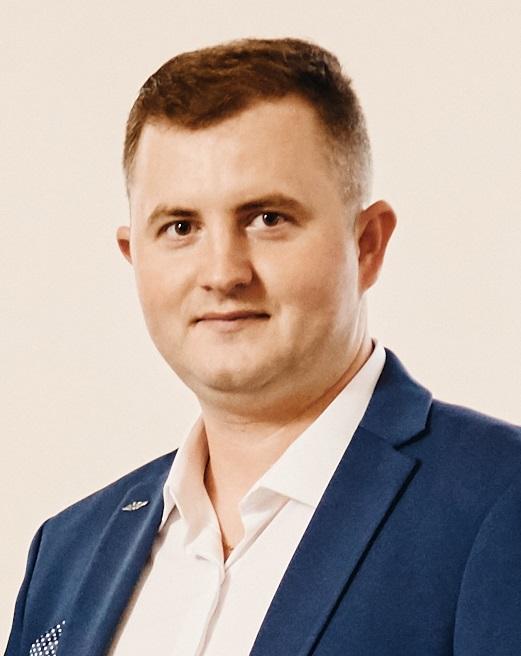
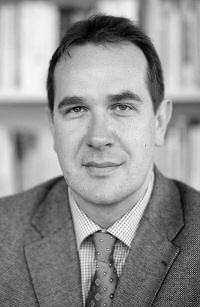
Dr. Rada Andrei is an Assistant Professor at the Faculty of Mechanical and Electrical Engineering , UPET.RO , affiliated with the Department of Automation, Computers, Electrical and Power Engineering. His research focuses on energy security, power systems optimization, electrostatic filtration technologies, and industrial automation. He has contributed extensively to studies on energy sector dynamics, centrifugal pump performance modeling, and energy efficiency in mining operations. His academic work spans experimental measurements of industrial equipment (e.g., pumps, transformers), simulation of thermal systems, and critical analysis of national/international energy policies. Notable collaborations include projects with the Institute of „Ioan Ursu” and energy companies of national strategic importance. Key research directions include: Power crisis mitigation strategies Electrostatic particle charging mechanisms Virtual instrumentation in engineering design Energy balance calculations for industrial systems Industry 4.0 implementation in production processes Dr. Andrei has developed a laboratory guide for electric machines and pioneered real-time electricity balance analysis at lignite coal mines. His work emphasizes bridging theoretical models with practical industrial applications.
Mohammad Masudur Rahman is an Associate Professor in the Faculty of Computer Science at Dalhousie University. His research focuses on intelligent automation of software maintenance and evolution , combining Artificial Intelligence (AI) and Software Engineering (SE) to address challenges in bug detection, diagnosis, and reproducibility. He leads the RAISE Lab , which aligns with Dalhousie’s strategic goals in Advanced AI & Digital Innovation , particularly Sustainable Software Innovation and Sustainable AI . Dr. Rahman earned his PhD in Computer Science/Software Engineering from the University of Saskatchewan (2019), advised by Prof. Dr. Chanchal Roy, and completed a postdoc at Polytechnique Montreal under Prof. Dr. Foutse Khomh. He has published 50+ papers in top venues like ICSE , ESEC/FSE , ASE , and TOSEM , with research funded by NSERC Discovery Grant, Mitacs Accelerate International, and Dalhousie Startup Fund. His work investigates the challenges of software bugs, crashes, vulnerabilities, and technical debt , particularly in AI-driven systems like Large Language Models and Deep Learning frameworks. He develops tools to automate bug diagnosis, leveraging code structures and neural machine translation. Recent articles analyze deep learning bug reproducibility , fault diagnosis in attention models , and code smell impacts . Scientific Awards : Governor General's Gold Medal, U of S Doctoral Thesis Award, Dalhousie Belong Research Fellowship, President Gold Medal (Bangladesh). Grants : $475K+ (PI) and $4.3M+ (Co-PI) from NSERC, Mitacs, Climate Action Fund, and Dalhousie.
Bernhard Rumpe is a full Professor at RWTH Aachen University, where he leads the Chair of Software Engineering (Department of Computer Science 3). His research focuses on model-based software and systems engineering (MBSE), domain-specific languages, and generative development techniques to improve software quality and development efficiency. His research interests include: Model-Based Software Engineering (MBSE) Domain-Specific Languages (DSLs) and language workbenches like MontiCore Model-driven digitalization and digital twins Agile integration with formal modeling Applications in embedded systems, AI, automotive, IoT, and cloud systems His team has developed MontiCore, a powerful language workbench used in both academia and industry for creating and processing DSLs, supporting code generation and static analysis. Research projects span theoretical foundations and industrial applications, with over 100 successfully completed projects celebrated recently. The recent publications reflect a strong trend in model-driven engineering, emphasizing formal modeling, automation, and scalability. Key themes include DSL design, variability modeling, digital twins, and integration of MBSE with agile practices. The work bridges theoretical rigor with practical implementation, especially in safety-critical and complex systems. Scientific contributions and leadership are evident through: Founding and leading a major research chair in software engineering Supervising PhD students such as Sage Binder and Brooke Burson Securing and managing over 100 research projects with industrial partners Developing widely used tools like MontiCore He also actively promotes academic careers, inviting applications for PhD and postdoctoral positions in software engineering, including opportunities for habilitation. The research is conducted within the Software Engineering group at RWTH Aachen, which fosters collaboration between students, researchers, and industry partners, focusing on innovation in software development processes and tools.
André Leal Santos is an Assistant Professor at ISCTE - Instituto Universitário de Lisboa, affiliated with the Department of Information Science and Technology (ISTA) and the ISTAR-Iscte research center. He holds a PhD in Computing from the University of Lisbon (2009), co-supervised with Tampere University of Technology, and a Bachelor's degree in Computing from the same institution. His research focuses on the human aspects of software development, particularly in programming education and API usability. Key areas include pedagogical tools, automatic assessment systems, projectional editors, domain-specific languages, and software maintenance. He has developed tools like PandionJ, a pedagogical debugger for Java, and authored a digital book on Kotlin programming. His recent publications reflect a consistent focus on improving developer and learner experiences through innovative software tools and educational methodologies. Themes include API learning support, automated component integration, programming pedagogy, and empirical studies on software development practices. Scientific engagement highlights: Visiting researcher at Carnegie Mellon University (2014) under CMU-Portugal program with Brad Myers Visiting researcher at Aalto University (2020) with Lauri Malmi in LeTech Organizer of ICPEC’24 Program Committee member for ITiCSE, Koli Calling (2017–2023), SPLASH-E’24 Member of the International Committee of the SIGSCE Technical Symposium Participant in the Dagstuhl Seminar on Notional Machines He advises PhD students Afonso Caniço and Ricardo Miranda, and has supervised MSc students. His work bridges academic research and practical applications in both educational and professional software development contexts. He is actively involved in open-source development, with projects hosted on GitHub, and maintains a strong presence in the computing education research community.
Masakazu Ishihara is an Associate Professor of Marketing at the Leonard N. Stern School of Business, New York University, where he has been a faculty member since 2011. His research is centered on quantitative marketing and empirical industrial organization, employing structural econometric models to study consumer and firm behavior in dynamic markets. Leonard N. Stern School of Business, New York University Department of Marketing His academic training includes a Ph.D. in Marketing from the Rotman School of Management at the University of Toronto, and both a B.S. and M.S. in Economics from the University of Wisconsin-Madison. Professor Ishihara's research interests span quantitative marketing , empirical industrial organization , the dynamic effects of marketing strategies , forward-looking consumer and firm decision-making , and marketing in the entertainment and luxury industries . He frequently investigates how consumers and firms make intertemporal choices, particularly in durable goods markets such as video games, pharmaceuticals, and alcohol. His work often integrates economic theory with large-scale consumer data to estimate structural models of demand, adoption, and competition. The recent publications highlight a consistent trend in applying dynamic structural models to analyze consumer behavior in complex markets. His research spans topics such as rational addiction (e.g., soda and alcohol), price promotions, scarcity marketing, advertising causality, software piracy, and brand extensions. The keywords across his publications indicate strong expertise in econometrics , consumer behavior , pricing , and empirical IO , with applications in entertainment, healthcare, and digital platforms. His scientific awards include: Inaugural 2010 ISMS Doctoral Dissertation Competition Award 2021 Best Paper Award, Journal of Advertising Research Honorable Mention, 2011 Dick Wittink Prize Professor Ishihara has collaborated extensively with leading scholars such as Andrew Ching, Tülin Erdem, and Eric Yanfei Zhao. He has secured research funding implicitly through publication in top journals and active working paper pipeline, though specific grants are not listed. He advises emerging scholars and contributes to the academic community through peer-reviewed publications and methodological advancements in structural modeling. There is no mention of specific labs or research teams in the provided text, though his work suggests involvement in quantitative marketing and empirical IO research groups at NYU Stern.
José Proença is an Assistant Professor at the Faculty of Sciences of the University of Porto (FCUP) and a Researcher at CISTER Research Centre, collaborating with INESC TEC. He specializes in formal methods for component-based systems, concurrency, and cyber-physical systems. His research focuses on coordination models, embedded systems, and software product lines, with contributions to frameworks like Reo and LooCI. Education: PhD in Concurrent & Distributed Computing (Leiden University, 2011), BSc+MSc in Mathematics & Computer Science (University of Minho, 2005) Research interests include formal verification, runtime verification for real-time systems, and hybrid systems programming. He coordinates projects like Ibex (FCT-funded) and has been involved in ECSEL projects like VALU3S. Supervised numerous MSc and PhD students, including work on CPS monitors, hybrid simulations, and variability analysis. Teaching includes Concurrent Programming, Algorithms, and Software Verification at the MSc level. Active in program committees for conferences like COORDINATION and SAFECOMP, and steering committee roles. Tools developed include Lince and RebeCaos for system simulation and formal analysis.
Pierre-Yves Schobbens is a Full Professor at the University of Namur, Faculty of Computer Science, specializing in software verification and formal methods. He serves as the Director of the Research Group on the Foundations of Computer Science (FOCUS) and holds leadership roles including President of the Research Center on Information Systems Engineering (PReCISE), Chair of the International Affairs Commission for the Faculty of Computer Science, and Chair of the Doctoral Commission for Exact Sciences at the university. Education: Bachelor in Philosophy, Université Catholique de Louvain (UCL), 1982 Master in Applied Mathematics and Economics, UCL, 1983 Master in Computer Engineering, UCL, 1984 Doctorate in Computer Science, UCL, 1992 Research Interests: Professor Schobbens specializes in software product lines, software verification, formal methods, agent-oriented software, and model checking. His research focuses on developing rigorous approaches for software development and verification, particularly in the context of variability-intensive systems. He has made significant contributions to the field of featured transition systems, which enable the verification of software product lines. His work bridges theoretical computer science with practical applications, addressing challenges in real-time systems, adaptive software, and database performance. Recent research directions include applying artificial intelligence techniques to software quality assurance, energy-aware computing, and the development of context-aware systems. Research Trends: Professor Schobbens' recent publications demonstrate a strong focus on the intersection of formal methods and emerging technologies. His work increasingly incorporates AI and machine learning techniques to address traditional software engineering challenges, particularly in software verification and testing. There's a notable emphasis on energy efficiency in computing systems, variability modeling for database performance testing, and the application of formal methods to self-adaptive systems. His research maintains a strong theoretical foundation while addressing practical concerns in software development. Scientific Awards: Most Influential Paper Award, VAMOS 2024 (ten-year award) Most Influential Paper Award, Software Product Lines Conference 2020 Most Influential Paper Award, International Requirements Engineering Conference 2016 Best Presentation Award, SAFECOMP 2012 Advising and Grants: Professor Schobbens has supervised 94 students across various levels. He leads multiple significant research projects including SQUAL.AI (Software Quality through Artificial Intelligence, 2025-2026), ERNEST (schEduler foR eNErgy autonomouS ioT, 2024-2025), and CYBEREXCELLENCE (Cyber Security Excellence project within the Walloon Region, 2022-2027). His research has been consistently funded since 1999, demonstrating sustained impact and relevance in his field. Laboratories and Research Teams: Professor Schobbens directs the Research Group on the Foundations of Computer Science (FOCUS) and is a key member of the Research Center on Information Systems Engineering (PReCISE). He also contributes to the Namur Digital Institute (NADI) and Namur Research Institute for Life Sciences (Narilis). His research group focuses on formal methods for software engineering, particularly addressing challenges in software product lines, model checking, and adaptive systems.
Jocelyn Simmonds is a faculty member in the Department of Computer Science at the University of Chile, Faculty of Physical and Mathematical Sciences. Her research spans software engineering, computing education, and gender diversity in STEM. She has published extensively in top-tier venues and collaborates with leading researchers in the field. PhD in Computer Science, University of Toronto, 2011 Extensive publication record from 2003 to 2025 Key collaborator: María Cecilia Bastarrica, Nancy Hitschfeld-Kahler, Francisco J. Gutierrez Her primary research interests include software engineering education , computational thinking for K-12 and vocational schools, and gender diversity and inclusion in computer science and software engineering. She has led initiatives to integrate computational thinking into teacher training and has studied the impact of affirmative action on female enrollment in CS/SE programs. Her recent publications reflect a strong trend toward computing education and social aspects of software engineering, particularly focusing on diversity, inclusion, and pedagogical methods. Earlier work was more technical, covering model-driven engineering, software process lines, and runtime monitoring of web services. Scientific Awards: No awards explicitly mentioned in the provided text. Jocelyn Simmonds has advised and collaborated with several students and researchers, including Constanza Diaz, Carlos Estay, Maíra Marques, and others, particularly in projects related to computational thinking and educational interventions. She has been involved in national training programs and initiatives to promote women in computing. Her work often involves empirical studies and systematic literature reviews, contributing both to technical software engineering knowledge and to the understanding of social dynamics in computing education. Laboratories and Research Teams: Collaborates with the research group at the Department of Computer Science, University of Chile. Active participant in international research collaborations, particularly in software engineering and computing education communities.
João Araújo serves as an Associate Professor in the Department of Informatics at NOVA University Lisbon's Faculty of Science and Technology and is a full member of the NOVA LINCS research center. His academic background includes: Master of Science in Software Engineering from Universidade Federal de Pernambuco PhD in Software Engineering from Lancaster University, UK His research concentrates on Requirements Engineering, Advanced Modularity, Model-Driven Engineering, and Software Product Lines, focusing on improving software development through innovative modularity approaches and model-driven solutions. This work bridges theoretical frameworks with practical applications in complex software systems. He has secured significant research funding through projects including: AMPLE (European Union) Aspects for Space Domain (European Space Agency) SOFTAS and BATIC3S (FCT/MCTES, Portugal) Professor Araújo actively shapes his field through leadership in academic communities, having co-founded the Early Aspects workshop series (running since 2002 at AOSD, OOPSLA, SPLC, and ICSE) and launched the Model-Driven Requirements Engineering (MoDRE) workshop series at the RE conference. He has organized major conferences including RE, MoDELS, ICSE, ECOOP, and AOSD.
Joaquín Nicolás Ros is a Professor at the Faculty of Informatics , Universidad de Murcia , specializing in Computer Science and Systems Engineering . His research focuses on Software Engineering , particularly in Formal Methods , Information Systems Security , and Control Theory applied to software systems. His work includes formal validation of atomic resolution microscope control systems and requirements reuse for security improvement , with publications in journals like Cybernetics and Systems and Advances in Engineering Software . He earned his Ph.D. from Universidad de Murcia in 2009 under Dr. José Ambrosio Toval Álvarez , contributing to integrated software product line modeling . His recent publications (2001–2009) highlight applications in security requirements engineering , formal verification , and control systems , with a focus on algebraic specification and dynamic modeling . He has collaborated with researchers such as Ambrosio Toval , Fernando García , and Begoña Moros .
Santa Di Cataldo is an Associate Professor at the Department of Control and Computer Engineering (DAUIN) of Politecnico di Torino. His research focuses on computer vision, pattern recognition, digital image processing, and medical image processing, with applications in industrial systems and AI for manufacturing. Scientific Branch: IINF-05/A - Information Processing Systems ERC Sectors: PE6_8 - Computer graphics, computer vision, multi media, computer games ERC Sectors: PE6_11 - Machine learning, statistical data processing His work includes developing AI-driven anomaly detection frameworks, physics-informed neural networks for additive manufacturing optimization, and neuro-symbolic approaches for Industry 4.0 applications. He supervises PhD students in Artificial Intelligence and Computer Engineering programs, collaborating on projects like BIG (Blue Is Green) and PNRR-Complementary Plan. Premio Donna Innovazione (2010) He leads courses such as Machine Learning in Applications and Applied AI and Machine Learning , while contributing to bioinformatics and robotics-related teaching. His research is supported by IAM@PoliTo and EDA groups, utilizing LADISPE laboratory facilities.
Richard May is a researcher and Ph.D. candidate at the Doctoral Center Engineering and Information Technologies (IWIT) , affiliated with Harz University of Applied Sciences . His work bridges software engineering , data security , and healthcare applications through roles as a scientific assistant and industry professional. Supervised by Prof. Thomas Leich and Prof. Gunter Saake, his research focuses on configurable systems in Industry 4.0 and health informatics . Education : Master of Engineering in Technical Innovation Management Bachelor of Science in Media Informatics (specialized in Computer Science) with a semester abroad in Medical Informatics Research Interests : He explores security vulnerabilities in configurable systems , particularly enterprise resource planning (ERP) software and industrial cloud systems . Key areas include: Integration of security into software product line engineering AI incident analysis in safety-critical systems Human-computer interaction for healthcare conversational agents Variability modeling for industry 4.0 applications Article Trends : His 2022-2025 publications show growing focus on AI safety in manufacturing and healthcare, vulnerability analysis of configurable systems, and practitioner-driven insights on cybersecurity challenges. Key journals include ACM , Springer , and JMIR Publications . Academic Experience : Head of User Experience & Design at eGuest & ePassGo GmbH (4 years 10 months) Scientific Assistant at Harz University of Applied Sciences (since 2020) Research at Fraunhofer Institute for Production Technology (2 years 4 months) Startup development and academic teaching experience Labs & Teams : Collaborates with research teams at IWIT Doctoral Center, Harz University of Applied Sciences, and Otto von Guericke University Magdeburg. Works closely with Prof. Thomas Leich and Prof. Gunter Saake.
Dr. Volodymyr Sokol is a researcher at RWTH Aachen University’s College of Computer Science, specializing in Learning Technologies. He contributes to academic research and teaching in the field of educational technology and software engineering. His research focuses on adaptive learning systems, competency-based education, and the integration of AI into teaching processes. He works closely with the Department of Learning Technologies to develop scalable educational solutions. The articles in his portfolio highlight trends in intelligent educational technologies, competency frameworks, and adaptive content generation. These publications demonstrate expertise in aligning academic curricula with industry needs and leveraging knowledge management systems for learning. He has advised Master’s student Muhammad Abdullah on AI-related educational tools, emphasizing practical applications in IT training environments.
Kostya Trachenko is a Professor of Physics at Queen Mary University of London, affiliated with the School of Physical and Chemical Sciences. He holds a prominent position in theoretical and computational condensed matter physics, with extensive research contributions to the fundamental understanding of states of matter. PhD: Cambridge University MSc: L'viv University, Ukraine Research Fellowship: Darwin College, Cambridge EPSRC Advanced Research Fellowship Trachenko's research focuses on the theoretical foundations of condensed matter physics, particularly the long-standing problems in liquid state theory, melting, and the relationship between fundamental physical constants and material properties. His work has revolutionized our understanding of liquids, developing a phonon-based theory that explains liquid thermodynamics where previous approaches failed. He discovered the Frenkel line on the phase diagram above the critical point, fundamentally changing textbook understanding of states of matter. His research on fundamental physical constants establishing bounds for properties like viscosity and speed of sound has received international recognition, including the Top 10 Physics Breakthrough award. Analysis of his publication trends shows a consistent focus on connecting fundamental physical constants to material properties, with significant work on viscosity limits, speed of sound bounds, and melting theory. His research spans from pure theoretical physics to practical applications in nuclear materials and fusion energy. Top 10 Physics Breakthrough award for work on speed of sound from fundamental constants CCP5 prize for outstanding contributions to theory and modeling of condensed matter phases Teaching award recognizing excellence in student mentorship Trachenko actively mentors PhD students, with his students reportedly winning major international prizes, completing projects in less than three years, and securing positions at prestigious institutions including MIT, Cornell, Oak Ridge Laboratory, and King's College. His research has been supported by significant grants, though specific grant details aren't provided in the source material. He has developed extensive molecular dynamics simulation capabilities, evidenced by his work on radiation damage and the DL_POLY software development. His research group employs advanced computational techniques including molecular dynamics simulations to study atomic-scale phenomena in liquids, glasses, and radiation-damaged materials. The group has produced numerous animations of atomic motions that illustrate key physical processes in liquids and glasses, making complex phenomena visually accessible.
Catrina Chivu is an Associate Professor at the Department of Engineering and Industrial Management within the Faculty of Technological Engineering and Industrial Management at Transilvania University of Brașov, Romania. Research focus: Industrial Automation, Logistics, and Programming Her recent work explores intersections of industrial systems with emerging technologies, including ethical implications of large language models, conveyor/AGV design software, and assembly line optimization through virtual platforms. Publications emphasize practical engineering solutions and educational technology integration. Key trends show applications of automation in logistics systems, AI ethics frameworks, and digital resource management tools for industry and academia.