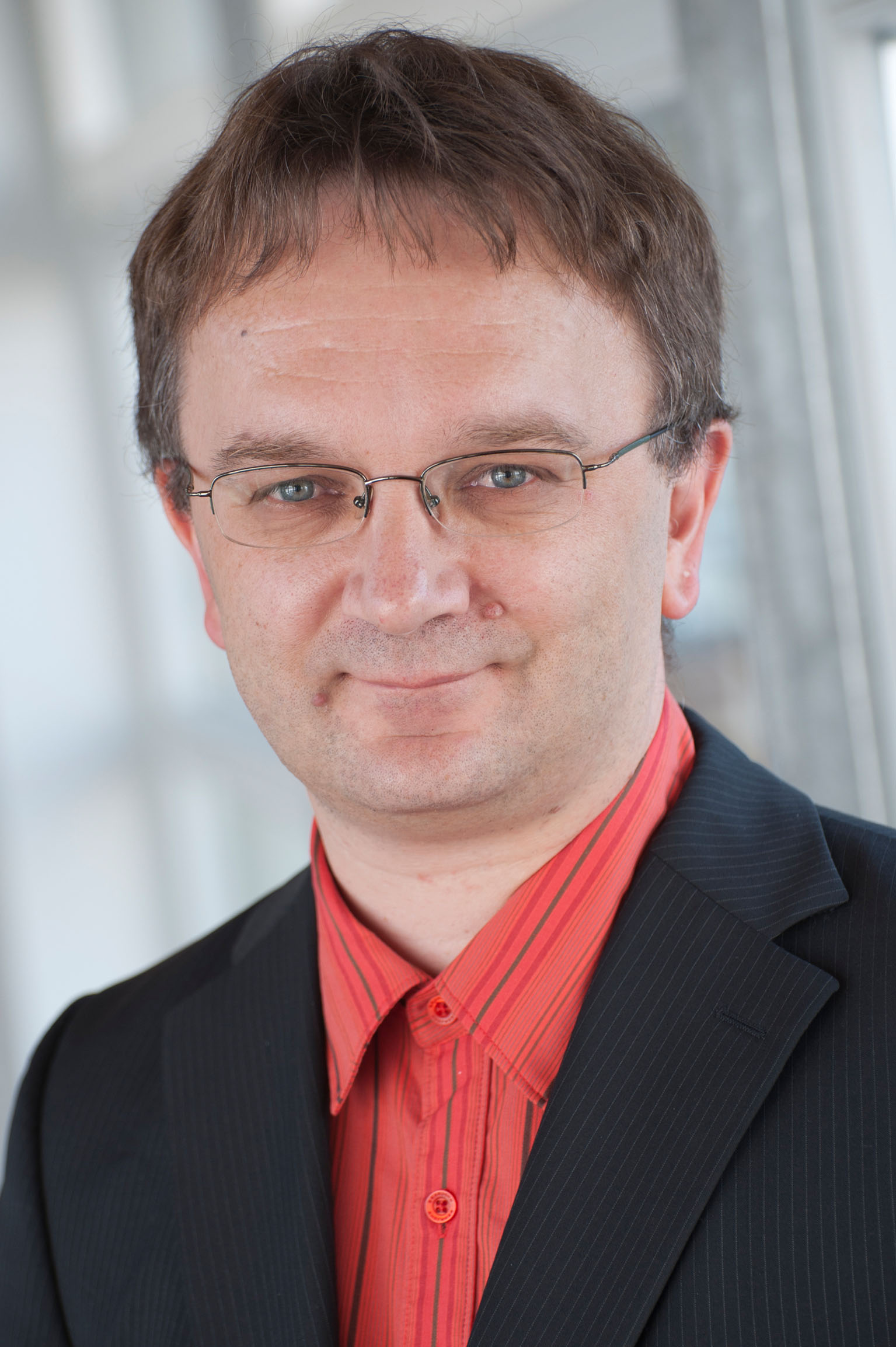
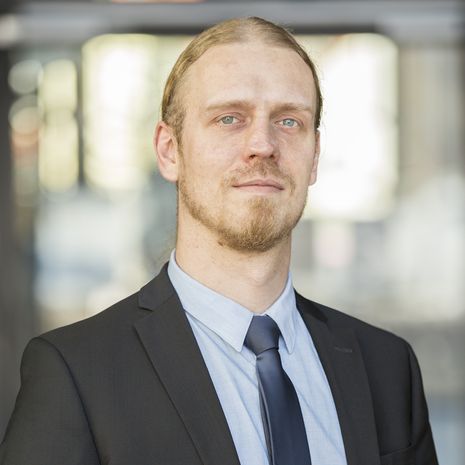
Mario Piattini is a Professor at the University of Castilla-La Mancha, Spain, with a focus on Quantum Software Engineering, Hybrid Systems, and Artificial Intelligence. He has published extensively in journals and conferences like Computing , IEEE Software , and ACM Transactions on Software Engineering Methodology . Research Interests : Quantum Software, Hybrid Systems, Software Quality, AI Maturity Assessment Recent Trends : His 2024-2025 publications address quantum-classical integration, design patterns, and automated code generation using UML.
Prof. Manfred Reichert is a full professor at the University of Ulm, serving as Director of the Institute of Databases and Information Systems and Dean of Studies at the Faculty of Engineering and Computer Science. He holds dual expertise in Computer Science and Mathematics, with academic leadership roles including chairing examination boards and strategic research initiatives. His interdisciplinary affiliations include co-opted membership in the Faculty of Mathematics and Economic Sciences. Reichert's research focuses on Business Process Management (BPM), IoT-driven processes, service-oriented architectures, and e-health applications. Notable contributions include co-developing the ADEPT process management system and pioneering object-centric process modeling. He has led over 20 international research projects (EU FP7, DFG, Industry) and authored >200 peer-reviewed papers, earning an h-index of 60+ and prestigious awards like the Merckle Forschungspreis. Education: PhD in Computer Science & Mathematics Diploma Leadership: Former associate professor at University of Twente, former director of CTIT research center Service: Conference chair for BPM, CoopIS, EDOC; steering committee member for GI SIG Databases Recent work explores IoT integration in BPM, generative AI for process models, and neuroscience-informed usability studies. His research bridges technical innovation with human-centric design, addressing challenges in process lifecycle management, federated learning, and mobile health interventions. Awards: IFIP TC2 Manfred Paul Award, doIT Software Award Key Projects: BPMN extensions for IoT, data-driven healthcare solutions
Dr. Sascha El-Sharkawy is a Researcher in the Department of Software Systems Engineering at the University of Hildesheim, affiliated with the Institute of Computer Science. His work focuses on software product line engineering, variability modeling, and the development of tools like EASy-Producer and MetricHaven. He contributes to academic governance through roles in examination boards for IMIT M.Sc./Applied Computer Science programs and Business Information Systems. His research emphasizes metrics for analyzing variability in software systems and improving static analysis efficiency through novel parsing techniques. Research Interests: - Software Product Lines (SPL) and variability management - Static analysis and metrics for SPLs - Tool development for software ecosystems - E-Learning applications in university systems Publications highlight advancements in combining code and variability metrics, optimizing analysis performance, and systematic reviews of existing SPL metrics. His work addresses challenges in managing large-scale software ecosystems and improving developer productivity through tool integration. Labs/Teams: Active contributor to the EASy-Producer research toolset and the Digital C@MPUS-le@rning project. Collaborates on initiatives like KernelHaven and VEVOS simulations.
Michael Ganske is a Researcher at the Department of Software Systems Engineering (SSE) at the University of Hildesheim, affiliated with Faculty 4 - Mathematics, Natural Sciences, Economics and Computer Science. He holds an M.Sc. and contributes to academic and project staff roles, including involvement in the Digital C@MPUS-le@rning project and as a Fachstudienberater for Applied Informatics programs. His work focuses on Industrial IoT (IIoT), AI integration, MLOps, and software engineering methodologies. Research Interests: Mr. Ganske's research revolves around IIoT platforms (e.g., IIP-Ecosphere), MLOps challenges in industrial settings, and the development of software systems for cyber-physical production systems. He collaborates on projects like DevOpt (controlled emergent systems) and HAISEM-Lab (AI-optimized hardware integration). His work emphasizes practical applications in smart energy grids, autonomous systems, and edge computing environments. Key Contributions: His team’s work includes the IIP-Ecosphere platform enabling AI-driven industrial automation, participation in ETFA 2024 with three conference contributions, and the successful completion of the DevOpt project involving smart grid optimization. He also contributes to educational initiatives, such as workshops for high school students and MINT career events. Future Directions: Current efforts include advancing MLOps frameworks for Industry 4.0, optimizing IIoT platform scalability, and exploring AI-driven solutions for manufacturing resilience through projects like HAISEM-Lab.
Prof. Dr. Sandro Schulze is a Professor in the Department of Computer Science and Languages at Anhalt University of Applied Sciences. His research focuses on software engineering, particularly in areas such as software architecture analysis, software product line engineering, and variability management. He leads efforts in developing tools for visualizing fork ecosystems and tracking architecture smells. His work bridges theoretical research with practical applications in open-source systems and industrial software. Responsibilities include overseeing the Software Engineering research group within the department. He is actively involved in academic activities, including organizing workshops like WSRE and contributing to initiatives like the Software Reengineering Body of Knowledge (SREBOK). Publications highlight advancements in fork ecosystem visualization (e.g., VisFork toolsuite), empirical studies on architecture smells, and techniques for feature extraction from requirements. His work often emphasizes tool development and empirical validation of software engineering practices.
Daniel Lohmann is a Full Professor and Fachgebietsleiter (Head of Department) at the Department of Operating Systems and Middleware within the College of Engineering and Computer Science at Leibniz Universität Hannover . His research focuses on operating system construction , embedded systems , and dependable real-time systems , with a strong emphasis on generative approaches , software product lines , and hardware-RTOS co-design .
Kai Ludwig is a Researcher affiliated with Otto von Guericke University Magdeburg , where he is pursuing a doctorate in the "Databases and Software Engineering" research group under the supervision of Prof. Gunter Saake and Prof. Thomas Leich. His work bridges academic research and practical software development, with a focus on variability analysis and software product line engineering.
Carsten Wenzel M.Sc. is a researcher at the Software Systems Engineering (SSE) department of the Institute of Computer Science at the University of Hildesheim. His work focuses on advanced software engineering practices within Industry 4.0 , including MLOps , Industrial IoT , and Cyber-Physical Production Systems . He contributes to projects like DevOpt , which explores controlled emergence in distributed systems, and IIP-Ecosphere , developing AI-integrated platforms for industrial applications. His research also intersects with Smart Energy Systems and Edge Computing , emphasizing interoperability and performance optimization. Key Research Areas : Model-driven realization of industrial digital twins Integration of machine learning operations in manufacturing Scalability of Industry 4.0 platforms Performance analysis of IIoT systems Emergent system control architectures Collaborative Projects : DevOpt : Combines distributed and centralized control for adaptive energy networks IIP-Ecosphere : Creates open-source IIoT platforms for cross-company AI-driven production HAISEM-Lab : Focuses on hardware-optimized AI applications and developer training Infrastructure & Outreach : Works with partners like Siemens AG , pdv-software GmbH , and Phoenix Contact on demonstrators at events such as Hannover Messe and ETFA 2024 . The department maintains tools like EASy-Producer for product line engineering and MetricHaven for quality analysis.
Dr. Ankit Agrawal serves as an Assistant Professor in the Department of Computer Science within the College of Arts and Sciences at Saint Louis University. His academic journey includes a Ph.D. in Computer Science from the University of Notre Dame (2022), where he worked under Dr. Jane Cleland-Huang. Prior to his current position, he conducted research on drone surveillance systems and human-machine interfaces for search and rescue operations. Dr. Agrawal's research focuses on the intersection of Software Engineering and Safety-Critical Systems, with particular emphasis on Cyber Physical Systems, CPS Safety, and Simulation. His work bridges theoretical foundations with practical applications in autonomous aerial platforms. Current research areas include Software Validation for testing and verification of cyber-physical systems, Simulation modeling of complex socio-technical systems, Requirements Engineering for safety-critical systems, and Human-Computer Interaction design for complex technical systems. His recent publications demonstrate a strong trend toward integrating AI and simulation technologies for validating autonomous drone systems. Research increasingly focuses on human-drone collaboration in emergency response scenarios, safety validation in realistic environmental conditions, and leveraging large language models for automated testing. The work spans both theoretical frameworks and practical tool development, with emphasis on bridging simulation-to-reality gaps. Honorable Mention at CHI Conference 2024 for HIFuzz: Human Interaction Fuzzing for small Unmanned Aerial Vehicles Best Paper at SPLC Conference 2020 for Requirements-Driven Configuration of Emergency Response Missions with Small Aerial Vehicles Fifth Place in Poster Presentation Award at NASA ImaginAviation 2024 Dr. Agrawal actively mentors graduate and undergraduate students through his UAV Research Lab at Saint Louis University. His lab currently supports multiple Ph.D. and Masters students working on projects including DroneReqValidator, DroneResponse, and React-G. The lab has secured research funding for projects related to drone safety validation and human-autonomy teaming, with collaborations including NASA Langley Research Center. Dr. Agrawal has served on program committees for major conferences including ASE, ICSE, and Requirements Engineering. The UAV Research Lab at Saint Louis University investigates software systems for autonomous aerial platforms, with three primary research thrusts: Software Engineering for Autonomous Systems (developing reliable software architectures and testing frameworks), Human-Autonomy Interaction (designing intuitive interfaces for human oversight), and Intelligent Software Systems (building AI-powered solutions for dynamic environments). The lab maintains active collaborations with NASA and emergency response organizations.
Fang Liu is an Assistant Professor at the School of Computer Science & Engineering, Beihang University, China. She has made significant contributions to the field of software engineering, particularly in the intersection of artificial intelligence and software development practices. Dr. Liu received her Ph.D. in Computer Science from Peking University (Sep. 2017 - Jul. 2022), supervised by Prof. Zhi Jin and Prof. Ge Li. Prior to that, she earned her B.S. in Computer Science from Chongqing University (Sep. 2013 - Jul. 2017). Her research interests focus on AI for Software Engineering, including program understanding and generation, program repair, and applications of Large Language Models to software development tasks. Dr. Liu teaches Compiler Technology as a compulsory course at Beihang University (Fall 2024) and Programming in Cangjie Language as an elective course (Spring 2025). Her recent publications demonstrate a clear trend toward leveraging large language models for various software engineering tasks, with a particular emphasis on code editing, program repair, and code translation. Her research spans both theoretical advancements in model architectures and practical applications to real-world software development challenges, with numerous publications in top-tier venues like ASE, ICSE, and FSE. Distinguished Paper Award at ICPC'20 for "A Self-Attentional Neural Architecture for Code Completion with Multi-Task Learning" Dr. Liu actively participates in the software engineering research community as a program committee member for major conferences including ASE, FSE, and ICSE. Her work has significant implications for improving developer productivity, software quality, and the integration of AI technologies into the software development lifecycle.
Jongmoon Baik serves as a Professor at the Korea Advanced Institute of Science and Technology (KAIST), School of Computing, South Korea, and maintains active membership in IEEE and ACM professional organizations. His academic foundation includes a PhD in Computer Science from the University of Southern California, establishing expertise in rigorous software engineering methodologies. Professor Baik's research program centers on software process modeling, software economics, software reliability engineering, and software Six Sigma, with emphasis on quantifying development efficiency and product quality through statistical process control. His work bridges theoretical modeling with industrial application in software lifecycle optimization. Current research trajectories demonstrate growing integration of security analysis into process modeling, exemplified by his upcoming ASE 2025 publication on vulnerability detection using modifiability signals at the line-level code analysis. Professional recognition includes sustained engagement with premier software engineering venues through conference participation and publications. He advises graduate researchers within KAIST's School of Computing and leads the Software Process Research Laboratory (SPIRAL), identifiable through his institutional web presence at spiral.kaist.ac.kr, focusing on empirical studies of software development economics and reliability metrics.
Dr. Ying Zou is a Professor in the Department of Electrical and Computer Engineering at Queen's University's Smith Engineering faculty in Kingston, Ontario, Canada. With an extensive publication record spanning from 2018 through 2025, Dr. Zou has established herself as a leading researcher in empirical software engineering with a growing focus on AI integration. Dr. Zou's research focuses on Software Engineering , Artificial Intelligence for Software Engineering (AI4SE) , Software Evolution , Software Analytics , and Empirical Software Engineering . Her work bridges theoretical approaches with practical applications, examining developer behavior, code quality improvement, and AI techniques for software engineering tasks. Recent publications demonstrate a clear progression from traditional empirical studies toward more AI-centric approaches, particularly in code refactoring, type inference, and performance analysis. Analysis of Dr. Zou's publication trends reveals a strategic evolution in her research focus. Early work centered on empirical studies of Stack Overflow and GitHub, while recent publications increasingly integrate large language models and AI techniques for software engineering tasks. Her research spans multiple dimensions including code quality, developer productivity, open source community dynamics, and performance optimization, with consistent methodological rigor in empirical validation. Dr. Zou has served in numerous leadership roles across major software engineering conferences including ASE, ICSE, and ESEC/FSE. She has been a Program Committee member for multiple tracks and conferences, and notably served as New Faculty Mentoring Co-Chair for ESEC/FSE 2026. Her service to the community extends to organizing conference tracks, chairing sessions, and mentoring new researchers in the field.
Professor Dan Hao is a distinguished faculty member at the Institute of Software, School of Computer Science, Peking University, where he has established himself as a leading researcher in software engineering. His extensive service to the academic community includes membership on the Steering Committee for The International Conference on Automated Software Engineering (ASE) since 2021, The ACM SIGSOFT International Symposium on Software Testing and Analysis since 2025, and The International Systems and Software Product Line Conference (SPLC) from 2018-2022. He has served as Program Co-Chair for multiple major conferences including ISSTA 2027, ICSME 2025, ICST 2023, SANER 2022, and ASE 2021. Professor Hao received his Bachelor's degree from Harbin Institute of Technology in 2002 and completed his Ph.D. at Peking University in 2008, followed by post-doctoral research at the same institution until 2009. His academic journey reflects a deep commitment to advancing software engineering research and education in China. Professor Hao's research primarily focuses on software testing and debugging, program comprehension, and software maintenance. His work has significantly contributed to compiler testing, fault localization, regression testing, and automated program repair. He has pioneered approaches in compiler auto-tuning, test-case prioritization, and history-guided testing techniques. His research bridges theoretical foundations with practical applications, addressing real-world challenges in large-scale software systems, particularly in online service environments. His publication record demonstrates a consistent trajectory of high-impact research in top-tier software engineering venues. Professor Hao's work shows increasing integration of machine learning techniques with traditional software engineering problems, particularly evident in his recent publications on LLM applications for code generation, neural theorem proving, and contrastive learning for vulnerability detection. His research maintains strong connections between theoretical rigor and practical applicability in industrial settings. ACM SIGSOFT Distinguished Paper Award for PDCAT: Preference-Driven Compiler Auto-Tuning at FSE 2025 Distinguished Paper Award for Formalizing, Mechanizing, and Verifying Class-Based Refinement Types at ECOOP 2024 ACM SIGSOFT Distinguished Paper Award for History-Guided Configuration Diversification for Compiler Test-Program Generation at ASE 2019 ACM SIGSOFT Distinguished Paper Award for History-driven Build Failure Fixing: How Far Are We? at ISSTA 2019 As an advisor, Professor Hao has mentored numerous graduate students, currently supervising 9 Ph.D. students and 7 Master's students. His former students have gone on to prestigious positions at institutions including King's College London, Tianjin University, Fudan University, and major technology companies like Huawei and China Construction Bank. His academic leadership extends through editorial roles as Deputy Editor-in-Chief of Software Testing, Verification and Reliability (STVR) and membership on the editorial boards of several premier journals including ACM Transactions on Software Engineering and Methodology, ACM Computing Surveys, and Empirical Software Engineering. Professor Hao leads a vibrant research group at Peking University's Institute of Software, focusing on cutting-edge problems at the intersection of traditional software engineering and artificial intelligence. His team actively collaborates with both academic institutions and industry partners to address practical challenges in software development and maintenance processes.
Juliana Alves Pereira is a Professor at the Computer Science Department of the Pontifical Catholic University of Rio de Janeiro (PUC-Rio), Brazil, where she leads the Artificial Intelligence for Software Engineering lab (AISE) as part of the Software Engineering lab (LES). Her academic journey includes a Ph.D. in Software Engineering with distinction (summa cum laude) from Otto-von-Guericke-Universität Magdeburg (OvGU) in Germany (2018), a Master's degree in Computer Science from the Federal University of Minas Gerais (Brazil), and postdoctoral research at the University of Rennes, Inria/IRISA (France). Her research focuses at the intersection of software engineering and artificial intelligence, particularly in automating software engineering through software analysis, machine learning, recommender systems, and meta-heuristic optimization. Dr. Pereira's work explores applications of Machine Learning, Explainability, Transfer Learning, Generative AI, Deep Learning, Natural Language Processing, and Recommender Systems in software quality and human aspects contexts. Her publications demonstrate a consistent focus on empirical software engineering, with significant contributions in code quality analysis, pull request characteristics, exception handling, and performance prediction in configurable systems. Her research shows increasing integration of advanced AI techniques with traditional software engineering practices. Best Dissertation Prize from the School of Computer Science in 2018 (Germany) Dissertationspreis award from OvGU (2018) ACM Best Paper Award from SPLC 2021 ACM Best Paper Award from ICPE 2020 CBSoft Most Influential Paper Award from Brazilian Computer Society (SBC) Dr. Pereira actively supervises master's and doctoral research in the Software Engineering concentration area at PUC-Rio. She has served on Program and Organizing Committees for major international conferences including ICSE, ASE, SANER, MSR, and ICSME. Her laboratory collaborations span national and international research groups, reflecting her significant impact in the software engineering community.
James R. Cordy is a Professor in the School of Computing at Queen's University, Faculty of Engineering and Applied Science, Kingston, Canada. He is a leading researcher in software engineering, with a focus on source code analysis, software clone detection, model-driven engineering, and program transformation. He has been actively publishing since 1977, with a sustained record of contributions in top-tier venues such as ICSE, MoDELS, and WCRE. His research interests include software clone detection, model transformation, Simulink models, source transformation, software maintenance, and grammatical inference. He has developed and contributed to influential tools such as TXL and NiCad, and his work often involves empirical studies and tool evaluation in real-world software systems. The most recent articles highlight trends in model transformation, clone detection, verification of state machines, and migration of legacy systems. His work increasingly integrates formal methods and empirical validation, particularly in automotive and safety-critical domains. He has also explored applications in healthcare software, such as artificial pancreas systems. Most Influential Paper Award, SCAM 2001 (awarded in 2019) He has advised numerous students, including Manar H. Alalfi, Matthew Stephan, and Chanchal K. Roy, who have co-authored multiple publications with him. His research is often collaborative, involving teams from Queen's University and other institutions. He has also contributed to workshops and special issues, demonstrating leadership in the software engineering community.