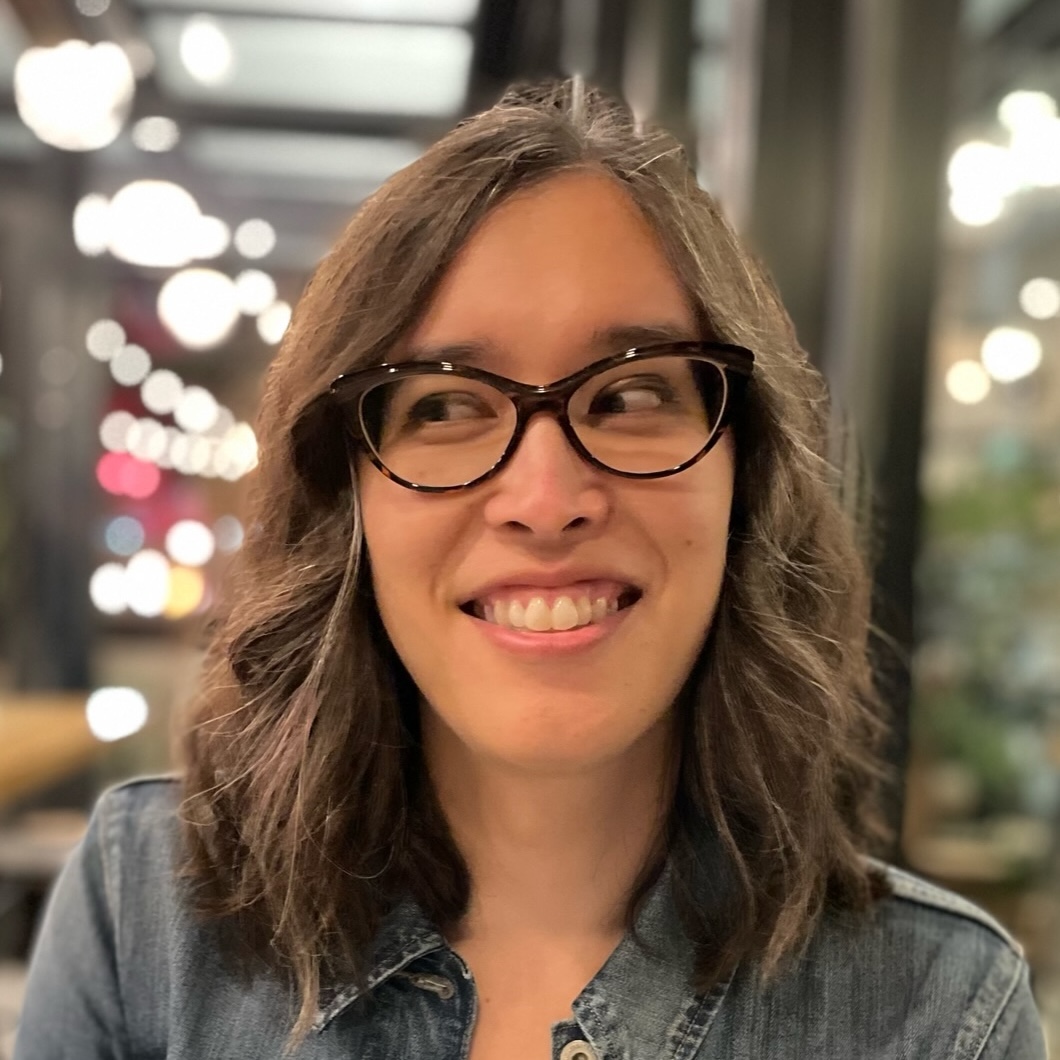
Amy J. Ko is a Professor and Associate Dean for Academics at the Paul G. Allen School of Computer Science & Engineering and The Information School at the University of Washington, Seattle . She serves as Editor-in-Chief of ACM TOCE , co-directs Reciprocal Reviews and CS for All Washington , and leads the CENSOR Research Lab . Her work prioritizes equitable, liberatory computing education , bridging human-computer interaction and social justice . Research Focus: Equity in CS education, AI literacy, inclusive design, developer productivity, and ethical technology use Awards: Best Paper Award (2024, 2022) Diversity + Inclusion Award (2024) Most Influential Paper Honorable Mention (2014) Honorable Mention (2024, 2023) Publications: Over 184 works spanning program comprehension, assessment design, ethical pedagogy, and democratizing computing education Books: Foundations of Information , Critically Conscious Computing , and Teaching Accessible Computing Her Google Scholar profile reflects citations under her deadname, which she advocates to correct. She emphasizes student agency and community collaboration , particularly with marginalized groups in computing spaces.
Dr. Todd Donavan is an Associate Professor in the Department of Marketing at Colorado State University's College of Business. His research focuses on customer orientation and identification, exploring how personality traits and environmental factors influence employee and customer behavior. Customer Orientation: Investigates traits predicting CO disposition and its benefits for organizational commitment and satisfaction. Identification: Analyzes drivers of customer and employee identification with firms, including personality and situational factors. Todd teaches principles of marketing and a sports marketing seminar, collaborating with the Denver Nuggets to provide students practical industry experience and contribute to a marketing scholarship. His recent publications examine service recovery, brand endorsement dynamics, and statistical methodologies. Notable trends in his research include the interplay between employee traits and customer satisfaction, social identification in sports marketing, and methodological advancements in factor analysis. He has also developed software tools for statistical research.
Jana Fortes is a Lecturer at the Faculty of Electrical Engineering and Informatics, Technical University of Košice, Slovakia. She teaches Applied Statistics, Cryptography, and Mathematics courses, including Numerical Mathematics and Probability and Statistics. Her research focuses on signal processing for localization and tracking systems using Ultra-Wideband (UWB) radar and sensor networks. Teaching: Applied Statistics, Cryptography, Mathematics I/II, Numerical Mathematics, Probability and Statistics, Mathematics Tutoring Research: UWB radar signal processing for person localization and tracking, software development (MATLAB, LabVIEW), cluster analysis for movement detection. Publications: Recent work includes studies on 2D/3D localization algorithms, UWB sensor system implementations, and mathematical analyses of graph crossing numbers. Contact: Email: jana.fortes@tuke.sk , Room N32 615, Phone: +421 55 602 3252.
Jun Yang is a Senior Lecturer in Chinese Language at the Department of East Asian Languages and Civilizations, University of Chicago. He serves as Director of the Chinese Language Program and focuses on pedagogy, linguistics, and language evaluation. His work bridges theoretical and applied research in language acquisition and teaching methodologies. University: University of Chicago School: East Asian Languages and Civilizations Role: Director of Chinese Language Program His research interests span Chinese linguistics , second language acquisition , discourse analysis , and Chinese language pedagogy . These areas are reflected in his leadership and instructional strategies within the Chinese language curriculum. Jun Yang’s publication record includes 14 recent articles (2017–2022) focused on optimizing database-backed web applications. Key themes involve automated code refactoring , schema management , reinforcement learning for data pipelines , and performance bug detection . These works emphasize tools for improving software reliability and efficiency in distributed systems and IDE environments. Jun Yang holds a Ph.D. in Second Language Acquisition and Teaching, underscoring his expertise in language education. His email address is yangj@uchicago.edu , and he is based at Classics 416, 1010 E 59th St, Chicago, IL 60637.
Stefan Smolnik is a University Professor at the FernUniversität in Hagen since 2013, affiliated with the Faculty of Business Administration and Economics . His academic career includes roles as Track Chair at the Hawaii International Conference on System Sciences (2025), Vice Rector for Research and Digitalization (2022-2025), and Head of the Institute of Research on Information Systems at EBS Business School (2012-2013). Education: Doctorate in Knowledge Management with Topic Maps (2005, University of Paderborn); Diploma in Computer Science (1998, University of Paderborn) Stefan's research focuses on Knowledge Management , Collaboration Systems , eLearning , and the Use and Success of Information Systems . His recent work explores digital health applications, smart city technologies, and AI-driven knowledge flows, with publications analyzing telemedicine adoption, gamified mobility systems, and neurophysiological impacts on digital work. Key trends in his 15 most recent publications (2023-2025) include: Integration of AI and NeuroIS in workplace design Smart city solutions for mobility , waste management , and sustainability Knowledge sharing in healthcare teleconsultations and professional services Maturity models for small/medium smart cities Emotional dimensions in knowledge management research Scientific recognition includes the Best Paper Award at the 4th Conference on Professional Knowledge Management (2007) and frequent participation in top-tier conferences like ICIS and HICSS . His work bridges information systems , organizational behavior , and urban digitalization .
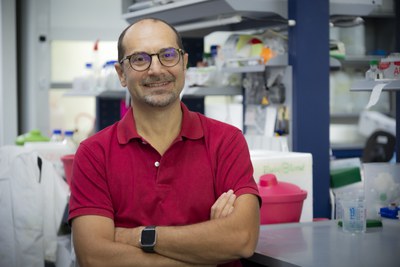
Diego di Bernardo is a Full Professor of Biomedical Engineering at the University of Naples Federico II and Principal Investigator at TIGEM, serving as Coordinator of the Genomic Medicine Program and Head of the Bioinformatics Core. His work bridges engineering and biological sciences to advance disease understanding and therapeutic development. His educational background includes a Laurea cum laude in Electronic Engineering from the University of Naples Federico II (1997) and a PhD in Medical Physics from the University of Newcastle School of Medicine (2001), funded by a European Commission Marie Curie Fellowship. Postdoctoral training followed at the Wellcome Trust Sanger Center and Boston University. Di Bernardo's research integrates Biomedical Engineering, Control Engineering, and Molecular Biology to pioneer Biomolecular Control. His lab develops microfluidics platforms for real-time cellular analysis and computational approaches for gene network reverse engineering and drug repositioning. Current work focuses on single-cell transcriptomics to combat drug resistance in cancer and engineer stress-response pathways for bioproduction optimization. His publication record demonstrates consistent innovation in computational biology, with recent work emphasizing pan-cancer transcriptomics, microfluidics-based cell control, and bioinformatics tool development for pathway analysis. The research trajectory shows increasing integration of engineering principles with genomic medicine. Scientific recognition includes: Marie Curie Fellowship He advises PhD students including Clarissa Poles and Virginia Fusco, leading a multidisciplinary team of postdocs and bioinformaticians. Major funding sources include Telethon, AIRC, Italian Ministries, HFSP, and EU programs such as Re-MEND (2023-2027) for mental health resilience and iPC (2019-2023) for pediatric cures. His TIGEM laboratory operates cutting-edge microfluidics and bioinformatics facilities to engineer living systems, with current projects targeting super-producer cell lines for biological drugs and viral vectors while reducing production costs through stress-response re-engineering.
Anne Fischer, M.Sc., is a researcher at the Chair of Material Handling, Material Flow, and Logistics at the Technical University of Munich (TUM). Her work focuses on digital twins, construction automation, and resource scheduling in heavy civil engineering. She is based in Garching near Munich and collaborates with institutions like UC Berkeley and Stanford University. Research Interests: Digital Twin frameworks, simulation-based optimization, BIM integration, activity recognition in construction, and sustainable logistics systems. Collaboration: Serves as a contact person for international exchanges with U.S. institutions. Publication Trends: Her recent articles (2024–2021) address construction automation, digital twin applications, and variability management in civil engineering projects. Key Projects: Engaged in initiatives like Bauen 4.0 , MiProcess2Twin , and SiteRoute , which focus on digitalization and automation in construction. Location: Boltzmannstraße 15, Garching bei München (Room: 5505.EG.501).
Petri Niemi is a Researcher at LUT University within the School of Engineering Sciences , specifically affiliated with the Industrial Engineering and Management (IEM) department. His work spans interdisciplinary domains, linking engineering with business practices. Current research focuses on soil science and agricultural management, particularly analyzing soil pore structure, microbial interactions, and long-term agricultural impacts. His earlier contributions center on supply chain management, logistics optimization, and educational pedagogy, including experiential learning frameworks and student guidance systems. Research Trends: Recent publications highlight sustainable soil management and pore dynamics, while earlier works emphasize knowledge development in supply chains and logistical service innovation. His expertise bridges quantitative analysis, organizational behavior, and user-centric design. Education & Practice: While formal educational details are not public, his pedagogical involvement includes student guidance and curriculum development for secondary and higher education programs.
Paul M. Karabinos is the Charles L. MacMillan Professor of Natural Sciences in the Department of Geosciences at Williams College, where he has been a faculty member since 1983. He holds an endowed professorship recognizing his significant contributions to geological sciences and education. His academic career at Williams progressed from Assistant Professor (1983-1990), to Associate Professor (1990-1995), to full Professor (1995-2012), and he served as Department Chair from 2006-2012 before receiving his current named professorship. B.S. from University of Connecticut (1975) Ph.D. from Johns Hopkins University (1981) Postdoctoral Fellow at Harvard University (1981-1983) Visiting Scholar at Doshisha University, Kyoto, Japan (1993) Professor Karabinos specializes in structural geology and Appalachian tectonics, with particular expertise in the Taconic orogeny, metamorphism, and geochronology. His research has significantly advanced understanding of gneiss dome formation, thrust faulting mechanisms, and the tectonic evolution of the New England Appalachians. He has developed innovative approaches to 3D geological visualization using SketchUp, creating interactive educational tools that transform how structural geology concepts are taught. His work combines field mapping, microstructural analysis, and geochronological techniques to unravel complex deformation histories. Analysis of Karabinos' recent publications reveals a strong focus on integrating traditional geological fieldwork with digital visualization technologies. His research spans fundamental tectonic questions about Appalachian evolution while simultaneously developing educational tools that make structural geology concepts more accessible. A significant thread throughout his work involves studying the Chester Dome, Berkshire Massif, and Mount Greylock as natural laboratories for understanding orogenic processes. His publications demonstrate consistent productivity with a notable shift toward developing interactive 3D models for both research and educational purposes in his later career. Professor Karabinos has mentored over 35 undergraduate research students at Williams College, many of whom completed senior theses under his guidance. His dedication to undergraduate education is evident in his development of field-based courses and innovative teaching tools. He has received support for his research through various grants that have enabled sustained field investigations in the Appalachian region and the development of his digital visualization projects. His research involves extensive field work in the Berkshire Massif, Chester Dome, and Mount Greylock areas, often utilizing student researchers. Karabinos has developed the SketchUp Structural Geology Studio, which provides interactive 3D models for teaching structural geology concepts. His work on the Day Mountain thrust sheet and graphite redistribution in pelitic schists represents ongoing field-based research projects that integrate undergraduate students in meaningful research experiences.
Nikolaos Efkolidis is an Assistant Professor at the University of Western Macedonia in the Department of Product and Systems Design Engineering . He is a member of the Computational Design and Digital Fabrication Research Lab ( codeplus.uowm.gr ) and co-founder of the design studio heptahedron.studio . Research Focus : Computational design, digital fabrication, AI-driven optimization, and sustainable product development. Key Techniques : Response Surface Methodology (RSM), Genetic Algorithms, Finite Element Analysis (FEA), and Additive Manufacturing. His recent publications highlight trends in multi-material 3D printing , machine learning for machining processes , and user-driven customization . Applications span footwear, marine robotics, and industrial design.
Lingjia Tang is an Assistant Professor in Computer Science with expertise in artificial intelligence, machine learning, big data, and no-code automation. Her research focuses on developing machine learning algorithms for medical data analysis and advancing no-code automation tools to democratize technology access. Research Interests Artificial Intelligence & Machine Learning Big Data Analytics & Graph-Based Retrieval No-Code Automation & User-Centric Systems Data Quality & Ethical AI Considerations Scientific Contributions With over 20 publications in prestigious journals, Dr. Tang's recent work explores: Graph-based retrieval frameworks (GraphRunner, TOBUGraph) LLM calibration and evaluation (SLMEval) Memory subsystem optimization in datacenters Meaning-typed programming paradigms Multi-agent conversational AI systems Awards 2023 Award for contribution to machine learning technologies Teaching Dr. Tang teaches courses in artificial intelligence, algorithms, and computational theory with a dynamic interactive approach. Current Projects Machine learning algorithms for medical diagnosis No-code automation tools for non-technical users
Prof. Dr. Stefan Brönnimann serves as a Professor and Unit Leader of Climatology at the Institute of Geography, University of Bern. His extensive research portfolio spans historical climatology, climate dynamics, and atmospheric circulation reconstruction, with particular focus on the past 400 years. He plays a leadership role in major international climate initiatives including the IPCC assessment reports and various climate reanalysis projects. Brönnimann's research centers on reconstructing historical weather and climate patterns through the innovative combination of early instrumental data, proxy records, and climate models. His work examines large-scale climate variability, interannual-to-decadal atmospheric circulation patterns, volcanic eruption effects on climate, and climate-society interactions. His methodologies often involve transforming historical documents into usable climate datasets and applying advanced machine learning techniques to weather reconstruction challenges. Recent publications reveal a strong emphasis on European climate patterns, hydroclimate extremes, and the development of novel datasets and tools for climate research across high-impact journals in climate science, paleoclimatology, and climate informatics. Notable scientific achievements include: Lead author for Chapter 2 of the IPCC Working Group I 5th Assessment Report President of the Commission 'Atmospheric Chemistry and Physics' (ACP) of sc.nat Editorial leadership for multiple prestigious journals including Meteorologische Zeitschrift, Climate of the Past, and Geographica Bernensia Leadership roles at the Oeschger Centre for Climate Change Research Active participation in international initiatives like the Twentieth Century Reanalysis Project and Atmospheric Circulation Reconstructions over the Earth (ACRE) Brönnimann has secured substantial funding through numerous national and international projects including SNF, NCCR Climate, EU FP-7, HORIZON2020, COST, and ERAnet.RUS. He has organized multiple international workshops on weather and climate extremes, atmospheric circulation variability, and historical climate events like the Tambora eruption. His work connects closely with the Oeschger Centre for Climate Change Research at the University of Bern, where he leads Work Package 2 and serves on the Steering Group, demonstrating his significant institutional leadership within Bern's climate research community.
Aditya Bhan serves as a Distinguished McKnight University Professor in the Department of Chemical Engineering and Materials Science at the University of Minnesota's College of Science and Engineering, leading a research group focused on catalytic conversion technologies for biomass and natural gas feedstocks. His work integrates molecular-level catalytic chemistry with materials synthesis to develop sustainable energy solutions and mitigate environmental impacts from fuel and chemical production. Research spans heterogeneous catalysis for CO 2 hydrogenation, ethylene epoxidation, plasma-catalyzed NO x abatement, and dehalogenation processes. The group employs isotopic tracer studies, transient kinetics, and steady-state measurements complemented by XRD, electron microscopy, and spectroscopy, with computational validation through DFT. Current projects address catalytic acrylate production, plasma-assisted waste stream treatment, and metal carbide catalyst development for carbon-neutral reactions. Professor Bhan has received significant recognition: Distinguished McKnight University Professor (2023) Paul H. Emmett Award in Fundamental Catalysis (2022) He mentors 11 active PhD candidates while having guided 4 recent doctoral graduates to industry and academic positions, with research funded by the National Science Foundation, U.S. Department of Energy, and University of Minnesota's Initiative for Renewable Energy. The group operates advanced facilities for catalytic testing and plasma reactor systems, collaborating with computational experts on the Rule Input Network Generator (RING) software for reaction network analysis. The research team maintains active participation in North American Catalysis Society meetings and International Precious Metals Institute conferences, with regular group development activities including annual picnics, conference travel, and collaborative dinners documented through 2025.
Marija Maruna is a Full Professor at the University of Belgrade - Faculty of Architecture , leading the Department of Urban Planning and heading the Doctoral Study Program . She specializes in urban development management , integrated planning , and planning theory . Graduated (1995), Master's (2003) and PhD (2009) from University of Belgrade - Faculty of Architecture Founder and former Head of Integral Urbanism master's program Current head of Doctoral Study Program in Architecture and Urbanism Her research focuses on urban planning , strategic urban design , and public policies in post-socialist transition countries . She has contributed to international publications with Elsevier , Springer , and MDPI . Notable awards include: First prize from Society of Architects of Novi Sad (graduation thesis) First prize from Belgrade Chamber of Commerce (doctoral dissertation) Special recognition at XXIV Salon of Urbanism First prize at VII Salon of Landscape Architecture She mentors students in master's and doctoral theses , coordinates international teaching at ETH Zurich , TU Berlin , and Politecnica Barcelona , and directs the Lab for Planning Culture and Spatial Policy Design .