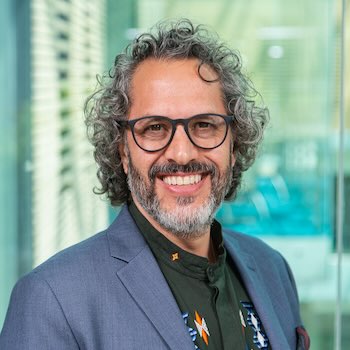
Madeline Endres is an Assistant Professor at the Manning College of Information and Computer Sciences, University of Massachusetts Amherst. She co-directs the LASER Lab and holds a Ph.D. in Computer Science from the University of Michigan (2024), alongside degrees in Computer Science and Cello Performance. Her research focuses on improving programmer productivity and wellbeing through interdisciplinary approaches combining software engineering, psychology, and medicine. Her research interests include: Programmer cognition and skill acquisition Developer tool design and evaluation Impact of external factors (e.g., psychoactive substances, workplace policies) on software development Neuroimaging studies of programming tasks Key achievements include Distinguished Paper Awards at ICSE 2024 and FSE 2023, and an NSF Graduate Research Fellowship (2020). She actively contributes to program committees for major software engineering conferences. Current projects include VR-based spatial reasoning training for novices, TMS experiments to identify cognitive causality in programming, and controlled studies on cannabis use and programming ability. She also maintains the CS Grad Job Guide to support early-career researchers.
Maya Daneva is an Associate Professor at the University of Twente's Digital Society Institute and part of the Semantics, Cybersecurity & Services research group. With over 200 research outputs, her work focuses on Requirements Engineering , Cybersecurity , and Agile Methodologies , particularly in digital transformation and enterprise systems. Academic Role: Associate Professor in Computer Science Institution: University of Twente Her research spans Model-Driven Engineering , security risk mitigation, and quality requirements prioritization, often employing empirical studies and systematic reviews. Recent articles explore phishing detection ontologies (2025), secure data storage architectures (2024), and digital consulting service modeling (2024). Scientific Awards: CBI 2021 Best Paper Award for work on digital IT consulting platforms EMMSAD 2025 Best Paper Award for phishing attack modeling She actively organizes academic events, serves on editorial boards (e.g., Empirical Software Engineering ), and contributes to conference peer-review, reflecting her leadership in the field.
Jaco van de Pol is a Full Professor of Computer Science at Aarhus University, holding dual roles in the Digital Society Institute and Formal Methods and Tools. He earned his PhD from Utrecht University in 1996, specializing in Termination of Higher-order Rewrite Systems, and a Master's in Computer Science (Term Rewriting) in 1992. His research focuses on model checking, formal methods, algorithms, and automated verification, contributing to UN Sustainable Development Goals related to innovation and education. Education: PhD, Termination of Higher-order Rewrite Systems, Utrecht University (1996) Master's in Computer Science (Term Rewriting), Utrecht University (1992) Research Interests: His work spans model checking, formal verification, parallel algorithms, and their applications in software engineering and bioengineering. He emphasizes practical formal methods, such as SCC algorithms and timed automata analysis, to solve complex computational challenges. Awards: Best Paper Award SPIN 2017 (2017) Best Student Paper Award (2018) Advising & Grants: Supervised 12 students and contributed to collaborative projects in formal methods and computational biology. His research has been applied to areas like cartilage phenotype modeling and parallel algorithm design. Labs/Teams: Engages with interdisciplinary teams, including computational biology and distributed systems groups, to advance formal methods in practical contexts.
Rosalind Cornforth is a Professor of Climate and Development and Director of the Walker Institute at the University of Reading, Department of Meteorology. She holds a PhD in Tropical Meteorology and has over 15 years of experience collaborating with governments and NGOs in developing nations. As Walker Institute Director, she leads strategic vision, operations, and interdisciplinary projects in climate resilience. Her roles include Senior Research Scientist at the National Centre for Atmospheric Science (NCAS) and Ambassador for the TAMSAT group. Her research focuses on African weather systems, climate early warning systems, rainfall variability, knowledge exchange, and governance for adaptation. Key projects include the Africa Climate Exchange (AfClix), AfClix Early Warning System for Sudan, and BRAVE groundwater studies. She advises on UN initiatives, including WHO/WMO, UNDP, and the African Union. Recent publications (2020–2024) address climate adaptation, flood early warning, heat stress, and transboundary resilience. She supervises postgraduate students and leads NERC-funded projects. Her work bridges science and policy, emphasizing actionable solutions for vulnerable regions.
Ignacio Castillo is a Professor and Associate Dean of Business (Graduate Academic Programs) at the Lazaridis School of Business and Economics, Wilfrid Laurier University. His expertise spans facility location optimization, supply chain management, and sustainable operations. He holds a leadership role in graduate academic programming and teaches courses in operations and statistics. Research focuses on optimizing facility layouts, material handling systems, and closed-loop supply chains. He has developed frameworks for multi-objective facility design and advanced packing optimization algorithms. His work bridges theoretical models with real-world applications in manufacturing and retail sectors. Publications emphasize nonlinear optimization techniques, packing problems, and supply chain coordination strategies. Recent work explores irregular object configurations and retail category space optimization. His textbooks include Business Statistics for Contemporary Decision Making and Operations Management , emphasizing practical decision-making tools. Office: LH4001M | Languages: English, Spanish
Prof. Rocco OLIVETO is a Full Professor at the University of Molise, affiliated with the School of Biosciences and Territory. His research spans software engineering, artificial intelligence, cybersecurity, and healthcare technology. He focuses on empirical studies of developer practices, AI-driven code analysis, vulnerability detection in smart contracts, and human-centric computing. His work also addresses challenges in game development, mobile app optimization, and wearable health monitoring systems. Notable research areas include code readability assessment, machine learning applications in healthcare diagnostics, and the effectiveness of AI tools like GitHub Copilot. He has contributed to projects like QualAI (continuous quality improvement for AI systems) and 2Vita-B (cognitive and physical rehabilitation systems). His empirical studies often bridge academic research with real-world developer workflows, emphasizing practical applicability. Prof. Oliveto's recent work explores topics such as automated gameplay analysis for game debugging, detection of engagement issues in video games, and robust methods for identifying security vulnerabilities. He has also investigated Dockerfile quality, developer frustration metrics, and the ethical implications of AI in administrative document simplification.
Kourosh Davoudi is an Associate Professor of Computer Science at Ontario Tech University's Faculty of Science. He holds a PhD in Computer Science from York University with a focus on Machine Learning and Data Mining. Prior to joining Ontario Tech in 2019, he was a postdoctoral research fellow at the University of Waterloo's Department of Management Sciences. His research interests span Natural Language Processing, Deep Learning, Reinforcement Learning, Graph Mining, and Machine Learning. He actively supervises graduate students in these areas and teaches courses such as Data Mining and Artificial Intelligence. His research emphasizes practical applications of AI techniques in areas like outbreak detection, sentiment analysis, and automated grading systems. Recent work includes innovations in neural document segmentation, vision-language models, and hybrid outbreak detection using social media data. His publications consistently address challenges in algorithm design, explainable AI, and domain-specific NLP applications. Dr. Davoudi has contributed to conferences such as COLING, EMNLP, and IEEE transactions, focusing on interdisciplinary applications of machine learning. His work bridges theoretical advancements with real-world problems in healthcare, education, and social media analysis.
Tanel Alumäe is a Tenured Associate Professor of Speech Processing and Head of the Laboratory of Language Technology at Tallinn University of Technology (TalTech). He holds a PhD in Information and Communication Technology from TalTech (2006) and has conducted research at institutions like LIMSI/CNRS, Aalto University, and Raytheon BBN Technologies. His research focuses on speech processing, speaker and language recognition, and low-resource language technologies. Affiliations: Department of Software Science, School of Information Technologies, TalTech. Education: PhD in ICT (2006), MSc in Informatics (2002), Diploma in Computer & Systems Engineering (1999). Research interests include speech recognition, speaker diarization, spoken language translation, and combating DeepFake voices. He leads teams achieving top results in competitions like IARPA BABEL, NIST LRE, and Interspeech challenges. His work emphasizes open-source tools and equitable AI solutions. Key Awards: Best Student Paper at Odyssey 2024 and TSD 2018. Keeletegu Awards (2019, 2011) for contributions to Estonian language technology. Grants & Leadership: Managed the National Programme for Estonian Language Technology (2011–2017). Serves as Secretary of the Northern European Association for Language Technology (NEALT) and Area Chair for ICME, EACL, and Interspeech conferences. Labs & Teams: Directs the Laboratory of Language Technology, focusing on practical applications of speech and language technologies.
Dr. Alexander Plopski is an Assistant Professor at the Institute of Visual Computing, Technische Universität Graz. His research focuses on advancing augmented reality (AR) technologies, human-computer interaction (HCI), and optical display systems. He holds a PhD, M.Sc., and BSc in relevant fields. His work emphasizes perceptual optimization in AR displays, eye tracking integration, and accessibility solutions for color vision deficiencies. Key research areas include gaze-contingent AR interfaces, light field manipulation for extended reality, and multimodal interaction techniques. Notable contributions include the development of the 'guitARhero' interactive AR guitar tutorial system and studies on focal distance effects in optical see-through displays. His publications span topics from AR display calibration to gesture recognition using radar sensing. He has explored applications in industrial training, medical AR, and robotic telemanipulation. His work often bridges theoretical perceptual studies with practical system implementations, aiming to enhance user experience and accessibility in AR/VR environments.
Aaron Maxwell is an Associate Professor in the Department of Geology and Geography at West Virginia University (WVU). He serves as the principal investigator of West Virginia View, a member of AmericaView, and director of the WV GIS Technical Center. His research focuses on spatial predictive modeling, geohazard mapping, machine/deep learning applications in remote sensing, and thematic map accuracy assessment. He holds degrees from Alderson Broaddus University (B.S. in Biology, Chemistry, Environmental Science) and WVU (M.S. and Ph.D. in Geology), with a GIS Professional (GISP) certification. Education: Bachelor of Science in Biology, Chemistry, and Environmental Science – Alderson Broaddus University Master of Science in Geology – West Virginia University Doctor of Philosophy in Geology – West Virginia University Research Interests: Dr. Maxwell’s work emphasizes computational methods to extract insights from geospatial data. Key areas include: Deep learning for geomorphic feature extraction (e.g., LIDAR-based semantic segmentation) Machine learning applications in forest fuel load estimation and slope failure modeling Best practices for assessing deep learning outputs in remote sensing Synthetic data generation for predictive modeling Community flood resiliency and participatory GIS Publications: His recent work highlights advancements in geospatial deep learning (e.g., the geodl R package), accuracy assessment metrics for imbalanced datasets, and modeling post-mining landscape evolution. Articles often blend theoretical frameworks with applied case studies across environmental and geotechnical domains. Grants & Funding: Supported by NSF (CAREER Award) and AmericaView, his work trains students and develops open-source geospatial tools. Current projects include synthetic forest stand modeling and flood resiliency initiatives. Labs & Teams: Leads WV View, fostering remote sensing education and data sharing. Collaborates on geospatial workforce development and open-source software initiatives (e.g., GIScience courses, ArcGIS Pro labs).
Alexandra Kirsch is an Assistant Professor in the Media Informatics Department at the University of Tübingen's Faculty of Informatics. She held the Carl von Linde Junior Fellowship at the Technical University of Munich (TUM) Institute for Advanced Study (TUM-IAS) from 2010. Previously, she was a senior research scientist at TUM's Intelligent Autonomous Systems Group and led the independent Junior Research Group “Planning for Adaptive Robot Assistance” within the Excellence Cluster CoTeSys (Cognition for Technical Systems). Education: Diploma in Computer Science from TUM, 2003 Doctoral degree from TUM, completed between 2003-2007 Research Interests: Kirsch focuses on developing control mechanisms for autonomous robots using artificial intelligence, aiming to create systems that collaborate closely and transparently with humans. Her work emphasizes models of world dynamics, robot action effects, and human behavior. She created the Robot Learning Language (RoLL) to automate model acquisition and update processes during robot operations. Collaborations with psychologists and neuroscientists explore joint human-robot planning tasks and model development for seamless interaction. Scientific Awards: Member of the Bayerische Akademie der Wissenschaften Förderkolleg (2012) Award by Comet Computer GmbH for excellent graduation results (2003) Advising & Grants: Managed interdisciplinary research projects during her junior fellowship at TUM. Previously worked as a management consultant at Booz & Co., 2007-2008. Her grants include the Carl von Linde Fellowship and support for the Junior Research Group. Labs/Teams: Active in the Planning for Adaptive Robot Assistance group (CoTeSys) and collaborates with the Cognitive Technology focus group at TUM-IAS. Engages in cross-disciplinary teams involving neuroscience and psychology for human-robot interaction studies.
Hannah K. Bako is an Assistant Professor at the School of Data Science , University of Virginia, leading the ViDAR Lab . Her work bridges data visualization, human-computer interaction (HCI), and design, focusing on enhancing creativity through computational tools and example-aided workflows. Recruiting students for Fall 2026 Program Committee member for IUI'26, VISCOMM, and VIS'25 Research explores: How examples inspire visualization design processes Techniques to improve diversity in automated design generation Code augmentation strategies for D3.js authoring Semantic decomposition of visualization design workflows Teaching : Spring 2026 course DS 2003: Communicating with Data . Recent News : August 2025: Became Assistant Professor at UVA SDS July 2025: Two papers accepted at IEEE VIS'25 May 2025: Completed PhD dissertation defense
Talal Shaikh is an Associate Professor at Heriot-Watt University's School of Mathematical and Computer Sciences in Dubai. He serves as Director of Undergraduate Studies and Programme Director for BSc Computer Science, BSc CS (AI), and MSc Software Engineering. With a decade of industry experience as a Chief Information Officer and Software Engineer, he bridges practical insights with academic research. Research Interests: Pervasive Computing, IoT/M2M, AI/ML, WiFi Sensing for Healthcare, Financial Machine Learning, Educational Technology Awards: Teaching Excellence Awards (2017/18), Fellow of the Higher Education Academy (FHEA), multiple Learning and Teaching Oscars (2016, 2017, 2018) His work spans Ubiquitous Computing and IoT , focusing on sensor networks and WiFi-based sensing for healthcare. In Artificial Intelligence , he applies ML to robotics, financial analytics, and educational innovation. Recent articles analyze Reinforcement Learning , Emotion Recognition , and WiFi Sensing applications. His teaching emphasizes student-centric learning, with over 100 supervised dissertations achieving distinctions. Collaborations include international conferences and interdisciplinary research in smart environments and adaptive systems.
Adlen Ksentini is a Professor at EURECOM, a leading graduate school and research center in Sophia Antipolis, France, specializing in digital science and communication systems. His extensive research focuses on next-generation mobile networks (5G/6G), network management, and the integration of artificial intelligence with telecommunications infrastructure. Dr. Ksentini actively contributes to major EU research initiatives including 6G-BRICKS and AC3, serving as a key researcher and project leader in the development of future network architectures. Dr. Ksentini's research interests center around network slicing, intent-based networking, edge computing, and the application of machine learning to network management problems. His work bridges theoretical advancements with practical implementations in 5G/6G systems, with particular emphasis on zero-touch network management, energy efficiency optimization, quality of service assurance, and the integration of large language models with network operations. His research has significantly contributed to the development of O-RAN (Open Radio Access Network) frameworks and the evolution of network automation. His recent publication trends reveal a strategic shift toward AI-native network architectures, with increasing focus on integrating large language models (LLMs) with network management systems. His work demonstrates a clear progression from traditional network management approaches to more autonomous, AI-powered systems capable of intent-based configuration, self-optimization, and predictive maintenance. The publications show strong emphasis on practical implementations within the 6G research ecosystem, addressing critical challenges in network slicing, resource allocation, and energy efficiency. As a research supervisor, Dr. Ksentini mentors several PhD students including Abdelkader Mekrache, Karim Boutiba, Bouziane Brik, and Houda Hafi, who frequently appear as co-authors on his publications. His research is primarily funded through major EU research projects such as 6G-BRICKS (Building Reusable Testbed Infrastructures for Cloud-to-Device Breakthrough Technologies) and AC3 (which focuses on Cloud Edge Continuum). Dr. Ksentini is actively involved with the 6G-BRICKS project consortium and the AC3 project team, where he contributes to developing next-generation network architectures that integrate communication, computing, and sensing capabilities. His work within these projects focuses on creating reusable testbed infrastructures and addressing security and trust management challenges in the cloud-edge continuum.
Andreas Rauber is an Associate Professor in the Department of Data Science at Technical University of Vienna. He serves as Curriculum Coordinator for Bachelor and Master programs in Business Informatics and Data Science, and chairs the Curriculum Commission for Business Informatics. His research focuses on Information Systems Engineering, Logic and Computation, and Visual Computing, addressing challenges in data management, digital preservation, and reproducibility in e-science. He leads projects like OS Trails and FAIR-AI, emphasizing FAIR principles and trustworthy research infrastructures. Rauber has contributed to over 150 publications, including works on data citation frameworks, adversarial ML defenses, and reproducibility in IR. His work bridges technical innovation with policy, exemplified through roles in the EOSC Support Office Austria and RDA Austria initiatives. Key projects include establishing FAIR data practices across universities and advancing digital preservation through repositories like DBRepo. He coordinates international collaborations, such as the EU-funded EOSC-Life and EGI Advanced Computing projects. His teaching spans courses in machine learning, information retrieval, and research methods, fostering next-generation data scientists.