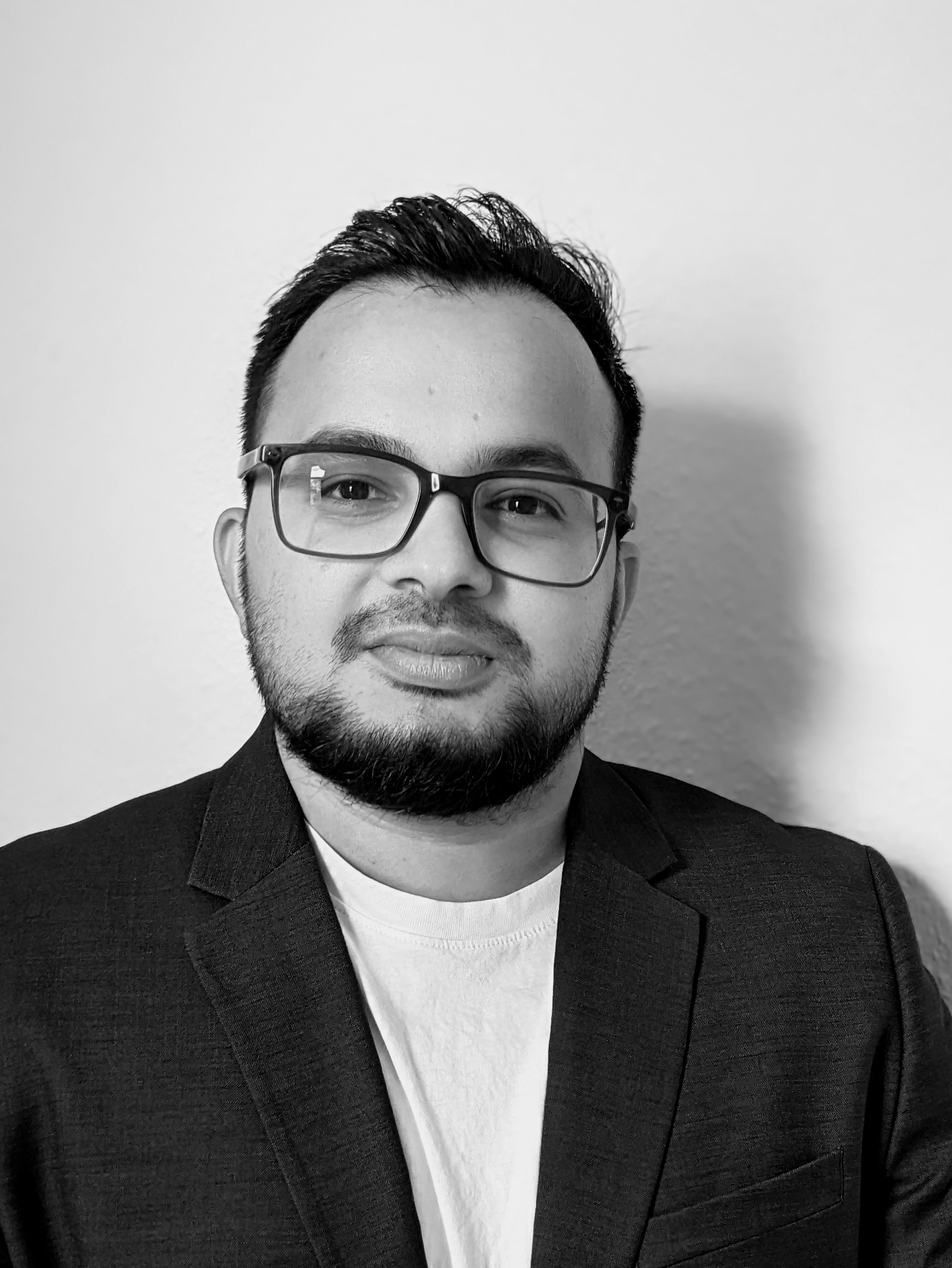
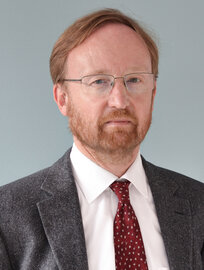
Sarath Menon is a computational materials scientist at Ruhr-University Bochum and Max-Planck-Institut für Eisenforschung GmbH. His work focuses on atomistic simulations, machine learning interatomic potentials, and thermodynamic property calculations. He contributes to open-source software like pyiron and pace. Doctor of Engineering, Mechanical Engineering (2021) Master of Science, Materials Science and Simulation (2018) Bachelor of Technology, Mechanical Engineering (2012) His research centers on developing machine learning potentials for thermodynamic modeling, with applications in phase diagrams and nucleation studies. He employs methods like transition path sampling and hyperdynamics. Menon teaches Python programming, electronic structure methods, and atomistic simulation techniques. He has organized workshops on reproducible workflows and quantum mechanics in solid-state physics. Key software contributions include: pyscal : Structural analysis tool for atomic environments pace : High-performance Atomic Cluster Expansion implementation calphy : Free energy calculation library atomRDF : Ontology-based structure manipulation
Stephan Zelewski is a full Professor at the Faculty of Business and Economics of the University of Duisburg-Essen since 1998 and head of the Institute for Production and Industrial Information Management. He studied business administration and economics at the Universities of Münster and Cologne (1977-1981), earning two diplomas with distinction. Key Research Areas : Production Management, Logistics, Industrial Information Systems, Semantic Knowledge Management, AI/Operations Research applications in business, and Game Theory-based fair distribution models. Academic Leadership : Dean of Studies (1993-1996), founder of the Ruhr Campus Academy (2001-2002), and chair of multiple research projects including KI-LiveS (AI brainware development) and OrGoLo (Semantic Knowledge Management in logistics). Recent Articles focus on AI-based knowledge reuse systems, e-mobility sustainability analysis, and semantic modeling tools. His work integrates Artificial Intelligence with Operations Research and Game Theory across logistics and production domains. Scientific Recognition : Multiple scholarships (Konrad Adenauer, Hoechst, Fritz Honsel Foundations) Cologne University Prize (1992) Leadership in academic associations (VHB, Wissenschaftliche Kommission Wissenschaftstheorie)
Nikolas Zöller is a research scientist at the Max Planck Institute for Human Development 's Adaptive Rationality department. His work focuses on collective intelligence, human-AI collaboration, and computational modeling of social systems. He combines methods from physics, computer science, and psychology to study decision-making processes in both natural and artificial collectives. Ph.D. candidate at Constructor University Bremen (2020-2024) Research Associate at Potsdam University of Applied Sciences (2015-2022) Master of Science in Physics from Freie Universität Berlin (2014) Bachelor of Science in Physics from Freie Universität Berlin (2010) His research spans: Collective intelligence frameworks Human-AI collaborative diagnostics Agent-based modeling of social networks Technological co-diffusion patterns Thermodynamic optimization in physical systems Recent publications highlight his work on: Diagnostic accuracy in human-AI collectives GitHub collaboration topology Affect control theory in group dynamics Co-diffusion of complementary technologies Scientific recognition includes: European Press Prize (2022) as part of a team Springer Best Masters Award (2014)
Shweta Suran is a Postdoctoral Fellow at the Max Planck Institute for Human Development (Berlin, Germany) with affiliations as an External Researcher at Tallinn University of Technology (School of Information Technologies, Department of Software Science) and IT University of Copenhagen (Collective Intelligence Research Group). She previously held roles at TalTech, The Open University (UK), and Krishna Engineering College. Doctor of Philosophy (2022) in Computer Science, Tallinn University of Technology Research Master's Degree (2014) in Knowledge Engineering, SRM Institute of Science and Technology Her research focuses on Collective Intelligence, Collective Behaviour, Social Network Analysis, Data Mining, and Digital Image Processing. She explores how individuals interact with online content, the impact of conversational affordances on deliberation quality, and correlations between social media preferences, media choices, and socio-economic/political factors. Her recent publications include work on a digital collaborative platform for the silver economy (2023), frameworks for collective intelligence (2020), pathfinding in medical imaging (2014), and AI applications in spatial data infrastructure (2019-2021). She co-supervised Sijo Arakkal Peious (2019 Master's thesis). Marie Skłodowska-Curie Postdoctoral Fellowship (2024) Seal of Excellence from European Commission (2023) SAP Fellowship Award (2016) Gold Medal at SRM University (2014) She contributed to projects like the EU Green Deal-aligned Waterway Safety Management program (2020-2021) and cost-effective 3D spatial data infrastructure (2019-2021), with funding totaling €1,996,000. Her work bridges ICT, collective behavior, and societal challenges.
Tasneem S. J. Darwish is a researcher affiliated with the University of Technology, Malaysia , specifically within the Faculty of Computing and the Pervasive Computing Research Group . Her work spans multiple domains in Computer Science and Networking , with a focus on Satellite Communications , Wireless Sensor Networks , and Intelligent Transportation Systems . She has contributed extensively to standardization frameworks for LEO satellites in 5G/Beyond networks and developed innovative routing protocols for urban vehicular networks. Notable research trends include: Advancements in LEO Satellite Networking (2021-2025) Integration of Graph Theory for handover frameworks (2022) Applications of Big Data in transportation safety (2016-2019) Energy-efficient WSN Clustering (2015-2017) Emerging Space Network Architectures (2023) Her work addresses critical challenges in Network Management , IP-based Satellite Systems , and HAPS (High Altitude Platform Station) networks, with a strong emphasis on Standardization and Future Communications infrastructure.
Oliver Hohlfeld is a Professor at the University of Kassel where he leads the Distributed Systems Group . Prior academic appointments include professorships at Brandenburg University of Technology (heading the Computer Networks group) and RWTH Aachen University , with earlier work at TU Berlin/Deutsche Telekom Innovation Laboratories . He has served as visiting scholar at University of Wisconsin-Madison (Paul Barford's group) and holds a Dr. rer. nat. in Computer Science (2013) from TU Berlin under advisor Anja Feldmann. B.Sc. and M.Sc. in Computer Science from Darmstadt University of Applied Sciences, Institute Eurecom, and Darmstadt University of Technology Former Fraunhofer IGD researcher (2004-2006) working on telemedical network architectures His research interests focus on data-driven analysis of internet performance and security through empirical network measurement, psychological user studies, and machine learning. Key areas include DDoS defense mechanisms, TLS deployment analysis, social media interaction patterns, caching strategies, and internet protocol evaluation (HTTP/2, QUIC, BGP). Recent work examines cross-border information control circumvention through unconventional user reviews. Oliver has served on technical program committees for 25+ conferences including SIGCOMM'24 , NSDI'25 , and IMC'24 . His scientific leadership includes: 2022 IETF/IRTF Applied Networking Research Prize 2020 ACM Senior Member status 2018-2021 conference co-chair roles He leads major research projects : AIDOS: AI-based DDoS Mitigation at DE-CIX Internet Exchange (BMBF funded) DFG SFB 1053 MAKI: Multi-Mechanism Internet Adaptation (2017-2020) EU Horizon 2020 SSICLOPS: Secure Cloud Operations Internet Observatory Initiative
Prof. Dr. Tobias Lasser is an Adjunct Professor at the Technical University of Munich (TUM) since 2024, leading the Computational Imaging and Inverse Problems research group. He holds affiliations with the TUM School of Computation, Information and Technology and the Munich Institute of Biomedical Engineering. His academic career includes a PhD (2011) and habilitation (2017) in Computer Science from TUM, along with prior roles as a Postdoctoral Fellow and Akademischer Rat at TUM's Chair for Computer Aided Medical Procedures. His research focuses on computational imaging , inverse problems in tomography , and clinical decision support systems . Key areas include X-ray phase-contrast/dark-field imaging, light field microscopy, and multi-modal medical data analysis. Notable contributions include advancements in sparse-view CT reconstruction, artifact-free deconvolution techniques, and AI-driven diagnostic tools. Recent work emphasizes integrating deep learning with traditional imaging modalities, such as encoder-decoder architectures for anomaly detection and attention-based models for skin lesion classification. His team also explores robotic sample holders for advanced CT setups and open-source frameworks like elsa for tomographic reconstruction. Educations: Diplom-Informatiker (2006), Diplom-Mathematiker (2008), Dr. rer. nat. (2011, summa cum laude), Habilitation (2017) Awards: IEEE editorial award (2023), Best Poster (2021), Supervisory Excellence (2021), Teaching Award (2021) Labs/Teams: Munich Institute of Biomedical Engineering, Computational Imaging Group (TUM)
Dr. Christoph Hennersperger is a Co-Founder and CTO of OneProjects, an Irish-German MedTech startup focused on cardiac imaging and data-driven healthcare solutions. He is affiliated as a senior research scientist and lecturer at the Chair of Computer Science Applications in Medicine (Prof. Navab) at Technical University of Munich (TUM). His research integrates medical device development, computational sonography, and robotics in surgical applications. He has directed the MedInnovate fellowship program and led the EU Horizon2020 EDEN2020 project. Education: Electrical Engineering (Information Technology) from TUM (2006–2011). Professional History includes roles as a Research Fellow at Trinity College Dublin (2016–2019), Research Manager at Klinikum Rechts der Isar (2016–2018), and Fellow at BioInnovate Ireland (2015–2016). He has supervised over 20 MSc/BSc theses on topics like Ultrasound-Guided Interventions and Surgical Robotics. Teaching: He has lectured since 2014 on courses including Computer Aided Medical Procedures , Medical Augmented Reality , and MedInnovate . Research focuses on 3D ultrasound imaging, robotic interventions, and AI-driven medical solutions. Current projects include RoBildOR (robotics for multimodal imaging) and SUPRA (real-time ultrasound processing). Key innovations include the SegThy Dataset and Leg-3D-US Dataset for medical imaging, and developments in 3D ICE imaging for cardiac interventions. His work bridges hardware, software, and clinical needs, emphasizing collaborative team-driven healthcare innovation.
Saeed Amizadeh is a prominent researcher specializing in artificial intelligence and machine learning, currently affiliated with Microsoft's research division. His work spans multiple domains of AI including speech processing, natural language understanding, computer vision, and time series analysis, with a particular focus on developing novel frameworks that bridge symbolic reasoning with neural approaches. Over the past decade, he has established himself as a significant contributor to the field through publications in top-tier conferences including ICASSP, ICLR, AAAI, KDD, and IJCAI. Dr. Amizadeh's research interests primarily center around advancing the theoretical foundations and practical applications of machine learning systems. His work on neuro-symbolic visual reasoning has contributed to understanding how to effectively disentangle visual perception from logical reasoning in AI systems. He has made significant contributions to differentiable programming, particularly in making classical machine learning pipelines fully differentiable, which enables end-to-end optimization of complex ML workflows. His research on speech enhancement using GANs represents cutting-edge work in audio processing, while his time series anomaly detection frameworks have practical applications in numerous industry settings. Analysis of his publication trends reveals a consistent trajectory from theoretical machine learning foundations toward increasingly applied research with practical industrial relevance. His early work (2010-2015) focused on fundamental algorithms and probabilistic modeling approaches, while his more recent publications (2019-2025) demonstrate a shift toward practical AI systems with direct applications in speech processing, audio separation, and enterprise machine learning. A notable theme throughout his career is the development of frameworks that enable more efficient, scalable, and interpretable AI systems. As a key contributor to Microsoft's ML.NET framework, Dr. Amizadeh has played an important role in developing tools that make machine learning more accessible to enterprise developers. His collaborative work spans academia and industry, with notable partnerships with researchers from various institutions as well as within Microsoft Research.
Andreas Ziegler is a Professor at the Department of Computer Science (INF) of Friedrich-Alexander University Erlangen-Nürnberg. His research focuses on system software optimization , particularly in Linux kernel configurability and binary tailoring . He leads the Chair of Computer Science 4 (System Software) and develops open-source tools for minimizing software stacks while preserving functionality. University: Friedrich-Alexander University Erlangen-Nürnberg School: College of Engineering Department: Department of Computer Science Rank: Professor Research Interests: Ziegler investigates methods to automate software stack tailoring. His work spans: Configuration Interface Utilization (e.g., Linux kernel modules) Binary-Level Code Removal (ELF file manipulation without source access) Maintenance Impact Quantification (AST hashing for change detection) Publication Trends: Recent works emphasize attack surface reduction and scalable configuration testing , while earlier studies focus on feature modeling and compilation redundancy . Tools developed include GitHub-hosted open-source solutions . Advising: Supervised multiple Master’s theses on topics like header analysis for dead code detection and dynamic variability management in Linux systems.
Prof. Dr. Wolfgang Renz is a faculty member at the Department of Computer Science, Faculty of Mathematics and Natural Sciences, University of Hamburg. He works on decentralized coordination mechanisms in self-organizing multi-agent systems, with applications in demand-side management, logistics, and urban mobility. Current affiliation: University of Hamburg (Informatik) Research focus: Systemic modeling, emergent behavior analysis, and validation of adaptive systems His publications cover topics like ant-colony optimization for energy management, peer-to-peer coordination spaces, and mesoscopic stochastic models for validating agent dynamics. He has supervised several doctoral and diploma theses on related subjects.
Robert Schweppe is a Researcher at the Department of Computational Hydrosystems , Helmholtz Centre for Environmental Research (UFZ) in Leipzig, Germany. He has held this position since 2017, following prior roles as Project Engineer at HYDRON GmbH (2014-2017) and Research Assistant at UFZ (2013). Expertise in hydrological modeling using mHM, ECLand, LARSIM Developed pyflow configuration tools and MPR software for environmental data processing Key contributor to 4DHyro project integrating Earth Observation data with hydrological models His research interests span hydrological modeling , drought forecasting , machine learning applications , and climate change impacts on water systems. His 2022 publications on parameter regionalization and floodplain modeling demonstrate methodological innovations in environmental data analysis. Notable scientific recognitions include the Deutschlandstipendium scholarship (2012-2013) and Helmholtz Field Study Fellowship (2022). He collaborates extensively with European institutions on compound environmental risks and smart monitoring technologies .
Dr.-Ing. Michael Selzer is a Group Leader in Research Data Management at the Karlsruhe Institute of Technology (KIT), specifically within the Institute of Nanotechnology. He leads the Kadi4Mat project, focusing on FAIR (Findable, Accessible, Interoperable, Reusable) research data infrastructure for materials science. His work bridges computational modeling and digital research workflows. Research Interests: Michael Selzer specializes in computational materials science , with a strong emphasis on phase-field modeling for simulating microstructure evolution, fracture mechanics, and multiphase systems. His research extends to materials informatics , digital workflows , and research data management , particularly in the context of battery materials, porous media, and solid-state systems. He integrates machine learning and data science to analyze and optimize materials properties. Publication Trends: His recent publications (2023–2025) highlight a growing focus on FAIR data infrastructure (e.g., Kadi4Mat, KadiStudio), large language models in battery science (LISA), low-code simulation platforms (MUSICODE), and reproducibility in bioprinting . These reflect a strategic shift toward digitalization and automation in materials research, while maintaining a strong foundation in physics-based modeling. Scientific Contributions: Developed and advanced phase-field models for grain growth, crack propagation, and interfacial phenomena. Contributed to the development of Kadi4Mat, a research data infrastructure for materials science. Integrated machine learning and AI into materials characterization and battery research. Published extensively in journals such as Acta Materialia , Computational Materials Science , and Scientific Data . Advising and Grants: While no direct students are listed, his leadership role in Kadi4Mat suggests mentorship and team supervision. He has likely secured funding for digital infrastructure and computational materials projects, evidenced by sustained publication output and collaborative work with major institutions. His research is highly collaborative, involving teams across KIT and international partners. Labs and Teams: He leads the Research Data Management group under the Kadi4Mat initiative at KIT. This team focuses on developing digital tools for materials research, including electronic lab notebooks (KadiWeb), workflow automation (KadiStudio), and ontology-based data integration. The group operates at the intersection of computational science, data engineering, and materials discovery.
Andy Schürr is a Full Professor at the Institute for Data Technology within the Department of Electrical Engineering and Communication Technology at Technische Universität Darmstadt. He holds a Dr. rer. nat. in Computer Science from RWTH Aachen and has held academic positions at institutions including the University of the German Armed Forces Munich and Queen’s University (Canada). His research focuses on model-based software engineering, embedded systems, graph transformation systems, and P2P technologies. Professional Activities: Co-organizer of >20 conferences/workshops Programme Committee Member for >130 conferences Editorial board member of Software & System Modeling (since 2004) Member of steering committees for GI Conference on Modeling, ICGT, and FASE Research Interests: Model-driven development of embedded systems Visual model transformation and specification languages Integration of system engineering tools Graph transformation applications in networking and real-time systems Awards & Recognition: Listed among the most cited computer scientists globally. Grants & Funding: Active in securing research funding for model-based engineering tools, graph transformation applications, and real-time systems development. Labs/Teams: Leads TU Darmstadt’s Real-Time Systems Group , focusing on model-driven prototyping and adaptive communication systems.
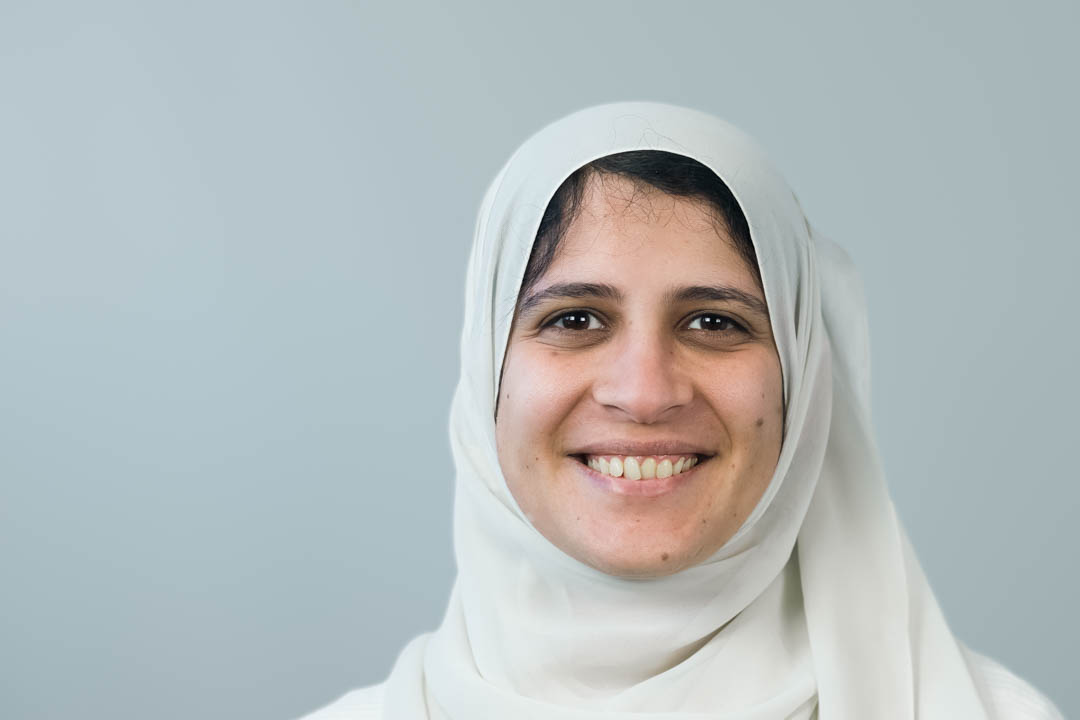
Maryam Fouad Abdelaty is a researcher in the Department of Medical Engineering at Ruhr University Bochum, where she completed her PhD in September 2024. Her work focuses on applying deep learning techniques to medical ultrasound imaging, including harmonic imaging, synthetic data generation, and contrast-enhanced imaging. She holds a bachelor's degree in electronics engineering from the German University in Cairo (2015), a master's degree in bio-impedance spectroscopy for non-invasive glucose monitoring (2017), and a Dr.-Ing. degree from Ruhr University Bochum (2024). Bachelor's: German University in Cairo (2015) Master's: Thesis on joint NIR and bio-impedance spectroscopy for glucose monitoring (2017) PhD: Focused on deep learning in medical ultrasound (2024) Her research emphasizes improving imaging resolution, reducing invasiveness, and enhancing diagnostic accuracy through AI-driven methodologies. Recent work includes comparative studies of deep learning vs. traditional amplitude modulation in contrast-enhanced ultrasound, as well as semi-supervised approaches for needle localization. Her publications span conferences like IEEE Ultrasonics Symposium and IEEE ISBI, with a focus on deep learning applications in biomedical imaging. Notable contributions include synthetic ultrasound signal generation using GANs and single-shot harmonic imaging techniques. While no formal advising or grants are explicitly listed, her research demonstrates significant contributions to medical imaging innovation. No lab affiliations or teams are mentioned in the provided text.