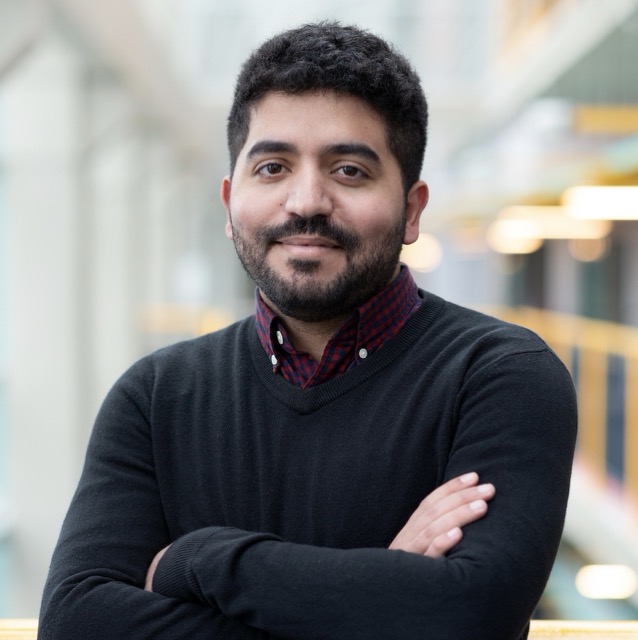
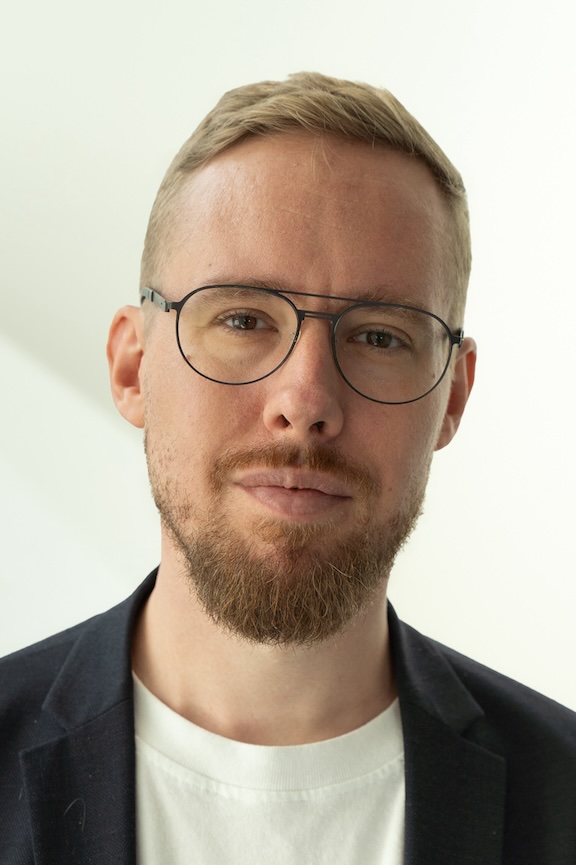
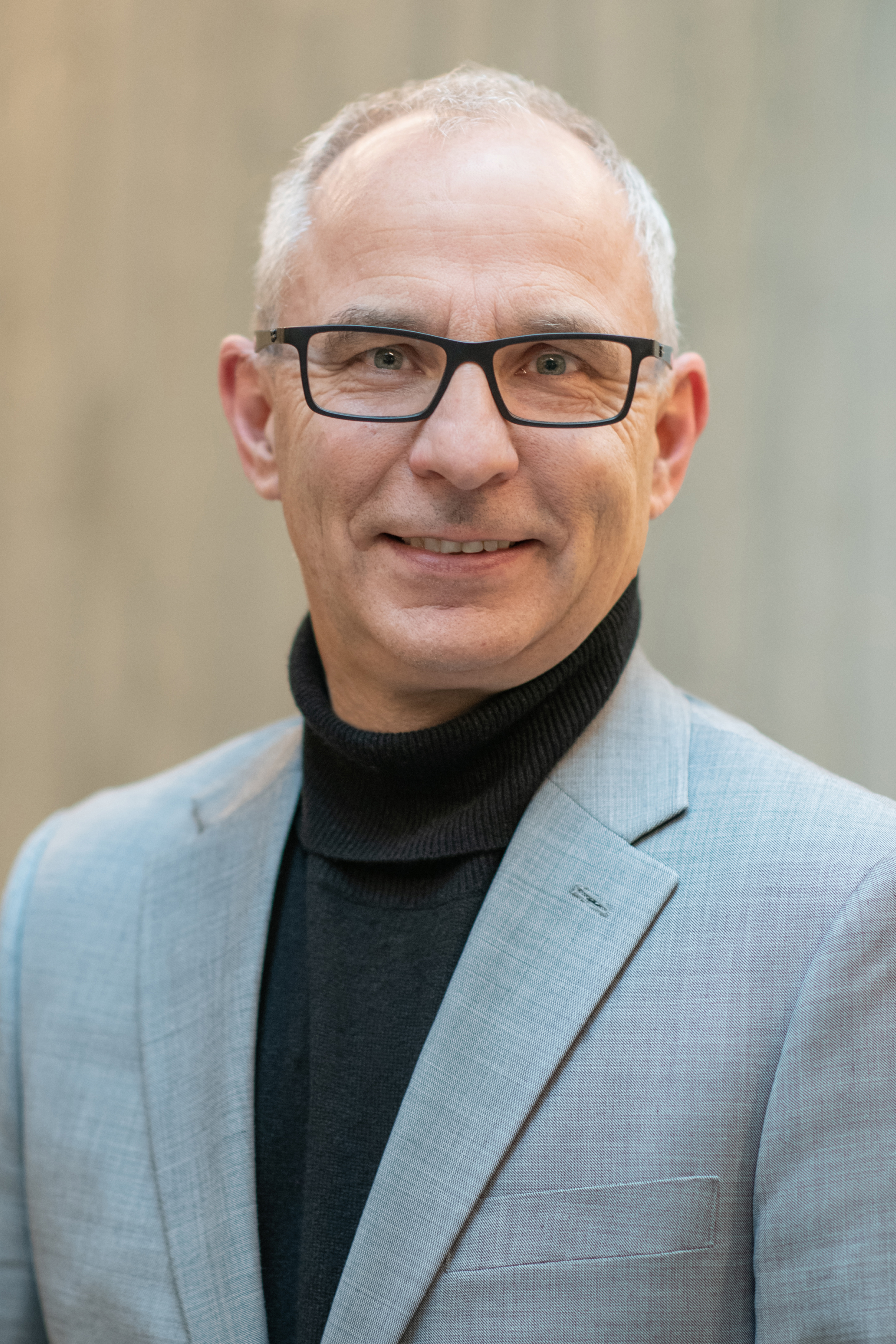
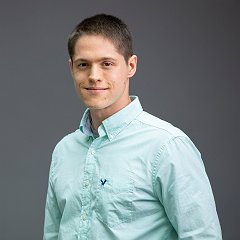
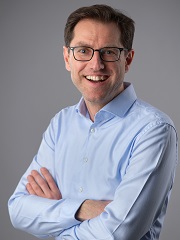
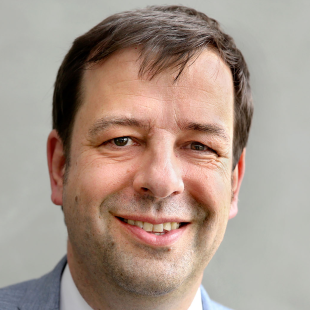
Prof. Dr.-Ing. Johannes Henrich Schleifenbaum is a Professor and Chair of Digital Additive Production at RWTH Aachen University, where he leads research in the Profile area Production Engineering (ProdE). His work advances additive manufacturing (AM) through interdisciplinary approaches combining materials science, process engineering, and digital technologies. His research encompasses: Laser powder bed fusion (LPBF) process optimization and defect mitigation Development of novel alloys/composites for AM applications Sustainable manufacturing practices including material recycling Integration of AI/ML for accelerated material and process design Digital tools for automated design and distributed manufacturing Recent publications (2023-2025) demonstrate a strong focus on: Multi-material processing and microstructure control Machine learning-driven alloy development Standardization and scalability of AM processes Advanced simulations for meltpool dynamics and thermal behavior Applications in aerospace, construction, and biochemical engineering He leads the Chair of Digital Additive Production, collaborating with industry partners to translate research into industrial solutions for next-generation manufacturing.
Dr. Yu Huang is an Assistant Professor in the Department of Computer Science at Vanderbilt University's School of Engineering, with a secondary appointment in the Department of Teaching and Learning at the Peabody School of Education. She is affiliated with the Institute for Software Integrated Systems, the Frist Center for Autism and Innovation, the Vanderbilt Lab for Immersive AI Translation (VALIANT), and the Vanderbilt LIVE Learning Innovation Incubator. Her academic journey began with a BS in Aerospace Engineering from Harbin Institute of Technology in China (2011), followed by an MS in Computer Engineering from the University of Virginia (2015), and culminated with a PhD in Computer Science and Engineering from the University of Michigan in 2021 under Professor Westley Weimer. Dr. Huang's research bridges human cognition and machine intelligence to enhance software development. Her work spans software, hardware, AI, medical imaging (fMRI/fNIRS), eye tracking, and mobile sensing through collaborations with Security, Education, Psychology, and Neuroscience researchers. She leads the MIND Lab (Mixed INtelligence Development for programming lab), investigating programming expertise formation, code comprehension processes, cognitive error patterns, and diversity in programming communities. Her innovative approach combines empirical human studies with AI model development to create more effective programming tools. Her recent publications reveal a growing emphasis on leveraging human attention data to improve code language models, analyzing cognitive biases in security contexts, and examining social factors in technical communication. The research shows strong interdisciplinary connections between neuroscience, psychology, and software engineering, with increasing applications of LLMs in developer tooling. Dr. Huang's work consistently demonstrates how understanding human cognition can inform better AI systems for programming tasks. Dr. Huang has received numerous prestigious recognitions including the 2025 ICPC Vaclav Rajlich Early Career Achievement Award and three ACM SIGSOFT Distinguished Paper Awards (ICSE 2019, FSE 2023, ICSE 2024). Her lab has earned the Best Presentation Award at GI2024, while her students have received the Richard Bennett/Dorothy Danforth Compton Prize scholarship and the C. F. Chen Best Paper award. She actively mentors a diverse team of graduate students (Yifan Zhang, Zach Karas, Zihan Fang, Yueke Zhang, Jiahao Zhang) and undergraduate researchers, with many former students advancing to top institutions (Stanford, Harvard, Duke, UC Berkeley) and organizations (NASA JPL). Her research is supported by a 4-year NSF grant, GitHub Tech for Social Good funding, and the Provost's Faculty Immersion Vanderbilt Grant, enabling comprehensive studies of human-AI collaboration in software engineering. The MIND Lab maintains a strong collaborative culture, frequently working with Professor Kevin Leach's research group and organizing retreats to locations like Radnor State Park and the Great Smoky Mountains. This environment fosters innovation at the intersection of human cognition and software engineering while supporting the professional development of emerging researchers in the field.
Amine Mhedhbi is an Assistant Professor at Polytechnique Montréal , where he leads the Data & AI Systems Lab . He earned his PhD in 2023 from the University of Waterloo. His work bridges data management , graph databases , and AI systems , with a focus on performance, debuggability, and user interface design for data applications. Education : PhD (University of Waterloo, 2023) Research Interests center on modern analytical data systems , including multimodal data management , language model integration , and graph query optimization . His projects like FLockMTL and GraphflowDB aim to combine semantic analysis, AI, and traditional database operations. Scientific Awards include the NSERC Discovery Grant , the Cheriton School Distinguished Dissertation Award , the VLDB Best Paper Award , and fellowships from Microsoft and Meta . Key Collaborations : Semih Salihoğlu, Jimmy Lin, Elena L. Glassman Labs & Teams : Affiliated with DAIS Lab , IVADO , and co-founded the applied research team at Distyl AI in 2023.
Prof. Dr.-Ing. habil. Gero Mühl is a W2-Professor at the University of Rostock, where he holds the chair for "Architecture of Application Systems" since October 2009. His academic journey includes positions as a Heisenberg Fellow at the Technical University of Berlin (2009), postdoctoral research at TU Berlin (2002-2009), and doctoral studies at TU Darmstadt where he received his Dr.-Ing. degree with distinction in 2002. He completed dual Diplomas in Computer Science (Dipl.-Inform.) and Electrical Engineering (Dipl.-Ing.) from FernUniversität in Hagen in 1998. Prof. Mühl's research focuses on Self-Organizing Distributed Systems , with particular expertise in distributed systems, distributed algorithms, event-based systems, middleware, energy-efficient systems, organic computing, sensor networks, web services, and electronic commerce. His work bridges theoretical foundations with practical implementations in real-world distributed environments. His recent publications show a strong trend toward time-sensitive networking, content-based publish/subscribe systems, and P4 programmable data planes. These works address critical challenges in industrial communication, real-time systems, and network reliability. His research group has made significant contributions to making distributed systems more autonomous, reliable, and efficient. Scientific awards and recognitions include: Nomination for the Berlin Science Award for Young Scientists (2008) Heisenberg Fellowship by the German Research Foundation (DFG) (2008) Best paper award in System Software and Security at SAC 2015 Prof. Mühl has been actively involved in numerous research projects and collaborations, particularly focusing on self-organizing and self-stabilizing systems. His work on the REBECA publish/subscribe middleware represents a significant contribution to autonomous distributed systems. He has supervised numerous students and researchers, contributing to the development of the next generation of computer scientists specializing in distributed systems. His laboratory at the University of Rostock focuses on practical implementations of self-organizing distributed systems, with current projects investigating time-sensitive networking, publish/subscribe systems, and energy-efficient distributed computing. The team combines theoretical analysis with practical system development to address real-world challenges in industrial and commercial applications of distributed systems.
Irena Koprinska is a prominent researcher at the University of Sydney with over 150 publications from 1996 to 2025. Her work spans multiple interdisciplinary domains with significant contributions to machine learning applications in educational technology, time series forecasting, and health informatics. She maintains strong research collaborations, particularly with Kalina Yacef (38 joint publications), Mashud Rana (26 papers), and Bryn Jeffries (22 papers), indicating leadership in her research group. Her research interests focus on practical applications of machine learning across diverse domains. In educational data mining, she has pioneered methods for predicting student performance in programming courses, analyzing syntax errors, and developing automated hint generation systems. Her work in time series forecasting has made significant contributions to solar power prediction using advanced neural network architectures. Additionally, she has applied machine learning techniques to medical domains, particularly in sleep disorder detection and analysis. The analysis of her 15 most recent publications (2022-2025) reveals a continued focus on educational technology and time series analysis, with increasing attention to interpretable methods and health applications. Her work demonstrates a consistent trajectory of applying sophisticated machine learning techniques to solve real-world problems across multiple domains, with particular emphasis on creating practical tools for education and renewable energy management. Notable Research Contributions: Development of the HINTS framework for automated programming hint generation Innovative approaches to multistep-ahead time series forecasting Applications of deep learning to sleep disorder detection Methods for predicting student performance in programming education Her publication record in top venues including Machine Learning journal, AIED, EDM, and IJCNN demonstrates significant impact in both machine learning and educational technology communities. The consistent output of high-quality research over nearly three decades indicates sustained scholarly productivity and leadership in her fields of expertise.
Prof. Dr. Matthias Weidlich is a faculty member at Humboldt University of Berlin within the Institute of Computer Science under the Faculty of Mathematics and Natural Sciences . His research focuses on Process Mining , Complex Event Processing , and Data Privacy with applications in Business Process Management and Scientific Workflows . Research Interests: Business Process Management and Process Mining Complex Event Processing and Stream Data Analysis Data Privacy and Security in Process Systems Scientific Workflow Systems and User Behavior Heterogeneous Network Embeddings Algorithm Design and Optimization Recent Publications (2023-2025) demonstrate expertise in: Efficient stream processing techniques Privacy-preserving process mining frameworks Scientific workflow analysis tools Graph neural network applications Multi-modal data integration Adaptive querying systems Contact: Office: Unter den Linden 6, 10099 Berlin Phone: 030 2093-41277 Email: matthias.weidlich@hu-berlin.de Web: hu.berlin/data
Patrick Henkel is a Professor at the Technical University of Munich (TUM) affiliated with the TUM School of Engineering and Design and the Chair of Communication and Navigation. He holds a professorship in Satellite Geodesy under Prof. Hugentobler. His research focuses on advanced positioning technologies, including Global Navigation Satellite Systems (GNSS), autonomous systems, and sensor fusion. He develops algorithms for precise positioning in challenging environments such as urban areas, alpine regions, and indoor spaces. His work also extends to environmental applications, such as snow hydrology and climate monitoring using GNSS signals. Henkel’s contributions include innovations in real-time kinematic (RTK) positioning, UAV navigation, and multi-sensor integration for robotics and autonomous vehicles. His research is supported by collaborations with industry and academic partners, addressing both theoretical and applied challenges in geodesy and navigation. Henkel leads projects on GNSS signal processing, satellite-based environmental monitoring, and autonomous driving technologies. He has contributed to the Galileo HAS service and developed methodologies for snow water equivalent estimation using multi-frequency GNSS signals. His expertise spans hardware-software co-design for navigation systems and algorithm optimization for high-precision positioning in dynamic environments. He actively publishes in top-tier journals and conferences, with a focus on advancing the reliability and accuracy of navigation systems across various domains. His advising and grants include funding for projects on sensor fusion, UAV-based measurements, and satellite receiver development. He collaborates with teams at TUM’s Navigation Lab and the Professur für Satellitengeodäsie, contributing to both academic and industrial applications. His work on low-bandwidth RTK dissemination and laser-tracker verified UAV positioning highlights his commitment to bridging theoretical advancements with real-world implementation.
Kevin Baum is a computer scientist currently serving as the deputy head of the Neuro-Mechanistic Modelling (NMM) department at the German Research Center for Artificial Intelligence (DFKI) since January 2023, and head of the Centre for European Research in Trusted AI (CERTAIN) at DFKI since December 2023. Based at the Saarland Informatics Campus in Saarbrücken, Germany, he completed his doctorate in philosophy in March 2024, combining technical expertise with philosophical depth. His work bridges computer science with ethics, focusing on making AI systems transparent and accountable to human users. Dr. Baum's research program centers on interdisciplinary questions concerning the explainability and transparency of AI systems. His work spans multiple significant projects including the Explainable Intelligent System (EIS) initiative and project E7 of the Transregional Collaborative Research Centre 248 "Foundations of Perspicuous Software Systems" (CPEC). He has developed frameworks for understanding stakeholder perspectives on explainable AI and investigated how different information types about automated systems affect user perceptions of fairness and justice. His approach consistently combines theoretical foundations with practical implementations across diverse contexts. Analysis of his publication trends reveals a clear trajectory from theoretical foundations in machine ethics toward practical implementations of explainability requirements in real-world contexts. His work demonstrates increasing focus on human oversight effectiveness, fairness monitoring, and ethical considerations across various AI applications. He has made significant contributions to both academic discourse and practical AI development guidelines, with publications spanning computer science, philosophy, psychology, and human-computer interaction venues. Award for Ethics for Nerds lecture series As a research leader, Dr. Baum contributes to shaping AI development practices through his departmental leadership and interdisciplinary collaborations. His current work with CERTAIN focuses on establishing European research standards for trusted AI development and deployment, emphasizing the practical implementation of ethical requirements in AI systems. He maintains active collaborations across multiple institutions and disciplines, reflecting his commitment to bridging technical and philosophical considerations in AI development. At DFKI, he leads research that combines neuroscientific insights with AI development to create more interpretable systems. The NMM department focuses on both theoretical research on explainable AI foundations and practical applications in various domains, with particular attention to how different stakeholders understand and require explanations from AI systems.
Prof. Karsten Urban is a Full Professor of Numerical Mathematics at the University of Ulm, leading the Institute for Numerical Mathematics. He holds roles such as Dean of Studies in Computational Science and Engineering (CSE) and Deputy Spokesman for the Research Association for Scientific Computing in Baden-Württemberg. He is an active member of prestigious societies including the Deutsche Mathematikervereinigung (DMV) and SIAM. His academic journey includes a PhD from RWTH Aachen (1995), Habilitation (2001), and a full professorship at Ulm since 2005. Research focuses on numerical methods for PDEs, reduced basis techniques, multiscale simulations in fluid mechanics, biomechanics, quantum sciences, and financial mathematics. He has pioneered wavelet-based methods and collaborated with industries on ship propulsion and energy trading models. His work integrates mathematical rigor with real-world applications, emphasizing model reduction and computational efficiency. Editorial Roles: Managing Editor of Advances in Computational Mathematics , Editor of SN Partial Differential Equations and Applications . Awards: Teaching award of Baden-Württemberg (2005), Science-Economy Cooperation Awards (2004, 2008). Administrative Roles: Member of the University Council and ASIIN expert committee. Supervises doctoral students in numerical analysis, quantum simulations, and biomechanics. Active in interdisciplinary projects, including quantum systems (IQST) and fracture healing modeling in collaboration with biomechanics experts. His contributions bridge academia and industry, driving innovation in computational methods.
Veronika Huck-Fries is a researcher at the Technische Universität München (TUM) , affiliated with the Department of Informatics and associated with the KrcmarLab and Wittges Lab . Her work focuses on Agile Information Systems Development , Work Engagement , and IT Workforce dynamics. Educational Background : M.Sc. in Industrial & Organizational Psychology (Ludwig-Maximilians-University Munich), Visiting Graduate Student (University of Alberta), B.Sc. in Psychology (LMU Munich), Entrepreneurship Education via UnternehmerTUM GmbH. Research Interests : Agile Software Development, Work Engagement, IT Workforce Management, Innovation Processes. Projects : ARinFLEX , MACS , Sonderforschungsbereich 768 subprojects. Collaborations : Involved in SAP University Competence Center, OpenPOWER@TUM initiatives, and DIAS project.
James C. Davis is an Assistant Professor in the Elmore Family School of Electrical and Computer Engineering at Purdue University. He leads the Duality Lab, which focuses on the engineering of software-intensive computing systems with particular interest in how these systems fail and how those failures can be mitigated. His research takes a socio-technical approach, considering both human and technical perspectives in system engineering. Dr. Davis received his PhD in Computer Science from Virginia Tech, where he was advised by Dongyoon Lee. His research interests span empirical software engineering, security, safety, testing, and web technologies, with a strong emphasis on practical impact and measurement. He applies a socio-technical philosophy to his work, believing high-quality systems must be engineered considering both human and technical perspectives. His recent research focuses on software supply chain security, regular expression vulnerabilities (particularly ReDoS), pre-trained model security, and failure analysis in software systems. His work often involves empirical studies of real-world software systems and security practices, with a strong emphasis on practical impact and measurable results. Dr. Davis has received significant funding from the National Science Foundation, Google, Cisco, and Rolls Royce for his research. His publications appear in top-tier venues including ICSE, FSE, ASE, and USENIX Security. He has served on program committees for many major software engineering and security conferences. Among his notable achievements are being elevated to IEEE Senior Member in 2022, receiving the Ruth and Joel Spira Outstanding Teacher Award from ECE@Purdue in 2022, and multiple Best Paper and Best Poster awards. He has successfully mentored numerous PhD and Master's students, with several completing their theses on topics related to software security and engineering. Dr. Davis actively recruits graduate and undergraduate research assistants for his Duality Lab, which has produced influential work on software failure analysis, regular expression security, and machine learning supply chain security. His lab is supported by multiple federal and industry grants focused on improving the security and reliability of software systems.
Prof. Dr. Sören Laue is a Professor of Machine Learning at the University of Hamburg's Department of Informatics. His research focuses on optimization algorithms, machine learning frameworks, and high-performance computing. He leads the Machine Learning research group and developed the GENO optimization framework and the Matrix Calculus toolset. His work emphasizes GPU acceleration, tensor operations, and scalable solutions for classical machine learning problems. Projects: GENO solver (Python-based optimization), Matrix Calculus (derivative computation), and SQL-based tensor operations. Key Research Themes: Optimization frameworks, GPU computing, neural network scalability, and algorithm design. Selected recent publications highlight contributions to tensor calculus benchmarks, GPU-optimized machine learning pipelines, and novel optimization methods. His work bridges theoretical foundations and practical software tools for the machine learning community.
Heiko Falk is a Professor and Head of the Institute of Embedded Systems at Technische Universität Hamburg (TUHH). His roles include serving as Workshop Chair for the 2024 Embedded Systems Week (ESWEEK), Scientific Coordinator for the B.Sc. and M.Sc. Computer Science programs, and Deputy Head of the Board of Examiners for Computer Science and Engineering. His research focuses on real-time systems, compiler optimizations, and worst-case execution time (WCET) analysis. Key areas include multi-core architectures, cache management, energy efficiency, and hardware/software co-design. Falk's work emphasizes practical compiler techniques for improving real-time performance, such as WCET-aware memory allocation, dynamic SPM optimization, and event-driven scheduling. His publications analyze shared cache interference, preemptive/non-preemptive scheduling, and DMA-aware optimizations. Recent work explores multi-objective trade-offs between WCET, energy consumption, and code size in embedded systems. No scientific awards are explicitly listed, but his contributions to WCET benchmarking (e.g., haRTStone project) and compiler frameworks demonstrate significant impact in the field. Advising and grants: No formal advisees are listed in the provided texts. Falk's work is supported through projects like teamplay, focusing on cyber-physical systems optimization. Labs/Teams: His group operates within TUHH's Institute of Embedded Systems, collaborating on projects addressing real-time system challenges in multi-core environments.
Prof. Dr. Christian Plessl is a W3 Professor of High-Performance Computing at the Institute of Computer Science, University of Paderborn. He leads the Paderborn Center for Parallel Computing (PC²), a national HPC center within the NHR alliance. His roles include Director of PC², Board Member of the NHR association, and member of the Sonderforschungsbereich 901. Education: PhD (Dr. sc. ETH) in Computer Engineering, ETH Zürich (2006) MSc in Electrical Engineering, ETH Zürich (2001) Postdoc at ETH Zürich (2007–2011) Research Interests: Architecture and tools for high-performance parallel and reconfigurable computing, FPGA acceleration, quantum chemistry, scientific computing, adaptive systems, and energy-efficient HPC solutions. Key projects include EKI-App (FPGA-based neural networks), FPGA4XPCS (X-ray spectroscopy), and HighPerMeshes (unstructured grid frameworks). Publications: Over 100 peer-reviewed works, focusing on FPGA acceleration, HPC frameworks, and quantum computing. Recent trends emphasize energy-efficient neural networks, FPGA-based quantum computing, and scalable HPC algorithms. Awards: Best Paper Awards at HEART 2023, ReConFig 2012/2014 Paderborn University Research Awards (2018, 2009) SEW-EURODRIVE Student Award (2001) Grants & Projects: Principal investigator in DFG, BMBF, and EU-funded projects. Collaborates with AMD/Xilinx, Intel/Altera, and Fujitsu. Leads initiatives like PerficienCC (custom computing) and HighPerMeshes. Labs/Teams: Directs the High-Performance Computing group at PC², focusing on FPGA supercomputing and HPC infrastructure. Active in the NHR alliance for national HPC coordination.
Yingfei Xiong is an active Associate Professor at Peking University, China, specializing in software engineering and programming languages. With a consistent research trajectory from 2013 through 2026, Xiong has established themselves as a prominent figure in the software engineering research community, regularly contributing to top-tier conferences including SPLASH, ICSE, ASE, and PLDI. Dr. Xiong's research primarily focuses on program synthesis, automated program repair, and software analysis techniques. Their work bridges theoretical programming language concepts with practical software engineering applications, particularly in developing novel approaches for code generation, bug fixing, and program optimization. The research demonstrates strong interdisciplinary connections between traditional software engineering, programming languages theory, and emerging AI techniques. Analysis of Xiong's publication trends reveals a clear evolution in research focus, beginning with foundational work in API transformations and program adaptation around 2013-2016, shifting toward program repair techniques from 2017-2020, and most recently incorporating machine learning and neural approaches into program synthesis and repair (2021-2026). The work consistently addresses practical challenges in software development while maintaining theoretical rigor, with increasing integration of AI techniques in recent years. Dr. Xiong has served in various leadership roles across the software engineering conference ecosystem, including program committee membership and session chair positions at major conferences. Their extensive service demonstrates recognition by peers as a subject matter expert in software engineering and programming languages research. While specific grant information isn't detailed in the provided text, the sustained publication record suggests successful research funding.