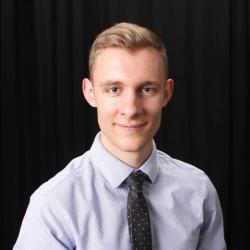
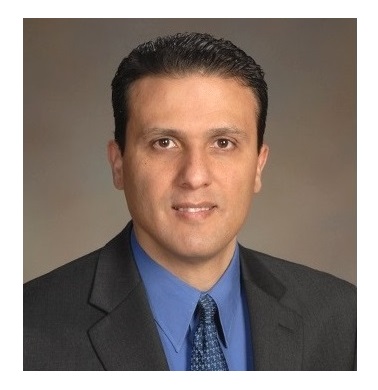
Colin Raffel , currently an Associate Professor at the University of Toronto and Associate Research Director at the Vector Institute , is a leading researcher in machine learning and natural language processing . His career spans roles at Hugging Face (Faculty Researcher), Google Brain (Senior Research Scientist), and UNC Chapel Hill (Assistant Professor). Education: PhD in Electrical Engineering (Columbia), MA in Music/Science (Stanford), BA in Mathematics (Oberlin) Key affiliations: Google Brain (2016-2020), Hugging Face (2021-present), Vector Institute (2023-present) His research focuses on language model development , attention mechanisms , efficient machine learning , and music information retrieval . Recent work explores model merging , parameter-efficient fine-tuning , and data-constrained language models . Teaching : Has instructed courses at University of Toronto and UNC Chapel Hill on Neural Networks , Deep Learning , and Information Theory . Academic service includes organizing ICLR workshops and serving as Senior Area Chair for NeurIPS and EMNLP . Notable awards : NSF CAREER (2022), Caspar Bowden Award (2023), NeurIPS Outstanding Paper (2023) Key contributions : Core developer of WT5 , Git-Theta , and mir_eval software
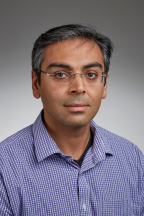
Professor Ihab Ilyas is a leading figure in data management and machine learning at the Cheriton School of Computer Science , University of Waterloo , where he holds the Thomson Reuters Research Chair in Data Quality . He is currently on leave from the university, serving as a Distinguished Engineer, Proactive Intelligence at Apple Inc . His research focuses on data cleaning , large-scale data integration , knowledge graphs , and machine learning applications in data quality . He has pioneered systems like HoloClean and Saga , with commercial impacts through co-founded startups Inductiv (acquired by Apple) and Tamr . PhD in Computer Science from Purdue University Co-founder of Inductiv (acquired by Apple) Co-founder of Tamr Research Interests include: Probabilistic and uncertain data management Machine learning for data quality and enrichment Big data systems and information extraction Knowledge graph construction and optimization Scientific Awards and Recognitions include: Fellow of the Royal Society of Canada (2024) C.C. Gotlieb Computer Award (2024) IEEE Fellow (2021) ACM Fellow (2020) Cheriton Faculty Fellowship (2013-2016) Ontario Early Researcher Award
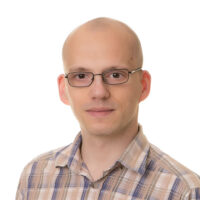
Trevor Campbell is an Associate Professor in the Department of Statistics at the University of British Columbia (UBC), Vancouver. He holds a Ph.D. in Machine Learning and Statistics from MIT and a B.A.Sc. in Aerospace Engineering from the University of Toronto. His research focuses on automated, scalable Bayesian inference algorithms, Bayesian nonparametrics, and streaming data analysis. Campbell is a core contributor to probabilistic programming tools like Pigeons.jl and has developed influential methods for coreset-based Bayesian inference. Education : Ph.D. in Machine Learning and Statistics (2016), MIT M.S. in Aeronautics and Astronautics (2013), MIT B.A.Sc. in Aerospace Engineering (2011), University of Toronto Research Interests : His work emphasizes scalable Bayesian computation, including variational inference, MCMC optimization, and coresets. He develops algorithms that balance statistical accuracy with computational efficiency, particularly for large-scale datasets. His recent work explores adaptive samplers (e.g., AutoStep, autoMALA) and theoretical guarantees for coreset methods. Applications span astrophysics, materials science, and network analysis. Awards & Grants : NSERC Discovery Grant (2025) Blackwell-Rosenbluth Award (2021) PIMS Early Career Award (2023) Google Perception Academic Funding (2020) Advising & Labs : He supervises a team of PhD and M.Sc. students at UBC, focusing on Bayesian methodology and computational tools. His lab collaborates with institutions like SFU and MIT on projects involving distributed sampling and probabilistic modeling. He co-organizes workshops on Bayesian computation and serves on editorial boards for Bayesian Analysis and TMLR.
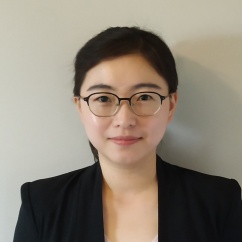
Kimon Fountoulakis is an Associate Professor at the University of Waterloo. His research focuses on Machine Learning on Graphs and Numerical Optimization, with a strong emphasis on algorithmic methods for graph-structured data. He holds a Ph.D. from The University of Edinburgh (2015), an M.Sc. from The University of Edinburgh (2010), and a B.Sc. from Athens University of Economics and Business (2009). His work spans theoretical foundations and practical applications in graph algorithms, optimization, and machine learning. Research interests include graph neural networks, local graph clustering algorithms, and algorithmic reasoning. His contributions address challenges in graph representation learning, message-passing architectures, and scalable optimization methods. Notable themes in his publications include improving counting abilities of vision-language models, analyzing graph convolutions, and developing flow-based clustering techniques with statistical guarantees. His work often bridges theory and practice, with applications in network analysis, pandemic containment strategies, and high-performance computing. While no specific grants or awards are listed, his research demonstrates significant contributions to graph-based machine learning and optimization. He maintains a research group at the University of Waterloo, with a focus on developing open-source tools and frameworks for graph algorithms. His lab’s work emphasizes local graph clustering methods and their scalability in real-world networks.
Dr. Zhenman Fang is an Associate Professor at the School of Engineering Science , Simon Fraser University (SFU) , where he founded and directs the HiAccel Lab . He also holds an associate membership in the School of Computing Science at SFU. His research focuses on customizable computing with software-defined hardware acceleration , addressing performance, energy-efficiency, and reliability in post-Moore’s law computing across domains like machine learning , big data analytics , quantum chemistry , and precision medicine . Education: Ph.D. in Computer Science from Fudan University (2014), with a visit to University of Minnesota during his studies. Postdoctoral Work: University of California, Los Angeles (UCLA) (2014-2017). Industry Experience: Staff Software Engineer at Xilinx (2017-2019). Dr. Fang’s research spans the entire computing stack , including application characterization , accelerator-rich architecture design , and programming/tool support . He has developed frameworks like HiSpMV , SyncNN , and SQL2FPGA , emphasizing FPGA acceleration for vision transformers , quantum chemistry , and spiking neural networks . His work has been recognized with 3 best paper awards (FPL 2024, TCAD 2019, MEMSYS 2017) and 3 best paper nominees (FCCM 2025, HPCA 2017, ISPASS 2018). Recent publications highlight trends in low-precision machine learning ( ShiftQuant , ESRU ), quantum chemistry acceleration ( SERI ), and vision transformer optimization ( Quasar-ViT ). His HiAccel Lab actively mentors PhD and MASc students , with notable graduates like Alec Lu (PhD 2024, now at Meta) and Philip Stachura (MASc, now with BC Graduate Scholarship). Scientific Awards: Inaugural SFU Research Excellence Award - Horizon Award (2025) FPL 2024 Stamatis Vassiliadis Best Paper NSERC Alliance Award (2020) CFI JELF Award (2019) Xilinx University Program Award (2019) IEEE Senior Member (2023) Grants: NSERC Discovery Grant (2019) CFI JELF Funding (2019) Huawei and Xilinx sponsorships Dr. Fang leads open-source initiatives like SyncNN , PASTA , and SQL2FPGA , and serves as General Chair for ASAP 2025 and Program Co-Chair for RAW 2025 . His lab collaborates globally with institutions such as UCLA , Northeastern University , and Xidian University .
Dr. Joey Paquet is a Tenured Associate Professor and Department Chair in the Department of Computer Science and Software Engineering at Concordia University in Montreal, Canada. He holds a PhD and specializes in research areas including Design and Implementation of Programming Languages, Context-Driven Computing, and Demand-Driven Computing. His work focuses on advancing programming paradigms and their applications in cybersecurity, distributed systems, and autonomic computing. Dr. Paquet is actively involved in thesis supervision across Computer Science and Software Engineering programs at both master's and doctoral levels. Research interests are centered around programming language design, particularly in demand-driven and context-aware systems. His contributions include frameworks like GIPSY and OpenISS, enabling scalable data processing and forensic computing. Recent work explores autonomic intent-driven networking, real-time gesture recognition, and IoT forensics. These efforts highlight his expertise in both theoretical constructs and practical implementations. His advising role supports students in MCompSc, MASc, and PhD programs. While specific grants are not detailed, his projects often involve interdisciplinary collaboration. Dr. Paquet is affiliated with platforms like LinkedIn and ResearchGate, reflecting an active academic presence. Key technical contributions include pioneering work on forensic computing backends, intent expression languages, and multimodal interaction systems. His research addresses challenges in cybersecurity, distributed systems, and service composition, with a focus on resilience and scalability.
Dr. Hiren Patel is a Professor in the Department of Electrical and Computer Engineering at the University of Waterloo. He holds a Doctorate in Computer Engineering from Virginia Tech and previously worked as a postdoctoral fellow at UC Berkeley under Edward A. Lee. His research focuses on real-time embedded systems, computer architecture, machine learning hardware, and cybersecurity. He teaches courses like ECE 150 (Programming), ECE 320/429 (Computer Architecture), and ECE 327 (Digital Systems). Research Interests: Cyber-physical systems and hybrid architectures Hardware/software co-design methodologies Predictable cache coherence protocols IoT and edge computing systems Security in embedded and real-time systems Recent work emphasizes cache coherence solutions for safety-critical systems and GPU acceleration strategies. His publications address challenges in multicore predictability, FPGA bandwidth optimization, and autonomous robotics orchestration. No specific awards are listed, though his extensive publication record indicates significant contributions to embedded systems research. He currently oversees graduate student applications focusing on his core research areas.
Paul Lu is a Professor in the Department of Computing Science at the University of Alberta, Faculty of Science. His research focuses on high-performance computing, parallel and distributed systems, cloud computing, and bioinformatics. He holds a B.Sc. (1991), M.Sc. (1993) in Computing Science from the University of Alberta, and a Ph.D. in Computer Science from the University of Toronto (2000). His research explores software systems, including operating systems, virtual machines, and parallel programming. Recent work emphasizes high-performance data transfers and IaaS cloud computing. He teaches courses such as MINT 706: Internet Application and Programming, covering internet protocols and client-server programming. Publications highlight contributions to network optimization, machine learning-driven protocol selection, and distributed systems. His work bridges theoretical advancements with practical applications in cloud infrastructure and wide-area networks.
Caroline Lemieux is an Assistant Professor at the Department of Computer Science, University of British Columbia (UBC), with research focused on advancing software correctness, security, and performance through innovative testing and synthesis techniques. Her work bridges Programming Languages and Software Engineering , particularly in fuzz testing, specification mining, and program synthesis. PhD from University of California, Berkeley (2021), advised by Koushik Sen Postdoctoral researcher at Microsoft Research, NYC (2021-2022) Key contributions: FuzzFactory , CodaMOSA , Arvada , and Gauss Her research integrates machine learning with traditional testing methods, exemplified by projects like RLCheck (reinforcement learning for test generation) and AutoPandas (neural synthesis for dataframes). Recent publications analyze generator-based fuzzing challenges and propose hybrid strategies combining coverage feedback with AI-driven insights. Scientific Awards : ACM/SIGSOFT Best Paper Award (ESEC/FSE 2019) ACM/SIGSOFT Tool Demonstration Award (ISSTA 2019) ACM/SIGSOFT Distinguished Artifact Award (ISSTA 2019) NSERC Postgraduate Scholarship-Doctoral (PGS D) UBC Governor General's Silver Medal (2016) Teaching roles include: 2025W2: CPSC 539L - Topics in Programming Languages 2024W2: CPSC 410 - Advanced Software Engineering 2023W2: CPSC 410 (with Alex Summers) She supervises graduate and undergraduate researchers working on projects like ExploTest (automated unit test generation) and GRIMOIRE (grammar extraction from pseudo-rules). Her research team collaborates with institutions including Microsoft Research, Google, and academic partners in systems security and AI-driven testing.
Professor Peter F. Driessen is a faculty member in the Department of Electrical and Computer Engineering at the University of Victoria, with a cross-appointment in the School of Music. He holds a BSc and PhD from the University of Victoria and is a Professional Engineer (PEng). His research focuses on communication systems, signal processing, control, and interdisciplinary projects in computer music and wireless technologies. Key areas include audio/video signal processing, radio propagation, sound recording, and multimedia systems. He leads the University of Victoria Propagation Laboratory, which explores radio wave propagation and Amateur radio integration with engineering education. His work spans theoretical research and applied projects like ECOSat satellite systems, software-defined radio (SDR), and innovative musical instruments such as the Radio Drum. He supervises undergraduate and graduate projects in these domains through ELEC 499 courses. Notable contributions include the APEGBC Editorial Board Award for Best Paper (2002) and patents in wireless networking and signal processing. His teaching includes courses in signal analysis and electromagnetics, and he collaborates on interdisciplinary programs like the Music/Computer Science degree. Education: BSc in Electrical Engineering, University of Victoria PhD in Electrical Engineering, University of Victoria Research Interests: Audio and video signal processing for music and media Software-defined radio and Amateur radio technologies Satellite communication and ground station development Gesture-based interfaces and musical instrument design Error mitigation in streaming audio/video Optical and microwave-photonic systems Labs & Collaborations: Propagation Laboratory (radio wave research) UVic Experimental Radio Group (Amateur radio club) UVic Satellite Design Team (ECOSat projects) UVic Centre for Aerospace Research Grants & Awards: APEGBC Editorial Board Award (2002) Multiple US patents in wireless systems and signal processing
Jelle Hellings is an Assistant Professor in the Department of Computing and Software at McMaster University , Canada. His research focuses on high-performance large-scale data management systems with a strong theoretical and algorithmic component, including resilient systems (blockchains) , graph databases , and external-memory algorithms . He previously worked as a Postdoc Scholar at the University of California, Davis and earned his PhD from Hasselt University in Belgium. Education: Doctor of Sciences in Computer Science (2018), Hasselt University Master of Science in Computer Science and Engineering (2011), Eindhoven University of Technology His research interests include scalable resilient systems with Byzantine fault tolerance, database theory, graph query languages, constraints on graph data, and external-memory algorithms for large graph datasets. He has authored numerous high-impact publications on blockchain-based resilient systems, query optimization in graph databases, and theoretical advancements in relation algebra expressiveness. Hellings actively contributes to academic service through program committee memberships and tutorial organization, and he currently teaches courses on future resilient databases and foundational computer science topics.
Michael Feeley is an Associate Professor in the Department of Computer Science at the University of British Columbia (UBC), affiliated with the Institute for Computing, Information and Cognitive Systems (ICICS). His research focuses on operating systems, distributed systems, and their applications in scalable file systems, cloud storage, and mobile computing. He leads projects such as the Unico file system, Parallax storage system, and Remus virtual machine replication framework. His research interests include peer-to-peer file systems, mobile ad hoc networks, interference mitigation in wireless networks, and system software for workstation clusters. He has supervised numerous graduate students, contributing to advancements in distributed systems and networking. His work often addresses challenges in resource management, fault tolerance, and performance optimization. Publications span topics like interference detection in WiFi networks, dynamic program analysis (Tralfamadore), and distributed storage solutions. Feeley teaches courses such as CPSC 213, emphasizing operating systems fundamentals. His office is located in CISR 393, with contact details available via email and phone.
Ning Nan is an Associate Professor at the University of British Columbia's Sauder School of Business, specifically within the Department of Accounting and Information Systems. With a BA from Peking University, an MA from the University of Minnesota, and a PhD from the University of Michigan, Dr. Nan focuses on digital business strategy, evolvable IT infrastructure, and complex adaptive systems. His research explores blockchain applications, agent-based modeling, and the intersection of AI with societal challenges like sustainability. Education: PhD in Information Systems, University of Michigan MA in Information Systems, University of Minnesota BA in Computer Science, Peking University Research Interests: Dr. Nan investigates how technology shapes organizational and societal systems, with a focus on AI ethics, sustainability through personalized recommendations, and blockchain's role in decentralized supply chains. He employs agent-based modeling to simulate complex phenomena like innovation diffusion and online community dynamics. Recent work addresses explainable AI in smart cities and carbon-reduction gamification strategies. Teaching: In 2024-2025, he teaches Data Management for Business Analytics , emphasizing practical applications of data-driven decision-making. Key Research Themes: His articles highlight trends in AI sustainability (e.g., carbon footprint impacts of recommendation systems), digital business strategy (blockchain governance, app update strategies), and foundational IS theory (hyperturbulence and IS strategy).
Dr. Yujie Tang is an Assistant Professor in the Faculty of Computer Science at Dalhousie University, Canada, where she has been serving since September 2022. Prior to this, she was an Assistant Professor at Algoma University (2019–2022) and a Post-Doctoral Fellow at the University of Waterloo (2017–2019). Her academic journey includes a PhD from the University of Waterloo and earlier degrees from Harbin Institute of Technology and Lanzhou Jiaotong University. PhD – University of Waterloo (2017) M.E. – Harbin Institute of Technology, Shenzhen, China B.E. – Lanzhou Jiaotong University, Lanzhou, China Her research focuses on intelligent networking and computing technologies for future IoT and 5G/6G systems. Key areas include Internet of Vehicles (IoV), AI-empowered edge computing, resource management in heterogeneous networks, software-defined networking, and UAV-assisted communications. She employs machine learning and optimization techniques to design energy-efficient and high-performance network protocols. The most recent publications reflect a strong trend in applying AI and machine learning to solve complex problems in vehicular networks, edge caching, and spectrum management. Her work spans top-tier IEEE journals such as IEEE Transactions on Vehicular Technology , IEEE Internet of Things Journal , and IEEE JSAC , with a clear emphasis on real-world deployable solutions for next-generation wireless systems. Faculty Research Startup Fund, Dalhousie University, 2022 NSERC Discovery Grant, 2021–2026 Algoma University Research Fund, 2021 Faculty Research Startup Fund, Algoma University, 2019 Best Speaker Award, University of Waterloo, 2017 Faculty of Engineering Award (4 times), University of Waterloo, 2013–2017 University of Waterloo Graduate Scholarship, 2013–2015 International Doctoral Student Award, 2012–2016 Graduate Research Studentship (twice), 2011–2012 Provost Doctoral Entrance Award for Women, 2011 Dr. Tang actively supervises graduate and undergraduate students and has secured competitive research grants, including the NSERC Discovery Grant. She serves on the technical program committees of major IEEE conferences such as INFOCOM, GLOBECOM, and ICC, and regularly reviews for top journals like IEEE JSAC , IEEE TWC , and IEEE TVT . She currently leads a research group focusing on B5G/6G networks, IoV, and edge computing, and she is actively recruiting new students and visiting scholars. Her research group operates within the Faculty of Computer Science at Dalhousie University, where she leads projects in intelligent resource management, AI-driven networking, and integration of space-air-ground networks. She is a member of IEEE, IEEE Communications Society, and IEEE Vehicular Technology Society.
Dr. Wahab Hamou-Lhadj is a Professor and Chair at the Department of Electrical and Computer Engineering , Concordia University, and an Affiliate Researcher at NASA JPL, Caltech . He leads research in Artificial Intelligence for IT Operations (AIOps) , Software Observability , and Model-Driven Engineering , focusing on improving the reliability of digital systems in AI-driven environments.