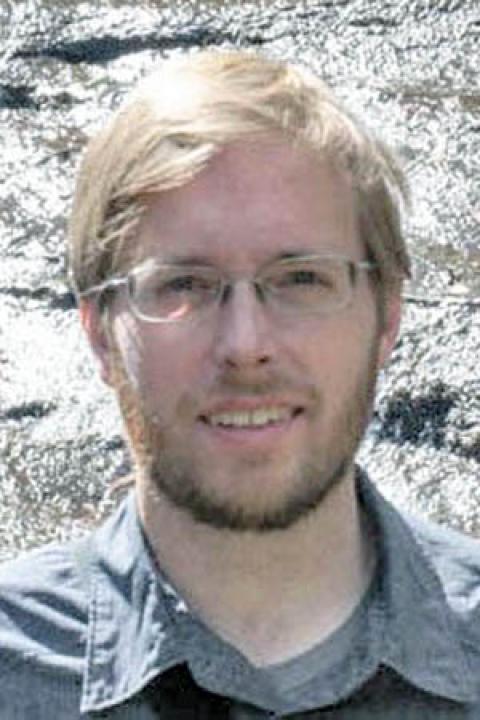
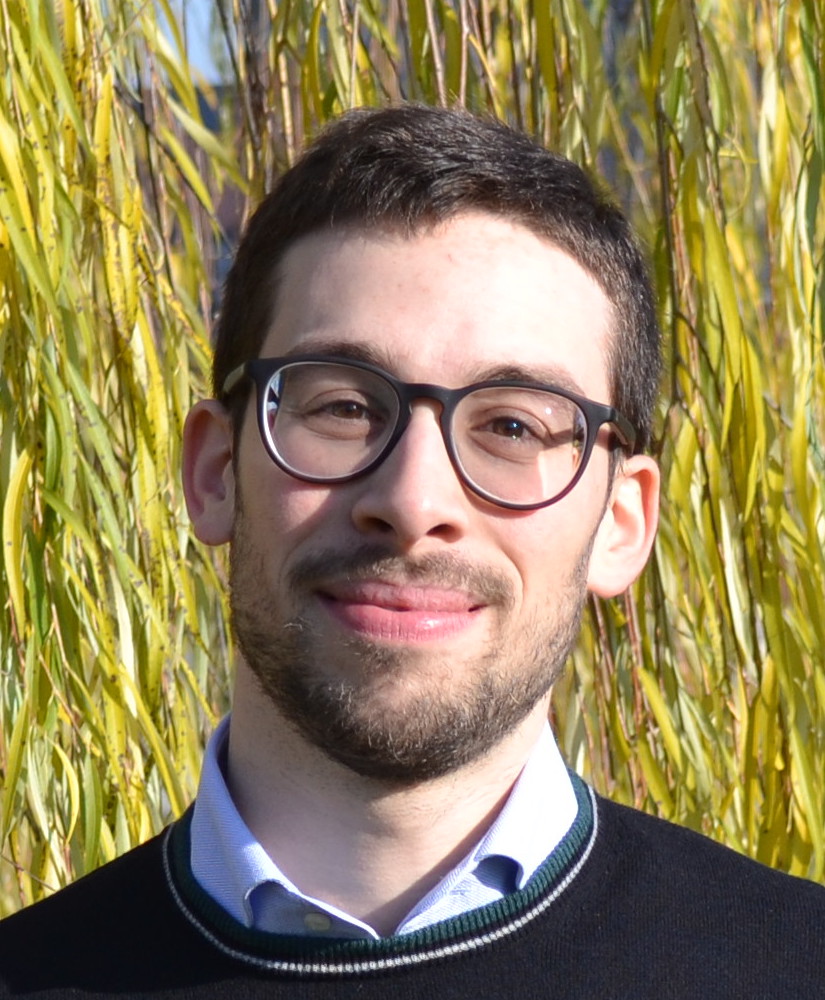
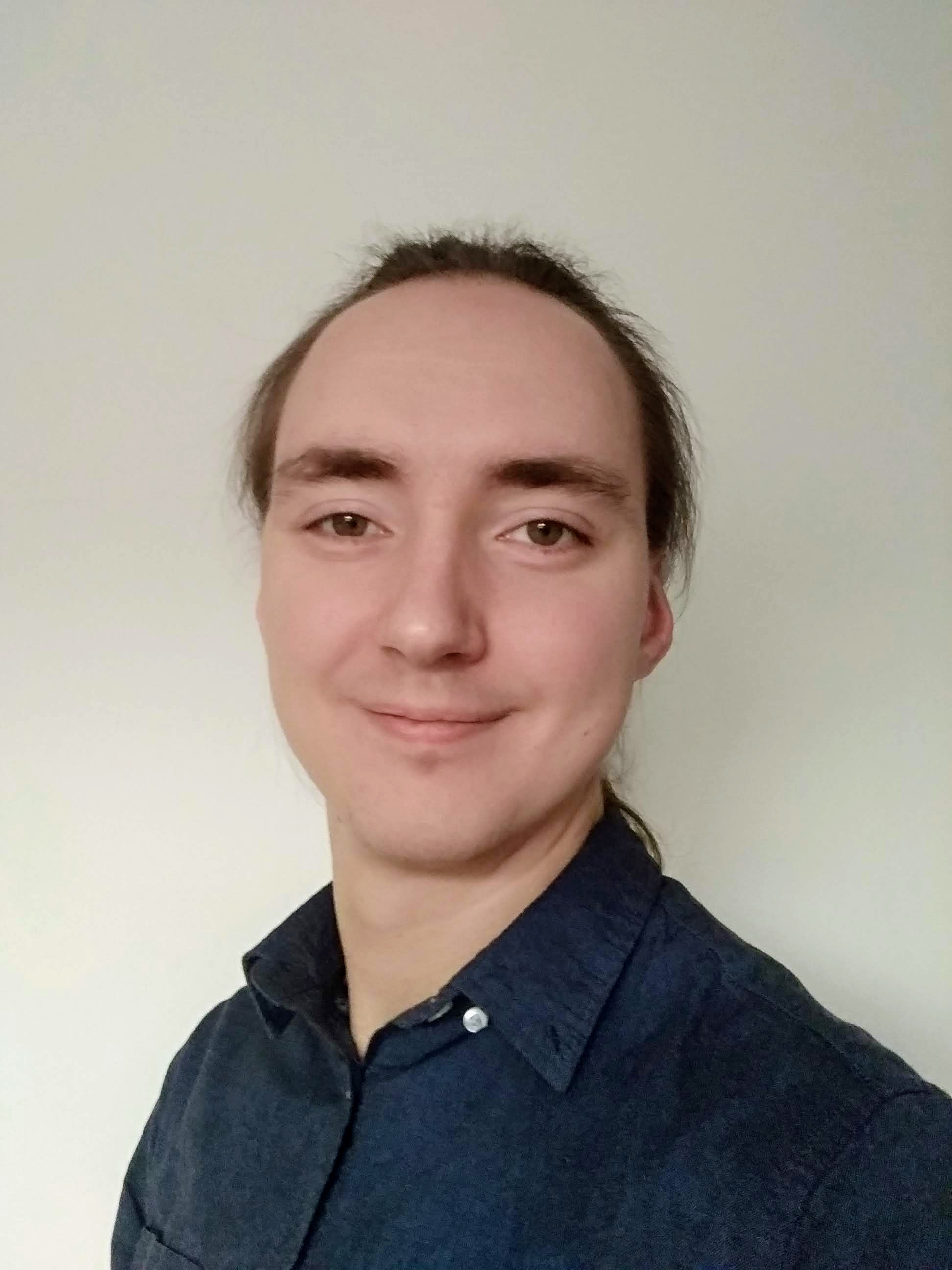
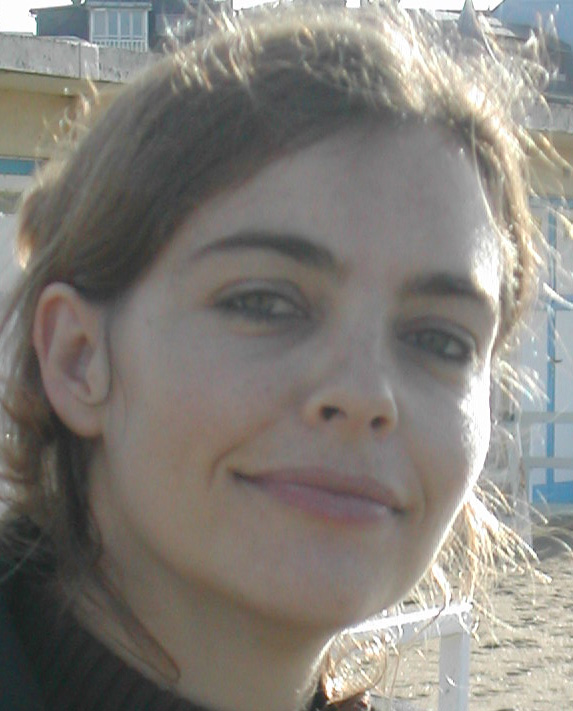
Pablo Giménez Font es Profesor en el Departamento de Análisis Geográfico Regional y Geografía Física de la Universidad de Alicante, y Secretario del Instituto Interuniversitario de Geografía. Su labor académica incluye la docencia en grados y postgrados de Geografía, Historia y Biología, con especialización en Geografía Histórica y Biogeografía. Doctorado en Geografía (2006), Universidad de Alicante Coordinador del Máster Oficial en Planificación y Gestión de Riesgos Naturales Su investigación se centra en: Reconstrucción de usos del suelo en sociedades históricas Análisis de hábitats de especies vegetales y animales Estudio de riesgos naturales en sistemas fluviales Transformación de paisajes mediterráneos Las publicaciones recientes reflejan tendencias en: Biogeografía de especies amenazadas (Helianthemum caput-felis, Genista longipes) Análisis de riesgos hidrológicos en ramblas Reconstrucción histórica de inundaciones Cartografía de infraestructuras hidráulicas Aplicación de TIG a paisajes históricos Monitoreo de especies endémicas Ha participado en proyectos de investigación con administraciones públicas y empresas privadas, enfocados en: Conservación de flora endémica Inventario de patrimonio natural Previsión de riesgos geomorfológicos Su labor profesional incluye asesoría técnica en: Declaraciones de impacto ambiental Geomorfología del Castillo de Monóvar Valores culturales del Museo Municipal de Villajoyosa
Dr. Brian Miles is a Senior Research Project Engineer at the University of New Hampshire, affiliated with the UNH Center for Coastal & Ocean Mappings and the Chase Ocean Engineering Lab. His work bridges software engineering and physical geography, focusing on distributed cloud processing of bathymetric data and standards-based data formats for coastal/ocean mapping. His research interests include: Hydrography Bathymetric Data Processing Ecohydrology Modeling Geospatial Data Storage and Analysis High-Performance Computing (HPC) Internet of Things (IoT) Environmental Monitoring Dr. Miles has developed tools for reproducible geospatial data ingestion, transformation, and uncertainty estimation in watershed studies. His software engineering expertise emphasizes robust documentation, automated testing, continuous integration, and scalable systems design for fault-tolerant, observable solutions in coastal research.
Dr. Nelly Bencomo is an Associate Professor in the Department of Computer Science at Durham University. She leads the SE@Durham research team and is Principal Investigator (PI) for the EPSRC-funded Twenty20Insight project, which focuses on explainability in intelligent systems. Her interdisciplinary work bridges Software Engineering, Requirements Engineering, Design Thinking, and Machine Learning, with applications to Digital Twins and human-machine teaming under uncertainty. Education : PhD from Lancaster University (UK) Research interests center on AI/ML decision-making under uncertainty, software engineering for autonomous and self-adaptive systems, and runtime modeling frameworks. Her work integrates Bayesian surprise theory, Markov processes, and non-functional requirements analysis to address challenges in system adaptability and human-AI collaboration. Recent publications emphasize uncertainty quantification in adaptive systems, digital twin lifecycle management, and explainable AI. Articles span topics like automated traceability for LLM-generated code, uncertainty flow diagrams, and SPECTRA's Markovian framework for NFR tradeoffs. Scientific Awards include: Best Paper & Software Artefact Awards (2024) Women for Innovation Recognition (2024) 10-Year Influential Paper Awards (2019) Best Paper REFSQ 2013 Leverhulme & Marie Curie Fellowships She supervises PhD students and has served as ACM Distinguished Speaker (2022), MODELS/SEAMS PC Co-Chair (2022), and IEEE TCSE Executive Committee member (2020-). Her labs focus on models@run.time, digital twins, and adaptive system governance.
Dr. Andrea Carron is a Senior Lecturer at ETH Zürich, affiliated with the Intelligent Control Systems group under Professor M. Zeilinger at the Department of Mechanical and Process Engineering. He holds a PhD in Information Technology from the University of Padova (2016) and was a Postdoc at ETH Zurich from 2016 to 2020. Education: B.S. and M.Sc. in Control Engineering (University of Padova, 2010 and 2012) Professional Roles: Senior Lecturer (ETH Zurich, 2022–present), Postdoc Fellow (ETH Zurich, 2016–2020) Research Interests: Andrea Carron's work focuses on Model Predictive Control (MPC) and Learning-based Control with safety guarantees. His research addresses challenges in Distributed Safe Learning , Coverage Control , and Autonomous Racing , utilizing Gaussian Processes and Stochastic Control frameworks. He has developed safety filters for racing vehicles, scalable MPC for mobility-on-demand systems, and Kalman-filter-enhanced GP regression techniques. Article Trends: Recent publications emphasize Autonomous Racing (ForzaETH Race Stack), Safe Learning for distributed systems, Gaussian Process applications in control, and Robust MPC under uncertainty. His work bridges machine learning and classical control theory, with applications in robotics and real-time systems. Teaching Activities: He has taught courses such as Signals and Systems and Advanced Model Predictive Control at ETH Zurich and Ashesi University since 2017. Course content includes discrete-time signal processing, system identification, and control algorithms.
Sybille Caffiau serves as an Associate Professor in the Computer Science Department at the University of Grenoble Alpes, France, where she is affiliated with the Grenoble Computer Science Laboratory (LIG) within the College of Engineering. Her research focuses on Human-Computer Interaction (HCI) with specializations in smart home systems, end-user development, and voice-based interaction technologies. She maintains an active research program through the Human-Computer Interaction Engineering Team (IIHM/ECMI). Her primary research interests center on making smart home technologies more accessible through innovative interaction paradigms. Key areas include context-aware programming languages like CCBL (Cascading Contexts Based Language), voice interface design for ambient assisted living, tactile feedback mechanisms, and task model comprehension. Her work bridges theoretical HCI principles with practical applications in real-world smart home environments, particularly focusing on user-centered design approaches that empower inhabitants as developers of their own living spaces. Analysis of her recent publications reveals a consistent focus on improving end-user programmability in smart homes through novel language design (CCBL), empirical validation of voice interfaces, and educational frameworks for HCI engineering. Her research demonstrates strong interdisciplinary connections between interaction design, programming language theory, and accessibility considerations, with particular emphasis on creating systems that accommodate diverse user needs including elderly populations and people with visual impairments. Through projects like SWEET-HOME and VocADom, Caffiau has contributed significantly to voice-based interaction in smart home environments, developing corpus collections and evaluating system performance against user experience metrics. Her work on educational frameworks for HCI engineering demonstrates commitment to advancing pedagogy in the field through structured case studies and practical teaching methodologies.
Dr. Su Talavera Soza is a Researcher at the Faculty of Geosciences, University of Utrecht, specializing in the DES - Seismology group. Their work bridges seismology, machine learning, and geophysical inversion to study Earth's crust, mantle, and inner core. They employ seismic normal modes and surface waves with advanced instruments like superconducting gravimeters and ocean bottom seismometers. Key Expertise Areas: Seismology, Global Seismology, Earth's Deep Interior, Machine Learning, Inverse Problems, Tomography Skills: Python, Fortran, MATLAB, Data Analysis, Visualization Current research focuses on physics-informed machine learning for full-waveform inversion and planetary-scale structure analysis. They collaborate internationally across the USA and Europe, contributing to 15+ publications between 2020-2025, including high-impact journals like Nature and Nature Geoscience . Notably, they developed the FrosPy Python toolbox for normal mode seismology. While no formal awards are listed, their work on mantle attenuation models and inner core dynamics has been widely shared (214+ X posts) and discussed in Wikipedia. They hold a 2021 PhD from Utrecht University titled Observing seismic attenuation in the Earth’s mantle and inner core using normal modes , supervised by A. Deuss.
Dr. Yilong Xu is an Associate Professor of Finance at the Utrecht School of Economics, Utrecht University. His work bridges Law, Economics, and Governance with a focus on Finance and multidisciplinary economics. Ph.D. in Economics, M.Sc. in Economics, Quantitative Finance, and Actuarial Science, and B.Sc. in Economics from Tilburg University. His research interests span Behavioral and Experimental Finance , Financial Decision-Making , Economic Inequality , and Ethics . He examines how psychological factors influence market behaviors, inequality perceptions, and social capital dynamics. Recent publications analyze cryptocurrency bubbles , emotion-driven environmental policies , reproducibility in finance , and behavioral public goods games . These works reflect his engagement with experimental methods, fairness, and cognitive biases. Dr. Xu teaches Multinational Corporate Finance and Next Generation Finance (Research Project) . His technical skills include Stata and MATLAB programming.
Dr. Monika Donker serves as Assistant Professor in the Department of Youth and Family within Utrecht University's Faculty of Social and Behavioural Sciences. Her academic base is the Martinus J. Langeveld Building (Heidelberglaan 1, Room E2.28) in Utrecht, Netherlands. As an active researcher, she contributes to the Dynamics of Youth (DoY) initiative and leads investigations within the InTransition project focusing on parent-adolescent interactions and adolescent autonomy development. Her research expertise spans emotion dynamics, interpersonal relationships, and psychophysiological measurement techniques. Specializing in longitudinal and dynamical systems approaches, she examines teacher-student relationships, parent-child interactions, and adolescent development through multimodal methodologies including heart rate monitoring and behavioral coding. Her work integrates personality theory with developmental frameworks to understand stress responses in educational and family contexts. Analysis of her recent publications reveals strong thematic continuity in educational and developmental psychology, with increasing emphasis on pandemic-related family dynamics and physiological assessment methods. Her scholarly output demonstrates methodological sophistication through integration of self-report, observational, and physiological data streams, particularly in classroom and family settings. Professional activities include presentations at major international conferences (EARLI, SAA, ISPA), service on the PhD council of the Faculty of Social Sciences, and membership in the Educational Committee of the Interuniversity Centre of Educational Sciences (ICO). She completed a visiting research period at the University of Konstanz (Germany) under Prof. Thomas Goetz in 2018. Her technical proficiency encompasses advanced statistical software (MLwiN, Mplus, HLM, AMOS, SPSS, R) for multilevel and structural equation modeling. Current media engagements include expert commentary on teacher emotional experiences and research dissemination regarding parent-adolescent relationships during the COVID-19 pandemic.
Professor Martina Klose serves as Professor for Aerosols in the Earth System and Head of the Mineral Dust Working Group at the Institute of Meteorology and Climate Research - Tropospheric Research (IMKTRO) at Karlsruhe Institute of Technology (KIT). With extensive expertise in atmospheric dust processes, she leads cutting-edge research on mineral dust emission, transport, and impacts within the Earth system. Her research interests focus on mineral dust emission mechanisms , aerosol-climate interactions , and Earth system modeling . Professor Klose investigates the physical and chemical properties of dust particles across various global sources including the Sahara, Mojave Desert, and Iceland. Her work combines field measurements , laboratory analyses , and advanced modeling techniques to understand dust's role in atmospheric processes and climate systems. She specializes in particle size distribution, mineralogical composition, and iron speciation in dust-emitting sediments. Analysis of her recent publications reveals a strong emphasis on process-based dust emission schemes for climate models, with particular attention to source heterogeneity and scale-aware parameterizations. Her work spans field campaigns across multiple continents, instrument development for dust measurement, and integration of satellite observations with ground-based data. Professor Klose contributes significantly to improving the representation of dust processes in global Earth system models like MONARCH and CESM2. Professor Klose actively collaborates with international research teams across Europe and North America. She has contributed to major field campaigns including J-WADI and FRAGMENT in the Sahara, and has led efforts to characterize dust sources in diverse environments from volcanic Iceland to the arid landscapes of Morocco and California. Her research has important implications for understanding dust's impacts on climate, air quality, and biogeochemical cycles.
Jeremy Freese is a Professor of Sociology at Stanford University, specializing in integrating biological and social science perspectives. His research spans quantitative methods, inequality, health sociology, demography, and the sociology of science and technology. Co-PI of major projects: Time-Sharing Experiments in the Social Sciences (TESS), General Social Survey (GSS), and Wisconsin Longitudinal Study (WLS) Developed Stata software tools for discrete-choice models and reproducibility His work examines how social environments interact with genetic factors, addressing issues like health disparities, educational attainment, and methodological advancements in survey research. Recent publications focus on research transparency, computational social science, and statistical modeling. Freese's methodological contributions include innovations in categorical regression analysis and reference category selection, while substantive work explores fertility's societal impacts and genetic influences on educational outcomes. He teaches graduate statistics and data analysis at Stanford. Developed open science frameworks for social research Advocates for institutional changes to improve research credibility
Damian Machlanski is a Researcher at the University of Edinburgh's School of Engineering , working within the CHAI group (Causal AI Hub) . He also holds a joint affiliation with the University of Essex as a Computer Science PhD candidate under the Department of Computer Science and Electronic Engineering (CSEE) and the Research Centre on Micro Social Change (MiSoC). His career includes roles as a Senior Research Officer at the Institute for Social and Economic Research (ISER) and prior experience as a Software Developer. Education BEng in Computer Science, West Pomeranian University of Technology MSc in Artificial Intelligence, University of Essex PhD (ongoing) in Computer Science, University of Essex His research focuses on causal inference and machine learning , particularly addressing hyperparameter sensitivity and robustness in causal structure learning. Key subtopics include treatment effect estimation, observational data analysis, domain generalization, and generative tree models. Damian's publications emphasize methodological rigor in causal discovery and algorithm evaluation. His work has been featured in venues like the Conference on Causal Learning and Reasoning and IEEE Access , with additional working papers on platforms such as arXiv. He contributes to open-source tools like the CATE Benchmark and actively engages in scientific outreach through workshops like the IADS Summer School on Causality . His software engineering background enhances his research focus on reproducibility and performance engineering in machine learning systems.
Vicente Quilis Quilis is a Full Professor (Catedrático de Universidad) in the Department of Astronomy and Astrophysics at the Faculty of Physics, Universitat de València. He leads research in computational astrophysics and cosmology, with a particular focus on galaxy clusters, cosmic voids, and numerical simulations of cosmological structure formation. He earned his PhD from the Universitat de València in 1998 with a thesis titled "Cosmología numérica formación y evolución de cúmulos de galaxias" (Numerical Cosmology: Formation and Evolution of Galaxy Clusters), supervised by Dr. Diego Sáez Milán. Quilis Quilis's research spans multiple areas of theoretical and computational astrophysics. His work primarily focuses on galaxy cluster formation and evolution , cosmic voids and large-scale structure , numerical methods for cosmological simulations , and astrophysical fluid dynamics . He has made significant contributions to understanding the role of shock waves in structure formation, the properties of intracluster medium, and the development of computational tools for analyzing cosmological simulations. His research group, CompAC (Computational Astrophysics and Cosmology Group), develops and utilizes advanced simulation techniques to study the universe's large-scale structure. An analysis of his recent publications (2022-2025) reveals a strong emphasis on galaxy cluster dynamics, cosmic void studies, and computational methodology development. His work bridges observational cosmology with numerical simulations, particularly through projects like CAVITY (Calar Alto Void Integral-field Treasury surveY) and the development of codes such as ASOHF (Adaptive Spherical Overdensity Halo Finder) and VORTEX for analyzing cosmological simulations. His research shows a consistent focus on understanding the formation history of cosmic structures through advanced computational techniques. While specific awards are not mentioned in the available information, his work has been influential in the field, with his 2007 paper "Fundamental differences between SPH and grid methods" cited 19 times according to zbMATH. Quilis Quilis collaborates extensively with researchers worldwide, as evidenced by his 25 co-authors across multiple publications. His research group CompAC appears to be actively involved in major cosmological projects and code development efforts. His work on the ASOHF halo finder and VORTEX analysis tools suggests significant contributions to the methodology of cosmological simulation analysis. The CompAC Computational Astrophysics and Cosmology Group, which Quilis Quilis is part of, focuses on developing and applying advanced computational methods to study cosmic structure formation. The group's work encompasses galaxy cluster simulations, void studies, and the development of analysis tools for cosmological data. Their research contributes to major projects like CAVITY and involves collaborations with observatories such as Calar Alto.
Dr. Tomislav Jurkić is an Associate Professor at the Department of Theoretical Physics and Astrophysics, Faculty of Physics, University of Rijeka, Croatia. He has been with the university since 2007, progressing through academic ranks from assistant to his current position as docent (Associate Professor) since July 2023. His academic journey began with a Diplomirani inženjer fizike degree from the University of Zagreb in 2005, followed by a Doctorate in Natural Sciences specializing in astronomy and astrophysics in 2012. His educational background includes: 2012: Doctor of Natural Sciences, field of physics, specialization in astronomy and astrophysics, Postgraduate Doctoral Study of Physics, University of Zagreb, Faculty of Science 2005: Diplomirani inženjer fizike (Diploma Engineer of Physics), University of Zagreb, Faculty of Science Dr. Jurkić's research focuses on astrophysics, particularly on circumstellar dust in symbiotic binary systems, variable stars, and time-domain astronomy. His work has significant implications for understanding stellar evolution, binary star interactions, and dust formation processes. He has made substantial contributions to the field through his modeling of circumstellar environments and analysis of observational data from various astronomical surveys. Analysis of his publications reveals a strong focus on symbiotic stars, particularly Mira variables with circumstellar dust. His research demonstrates expertise in applying sophisticated modeling techniques to observational data, with particular emphasis on infrared astronomy and light curve analysis. He has recently transitioned to large-scale survey astronomy through his involvement with the Vera C. Rubin Observatory's Legacy Survey of Space and Time (LSST) project, where he leads efforts to utilize Croatia's supercomputer 'Bura' for processing astronomical data. Dr. Jurkić has received multiple teaching excellence awards from the University of Rijeka (2020, 2022) and a presentation award at the 8th Scientific Meeting of the Croatian Physical Society (2013). His research contributions have been recognized through his membership in prestigious international organizations including the International Astronomical Union and the LSST Corporation. He has mentored numerous students through their undergraduate and graduate theses, guiding research on topics ranging from interferometry in astronomy to exoplanets and cosmic dust. His administrative contributions include serving on the Faculty Council and chairing the University of Rijeka's Online Learning Committee. Dr. Jurkić is also actively involved in science popularization, regularly giving public lectures and participating in educational outreach programs.
Bénédicte Fruneau is an Associate Professor at Université Gustave Eiffel and a member of the ACTE research team within LASTIG (Laboratory of Studies and Research in Geomatics). She serves as co-coordinator of the Master 2 Geographical Information, Spatial Analysis and Remote Sensing program. Her expertise lies in radar interferometry for ground deformation monitoring and seismic cycle studies. Research Interests : DInSAR and MTInSAR techniques Seismic cycle deformation analysis Urban and suburban displacement monitoring Residual mining subsidence characterization Publications focus on satellite radar interferometry applications for glacier monitoring , forest phenology , anthropogenic deformation , and post-mining subsidence . Her work spans geophysics, remote sensing, and geotechnical risk assessment across France, Taiwan, Mexico, and India. Education : Habilitation (HDR) in Radar Interferometry, Université Paris-Est (2011) PhD in Geophysics, Université Paris 7 (1995) MSc in Signal/Image/Parole, Grenoble INP (1991) Electrical Engineering degree, Grenoble INP (1991)
Dr. David Tarboton is a Sant Endowed Professor of Water Resources Engineering at the Utah Water Research Laboratory and in the Department of Civil and Environmental Engineering at Utah State University. His work bridges hydrology and information technology, developing tools and models for hydrologic prediction and water resource management. Dr. Tarboton earned his Sc.D. and M.S. in Civil Engineering (Water Resources and Hydrology) from the Massachusetts Institute of Technology in 1989 and 1987, respectively. He also holds a Diploma in Datametrics (Computer Science) from the University of South Africa (1984) and a B.Sc. Eng in Civil Engineering from the University of Natal in South Africa (1981). His research focuses on advancing hydrologic prediction capabilities through the development of models that leverage new information and process understanding enabled by technology. Dr. Tarboton's work synthesizes modeling and numerical analysis with field observations and hydrologic information systems, tailoring software and computing systems to hydrologists' needs. He has made significant contributions to terrain analysis in hydrology, hydrologic modeling, and snowmelt processes. His research crosses the disciplinary interface between hydrology and information technology, with particular emphasis on hydrologic information systems and stochastic hydrology. Dr. Tarboton's recent publications demonstrate a strong focus on collaborative hydrologic information systems, with particular emphasis on HydroShare, a platform he leads the development of for sharing hydrologic data and models. His work increasingly integrates machine learning, cloud computing, and reproducible research methodologies into hydrologic modeling. The research spans applications from the Colorado River Basin to the Great Salt Lake, with growing attention to climate change impacts on water resources. Lifetime Achievement Award, 2025, International Society for Geomorphometry D. Wynne Thorne Career Research Award, 2023, Utah State University David R Maidment Award for Exemplary Contributions to Water Resources Data and Information Systems, 2020, American Water Resources Association Fellow, 2018, American Geophysical Union Multiple Outstanding Researcher awards from Utah State University (2002, 2005, 2015, 2018) Dr. Tarboton has mentored over 30 graduate students throughout his career, including numerous PhD candidates in Civil and Environmental Engineering. His research is supported by significant grants from federal agencies including NSF, USGS, and USDA. He serves as Principal Investigator for major projects including the HydroShare platform, the Institute for Geospatial Understanding through an Integrative Discovery Environment (I-GUIDE), and research on the Colorado River Basin's future hydrology. Dr. Tarboton leads the development of HydroShare (www.hydroshare.org), a hydrologic information system for sharing hydrologic data and models operated by the Consortium of Universities for the Advancement of Hydrologic Science, Inc. (CUAHSI). His research group has developed and supports several open source software packages, including the Terrain Analysis using Digital Elevation Models (TauDEM) package and the Utah Energy Balance snowmelt model.