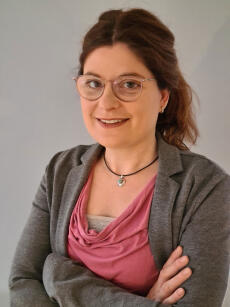
Florian Leiser is a Professor at the Chair of Information Infrastructures (led by Prof. Dr. Ali Sunyaev) at Technical University of Munich's Heilbronn campus. His research focuses on human-AI collaboration, privacy-preserving algorithms, and explainability in machine learning systems. Current research areas include Hybrid Intelligence, Human-centered Generative AI (LLMs), Federated Learning, and Health Information Systems Recent publications demonstrate expertise in Explainable AI for medical imaging LLM hallucination detection Federated learning architectures Human-in-the-loop systems Healthcare data applications He contributes to teaching through Human-Centered Artifact Design courses Collaborative teaching roles in machine learning Supervising student projects
Lars Grunske is a Professor at the Department of Computer Science, Faculty of Mathematics and Natural Sciences, Humboldt University of Berlin. His research focuses on software and systems engineering, safety-critical systems, and software evolution. Department: Computer Science University: Humboldt University of Berlin Academic Rank: Professor His work spans automated software analysis, probabilistic model checking, and formal methods for complex systems. Key collaborations include researchers from Swinburne University, University of Hull, and University of Queensland. Recent publications address research software engineering, program repair, and explainability in cyberphysical systems. Professional roles include leadership in examination boards and program committees for conferences like ICSE and ASE. Contact info: Email: grunskel@hu-berlin.de Phone: +49 30 2093-41142 Address: Unter den Linden 6, Berlin
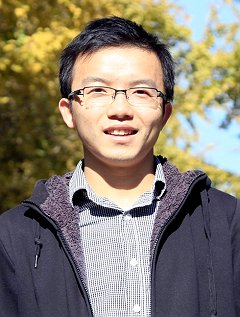
Yu Jiang is an Associate Professor at the School of Software, Tsinghua University, China. His research focuses on software security with emphasis on fuzz testing, embedded systems, and database security. He leads the Software System Security Assurance Group which has discovered over 1,000 bugs in major system software with 300+ CVEs registered. Dr. Jiang's research interests include Software Engineering , Embedded Systems Security , and Cross-Layer Fuzzing . His work addresses vulnerabilities in operating systems, databases, communication protocols, and IoT firmware through innovative fuzzing frameworks. Key contributions include semantic-aware fuzzing for heterogeneous software stacks and learning-based vulnerability detection for embedded systems. His recent publications demonstrate strong trends in database security (Hulk, PUPPY, THANOS), ransomware defense (Fawkes, Preventing Disruption), and web security (JANUS). Research spans both theoretical advances in fuzzing techniques and practical industrial applications, with significant impact evidenced by numerous distinguished paper awards. Career Award, NSFC: 2026 Distinguished Paper Award, ISSTA: 2025 First Prize for Technical Invention, CCF: 2024 Distinguished Paper Award, USENIX Security: 2024 SIGSOFT Distinguished Paper Award, FSE: 2022 Dr. Jiang has advised over 50 graduate students including 20 PhD candidates. His research is supported by major grants including NSFC projects ($600,000 for Software Trustworthiness Construction and $350,000 for Distributed Database Reliability), Huawei ($80,000 for LLM-Powered Fuzzing), and Tencent ($120,000 for LLM-Powered Unit Testing). The Software System Security Assurance Group maintains strong industry partnerships with Huawei, Alibaba, Tencent, and Webank. The group operates cutting-edge infrastructure for fuzz testing across multiple domains including database systems, operating kernels, blockchain platforms, and industrial control systems. Current projects integrate LLM technologies with traditional fuzzing techniques to enhance vulnerability detection in complex software stacks.
Prof. Michael Felderer is the Director of the Institute for Software Technology at the German Aerospace Center (DLR) and a full professor at the University of Cologne. His expertise spans software testing, security, architectures, empirical software engineering, and emerging technologies like AI and quantum computing. Previously, he held roles as associate professor at the University of Innsbruck, guest professor at Blekinge Institute of Technology, and CEO of QE LaB Business Services. His research focuses on developing methods to enhance software quality and trustworthiness through collaborations with academia and industry. Education details are not explicitly provided, but his career trajectory indicates advanced academic training in software engineering. Research interests include AI-driven software systems, data trustworthiness in IoT, and agile methodologies. He has co-authored over 200 publications and received 14 best paper awards, with notable recognition from the Journal of Systems and Software. Labs/Teams: Leads the DLR Institute for Software Technology, focusing on open-source software solutions for aerospace, energy, and security domains. Collaborates with global researchers and companies on advanced engineering applications like quantum computing and digital twins.
Jonas Fritzsch is a Lecturer and Research Associate at the University of Stuttgart's Institute of Software Engineering (ISTE), specifically within the Empirical Software Engineering (ESE) department. He holds a postdoctoral position and focuses on advancing software architecture, microservices, and quality assurance methodologies. His research emphasizes modernizing monolithic applications through architectural refactoring and evaluating cloud-native systems' impacts on software quality. His work spans empirical studies on industry practices—such as challenges in microservices evolvability and résumé-driven development—as well as formal verification techniques for safety-critical systems. Dr. Fritzsch leads the Team Fritzsch , contributing to both academic publications and industrial collaboration. Key areas of exploration include: Migrating monolithic architectures to microservices with a focus on quality-driven methodologies Assessing software quality in cloud-native and DevOps environments Empirical investigations into developer behaviors and tool usability His advisory work includes guiding over 20 students in theses and projects, covering topics like LLM-powered paper discovery, refactoring tools, and microservices adoption in cyber-physical systems. Notable contributions include defining résumé-driven development and developing systematic approaches for microservice migration. His research bridges theoretical advancements with practical industry applications, emphasizing empirical validation and tool support.
Professor Anne Remke leads the safety-critical systems group at the Faculty of Mathematics and Computer Science at Westfälische Wilhelms-Universität Münster since October 2014. She is also affiliated with the Design and Analysis of Communication Systems group at the University of Twente, where she served as assistant professor from June 2010 and became associate professor in March 2016. Her research focuses on dependability and security in critical infrastructures, particularly electrical power systems and telecommunication networks. Her educational background includes a PhD (2008) and MSc (2004) in Computer Science from the University of Twente and RWTH Aachen respectively. Her doctoral research focused on 'Model Checking Structured Infinite Markov Chains,' for which she publicly defended her thesis in June 2008. Professor Remke's research interests center on cyber-physical systems, with particular focus on evaluation of charging strategies for local energy storage in smart homes and security of control networks (SCADA) in smart grids. Her work bridges theoretical model checking techniques with practical applications in critical infrastructure protection. She has made significant contributions to the analysis of hybrid Petri nets, stochastic models, and the development of tools for dependability evaluation. Her recent publications demonstrate a strong trend toward integrating machine learning with formal verification methods for cyber-physical systems. The research spans stochastic hybrid systems, reachability analysis, and security evaluation of smart grid infrastructures, showing consistent growth in both theoretical foundations and practical applications of dependability analysis. Veni award from Dutch Science foundation (NWO) for 'Counting on a reliable water supply' GI/ITG MMB prize for best diploma thesis in computer and communication systems Best Paper Award at Valuetools 2023 conference Best Repeatability and Artifact Evaluation Award at QEST21 Teaching award from Fachschaft FB10 (2019) Professor Remke has successfully secured multiple research grants including the DFG project 'RealyST: Reachability Analysis for Stochastic Hybrid Systems' in collaboration with RWTH Aachen. She has supervised numerous students including Katharina Sichma, Pauline Blohm, Joanna Delicaris, Verena Menzel, Mathis Niehage, Jonas Stübbe, and Lisa Willemsen. Her research group actively participates in international collaborations and standardization efforts in critical infrastructure security. The safety-critical systems group maintains several research tools including HYPEG (for simulation and analysis of hybrid Petri nets), TimeNET (a GUI for modeling hybrid Petri nets), and a Smart Neighbourhood Simulation Tool for community energy storage and trading. These tools support their research in modeling and evaluating complex critical infrastructures through both analytical methods and simulation techniques.
Jürgen Giesl is a Professor at the Teaching and Research Area Computer Science 2 within the Department of Computer Science at RWTH Aachen University , Germany. He leads research in programming languages, formal verification, automated deduction, and term rewriting systems. Research Interests: Automated Termination and Complexity Analysis of Programs Dependency Pairs and Term Rewriting Systems Verification of Probabilistic and Integer Programs Static Analysis and Symbolic Execution Model Checking and Constrained Horn Clauses Development of Automated Tools (AProVE, LoAT) His recent research, reflected in the latest publications, focuses on termination and complexity analysis for probabilistic programs, polynomial loops, and integer programs, using advanced techniques such as dependency pairs, loop acceleration, and semiring semantics. He also contributes to SMT solving and transitive relation learning for infinite-state model checking. Scientific Awards: Best Tool Paper Award at iFM 2017 Silver Medal (Second Best Paper) at SEFM '16 Best Paper Honourable Mention at IJCAR 2024 Best Student Paper Honourable Mention at IJCAR 2024 Advising and Grants: Giesl has supervised numerous PhD and Master’s students, including prominent researchers such as Fabian Frohn, Jens Hensel, Nils Lommen, and Marcel Hark. He leads a large research group focused on automated verification and has contributed extensively to international verification competitions. His work is supported by ongoing research grants and collaborations with leading institutions in formal methods. Labs and Teams: He leads the Programming Languages and Verification research group at RWTH Aachen, which develops and maintains the AProVE and LoAT tools. These tools are central to automated termination and complexity analysis and are regularly submitted to international competitions such as TERMCOMP and VBS.
Dr. Theresa Züger is an interdisciplinary researcher leading the AI & Society Lab at the Alexander von Humboldt Institute for Internet and Society (HIIG). She investigates how AI systems can be designed to serve the common good, focusing on initiatives that promote sustainability, strengthen social inclusion, and enable technology reuse through open systems. Her work addresses societal challenges associated with artificial intelligence at political, social, and cultural levels, contributing to accurate assessment of AI's societal implications. Züger received her Ph.D. in Media Studies from Humboldt University in Berlin in 2017 with her dissertation 'Reload Disobedience,' focusing on digital forms of civil disobedience. Previously, she earned an M.A. in Theatre, Film and Television Studies as well as German and Philosophy from the University of Cologne. She also headed the office responsible for the German government's Third Engagement Report on behalf of the Federal Ministry for Family Affairs, Senior Citizens, Women and Youth (BMFSFJ). Her research centers on Public Interest AI, examining how AI development and deployment can benefit society rather than primarily maximizing profit. Current projects include 'Impact AI' (funded by Volkswagen Foundation), which develops auditing methods to assess AI projects' impact on public interest and sustainability, and 'Human in the Loop,' investigating how automated decision-making processes should be designed for successful human-machine interaction. She previously led the 'Public Interest AI' project, developing a theoretically grounded understanding of public interest AI and creating prototypes like a web accessibility tool and fact-checking application. Analysis of her recent publications reveals a consistent focus on bridging AI technology with societal values. Her work spans technical aspects of AI implementation, ethical considerations, and practical applications that serve public interests. Key trends include human-AI collaboration frameworks, accessibility enhancements, critical examination of AI hype, and theoretical foundations for public interest-oriented AI development. Züger serves as Vice-Chair of the UNESCO Commission on Communication and Information and participates in several juries including the Deep Tech Award, Digital Places – Land of Ideas, and the Civic Innovation Fund. She is also a regular event moderator for organizations like the Berlin-Brandenburg Media Authority, re:publica, and transmediale. As project leader of Impact AI and head of the AI & Society Lab, Züger directs significant research initiatives with funding from organizations like the Volkswagen Foundation. Her work involves extensive collaboration with academic and practical partners across Europe and globally, particularly through projects addressing women in tech and international AI governance. The AI & Society Lab functions as an interdisciplinary interface for new research approaches and knowledge transfer in AI, promoting inclusive, human rights-friendly, and sustainable AI strategies in Europe.
Khalil Esper is a Researcher at the Department of Computer Science, Faculty of Engineering, Friedrich-Alexander-University Erlangen-Nuremberg (FAU), where he works at the Chair of Computer Science 12 (Hardware-Software Co-Design). His research focuses on verification, energy optimization, and runtime requirement enforcement in embedded systems and MPSoCs. His educational background includes: Informatics Engineering from Aleppo University, Syria (2010-2015) European Master in Embedded Computing Systems (EMECS) from Rhineland-Palatinate University of Technology Kaiserslautern-Landau (Germany) and Norwegian University of Science and Technology (Norway) (2017-2019) Esper's research interests center around verification and model checking, energy optimization on MPSoC, real-time systems and embedded systems, and autonomic computing. His work particularly focuses on runtime requirement enforcement mechanisms for non-functional properties in multi-processor systems-on-chip, with applications extending to medical devices and human-robot interaction systems. He has developed approaches using finite state machines, reinforcement learning, and evolutionary algorithms to ensure system properties are maintained during execution. His publication record shows a strong trend toward applying formal methods and runtime enforcement techniques to increasingly complex systems, with recent work expanding into safety-critical applications like orthoses and human-robot interaction. The interdisciplinary nature of his research bridges computer science, embedded systems engineering, and biomedical applications. Esper has supervised multiple theses including: Sascha H.: Runtime Requirement Enforcement of Non-Functional Requirements on MPSoCs Using Fuzzy Logic (2022) Iana S.: Feedback-Based Control of Non-functional Program Execution Properties on Linux (2023) Philipp L.: Runtime Requirement Enforcement of Functional and Non-Functional Requirements of a Knee Orthosis Based on a Digital Twin (2024) Avinash N.: Runtime Requirement Enforcement of Safety Properties of an Ankle Orthosis Based on a Digital Twin (2024) Zhiyi T.: Generation of Environment FSMs Using Machine Learning Techniques (2025) Moustafa A.: Runtime Requirement Enforcement of Safety Properties of Human-Robot Interaction Based on a Digital Twin (2025) Florian K.: Runtime Requirement Enforcement of Safety Properties of Human-Robot Interaction (2025) He has been actively teaching courses on Approximate Computing and Embedded Systems since the 2021/2022 academic year, demonstrating his commitment to academic instruction alongside his research activities. Esper is involved in the InvasIC research project, part of the DFG Transregional Collaborative Research Center 89 on Invasive Computing, which explores novel approaches to resource management in parallel computing systems.
Rayna Dimitrova is a Tenure-track faculty member at the CISPA Helmholtz Center for Information Security in Saarbrücken, Germany. Previously, she held positions as Lecturer (Assistant Professor) at the University of Sheffield and University of Leicester, and postdoctoral roles at the University of Texas at Austin and the Max Planck Institute for Software Systems. She earned her PhD from Saarland University. Her research focuses on formal methods, including verification and synthesis of reactive systems, applications to control and robotics, quantitative analysis of probabilistic systems, and information-flow security. Key interests include strategic synthesis under partial observability, probabilistic uncertainty, and continuous dynamics, with applications to autonomous systems. She has served in numerous prestigious roles, including PC co-chair for VMCAI 2024, HYPER 2023, and SMT 2018. Her awards include the RS3 Best Paper Award (VMCAI 2012) and nominations for ETAPS (TACAS 2015) and EMSOFT (2014) Best Paper Awards. Her research group includes PhD students Rafael Dewes, Philippe Heim, and Saleh Soudijani. She has taught courses on reactive synthesis, program analysis, and decision procedures at multiple institutions, including the University of Sheffield and TU Kaiserslautern.
Sven Schewe is a Professor in the Department of Computer Science at the University of Liverpool, affiliated with the School of Electrical Engineering, Electronics and Computer Science. He leads the AI Section and is a founding member and former leader of the Verification Group. He also has secondary affiliations with the Algorithms, Complexity Theory and Optimisation Group and the Institute for Risk and Uncertainty. Research Interests: His research centers on automata theory and game theory, particularly their applications in the verification and synthesis of reactive and safety-critical systems. He investigates infinite-duration games, automata over infinite words and trees, and develops algorithms and tools for automated verification, synthesis, and learning of optimal control strategies. His work extends to reinforcement learning with formal guarantees, cyber-physical systems, and AI safety. Recent Research Trends: His recent publications demonstrate a strong integration of formal methods with machine learning, particularly in adversarial training, neural network robustness, and model-free reinforcement learning under omega-regular objectives. He also applies formal reasoning to interdisciplinary domains such as chemical space exploration and materials science. Scientific Awards: Finalist for the ERCIM Cor Baayen Award 2010 Dr. Eduard Martin Preis 2009 GI Dissertation Award 2008 Advising and Grants: He actively supervises numerous PhD students and postdoctoral researchers. He is Principal Investigator (PI) or Co-Investigator (CI) on multiple major grants, including EPSRC Programme Grants, Royal Society Fellowships, and Horizon Europe projects. His funded research spans topics such as game theory, verification, synthesis, reinforcement learning, and risk analysis. He has hosted visiting researchers and collaborated internationally with institutions in Germany, France, India, Taiwan, and the US. Labs and Teams: He co-founded and led the Verification Group and previously led the AI Section at the University of Liverpool. These groups focus on formal methods, automata, games, and their applications in AI and safety-critical systems.
Corina Cirstea is a Professor in the School of Electronics and Computer Science at the University of Southampton, where she has been a faculty member since 2003. She holds a DPhil in Computation from the University of Oxford and previously served as a Junior Research Fellow at St. John's College, Oxford. She is the Programme Leader for the BEng/MEng in Software Engineering and teaches core modules including Algorithmics, Theory of Computing, and Automated Software Verification. Education: DPhil in Computation, University of Oxford (2000) Junior Research Fellowship, St. John's College, Oxford (1999–2003) Her research focuses on logic and models of computation, particularly coalgebras and their applications in automated verification and synthesis. She explores coalgebraic temporal logics, trace semantics, and formal modeling of real-time and resource-aware systems, primarily using Event-B. Her work bridges theoretical foundations with practical system verification, especially in safety-critical domains. The analysis of her recent publications reveals a strong trend in formal methods, with consistent contributions to real-time system modeling, refinement techniques, and coalgebraic semantics. Her work integrates theoretical depth with engineering applications, particularly in automated verification and system design. Scientific Service and Recognition: Member of the editorial board, Compositionality journal Member of IFIP Working Group 1.3 Member of CALCO Steering Committee Member of CMCS Steering Committee Program Committee member for SEFM 2021, MFPS 2021, HIGHLIGHTS 2021, ICALP 2021, MFCS 2021, ACT 2020, ICE 2020, CMCS 2020, FOSSACS 2020 She advises PhD students including Chenyang Zhu and Eman Alkhammash, and has been involved in multiple research grants focused on formal verification, real-time systems, and software engineering. She collaborates extensively with researchers such as Michael Butler and Ichiro Hasuo. Her work contributes to both foundational theory and practical tooling in formal methods. She is associated with research groups and initiatives in formal methods and theoretical computer science at the University of Southampton, particularly within the broader context of software engineering and system verification.
Oliver Karras is a researcher, data scientist, and lecturer at the Data Science and Digital Libraries research group at TIB – Leibniz Information Centre for Science and Technology. He holds a BSc, MSc, and PhD in Computer Science from Leibniz University Hannover. His research focuses on FAIR scientific knowledge, Open Research Knowledge Graph (ORKG), and national research infrastructure projects like NFDI-4Ing and FAIR-DS. He is a member of the German Informatics Society (GI) and spokesperson of the Requirements Engineering (RE) group, contributing to conferences and journals as a reviewer. Previously, he was a research associate and PhD student in the Software Engineering group at Leibniz University, leading the DFG project ViViReq on video integration in requirements engineering. His research interests include Data Science, AI, Knowledge Representation, Software Engineering, Requirements Engineering, Empirical Research, and Open Science. He has published over 60 papers in these areas, with notable contributions to knowledge graphs, FAIR data, and reproducibility frameworks. His work emphasizes organizing scientific knowledge for accessibility and collaboration across disciplines. He is actively involved in initiatives like the ORKG, promoting sustainable literature reviews and open science practices. His professional contributions extend to tool development, such as OntoAligner for ontology alignment and SciKGTeX for semantic annotation in LaTeX. Oliver Karras collaborates with institutions like Leibniz University, contributing to the NFDI consortium and energy research projects. His expertise bridges technical innovation and academic rigor, addressing challenges in knowledge management and reproducibility. His current roles include advancing TIB’s research infrastructure and fostering interdisciplinary collaboration through knowledge graph applications.
Prof. Dr.-Ing. Sergio Montenegro is a Professor of Aerospace Information Technology at Julius-Maximilians-University Würzburg, where he leads the Chair of Computer Science VIII. His academic journey includes a Bachelor's in Computer Science from Universidad del Valle de Guatemala (1978-1982), a Diploma from Technische Universität Berlin (1983-1985), and a Dr.-Ing. from TU Berlin (1989). Prior to joining academia, he held positions as a software developer (1979-1982), research coordinator at Fraunhofer Gesellschaft (1985-2007), and Head of Department at DLR (2007-2010). His research focuses on dependable distributed systems for aerospace applications, including satellite networks, real-time operating systems (RODOS), UAV swarm control, fault-tolerant architectures, and space mission software. Key projects span satellite formation flight (TET, AsteroidFinder), solar sail missions, distributed avionics (VIDANA), and medical IoT systems. Recent publications (2018) demonstrate strong emphasis on distributed spacecraft systems, UAV navigation, fault tolerance, and software engineering for space applications. Trends include miniaturized satellite technologies, decentralized control algorithms, real-time OS verification, and Java-based space systems. He leads research in distributed computing networks and UAV laboratories, supervising projects like VaMEx-LaOLA (Mars exploration) and ultra-wideband positioning systems. Though no awards are documented, he has coordinated over 100 projects including ESA and DLR missions.
Prof. Dr. rer. nat. Matthias S. Müller is a Universitätsprofessor and Director of the IT Center at RWTH Aachen University. His research focuses on High-Performance Computing (HPC), parallel programming models, correctness verification, energy-aware computing, and tools for distributed systems. He leads the High-Performance Computing group, contributing to advancements in HPC resource management, runtime systems, and sustainable computing practices. Key areas of expertise include MPI and OpenMP correctness checking, static and dynamic analysis techniques, performance optimization for heterogeneous architectures, and energy footprint modeling. Müller has extensively collaborated on projects like MUST (MPI correctness tool), OMPT tools, and frameworks for analyzing hybrid parallel applications. His work bridges theoretical computer science with practical implementation challenges in large-scale computing environments. Notable contributions include developing methods for data race detection in Remote Memory Access (RMA) programs, latency-aware power management models, and educational frameworks for HPC lab courses. His research often emphasizes tool development, runtime systems, and interdisciplinary applications of HPC across engineering domains. Müller's lab is part of RWTH Aachen's IT Center, which provides infrastructure and expertise for computational research. He actively publishes in top-tier conferences and journals, addressing challenges in parallel programming, energy efficiency, and distributed computing systems.