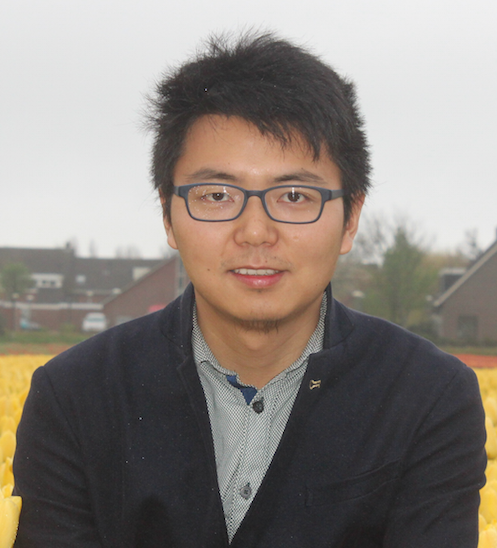
Li Li is a Professor of Software Engineering at Beihang University , China. Previously, he served as an ARC DECRA Fellow and Senior Lecturer at Monash University , leading the SMart software Analysis and Trustworthy computing (SMAT) research lab at the Department of Software Systems and Cybersecurity. His academic journey includes a Ph.D. in Software Engineering from the University of Luxembourg (2016), supervised by IEEE Fellow Prof. Yves Le Traon and Dr. Jacques Klein. Research Interests Li's research focuses on Mobile Software Engineering (Mobile Security, Quality Assurance) and Intelligent Software Engineering (SE4AI, AI4SE). He applies static code analysis , dynamic program testing , and machine/deep learning to enhance software security and reliability. Key areas include Android API evolution, automated patch validation, and multi-language code analysis frameworks like Scalpel for Python. Scientific Recognition ARC DECRA Fellowship Rising SE Research Star Top-5 Most Impactful Early Career SE Researchers (2020, 2017) 5 Best/Distinguished Paper Awards across PLDI, WWW, ASE, MSR, and SANER Academic Contributions He has contributed to foundational Android analysis tools (e.g., AndroZoo++, DroidRA) and developed scalable systems for distributed program analysis (Seads). His work appears in top venues like ICSE, ESEC/FSE, ASE, ISSTA, POPL, and TSE.
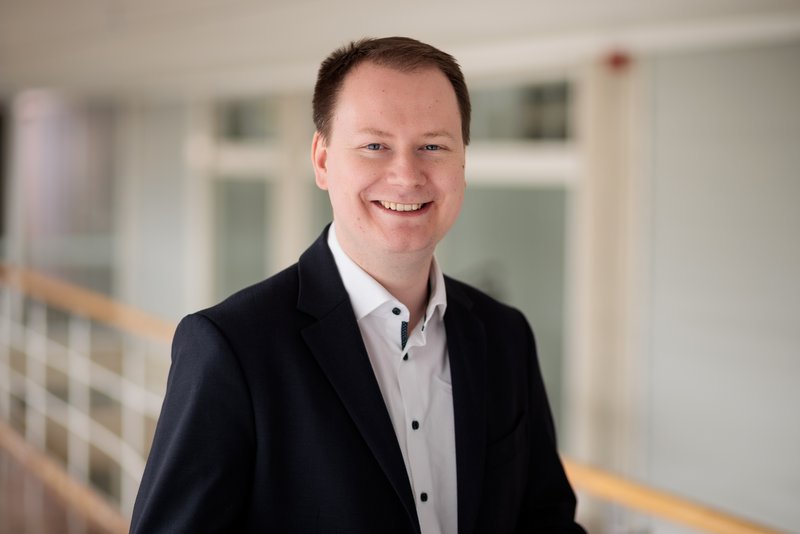
Igor Wojnicki is a Professor at AGH University of Science and Technology's Faculty of Electrical Engineering, Automatics, Computer Science and Biomedical Engineering, where he serves as Vice-Dean of the Faculty of Cooperation and Education. His primary affiliation is with the Department of Applied Informatics, where he maintains an active research laboratory focused on knowledge engineering and smart systems. His research spans multiple domains with evolving focus: Early career: Deductive databases and rule-based inference engines (PhD thesis on "A Rule-based Inference Engine Extending Knowledge Processing Capabilities of Relational Database Management Systems") Mid-career: Graph-based knowledge representation and Tabular Trees (XTT predecessor) Current focus: Smart city applications, particularly energy-efficient lighting control systems and graph-based urban data integration His recent publications demonstrate a clear trajectory toward applied urban computing, with over 15 significant papers in the last five years addressing smart city infrastructure optimization. Key themes include dynamic street lighting control, graph-based computational methods for urban environments, and energy conservation in public infrastructure. Wojnicki actively contributes to academic-practical collaboration through initiatives like the Green AGH Campus Project and IBM academic partnerships. His technical leadership includes development of the ReDaReS system for relational database knowledge processing and the Jelly View technology for advanced database queries. His laboratory maintains strong industry connections, particularly with IBM through student internship programs and technology transfer initiatives. The team produces both theoretical frameworks and practical implementations, with notable outputs including the Osiris GUI system and Magellan GPS software for Poland.
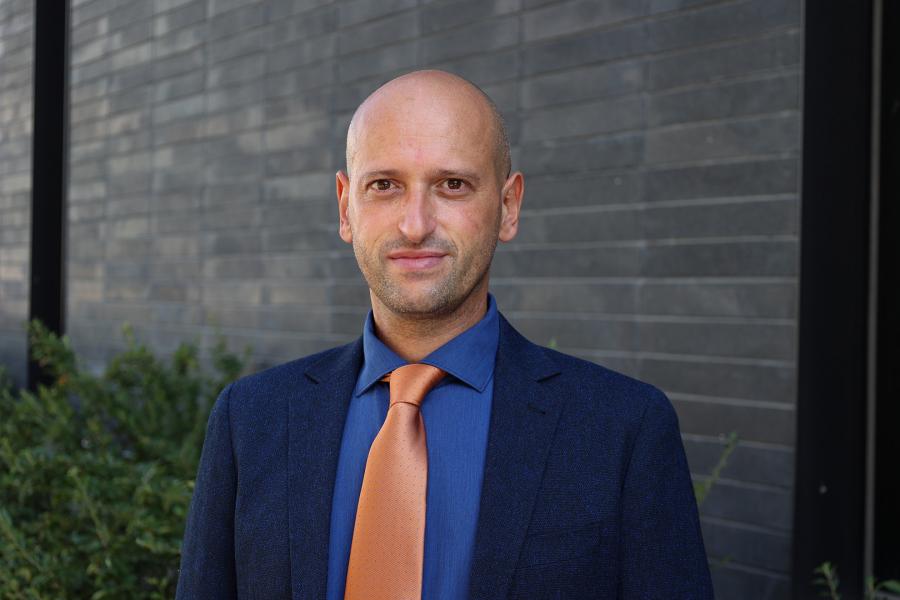
Tien N. Nguyen is a Professor in the Computer Science Department at the Erik Jonsson School of Engineering and Computer Science, University of Texas at Dallas. He has been actively contributing to the software engineering research community since 2005, with significant publications and service to major conferences including ASE, ICSE, and ESEC/FSE. His extensive research portfolio spans multiple areas at the intersection of artificial intelligence and software engineering. Dr. Nguyen's research focuses on AI/ML4Code, encompassing Machine Learning, Natural Language Processing for Software Engineering and Software Security. His work specifically addresses Program Analysis, Software Evolution and Mining, Software Security, Software Maintenance, Mining Software Repositories, Version and Configuration Management, and Web Code Analysis and Security. His research has been consistently funded by multiple NSF grants including NSA NCAE-C-002-2021, CNS-2120386, CCF-1723215, CCF-1723432, CNS-1723198, and others dating back to CCLI-0737029. His recent publications demonstrate a strong trend toward leveraging large language models for various software engineering tasks including program analysis, bug detection, code completion, and automated program repair. The research spans both theoretical foundations and practical applications, with numerous papers accepted at top-tier conferences across multiple years. His scientific contributions have been recognized with several prestigious awards: ACM SIGSOFT Distinguished Paper Award at FSE 2024 IEEE Computer Society TCSE Distinguished Paper Award at SANER 2022 ACM SIGSOFT Distinguished Paper and ASE Best Paper Award at ASE 2014 ACM SIGSOFT Distinguished Paper Award at ASE 2012 ACM SIGSOFT Distinguished Paper Award at ESEC/FSE 2009 Dr. Nguyen has served in numerous leadership roles including Program Co-Chair for ICSE 2020 Demonstrations, Doctoral Symposium Co-Chair for ESEC/FSE 2021, NIER Track Chair for ASE 2020, and Tutorials Co-Chair for ASE 2024. He has received multiple NSF grants supporting his research in software analysis, mining, and security. His work with the Boa infrastructure for ultra-large-scale code mining has established significant infrastructure for the research community. His laboratory focuses on AI for software engineering, with particular emphasis on program analysis, software security, and mining software repositories. The research group develops techniques that bridge the gap between artificial intelligence and practical software engineering challenges, creating tools that are both theoretically sound and practically applicable to real-world software development.
Prof. Dr.-Ing. Michael Möhring is a Professor of Data Science at Reutlingen University's Faculty of Informatics. He serves as Prodekan for the Herman Hollerith Zentrum (HHZ) and leads research in data analytics, Industry 4.0, and process mining. Previously, he held roles as an IT consultant, project manager at Bosch Group/BSH, and academic researcher. Education: Dr.-Ing. (PhD) in Business Informatics M.Sc. in Business Informatics B.Sc. in Business Informatics Research Interests: Focuses on leveraging structured/unstructured data for industrial applications, enterprise architecture management, digital twins integration, and AI-driven decision support. Specializes in bridging technical systems with organizational processes in manufacturing and service industries. Lab Affiliations: AI-Real Lab AIDA Future Mobility Lab Internet of Things Lab Virtual Reality Lab Articles Trends: Recent work emphasizes practical implementations of AI in production failure analysis (language models), energy optimization systems (HollerithEnergyML), and technical debt management in SMEs. Consistently explores data integration challenges across manufacturing, service ecosystems, and digital twin frameworks. Grants & Collaborations: Active in EU-funded projects like 5G-PreCiSe and bwHealthApp. Collaborates with industry partners on digital transformation initiatives through HHZ's applied research programs.
Adeel AHMAD is an active Associate Professor (Maître de Conférences) conducting cutting-edge research at the intersection of artificial intelligence, industrial applications, and business process management. His academic work demonstrates strong interdisciplinary connections between computer science, industrial engineering, and business informatics. Dr. AHMAD's research interests span Explainable Artificial Intelligence (XAI), Industrial Machine Learning, Business Process Management, Ontology-Based Reasoning, and Logistics Optimization. His work focuses on developing practical AI solutions for industrial contexts, particularly in Industry 4.0 environments where human-AI collaboration is essential. He has made significant contributions to meta-learning approaches for automated algorithm selection and configuration, with particular emphasis on making these systems transparent and interpretable for domain experts. His publication record shows a clear trajectory toward integrating explainability into industrial AI systems, with recent work focusing on conversational recommendation systems for cyber-physical environments. The research demonstrates consistent evolution from foundational work in business process analysis toward sophisticated AI applications in industrial settings. Active research leadership in Explainable AI for industrial applications Significant contributions to meta-learning frameworks for automated machine learning Interdisciplinary approach bridging computer science, industrial engineering, and business processes Strong publication record in top-tier conferences and journals Dr. AHMAD demonstrates strong collaborative research patterns, frequently working with colleagues including Mourad Bouneffa, Moncef Garouani, and other researchers in the French academic community. His work shows particular relevance to manufacturing, logistics, and cyber-physical systems where AI must work alongside human domain experts.
Subodha Kumar is the Paul R. Anderson Distinguished Chair Professor of Statistics, Operations, and Data Science at Temple University’s Fox School of Business. He also serves as Founding Director of the Center for Business Analytics and Disruptive Technologies and holds a secondary appointment in Information Systems. With prior faculty roles at the University of Washington and Texas A&M University, he has been recognized with prestigious awards including the INFORMS ISS Distinguished Fellow Award (2023) and POMS Fellow (2019). His research focuses on artificial intelligence, machine learning, blockchain, fintech, and cybersecurity, with over 240 publications in top journals and two books. He actively contributes to academic leadership as Deputy Editor of the Production and Operations Management Journal and Founding Executive Editor of Management and Business Review. Research Interests: Artificial Intelligence Machine Learning Blockchain Fintech Healthcare Analytics Social Media Analytics Supply Chain Analytics Awards: INFORMS ISS Distinguished Fellow Award (2023) POMS Fellow (2019) Changjiang Scholars Chair Professorship (China) Namesake Award: The Subodha Kumar and Geoffrey G. Parker Award for Digital Transformation Research Grants & Advising: Secured NIH grants, advises PhD students in Operations & Supply Chain Management, and oversees the Center for Business Analytics. His editorial roles include multiple top journals and conference leadership (e.g., POMS Annual Conference 2018). Labs/Teams: Leads the Center for Business Analytics and Disruptive Technologies, fostering innovation in analytics and tech-driven business strategies.
Kalle Lyytinen is the Iris S. Wolstein Professor of Management Design and Distinguished University Professor at Case Western Reserve University's Weatherhead School of Management, where he also serves as Faculty Director of the Doctor of Business Administration Program. He is a Professor in the Department of Design & Innovation. Lyytinen received his PhD in 1986 from the University of Jyvaskyla, Finland, following an Econ Lic (1982) and MS (1978) from the same institution. He was initially appointed to Case Western Reserve University in 2001. Lyytinen's research focuses on digital innovations and how they shape organizations and industries. His work helps organizations identify, absorb, manage, implement and transform through digital innovations. His specific research areas include the content and logic of digital innovation, digital innovation regimes and infrastructures, organizing processes of digital innovation, and how digital technology shapes engineering and design practices. He has also studied the adoption of new technologies, particularly mobile technologies, new collaboration forms enabled by technologies, and methods for determining large-scale system requirements. With over 450 publications in prestigious journals including Information Systems Research, Management Information Systems Quarterly, and Organization Science, he is among the top five scholars in the information system field by citations (51,000, h-index 100). Lyytinen's recent publications demonstrate his continued leadership in the digital innovation space, with research spanning digital platforms, technical debt, software complexity, and socio-technical systems. His work consistently bridges theoretical frameworks with practical applications across multiple industries and contexts. Distinguished University Professor 2017 Case Western Reserve University Honorary Doctorate 2017 Lappeenranta University of Technology, Finland Enduring Research Impact Award 2016 Weatherhead School of Management Honorary Doctorate 2016 Copenhagen Business School LEO Award 2013 Association for Information Systems Best Paper Awards from AIS (ICIS), HICSS and AoM (OCIS) Lyytinen has served as Vice President for the Association for Information Systems, Senior Editor for Information Systems Research, and Editor-in-Chief for the Journal of the Association for Information Systems. He has held editorial board positions in all major information systems and several organization theory and management journals. His global academic engagements include positions at London School of Economics, Erasmus University, University of Sorbonne, LUISS University, University of Cape Town, Copenhagen Business School, City University of Hong Kong, Auckland University School of Business, Umea University, Aalto University, and Oslo University.
Prof. P. (Paris) Avgeriou is a full professor of Software Engineering at the Faculty of Science and Engineering , University of Groningen (RUG). His research focuses on software architecture , technical debt management , and self-adaptive systems through empirical studies and industrial collaborations. His work explores architectural decision-making using financial investment models, machine learning for debt detection, and dependency analysis in software systems. Recent projects include SDK4ED for energy-efficient embedded systems and DebtViz for debt visualization. Key article trends include technical debt lifecycle analysis (2023-2025), self-adaptive systems (2025), and modular architecture challenges (2024). Keywords span Computer Science , Machine Learning , and Software Systems . As an ancillary academic activity , he serves as editor for the Journal of Systems and Software (Elsevier). His collaborations extend to institutions in the Netherlands, Brazil, and Italy, with research outputs appearing in IEEE and ACM venues.
Lars Grunske is a Professor at the Department of Computer Science, Faculty of Mathematics and Natural Sciences, Humboldt University of Berlin. His research focuses on software and systems engineering, safety-critical systems, and software evolution. Department: Computer Science University: Humboldt University of Berlin Academic Rank: Professor His work spans automated software analysis, probabilistic model checking, and formal methods for complex systems. Key collaborations include researchers from Swinburne University, University of Hull, and University of Queensland. Recent publications address research software engineering, program repair, and explainability in cyberphysical systems. Professional roles include leadership in examination boards and program committees for conferences like ICSE and ASE. Contact info: Email: grunskel@hu-berlin.de Phone: +49 30 2093-41142 Address: Unter den Linden 6, Berlin
Dr. Hafizul Asad serves as a Lecturer in Dependability at City St George's, University of London, leveraging his PhD in Electrical Engineering (City University of London, 2016) and MS in Aerospace Engineering (University of Belgrade, 2008) to advance cybersecurity and formal verification research. His expertise bridges critical infrastructure protection and cyber-physical systems security, with significant contributions to IoT/IIoT security frameworks. His educational journey includes: PhD in Electrical Engineering, City, University of London (2012-2016) MS in Aerospace Engineering, University of Belgrade, Serbia (2007-2008) BSc in Electrical and Electronics Engineering, University of Engineering and Technology Peshawar, Pakistan (1999-2003) Asad's research centers on formal verification of hybrid systems and verifiable intrusion detection mechanisms for interconnected environments. He pioneers provably robust security architectures for IoT/IIoT systems, emphasizing mathematical verification to ensure system resilience against cyber threats. His work integrates diversity principles to create defense-in-depth strategies for critical infrastructure, with recent focus on wind turbine cyber-safety and industrial control system protection. Analysis of his 15 most recent publications (2014-2025) reveals an evolution from aerospace applications and analog circuit verification toward cutting-edge cybersecurity for cyber-physical systems. His 2023-2025 work demonstrates increasing specialization in IoT security and formal methods, while maintaining foundational contributions to diversity-based security architectures established in his 2015-2018 research. No scientific awards or prizes are documented in the provided materials, though he maintains professional standing as a British Computer Society member and Higher Education Academy Associate Fellow. Details regarding doctoral student supervision or specific research grants are not disclosed in the source text. His professional trajectory indicates significant project involvement, including the D3S security project at City University of London (2015-2018) and Rolls-Royce-funded Future Systems Simulator development at Cranfield University (2018-2019), though current laboratory affiliations remain unspecified.
Dr. Graziano Fiorillo is an Assistant Professor in the Department of Civil Engineering at the University of Manitoba's Price Faculty of Engineering. He holds a Ph.D. from the City University of New York and M.Sc./B.Sc. from the University of Naples, Italy. His research focuses on structural reliability, bridge systems analysis, and risk assessment, incorporating machine learning and high-performance computing. He has contributed to probabilistic frameworks for infrastructure resilience, filovirus outbreak modeling, and bridge redundancy evaluation. Education: Ph.D. Civil Engineering, City University of New York, 2016 M.Sc. Building Engineering, University of Naples Federico II, 2003 B.Sc. Building Engineering, University of Naples Federico II Research Interests: Dr. Fiorillo specializes in structural analysis of bridges, risk-based design, and machine learning applications in infrastructure. He develops probabilistic models for bridge network reliability and flood risk assessment, with a focus on Manitoba's infrastructure resilience. His work integrates computational fluid dynamics (CFD) and energy efficiency solutions for buildings. Publications: His recent work emphasizes interdisciplinary approaches to infrastructure challenges, including CFD for sediment transport, EnergyPlus-based building efficiency studies, and MPI parallel computing for reliability analysis. His 2024 studies on flood-overload interactions and additive manufacturing in construction highlight emerging trends in civil engineering. Awards: He received the 2012 New York State Intelligent Transportation Society Award for best student paper. His research has been applied to truck weight regulation strategies and bridge importance factor calibration. Advising & Grants: Offers M.Sc. opportunities in CFD, building energy efficiency, and bridge structures. Positions require expertise in OpenFOAM, EnergyPlus, or structural analysis software. No specific grants mentioned in the text.
Irina Overeem is an Associate Professor and Deputy Director of the Community Surface Dynamics Modeling System (CSDMS) at the Department of Geological Sciences, University of Colorado Boulder. Her research focuses on Earth surface process modeling, with emphasis on coastal and river geomorphology in remote and polar regions. PhD: Delft University of Technology (2002) MS: Wageningen University (1996) BS: Wageningen University (1993) Her work investigates sediment fluxes in Greenland rivers, Arctic coastal erosion, and floodplain sedimentation through integrated field studies and numerical modeling. She specializes in using CSDMS tools for predictive simulations of water, sediment, and nutrient fluxes across landscapes. Recent publications highlight her contributions to permafrost dynamics, carbon budgets in icy rivers, and FAIR principles for open-source geoscience software. Her research spans from fjord environments to high-mountain erosion dynamics. Science Communication Fellowship (2015) National Oceanographic Partnership Program Award (2010) Outstanding Student Award, Netherlands (1996) Tropenfonds scholarship (1994) She mentors graduate students in sedimentary process modeling, leads CSDMS working groups on coastal dynamics and education, and teaches courses in sedimentary systems modeling, geomorphology, and field methods. Her work combines field measurements with computational approaches in the Cryosphere and Surface Processes Lab.
Dr. Sam S. Ramanujan is Professor of Computer Information Systems and Analytics at the University of Central Missouri , affiliated with the Harmon College of Business and Professional Studies . He teaches advanced object-oriented programming and software engineering courses, combining over two decades of academic expertise with substantial industry experience in complex system deployment. Doctor of Philosophy in Information Systems (University of Houston, 1995) MBA in CIS and Quantitative Analysis (University of Arkansas, 1989) PGDM in Information Systems (XLRI Institute of Management Studies, 1987) Bachelor of Arts (Hons) in Economics (University of Delhi, 1985) His research spans big data architecture , visual analytics , healthcare IT , and legal aspects of technology . He has published extensively on topics including software maintenance, e-commerce trust models, and cloud-based healthcare systems, with a focus on bridging technical and legal challenges in digital environments. Dr. Ramanujan's academic work shows a consistent focus on software engineering (1995–2017), healthcare IT (2004–2017), and legal-compliance frameworks (2000–2017). His publications demonstrate interdisciplinary expertise in merging technical systems with regulatory requirements . Best Paper Award , Journal of American Academy of Business, Cambridge (2006) He has contributed to pedagogical advancements in distributed computing curricula and collaborates with scholars like S. Kesh and S. Nerur. His industry experience informs real-world applications of his research in software maintenance and offshore operations.
Beyza Eken serves as Assistant Professor in the Department of Software Engineering at Sakarya University's Faculty of Computer and Information Sciences, teaching core courses including Software Project Management, Natural Language Processing, and Graduation Projects while maintaining active research in software engineering and AI applications. Her academic credentials include: Doctorate in Computer Engineering from Istanbul Technical University (2015), thesis: "Software Defect Prediction" Master's in Computer Engineering from Istanbul Technical University (2011-2015), thesis: "Entity Name Recognition in Short Texts" Bachelor's in Computer Engineering from Sakarya University (2007-2011) Dr. Eken's research integrates machine learning with software engineering, specializing in defect prediction models that incorporate personalized developer factors and industrial deployment challenges. Her work bridges natural language processing for Turkish social media analysis with software quality assurance, demonstrating expertise in both theoretical modeling and practical implementation in industrial settings. Recent expansions include neuro-symbolic AI for test oracle generation and MLOps frameworks. Publication trends reveal consistent focus on empirical software engineering from 2018-2021 (defect prediction, community smells, industrial deployment), evolving into cutting-edge domains by 2023-2025 (neuro-symbolic testing, employee feedback analysis, MLOps). Her work shows strong industry-academia collaboration patterns with increasing methodological sophistication. Dr. Eken actively contributes to academic service as reviewer for ACM Transactions on Software Engineering and Methodology (2024) and IEEE Transactions on Software Engineering (2023). She leads research projects including "Developer-specific error prediction modeling" (2020) and the Mevlana exchange project with Ryerson University on data mining for defect prediction (2018), while supervising graduation projects and research area courses that develop student expertise in software engineering practices. Her international research engagement includes participation in the ASTERIx project at Università della Svizzera Italiana's Software Testing and Analysis Research Group (2023), demonstrating ongoing commitment to global collaboration in software engineering advancements.
Raffi Khatchadourian is an Associate Professor in the Department of Computer Science at Hunter College and the Graduate Center of the City University of New York (CUNY). His research focuses on techniques for automated software evolution, particularly automated refactoring and source code recommendation systems, with the goal of easing the burden associated with evolving large and complex software through automated tools. He also conducts research on the automated analysis of Object-Oriented programs. Ph.D., Computer Science & Engineering, Ohio State University (2011) MS, Computer Science & Engineering, Ohio State University (2010) BS, Computer Science, Monmouth University (2004) Khatchadourian's research spans multiple areas of software engineering and programming languages, with particular emphasis on automated software evolution techniques. His work addresses critical challenges in refactoring legacy systems to modern language constructs, optimizing parallel processing in Java 8 streams, and addressing technical debt in machine learning systems. His recent research has expanded into deep learning program transformation, where he develops techniques to convert imperative deep learning code to more efficient graph execution models while ensuring safety. His approach combines static analysis, program transformation, and empirical validation to create practical tools that developers can integrate into their workflows. Analysis of Khatchadourian's recent publications reveals a strong focus on bridging the gap between theoretical program analysis and practical software engineering challenges. His work increasingly intersects with machine learning systems, examining both how to improve ML code through refactoring and how to ensure safety in deep learning frameworks. The research demonstrates consistent evolution from foundational work on Java language features toward more complex systems involving concurrency, deep learning, and automated program transformation. Distinguished Paper Award at SCAM '18 for work on Java 8 stream optimization EAPLS Best Paper Award at FASE '20 for study on Java 8 stream usage EAPLS Distinguished Paper Award at FASE '25 for Deep Learning refactoring work Best Paper Award nominee at IJCAI '24 for AI safety framework Khatchadourian actively mentors graduate and undergraduate students, with several advisees going on to successful academic and industry positions. His former Ph.D. student Tatiana Castro Vélez accepted a tenure-track Assistant Professor position at the University of Puerto Rico. He has supervised numerous master's theses and undergraduate research projects, often resulting in co-authored publications at top software engineering venues. His research has been supported by various grants, though specific funding details are not prominently featured in the available information. Through his work on tools like Fraglight for aspect-oriented programming and Hybridize Functions for deep learning refactoring, Khatchadourian has established a research group focused on practical program analysis and transformation. His lab develops Eclipse plugins and other IDE-integrated tools that help developers with automated refactoring, bug detection, and code optimization. The group maintains active collaborations with researchers at other institutions and contributes to open-source projects on GitHub.