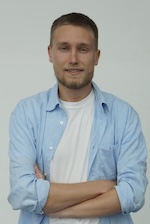
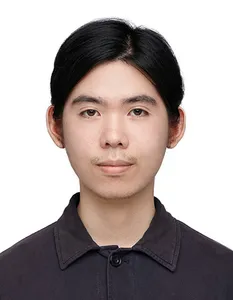
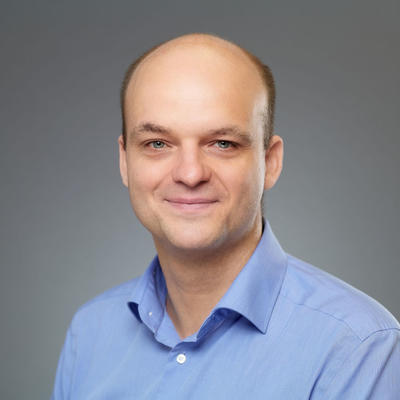
Prof. Dr. Fatih Gedikli is a full-time Professor of Artificial Intelligence and Big Data at the Institute of Computer Science, Ruhr West University of Applied Sciences . His academic work spans software engineering, web engineering, and applied artificial intelligence, with a focus on recommendation systems . Key research areas: Recommender Systems , Big Data Analytics , Natural Language Processing , Deep Learning Contribution: Development of AI-based data pipelines for unstructured data analysis from news, social media, and scientific publications Entrepreneurial Activities : Co-founder and Co-CEO of graphworks.ai , a German AI startup offering student internships. Regular speaker at workshops and keynotes, including events on entrepreneurship and sustainable supply chains.
Marcellus Siegburg is a Research Associate in the Department of Computer Science / AI at the University of Duisburg-Essen, working under Prof. Dr. Janis Voigtländer in the Formal Methods in Computer Science group. His responsibilities include teaching courses on programming paradigms and modeling, with ongoing instructional activities scheduled through 2025. His research focuses on applying formal methods to educational contexts, particularly in: Automated generation of exercises for modeling tools (Petri nets, UML diagrams) Development of assessment systems for programming languages (Haskell) Integration of formal verification tools like Alloy into pedagogical workflows Model-driven development for educational technologies His publications demonstrate a consistent focus on automating computer science education components, combining formal methods with practical teaching tools. The work emphasizes scalability and diversity in exercise generation while maintaining academic rigor. As part of the Formal Methods research group, he collaborates on projects involving domain-specific languages and automated assessment systems. No awards, grants, or student advising relationships are documented in available materials.
Florian Matthes is a Professor of Software Engineering for Business Information Systems at the Technical University of Munich (TUM), specifically within the TUM School of Computation, Information and Technology. Born in 1963, he has established himself as a leading researcher in software engineering, business information systems, and their applications across various domains. Prof. Matthes' research focuses on business information systems and software engineering, with particular emphasis on natural language processing applications in medical, legal, and enterprise contexts, privacy-enhancing technologies for digital platforms, and blockchain-based systems engineering. His work bridges theoretical computer science with practical industry applications, as evidenced by his co-founding of several successful IT startups including CoreMedia AG (1996), infoAsset AG (1999), Tr8cy UK Ltd (2018), and silver AI GmbH (2024). His publication record demonstrates consistent research productivity with over 400 research outputs spanning from 1990 to the present, with significant activity in recent years (2023-2025). His work spans multiple subfields including privacy-enhancing technologies, natural language processing, blockchain systems, and agile software development methodologies. The research shows a clear trend toward addressing contemporary challenges in AI ethics, data privacy, and the integration of emerging technologies into business information systems. Ernst Denert Award for Software Engineering 2022 Prof. Matthes has held significant leadership roles including Head of the Software Architecture working group of Gesellschaft für Informatik, membership on the advisory board of the Ernst Denert foundation for software engineering, and organization of several international conferences. He previously served as Dean of Studies at the Faculty of Computer Science at TUM until 2010 and has been a venture ambassador of the TUM Venture Labs since 2020. His academic journey began at J.W. Goethe University in Frankfurt (graduated 1988), followed by a doctorate at the University of Hamburg in 1992, and research at Digital Equipment Systems' research center in Palo Alto (1992-93). He was a professor at TU Hamburg-Harburg from 1997 to 2002 before joining TUM. His work demonstrates strong industry-academia collaboration through his startup activities and advisory roles, reflecting his commitment to translating research into practical applications while maintaining academic rigor.
Prof. Dr. Carsten Trinitis is a full professor at the Chair of Computer Architecture & Parallel Systems within the TUM School of Computation, Information and Technology. Specializing in high-performance computer architecture with a unique focus on spaceflight applications and informatics ethics, he leads the 'Gesellschaft für Informatik und Ethik' (Society for Informatics and Ethics). Ph.D. in Electrical Engineering from TUM (1998) Industry experience before returning to academia Former Assistant Professor in History of Science (2002-2010) at Universität der Bundeswehr München Full Professor of Distributed Computing at University of Bedfordshire (2010-2014) His research spans three major domains: High-Performance Computing: Focused on microprocessor architectures, hardware-oriented optimizations, and co-design approaches. Recent work includes GPU power capping strategies and Data Distribution Service (DDS) middleware enhancements. Space Systems: Pioneering computer architectures for nanosatellites with projects like MOVE-II mission and MicroPython-based satellite control systems. Digital Ethics: Through his 'Gewissensbits' initiative, he explores ethical decision-making frameworks for technology and contributes to the German Informatics Society's ethical guidelines. Key publication trends show interdisciplinary work connecting: HPC systems and edge AI applications FPGA-based verification and RISC-V processors Time series analysis at petascale performance Hardware-software co-design for extreme environments Continued emphasis on ethical computing frameworks Scientific Recognition: TeachInf Award for Outstanding Teaching (2023) Hans Meuer Award for Best Paper (2020) ZARM Master Thesis Awards (2016, 2017) Prof. Trinitis leads multiple research projects including: SEANERGYS (EuroHPC) - Energy-efficient computing systems PlasmaPEPS - Plasma physics simulation environments OpenCUBE - Open computing frameworks for space MUNIQC-ATOMS - Quantum computing integration
Alexandre Mercier is a Research Associate at the Software Engineering for Business Information Systems (sebis) chair within the Faculty of Informatics at the Technical University of Munich (TUM) since July 2024. He holds a Master's degree in Computer Science from TUM, specializing in Natural Language Processing with research focus on medical applications, dialogue systems, and text generation evaluation. Mercier completed his Master's thesis titled 'Investigating data to text approaches to achieve diversity of generated marketing text in the music industry' in January 2024 through a collaboration with startup Connactz. His academic journey began with data science work at Würth Elektronik during Bachelor studies before specializing in NLP at TUM. His research centers on enhancing text diversity in generated content while maintaining fluency and relevance, with specific interests in medical NLP applications, voice assistant interpretability (using SHAP values), and evaluation methodologies. He investigates techniques to overcome repetitive outputs in large language models, particularly for marketing contexts in the music industry. Mercier's publication 'JaccDiv' (2024) establishes a metric and benchmark for quantifying inter-sample diversity in generated marketing text. This work explores input data representations and model configurations to produce non-repetitive content for digital platforms, contributing significantly to natural language generation evaluation frameworks. He advises Master's level courses including 'Natural Language Processing - Methods and Applications' and 'Software Engineering for Business Applications', and organizes the Advanced Seminar. His research is funded through projects AssistD (a digital health assistant initiative launching March 2025) and MedTech (medical information extraction from clinical trials with MRI). Mercier operates within the sebis research group led by Prof. Dr. Florian Matthes, contributing to NLP and digital health initiatives. The group maintains active collaborations with industry partners and medical institutions on enterprise architecture management, legal AI applications, and healthcare technology development.
Anum Afzal is a Ph.D. candidate and Researcher at the Chair of Software Engineering for Business Information Systems (sebis) within the Faculty of Informatics at Technical University of Munich . Her work focuses on improving efficiency and domain adaptation of Large Language Models (LLMs) , particularly in business contexts through collaborations with SAP and Holtzbrinck Publishing Group.
Joshua Oehms is a Researcher at the Technical University of Munich (TUM) within the School of Computation, Information and Technology, specifically in the Department of Computer Science (I19 Software Engineering for Business Information Systems). He joined sebis in July 2024 and focuses on Natural Language Processing (NLP) applications in healthcare, conversational systems, and low-resource NLP tasks. B.Sc. and M.Sc. in Games Engineering from TUM Research expertise in text simplification and NLP for healthcare Teaching role as lecture organizer for "Software Engineering for Business Applications" (WS 24/25, Bachelor level) His recent work addresses challenges in German text simplification through style-specific pre-training of language models, targeting scenarios with limited parallel data. He collaborates with external partners like MRI (Medical Research Institute) on automating medical literature screening processes. Key technical skills include PyTorch/Keras, transformer models, and traditional information retrieval systems. Joshua actively supervises student thesis projects focusing on AI applications in healthcare contexts.
Zhen Tao is a Research Associate at the Chair of Software Engineering & AI , part of the TUM School of Computation, Information and Technology at the Technical University of Munich. They hold an academic affiliation in Heilbronn, Germany, and their email address is zhen.tao@tum.de . Education M.Sc. in Machine Learning and Computer Vision from The Australian National University Bachelor of Advanced Computing (Honours) from The Australian National University Bachelor of Computer Science and Technology from Shandong University (Weihai) Zhen Tao's research focuses on Usable Privacy and Security and Privacy Policy Analysis , with contributions to topics such as GUI testing, code vulnerability detection, and LLM-based agents for personalized app reviews. Their work intersects software engineering, human-computer interaction, and AI ethics, reflecting a multidisciplinary approach to improving user interface design and software security. They are part of a research team led by Prof. Chunyang Chen, collaborating on projects related to large language models, code optimization, and compliance with AI regulations like the EU AI Act.
Sebastian Franz is a researcher at the Chair for Bioinformatics (Informatics 12) of the Technische Universität München (TUM). He focuses on scientific software engineering and biomedical data analysis, with a strong emphasis on accessibility, reproducibility, and open-source solutions. Teaches Problembasiertes Lernen Bioinformatik (PBL) (course number IN2343) in the Sommersemester 2025. Develops biomedical software tools such as Biocentral and Biotrainer , available on GitHub and as web applications. Supervises students in projects related to protein language models, Bayesian optimization, and data/model evaluation. His research spans software engineering for biomedical laboratories, protein language model distillation, and protein-protein interaction analysis. Projects under his supervision include deploying sustainable protein prediction models and integrating Bayesian optimization into biocentral. Collaborations include partnerships with companies like iteratec GmbH , where students work alongside industry professionals such as Paula Schlötermann, Christian Rack, and Tehseen Rug.
Nico Reeb is a Researcher at the Technical University of Munich , affiliated with the Chair for Robotics, Artificial Intelligence and Real-time Systems (I6). He joined the group in December 2020 and focuses on spiking neural networks and neuromorphic computing applications. Education : B.Sc. in Physics (2018) from Ludwig-Maximilians University M.Sc. in Physics (2020) from Ludwig-Maximilians University His research bridges machine learning and computational neuroscience , with applications in automotive radar processing , 3D point cloud reconstruction , and neuromorphic hardware . He has contributed to the KI-ASIC project for energy-efficient AI in autonomous vehicles. Recent publications highlight his work on spiking network optimization, phase-encoded signal processing, and sensor fusion techniques. His educational background includes a semester at the University of Queensland and research experience at the Max Planck Institute for Astrophysics . Key Projects : KI-ASIC (Neuromorphic AI for autonomous vehicles) ANTARES Neutrino Telescope (bioluminescence and neutrino detection) He teaches courses like the SoSe 2021 Seminar on Bio-inspired Data Processing , and his work integrates physics-based approaches with computer science challenges.
Ulf Brackmann serves as an External Doctoral Researcher at the Ubiquitous Media Technology Lab (UMTL), with primary affiliations at the German Research Center for Artificial Intelligence (DFKI) and SAP. His work bridges artificial intelligence research and enterprise software innovation. His research spans foundational areas including Artificial Intelligence, Machine Learning, Enterprise Software, and Data Engineering, with specific expertise in: Future of enterprise software Business Foundation Models Foundation Models on structured data LLMs for Data Engineering Tasks Composable Business Software Brackmann investigates the integration of large language models and foundation models into structured enterprise data systems to develop adaptive business software architectures. No scientific awards were documented in the source material. Information regarding student supervision or research funding sources was not provided. He operates within the Ubiquitous Media Technology Lab, a research unit focused on AI-driven enterprise solutions and media technology convergence.
Dr. Marcel Köster is a researcher affiliated with the Ubiquitous Media Technology Lab at the German Research Center for Artificial Intelligence (DFKI) and the Saarland Informatics Campus. His work focuses on GPGPU computing, particle simulations, compilers, and optimization techniques. Email: Marcel.Koester@dfki.de Phone: +49 681 85775 7750 Location: Gebäude D3 1, Room 0.13, Saarbrücken Research Interests Dr. Köster's research integrates GPU computing with simulation algorithms and compiler optimization. He contributes to advancements in parallel processing, domain-specific languages, and scientific visualization through both theoretical exploration and practical implementations. His publications highlight innovative applications of GPU acceleration to heuristic optimization, state generation, and particle simulations. These works demonstrate expertise in thread compaction, shared memory utilization, and warp scheduling. Teaching Experience Dr. Köster has taught multiple courses at HBK Saar, including: Artificial Intelligence (Summer 2019) Grundlagen der Medieninformatik (Winter 2016/17) Physical Simulations on Media Facades (Winter 2015/16) Core Lecture: Compiler Construction (Winter 2013/2014)
Dr. Nico Herbig is a researcher at the Ubiquitous Media Technology Lab (UMTL) at Saarland University, holding a Dr.-Ing. degree awarded in 2022 for his PhD thesis on multi-modal post-editing of machine translation. His work bridges human-computer interaction and language technologies, focusing on enhancing translator productivity through innovative interface design. Herbig's primary research explores Machine Translation and Human-Computer Interaction , with specific expertise in multi-modal post-editing systems that reduce cognitive load. His investigations into gesture-based interfaces, handwriting recognition, and speech commands for translation workflows represent significant contributions to the field. Recent work extends into E-Learning applications where multi-modal cognitive load detection improves adaptive learning systems, and Retail Technology focusing on sustainable food systems and intelligent shopping interfaces. Analysis of his 15 most recent publications (2018-2022) reveals a consistent focus on multi-modal translation interfaces, with 70% dedicated to post-editing enhancement. His work increasingly integrates physiological sensors for cognitive load measurement (2019-2021) and expands into cross-domain applications like e-learning (2020) and retail (2017-2018). The publications demonstrate strong industry relevance through collaborations with professional translators and practical implementations in CAT tools. As an academic advisor, Herbig has supervised 7 Master's theses and 3 Bachelor's theses between 2017-2020. Key projects include ImpoWord MTQE (2020), IPE visualization (2020), and tangible AR systems for retail (2018). His teaching portfolio includes Web Development courses (2017-2018) and the 'Livestreaming Meets HCI' seminar (2017), reflecting his interdisciplinary approach. Herbig operates within the Ubiquitous Media Technology Lab led by Prof. Dr. Antonio Krüger, collaborating on projects including MMPE (Multi-Modal Post-Editing), VICAR, HyperCOG, and KOALA. The lab's research spans intelligent retail systems (e.g., 'intelligent fruit stand'), factory layout planning (DEPlata), and sports technology (OmniSports), with Herbig contributing core expertise in human-centered translation interfaces and cognitive load optimization.
Dr. Steffen Remus is a postdoctoral researcher at the University of Hamburg , affiliated with the Department of Informatics and the Language Technology Group (LT) . He holds a Ph.D. in 2023 from the University of Hamburg under Prof. Dr. Chris Biemann and earned his MA in 2012 at Technische Universität Darmstadt. Research Interests : Unsupervised methods, computational linguistics, distributional semantics, information extraction, knowledge induction, and focused web crawling. Projects : JOIN-T2, BIMDANUBE, WebAnno-MM, KDSL, AIPHES. Scientific Awards : KDSL scholarship holder (2017), Best Mentoring award (2015) for Algorithms of Language Technology course. Academic Contributions : Co-lecturer in Research Software Engineering at University of Hamburg (2024), teaching assistant in multiple NLP and software engineering courses since 2014. Supervised over 20 B.A./M.A. theses and independent studies. Active reviewer for major conferences (ACL, EMNLP, AAAI, EACL, COLING) and organizer for GermEval shared tasks.
Dr. Jannek Squar is a researcher affiliated with the University of Hamburg and the German Climate Computing Centre (DKRZ). His work focuses on high-performance computing (HPC) infrastructure, code transformation, and parallelization techniques. Academic Rank: Researcher Key Projects: i_SSS (Integrated Support System for Sustainability), HLRE-5 Supercomputer Procurement His research spans automatic code transformation using LLVM , parallelization via OpenMP/MPI , and high-performance I/O optimization . Recent publications highlight applications in sustainable agriculture and compiler-assisted HPC performance analysis. He has supervised multiple theses on topics including elastic cloud solutions, MPI communication modeling, and LLVM-based code verification. No scientific awards are explicitly mentioned in the provided text.