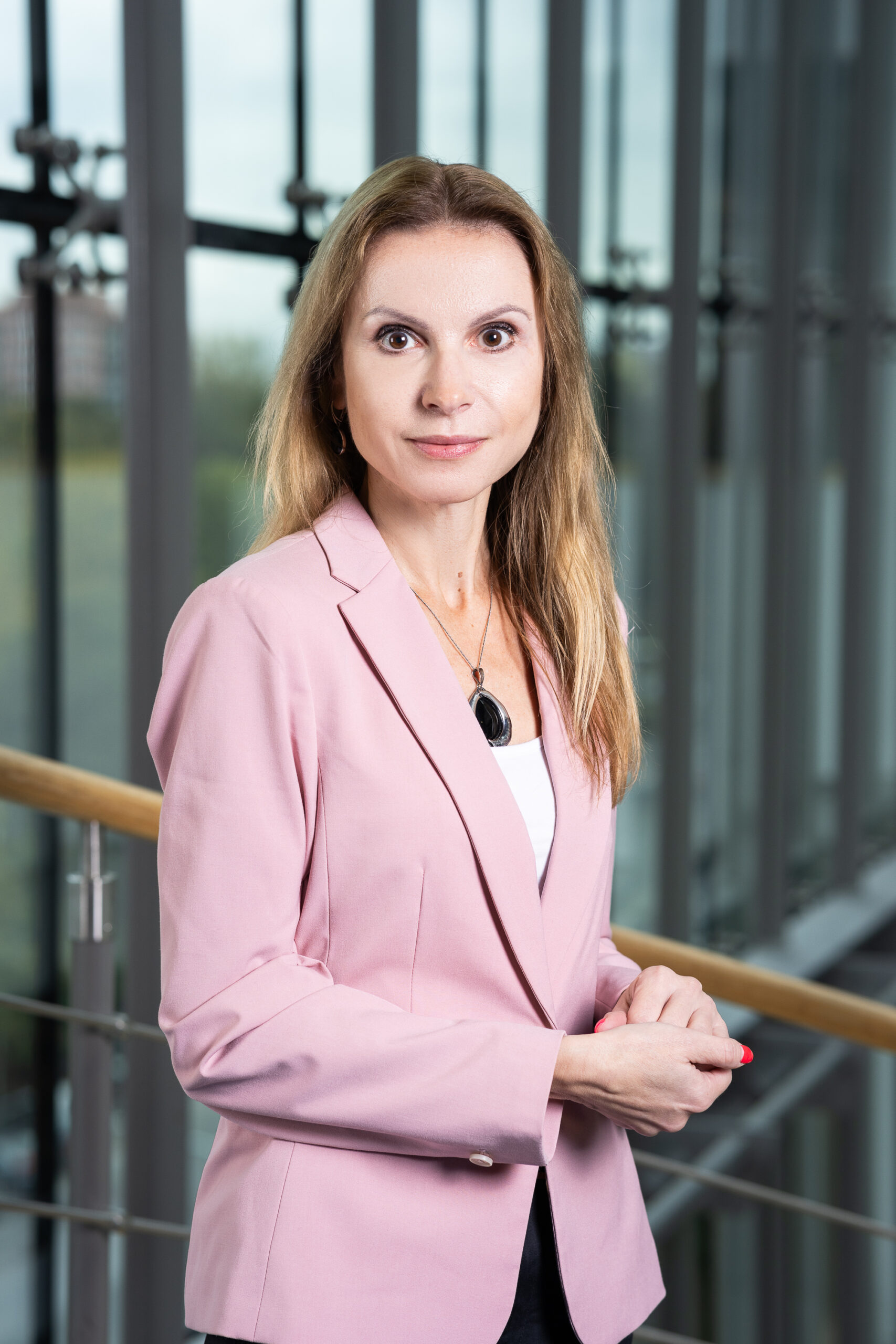
Magdalena Szymczyk is a Lecturer in the Department of Biocybernetics and Biomedical Engineering at AGH University of Science and Technology, Faculty of Electrical Engineering, Automatics, Computer Science and Biomedical Engineering. Her work bridges embedded systems, biomedical signal processing, and geophysical data analysis. Research focuses on energy-efficient sensor networks, neural networks for GPR data classification, and mathematical transforms in signal analysis Expertise in parallel computing, real-time systems, and biomedical engineering applications Her publications (2015–2025) demonstrate a trajectory from parallel neural networks and S-transform/GPR methodologies to recent work on MicroPython in embedded systems. Key themes include energy optimization in distributed architectures and AI-driven signal processing across biomedical and geophysical domains. She has authored works on deterministic chaos in simulations, GPU image processing, and cybersecurity in microcontroller systems. Her current research emphasizes embedded systems security, medical signal diagnostics, and computational methods for geological analysis. She utilizes tools like OpenCL for GPU acceleration and MATLAB for parallel computing implementations.
Damian Grela is a Lecturer in the Department of Automation and Computer Science at the Faculty of Electrical and Computer Engineering, Cracow University of Technology. His work spans two distinct research domains: software engineering (focusing on BPEL processes, web services, and fault injection testing) and environmental engineering (specializing in diatomite-based biogennic pollutant removal, rain gardens, and surface water quality monitoring).
Prof. Katarzyna Piwowar-Sulej is a Professor of Economics in Management and Quality Sciences at Wrocław University of Economics, holding a position in the Department of Labor, Capital and Innovation. She actively contributes to academic governance as a member of the Doctoral School Council and various strategic committees. Her research focuses on sustainable human resource management, leadership, and project management, with a strong emphasis on integrating sustainability into organizational practices. Expertise: Sustainable HR Development, Green HRM, Organizational Innovation Leadership Roles: Director of 'Psychology in Management' postgraduate studies Her academic contributions span over 200 publications in top journals such as Human Resource Management and Journal of Business Ethics . She has secured EU grants and led projects addressing HR challenges in Industry 5.0 and digitalization. Notable achievements include recognition in the World's TOP 2% Scientists 2023 and second place in the 2025 Science Personality of the Year award. Awards: Medal of the National Education Commission, Emerald's Outstanding Paper Award Research trends in her work highlight the intersection of leadership, sustainability, and innovation. Recent studies explore sustainability-focused leadership, green behaviors in SMEs, and neurodiversity management. She bridges academic and business worlds through HR consulting and project management expertise in sectors like finance and manufacturing. Key Projects: Digital HR process optimization, compensation system design, post-merger integration Her teaching legacy includes pioneering postgraduate programs for business trainers and integrating design thinking into academic curricula. She advocates for sustainable HR practices, emphasizing employee development and environmental responsibility.
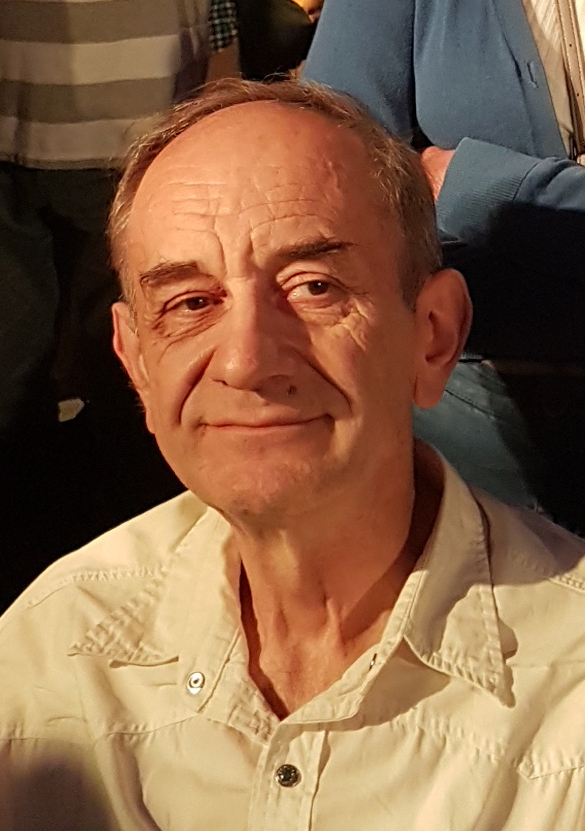
Roman Matuszewski is a retired Associate Professor at the University of Bialystok, affiliated with the Faculty of Philology's Department of Applied Linguistics. His research focuses on automated reasoning, formalized mathematics, and the Mizar Project, which he has been involved with since its inception in 1973. He holds a PhD in Computer Science from Shinshu University (2000) and has held academic positions at multiple institutions, including part-time roles at Bogdan Janski University. Education: PhD in Computer Science (2000), Master of Science in Mechanics (1975), Engineer (1973), all from Polish institutions. His work emphasizes formal proof systems, mathematical knowledge management, and education integration of automated reasoning tools. Research interests include automated deduction, formal proof verification, and the application of these methods to mathematics education. His contributions to the Mizar Mathematical Library and its 50-year history (celebrated in 2023) are foundational for interactive theorem proving. Key awards include the Silver Cross of Merit (2004) and multiple Rector’s prizes. He has organized major conferences like MKM2004 and served on program committees for events such as IJCAR and Tableaux. Grants include leadership roles in EU-funded projects like TYPES and CALCULEMUS. His work bridges computer science and mathematics through formalized systems, impacting both research and education.
Konrad Kowalczyk is an Associate Professor at AGH University of Science and Technology in Krakow, Poland, where he heads the Signal Processing Group within the Faculty of Computer Science, Electronics and Telecommunications. With extensive international experience from institutions including Queen's University Belfast, Stanford University, and Fraunhofer Institute, he has established himself as a leading researcher in audio and speech signal processing. His academic journey includes B.Eng. and M.Sc. degrees from AGH University (2005), a Ph.D. from Queen's University Belfast (2009), and a Habilitation in ICT from AGH University (2020). B.Eng. and M.Sc. in Electronics and Telecommunications, AGH University of Krakow (2005) Ph.D. in Electronics, Queen's University Belfast, UK (2009) Habilitation (D.Sc.) in Information and Communication Technology, AGH University of Krakow (2020) Kowalczyk's research spans multiple cutting-edge areas in audio processing, with particular focus on speech and audio signal processing enhanced by machine learning techniques. His work integrates deep neural networks with traditional signal processing methods to address challenges in array signal processing , speech enhancement , and speaker recognition . The research group he leads explores innovative applications in distributed signal processing for IoT , acoustic event detection , and spatial audio rendering , bridging theoretical advances with practical implementations. His recent publications demonstrate a clear trend toward integrating deep learning with traditional signal processing techniques, particularly in speaker diarization, source separation, and robust speech recognition. The research increasingly focuses on real-world applications requiring reverberation-robust processing , distributed microphone array systems , and end-to-end neural architectures that can operate in challenging acoustic environments. There's a noticeable shift toward more complex, integrated systems that combine multiple signal processing tasks. Stanislaw Staszic Medal for best graduate of AGH (2005) IEEE Best Student Paper Contest finalist (2007) AES Student Technical Paper Award winner (2008) Best Student Paper Award at IWAENC conference (2014) Best Paper Awards at IEEE SPA conferences (2016, 2019) Polish Ministry of Science Scholarship for Distinguished Young Scientists (2016-2019) Prime Minister Award for outstanding scientific achievements (2020) As Principal Investigator, Kowalczyk leads multiple significant research projects including "Acoustic Intelligence" (2024-2028) funded by National Science Center, and "Deep extraction for robust speech recognition" (2023-2028). He has successfully secured funding from prestigious programs including First TEAM from the Foundation for Polish Science, and EU FP7 projects. His research group actively supervises Ph.D., M.Sc., and B.Eng. students, with strong connections to international institutions including Aalto University and IEEE Signal Processing Society. The research output includes numerous journal publications, conference papers, patents, and software implementations that have advanced the field of audio signal processing. Kowalczyk leads the Signal Processing Group at AGH University, which focuses on developing innovative solutions for speech and audio processing challenges. The group maintains strong collaborations with international institutions including Aalto University (Finland), and participates in European research initiatives. Their work spans theoretical development through practical implementation, with applications ranging from medical voice assistants to distributed acoustic sensor networks.
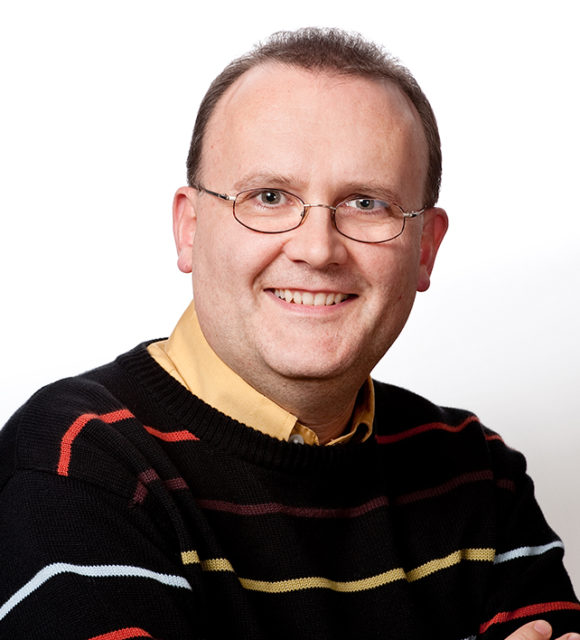
Igor Wojnicki is a Professor at AGH University of Science and Technology's Faculty of Electrical Engineering, Automatics, Computer Science and Biomedical Engineering, where he serves as Vice-Dean of the Faculty of Cooperation and Education. His primary affiliation is with the Department of Applied Informatics, where he maintains an active research laboratory focused on knowledge engineering and smart systems. His research spans multiple domains with evolving focus: Early career: Deductive databases and rule-based inference engines (PhD thesis on "A Rule-based Inference Engine Extending Knowledge Processing Capabilities of Relational Database Management Systems") Mid-career: Graph-based knowledge representation and Tabular Trees (XTT predecessor) Current focus: Smart city applications, particularly energy-efficient lighting control systems and graph-based urban data integration His recent publications demonstrate a clear trajectory toward applied urban computing, with over 15 significant papers in the last five years addressing smart city infrastructure optimization. Key themes include dynamic street lighting control, graph-based computational methods for urban environments, and energy conservation in public infrastructure. Wojnicki actively contributes to academic-practical collaboration through initiatives like the Green AGH Campus Project and IBM academic partnerships. His technical leadership includes development of the ReDaReS system for relational database knowledge processing and the Jelly View technology for advanced database queries. His laboratory maintains strong industry connections, particularly with IBM through student internship programs and technology transfer initiatives. The team produces both theoretical frameworks and practical implementations, with notable outputs including the Osiris GUI system and Magellan GPS software for Poland.
Bydgoszcz University of Science and TechnologyPoland
Kamil Futyma is a researcher and lecturer at the Institute of Heat Engineering (IHE) at Warsaw University of Technology, specializing in mathematical modeling of thermal machines and energy systems. He holds an academic position as Assistant Professor and is actively engaged in both teaching and research activities. His research focuses on advanced energy systems including mathematical modeling of thermal machines and power plants, CO 2 separation technologies using molten carbonate fuel cells, optimization of district heating systems, and waste heat utilization. His work demonstrates a strong emphasis on improving energy efficiency in industrial and power generation applications through innovative engineering solutions. Dr. Futyma's publication record shows consistent contributions to the field of energy engineering, particularly in the areas of flue gas heat recovery, molten carbonate fuel cell applications for carbon capture, and optimization of thermal systems. His research often addresses practical challenges in power plant operations and district heating networks. He teaches courses on Theory of Thermal Machines and Contemporary Energy Systems, providing students with knowledge of fundamental and advanced energy conversion technologies. His professional activities include supporting industrial partners through mathematical modeling, energy efficiency audits, and training on engineering software such as Ebsilon Professional, GateCycle, and Aspen Hysys.
Michał Turek is a Professor at the Department of Applied Informatics within the Faculty of Electrical Engineering, Automatics, Computer Science and Biomedical Engineering at AGH University of Science and Technology in Kraków, Poland. His primary workplace is located in room 303a of building C-2, and he maintains active contact through email (mitu@agh.edu.pl) and phone (+48 12 617 52 03), indicating current academic engagement. His research spans Software Engineering with particular emphasis on Workflow Management Systems integration with industrial applications, Image Analysis for 3D surface inspection, and Agile Methodologies implementation. Turek has pioneered innovations in Scrum adaptation for multi-project environments and software product lines, while developing formal verification frameworks for business processes and service-oriented architectures. His work bridges theoretical computer science with practical industrial solutions, especially in automated damage identification systems and workflow optimization. Analysis of his 15 most recent publications reveals consistent focus on workflow system intelligence (2020-2022), with significant contributions to automatic correction mechanisms and smart procedure integration. Earlier works (2010-2016) demonstrate deep expertise in formal verification methods, Scrum economics, and 3D surface analysis techniques. The publications show interdisciplinary convergence between software engineering, computer vision, and industrial automation, with recurring themes of system resilience and process optimization across both English and Polish scholarly outputs.
Wrocław University of Science and TechnologyPoland
Dr. Bogumiła Hnatkowska serves as Assistant Professor at the Institute of Informatics within the Faculty of Computer Science and Management at Wrocław University of Science and Technology. Her academic career spans software engineering research and education with emphasis on model-driven approaches and quality assurance methodologies. Her research interests include: Software Engineering Analysis and Design of Information Systems Software Development Methodologies Model-Based Software Development Domain-Specific Languages Software Quality Recent publications (2021-2025) reveal concentrated research in model-driven engineering, business rules processing, and ontology integration. Key trends involve textual specification languages for use-cases, automated test generation mechanisms, and formal transformations for ontologies – demonstrating consistent application of theoretical rigor to practical software development challenges across agile and model-based contexts. Scientific Awards: No scientific awards were mentioned in the provided text Dr. Hnatkowska has served as principal investigator for multiple State Committee for Scientific Research grants including UML extensions for multimedia systems (2000), real-time systems analysis (2005), and model-driven database design (2008). Her teaching portfolio includes Software Engineering, Software System Development, and Advanced Programming Techniques courses where she supervises team projects providing students with hands-on development experience. She actively participates in partner programs including Visual Paradigm's Academic Training Partner Program (providing UML/BPMN/agile tools) and IBM Academic Initiative, supporting her research in software engineering methodologies and educational tool development.
Dr. Viktor Melnyk serves as an Assistant Professor in the Department of Applied Computer Science at the Institute of Mathematics, Informatics and Landscape Architecture within the Faculty of Natural Sciences and Technology at John Paul II Catholic University of Lublin. His academic activities span teaching, research, and extensive student supervision across multiple years. His research interests focus on cybersecurity, cryptography, and FPGA-based systems, with particular expertise in wireless network security (especially IEEE 802.15.4), hardware acceleration, and machine learning applications in electronic design. His work bridges theoretical computer science with practical security implementations, evident in his numerous publications and student thesis topics. Analysis of Dr. Melnyk's recent publications reveals a consistent focus on hardware security implementations, particularly for low-rate wireless networks and reconfigurable computing systems. His research trajectory shows increasing integration of machine learning techniques with traditional security protocols, reflecting broader trends in the field. The publications demonstrate both theoretical depth and practical implementation focus, with many papers addressing specific hardware implementations. Dr. Melnyk has served as an Independent External Expert for evaluating grant proposals in the European COST Open Call competition, indicating professional recognition of his expertise. His contributions to the academic community extend to reviewing numerous scientific articles across various domains including biomedical data processing, cyber-physical systems, and cloud computing. His academic advising is exceptionally active, with documentation of supervising over 100 diploma theses from 2015 through 2025 across both Bachelor's and Master's levels. The thesis topics consistently align with his research interests, covering cybersecurity, cryptography, network security, and hardware implementations. He teaches courses including 'Operating Systems,' 'Network Data Protection Technologies,' and 'Multimedia Systems,' with teaching materials adapted for remote delivery during the pandemic period.
Prof. Grzegorz J. Nalepa holds the position of Full Professor at the Faculty of Physics, Astronomy, and Applied Computer Science, Jagiellonian University, Poland. He leads the Jagiellonian Human-Centered Artificial Intelligence Lab and is involved in international projects such as the CHISTERA XPM initiative on explainable AI in predictive maintenance. His academic journey includes a PhD (2004), habilitation (2012), and a philosophy MA (2012). Research focuses on AI, affective computing, context-aware systems, and explainable AI (XAI). He has authored over 200 papers, two monographs, and edited volumes. Key projects include the BIRAFFE2 dataset for emotion-based personalization and the GEIST team's semantic wiki tools. Holds leadership roles in conferences (e.g., ECAI 2023) and serves on editorial boards of journals like Sensors and Intelligent Sensors Section . Awards include the 2018 Outstanding Monograph Prize and multiple AGH-UST Rector's Prizes for scientific achievements. Advises PhD and master students, supervising 36 MSc theses. Active in professional organizations like the Polish Alliance for AI and the IEEE Computational Collective Intelligence TC. His contributions span industrial collaborations, software tools (e.g., InXAI, LUX, KnAC), and international research networks.
Dr. Bartosz Marcinkowski serves as Professor and Head of the Department of Business Informatics at the University of Gdańsk's Faculty of Management, concurrently holding the positions of Deputy Dean for Research and Head of the Doctoral School. His academic leadership spans departmental administration, faculty research strategy, and doctoral program oversight within Poland's prominent management education institution. Marcinkowski's research centers on the intersection of information systems and practical business applications, with dominant focus areas including agile software development methodologies, digital transformation frameworks, and facility management technology adoption. His work consistently addresses contemporary challenges such as post-pandemic recovery in IT projects, generative AI integration, and sustainable business practices through empirical industry-academia collaborations. Recent publications demonstrate particular expertise in scaling agile frameworks for distributed teams and implementing blockchain solutions in enterprise environments. Analysis of his 2022-2025 publications reveals a strategic research trajectory emphasizing practical solutions for complex business-technology challenges. His work shows increasing integration of sustainability considerations across domains, from facility management to corporate governance, while maintaining strong methodological focus on agile approaches and systems integration. The recurring industry-academia collaboration theme highlights his commitment to bridging theoretical research with real-world business applications.
Pierre Francus is a Full Professor at INRS – Institut National de la Recherche Scientifique , leading the Geochemistry, Imaging, and Radiography of Sediments Laboratory , Scanning Electron Microscopy Laboratory , and CT Scanning for Civil Engineering and Natural Resources Laboratory . His work focuses on environmental sedimentology , varve analysis , and paleoclimatology using CT scanning and X-ray microfluorescence to study Arctic and boreal lake systems. PhD in Geology, Université catholique de Louvain (UCL, Belgium) MSc in Applied Natural Sciences, UCL BSc in Physical Geography, UCL His research employs varved sediments to reconstruct Arctic paleoclimates and assess natural hazards like floods and earthquakes. He develops non-destructive imaging techniques for sediment analysis, contributing to projects such as the Canadian Continental Drilling Program and PERSISTANCE (drought risk assessment in Quebec-Labrador). Current students include doctoral researchers in Arctic sedimentology , varve imaging , and CT scanning applications . Collaborations span GEOTOP , CANQUA , and ICDP , with funding from NSERC and Quebec government agencies. His lab teams specialize in microfluorescence , electron microscopy , and sediment CT analysis . Professor Francus has authored over 150 peer-reviewed publications, with recent work applying dual-energy CT to mineral identification and XCT calibration for wood density studies. His interdisciplinary approach bridges geology , environmental science , and engineering , emphasizing non-destructive methods and paleoenvironmental reconstruction .
Jarosław Wąs is a Professor and Head of the Department of Applied Informatics at the Faculty of Electrical Engineering, Automatics, Computer Science and Biomedical Engineering, AGH University of Science and Technology in Kraków, Poland. His academic leadership extends to governance roles including the Senate, Faculty College, and Disciplinary Council for Technical Information Technology and Telecommunications. His research spans Artificial Intelligence, Machine Learning, and Data Mining with core expertise in Rough Sets theory. He develops computational models for crowd simulation and pedestrian dynamics critical for evacuation planning, and applies deep learning to renewable energy forecasting and health trajectory prediction. His work bridges theoretical computer science with practical applications in energy systems, healthcare analytics, and cosmic physics. Analysis of his 2023-2025 publications reveals interdisciplinary convergence: Rough Sets combined with cellular automata for crowd modeling, transformer networks for electronic medical records, and hybrid deep learning approaches for renewable energy forecasting. Key trends include zero-shot learning in healthcare, anomaly detection in cosmic data, and data-driven evacuation simulation with social group dynamics. No scientific awards are mentioned in available sources. Information regarding student advising and research grants is not provided in the source material. No laboratory or research team affiliations are specified in the available documentation.
Dr. Artur Basiura serves as an Assistant Professor in the Department of Applied Informatics at AGH University of Science and Technology's Faculty of Electrical Engineering, Automatics, Computer Science and Biomedical Engineering in Kraków, Poland. His institutional affiliation centers on applied informatics research within electrical engineering and computer science domains. His research spans graph theory applications in lighting systems, energy efficiency optimization, and software engineering. Key interests include graph-based street lighting modernization, XBRL taxonomy integration, and adaptive control systems. His work bridges theoretical computer science with practical electrical engineering solutions for urban infrastructure. Analysis of his 14 publications (2004-2022) reveals an evolving research trajectory: early work (2004-2007) focused on software engineering fundamentals including e-commerce frameworks and UML diagram comprehension, while recent publications (2016-2022) demonstrate a strategic shift toward graph-theoretic approaches for lighting system optimization and energy reduction in urban environments.