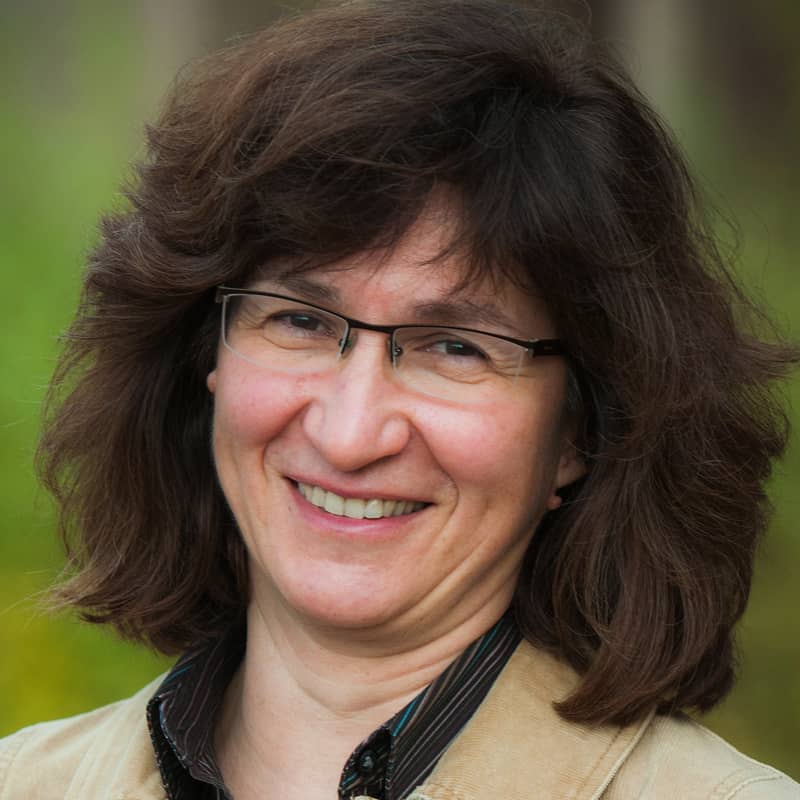
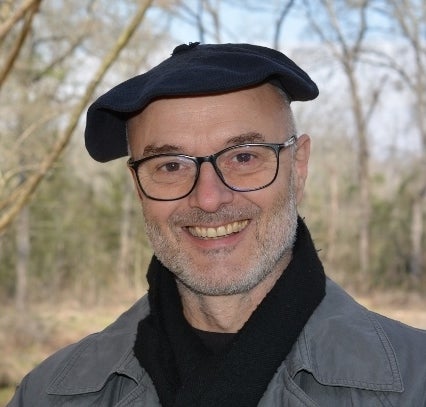
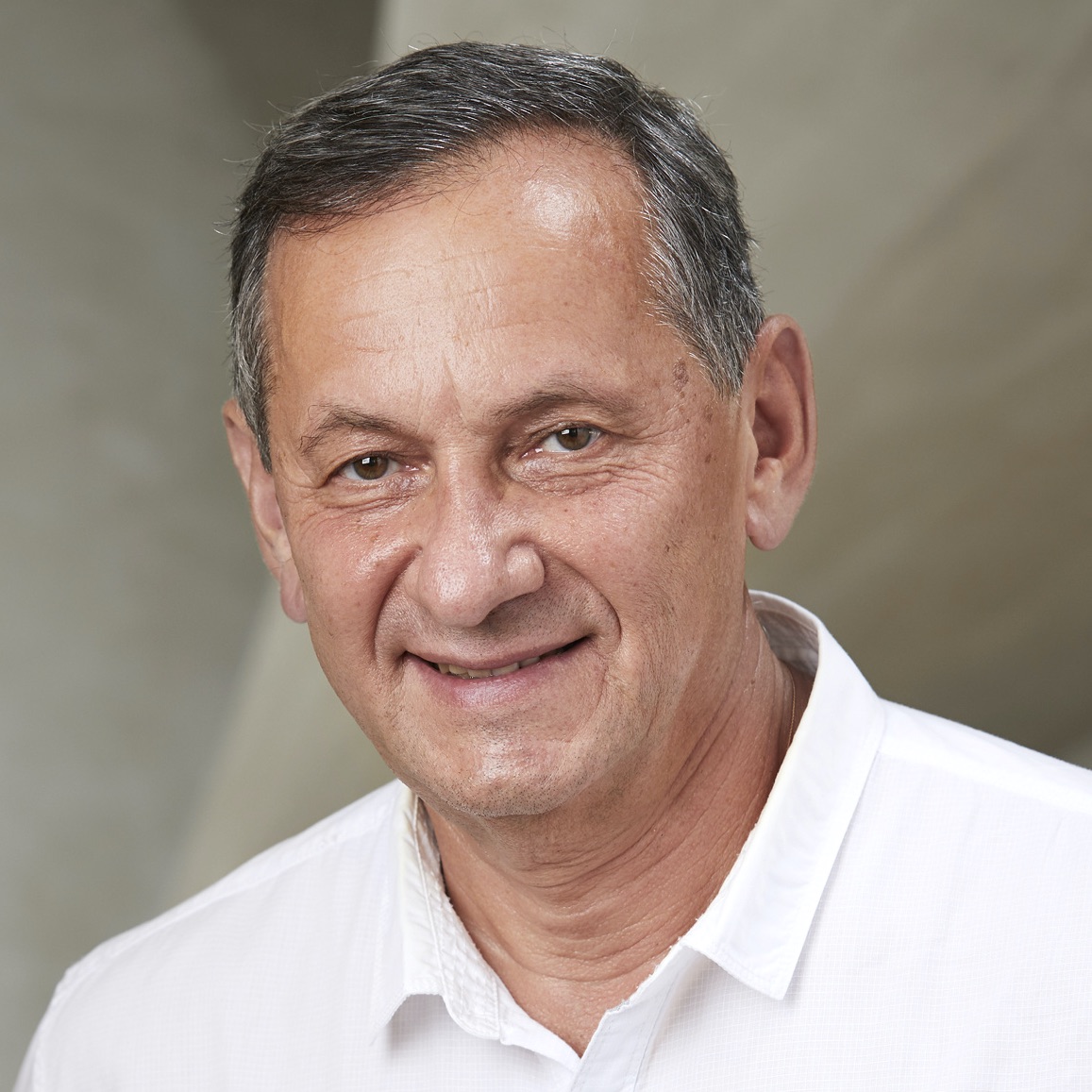
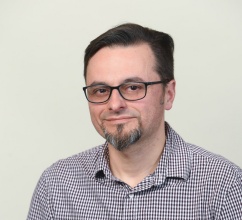
Dr. Maja Krzic is a Professor at the Department of Forest and Conservation Sciences within UBC's Faculty of Land and Food Systems. Her research bridges soil science with sustainability education through community engagement and digital innovation, focusing on human impacts on soil properties across agricultural, grassland, and forest ecosystems. She develops cutting-edge teaching tools like the Digging into Canadian Soils open textbook and SOILx interactive platform. PhD (University of British Columbia, 1997) MSc (University of Belgrade, 1990) BSc (University of Belgrade, 1986) Her publications (2010-2025) explore greenhouse gas dynamics in agricultural systems, soil carbon sequestration in elevation gradients, and innovative educational approaches including problem-based learning and augmented reality. Recent work addresses climate-resilient soil management in coastal British Columbia and gender parity in soil science academia. Major awards include: 3M National Teaching Fellow (2016) UBC Killam Teaching Prize (2006) Fellow, Soil Science Society of America (2023) Platinum AVA Digital Award for SOILx (2015) She has mentored 28 graduate students and postdocs, including Amy Wells (2024), Clara Roa-Garcia (PhD, 2018), and Preston Cumming (Postdoc, 2015). Current projects focus on climate change adaptation in Delta farmland and regenerative agricultural practices.
Tanvir Arafin serves as an Assistant Professor in the Department of Cyber Security Engineering at George Mason University, where his research focuses on hardware security and trust mechanisms for emerging computing platforms. With publications in premier venues including IEEE Transactions on Very Large Scale Integration Systems, IEEE Transactions on Computers, and ACM International Conference on Computer-Aided Design, he addresses critical security challenges in next-generation systems through rigorous hardware-software co-design approaches. His research portfolio spans Hardware Security, Trusted Computing, and IoT Security, with specialized expertise in Side-Channel Attacks and Secure Hardware Design. Dr. Arafin investigates electromagnetic side-channel vulnerabilities in O-RAN networks, develops countermeasures for autonomous vehicle cybersecurity, and pioneers RRAM-based security solutions for memory-constrained devices. His work bridges theoretical security models with practical implementations, emphasizing real-world applicability in edge computing environments and autonomous navigation systems. Current projects explore machine learning integration for anomaly detection in connected vehicles and secure acceleration of cryptographic operations. Analysis of Dr. Arafin's 2022-2025 publications reveals strategic focus areas: electromagnetic fingerprinting for radio units in O-RAN (2025), spatial acceleration of Kolmogorov-Arnold Networks (2025), and NTT-based cryptography accelerators (2024). His research demonstrates consistent innovation in securing autonomous navigation systems and edge devices, with emerging work on in-memory computing architectures using resistive memory technologies. Key trends include hardware-centric defense against model inversion attacks, voltage overscaling for lightweight authentication, and robust multi-robot coordination in dynamic environments. Scientific Awards: No scientific awards, fellowships, or medals were documented in the source materials. Dr. Arafin leads significant collaborative research, including the NSF CISE-MSI grant (DP: CNS) for edge-based robust multi-robot systems. His educational initiatives feature Capture-the-Flag competitions targeting underrepresented students in cybersecurity. Current grant activities emphasize practical security solutions for autonomous navigation, multi-robot coordination, and IoT edge devices, with demonstrated focus on translating research into deployable countermeasures for real-world threats in dynamic operational environments.
Roberto Bertolusso is a Senior Pfeiffer Lecturer in the Department of Statistics at Rice University. He has held this position since 2013, focusing on teaching probability, statistics, and data science courses. His research integrates computational and systems biology approaches to study cancer mechanisms. Bertolusso earned his Ph.D. and M.S. in Statistics from Rice University and holds a graduate degree in Industrial Engineering from Universidad de Buenos Aires. His academic background includes significant contributions to cancer biostatistics and systems biology, highlighted by his participation in the AACR Methods in Cancer Biostatistics Workshop (2015) and a CPRIT-funded training program (2013–14). His publications span epidemiological modeling, orthopedic outcomes, and computational cancer research, reflecting interdisciplinary expertise. Education: Ph.D. & M.A. in Statistics, Rice University Graduate Level in Industrial Engineering, Universidad de Buenos Aires Teaching Focus: Probability theory, regression analysis, SAS programming, and data science methodologies. Research interests emphasize systems biology applications in cancer, stochastic modeling of biological systems, and computational methods for medical data analysis. His work bridges statistical theory with clinical and biomedical challenges, as seen in studies on viral infection dynamics and tumor growth modeling. Recent publications reflect both his cancer research and collaborative work in orthopedic surgery outcomes, showcasing a commitment to interdisciplinary problem-solving. Awards include recognition for methodological contributions to cancer clinical trial design and biostatistical training initiatives.
Andrew Cooper-James is a Senior Lecturer in Creative Film, TV & Digital Media Production at the University of Northampton, School of Arts. With over 30 years of experience as an independent filmmaker, he specializes in production design, performance, and sound design across film, television, and live art. He has been teaching for 17 years and holds a Fellowship from the Higher Education Academy. Research Interests: His creative and academic work focuses on interdisciplinary practices, particularly in screendance, collaborative art, and digital media. He explores the integration of performance, sound, and visual storytelling in both educational and artistic contexts. Publications and Conferences: Andrew has published in the International Screendance Journal and presented at GLAD and NAHEMI conferences. His recent work reflects trends in experiential learning, community engagement, and the fusion of live art with moving image. Fellowship from the Higher Education Academy Teaching and Creative Practice: He leads hands-on modules including Final Major Project, Sound for Screen, and Community Impact. His artistic projects have been supported by major institutions such as Arts Council England, The Royal Opera House, and The South Bank Centre. He mentors students in creative production and emphasizes practical, student-led learning. Labs and Creative Teams: While no formal lab is mentioned, Andrew collaborates with interdisciplinary teams in live art and film, often working with dancers, composers, and visual artists on hybrid projects supported by national and international arts organizations.
Maria dos Santos Lonsdale serves as Professor of Information and Communication Design at the University of Leeds School of Design, where she also directs PACE (Professional Academy for Creative Enterprise) and previously served as Head of School from 2020 until her current sabbatical through September 2026. With academic credentials including a PhD from the University of Reading (2006) and extensive teaching experience since 1997 across Portugal and the UK, she brings significant expertise to her roles. Her research demonstrates remarkable interdisciplinary breadth, spanning healthcare communication, cybersecurity awareness, educational technology, and sustainable fashion. Lonsdale employs rigorous user-centered methodologies including focus groups, co-design sessions, usability testing, and eye-tracking studies to validate design solutions that improve user performance and wellbeing. Her work consistently bridges theoretical research with practical applications across multiple sectors. Lonsdale holds influential editorial positions as Editor-in-Chief for Visible Language journal (starting January 2025) and former Editor-in-Chief (2020-2024) for the Information Design Journal. She actively contributes to the academic community as an Academic Advisor for Luto (a global health communications company) and as a reviewer for major publishers including Sage and Routledge. Senior Fellow of the Higher Education Academy (SFHEA) Member of the International Society of Typographic Designers (MISTD) Regular contributor to design research societies Her research output reveals consistent focus on making information accessible and usable across diverse contexts, from virtual learning environments to public health communications. Lonsdale's work demonstrates how thoughtful application of design principles can solve complex real-world problems while enhancing user experience and information comprehension.
Johannes Schöning is a Professor of Human-Computer Interaction at the University of St. Gallen, where he leads a research group focused on developing novel user interfaces that empower individuals and communities with data-driven decision capabilities. His work bridges rapidly advancing technologies with human needs across diverse contexts including geographic information science, public health, medical applications, and extreme environments such as space missions. He publishes extensively at premier HCI venues including ACM CHI, MobileHCI, and DIS, as well as in interdisciplinary journals like NATURE and PLOS ONE. Professor Schöning's research interests center on understanding the interplay between technology and human activities through rigorous methods from AI, computer graphics, and cognitive psychology. His work emphasizes user-centered design methodologies and mixed methods approaches to create interfaces that fit both technological possibilities and human requirements. Key focus areas include virtual and augmented reality applications, accessibility solutions, navigation technologies, and the social implications of digital interfaces in everyday life. His research mission prioritizes theoretical and practice-based inquiry to develop disruptive solutions for real-world problems. Analysis of his recent publications reveals strong trends in virtual reality applications for emotional regulation and accessibility, with increasing emphasis on generative AI integration, environmental awareness, and space-related HCI challenges. His work consistently demonstrates interdisciplinary collaboration across computer science, psychology, geography, and medical fields, with publications showing growing interest in social implications of technology, particularly regarding navigation systems and their externalities. His scientific contributions have been recognized with numerous awards including: Best Presentation Award at IEEE VR 2023 Best Paper Award & Accessibility Award at Interact 2019 10 Year Impact Award 2021 Multiple Honorable Mention Awards at top conferences Professor Schöning actively mentors students across bachelor, master, and PhD levels, with his lab seeking candidates interested in the intersection of HCI, geoinformatics, and ubiquitous computing technologies. He emphasizes creating a 'detox-free academic environment' that focuses on meaningful teaching and research outcomes rather than academic pressures. His group frequently collaborates with international researchers and institutions on projects spanning medical applications, space exploration interfaces, and public health technologies. The research laboratory led by Professor Schöning maintains strong interdisciplinary connections across multiple domains. Current projects include developing AI-powered wearables for blind and low vision users, exploring VR applications for emotional regulation, investigating navigation technologies' social impacts, and creating interfaces for space mission contexts. The lab's work on CubeSat control software and plant visualization for space greenhouses demonstrates their unique focus on extreme environment applications, while their research on citizen participation through generative AI shows engagement with contemporary societal challenges.
Dr. Alraune Zech is an Assistant Professor for Computational Environmental Hydrogeology at Utrecht University, Faculty of Geosciences, Department of Earth Sciences, Hydrogeology group. Her research focuses on groundwater flow and transport processes in heterogeneous environments, with emphasis on practical applications in contaminated aquifers, PFAS remediation, and construction-related groundwater issues. She is affiliated with the Helmholtz-Centre for Environmental Research and serves as convener for EGU sessions on contaminant transport. Dr. Zech's educational background includes: PhD in Computational Hydrosystems from Friedrich-Schiller-University Jena and Helmholtz-Centre for Environmental Research (2010-2013) Prediploma Degree in Business Mathematics from University Leipzig (2011) Diploma in Mathematics with minor in Chemistry from University Leipzig (2003-2009) Her research interests span hydrogeology, groundwater modeling, and environmental remediation. She specializes in stochastic and computational modeling of subsurface processes, with focus on contaminated aquifers, PFAS removal strategies, biodegradation, bioremediation, and heat transport in the subsurface. Her work bridges theoretical approaches with practical applications in construction engineering and environmental protection. Analysis of Dr. Zech's recent publications (2021-2025) reveals strong focus on advancing hydrogeological modeling techniques, particularly in aquifer heterogeneity characterization, machine learning applications in hydrogeology, and practical remediation strategies. Her work spans fundamental research on pore-scale processes to field-scale applications, with increasing integration of artificial intelligence methods for solving complex groundwater problems. Dr. Zech leads several significant research projects: Living Lab PFAS Remediation (2024-2028): Developing strategies for PFAS contamination SilPit (2024-2028): Studying erosion of silicate grouting in construction pits MIBIREM (2022-2027): Creating innovative technological toolbox for bioremediation She actively supervises multiple PhD students including Alexandra Hockin, Kim Bartsch, Mahammad Valibeknejad, Sona Aseyednezad, Hannah Gebhardt, and Martijn van Leer. Her research is supported by funding from the Ministry of Infrastructure and Water Management, NWO, and EU Horizon programs.
Dr. Vladimir Vlassov is a full Professor in Computer Systems at the Division of Software and Computer Systems (SCS) , Department of Computer Science (CS) , School of Electrical Engineering and Computer Science (EECS) , KTH Royal Institute of Technology , Stockholm, Sweden. He leads the AVA project in ALEC2, an AI-powered system for mental health care. He is a member of the Distributed Computing research group (DC@KTH) . Education & Roles: Holds a PhD and is a member of ACM and IEEE. Previously visited MIT (1998) and UMass Amherst (2004). Teaches courses on Data Mining , Distributed Systems , and Concurrent Programming . Research Interests: Focus on scalable AI, Cloud computing, distributed systems, and NLP for mental health. Projects include ExtremeEarth (Copernicus data analytics) and EMJD-DC (distributed computing PhD program). Grants & Projects: Principal Investigator in ALEC2 (adaptive mental health care) and ExtremeEarth (EU H2020). Led EU projects like ENCORE (manycore systems) and PaPP (embedded systems). Labs & Teams: Directs the Distributed Computing group, contributing to Hopsworks (machine learning feature store) and Maggy (hyperparameter optimization).
Chris Whidden is an Assistant Professor in the Faculty of Computer Science at Dalhousie University, where he leads research in algorithms and bioinformatics. His work bridges theoretical computer science with practical applications in computational biology and ocean data analytics. Whidden's research interests include approximation and fixed-parameter algorithms, computational biology, evolutionary trees and networks, graph theory, hybridization and lateral gene transfer, NP-hardness, and ocean data analytics. He develops efficient algorithms and software to solve NP-hard problems, particularly in the context of phylogenetics and large-scale biological data. His work applies both theoretical algorithm design and practical software engineering to create novel solutions for understanding biodiversity, bacterial and viral evolution, and oceanographic systems. His recent publications reflect a strong trend toward interdisciplinary research, combining deep learning and machine learning with oceanographic data analysis, fish detection and classification, echosounder data processing, and environmental monitoring. Many of his algorithmic contributions focus on phylogenetic tree comparison, including SPR distances, maximum agreement forests, and supertree construction. He has developed several widely used software tools such as rspr, SPR Supertrees, uspr, and phylogenetic topographer. NSERC Killam Trusts Tula Foundation NSF Simons Foundation (via Life Sciences Research Foundation) DeepSense (industry-academic collaboration) He is actively involved in mentoring and has funding available for PhD and MCS students in computer science, particularly in algorithms, bioinformatics, and data analytics. He teaches courses such as Algorithm Engineering (CSCI 4118/6105), Software Development (CSCI 2134), and Design and Analysis of Algorithms (CSCI 3110). Whidden has collaborated extensively with industry through DeepSense, working on projects that apply data analytics and machine learning to the ocean sector, including predictive modeling for ocean buoys, automated fish detection, and tidal energy monitoring.
Christian Blouin is a Professor and Associate Dean, Academic in the Faculty of Computer Science at Dalhousie University. His interdisciplinary research bridges computer science and molecular biology, with a strong focus on bioinformatics and computational biophysics. Education: Ph.D. in Computer Science, Dalhousie University (2001) B.Sc. in Computer Science, Université Laval (1997) His research interests lie at the intersection of algorithms, phylogenetics, protein evolution, and molecular modeling. He develops computational methods to analyze protein structure evolution, multiple sequence alignments, and phylogenetic tree reconstruction. His work integrates high-performance computing and statistical mechanics to model biophysical properties of proteins, particularly in conformational dynamics and electrostatic interactions. The most recent publications reveal a consistent trend in developing algorithmic solutions for biological problems—especially in text mining for biological events, phylogenetic distance computation, and 3D mapping of evolutionary data. His work emphasizes automation, accuracy, and scalability in bioinformatics pipelines. Scientific Awards and Honors: TULA Fellow Dr. Blouin has secured significant research funding from NSERC, the TULA Foundation, and the CFI. His research group has contributed to tools like GenGIS for geospatial genomics and libcov for bioinformatics programming. He has advised students such as Haibin Liu and Vlado Keselj, who have co-authored key publications in text mining and phylogenetics. His lab integrates algorithm development with biological validation, aiming to bridge computational innovation with real-world biological insights.
Nils Sponheim is an Associate Professor at Oslo Metropolitan University (OsloMet) in the Faculty of Technology, Art and Design, Department of Mechanical, Electrical and Chemical Engineering. His research focuses on ultrasound, medical imaging, and signal processing, with particular emphasis on contrast agents, Doppler imaging, and biomedical engineering applications. He has contributed extensively to ultrasound transducer design and problem-based learning pedagogy. Academic Affiliation: OsloMet – Faculty of Technology, Art and Design Research Areas: Ultrasound physics, contrast agent development, Doppler signal analysis, medical imaging instrumentation Education Focus: Problem-Based Learning (PBL) in engineering His publications span transient ultrasonic fields, synchronization techniques for contrast agents, and clinical applications in cardiology and oncology. Key subfields include pulse shaping, frequency resolution limitations, and transducer design. Sponheim's work bridges engineering and clinical diagnostics, with collaborations in cardiology and oncology imaging. Current projects focus on pulsed ultrasonic fields and practical measurement systems.
Emek Demir serves as an Associate Professor in the Department of Molecular and Medical Genetics at Oregon Health & Science University's School of Medicine, where he directs the Computational Biology program at the Brenden-Colson Center for Pancreatic Care. His academic journey includes a Ph.D. in Computer Engineering from Bilkent University (2005) under Ugur Dogrusoz and postdoctoral training with Chris Sander at Memorial Sloan Kettering Cancer Center's Computational Biology Center. Dr. Demir's research centers on Pathway Informatics, integrating detailed biological pathway information with omic data to solve cancer biology problems. His work spans pathway curation, visualization, NLP, data standardization, machine learning, and mechanistic simulation. He pioneered the BioPAX pathway data standard and developed Pathway Commons—the largest process-level pathway database with over 2 million interactions and 400,000 detailed human reactions. His publication record demonstrates consistent innovation in computational oncology, with recent work focusing on transcription factor activity prediction, spatial tumor mapping, and causal network analysis. Key contributions include algorithms for detecting altered cancer sub-networks, identifying transcription factor modulators, and inferring active networks from proteomic data. His research bridges computational methods with clinical applications in leukemia, prostate cancer, and glioblastoma. Recipient of leadership roles in major NIH-funded initiatives Principal developer of Pathway Commons and BioPAX standards Extensive collaborations with Memorial Sloan Kettering and OHSU clinical departments Dr. Demir directs a computational biology program focused on translating pathway knowledge into clinical insights for pancreatic cancer, with ongoing projects in spatial omics, multi-dimensional tumor atlases, and antiviral nanomaterial applications.
Iza Marfisi is a Professor at the University of Le Mans where she became a University Professor in 2024 and was appointed Head of the IEIAH (Computer Environments for Human Learning) team in 2025. She works within the Claude Chappe Institute of Computer Science, focusing on developing educational technologies that empower teachers to create their own digital learning tools. Her research bridges computer science and educational theory to enhance teaching practices through accessible technology solutions, with particular emphasis on making advanced tools usable for non-technical educators. Marfisi's research spans Educational Technology, Serious Games for Education, Mobile Learning, and Extended Reality (XR), with a consistent focus on teacher-centered design. She develops "no-code" authoring tools enabling educators to create custom digital learning experiences deployable across various hardware platforms. Her work specifically targets situated learning with mobile devices, human-computer interactions for learning, and educational applications of mixed and extended reality. This approach democratizes access to advanced educational technologies by removing technical barriers for teachers. Analysis of her recent publications reveals a clear evolution from foundational mobile learning frameworks toward increasingly sophisticated integration of mixed reality and artificial intelligence in educational contexts. Her 2024-2025 work shows particular emphasis on generative AI for educational activity design, immersive pharmacology learning, and collaborative frameworks that connect multiple learning technologies. The publications consistently emphasize practical teacher needs, with many studies conducted in authentic educational settings rather than controlled laboratory environments. Marfisi actively supervises doctoral research across multiple dimensions of educational technology. Her current advisees explore artificial intelligence for mixed reality activity creation, mixed reality for professional training, free software approaches to serious games, and innovative interaction techniques for collaborative learning. Previous students have investigated mixed reality for fraction learning, educational game indexing systems, and mobile educational game design models. Her supervision portfolio demonstrates both depth in specific technical areas and breadth across the educational technology landscape. As Head of the IEIAH team at LIUM since 2025, Marfisi leads a research group focused on computer environments for human learning. She also serves on the Board of Directors for both the Serious Game Society and the IKIGAI association (Games for citizens), and was elected Deputy Director of Research at the Claude Chappe Institute of Computer Science since 2018. Her leadership extends to communications management for the IEIAH team and participation in the LIUM Laboratory Council (2022-2024), demonstrating significant institutional impact beyond her direct research contributions.
Johan Jeuring is Professor of Software Technology for Learning and Teaching at Utrecht University's Department of Information and Computing Sciences. His research focuses on intelligent tutoring systems, computational thinking education, and game-based learning environments. Research Interests: Prof. Jeuring's work explores computational thinking pedagogy, automated feedback systems, and educational game design. His research bridges artificial intelligence with educational psychology to develop effective learning tools. Publications: Recent publications focus on augmented reality learning environments, programming education methodologies, automated assessment systems, and AI applications in education. His work combines empirical studies of learning behaviors with technological innovations in educational tools.
Francisco C. Santos is a Full Professor at Instituto Superior Técnico (IST), University of Lisbon, and currently serves as Vice-President of the Portuguese Science Foundation (FCT). He holds a PhD in Computer Science from Université Libre de Bruxelles (ULB), Belgium, where he was a Marie Curie Fellow. His research spans computer science, evolutionary biology, economics, and physics, focusing on cooperation dynamics, environmental governance, network science, and AI's societal impact. He leads the GAIPS and ATP research groups at INESC-ID, Lisbon. Education PhD in Computer Science, Université Libre de Bruxelles (ULB), Belgium (Marie Curie Fellowship) FNRS Senior Researcher at ULB's Machine Learning Group Research Interests His work bridges AI, complex systems, and social dynamics. Key areas include: - Evolution of cooperation and social norms - Climate governance and collective-risk dilemmas - Network science and urban planning - Machine learning and robotics applications Awards Young Scientist Award (German Physical Society) CGD/ULisbon Prize in Computer Science AAAI Blue Sky Award IST Teaching Excellence Awards (multiple) Advising & Grants Supervised over 30 PhD and MSc students, many of whom have gone on to prestigious postdocs and academic roles. Co-headed research groups and led projects funded by FCT-Portugal and EU initiatives. Labs & Teams Leads the Group of Artificial Intelligence for People and Society (GAIPS) and the ATP interdisciplinary group at INESC-ID. Collaborates internationally on AI ethics and environmental policy.