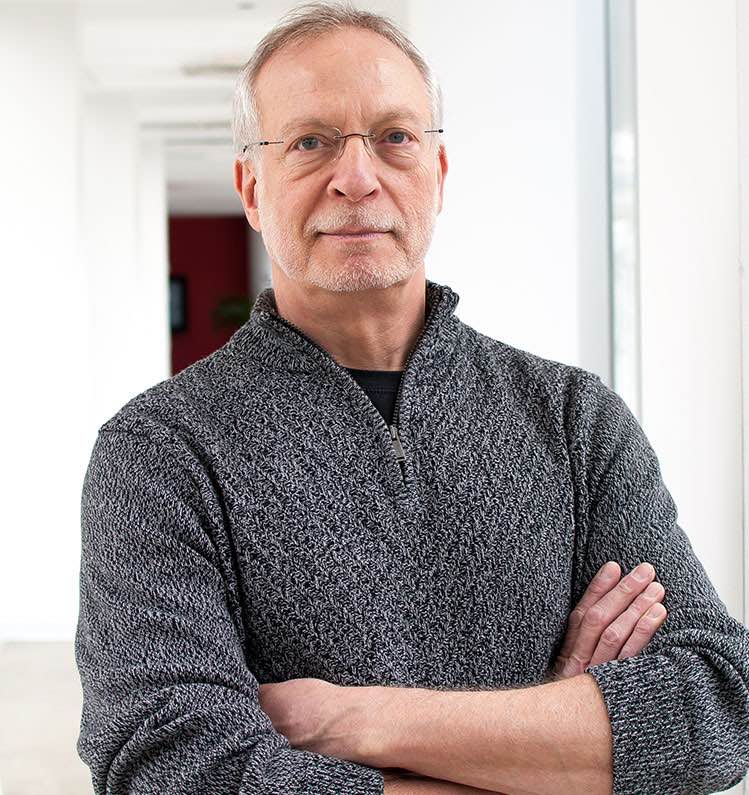
Irina Overeem is an Associate Professor and Deputy Director of the Community Surface Dynamics Modeling System (CSDMS) at the Department of Geological Sciences, University of Colorado Boulder. Her research focuses on Earth surface process modeling, with emphasis on coastal and river geomorphology in remote and polar regions. PhD: Delft University of Technology (2002) MS: Wageningen University (1996) BS: Wageningen University (1993) Her work investigates sediment fluxes in Greenland rivers, Arctic coastal erosion, and floodplain sedimentation through integrated field studies and numerical modeling. She specializes in using CSDMS tools for predictive simulations of water, sediment, and nutrient fluxes across landscapes. Recent publications highlight her contributions to permafrost dynamics, carbon budgets in icy rivers, and FAIR principles for open-source geoscience software. Her research spans from fjord environments to high-mountain erosion dynamics. Science Communication Fellowship (2015) National Oceanographic Partnership Program Award (2010) Outstanding Student Award, Netherlands (1996) Tropenfonds scholarship (1994) She mentors graduate students in sedimentary process modeling, leads CSDMS working groups on coastal dynamics and education, and teaches courses in sedimentary systems modeling, geomorphology, and field methods. Her work combines field measurements with computational approaches in the Cryosphere and Surface Processes Lab.
Harutyun Ishkhanovich Avetisyan is a Professor and Head of the Basic Department "System Programming" at the Faculty of Computer Science of the National Research University Higher School of Economics (HSE). He began his tenure at HSE in 2017 and brings 30 years of scientific and teaching experience to his role. Additionally, he serves as the Director of the Institute for System Programming of the Russian Academy of Sciences (ISP RAS), a position he has held since 2015. Avetisyan holds numerous prestigious academic distinctions, including being elected as an Academician of the Russian Academy of Sciences in 2019 and as a Corresponding Member in 2016. He earned his Doctor of Physical and Mathematical Sciences degree in 2012 and was awarded the academic title of Associate Professor in 2009. His educational background includes a specialty in "Applied Mathematics" from Yerevan State University (1993). His research focuses on three main areas: analysis and transformation of programs, software security, and parallel and distributed computing technologies. These interests are reflected in his extensive publication record and leadership in major research initiatives. His work bridges theoretical computer science with practical applications in cloud computing, secure data storage, and high-performance computing systems. Avetisyan's scholarly contributions demonstrate a consistent focus on system programming challenges, particularly in the areas of code analysis, optimization, and security. His recent publications indicate a growing interest in cloud computing paradigms, smart city infrastructure, and energy-efficient computing solutions. His research has significant implications for both academic theory and industrial applications in software development. Among his notable recognitions, Avetisyan was awarded the medal of the Order "For Merit to the Fatherland" 2nd degree in 2021 for his significant contributions to science and dedicated service. He also serves on the editorial boards of several prestigious journals including "Programming" (since 2015) and "Proceedings of the Institute for System Programming of the RAS" (since 2010). Throughout his career, Avetisyan has led and participated in numerous research grants funded by the Ministry of Education and the Russian Foundation for Basic Research. His professional trajectory shows steady progression from postgraduate studies (1997-2000) to research fellow (2000-2002), deputy director of ISP RAS (2002-2015), and ultimately director of the institute (2015-present). At HSE, Avetisyan teaches courses in parallel programming and mentor seminars for master's students in Software Engineering. His teaching philosophy emphasizes the integration of cutting-edge research with practical software development skills, preparing students for careers at the forefront of computer science.
Karen Casciotti is a Professor in the Department of Oceans and Professor of Earth System Science at Stanford University, where she has held a faculty position since 2011. She serves as Senior Fellow at the Stanford Woods Institute for the Environment and as Victoria and Roger Sant Director of the Earth Systems Program. PhD in Geosciences from Princeton University (2002) MS in Geosciences (Princeton) and Oceanography (UCSD) B.S. in Environmental Engineering Science from Caltech Her research focuses on marine nitrogen cycle biogeochemistry, particularly nitrate, nitrite, and nitrous oxide (N2O) cycling in ocean waters. She combines stable isotope geochemistry, microbiology, molecular biology, and geochemical modeling across scales from benchtop to global ocean systems. Recent work demonstrates urea utilization by diverse deep-sea microorganisms and its role in chemoautotrophy. Key publications (2023-2025) examine N2O dynamics in tropical oceans, nitrate assimilation pathways, urea metabolism in dark ocean communities, and isotopocule analysis methodologies. Her team developed the pyisotopomer software package for nitrous oxide isotopocule analysis. John Hayes Award (2020) Terman Fellow (2011) NRC Postdoctoral Fellow (2002) Harold W. Dodds Fellowship (2001) She advises doctoral students in oceanography and earth system science while serving as Co-Chair of the GEOTRACES Scientific Steering Committee and former Associate Editor for Marine Chemistry . Her lab investigates microbial nitrogen cycling, seawater chemistry, and climate-relevant trace gas production.
João Miguel Lobo Fernandes is a Full Professor at the Department of Informatics, School of Engineering, University of Minho. He holds a 5-year degree in Informatics Engineering (1991), a Master's in Informatics (1994), and a Ph.D. in Informatics/Computer Engineering (2000) from Universidade do Minho, with a thesis on An object-oriented methodology for embedded systems development . Research interests: Software Modeling, Requirements Engineering, Embedded Software, Software Process, Bibliometrics International collaborations: University of Bristol, Turku Centre for Computer Science (Finland), Aarhus University (Denmark), Universidade Federal de Santa Catarina (Brazil), and others Key projects: iFlow and DIABO logistics platforms (awarded by APLOG) His 160+ peer-reviewed publications focus on software methodologies, embedded systems, and industry collaborations. Recent work includes applications of machine learning in automotive software, feature modeling, and remote work impact studies. He serves on editorial boards for Journal of Information Technology Research and Open Computer Science . 2016 & 2022 Logistics Excellence Awards (APLOG) Organized international events: ACSD, DIPES, GTTSE, PETRI NETS, ICSOB, MOMPES As an academic leader, he directed the 5-year Systems and Informatics Engineering degree (2004-06), Master's in Informatics Engineering (2011-12), and served on Scientific Council of the School of Engineering (2013-16).
Witold Pedrycz serves as Professor and Canada Research Chair in Computational Intelligence within the Department of Electrical and Computer Engineering at the University of Alberta, Canada, and maintains affiliation with the Systems Research Institute of the Polish Academy of Sciences in Warsaw, Poland. His research expertise spans Computational Intelligence, fuzzy modeling, Granular Computing, knowledge discovery, data science, pattern recognition, knowledge-based neural networks, and control engineering, with additional exploration in Artificial Intelligence, Big Data, Data Engineering, Internet of Things, Complex Systems, and Software Engineering. Scientific Honors: IEEE Fellow (1998) Foreign member of the Polish Academy of Sciences (2009) Fellow of the Royal Society of Canada (2012) Norbert Wiener award (2007) IEEE Canada Computer Engineering Medal Cajastur Prize for Soft Computing Killam Prize Fuzzy Pioneer Award 2019 Meritorious Service Award Dr. Pedrycz holds editorial leadership as Editor-in-Chief of Information Sciences and WIREs Data Mining and Knowledge Discovery, Co-editor-in-Chief of the International Journal of Granular Computing and Journal of Data Information and Management, and serves on the Advisory Board of IEEE Transactions on Fuzzy Systems. The source material contains no details regarding his academic advising, research grants, laboratory affiliations, or educational background.
Aayush Jain is an Assistant Professor at Carnegie Mellon University, renowned for his groundbreaking contributions to cryptography. He received the 2022 ACM Doctoral Dissertation Award for his seminal work on indistinguishability obfuscation, establishing its feasibility from well-studied mathematical assumptions. Education: BTech in Electrical Engineering and MTech in Information and Communication Technology from Indian Institute of Technology, Delhi PhD in Computer Science from University of California, Los Angeles His research centers on theoretical and applied cryptography, with deep connections to theoretical computer science. Jain's work revolutionized software security by providing mathematically rigorous foundations for indistinguishability obfuscation—a 'master tool' enabling previously unattainable cryptographic goals like functional encryption while expanding cryptography's scope into software engineering domains. His dissertation demonstrated how indistinguishability obfuscation transforms unintelligible code without altering computational behavior, addressing fundamental security challenges. Scientific awards: ACM Doctoral Dissertation Award (2022) Best Paper Award at ACM Symposium on Theory of Computing (STOC 2021) Jain's research was featured in Quanta Magazine as 'Scientists Achieve Crown Jewel of Cryptography,' highlighting its significance. The source text provides no details about his advising activities, grants, or laboratory affiliations.
James D. Herbsleb is a Professor at the Software and Societal Systems Department within the School of Computer Science at Carnegie Mellon University. His research focuses on the intersection of software engineering and organizational behavior, particularly in distributed and open source contexts. Research Interests: Coordination theory in software development Open source ecosystems and transparency practices Global software team dynamics Socio-technical systems design Architectural knowledge management Scientific Awards: SIGSOFT Outstanding Research Award (2016) Alan Newell Award for Research Excellence (2014) Distinguished Paper Award at ICSE 2011 Most Influential Paper Award at ICSE 2010 Best Paper Award at Academy of Management 2010 Advising and Grants: Herbsleb has advised numerous PhD students and postdocs who now hold positions at institutions like Google, University of Texas at Austin, and Oregon State University. His research has been funded by National Science Foundation (NSF) , Sloan Foundation , Accenture , Bosch , Google , Siemens , and IBM . Key projects include Personalized Information Access for Online Deliberation (2013) and Designing Transparent Work Environments (2013).
Fredrik Sandin is a Professor in the Department of Computer Science, Electrical and Space Engineering at Luleå University of Technology, where he leads the Machine Learning research group with approximately thirty members. His work focuses on neuromorphic technologies and the intersection of machine learning with computational physics to solve challenging real-world interaction problems. He coordinates the 'Teknisk fysik och elektroteknik' program at LTU and has been instrumental in establishing neuromorphic research activities at the university. Luleå University of Technology, Department of Computer Science, Electrical and Space Engineering Member of WASP (Wallenberg AI, Autonomous Systems and Software Program) and ELLIS (European Laboratory for Learning and Intelligent Systems) Coordinator of Neuromorphic Innovation Platform Sweden with KTH, Lund University, Uppsala University, FOI, ABB, Ericsson, and SAAB Fredrik earned his PhD in Physics from Luleå University of Technology in 2007, with thesis work focusing on dense states of matter in neutron stars. His academic journey began with an MSc diploma work in ATLAS at CERN in 2001, followed by postdoctoral research in computational physics at IFPA in Belgium (2008-2009) and brain-like computing at EISLAB with Prof. Jerker Delsing (2010-2011). Professor Sandin's research interests center around neuromorphic technologies, particularly neuromorphic computing and spiking neural networks. He investigates sensor/detector and intelligent systems co-design where constraints like energy, power, latency, and dynamic range challenge conventional digital approaches. His work spans mixed-signal neuromorphic circuits, algorithms, and systems, as well as machine learning projects involving industrial data and collaboration. He has been a key figure in establishing neuromorphic research at LTU, supported by The Kempe Foundations, particularly through the 2014 Gunnar Öquist Fellowship. His recent publications demonstrate a strong interdisciplinary focus spanning quantum phase transitions, particle physics detector optimization, renewable energy materials, and the integration of large language models into control systems. This diverse portfolio reflects his approach connecting machine learning with fundamental physics and practical engineering applications, particularly in neuromorphic computing and intelligent systems design, with emphasis on solving real-world problems through co-design of hardware and algorithms. Gunnar Öquist Fellowship Award and 3 MSEK grant from The Kempe Foundations ISSP award for an Original Work in Theoretical Physics (signed by Prof. 't Hooft and Prof. Zichichi) New-Talents award for original work in theoretical physics at the International School of Subnuclear Physics in Erice Professor Sandin has supervised numerous PhD students working on topics ranging from neuromorphic TinyML to materials for neuromorphic computing, privacy-preserving machine learning at the edge, and intelligent fault diagnosis. He has secured substantial research funding from various sources including Vinnova, ÅForsk, Kempe Foundations, WASP-WISE, and EU programs like ECSEL JU Arrowhead Tools and ITEA3 AutoDC. His current major projects include the Neuromorphic Innovation Platform Sweden and several initiatives focused on neuromorphic condition monitoring and computing, with total funding exceeding 30 MSEK in the past five years. He leads the Machine Learning group at LTU, which collaborates extensively with industry partners including ABB, Ericsson, SAAB, SKF, and RISE. The group is active in developing neuromorphic technologies for wireless sensor networks, condition monitoring systems, and next-generation intelligent systems that address energy, power, and latency constraints that challenge conventional digital approaches.
Simone Paolo Ponzetto is an Assistant Professor (Juniorprofessor) at the University of Mannheim since 2013, affiliated with the Research Group Data and Web Science. His research focuses on Semantic Web technologies, Natural Language Processing (NLP), and knowledge acquisition, particularly leveraging collaboratively built resources like Wikipedia. Prior to Mannheim, he held postdoctoral roles at Sapienza University of Rome and research positions at the University of Heidelberg and Stuttgart. His work includes pioneering projects like BabelNet, a multilingual semantic network. Ponzetto earned his PhD in Computational Linguistics from the University of Stuttgart, with interdisciplinary contributions to coreference resolution, semantic relatedness, and ontology learning. Research Interests: Unsupervised/weakly-supervised knowledge extraction Multilingual ontology learning and semantic networks Lexical semantics (word sense disambiguation, semantic similarity) Discourse semantics (coreference resolution, coherence modeling) Professional Contributions: Guest editor for a Artificial Intelligence Journal special issue on AI and Wikipedia Area chair for EMNLP-CoNLL 2012 and EACL 2014 Program committee member for ACL, AAAI, and other top conferences Lab/Team: Active in the Research Group Data and Web Science at Mannheim, advancing AI and NLP applications in collaborative knowledge systems.
Kanad Basu is an Associate Professor in the Department of Electrical, Computer, and Systems Engineering at The University of Texas at Dallas, Jonsson School of Engineering and Computer Science. He leads the Trustworthy and Intelligent Embedded Systems (TIES) lab, focusing on hardware security, reliability, and emerging computing paradigms. His research spans AI hardware, quantum computing, functional safety, and hardware-based security validation. Research Interests: His work emphasizes improving the trustworthiness of modern hardware systems. Key areas include hardware security (e.g., side-channel analysis, hardware trojans), functional safety in AI accelerators, quantum computing security and verification, and post-silicon validation techniques. He combines formal methods, machine learning, and hardware design to address vulnerabilities in SoCs, DNN accelerators, and quantum systems. Publication Trends: Recent publications (2023–2025) show a strong focus on interdisciplinary research, integrating AI/ML with hardware security, quantum computing, and functional safety. There is a growing emphasis on using large language models for assertion generation, symbolic execution for hardware fuzzing, and graph neural networks for quantum circuit analysis. His work frequently appears in top venues like DAC, DATE, HOST, ISVLSI, and IEEE journals. Scientific Awards: NSF CAREER Award, 2025 IEEE Top Picks in Test and Reliability, 2024 and 2023 Multiple Hack@DAC Prizes (2nd and 3rd) Best Paper Award at VLSI Design 2011 Assistant Professor Award at UTD Jonsson School, 2024 Nominated for Blavatnik Awards for Young Scientists, 2019 Advising and Grants: Dr. Basu has mentored numerous PhD, MS, and undergraduate students, many of whom have published in top-tier venues. He leads the TIES lab, which has received significant recognition, including the NSF CAREER Award. He actively collaborates across disciplines, advising students on topics ranging from quantum computing to AI hardware and functional safety. His lab produces high-impact research with real-world applications in automotive, cloud, and embedded systems. Labs and Teams: He leads the Trustworthy and Intelligent Embedded Systems (TIES) lab at UT Dallas, which fosters innovation in hardware security and reliability. The lab has produced award-winning work, including second prize at HACK@DAC 2025. He also serves on technical committees for IEEE DATE and HOST, and acts as Hardware Hacking Chair for IEEE HOST, indicating strong leadership in the hardware security community.
Andries "Andy" van Dam is a distinguished Dutch-American professor of computer science at Brown University, where he also served as vice-president for research. Born in Groningen, the Netherlands on December 8, 1938, van Dam has been instrumental in shaping computer science education and research for over five decades. He helped establish Brown's computer science program, serving as its first department chair from 1979 to 1985, and was appointed Thomas J. Watson, Jr. University Professor of Technology and Education in 1995. His educational background includes a B.S. with Honors in Engineering Sciences from Swarthmore College (1960) and M.S. and Ph.D. degrees from the University of Pennsylvania (1963, 1966), where he was the second person to receive a PhD in Computer Science. Van Dam's research interests span computer graphics, hypertext systems, virtual reality, and educational technology. He is particularly known for his pioneering work in hypertext systems, having co-developed the first hypertext system with Ted Nelson in the late 1960s. His influential textbook "Computer Graphics: Principles and Practice" is often referred to as the "Bible" of computer graphics. His work has consistently focused on making complex computing concepts accessible through innovative interfaces and educational approaches. His research publications demonstrate a consistent trajectory from foundational work in computer graphics and hypertext to more recent explorations in immersive virtual reality, digital visual literacy, and next-generation educational software. His work bridges theoretical computer science with practical applications in education, medicine, and scientific visualization. Among his notable honors are: IEEE Centennial Medal (1984) Fellow of the Association for Computing Machinery (1994) ACM SIGGRAPH Distinguished Educator Award (2019) Van Dam has mentored numerous students who have gone on to make significant contributions in computer science, including Randy Pausch, Danah boyd, Scott Draves, and Steven K. Feiner. His teaching extends beyond traditional academic settings, as evidenced by his influence on the character of Andy in the film Toy Story, which pays tribute to his pioneering work in computer graphics. He continues to serve on the technical board of Microsoft Research and as chairman of the Rhode Island Governor's Science and Technology Advisory Council. His research lab has been instrumental in developing innovative approaches to human-computer interaction, with particular focus on post-WIMP (Windows, Icons, Menus, Pointer) interfaces, immersive environments, and educational technologies that transform how we learn and interact with digital information.
Assoc. Prof. Boyan Zhekov, PhD is an active faculty member at the University of Library Studies and Information Technologies (UNIBIT) in Sofia, Bulgaria, where he serves in the Department of Computer Science under the Faculty of Information Sciences. He teaches courses including Case Studies in Digital Transformation (SHEB609) and holds academic appointments at Sofia University "St. Kliment Ohridski" and New Bulgarian University as a visiting lecturer. MSc in Information Technologies from Technical University - Sofia Specialized in IT and Economics across UK, France, Netherlands, South Korea, Japan, and Taiwan His research focuses on the intersection of digital governance and emerging technologies, with significant contributions to Internet of Things applications in public administration, smart city ecosystems, and open data frameworks. His work demonstrates a consistent emphasis on practical implementations of ICT solutions for governmental modernization, particularly through EU-funded projects and national initiatives. Current projects examine IoT business models and startup ecosystems within smart city contexts. Prof. Zhekov actively contributes to European research policy as a Horizon 2020 National Contact Point for Future and Emerging Technologies, ICT, and Secure Societies, while serving on the Programme Committee for ICT. His professional engagement extends to leadership roles in Japanese-Bulgarian academic networks including JICA Alumni Bulgaria and Nihon Tomono Kai. Member of Horizon 2020 National Contact Network Board member of Union of Electronics, Electrical Engineering and Communications (SEES) President of JICA Alumni Bulgaria Vice President of JSPS Alumni Bulgaria His advisory work includes technical ICT audits for EU-funded projects under Operational Program RCBIS (2007-2013) and development of sectoral information strategies for regional governance (2014-2020). Recent projects for the Ministry of Education analyze national research infrastructure roadmaps and map Bulgaria's scientific infrastructure landscape.
Hans-Joachim Hof is a Professor and Vice President for Teaching and Students at Technische Hochschule Ingolstadt (THI), where he has been employed since 2016. He serves as Head of Bachelor Cybersecurity (since 2022), Project Manager for THIsuccessAI (since 2021), and Head of the Research Group 'Security in Mobility' at the CARISSMA Institute of Electric, Connected and Secure Mobility. Additionally, he chairs the Scientific Board of the Center of Entrepreneurship and serves on the Supervisory Board of AININ. Professor, Head of INSecurity - Ingolstadt Applied IT Security Research Group (since WS 2016) Professor of Secure Software Systems, Head of MuSe - Munich IT Security Research Group at HAW Munich (2011-2016) Research Scientist at University of Karlsruhe (2008-2011) Research Assistant at Institute for Telematics, University of Karlsruhe (TH) (2003-2007) Professor Hof holds a doctorate in engineering and completed studies in computer science with a specialization in telematics and reliability architectures of systems, with a minor in law. His research spans automotive security, network security, and IT security, with recent focus on security in the Internet of Things, development processes for Secure Automotive Software, Automotive Blockchains, and Future Automotive Security Architectures. His work bridges theoretical security frameworks with practical automotive applications, particularly in electric vehicle security and battery management systems. Hof's recent publications reveal a strong trend toward automotive cybersecurity, with particular emphasis on electric vehicle infrastructure security, battery management systems, and vehicle security operations centers. His research increasingly addresses the security challenges of connected and autonomous vehicles, with growing attention to trust management systems and the security implications of AI in automotive contexts. The interdisciplinary nature of his work connects computer security with automotive engineering, energy systems, and digital forensics. Professor Hof has received numerous prestigious awards for his research contributions: Multiple Best Paper Awards at SECURWARE (2015, 2016, 2017) Best Paper Awards at CENTRIC (2010, 2012) Best Speaker Award at ESE Congress 2015 IARIA Fellow recognition Best Paper Award at ICIW 2010 As Editor-in-Chief of the International Journal on Advances in Security and Chairman of the German Chapter of the ACM, Hof plays a significant role in shaping security research discourse. His leadership extends to the German Informatics Society where he serves on the Executive Board. His research group INSicherheit (http://insi.science) actively collaborates with industry partners on real-world security challenges. Professor Hof leads the INSecurity research group at THI, which focuses on applied IT security with particular expertise in automotive contexts. The group maintains strong industry connections and operates within the CARISSMA research institute, which specializes in electric, connected, and secure mobility. Their work includes practical security testing, development of security architectures, and analysis of emerging threats in automotive systems, with notable contributions to EV charging security, battery management systems, and vehicle forensics.
Alexandre Bartel is a Professor in the Department of Computing Science at Umeå University, Sweden, specializing in software security and software engineering. His research focuses on system security and analysis of permission-based software stacks, particularly Android. With numerous publications in top-tier security and software engineering conferences and journals, Bartel has established himself as a leading researcher in vulnerability analysis and software security. Bartel's research interests primarily center around software security, with a particular emphasis on Java and Android ecosystems. His work delves into vulnerability analysis, deserialization attacks, control flow integrity, and security mechanisms for complex software systems. He investigates how to verify security properties through efficient algorithms and examines existing software layers from a security perspective. His research bridges theoretical security concepts with practical implementation challenges in real-world systems. Analysis of Bartel's recent publications reveals a strong focus on Java deserialization vulnerabilities, control flow integrity mechanisms, and Android security. His work demonstrates a consistent trajectory from fundamental vulnerability analysis to developing practical security solutions and benchmarks. The research spans both theoretical frameworks and empirical evaluations, with significant contributions to understanding long-term security adoption patterns and developing tools for vulnerability detection. Scientific Awards: Most influential Paper ICSE N-10 Award for IccTA: Detecting Inter-Component Privacy Leaks in Android Apps Bartel actively contributes to the academic community through service roles, having served on program committees for major conferences including ASE, ESEC/FSE, ICSE, and FSE. His research has practical implications for software developers and security practitioners, particularly in the areas of vulnerability detection and security mechanism implementation. While specific grant information isn't detailed in the provided materials, his extensive publication record suggests successful funding for his research initiatives. Though not explicitly detailed in the provided information, Bartel's research likely involves collaboration with students and researchers on projects related to software security analysis. His work on benchmarks like Gleipner and CONFUZZION suggests involvement in developing tools and resources for the security research community.
Sonia Lopez Alarcon is an Associate Professor in the Department of Computer Engineering at the Kate Gleason College of Engineering, Rochester Institute of Technology (RIT). She has been a faculty member since 2009, teaching core courses like Computer Organization and developing quantum computing curricula including the new CMPE-257 undergraduate course and CMPE-757 graduate course. Her research bridges computer architecture and quantum computing with emphasis on practical quantum circuit implementation. Her educational background includes a Bachelor of Physics and Master's in Device Physics from the University Complutense of Madrid (2002), followed by a PhD in Computer Engineering (2009) where she researched cache hierarchy in simultaneous multithreaded architectures. During her studies, she gained industry experience at Lucent Technologies and Fundetel working on integrated circuit design. Dr. Lopez Alarcon's primary research focuses on Quantum Computing and heterogeneous hardware solutions, specifically quantum circuit compilation processes, scalability challenges, and error resilience techniques. She investigates how to translate theoretical quantum algorithms into executable circuits while managing noise and resource constraints, with applications in optimization problems and physics simulations. Her work connects computer engineering principles to emerging quantum technologies. Analysis of her publication timeline shows a strategic shift from traditional computer architecture (2015-2018 cache/HLS research for GPU/heterogeneous systems) to quantum computing (2019-2021). Recent work explores quantum algorithms for combinatorial optimization (Grover's), quantum simulation of physical systems, and machine learning applications, reflecting her adaptation to the rapidly evolving quantum landscape while maintaining her architectural expertise. Her teaching excellence has been recognized through multiple awards: Kate Gleason College of Engineering Exemplary Performance in Teaching Award (2016, 2017, 2020) Computer Engineering Most Effective Teacher Award (2016) She actively mentors graduate students including Mark Danza (MS Computer Engineering candidate 2025), with whom she collaborated on quantum machine learning research featured in Quantum Zeitgeist (May 2025). She contributes to RIT's quantum information science minor launched in 2022, developing curriculum and supervising student research in this emerging field. Dr. Lopez Alarcon leads quantum computing research efforts within RIT's Department of Computer Engineering, collaborating with colleagues like Cory Merkel on quantum algorithm applications. Her work is supported through her personal research website and integration into university-wide quantum initiatives, positioning her at the forefront of academic quantum computing education and research.