Natalie W. Crawford is a Senior Fellow and Distinguished Chair in Air and Space Policy at the RAND Corporation. She serves as Professor of Policy Analysis at the RAND School of Public Policy, with a career spanning decades in defense strategy and aerospace policy research. Research Interests: Crawford specializes in aerospace power, military strategy, and defense modernization. Her work addresses electronic warfare , air defense systems , and military force planning , integrating artificial intelligence into combat scenarios. She has analyzed air power dynamics on the Korean Peninsula and tactical aircraft challenges against Soviet air defenses. Scientific Awards: U.S. Air Force Academy's 2012 Thomas D. White National Defense Award 2011 Air Force Association Lifetime Achievement Award 2006 OSD Medal for Exceptional Public Service 2003 Vance R. Wanner Memorial Award AIAA Fellow (2011) Honorary Doctor of Public Policy (Pardee RAND, 2018) Publications Trends: Her work spans Cold War-era tactical analysis to contemporary AI-driven electromagnetic spectrum strategies. Recurring themes include military transformation , air defense modernization , and strategic force structures . Leadership: Crawford led RAND Project Air Force as Vice President and Director from 1997 to 2006, shaping defense research initiatives and contributing to U.S. Air Force strategic planning.
Marc Parizeau is a Professor at Université Laval, affiliated with the Faculty of Science and Engineering and the Department of Electrical and Computer Engineering. His office is located at PLT-1138-B, and he can be reached at (418) 656-2131 ext. 407912 or via email at marc.parizeau@gel.ulaval.ca. Academic Background: Ph.D., École Polytechnique de Montréal, 1992 M.Sc.A., École Polytechnique de Montréal, 1987 B.Eng., École Polytechnique de Montréal, 1984 His research focuses on Pattern Recognition, Evolutionary Computation, Neural Networks, 2D and 3D Computer Vision, and parallel and distributed systems . He integrates these areas to develop scalable computational models and tools for intelligent systems. His work bridges theoretical AI with practical software engineering for high-performance environments. His teaching includes courses such as Programmation parallèle et distribuée (GIF-4104) , Réseaux de neurones (GIF-21410) , and various algorithm and programming courses in Python and engineering. His recent publications reflect a strong trend in distributed evolutionary algorithms and concurrent programming frameworks, particularly using Python-based tools like DEAP and SCOOP, emphasizing scalability and real-world deployment. Scientific Leadership and Software Contributions: Director, Calcul Québec Creator, Distributed Evolutionary Algorithms in Python (DEAP) Creator, Scalable Concurrent Operations in Python (SCOOP) Contributor, Portable Agile Classes in C++ (PACC) Contributor, Open Beagle Marc Parizeau has supervised multiple collaborative projects and students, though specific names are not listed. He has secured research support through leadership roles and software development. His work is supported by institutional and provincial computing infrastructure initiatives. Conference Involvement: Organizing Committee, High Performance Computing Symposium (HPCS'08) International Workshop on Frontiers in Handwriting Recognition (IWFHR'02) International Conference on Pattern Recognition (ICPR'02) Vision Interface (VI'99) Conférence Internationale sur l'Écrit et le Document (CIFED'98) He leads the Computer Vision and Systems Laboratory at Université Laval, a research group focused on intelligent systems, machine learning, and high-performance computing applications in vision and optimization.
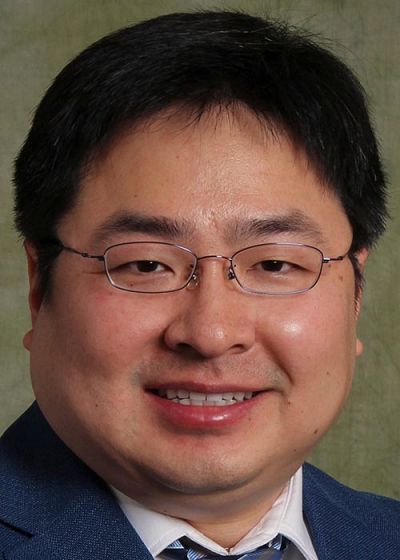
Guanpeng Li is an Assistant Professor in the Department of Computer Science at the University of Iowa since 2020. His research focuses on building dependable high-performance computing systems, with emphasis on fault tolerance, data reduction, and safety in autonomous systems. Ph.D., University of British Columbia (2019) Postdoc, University of Illinois Urbana-Champaign (2020) BASc, University of British Columbia (2014) Research interests include: HPC Fault Tolerance and Error Propagation Analysis Lossy Compression Techniques for Scientific Data Safety Assurance for Autonomous Driving Systems Dependability of Machine Learning Applications Recent publications reveal trends in GPU-based fault detection, error-bounded compression, and autonomous systems security. His team has contributed to IEEE/ACM SC, IPDPS, DSN, and ISSRE conferences. Scientific awards include: NSF CAREER Award (2025) IEEE TCHPC Early Career Researchers Award (2024) Multiple Best Paper Awards at SC, DSN, and ISSRE (2024-2018) IEEE Top Picks in Test and Reliability (2023, 2024) Guanpeng Li advises active PhD students and collaborates with institutions like the University of British Columbia and Intel. His work impacts real-time safety systems and deep learning frameworks.
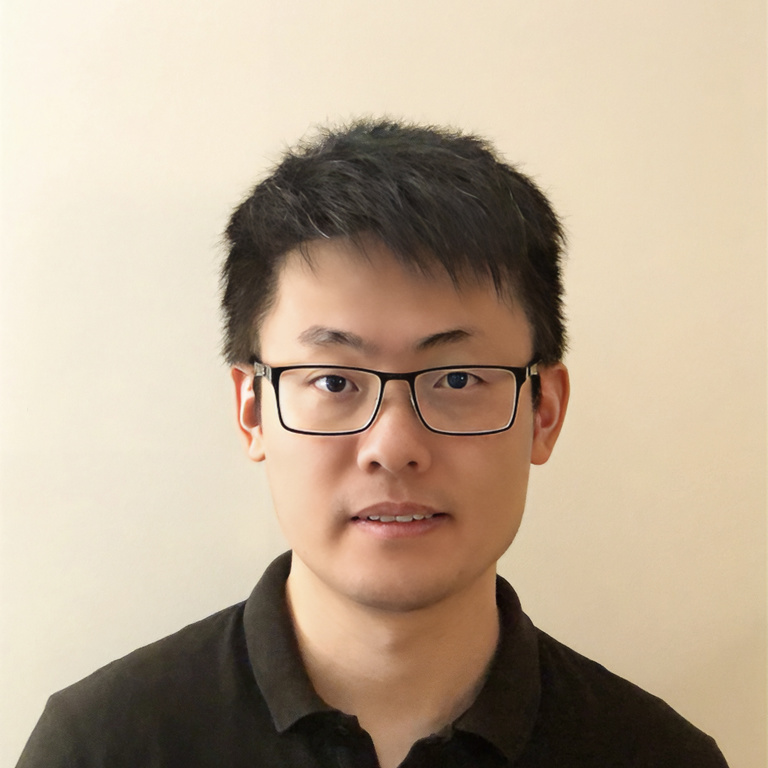
Zeyu Ding is an Assistant Professor in the School of Computing at Binghamton University, with a courtesy appointment in the Department of Mathematics and Statistics. He holds two PhDs: one in Computer Science from Penn State University and another in Mathematics from Binghamton University, along with a BS in Mathematics from Zhejiang University. Research Interests His work focuses on the intersection of privacy, security, machine learning, and algorithmic fairness. He investigates how to protect sensitive personal information through differential privacy mechanisms, formal verification, numerical optimization, and privacy-preserving statistical inference. Article Trends Ding's publications highlight advancements in differential privacy, including the Report Noisy Max with Gap Mechanism and the Permute-and-Flip approach. His research also addresses security challenges like reconstruction attacks and automated verification tools (e.g., Checkdp and DPGen), alongside mathematical explorations of automorphism group schemes and Barsotti-Tate groups. Scientific Awards CCS Outstanding Paper Award, 2018 Caper Bowden PET Award Runner-up, 2019 CCS Best Paper Award Runner-up, 2020 CCS Best Paper Award Runner-up, 2021 Research Award from Penn State University, 2019 Teaching Award from Penn State University, 2021 His research is supported by the NSF grant 2317233, underscoring his contributions to privacy-preserving computational methods.
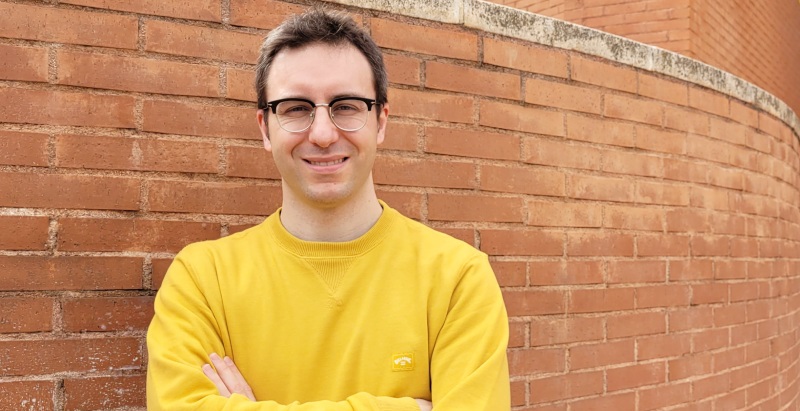
Luca D'Acci is an Associate Professor in Sustainable Urban Forms and Evaluations at the Polytechnic of Turin, affiliated with the Interuniversity Department of Territorial Sciences, Planning and Policies (DIST). He holds additional affiliations as a Senior Research Fellow at the University of Portsmouth and as a member of research networks at the University of Birmingham and Erasmus University Rotterdam. His academic journey includes international roles such as Head of Urban Environment at Erasmus University Rotterdam and visiting researcher positions at the University of Oxford, University of Cambridge, and ETH Zurich. Education: MSc in Architecture-Science of Cities, Polytechnic of Turin (2003, cum laude) PhD in Economic Assessments, Polytechnic of Turin (2007) BSc in Mathematics, University of Turin (2007) BSc in Construction Engineering, Polytechnic of Turin (2009, cum laude) Post-PhD in Urbanism, University of Campinas (2010) Anthropology, University of Oxford (2020, 20 credits) Luca D'Acci’s research focuses on urban morphology, urban allometry, isobenefit urbanism, and the socio-economic-environmental impacts of urban form. His work bridges humanistic and quantitative approaches, integrating engineering, architecture, economics, and anthropology. He investigates how urbanicity, urban form, and spatial configuration influence well-being, sustainability, and resilience. His recent publications (2023–2025) reveal a strong trend toward computational modeling and simulation of urban growth, particularly through the lens of isobenefit urbanism —a concept he has pioneered. These works combine cellular automata, agent-based modeling, and morphogenetic frameworks to simulate sustainable urban futures. He also explores fractal patterns in housing markets, the psychology of urban living, and the mental costs of urbanicity. His research spans disciplines including urban science, environmental psychology, urban economics, and complex systems. Scientific Awards and Honors: Fellow, Erasmus Happiness Economics Research Organisation (EHERO), Erasmus University Rotterdam (2022–) Senior Research Fellow, University of Portsmouth (2017–) Fellow, Cluster for Sustainable Cities, University of Portsmouth (2017–2020) Fellow, Urban Morphology Research Group, University of Birmingham (2016–2021) Member, Cambridge Networks Network, University of Cambridge (2016–) Honorary Fellow, University of Birmingham (2016–) Luca D'Acci actively advises PhD students as a member of the Doctoral Collegium for Urban and Regional Development at Politecnico di Torino (2020–2024). He has secured and contributed to significant research grants, including projects funded by the World Bank, Asian Development Bank, European Commission, EPSRC, Lincoln Institute of Land Policy, and University College London (Future Urban Growth Lab). His editorial roles include membership on the boards of PLOS ONE , PLOS Mental Health , and Humanities & Social Sciences Communications . Labs and Research Networks: Future Urban Growth Lab (UCL, 2019–) LEUr Urban Ecology Lab (UFSC, 2022–) URban Evolution Morphology (UReM, 2024–) Erasmus Universiteit Rotterdam (EHERO, 2022–2024) Spatial Intelligence Unit (SPIN Unit), Estonia (2013–) International Society of Biourbanism (2013–)
Enrico Macii is a Full Professor at the Politecnico di Torino, affiliated with the Interuniversity Department of Regional and Urban Studies and Planning (DIST) and the Department of Control and Computer Engineering (DAUIN). He leads the Electronic Design Automation (EDA) research group and holds key roles as Scientific Advisor for the Politecnico-STMicroelectronics partnership and Scientific Contact for the European Chips Joint Undertaking. Research Interests: His work spans digital circuits and systems, energy efficiency, smart cities, Industry 4.0, and smart manufacturing. He focuses on embedded and cyber-physical systems, low-power design, neuromorphic computing, AIoT, and sustainable urban development. Recent Publications: His recent research demonstrates strong trends in edge AI, neuromorphic computing, and smart energy systems. Articles highlight innovations in low-power hardware acceleration, federated learning, physics-informed AI, and digital twin applications for urban and industrial systems. There is a clear emphasis on deploying AI efficiently on constrained devices and integrating physical models with machine learning. J. William Fullbright Fellowship (1993) Best paper award IEEE European Design Automation Conference (1996) Best paper award ACM/IEEE Great Lakes Symposium on VLSI (2008) DAC Service Award (2014) IEEE Fellow (2006) DATE Fellow (2014) Advising and Grants: He has supervised over 25 PhD students in computer engineering, AI, and urban systems. His research is funded by major EU programs (Horizon 2020, PNRR, KDT JU), national (PRIN, FAR), and regional grants, as well as industrial contracts with STMicroelectronics, Michelin, and Cefriel. He leads numerous high-impact projects in smart manufacturing, energy efficiency, and digital twins. Labs and Teams: He is a core member of the EDA Group, an interdepartmental research team at Politecnico di Torino focusing on VLSI-CAD, bioinformatics, smart cities, and Industry 4.0. He also contributes to IAM@PoliTo (Integrated Additive Manufacturing) and leads multiple EU and national research consortia.
Sergi Abadal Cavalle is a distinguished Professor in the Department of Computer Architecture at the Universitat Politècnica de Catalunya (UPC), affiliated with the Escola Tècnica Superior d'Enginyeria de Telecomunicació de Barcelona (ETSETB). He leads a dynamic research group focused on revolutionary computing architectures through wireless chip-scale networks and quantum interconnects. His work is supported by prestigious grants including an ERC Starting Grant and an ERC Proof of Concept Grant. Education: PhD in Computer Architecture, Universitat Politècnica de Catalunya (2016) MSc in Telecommunication Engineering, UPC (2011) BSc in Telecommunication Engineering, UPC (2010) Sergi's research focuses on overcoming the limitations of traditional wired interconnects in computing systems by pioneering wireless communication at the chip and package level. His work spans terahertz communications, graphene-based antennas, reconfigurable metasurfaces, and quantum-coherent networks. He has led major EU projects such as WINC, EWiC, QUADRATURE, and WiPLASH, aiming to revolutionize classical and quantum computing architectures. His research integrates electromagnetics, materials science, and computer architecture to enable ultra-fast, scalable, and energy-efficient systems. His recent publications demonstrate a strong trend toward integrating wireless technologies within computing systems, particularly using novel materials like graphene and software-defined metasurfaces. The articles highlight advancements in on-chip wireless communication, channel modeling, and the application of these technologies in 6G and quantum computing. His work bridges theoretical modeling with experimental validation and practical emulation. Scientific Awards: ERC Starting Grant (2022) ERC Proof of Concept Grant (2024) ACM NanoCom Outstanding Milestone Award (2022) NanoComNet Young Investigator Award (2019) UPC Outstanding Thesis Award (2016) IN-NOVA Award to Best Master Thesis (2021) IBM Award to Best Academic Record (2021) Medal from Real Academia de la Ingeniería (2024) IEEE Senior Member (2025) Sergi actively mentors a large group of PhD and Master's students, many of whom have received awards for their thesis work. He leads the N3Cat research group and collaborates with institutions such as IBM Research, NEC Labs Europe, RWTH Aachen, EPFL, University of Nottingham, and Intel Labs. His lab is at the forefront of experimental validation of wireless interconnects and quantum architectures, with ongoing projects focusing on emulation and commercialization of chiplet communication technologies.
Ramazan Yeniçeri is a Lecturer at Istanbul Technical University's Department of Aeronautical Engineering. His research focuses on Unmanned Aerial Vehicles (UAVs), Field Programmable Gate Arrays (FPGAs), and computational fluid dynamics, with applications in hardware acceleration and autonomous flight systems. Academic Rank: Lecturer University: Istanbul Technical University Department: Aeronautical Engineering Research Interests: Yeniçeri's work bridges aerospace engineering and computer science, emphasizing: FPGA-based hardware acceleration for aerospace systems UAV communication networks (FANETs) and formation flight Dynamical modeling for 6-DoF systems Autopilot software and real-time operating systems Scientific Awards: He has received the BOEING Academic Work Encouragement Award (2017) and the Best Doctoral Thesis Award (2015) . Project Leadership: As Principal Investigator (PI), he leads projects like: "IHA Kayıt, Takip, Kontrol ve Hava Trafik Yönetim Sistemi" (2024–2025) "FPGA Tabanlı 6DoF Dinamik Hızlandırıcı Tasarımı" (2024) "EU Sürü İHA" (2020–2022) His recent publications highlight trends in UAV communication, FPGA acceleration, and multi-sensor tracking.
Dr. Amal Zouaq is a Full Professor in the Department of Computer Engineering and Software Engineering at Polytechnique Montréal. She holds the FRQS (Dual) Chair in AI and Digital Health, serves as Director of the LAMA-WeST research laboratory, and is an Associate Member of MILA. Her work bridges artificial intelligence with applications in digital health, cultural heritage, and educational technologies, positioning her at the forefront of interdisciplinary AI research in Canada. Her research focuses on Artificial Intelligence , particularly Natural Language Processing and the Semantic Web . Specific interests include knowledge representation, ontology learning, SPARQL query generation, bias mitigation in language models, and clinical text processing. Her work spans multiple domains including healthcare, cultural heritage, and educational technology, with emphasis on developing practical AI solutions that address real-world challenges in knowledge management and information extraction. Analysis of her recent publications reveals a strong trajectory in advancing NLP techniques for knowledge-intensive applications. Her work increasingly focuses on domain-specific applications in healthcare and cultural heritage, with growing emphasis on ethical AI considerations like bias mitigation. The research demonstrates progression from foundational semantic web technologies toward more sophisticated neural approaches while maintaining strong theoretical grounding in knowledge representation. Scientific Recognition: Holder of the FRQS (Dual) Chair in AI and Digital Health Dr. Zouaq has supervised 23 graduate students to completion, including 1 PhD and 22 Master's theses, with research spanning ontology learning, knowledge representation, and NLP applications. Her supervision record demonstrates consistent mentorship in cutting-edge AI research with practical applications across multiple domains. She actively serves on program committees for major conferences in knowledge engineering, data mining, and semantic web technologies. She directs the LAMA-WeST (Web, Semantics and Text) laboratory , which specializes in natural language processing and artificial intelligence research. The lab focuses on knowledge representation, semantic technologies, and their applications in healthcare, cultural heritage, and educational contexts. As a member of IVADO and MILA, she collaborates with leading AI researchers across Montreal's vibrant AI ecosystem.
Emilia Mendes is a Full Professor in the Department of Electrical and Computer Engineering at Aarhus University . Her research focuses on Empirical Software Engineering , particularly human-centric approaches, evidence-based decision-making, and the application of machine learning and statistical techniques in software development. Current research themes: Human-Centric Software Engineering, Evidence-Based Research, Statistical/Machine-Learning Techniques, and Value-Based Software Engineering. Developed tools for team climate forecasting, capability measurement, and value-based decision-making. Research Trends: Her work bridges software engineering with psychology (personality traits, team dynamics), machine learning (effort estimation, dementia prognosis), and value-based frameworks for decision-making. She emphasizes industrial applications, including agile methodologies, cross-company predictions, and Bayesian network modeling. Scientific Impact & Awards: 10,018 citations, h-index 58. Ranked #32 in Empirical Software Engineering Scholars (Google Scholar). Ranked #20 in Top Computer Science Scientists in Sweden (2023). Top 2% scientist in the world (2019, 2020, 2022; only female in Sweden for SE in 2022. Nine best paper awards at international conferences. Editorial board member: Information and Software Technology , ACM Computing Surveys , former roles at IEEE Transactions on Software Engineering and others. Grants & Leadership: Awarded €11.921.603 in research grants. Held leadership roles as General Chair (EASE 2017), PC Co-Chair (EASE 2012, ESEM 2012), and active participant in 200+ academic events.
Yasser Iturria Medina is an Assistant Professor at the Montreal Neurological Institute (MNI) , McGill University, within the Department of Neurology and Neurosurgery . He is an associate member of the Ludmer Centre for Neuroinformatics and Mental Health and the McConnell Brain Imaging Centre . Academic Rank: Assistant Professor Key Affiliations: MNI, Ludmer Centre, McConnell Brain Imaging Centre His educational background includes: Undergraduate: Nuclear Engineering (2004), Higher Institute for Nuclear Sciences and Technology, Cuba MSc: Neurophysics and Neuroengineering (2006), Cuban Neuroscience Center PhD: Neuroimaging and Neuroinformatics (2013), National Center for Scientific Research and Havana’s University of Medical Science His research focuses on neuroinformatics for precision medicine , particularly in neurodegenerative diseases like Alzheimer's and Parkinson's. His lab develops multiscale brain models integrating molecular, imaging, and cognitive data to characterize pathogenic mechanisms and identify personalized interventions. Key research areas include: Neurodegeneration modeling Neurovascular interactions in Alzheimer's Multi-omics integration for disease subtyping Neuroimaging biomarkers across neurodegenerative spectra Computational modeling of amyloid-beta and tau propagation The article analysis reveals his emphasis on: Alzheimer's disease mechanisms (45% of recent works) Multi-omics and transcriptomic modeling (30%) Neurovascular and white matter pathology (20%) Machine learning applications in neuroimaging (15%) Development of tools like NeuroPM-box and MVComp toolbox His lab has been instrumental in creating NeuroPM-box , a software platform for integrating molecular, neuroimaging, and clinical data to characterize neurodegenerative progression and heterogeneity. He has also contributed to CAPTURE ALS , a comprehensive analysis platform for amyotrophic lateral sclerosis.
FH-Prof. Mag. Dr. Tassilo Pellegrini is a Professor at the University of Applied Sciences St. Pölten , leading the Institute for Innovation Systems within the Department of Digital Business and Innovation . His work bridges semantic technologies with digital business strategies. Education : Business Economics, Communication Studies, Political Science Research Focus : Semantic Web, Linked Data, Digital Media Economics, Network Neutrality, Data Licensing His publications highlight trends in Semantic Metadata for news production, Linked Data Integration , and Cloud-based Business Models under network neutrality constraints. Recent work explores thesaurus-driven knowledge organization and the economic implications of Big Data. Scientific Awards : Best Paper Award at I-Semantics 2012 Key Projects : ECO-TCO (Digital Data for Sustainability), Corporate Semantic Web initiatives Contact: tassilo.pellegrini@fhstp.ac.at
Dr. Satrya Fajri Pratama is a Senior Lecturer in Computer Science at the University of Hertfordshire , affiliated with the School of Physics, Engineering & Computer Science and the Department of Computer Science . With professional certifications from Oracle, Microsoft, Google, AWS, Cisco, and other industry leaders, he combines academic expertise with practical industry recognition. His research focuses on software development, internet of things (IoT), cloud computing, and computational approaches to drug classification. Doctor of Philosophy (ICT) – Universiti Teknikal Malaysia Melaka Master of Science in ICT – Universiti Teknikal Malaysia Melaka Bachelor of Computer Science (Software Development) – Universiti Teknikal Malaysia Melaka His research involves descriptor selection for drug classification using advanced algorithms like the Whale Optimization Algorithm and Particle Swarm Optimization , particularly in combating Amphetamine-Type Stimulants (ATS) . Collaborative work includes ncRNA identification and QSAR modeling for biodegradation studies. Key scientific awards include certification as a Professional Technologist with the Malaysia Board of Technologists (MBOT) and recognition as an Apple Teacher with Swift Playgrounds Recognition . He holds numerous industry certifications and is a certified educator/trainer for Microsoft, Google, AWS, Oracle, and other major tech companies.
Prof. Angela Schoellig is the Alexander von Humboldt Professor for Robotics and Artificial Intelligence at the Technical University of Munich, where she leads the Learning Systems and Robotics Lab (formerly the Dynamic Systems Lab). She is a member of the Board of Directors at the Munich Institute of Robotics and Machine Intelligence (MIRMI) and serves as Coordinator of the Robotics Institute Germany (RIG). Previously, she was an Associate Professor at the University of Toronto and a Faculty Member of the Vector Institute for AI. Her educational background includes a PhD from ETH Zurich (awarded the ETH Medal and Dimitris N. Chorafas Foundation Award), an M.Sc. in Engineering Cybernetics from the University of Stuttgart, and an M.Sc. in Engineering Science and Mechanics from Georgia Institute of Technology. Prof. Schoellig's research focuses on enhancing robot performance, safety, and autonomy through learning systems that combine a-priori information with operational data. Her work addresses challenges in robots operating in unstructured, uncertain environments over long periods. Key research areas include Safe Robot Learning , Semantic Control for Robotics , Foundations of Robot Learning , Mobile Manipulation , and Mapping and Localization in Changing Environments . Her lab develops novel control and learning algorithms for single and multi-robot systems across aerial and ground applications. Her scientific contributions have been recognized with numerous prestigious awards including the NSERC Arthur B. McDonald Fellowship, RSS Early Career Spotlight Award, Sloan Research Fellowship, and being named to MIT Technology Review's 35 Innovators Under 35. NSERC Arthur B. McDonald Fellowship (2022) Alexander von Humboldt Professor (2020) Four-time winner of North American SAE AutoDrive Challenge (2018-2021) RSS Early Career Spotlight Award (2019) Sloan Research Fellowship (2017) MIT Technology Review's 35 Innovators Under 35 (2017) Prof. Schoellig actively mentors numerous PhD and Master's students, leads the University of Toronto's SAE/GM AutoDrive Challenge team, and serves as Faculty Advisor for the University of Toronto Aerospace Team. Her lab collaborates with various academic, industry, and government partners on real-world robotics applications including mining, self-driving vehicles, and aerial robotics. Current future research directions include Hardware and Software Co-Design, Autonomy through Deployment, and Learning with Contacts.
Juan Antonio Añel Cabanelas is a Professor of Earth Physics at the University of Vigo , affiliated with the EPhysLab research group and the Specialized Group on Atmospheric and Ocean Physics of the Royal Spanish Society of Physics . He serves as an Executive Editor for Geoscientific Model Development and an Associate Editor for PLoS Climate . PhD in Physics (2007) from the University of Vigo, thesis: Climatic analysis of the tropopause using radiosonde data Taught courses in Meteorology, Atmospheric Physics, Computational Science, and Renewable Energy at the University of Vigo and international institutions His research focuses on climate change impacts , upper troposphere-lower stratosphere dynamics , renewable energy modeling , and computational reproducibility in climate research . He emphasizes instrumental data recovery and open science , with recent work addressing stratospheric contraction and mercury cycling . Key publications span extreme weather-energy sector interactions , Fortran code quality , and ozone data analysis . He mentors PhD students in Physics and Computer Science, and has collaborated with institutions in Mexico, Portugal, and the private sector. He advocates for free software and has organized workshops on climate intervention and citizen science . His work is funded by public grants from Spain's Government, Xunta de Galicia, and private entities like Naturgy and Acciona, with computing support from Google and Microsoft.