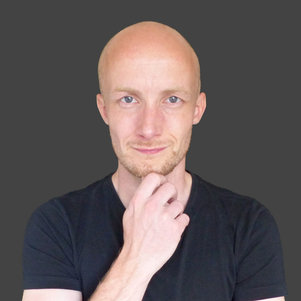
Dr. Ir. Wouter Schakel is a full-time O&O researcher at Delft University of Technology's Faculty of Civil Engineering and Geosciences, specializing in Transport & Planning. His research focuses on microscopic simulation of driver behavior, particularly lane change modeling and traffic flow optimization. He has developed the LMRS lane change model and contributes to OpenTrafficSim. His academic roles include teaching programming courses for transport engineering students and supervising BSc/MSc projects. Education: Civil Engineering (BSc & MSc) from TU Delft, followed by a PhD on freeway driving advice systems. Research highlights include the Greenshields prize-winning LMRS model and work on in-car advisory systems. He teaches courses like 'Programming and MATLAB' and 'Intelligent Vehicles Design and Assessment'. Current projects involve urban traffic simulation validity improvements and lane change strategy extensions.
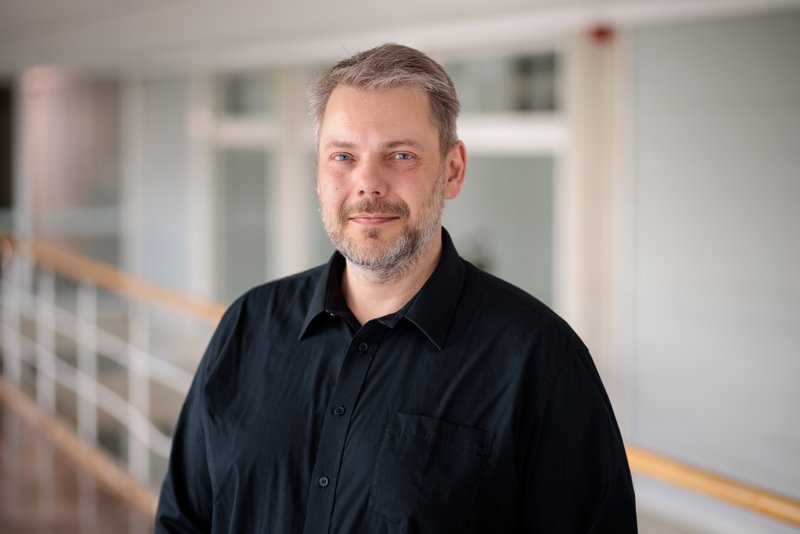
Alessandro Orso is the Dean and Professor of the University of Georgia College of Engineering. Previously, he served as a professor at Georgia Institute of Technology, where he directed the Scientific Software Engineering Center and held leadership roles, including interim dean of the College of Computing (2023–2024). He earned his Ph.D. and master’s in computer science and electrical engineering from Politecnico di Milano, Italy. Orso’s research focuses on software testing, program analysis, and debugging, with applications in improving software reliability and security. His work includes developing automated testing tools (e.g., AutoRestTest), methodologies for scientific software engineering, and techniques for program debloating. His research has secured funding from agencies and industry partners like Google, IBM, and Microsoft, including a $11M grant from Schmidt Futures. His scientific awards include being a Distinguished Member of the ACM and IEEE Fellow. He advocates for innovative education, such as Georgia Tech’s Online Master of Science in Computer Science and his virtual software engineering course. His publications span automated testing, API analysis, and security, reflecting his commitment to advancing both academic research and practical software solutions. Orso’s leadership includes directing the Scientific Software Engineering Center, which pioneers methodologies for scientific software improvement and trains a new generation of engineers. His career blends academic excellence with impactful industry collaborations, driving advancements in software engineering practices.
Marco Kuhrmann is a Professor of Agile System Development at the Faculty of Informatics at Reutlingen University. He holds positions including Chair of the Examination Board for the Medical Technology Informatics program. His research focuses on software engineering methodologies, particularly agile development, process improvement, and hybrid methods. He has held academic roles at institutions like the Technical University of Munich, University of Southern Denmark, and the University of Passau. Education: PhD (Dr. rer. nat.) in Computer Science, Technical University of Munich (2008) Habilitation (Dr. rer. nat. habil.), Technical University of Munich (2014) Diploma in Computer Science, University of Potsdam (2004) His research interests include software process improvement, hybrid development approaches combining agile and traditional methods, and software engineering education. He leads projects like ANUKI and contributes to initiatives such as the HELENA survey on hybrid methodologies. His work addresses challenges in regulated domains, global software engineering, and the application of AI techniques in requirements engineering. Publications highlight themes like process transparency, compliance automation, and data augmentation. He is active in academic communities through workshops (e.g., PROFES, ICSSP) and has authored textbooks like Einführung in die Softwaretechnik (Springer, 2021). His teaching emphasizes hands-on experiments, such as simulating distributed teams and process adaptation in stressful scenarios. He collaborates with labs like the Virtual Reality Lab (VRehago) and contributes to research infrastructure like the IPSSE (Goslar) and software process ecosystems. Current projects explore AI-driven requirements evaluation and measurable artifact models in regulated industries.
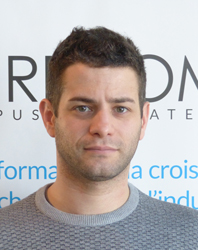
Simone Aonzo is a Class 2 Lecturer in the Digital Security department at EURECOM, a leading research and education institution in France focused on digital sciences. He is actively engaged in cybersecurity research with a strong emphasis on malware analysis, Android security, and machine learning applications in threat detection. His research interests span several critical areas in modern cybersecurity, including: Android and Windows malware analysis Evasive techniques used by malware Machine learning vulnerabilities in security systems Binary analysis and cryptographic function detection Phishing and social engineering attacks Security hardening using AI The trends in his recent publications (2024–2025) reflect a deep focus on adversarial machine learning, evasive malware behaviors, and the application of AI in both offensive and defensive security contexts. His work frequently appears in top security venues such as RAID, NDSS workshops, and IEEE-affiliated conferences, demonstrating his active contribution to the research community. He has no listed scientific awards in the provided text. Simone Aonzo is involved in mentoring and training through academic collaborations and educational events such as the PEPR Cybersecurity Winter School. While specific advisees are not listed, his collaborative publications suggest an active role in guiding junior researchers. There is no mention of grants, but his publication output implies ongoing research funding. He also contributes to community knowledge through talks and workshops. He is associated with the Digital Security research group at EURECOM, which focuses on cutting-edge cybersecurity challenges, including malware analysis, privacy, and system security. The team employs advanced techniques in machine learning, reverse engineering, and automated analysis to study modern threats.
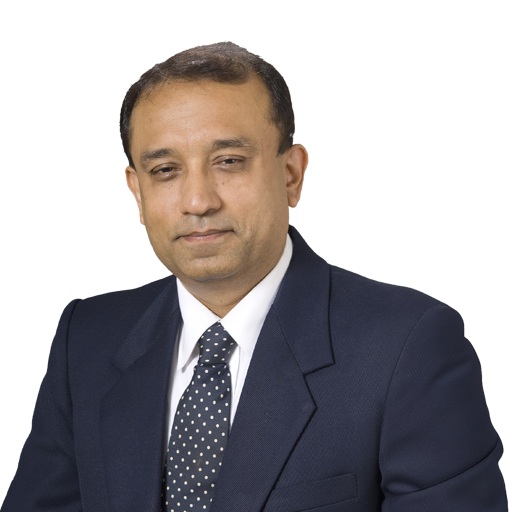
Yasir Zaki is an Assistant Professor of Computer Science at New York University Abu Dhabi and a Global Network Assistant Professor at the Courant Institute of Mathematical Sciences, NYU. He leads the Communication Networks Lab, focusing on next-generation communication systems, performance optimization, and digital equity. University: New York University Abu Dhabi School: Courant Institute of Mathematical Sciences Department: Department of Computer Science Academic Rank: Assistant Professor Email: yz48@nyu.edu Dr. Zaki holds an MSc and PhD in Communication and Information Technology from the University of Bremen, graduating with honors. His research centers on communication and wireless networks, cellular systems, congestion control, and enhancing internet access in developing regions. His work bridges theory and real-world impact, especially in digital inclusion and AI's role in education. His recent publications span top venues like PNAS, IEEE TCSS, and ACM IMC, covering topics such as satellite network performance, digital inequality (Lite-Web), AI in education, and Big Tech's global influence. These works reveal a strong trend toward socially impactful computing, network measurement at scale, and algorithmic transparency. Big Tech Dominance Despite Global Mistrust Perception of AI in Education YouTube's Political Bias Lite-Web for Digital Equity Satellite Network Analysis His research has been recognized through high-profile media coverage in Nature and The National , and his PhD student Hazem Ibrahim received the MIT Technology Review Arabia’s Innovators Under 35 MENA 2023 award. This reflects the lab's excellence in computational social science and AI policy. Dr. Zaki mentors students in the Capstone and Research Seminar courses and actively advises PhD and research assistants. He has secured research funding through NYUAD and collaborative projects, enabling field deployments in 56 countries. His lab, the Communication Networks Lab, fosters interdisciplinary work, involving researchers from computer science, social sciences, and policy.
Ciprian Bogdan Chirila is a Senior Lecturer at the University Politehnica of Timisoara (Faculty of Automation and Computer Science, Computing and Information Technology Department) and also teaches at Ioan Slavici University . His career spans over two decades, with roles in teaching, research, and software development. Education : PhD in Computer Science (2010, University Politehnica Timisoara & University Nice-Sophia Antipolis) Master's in Computer Science & Software Engineering (2002) Engineer Diploma in Automation & Computer Science (2001) Analyst-Programmer Diploma (1996) Research Interests : His work focuses on reverse inheritance for software reusability, generative learning objects for education, and software quality assessment using code metrics. He explores interdisciplinary applications in healthcare, mathematics education, and industrial IT services. Article Trends : Recent publications emphasize adaptive e-learning frameworks , gamification in education , and model-driven development . Key themes include automated assessment , dynamic content generation , and integration of standards like SCORM and xAPI . Scientific Awards : Microsoft Award, Student Scientific Communications Session (2001) Award, Student Scientific Communications Session (2002) Third Place, Mechanics and Robotics Contest (1998) Fourth Place, Traian Lalescu Mathematics Contest (1998) Teaching & Development : He has led laboratory sessions and lectures in Data Structures , Compiler Design , Operating Systems , and Heuristic Methods . He organizes programming contests and develops centralized materials management software as a volunteer engineer.
Prof. Kumar Sridharan is the Grainger Professor and Vilas Distinguished Achievement Professor at the University of Wisconsin-Madison , with appointments in the Departments of Nuclear Engineering & Engineering Physics and Materials Science & Engineering. His research spans materials science, metallurgy, and nuclear engineering, focusing on nuclear reactor materials, irradiation effects, corrosion, surface modification, and advanced manufacturing technologies. Research interests include: Nuclear reactor materials development Irradiation effects and corrosion of materials Surface engineering and coatings Machine learning applications for materials analysis High-temperature materials behavior Key awards: Bollinger Award for Vision and Leadership Chancellor’s Award for Excellence in Research Mentoring Undergraduates Award Fellowships in American Nuclear Society and other institutions
Wenguang Chen is a researcher affiliated with Tsinghua University and Pengcheng Laboratory , specializing in computer science and high-performance computing . His work bridges theoretical advancements with practical applications in domain-specific languages , parallel programming , and machine learning . Research Interests include: Development of modular DSLs for numerical methods (e.g., Mat2Stencil) Performance optimization in distributed and parallel systems Compiler frameworks for privacy-preserving AI (e.g., FHE-based neural network inference) Graph algorithms scaling to trillion-edge datasets Applications of Rust in memory-safe pointer analysis Recent Publications span 2014–2025, focusing on: Parallelization strategies for supercomputing Compiler automation tools Extreme-scale data processing Performance variance diagnosis in production environments
Ruben Taelman is a postdoctoral researcher at IDLab , Ghent University – imec, specializing in decentralization, Linked Data publishing, and querying. He develops open-source JavaScript libraries like the Comunica engine for decentralized data access and focuses on intelligent infrastructure for data publication and retrieval. His research bridges academic and industrial perspectives, addressing challenges in decentralized knowledge graphs, policy negotiation, and data governance. Key projects include Triple Storage for versioned RDF querying and contributions to the Solid ecosystem for user-centric data control.
Yasmina Abdeddaïm is an Associate Professor at Université Gustave Eiffel and affiliated with ESIEE Paris. She works within the Laboratoire d'Informatique Gaspard-Monge (Softwares, Networks and Real-time team) and serves as Head of the Master in Artificial Intelligence and Cybersecurity (AIC) program. Her research focuses on real-time systems, critical systems, and scheduling algorithms. University: Université Gustave Eiffel Role: Head of Master AIC program Laboratory: Laboratoire d'Informatique Gaspard-Monge Team: Softwares, Networks and Real-time Her research spans real-time systems , mixed-criticality scheduling , energy-harvesting systems , and probabilistic schedulability . Recent publications analyze compilation optimization impacts on timing variability and propose new models for real-time deep neural networks over GPUs. She employs formal methods like timed automata for scheduling verification. Her teaching includes courses on Real-time Systems , Model Checking , Critical Application Development , and Artificial Intelligence . She is based at Cité Descartes, Champs-sur-Marne, France, with office contact details provided.
Rüdiger Lunde is a Professor at Technische Hochschule Ulm , currently serving as Dean of Studies for Information Systems since September 2019. He previously chaired the Examination Board for programs including INF, CTS, TI, ICS, DSM, MD, and IS from 2014 to 2019. His primary research areas include Software Engineering , Intelligent Systems , and Model-Based Systems Engineering , with a focus on automated safety analysis and technical system simulation. Current Role: Dean of Studies for Information Systems Prior Role: Chair of Examination Board (2014–2019) His research leverages the smartIflow framework for safety tasks such as Failure Mode and Effects Analysis (FMEA) and Fault Tree Analysis (FTA). He has contributed to formal verification methods using Computation Tree Logic (CTL) and explored temporal reasoning across varying time scales. Recent trends in his work include: Automated safety analysis in technical systems Integration of SysML for artifact generation Model decomposition techniques for complex systems Scientific awards: Best Paper Award at International Workshop on Applications in Information Technology (IWAIT-2015) Contact: Ruediger.Lunde@thu.de | Room: A306a | Consultation hours: By appointment via email.
Franco Lombardi is a Full Professor at the Department of Management and Production Engineering (DIGEP) , Polytechnic of Turin , with affiliations to the J-Tech@PoliTO Interdepartmental Center . He has been a PhD college member for the Production Systems & Industrial Design program since the 19th cycle (2003/2004) and served as a course lecturer in Production Systems (Management Engineering) and Graphic Communication and Mechanical Manufacturing (Industrial Production Engineering) since 2019/2020. Research Focus: Manufacturing technologies, product lifecycle management (PLM), Industry 4.0, sustainable production systems, joining processes, and human-centric knowledge management frameworks. Article Trends: Recent work spans friction stir welding of industrial alloys (2025), sustainability evaluation of AI in product lifecycles (2024), integration of Industry 4.0 in agriculture (2024), and additive manufacturing eco-design (2024). Earlier projects include reconfigurable production systems (2009) and real-time production planning (2019). Grants and Projects: Scientific manager for PNRR-funded initiatives like AGRITECH Spoke 6 (2022-2025) and MANAGE5.0 (2022-2024), alongside regional projects such as TECNOPROTEO (2024-2027) and DynLab4JMat (2018-2021). Collaborated on national patents for gear machining processes. PhD Advisees: Temur Turgunboev (Ingegneria Gestionale), Nicolo Grasso (Gestione, Produzione E Design), Giovanni Marongiu (Gestione, Produzione E Design), Benedetta Fasciolo (Gestione, Produzione E Design), Luigi Panza (Gestione, Produzione E Design), Alberto Faveto (Gestione, Produzione E Design).
Assoc Prof Geraldine Torrisi is the Deputy Head of School (Learning & Teaching) at the School of Information and Communication Technology at Griffith University. With a PhD in Educational Studies and degrees in Science (Physics/Mathematics) and Education, she focuses on Human-Computer Interaction (HCI) , User Experience , and Learning Theory . She is a Senior Fellow of the Higher Education Academy and Griffith Learning and Teaching Academy . Education: PhD in Educational Studies (Griffith University) Masters of Educational Studies (James Cook University) Bachelor of Education (Secondary Science and Maths) (James Cook University) Bachelor of Science (Physics/Mathematics) (James Cook University) Research Interests include Interactive Digital Media , Educational Technology , and Data Literacy . Her 2025 book chapters explore AI's role in education, while 2024-2023 articles address data literacy frameworks and hybrid teaching models. Scientific Awards include Griffith Award for Excellence in Teaching (2011) , Excellence in Teaching Award (2015) , and Senior Fellow of the Higher Education Academy (2018) . She also received multiple Group Learning and Teaching Commendations (2009, 2017, 2019). Grants include The Dignity Project (2024-2025), Promoting Renewable Energy Adoption (2022-2025), and Smart Environmental Sensing (2022-2023). She supervises PhD students on topics like Human-Machine Teaming and Instructional AR Design .
Daniel Hardt serves as Associate Professor in the Department of Management, Society and Communication at Copenhagen Business School. His interdisciplinary research bridges computational linguistics, artificial intelligence, and social analysis, with particular focus on natural language processing applications and theoretical linguistic phenomena. His primary research domains include Computational Linguistics (specializing in ellipsis resolution and sluicing phenomena), Natural Language Processing (developing methods for psychographic classification and sentiment analysis), and Artificial Intelligence (examining large language model capabilities and limitations). Recent work analyzes travel behavior during crises, gender effects in evaluations, and GDPR policy comprehension through NLP techniques. His publications span top venues including Linguistic Inquiry , Tourism Management , and ACL proceedings. Hardt actively engages with practical business applications through 27 media contributions discussing AI implementation, ChatGPT transparency, and data-driven leadership strategies. His academic service includes organizing events like the 2019 "Fake News" conference at CBS and presenting at international venues including JSAI 2024. With 28 supervised academic works documented, he maintains substantial mentoring activity while contributing to public discourse on digital transformation challenges.
Afsah Anwar is a tenure-track Assistant Professor in the Department of Computer Science at the University of New Mexico (UNM), Albuquerque, leading the Beyond Defense Lab focused on Internet security, malicious activity analysis, and incident response frameworks. Her work bridges technical cybersecurity research with societal impact assessment. Her research spans Malware Analysis, Threat Intelligence, and Vulnerability Management, with specialized expertise in Machine Learning-based defenses for IoT/mobile platforms, Internet censorship measurement, space security, and web fraud detection. The lab emphasizes real-world applicability through tools that address concept drift in malware detection and robustness against adversarial attacks. Analysis of her 2020-2025 publications reveals dominant themes: IoT malware robustness under adversarial conditions (40% of output), Internet measurement studies including censorship and routing security (30%), and vulnerability database refinement (15%). Key methodologies integrate graph-based analysis, time-series measurement, and multimodal LLMs for interpretable security reasoning. Scientific Awards: Best Paper Award at WISE 2024 Research Grants: NSF SaTC Medium grant (August 2025) on VPN security with Roya Ensafi (UMich) and Jed Crandall (ASU) Advising: PhD Students: Enrique Sobrados (Mobile Security), Ramsha Anwar (Mobile Security/Privacy), Dheeman Saha (Censorship/Internet Measurement; co-advised) Master's: Jack Vanlyssel (NSF SFS Scholar, Space Security), Muhammad Danish (Web Security; CRA Outstanding Undergraduate) Undergraduate: Muneeb Ahmad (AI/Cybersecurity) Mentorship: Weekly CTF events, Sandia National Labs collaborations (Ross, Doakes, Hassan), and dedicated support for students from Bihar, India The Beyond Defense Lab operates from Farris Engineering Center #2150, hosting industry experts (e.g., Meta's Dr. Abusnaina, X's Dr. Saad) and developing healthcare security frameworks with Dr. Sazzadur Rahman. Current projects include Russian censorship analysis using time-series methods and multimodal LLMs for vulnerability reasoning (LLaVul).