Prof. Srdjan Capkun is a Full Professor in the Department of Computer Science at ETH Zurich and Director of the Zurich Information Security and Privacy Center (ZISC). He holds a Dipl.Ing. from the University of Split (1998) and a Ph.D. from EPFL (2004). His research focuses on system and network security, including wireless security (e.g., secure positioning), trusted computing, blockchain technologies, and privacy-preserving systems. He co-founded 3db Access (acquired by Infineon) and Sound-Proof, addressing secure distance measurement and authentication. Notable achievements include an ERC Consolidator Grant (2016), ACM Fellowship, and IEEE Fellowship. Education: Dipl.Ing., Electrical Engineering / Computer Science, University of Split, 1998 Ph.D., Communication Systems, EPFL, 2004 Research Interests: Wireless security (e.g., UWB, GNSS, cellular) Trusted execution environments (TEEs) Blockchain and cryptocurrency systems Privacy-preserving technologies Awards & Grants: ERC Consolidator Grant (2016) ACM Fellow and IEEE Fellow Leadership of ZISC Advising & Labs: Leads the System Security Group at ETH Zurich Guided postdoctoral researchers and graduate students in security and privacy Companies: 3db Access (secure distance measurement) Futurae (online authentication)
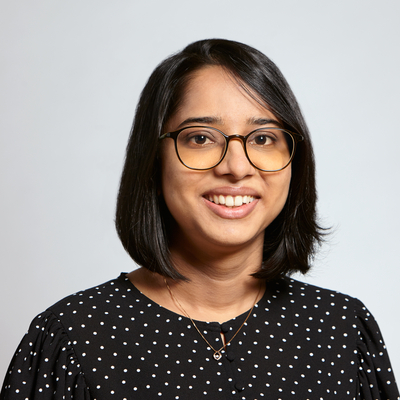
Snježana Babić serves as Associate Professor and Head of the Graduate Study Program Informatics - Teaching Major at the Faculty of Informatics in Pula , University of Pula. With a PhD obtained in 2016 and university affiliation since 2017, she teaches across undergraduate and graduate programs focusing on ICT fundamentals, web design, digital competencies, and informatics education methodology. Her educational background includes graduation in 1993 followed by doctoral studies culminating in 2016. Though specific institutions aren't detailed in the text, her career trajectory shows progression from foundational ICT teaching to specialized informatics education leadership. Babić's research centers on educational technology adoption with particular emphasis on programming pedagogy for young learners through the MEMA method. Her work investigates digital competencies across multiple educational contexts, from primary schools to higher education. Recent publications demonstrate rapid adaptation to emerging technologies, with 2025 studies examining ChatGPT integration in Croatian educational settings and cross-cultural applications of programming methods. Analysis of her 15 most recent publications reveals consistent focus on technology acceptance models applied to Croatian educators and students. The research trajectory shows evolution from foundational e-learning systems (2016-2020) to cutting-edge AI and robotics applications (2022-2025), maintaining strong methodological focus on teacher motivation , implementation barriers , and culturally-specific adoption factors . Her teaching portfolio demonstrates deep integration with research interests: Undergraduate: ICT Fundamentals, Web Design and Application Graduate: Digital Competencies in Education, Informatics Education Methodology, Practicum for IT Educators Cross-disciplinary: ICT in Nursing, Healthcare Informatics Babić actively contributes to institutional leadership as program head while maintaining robust research productivity. Her work bridges theoretical technology adoption frameworks with practical implementation challenges in Croatian educational contexts, particularly examining how emerging technologies like humanoid robots and AI assistants can be effectively integrated into teaching practices.
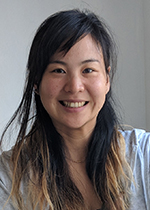
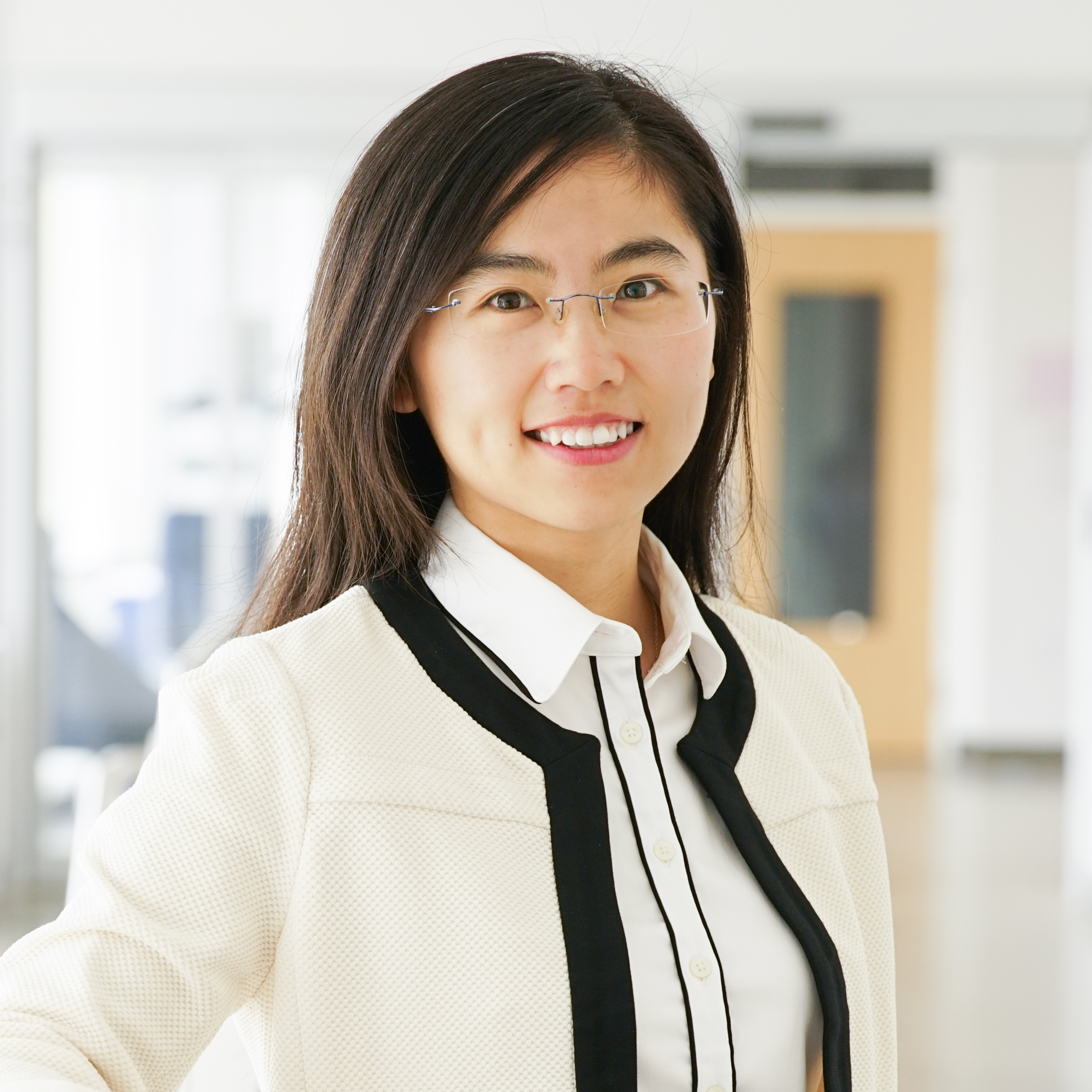
April Yi Wang is a tenure-track Assistant Professor in the Department of Computer Science at ETH Zürich, where she directs the Programming, Education, and Computer-Human Interaction Lab (PEACH Lab). She is a core faculty member at the Institute for Intelligent Interactive Systems and associated with the ETH AI Center. Wang is also an active member of ETH HCI and Swiss CHI communities, contributing significantly to human-computer interaction and educational technology research. Dr. Wang's educational background includes: Ph.D. in Information Science from University of Michigan (2023), advised by Steve Oney and Christopher Brooks M.Sc. in Computer Science from Simon Fraser University (2018), advised by Parmit Chilana B.Eng in Computer Science from Zhejiang University (2016) Dr. Wang's research focuses on human-centered approaches to programming and data science. Her work reimagines programming as a form of literature that communicates with both machines and people, exploring creative representations like text, shapes, animations, and everyday objects. She investigates how to make programming more natural and intuitive through literate programming environments, with applications in professional and educational contexts. Her research spans human-computer interaction, educational technology, and AI-assisted programming tools. Analysis of Dr. Wang's recent publications reveals a strong focus on AI-enhanced educational tools, particularly for programming and data literacy. Her work increasingly integrates large language models to scaffold learning while maintaining user agency. There's a clear trajectory toward developing situated learning approaches that connect abstract concepts to real-world contexts through augmented reality and tangible interfaces. Her research bridges HCI, education, and AI to create more accessible and engaging technical learning experiences. Dr. Wang has received numerous prestigious awards including: 2023 Gary M. Olson Award and Honourable Mention Award at ACM CHI 2022 Rising Stars in EECS and Heidelberg Laureate Forum Young Researcher 2020 Best Short Paper Award at IEEE VL/HCC and Honourable Mention at ACM CHI 2019 Best Paper Award at ACM CSCW Dr. Wang actively mentors students through thesis projects at ETH Zürich, supervising numerous bachelor's and master's students on topics ranging from AI-assisted programming to data literacy tools. Her lab, PEACH Lab, has secured funding including the recent innovedum funding for the Coducate project. She serves on program committees for major conferences including CHI and UIST, and regularly reviews for top HCI and education journals. The PEACH Lab, directed by Dr. Wang, focuses on creating expressive, intelligent, and human-centered systems that make technical topics more accessible. The lab explores textual, visual, and embodied representations for programming, with emphasis on enhancing communication, collaboration, and learning. Current research directions include balancing automation with user agency, supporting diverse learning needs, and developing tools for interdisciplinary technical communication.
Angjoo Kanazawa is an Assistant Professor in the Department of Electrical Engineering and Computer Sciences (EECS) at the University of California, Berkeley. She leads the Kanazawa AI Research (KAIR) lab under the Berkeley Artificial Intelligence Research (BAIR) umbrella and serves on the advisory board of Wonder Dynamics. Her research focuses on the intersection of computer vision, computer graphics, and machine learning, with a particular emphasis on 4D reconstruction of dynamic scenes, neural radiance fields (NeRF), and systems that model human-environment interactions from 2D visual data. Education : Ph.D., Computer Science (2017), University of Maryland, College Park BA, Mathematics and Computer Science (2012), New York University (NYU) Her work aims to build systems that can capture, perceive, and understand complex 3D/4D worlds from photographs and videos, enabling applications in scene reconstruction, motion analysis, and generative modeling. She has pioneered techniques for scaling NeRFs across GPUs (NeRF-XL), developing open-source tools like nerfstudio and gsplat. Her recent publications focus on topics like self-occluded avatar recovery (SOAR), decentralized diffusion models, and 4D reconstruction of articulated objects for robotics. Kanazawa's research has been recognized with prestigious awards including the IEEE CS TCPAMI Young Researcher Award (2024) , Sloan Research Fellowship (2023) , and Google Faculty Research Award (2021) . Her lab has trained numerous students who now hold positions at leading institutions and companies like Anthropic, Meta Reality Labs, and Luma AI. Key Scientific Awards : IEEE CS TCPAMI Young Researcher Award (2024) Sloan Research Fellow (2023) Hellman Fellow (2022) Bakar Fellows Spark Award (2022) Google Faculty Research Award (2021) Her KAIR lab collaborates extensively with industry partners and academic institutions, including the Max Planck Institute and Google Research. She has served as an advisor for PhD students and postdocs who now lead teams at UC Berkeley, MIT, Stanford, and Luma AI, while her teaching includes graduate courses like CS 280A (Computer Vision) and CS 294-173 (Learning for 3D Vision).
Ajmal Mian is a Professor of Computer Science at the University of Western Australia (UWA), affiliated with the School of Physics, Maths and Computing. He holds an Australian Research Council Future Fellowship (2022) and leads research in Artificial Intelligence, Computer Vision, and Machine Learning. His work focuses on 3D computer vision, adversarial AI defense, and explainable AI. His research interests include 3D point cloud analysis, face recognition, human action recognition, and remote sensing. He has published over 300 papers and secured major grants from ARC, NHMRC, and DARPA, totaling millions in funding. He has supervised 29 PhD students and mentored 12 postdoctoral researchers. Key projects include 3D diffusion models for scene generation, robust 3D vision systems, and defense against AI deception attacks. He serves as a fellow of IAPR, an ACM Distinguished Speaker, and has editorial roles at IEEE Transactions on Neural Networks and Pattern Recognition. Research Awards: HBF Mid-Career Scientist of the Year, West Australian Early Career Scientist of the Year, IAPR Best Scientific Paper Award. Grants: ARC Discovery Projects, National Intelligence & Security Discovery grants, DARPA grants for AI security. His teaching spans computer vision, machine learning, and programming courses. Collaborations include defense, medical, and agricultural applications.
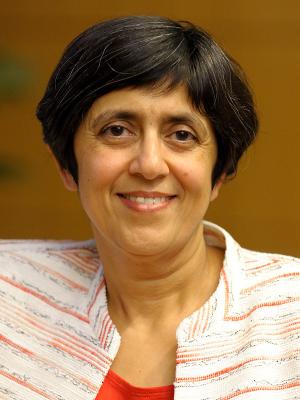
Sarita V Adve is the Richard T. Cheng Professor of Computer Science at the University of Illinois at Urbana-Champaign, where she conducts research spanning hardware, programming languages, operating systems, and applications with a focus on domain-specific systems. Her work bridges theoretical foundations and practical implementations, particularly in extended reality and heterogeneous computing. Her educational background includes a Ph.D. and M.S. in Computer Science from the University of Wisconsin-Madison (1993, 1989) and a B.Tech in Electrical Engineering from the Indian Institute of Technology Bombay (1987). Prior to joining Illinois, she served on the faculty at Rice University from 1993 to 1999. Adve's research centers on generalizable and scalable specialization for domain-specific systems, with current emphasis on extended reality (XR) systems including virtual, augmented, and mixed reality. She chairs the ILLIXR consortium to democratize XR research and developed the first fully open-source XR system (ILLIXR). Her foundational contributions include memory consistency models for C++ and Java programming languages, the Spandex coherence framework for heterogeneous systems, and software-driven approaches for hardware reliability. Her work spans hardware reliability (SWAT and RAMP projects), power management (GRACE system), and instruction-level parallelism. Recent publications reveal a strong focus on energy-efficient XR systems, hardware-software co-design for AI workloads, and resilience analysis. Her team explores rendering offload, visual-inertial odometry optimization, and compositional error injection frameworks, often targeting tradeoffs between energy, latency, and accuracy in mobile and edge environments. Fellow of the American Academy of Arts and Sciences Fellow of the ACM and IEEE ACM/IEEE-CS Ken Kennedy Award Anita Borg Institute Woman of Vision in Innovation Award ACM SIGARCH Maurice Wilkes Award Alfred P. Sloan Research Fellowship UIUC University Scholar University of Illinois Campus Award for Excellence in Graduate Student Mentoring Adve actively mentors students and has received multiple teaching awards. She co-founded the CARES movement to address discrimination in CS research events and chairs CS@Illinois CARES. Her service includes leadership roles in ACM SIGARCH (2015-2019), DARPA/ISAT study group, ACM Council, and Computing Research Association. She has secured significant funding including DARPA initiatives and Google Faculty Research Awards. She leads the ILLIXR consortium and has established collaborative research programs such as the $8.3M DARPA Joint University Microelectronics Program. Her lab focuses on open-source XR development, heterogeneous system architectures, and reliability-aware designs, with strong industry and government partnerships.
Fei Fang is an Associate Professor in the Software and Societal Systems Department at Carnegie Mellon University (CMU) , where she explores the intersection of artificial intelligence and multi-agent systems . Her work integrates machine learning with game theory to address challenges in security , sustainability , and mobility , aligning with the AI for Social Good mission. Ph.D. in Computer Science, University of Southern California (2016) B.Eng. in Electronic Engineering, Tsinghua University (2011) Recent research focuses on reinforcement learning , large language models (LLMs) , and human-AI collaboration . Her team’s work has been recognized with 15+ awards across prestigious venues like IAAI, AAAI, and IJCAI. Notable accolades include the 2023 Allen Newell Award , 2022 Sloan Fellowship , and NSF CAREER Award (2021) . She actively contributes to educational initiatives , including teaching "Demystifying AI for Everyone" at CMU, and has sought part-time teaching assistants for course development. Her research spans 15+ domains , including AI ethics , cyber defense , traffic optimization , and public health .
Shweta Shinde is an Assistant Professor at ETH Zürich's Department of Computer Science. She leads the Secure & Trustworthy Systems (SECTRS) group and is affiliated with the Institute of Information Security and the ZISC Center. Her research focuses on foundational and practical aspects of trusted computing, system security, and program analysis to protect devices ranging from smartphones to cloud servers. Key areas include AMD SEV-SNP, Arm CCA, Intel SGX, and hardware-software co-design for security. Dr. Shinde has made significant contributions to confidential computing, including frameworks like OpenCCA and tools for analyzing hardware vulnerabilities. Her work has been recognized with Best Paper Awards and Distinguished Paper Awards at top venues. She advises a group of PhD students, including Mark Kuhne, Supraja Sridhara, and Benedict Schlüter. Her service includes program committee roles at IEEE Security & Privacy, USENIX Security, and as Track Co-Chair for AsiaCCS 2026.
James R. Eagan is an Associate Professor in the Computer Science and Networks Department (Infres) at Télécom Paris , part of the Institut Polytechnique de Paris. He is also a Visiting Professor at the University of Colorado, Boulder for the 2024–25 academic year. His research focuses on making computers more expressive tools for human interaction, emphasizing malleable software, collaborative dynamic media, and multi-surface environments. His work spans Human-Computer Interaction , Data Visualization , and User Interface Programming . A key theme involves adapting software for user-driven customization, exemplified by projects like Webstrates (shareable dynamic media) and SchemeLens (semantic zoom for technical diagrams). He also explores uncertainty in data analytics and gesture-based interfaces for experts. Recent publications from 2020–2024 address Explainable AI (XAI) , Financial Crime Detection , and Interactive Data Analysis . His tools Tarantula and SchemeLens have received acclaim, including the 2015 ACM SIGSOFT Impact Award and Best Paper at UIST 2015. Scientific accolades include: Prix de l’Impact 2015 d’ACM SIGSOFT Best Paper Award at UIST 2015 Honorable Mention at CHI 2017 He teaches courses in Mobile Application Development , Human-Computer Interaction , and Data Visualization . His lab, DIVA (Design, Interaction, Visualization & Applications), operates within the Information Processing and Communication Laboratory (LTCI). He actively recruits PhD candidates and postdocs for research in these domains.
Karthik R. Narasimhan is a Professor at Princeton University's School of Engineering and Applied Science in the Department of Computer Science. Previously, he earned his PhD from MIT under Regina Barzilay and served as a visiting research scientist at OpenAI during 2017-18. His research focuses on the intersection of language and decision-making, building autonomous agents that learn from both experience and human knowledge. His research spans multiple high-impact areas including language agents (Text-DQN, CALM, ReAct, Tree of Thoughts), reinforcement learning (h-DQN, Multi-Objective RL), and AI safety (Toxicity in ChatGPT, DataMUX). He has developed critical datasets and benchmarks such as WebShop, InterCode, SWE-bench, and SILG that have become standard evaluation tools in the field. Current work emphasizes agent capabilities, software engineering automation, and multimodal interaction. His publication trends show strong focus on practical agent deployment (SWE-agent, Tree of Thoughts), safety evaluation (Probing AI Safety), and efficiency improvements (DataMUX). Recent work increasingly addresses real-world challenges in software engineering, security, and human-AI collaboration through rigorous benchmarking. Co-author of foundational GPT (2018) paper Key developer of Text-DQN (2015), CALM (2020), ReAct (2022), Tree of Thoughts (2023) Creator of influential benchmarks: WebShop (2022), SWE-bench (2023), InterCode (2023) He actively advises students through Princeton's computer science program, with research supported by multiple grants focused on autonomous agent development and language-based decision systems. His GitHub repositories (nlp-datasets, text-world-player) demonstrate strong community engagement in open-source research tools. Current projects include advancing language agent capabilities through Reflexion (2023) and Tree of Thoughts (2023) frameworks while addressing critical safety and efficiency challenges.
Elisa Ricci is a Full Professor at the Department of Information Engineering and Computer Science (DISI) at the University of Trento and serves as Head of the Research Unit Deep Visual Learning at Fondazione Bruno Kessler. She coordinates the Doctoral Program in Information Engineering and Computer Science at the University of Trento and holds prestigious fellowships from ELLIS and IAPR. Her research focuses on advancing computer vision and deep learning systems capable of operating in open-world environments. Key interests include domain adaptation, continual learning, and self-supervised learning for visual and multi-modal data processing. Her work addresses critical challenges in enabling machines to adapt to new domains without forgetting prior knowledge, with applications spanning robotics perception, medical imaging, and privacy-preserving AI systems. Recent publications reveal a dominant trend toward leveraging vision-language models for open-vocabulary tasks, training-free adaptation methods, and federated learning architectures. Significant research thrusts include machine unlearning for privacy, robustness against bias in visual classifiers, and novel class discovery using foundation models—particularly evident in 2025 publications addressing medical imaging, 3D segmentation, and collaborative generative systems. Her major recognitions include: ELLIS Fellow IAPR Fellow As Doctoral Program Coordinator at the University of Trento, she oversees PhD training while leading the Deep Visual Learning unit at Fondazione Bruno Kessler. Her research group secures competitive grants in AI-driven perception systems, though specific funding sources aren't detailed in the source material. The Deep Visual Learning Research Unit specializes in open-world computer vision challenges, developing frameworks for domain adaptation, continual learning, and multi-modal perception. Current projects integrate generative models with robotics applications while addressing privacy concerns in vision-language systems through unlearning techniques.
Professor Jiyuan Tu is a Professor in the Department of Mechanical and Automotive Engineering at RMIT University's School of Engineering. He specializes in computational fluid dynamics (CFD), multiphase flows, and their applications in renewable/nuclear energy, biomedical engineering, and built environment systems. His research has led to over 500 peer-reviewed articles, 9 books, and $10M+ in ARC grants. He has supervised over 50 postgraduate students and received prestigious awards such as the RMIT Research Excellence Award (2012) and Fulbright Senior Scholar Award (2008). Research interests include CFD modelling of bioaerosol transport, drug delivery systems, and thermal energy storage. He pioneered numerical models for multiphase flows, contributing to software implementations in industries. Notable works include books on CFD and multiphase flow analysis, and leadership in international conferences like COBEE 2018. He holds honorary professorships at Tsinghua University and is Editor-in-Chief of the Experimental and Computational of Multiphase Flow journal. Industry experience includes roles at ANSTO (1996-2001). Awards span fellowships from JSPS, KOSEF, and Fulbright programs. Grants include ARC Discovery, Linkage, and LIEF projects. His work ranks him among the world’s top researchers in pebble bed reactors and airborne infection studies (SciVal 2016-2025).
Gail E. Kaiser is a Professor of Computer Science and the Director of the Programming Systems Laboratory (PSL) in the Computer Science Department at Columbia University. She has been with Columbia University since 1985, becoming a full Professor in 1998. Prof. Kaiser's research spans software engineering, program analysis, software testing, and software security, with recent focus on addressing challenges in AI/ML systems testing and security. Prof. Kaiser received her PhD in Computer Science from Carnegie Mellon University in 1985 and her ScB in Computer Science and Engineering from MIT in 1979. Her dissertation at CMU was titled "Semantics for Structure Editing Environments" under advisor Nico Habermann, and at MIT she completed "Automatic Extension of an Augmented Transition Network Grammar for Morse Code Conversations" under advisor Al Vezza. Prof. Kaiser's research interests primarily focus on software engineering following a systems building approach, with recent emphasis on static and dynamic program analysis techniques to improve software reliability and security. Since 2005, she has investigated testing "non-testable" programs, particularly in machine learning, data mining, and scientific computing applications where traditional testing oracles are insufficient. She has developed novel techniques and tools for detecting bugs and verifying repairs in complex systems. Concurrently, she has worked on collaboration environments for computational scientists, creating knowledge sharing and domain-aware environments to support scientific workflows. Prof. Kaiser's recent publications demonstrate a strong focus on the intersection of software engineering and artificial intelligence. Her work addresses critical challenges in testing AI systems, code understanding through deep learning, vulnerability detection, and educational tools for computational thinking. There's a clear evolution from traditional software engineering topics toward AI/ML applications, with particular emphasis on metamorphic testing for non-testable systems, code similarity analysis, and educational applications. Prof. Kaiser has received numerous prestigious awards throughout her career: Distinguished Journal Award (10 Years) from 18th IEEE International Conference on Software Testing, Verification and Validation (ICST), April 2025 Best Research Paper Award at 24th IEEE International Conference on Source Code Analysis & Manipulation (SCAM), October 2024 Distinguished Reviewer Awards for ASE 2024 and FSE 2024 ACM SIGSOFT Distinguished Paper Award for "CONCORD: Clone-aware Contrastive Learning for Source Code", July 2023 Best Student Paper Award at ICCE 2021 Multiple ACM SIGSOFT Distinguished Paper Awards dating back to 2014 Presidential Young Investigator in Software Engineering and Software Systems from NSF (1988-1993) Prof. Kaiser has chaired Columbia's doctoral program since 1997 and served on editorial boards including IEEE Internet Computing and as a founding associate editor of ACM Transactions on Software Engineering and Methodology. Her lab has been continuously funded by major agencies including NSF, NIH, DARPA, ONR, NASA, and numerous companies. Current grants include significant NSF funding for secure containers architecture, learning semantics of code for software assurance, and finding semantic security bugs. As Director of the Programming Systems Laboratory (PSL), Prof. Kaiser leads research in software systems, program analysis, and software testing. The lab has developed numerous tools and techniques for software reliability and security, with recent focus on challenges in AI/ML systems. Her work bridges theoretical foundations with practical applications, often resulting in deployable tools that address real-world software engineering challenges.
Changxi Zheng is an Associate Professor in the Department of Computer Science at Columbia University's School of Engineering and Applied Science (SEAS). He directs Columbia's Computer Graphics Group (C2G2) within the Columbia Vision and Graphics Center (CVGC). After receiving his PhD from Cornell University, he joined the faculty of Computer Science Department at Columbia, where he has established himself as a leading researcher in computer graphics and scientific computing. Dr. Zheng's research spans multiple areas of applied computer science with a particular focus on computer graphics and scientific computing. His work centers around developing numerical models for simulating physical phenomena involving complex motions such as fluids, bubbles, and thin rods, along with their resulting acoustic waves. Leveraging computational insights from these models, he devises methods for improving tangible object creation, enabling novel human-computer interactions, and developing software tools for acoustic and photonic devices. His research has attracted significant public interest and media coverage, including projects like FontCode, AirCode, and Computational Metallophone Design. His recent publications reveal a strong interdisciplinary approach, bridging computer graphics, physics simulation, machine learning, and hardware design. His work demonstrates consistent innovation in computational methods for simulating physical phenomena and applying these techniques to practical problems in 3D printing, acoustic modeling, and interactive systems. The breadth of his research spans from fundamental physics-based simulations to practical applications in industry. Columbia SEAS Dean's Fellow (for advised students) NSF Graduate Research Fellow (for Ruilin Xu) Snap Research Fellow (for Rundi Wu) CKGSB Fellow (for Yun Fei) Adobe Research Fellow (for Gabriel Cirio) Marie Sklodowska-Curie Individual Fellow (for Rundi Wu) Best Paper Award at ACM International Conference on Multimedia (ACMMM), 2019 Dr. Zheng actively mentors a diverse group of students, including current PhD candidates and postdoctoral researchers. His research group has received support from various sources that enable their innovative work in computational graphics and physics-based simulation. He has supervised numerous successful students who have gone on to positions at leading technology companies including Adobe, Tencent, Facebook, and academic institutions. As director of Columbia's Computer Graphics Group (C2G2) within the Columbia Vision and Graphics Center (CVGC), Dr. Zheng leads a vibrant research team focused on advancing the state of the art in computer graphics, physics-based simulation, and their applications. The group maintains strong collaborations with industry partners and academic institutions worldwide, fostering an environment of innovation and practical application of theoretical concepts.
Andrew Head is an Assistant Professor at the University of Pennsylvania in the Computer and Information Science department. His research focuses on human-computer interaction, programming, and reading, particularly in developing technology for interactive reading and reasoning. He advises PhD students Alyssa Hwang, Hita Kambhamettu, Litao Yan, Jeffrey Tao, and Jessica Shi, and co-leads the Penn Human-Computer Interaction (Penn HCI) group with Danaé Metaxa. His work is published in top venues like ACM CHI, UIST, and ICSE. Research Interests: Andrew's work bridges interactive systems with programming environments, aiming to enhance how scientists and programmers interact with their tools. Key areas include AI-assisted code understanding, math notation accessibility, and medical note interpretation through interactivity. He employs user studies to identify needs and builds interactive systems to address them. Recent Article Trends: His publications emphasize systems-centric HCI approaches, integrating AI into code and document interfaces. Topics span code explanation (e.g., Ivie), property-based testing (e.g., Tyche), math notation augmentation (e.g., FreeForm), and medical informatics (e.g., Explainable Notes). Recent work also explores notebook environments (e.g., Bolt-on, Tyche) and literate programming (e.g., Colaroid). Scientific Awards: Distinguished Paper Award, ICSE 2024 Best Paper Awards at CHI (2024, 2023, 2022, 2019), UIST (2023, 2018), and others. Nominated for Best Paper at CHI 2023 and VL/HCC 2015. Advising & Grants: Andrew advises multiple PhD students and has secured significant grants, including a $1M NSF award for 'Property-based Testing for the People' (2024). His group collaborates with Penn’s MindCORE center and teams like PLClub and PennNLP. Labs & Teams: He co-leads the Penn HCI group, which works closely with other Penn research teams and labs. The group focuses on creating interactive tools that enhance scientific and programming workflows, supported by grants and cross-institutional partnerships.