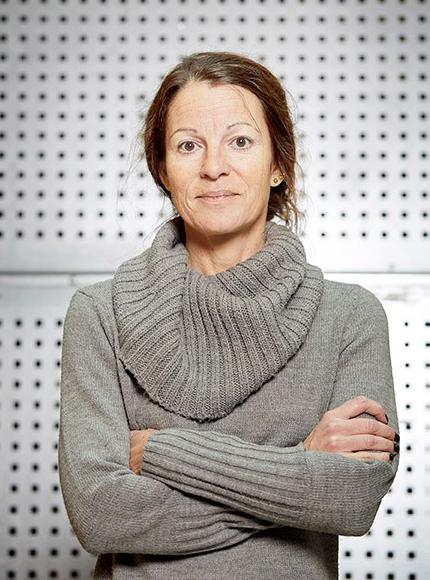
Joost-Pieter Katoen is a full Professor at RWTH Aachen University and Head of its Computer Science Department since 2012. He also holds a part-time (20%) Professorship at the University of Twente . His research focuses on model checking , probabilistic verification , formal semantics , and software verification , with applications in aerospace systems. His work has led to significant tools like MRMC (probabilistic model checker), COMPASS (AADL analysis tool-set), and libalf (learning automata library). He has authored over 18 international projects (total €5.2 million) and graduated 12 PhD students. Scientific Awards : Member, German National Academy of Sciences (Leopoldina), 2024 ACM Fellow, 2020 ERC Advanced Grant, 2018 Honorary doctorate, Aalborg University, 2017 Teaching Award, RWTH Aachen, 2010 Philips Early Career Development Award, 1988 Research Trends (from articles): His recent work spans probabilistic program verification , quantitative game theory , Markov chain analysis , and parameter synthesis for stochastic systems, with applications in AI, quantum computing, and fault tree analysis. Leadership & Service : Katoen co-founded the QEST conference , chairs ETAPS steering committee, and has led numerous program committees (CONCUR, TACAS, QEST). He has served on editorial boards and organized conferences/seminars globally.
Tobias Ofner-Graff is a researcher at the Institute of Forest Growth within the Department of Ecosystem Management, Climate and Biodiversity at the University of Natural Resources and Life Sciences, Vienna (BOKU). Based at Peter-Jordan-Straße 82, 1190 Wien, his work focuses on advanced forest monitoring technologies. His research interests include: LiDAR and remote sensing applications in forestry Automated forest inventory systems Forest regeneration quantification Airborne Laser Scanning (ALS) data analysis Sustainable forest harvesting planning Recent project contributions include: Leading lidar-based forest monitoring systems development Developing spatial forest growth models Implementing digital inventory workflows His publications demonstrate expertise in: Quantifying forest resources through 3D point clouds Advanced timber stack measurement techniques ALS data integration for forest modeling Mobile laser scanning applications Forest climate adaptation strategies
Philipp Haindl is a lecturer at the Department of Computer Science and Security at St. Poelten University of Applied Sciences. His work focuses on software engineering, cybersecurity, and AI integration in education and manufacturing. Software Engineering Cybersecurity Artificial Intelligence DevOps Quality Assurance Research Interests: Dr. Haindl explores software metrics, inter-service security in microservices, and AI tools like ChatGPT in programming education. He investigates quality models and non-functional requirements in DevOps environments. Publications: Recent work includes studies on ChatGPT's impact in software engineering education, systematic reviews of microservice security, and frameworks for human-AI teaming in manufacturing.
Stefan Hagel is a Research Fellow at the Austrian Academy of Sciences and Privatdozent at the University of Vienna, specializing in ancient Greek and Roman music. His work bridges archaeology, philology, and digital reconstruction to analyze ancient musical instruments, notation systems, and performance practices. His research focuses on: Reconstruction of auloi (double-pipes) and hydraulis (water organs) Computational analysis of instrument acoustics Cross-cultural transmission of musical technologies Ancient harmonic theory and notation decipherment He leads major projects including Ancient Music Beyond Hellenisation (ERC Advanced Grant), Digitising Aspects of Graphical Representation in Ancient Music (FWF), and the European Music Archaeology Project . Hagel has developed specialized software for instrument analysis and serves as editor for the Journal of Music Archaeology . His publications demonstrate consistent focus on technical aspects of ancient music through interdisciplinary methodologies.
Fajar Juang Ekaputra is a Tenure Track Assistant Professor at the Institute of Data, Process, and Knowledge Management (DPKM), WU Vienna and a part-time Postdoctoral Researcher at the Data Science research unit, TU Wien . With a focus on Semantic Web , Knowledge Graphs , and their integration with Machine Learning in Neurosymbolic AI systems, his work spans domains like Cyber-Physical Systems and Materials Engineering . Education: Dr.techn. (2018), TU Wien M.T. (2010) and S.T. (2008), Institute Teknologi Bandung (ITB) Research Interests center on hybrid AI systems combining Semantic Web and Machine Learning , with applications in Cyber-Physical Systems (e.g., smart grids, smart buildings), data privacy in smart cities, and materials engineering . His 102+ publications include frameworks like SWeMLS-KG and SHACL4Protege . Recent Articles (2024) address explainable AI in cyber-physical systems, privacy trust in data infrastructures, and neurosymbolic frameworks . Earlier works (2023–2022) explore ontology-based data management , auditable AI , and hybrid system architectures . Scientific Awards: Best Paper Awards (ICoDSE 2023, ICoDSE 2016) Best Poster Nomination (SEMANTiCS 2019) PhD Scholarship (Austria’s Agency for Education and Internationalisation, 2012) Advising includes supervising PhD students (e.g., Majlinda Llugiqi, Katrin Schreiberhuber) and master’s theses on topics like knowledge graph characteristics and data quality assessment . He leads projects such as FAIR-AI (FFG-funded, 2024–2026) and SENSE (Horizon Europe, 2023–2025).
Alex X. Liu is a Professor in the Department of Computer Science & Engineering at Michigan State University (2016-2022), currently serving as Chief Information Security Officer and President of Midea Software Engineering Institute. His academic career includes roles as Associate Professor (2012-2016) and Assistant Professor (2006-2012) at the same institution. He holds a Ph.D. and M.S. in Computer Science from The University of Texas at Austin, and a B.S. in Computer Science from Jilin University, China. Education Ph.D. in Computer Science (UT Austin, 2006) M.S. in Computer Science (UT Austin, 2002) B.S. in Computer Science (Jilin University, 1996) Liu's research focuses on Dependable computing , Networking algorithms , Cloud computing , Mobile computing , Privacy computing , and Computer/network security . His work spans secure systems, network protocols, and resource optimization in distributed environments. Recent publications address quantum neural networks , microservices autoscaling , RFID tag recognition , network traffic classification , and hybrid physical-layer authentication , demonstrating expertise at the intersection of AI and network security. Key trends include deep learning applications for cloud systems and robust security protocols. Scientific Awards IET Fellow (2021) IEEE Fellow (2019) ACM Distinguished Scientist (2019) Withrow Distinguished Scholar Awards (Senior 2019, Junior 2011) NSF CAREER Award (2009) IEEE & IFIP William C. Carter Award (2004)
Leonhard Dobusch is a full Professor of Business Administration with a focus on Organization at the University of Innsbruck's Faculty of Business and Management, specifically within the Institute for Organisation and Learning. He has held this position since February 2016, after serving as a Junior Professor at Freie Universität Berlin from 2012-2016. Professor Dobusch maintains active international collaborations with researchers at institutions including ETH Zurich, University of Oxford, University of Zurich, and University of Duisburg-Essen. University of Innsbruck: Professor of Business Administration (since 2016) Freie Universität Berlin: Junior Professor of Management (2012-2016) Freie Universität Berlin: Postdoc at Chair for Inter-Organizational Cooperation (2009-2012) Stanford Law School: Research Fellow at Center for Internet & Society (2008) Max Planck Institute for Social Research: Postdoc Fellow (2008-2009) Professor Dobusch's research centers on three interconnected areas that challenge conventional organizational thinking. His work on organizational openness examines how principles like open source software, open science, and open innovation manifest in practice, revealing how formal openness often leads to unintended exclusion. His second research stream investigates alternatives to intellectual property rights in regulatory uncertain environments, particularly in pharmaceutical innovation where he studies approaches to vaccine development beyond traditional patent systems. Thirdly, he develops the concept of 'organisationality' to redefine how we understand organization in increasingly fluid social systems. His research has significant implications for companies, public administrations, and scientific institutions navigating the challenges of openness, regulatory uncertainty, and new organizational forms in the digital age. Professor Dobusch's publication record demonstrates consistent high-impact contributions to organizational studies, with articles appearing in top journals including Organization Studies, Journal of Management Studies, and Long Range Planning. His work shows a clear trajectory from studying open source software adoption in city administrations (his doctoral research) to broader questions about organizational forms, openness, and intellectual property in complex systems. 2025: Best Reviewer Award of the Journal Organization Theory 2025: Prof of the Year Award in Rhetoric and Didactics 2022: Best Paper Award of the Strategy Practice Interest Group 2020: Ideas Worth Teaching Award by Aspen Institute for 'Organizing in Times of Crisis' 2020: LehrePlus!-Preis der Universität Innsbruck 2016: LehrePlus!-Preis for 'Open Organizations and Organizing Openness' course Professor Dobusch actively integrates his research into teaching, exemplified by his award-winning wiki-based course 'Open Organizations and Organizing Openness' and the collaborative online course series 'Organizing in Times of Crisis', which received international recognition. He currently leads a three-year DFG/FWF-funded research project 'Organising Creativity under Regulatory Uncertainty: Alternative Approaches to Intellectual Property' with Professor Sigrid Quack. Within professional networks, he serves as Chair of the Executive Board of the Interest Group 'Strategizing Activities and Practices' at the Academy of Management and regularly leads sub-themes at the European Group of Organization Studies Colloquium on Organizational Openness. Professor Dobusch contributes to several research communities through his blogs 'osconjunction.net' and 'governancexborders.com', and participates in the Momentum-Kongress that connects academic research with social and political practice. His work bridges theoretical innovation with practical relevance, particularly in how organizations can navigate the tensions between openness and closure, formal regulation and creative adaptation.
Prof. Dr. Robert Risse is an esteemed academic and practitioner in tax law, currently serving at the Institute for Austrian and International Tax Law at Vienna University of Economics and Business since 2020. Previously, he held the position of Corporate Vice President Tax & Trade at Henkel AG & Co KGaA from 2000 to 2020, where he was globally responsible for taxation and customs. He also holds the title of Honorary Professor for Tax Compliance and Applied Tax Planning at the Institute for Business Taxation, University of Leipzig. His extensive career bridges academic excellence with practical corporate tax leadership. Education 2017: Chairman of the Board of Directors for the Transfer Pricing Center of the Institute for International and Austrian Tax Law, Vienna University of Economics and Business 2014: Doctoral Thesis "Tax Compliance und Tax Risk Management: Eine rechtsvergleichende Analyse und Umsetzung in einem internationalen Konzern" at University of Freiburg 1986-1989: Second State Examination in Law, University of Bonn 1983-1986: First State Examination in Law, University of Bonn 1979-1982: Diplom Finanzwirt FH in Financial Sciences, University of Applied Sciences for Finances North Rhine-Westphalia Research Interests Prof. Risse's research focuses on the intersection of tax compliance, digitalization, and international tax systems. His work explores how digital technologies can transform tax compliance processes, particularly in multinational corporations. He has pioneered research on Tax Compliance Systems, Transfer Pricing in the digital age, and the integration of tax risk management with corporate governance frameworks. His expertise spans international tax law, corporate taxation, and the practical implementation of tax strategies in global business environments. His recent work emphasizes the practical implementation of digital tax systems, with particular attention to blockchain applications, AI in tax compliance, and the integration of tax processes with broader business systems. He has developed frameworks for assessing tax risk in multinational corporations and has contributed significantly to the understanding of transfer pricing in the context of digital business models. Publication Trends Prof. Risse's recent publications reveal a strong focus on digital transformation in tax systems, with increasing attention to practical implementation challenges. His work consistently bridges theoretical tax principles with real-world corporate applications, particularly in multinational contexts. The emergence of topics like AI in tax administration, blockchain applications, and digital compliance systems reflects his forward-looking approach. His research shows a clear trajectory from traditional tax compliance toward integrated digital tax ecosystems that address both regulatory requirements and business efficiency needs. Professional Engagement President of Gesprächskreis Rhein-Ruhr, Internationales Steuerecht e.V./International Fiscal Association (IFA) West Member of DIHK Finanz- und Steuerausschuss, Berlin Member of Düsseldorfer Vereinigung für Steuerrecht e.V Member of Fachinstitut der Steuerberater e.V., Düsseldorf Member of Institut Finanzen und Steuern, Berlin Teaching and Advisory Roles Prof. Risse has extensive teaching experience across multiple institutions including University of Leipzig, Vienna University of Economics and Business, University of Freiburg, University of Cologne, and WHU – Otto Beisheim School of Management. He has supervised doctoral students through the "Doktorandenseminar zur Betriebswirtschaftlichen Steuerlehre" at University of Leipzig. His teaching focuses on international taxation, corporate tax law, and the practical application of tax planning in multinational corporations.
Gerti Kappel is a full professor at the Institute of Information Systems Engineering at TU Wien, affiliated with the Business Informatics Group (BIG). Since 2020, she has served as Dean of the Faculty of Informatics at TU Wien, previously holding the role of Dean’s team member responsible for research, diversity, and financial affairs (2016–2019). She previously held a full professorship in computer science (database systems) and led the Department of Information Systems at Johannes Kepler University Linz (1993–2001). Her research focuses on Model Engineering, Web Engineering, and Process Engineering, particularly in cyber-physical production systems. She has co-authored influential works such as UML@Work (2005), UML@Classroom (2015), and Web Engineering (2006). Key projects include leadership roles in Vienna Informatics Living Lab (2018–2019), MPM4CPS (2014–2019), and ARTIST (2012–2015), addressing topics like model versioning, cloud architecture modeling, and inter-organizational systems. Her recent articles explore circular systems engineering, IoT-based simulation environments, and model-driven approaches for time-series analytics and cloud applications. She actively contributes to academic governance, including managing the Office of the Dean (E199-01) and overseeing faculty services. Her work emphasizes bridging theory and practice through collaborative frameworks like ERPEL and TROPIC . Grants: Projects funded by Austrian Research Promotion Agency, European Cooperation in Science and Technology, Vienna Business Agency, and others. Advising: Supervised over 15 graduate theses, including recent works on model-driven techniques for railway planning, debugging frameworks for modeling tools, and cloud-based IDEs. Labs/Teams: Leads research within the Business Informatics Group (BIG) and collaborates with the Vienna Informatics Living Lab for applied systems engineering.
**Pernilla Wittung Stafshede** is a Full Professor with Tenure and Head of the Chemical Biology division at Chalmers University of Technology (Gothenburg, Sweden). She previously held professorships at Umeå University (Sweden) and Rice University (USA). Her research focuses on protein folding, metalloproteins, biophysical methods, and applications to diseases like cancer and Parkinson’s. She leads the Wittung-Stafshede Lab , part of Chalmers’ Chemical Biology infrastructure. **Research Interests**: Protein folding mechanisms, metal transfer proteins, spectroscopic techniques, amyloid formation, and biophysical studies of macromolecules. Her work bridges fundamental biochemistry with disease mechanisms, leveraging advanced experimental and computational methods. **Awards**: Notable honors include the Arrhenius Medal (2016), membership in the Swedish Royal Academy of Sciences (2016), and sustained Wallenberg Scholar funding (2010–2022). She is recognized for pioneering contributions to chemical biology. **Key Contributions**: Her lab’s work spans protein dynamics, metallomics, and disease-related protein misfolding. Recent publications highlight systems biology approaches to yeast metabolism and drought stress responses in plants.
Bettina Grün is an Associate Professor and Deputy Head of the Institute for Statistics and Mathematics at Vienna University of Economics and Business (WU). Her research focuses on Bayesian mixture models, cluster analysis, and applying statistical methods to sustainability, tourism, and environmental studies. She has led multiple research projects, including studies on environmental behavior in tourism and advanced text modeling in economics. Grün holds a PhD in Technical Mathematics from TU Wien (2006) and a Habilitation in Statistics from Johannes Kepler University Linz (2012). She has authored over 150 publications in top journals like Journal of Environmental Management and Expert Systems with Applications . Her work emphasizes practical applications, such as reducing hotel waste through behavioral interventions and developing R packages like movMF and circlus for statistical clustering. Grün has received awards including the AIEST Best Contribution Award (2019) and the MRS Silver Medal (2016). Grün teaches courses on statistical modeling and leads projects like Analysis of Central Bank Communication (2022–2026) and Environmentally Friendly Behavior in Tourism (2019–2024).
Bernhard Pucher is a Senior Scientist at the Institute of Sanitary Engineering, Industrial Water Management and Water Pollution Control (SIG), within the Department of Landscape, Water and Infrastructure at the University of Natural Resources and Life Sciences, Vienna (BOKU). He holds a doctorate in technical natural sciences and is actively leading and participating in multiple research projects focused on urban water management and nature-based solutions. His research interests lie at the intersection of urban sustainability and environmental engineering, with a strong focus on urban water management , circular economy , nature-based solutions , treatment wetlands , vertical greening systems , and greywater treatment . His work emphasizes process-based modeling of water and solute transport, particularly using the HYDRUS software, to optimize the design and performance of decentralized water treatment systems. The recent articles highlight a consistent trend in developing and evaluating nature-based technologies for sustainable urban water cycles. Key themes include the performance assessment of vertical and horizontal flow wetlands, numerical modeling for design optimization, the multifunctionality of green walls for cooling and water reuse, and the integration of blue-green infrastructure into circular city frameworks. His research bridges technical modeling with practical implementation, aiming to quantify resource recovery and improve urban resilience. Board member of the IWA national committee Austria (2023) Member of the Management Committee, IWA Specialist Group on 'Wetland Systems for Water Pollution Control' (2019) Active reviewer for journals including Chemical Engineering Journal , Science of the Total Environment , and Water Science and Technology Served on scientific advisory boards for major conferences like WETPOL and IWA ecoSTP He has supervised numerous master’s theses on topics such as greywater use for vertical greening, treatment performance of living walls, and modeling of rainwater use. His projects are funded by diverse sources including the European Commission (Horizon), FFG, national companies, and private foundations, demonstrating strong grant acquisition capability. He is also involved in knowledge transfer through public reports, media contributions, and participation in policy-relevant seminars. Bernhard Pucher is a key member of a research team that includes collaborators like Günter Langergraber, Ulrike Pitha, and Isabella Zluwa. His work is often conducted within interdisciplinary projects such as 'resilientRAIN', 'UrBan hEat islands REsilience', and the EU COST Action 'Circular City Re.Solution', reflecting a collaborative approach to addressing complex urban environmental challenges.
Katharina Kaiser is affiliated with TU Wien's Fachbereich Software Services. She specializes in medical informatics with a focus on computerized clinical guidelines and healthcare system optimization. Her work bridges temporal data analysis, information extraction from clinical texts, and workflow modeling in medical contexts. Key areas: Clinical decision support systems, guideline implementation frameworks, temporal logic in healthcare processes Notable contributions: Development of TimeML-based clinical guideline modeling, heuristic methods for condition-action sentence identification Her research emphasizes semantic enrichment of medical documents and interactive visualization tools for therapy planning and patient data correlation. Collaborations include the PROTOCOL project and ReMINE deliverables in adverse risk management.
Morgane Chevalier is an Associate Professor at Vaud Teacher Training College (HEP Vaud) working within the Media, Digital Uses and Computer Science Teaching unit (UER MI). She specializes in multimedia pedagogical engineering, combining project management with e-learning scripting. Her work bridges educational theory and practical implementation of digital technologies in classroom settings, with particular focus on primary education. With prior experience teaching in primary schools in Seine-Saint-Denis (France), working in human resources in Montreal (Canada), and teaching in the Canton of Vaud, Chevalier brings diverse perspectives to her academic work. She holds a Master's degree in e-learning from IPM, Lille 1 and is currently pursuing a MAS in 'Theories, practices and training devices for teachers' to refine her understanding of institutional and social contexts of teacher training in French-speaking Switzerland. Her research interests focus on three complementary areas: online homework implementation in blended learning environments and fostering teacher communities of practice; how e-learning supports teacher professionalization; and robotics as a medium for knowledge, specifically examining how classroom robot integration impacts student learning and teaching practices. She is particularly interested in emerging communities of practice around educational technology. Analysis of her recent publications reveals a strong emphasis on educational robotics as a vehicle for developing computational thinking in primary education. Her work consistently explores scaffolded learning approaches, intervention methods, and teacher perspectives on implementing robotics in classrooms. A recurring theme is the development of models to help teachers identify relevant computational thinking concepts during different phases of educational robotics activities. Chevalier serves in several organizational roles including as an Associate HEP Professor, delegate of the intermediate body to the HEP Council, delegate of the Specialized Pedagogy Study Commission, and scientific collaborator at EPFL's LSRO. She is also a member of the educanet2 Community. Her teaching spans Bachelor primary programs, MASPE education, and continuing education courses covering image creation and processing, media education, Thymio II robotics, and flipped classroom methodologies. She collaborates extensively with EPFL researchers, particularly on projects involving the Thymio educational robot, and has developed frameworks for creative computational problem solving through robotics. Her work demonstrates a commitment to translating research into practical classroom applications while supporting teacher development in the digital age.
Prof. Wilfried Kubinger serves as the Head of the Department of Electronic Engineering at the University of Applied Sciences Technikum Wien, Austria. He holds a PhD in Technical Sciences from the Technical University of Vienna (1999) and has extensive experience in research and industry. His academic roles include leading the 'Automation & Sensor Technology' competence field and managing the 'Automation & Robotics' research area. **Research Focus:** His work centers on embedded systems, machine vision, autonomous robotics, and real-time control systems. Notable projects include obstacle detection for autonomous vehicles, stereo vision algorithms, and agricultural robotics applications. He actively contributes to IEEE and OVE engineering associations. **Professional Journey:** Prior to academia, he worked at Siemens Austria (2000–2003) as a software developer and project manager, and at AIT Austrian Institute of Technology (2003–2010) managing research projects in autonomous systems. He participated in DARPA Grand Challenge/Urban Challenge as a principal scientist for vision-based obstacle detection. **Publications:** His research spans embedded vision systems, FPGA implementations, and autonomous vehicle technologies. Recent work emphasizes agricultural robotics and Industry 4.0 applications. He also leads R&D project acquisition and implementation for Technikum Wien.