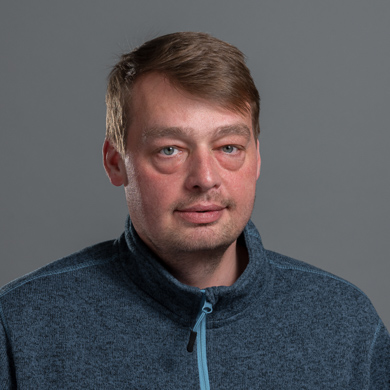
Carlos Andrés Pena is a Professor and Director of the Institute of Information and Communication Technologies (IICT) at HEIG-VD. His research focuses on Machine Learning, Artificial Intelligence, and Bioinformatics, with applications in healthcare, environmental science, and computational biology. He leads projects like ImpTox and EXPLaiN, addressing challenges in nanotoxicology, phage therapy, and ethical AI. His work bridges AI with real-world problems, including antimicrobial resistance and soil health monitoring. Education: Not explicitly listed in the provided text. Research Interests: Pena’s research integrates AI with interdisciplinary domains. Key areas include: Machine learning for healthcare diagnostics (e.g., diabetic retinopathy, perinatal health) Phage genome engineering using deep learning to combat antibiotic resistance Protist bioindicators for soil quality assessment using metabarcoding Fuzzy logic systems for biomarker discovery and disease classification Grants & Projects: He has secured over CHF 1M in funding, including EU Horizon 2020 projects and Swiss National Science Foundation grants. Notable projects include: ImpTox (2021–2025): Investigating nanoplastics’ toxicity on allergies PERPHECT (2019–2021): Engineering phages via LSTM networks HES-XPLAIN (2023–2024): Open platform for explainable AI Labs/Teams: Directs the IICT lab, collaborating with institutions like CNRS and University of Fribourg on bioinformatics and environmental studies.
Pedro F. Oliveira is an academic affiliated with the Polytechnic Institute of Bragança (IPB), Portugal, where he has served as a teacher at both the School of Public Management, Communication and Tourism (EsACT) and the Technology and Management School (ESTiG). He holds a Ph.D. in Computer Science from the Universities of Minho, Aveiro, and Porto, alongside degrees in Informatics Engineering and Business Information Systems. His academic roles include editorial board membership for journals like the International Journal of Network Security & Its Applications (IJNSA) and the Journal of Artificial Intelligence and Big Data (JAIBD). Dr. Oliveira's educational background includes a Ph.D. in Computer Science from the Universities of Minho, Aveiro, and Porto, a Master’s in Business Information and Systems from Instituto Superior Técnico, and a Bachelor’s in Informatics Engineering from IPB. His academic journey reflects a strong foundation in both technical and business-oriented information systems. His primary research interests span Artificial Intelligence , Multi-Agent Systems , Ambient Intelligence , Internet of Things (IoT) , and Learning Dashboards . Additionally, he explores broader fields such as Simulation and Advanced Data Analytics , Sensing and Connectivity , and Advanced Human-Machine Integration . These areas highlight his focus on intelligent systems, adaptive environments, and their practical applications. While no specific scientific awards are mentioned, his editorial and conference committee memberships underscore his contributions to academic and professional communities. Dr. Oliveira has not listed any supervisees, but his involvement in research projects and publications indicates active contributions to academic and industrial collaborations. Specific grants or funding details are not detailed in the provided information. He is a researcher at the Polytechnic Institute of Bragança, contributing to initiatives within the informatics and communications departments, aligning with research centers focusing on digitization and intelligent robotics.
Fernando Rafael Pardo Seco is a Professor at the Department of Electronics and Computing, affiliated with the Higher Technical School of Engineering at the University of Santiago de Compostela. He earned his PhD in 2008 with a thesis titled Software-hardware FPGA-Based System for the solution of the 3D heat equation applications on the non-destructive evaluation of minefields , supervised by Dr. Diego Cabello Ferrer and Dr. Marco Balsi. His research focuses on FPGA-based systems, CMOS architectures, thermal modeling, image processing, and non-destructive evaluation techniques. His academic contributions span engineering education innovation, including methodologies like cooperative learning and e-learning integration. His technological work emphasizes embedded systems, hardware acceleration for numerical simulations, and safety-critical applications such as landmine detection through thermal analysis. Recent publications highlight advancements in hyperdimensional computing architectures, 3D image processing, and thermal simulation tools. His work bridges hardware-software co-design principles with real-world applications in geophysics, security systems, and industrial engineering education.
Professor Sylvain Laizet is a faculty member in the Department of Aeronautics at Imperial College London, part of the Faculty of Engineering. He holds a PhD and Habilitation à Diriger des Recherches from the University of Poitiers in France, specializing in Computational Fluid Dynamics (CFD). His research focuses on turbulent flows and their engineering applications, including wind farm optimization, quantum algorithms for fluid mechanics, and machine learning integration in CFD. Key research areas include: Wake-to-wake interaction in wind farms Bayesian optimization for drag reduction and energy efficiency Immersed boundary methods for moving objects Quantum computing for solving PDEs in fluid dynamics His work leverages high-order numerical methods and large-scale simulations, with contributions to frameworks like Xcompact3D and WInc3D. Recent publications emphasize quantum algorithms, turbulence entrainment, and data-driven optimization strategies for renewable energy systems. Scientific contributions span over 50 peer-reviewed articles in top-tier journals, focusing on advancing CFD methodologies and their applications in environmental and industrial fluid mechanics. His team collaborates globally, including partnerships in France and Brazil.
Stephen B Blessing is a Professor in the Psychology Department at the University of Tampa, affiliated with the College of Social Science, Mathematics, and Education. He holds a Ph.D. from Carnegie Mellon University (1996), an M.S. (1994), and a B.S. (1992) in Psychology. His research focuses on applying cognitive psychology to real-world contexts, including intelligent tutoring systems, museum exhibits, and decision-making in games. He has collaborated extensively with student researchers, producing impactful work in areas like educational technology and AI-driven learning systems. Notable contributions include the development of the extensible problem-specific tutor (xPST) framework and studies on how content influences problem-solving and decision-making. His publications span topics from authoring tools for intelligent tutors to the effects of masks on speech perception. Blessing has received awards for service, undergraduate research mentorship, and academic advising. His advising and grants emphasize student-led research, with projects highlighted at conferences like the Florida Undergraduate Research Conference (FURC). While no specific labs or teams are mentioned, his work integrates collaborative environments like museums and gaming contexts to enhance learning outcomes.
Bryan Higgs, Ph.D., is an Assistant Professor in the Department of Civil Engineering at the University of the District of Columbia (UDC), affiliated with the School of Engineering and Applied Sciences. He serves as Director of the UDC Center of Climate Change Analytics and Undergraduate Program Director for the Civil Engineering Department. His research focuses on climate change impact analysis, critical infrastructure resilience, and transportation engineering with applications in geospatial data mining, artificial intelligence, and game theory. Dr. Higgs holds three degrees from Virginia Tech: a B.S., M.S., and Ph.D. in Civil Engineering, all specializing in Transportation Engineering. His professional roles include leadership positions such as Chair of the Curriculum Committee and SEAS Union Representative for the UDC Faculty Association. His research portfolio includes over $1 million in NSF-funded grants, including the HBCU-RISE initiative focusing on climate change infrastructure protection. He has received prestigious awards including the 2023 Black Engineer of the Year Award and UDC's Scholarly Excellence Award. Dr. Higgs teaches advanced courses like Game Theory Applications in Engineering and Traffic Engineering, while maintaining active involvement in curriculum development and engineering education innovation. His lab develops web-based tools for rainfall analysis and collaborates across disciplines to address climate-related infrastructure challenges.
Elizabeth A. Babcock is a Professor and Associate Dean at the Rosenstiel School of Marine, Atmospheric, and Earth Science, University of Miami. Her roles include overseeing Graduate Studies and the Master of Professional Science program. She specializes in marine biology, elasmobranch conservation, fisheries management, and ecological modeling. Her research focuses on shark population dynamics, bycatch mitigation, and the efficacy of marine protected areas (MPAs). Key contributions include studies on Caribbean reef sharks, stingray activity patterns, and the global shark fin trade. Her work integrates field studies, genetic analysis, and statistical modeling to address conservation challenges. Notable projects include analyzing small-scale fisheries in Central America and developing tools to estimate bycatch in Gulf of Mexico fisheries. She collaborates with NOAA on workforce development initiatives, emphasizing diversity in marine sciences. Her publications span over 20 years, addressing topics like habitat use in elasmobranchs and the impacts of fishing practices on biodiversity. Elizabeth’s research highlights the need for adaptive management strategies, particularly in data-limited fisheries. She advocates for science-informed policies to protect threatened species and improve ecosystem resilience. Her interdisciplinary approach bridges ecology, policy, and education to foster sustainable marine resource management.
Romain Sacchi is a Researcher at the Paul Scherrer Institute (PSI) in Switzerland, working within the Technology Assessment Group of the Laboratory for Energy Systems Analysis. He joined PSI in June 2019 to conduct life cycle assessment (LCA) research on future mobility technologies, focusing on the environmental implications of transportation electrification across all life cycle phases. His educational background includes a Bachelor's degree in Logistics and Production Management from Université d’Aix-en-Provence (2009), a Third year Bachelor in Economics from Haute Ecole de Commerce de Liège (2010), a Joint European Master in Environmental Sciences from Aalborg University and Barcelona University (2012), and an Industrial Ph.D. in Industrial Ecology from Aalborg University (2018). His doctoral research involved partnership with Aalborg Portland A/S. Sacchi's research expertise spans Life Cycle Assessment, Industrial Ecology, and Sustainable Systems. His work applies consequential LCA to evaluate circular supply chains, industrial symbiosis in energy systems, and environmental footprints of mobility and wind energy infrastructure. He has developed methodological approaches for uncertainty handling in LCA using Monte Carlo simulations and created modeling tools for life cycle inventories of power generation and waste treatment. His publication record from 2016-2018 demonstrates consistent focus on practical LCA applications in industrial contexts, particularly examining waste recovery systems, district heating optimization through industrial symbiosis, and evolving environmental footprints of renewable energy infrastructure. His research bridges academic theory with industrial implementation in cement, wind energy, and composite materials sectors. Professionally, Sacchi has held roles as Sustainability Specialist at Aalborg Portland A/S (2018-2019), where he reduced cement production footprints through industrial symbiosis, and researcher positions at Barsmark A/S and Fibertex Personal Care A/S. He maintains proficiency in LCA software including EASETECH, UseTox, EnergyPLAN, and BrightWay2, and is fluent in English, French, Danish, and Italian.
Dr. Daniel Gillis is an Associate Professor in the School of Computer Science at the University of Guelph. He specializes in transdisciplinary research addressing ecological and public health challenges, community-engaged software design, and educational pedagogy. His work emphasizes collaboration across disciplines and communities, notably through projects like Farm to Fork (food security), ICON (transdisciplinary classroom), and the Wireless Mobile Mesh Network initiative to bridge Canada’s digital divide. Gillis holds a PhD in Statistics from the University of Guelph (2010) and has been recognized with awards including the Ontario Confederation of University Faculty Associations Teaching Award (2019) and a $2.13M MITACS grant (2018). Education & Employment: PhD in Statistics, University of Guelph (2010) Joined University of Guelph School of Computer Science in 2011 Research Themes: Agent-based modeling for ecological risk assessment Community-led tech solutions in Indigenous communities Transdisciplinary education frameworks (e.g., ICON program) Climate change adaptation via integrated monitoring systems (eNuk program) Grants & Awards: MITACS Accelerate Grant ($2.13M, 2018) Science Borealis 100 Voices recognition (2016) Teaching Excellence Award (2019) Advising & Partnerships: Collaborations with Public Health Agency of Canada, Statistics Canada, Inuit communities in Labrador Advisor for undergraduate and graduate research projects (e.g., phishing detection, land observation tools) Labs & Teams: ICON Transdisciplinary Classroom Wireless Mobile Mesh Network Research Group Rigolet Inuit Community Monitoring Initiative
Dr. Tan Chee Keong is a Senior Lecturer at the School of Information Technology, Monash University, Malaysia. He holds a PhD in Information and Communication Technology from Multimedia University (2014). His expertise lies in network system design, with a focus on software-defined networks, beyond 5G networks, indoor positioning systems, game theory, machine learning, and data science. He has secured over RM 800K in research grants as a principal or co-investigator and contributed to over 10 international journal papers. Notably, he received the Best Teaching Award from Multimedia University in 2016. Research activities include projects funded by government and industry, such as AI-Driven Energy Management for Smart Cities and IoT-based energy monitoring systems. His work addresses challenges in network efficiency, indoor positioning, and smart city technologies. Dr. Tan has collaborated on projects involving UAV swarming intelligence, reinforcement learning, and autonomous systems. Education: B.Eng (Hons) in Electronics (Telecommunication), Multimedia University, 2006 M.Eng.Sc (Information and Communication Technology), Multimedia University, 2009 Ph.D (Information and Communication Technology), Multimedia University, 2014 Research Interests: Optimizing wireless networks and protocols Indoor positioning and trajectory tracking Game theory applications in network resource management Machine learning for signal processing and localization Recent publications (2023–2025) emphasize AI-driven solutions for energy efficiency, path planning in disaster environments, and blockchain-based logistics optimization. These reflect a trend towards integrating AI/ML with traditional networking challenges. Awards: Best Teaching Award, Multimedia University (2016) Grants & Projects: AI-Enabled Energy Management (RM 800K+) IoT-Based Energy Monitoring (2022–2025) Smart City IoT Applications He plays a key role in industry-academia collaborations, particularly in Malaysia’s tech sector. His labs focus on developing practical solutions for smart city infrastructure and next-generation communication systems.
Noah Rhodes is a CNLS Postdoctoral Associate at Los Alamos National Laboratory's Center for Nonlinear Studies (CNLS), working within the Theoretical Division (T-Division). His research focuses on mathematical optimization applications for power grid challenges, particularly infrastructure flexibility and wildfire risk mitigation. Office contact: TA-3, Building 1690, Room 123; email: nrhodes@lanl.gov. Educational background includes: B.S. in Electrical Engineering, University of Wisconsin-Madison (2019) Ph.D. Minor in Energy Analysis and Policy, University of Wisconsin-Madison (2022) Ph.D. in Electrical Engineering, University of Wisconsin-Madison (2024) Rhodes' research centers on enhancing power grid resilience through optimization techniques, with emphasis on reducing infrastructure needs and managing wildfire-related outages. His work bridges theoretical mathematics with practical energy security challenges, developing frameworks for public safety power shutoffs and grid restoration under extreme conditions. His 2021-2025 publications reveal a trajectory from foundational grid restoration algorithms toward integrated environmental considerations. Recent work combines carbon intensity analysis with grid operations while advancing open-source tools (PowerModelsRestoration.jl, ElectricityEmissions.jl) for academic and utility applications. Key trends include stochastic optimization for emergency response and topology-aware power flow formulations. No scientific awards are listed in the provided materials. No student advisement or grant information is documented in the source text. Rhodes operates within CNLS—a hub for nonlinear science research at LANL—which fosters interdisciplinary collaboration on complex systems. His work interfaces with T-Division's theoretical frameworks while addressing real-world energy infrastructure vulnerabilities through computational modeling and optimization.
Stefan Emrich is affiliated with the Institute of Urban Design, Landscape Architecture, and Design at TU Wien. His research focuses on applying simulation models to urban planning, facility management, and crisis response. He holds a Dipl.-Ing. (Diplom-Ingenieur) and Dr.techn. (Doctor of Technical Sciences). Research Interests: Emrich specializes in agent-based modeling, discrete event simulation, and space utilization optimization. His work addresses pandemic planning, energy-efficient manufacturing, and sustainable building design. He has contributed to projects like the MoreSpace initiative for optimizing corporate real estate through computational tools. Projects & Collaboration: He co-led interdisciplinary efforts such as the INFO project on energy optimization in manufacturing (2013) and developed the MoreSpace simulation tool for space management. His recent work includes applying agent-based models to Austria's COVID-19 response strategy (2021). Labs & Teams: Emrich is part of TU Wien's Network Lab , collaborating on simulation-driven solutions for urban and industrial challenges. His research bridges engineering, architecture, and computational science to advance practical applications in resource management and crisis mitigation.
Ivaylo Nedyalkov is a Senior Lecturer in the Department of Mechanical Engineering at the University of New Hampshire. He joined the faculty in 2015 after completing his Ph.D. under Prof. Wosnik, focusing on computational fluid dynamics (CFD), turbine design, and ocean engineering. His work includes the overhaul of the high-speed water tunnel (HiCaT) and development of automation code for hydrofoil simulations using OpenFOAM. Ph.D., Mechanical Engineering, University of New Hampshire M.S., Mechanical Engineering, Chalmers University of Technology B.S., Industrial Engineering, Technical University of Sofia His research spans fluid dynamics, renewable energy systems, and engineering education. Key contributions include studies on tidal turbines, bi-directional hydrofoils, and aerodynamics in cycling formations. He has integrated open-source CFD tools like OpenFOAM into undergraduate and graduate curricula. Recent publications emphasize computational simulations, experimental flow analysis, and turbine performance improvements. His work bridges academic research with practical applications in marine energy and sustainable design. Nedyalkov teaches courses such as Thermodynamics, Computational Fluid Dynamics, and Senior Design Projects. He also designed and implemented systems for the high-speed water tunnel facility at UNH, enhancing research capabilities in ocean engineering.
Institute of Process Management, Faculty of Applied Informatics at Tomas Bata University in Zlín. Petr Navrátil, Ph.D., is an Assistant Professor whose work bridges theoretical and applied control systems research. He holds a Ph.D. from Tomas Bata University in Zlín (2007) and an M.Sc. from Brno University of Technology (2001). A three-month internship at the University of Applied Science Cologne (2003) enriched his expertise in process engineering and control systems. Petr's research spans adaptive control , recursive identification , Delta model , and MIMO systems . His publications (2003-2016) focus on real-time control of laboratory models, optosensor applications, and environmental factors in measurement accuracy. Collaborations with colleagues like Vladimir Bobál and Ján Ivanka highlight his team-based approach to solving complex control problems, including TITO and three-tank systems. His work with MATLAB/Simulink libraries for recursive algorithms and applications in commercial security (light/laser protection systems) underscores his commitment to practical, industry-relevant solutions. The Institute of Process Control at Tomas Bata University serves as his primary research environment, where he develops tools and frameworks for both educational and industrial applications.
Nis Sand Jacobsen is a Senior Researcher at the Technical University of Denmark (DTU), working within the National Institute of Aquatic Resources (DTU Aqua) in the Section for Ecosystem based Marine Management. Based in Kgs. Lyngby, Denmark, his research focuses on fisheries science, marine ecosystem dynamics, and sustainable management of aquatic resources. With over 50 publications and involvement in numerous research projects, Jacobsen contributes significantly to understanding fish population dynamics, particularly in the North Sea and Baltic Sea regions. Dr. Jacobsen's research interests center on ecosystem-based fisheries management, with particular expertise in North Sea and Baltic Sea ecosystems. His work examines fish stock dynamics, food web interactions, and the impacts of climate change on marine populations. He specializes in herring and sandeel fisheries, investigating spawning patterns, migration behaviors, and the effects of environmental changes on fish distribution. His research integrates ecological, socioeconomic, and management perspectives to develop sustainable approaches for fisheries management. Analysis of Jacobsen's recent publications reveals a strong focus on ecosystem-based approaches to fisheries management. His work increasingly incorporates climate change impacts, spatial management strategies, and multispecies interactions into stock assessment models. A notable trend is the development of integrated modeling frameworks that combine biogeochemical processes with fisheries dynamics, as seen in his work on the FEISTY library. His research also addresses the socioeconomic dimensions of fisheries management, examining how fishing industries adapt to changing fish distributions. Member of International Council for the Exploration of the Sea (ICES) since 2014 Active participant in multiple working groups including Herring Assessment Working Group (HAWG) As a research supervisor, Jacobsen serves as Main Supervisor for PhD student M. V. Strange, whose work focuses on cormorant and seal predation of fish in inner Danish waters. He coordinates multiple research projects including SOS-Fisk, which investigates the influence of cormorants and seals on fish stocks in Danish waters, and TRUST 2, which examines spatial stock structure for North Sea sandeel. His collaborative work extends to international efforts through the International Council for the Exploration of the Sea (ICES), where he has been an active participant since 2014. Dr. Jacobsen's laboratory and team work within the Section for Ecosystem based Marine Management at DTU Aqua focuses on integrating ecological, fisheries, and socioeconomic data to develop comprehensive management strategies. His team collaborates with Danish fisheries organizations, European research institutions, and international bodies to address challenges in sustainable marine resource management, particularly focusing on the impacts of climate change on fish distribution and the resulting management implications.