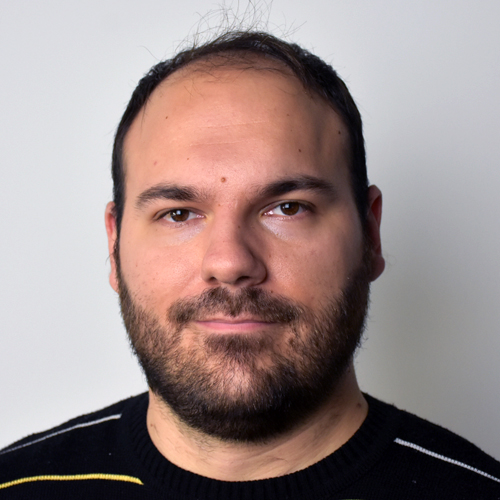
Dr. Anđelija Mitrović is an Assistant Professor at the Department of Mechatronics, Faculty of Technical Sciences in Čačak, University of Kragujevac. She holds a PhD in Technical Sciences (Mechanical Engineering) from 2016 and Master of Science in Information Technology from 2010. Her academic career spans multiple institutions including College of Technical Vocational Studies Čačak (2006-2011) and Faculty of Technical Sciences Čačak (2020-present). BSc in Hydropower Engineering, Mechanical Engineering Faculty Belgrade (1996) Profesor in Engineering and Informatics, Technology Faculty Čačak (2006) MSc in Information Technology, Technology Faculty Čačak (2010) PhD in Technical Sciences, Faculty of Technical Sciences Novi Sad (2016) Her research focuses on Production Technologies with emphasis on metal cutting thermal analysis, CAD/CAM systems, and educational technology innovations. Key research trends include: Thermal modeling in conventional and unconventional machining 3D virtual environment applications for engineering education Finite element analysis of milling processes Software-based cutting parameter optimization Integration of immersive learning platforms Publications demonstrate expertise in Thermal Analysis , Manufacturing Simulation , and Virtual Learning Environments . While no formal awards are listed, her work appears in reputable journals and international conference proceedings.
Dr. Vesna Petrović is an Assistant Professor at the Department of Social and Human Sciences within the Faculty of Technical Sciences in Čačak , part of the University of Kragujevac . She holds a Doctor of Science in Philological Sciences (English Language) and specializes in English for Specific Purposes (ESP) pedagogy. PhD in Philological Sciences (2022), University of Belgrade Master of Academic Studies in English Language and Literature (2010) Undergraduate Degree in English Language and Literature (2000) Her research focuses on Task-Based Learning (TBL) , Oral Presentation Assessment , and Technology-Enhanced Language Learning . She has developed multicriteria rating scales for communicative competence evaluation and investigated the role of MS Teams in pandemic-era ESP instruction. Recent work explores foreign language anxiety reduction in digital environments. She co-authored over 15 peer-reviewed publications, including articles in ELOPE and Teaching Innovations , and presented at conferences like TIE and EUROCALL . She participates in Erasmus+ projects and leads professional development seminars for language educators.
Milan Marjanović is an Assistant Professor at the Department of Mechanical Engineering, Faculty of Technical Sciences in Čačak, University of Kragujevac. Holding an M.Sc. in Mechanical Engineering, he teaches Thermodynamics, Applied Thermodynamics, Renewable Energy Sources, and Machine Elements. His research focuses on Thermal Engineering, Thermoenergetics, and Renewable Energy systems. Born 1990 in Užice Completed primary/secondary education in Požega Faculty of Mechanical Engineering and Civil Engineering, Kraljevo (2012) Master's in Energy Engineering (2014) Research spans biomass combustion optimization, solar energy systems, and hydraulic simulation tools. Active in academic projects like the national PRIZMA 2023 initiative for Active Condensation Hybrid Systems. Key publications include work on: Biomass-fired district heating efficiency AI-driven solar energy prediction models Hybrid photovoltaic-thermal collector testing Industry 4.0 curriculum development for Mechatronics Scientific contributions appear in journals like Case Studies in Thermal Engineering and conferences including COAST 2024. Awards include Ministry scholarships and 'Mašinijada' competition victories. Collaborates with industry partners on mechanical testing equipment development.
Jasmina Ćurčić is an Assistant Professor at the Department of Industrial Management , Faculty of Technical Sciences in Čačak , affiliated with the University of Kragujevac . She holds a Master of Management Engineer degree (2017) and is currently pursuing her doctoral studies in Engineering Management. Education : Management Engineer, Faculty of Economics in Čačak (2014) Graduate Manager, Faculty of Economics in Čačak (2015) Master of Management Engineer, Faculty of Engineering Management (2017) Doctoral Studies, Faculty of Technical Sciences in Čačak (2018–present) Research interests span Management , Engineering Management , and Production Sector Digitization , with a focus on strategic management, business information systems, and quality improvement frameworks. Her recent publications examine ERP implementation, standardization effects, and ABC analysis in production contexts. Scientific contributions include 13 national/international conference papers analyzing business intelligence applications, strategic performance improvement, and process modeling. Notable awards include the Dositej scholarship from the Young Talents Fund (2014/2015). Professional roles : Administrative duties at FTS Čačak (2018–2019) Assistant Professor (2021–present) Member of accreditation teams and asset inventory commissions
Јasmina Ćurčić is an Assistant Professor in the Department of Industrial Management at the Faculty of Technical Sciences Čačak, University of Kragujevac. She holds a PhD candidate status in Engineering Management, having completed a Master's in Engineering Management (2017) and a Bachelor's in Entrepreneurial Management (2014). She has been employed as an academic assistant since 2021, previously working in administrative roles at the faculty (2018-2019). Her research focuses on industrial management, quality systems, and information technology applications in manufacturing. She has published extensively in areas like ERP system implementation, AHP decision-making frameworks, and strategic process optimization. Her work emphasizes practical applications in Serbian industries, particularly in production monitoring and organizational digitization. Education: PhD candidate (2018–present), MEng Management (2017), BEng Entrepreneurial Management (2014) Teaching: Leads courses in Project Management, Supply Chains, Engineering Economics, and Standardized Management Systems Awards: 2014/15 Dositej Scholarship for academic excellence Committees: Member of accreditation teams for academic programs and faculty asset inventory commission Her recent publications (2023–2025) investigate topics such as ERP systems in manufacturing, business intelligence in public procurement, and strategic performance improvement methodologies. She actively participates in international conferences across Serbia, Montenegro, and Bosnia-Herzegovina.
Igor Nikolić is an Assistant Professor at the Faculty of Arts in Niš, specializing in Solfeggio pedagogy and music education methodologies. He holds an MA in Methodology of Music Teaching (2008) from the Faculty of Music Art in Skopje and a Bachelor's degree in Solfeggio Teaching Methods (2005) from the Faculty of Arts in Niš. His research focuses on innovative teaching strategies in music education, particularly in integrating technology, mother tongue applications, and creative methodologies. Notable areas include the use of computer technology in Solfeggio instruction, the role of artistic literature in teaching, and the perceptual elements of tonality and timbre in music pedagogy. He has contributed to multiple scientific forums and journals, including works on musical ear tests, the application of Michele Valentin’s hearing tests, and the methodological frameworks for nurturing musical potential. His publications emphasize practical pedagogical tools and cross-disciplinary approaches.
Živko Bojović is affiliated with Singidunum University, holding a doctoral degree in Telecommunications and Signal Processing from the University of Novi Sad. His career includes roles as an engineer and manager in telecommunications companies like Telekom Srbija and PTT Serbia. He has extensive experience in academic publishing, with monographs on network technologies and textbooks on software-defined networking (SDN) and IoT applications. His research focuses on cybersecurity, machine learning applications in healthcare, smart government systems, and network virtualization. Education: PhD in Telecommunications (2011), Postgraduate studies in Telecommunications (2000-2001), Bachelor’s in Electronics with Telecommunications (1986-1992). He also completed high school in Peć with a mathematical focus. Research Interests: He explores advanced networking technologies including SDN, 5G/6G networks, IoT security, and educational technology innovations. His work bridges theoretical advancements with practical implementations in healthcare diagnostics and public sector digitization. Recent studies include applying machine learning to predict thrombosis and thyroid cancer metastasis, reflecting his interdisciplinary approach. His articles collectively highlight trends in smart systems (e.g., government services, energy grids) and network security, with frequent contributions to journals like Computer Applications in Engineering Education and Journal of Network and Systems Management . The Wiley Top Cited Article award (2020-2021) recognizes his impactful work on rapid transition to distance learning during crises. Prof. Bojović holds IEEE membership and sits on editorial boards for journals like Inventi Impact: Software Engineering . He actively participates in EU Horizon projects focusing on 6G privacy and smart city analytics.
Dr. Nebojsa Stanković is an Assistant Professor at the Department of Information Technologies , Faculty of Technical Sciences Čačak , University of Kragujevac . With a career spanning over three decades in academia, he focuses on educational technology innovation , machine learning applications , and IT pedagogy . BSc: Electrical Engineering, University of Kragujevac (1991) MSc: Technical Sciences, University of Kragujevac (2009) PhD: Information Technologies, University of Kragujevac (2021) His research explores artificial intelligence in education , student success prediction , and e-learning systems . Recent work includes hybrid AI models for solar energy optimization and vibration classification in industrial settings. Publications demonstrate consistent engagement with machine learning , cybersecurity , and digital transformation in educational contexts. He actively contributes to international conferences like TIE and UNITECH, specializing in pedagogical applications of Python programming , NLTK , and MATLAB . As a certified ECDL examiner and conference organizer, he bridges academic research with practical IT training . His textbook on Multimedia Technologies (2019) exemplifies his commitment to educational resource development.
Nikola I. Mitrovic is a Lecturer at the Faculty of Electronic Engineering, University of Niš, specializing in Microelectronics and Microsystems. His academic career began with a Master's degree (2018) and undergraduate degree (2017) in Electronic Components and Microsystems from the same institution. He has been actively involved in teaching and research since 2020, focusing on semiconductor device reliability and renewable energy technologies. Education Bachelor's Degree: Electronic Components and Microsystems, Faculty of Electronic Engineering, University of Niš (2017) Master's Degree: Electronics and Microsystems, Faculty of Electronic Engineering, University of Niš (2018) Research Interests His research emphasizes semiconductor device modeling, particularly in power VDMOSFETs under stress conditions, and solar energy systems. He explores failure mechanisms in microelectronics and develops practical educational tools for engineering students. His work bridges theoretical analysis (e.g., NBTS/NBTI effects) with applied technologies like solar tracking systems and RFID-based access controls. Publications He has published extensively in IEEE journals and international conferences, focusing on topics such as device reliability, solar cell characterization, and embedded system design. His work demonstrates a blend of semiconductor physics, mathematical modeling (e.g., Least Square Method applications), and practical engineering solutions. Awards and Activities Received First Prize for the project 'RFID-Based Access Control System' at the 11th Student Projects Conference (2018) Member of the Secretariat for the IEEESTEC Student Project Conference Current involvement: 1 national research project Labs/Teams His affiliation with the Department of Microelectronics positions him within a research group focused on advanced semiconductor technologies and renewable energy systems. Collaborations include work with colleagues on device modeling and educational technology development.
Miroslav Bjekić is a Full Professor at the Department of Electrical Power Engineering, Faculty of Technical Sciences, University of Kragujevac (Čačak, Serbia). His academic journey includes a PhD (2006) and Master's (1995) from Serbian institutions, with undergraduate studies completed at the Technical Faculty in Čačak (1991). He received academic excellence awards during his studies. His research spans electrical machines, energy efficiency, electromechanical simulation, and renewable energy systems . Key focus areas include: Design and optimization of electric motors/drives Energy-efficient industrial systems Educational technology for engineering Smart grid and distributed generation His publications emphasize experimental validation, simulation tools (GeoGebra, MATLAB), and applied solutions for energy challenges , with consistent themes in motor control efficiency, educational innovation, and sustainable energy integration. Awards/Honors: University of Kragujevac & Technical Faculty Čačak Study Excellence Awards Second Prize, International PhD Seminar (Ohrid, 2005) Leadership & Projects: He modernized laboratories for Electrical Machines/Drives and led national projects like TR33016 on energy efficiency in motor drives. International collaborations include TEMPUS initiatives and DAAD-funded programs. He chaired the Rotating Electrical Machines Standards Committee (Serbian Institute of Standardization, 2012–2017). Educational Development: Created original educational software for electrical engineering and accredited teacher training programs. Supervised laboratory development for remote experiments and industrial collaborations.
Marija Blagojević is a Full Professor at the Department of Information Technologies within the Faculty of Technical Sciences in Čačak, University of Kragujevac, Serbia. With over fifteen years of experience in teaching and research, she has established herself as a leading academic in Information Technologies and Systems. Her work spans multiple domains including artificial intelligence, machine learning, and educational technologies, contributing significantly to both theoretical advancements and practical applications in these fields. Dr. Blagojević began her academic career at the Technical Faculty in Čačak in October 2007, initially conducting exercises for courses in Informatics Methodology and IT Applications-Practicum. She was appointed as an Assistant in June 2008 and has since advanced to her current position as Full Professor. Throughout her career, she has continuously expanded her expertise through various specialized courses including Oracle Academy courses in database design and programming, machine learning from Stanford University, and certifications in Huawei AI technologies. Her research interests primarily focus on the application of artificial intelligence techniques to solve complex problems across diverse domains. She has made significant contributions to neural network applications, developing models for predicting apricot yields, air pollution levels, and student success in programming courses. Her work in e-learning technologies demonstrates innovative approaches for adaptive course delivery using data mining techniques. She has also pioneered research at the intersection of AI and psychology, exploring concepts like 'Artificial Psychology' and 'PsAIchology'. Analysis of Dr. Blagojević's recent publications reveals a clear trajectory toward interdisciplinary applications of artificial intelligence. Her work increasingly bridges computer science with psychology, healthcare, and environmental science. A notable trend is her focus on explainable AI, ensuring complex machine learning models remain interpretable for end-users. Her research also demonstrates strong commitment to applying technology for social good, particularly in education and rural development contexts, as evidenced by projects like WINnovators Space. Scientific Awards and Recognitions Award from 'dr Milivoje Urošević' foundation for best graduating student in 2006/2007 Four awards from Technical Faculty for excellent academic results each school year Scholarship from Fund for Young Talents Scholarship from University of Kragujevac (as one of 11 best students) Scholarship from Čačak municipality Scholarship from 'Denise Hale' Foundation Award for the best second-place innovative idea from the Union of Engineers and Technicians of Serbia (February 2020) Recognition for the best female scientist with most research results at University of Kragujevac (February 2022) Dr. Blagojević has been actively involved in research supervision and grant-funded projects throughout her career. She has served as a reviewer for three scientific journals and participated in significant research initiatives including 'Development of new information and communication technologies using advanced mathematical methods' (Project III 44006) and 'Application of biomedical engineering in preclinical and clinical practice' (Project 41007). Her international collaboration includes participation in TEMPUS project 544482-TEMPUS-1-2013-1-IT-TEMPUS-JPHES and Erasmus mobility at Alexandru Ioan Cuza University of Iaşi. As a member of the Computer Science Laboratory at the Faculty of Technical Sciences, Dr. Blagojević contributes to a collaborative research environment focused on advancing information technologies. Her interdisciplinary approach connects computer science with psychology, healthcare, and environmental science, demonstrating how technology can address complex real-world challenges while enhancing educational outcomes and community development.
Maja Radović is an Assistant Professor in the Department of Information Technologies at the Faculty of Technical Sciences, University of Kragujevac, Serbia. She has been working at this institution since September 2008, specializing in the narrow scientific field of Information Technologies and Systems. Her academic journey began at the Faculty of Technology in Čačak, where she graduated in 2008 with high honors, and later earned her Doctor of Science in Electrical Engineering and Computer Science from the Faculty of Electronics in Niš after defending her doctoral thesis on "Ontology-guided student testing in e-learning" in 2024. Dr. Radović's research spans multiple areas within educational technology and computer science. Her primary interests include e-learning systems, ontology-based assessment methods, database technologies, and the application of virtual environments in education. She has made significant contributions to the development of innovative teaching methodologies, particularly in engineering education and medical informatics. Her work often focuses on the intersection of technology and pedagogy, exploring how modern tools can enhance learning experiences and assessment practices. Over the years, Dr. Radović has been actively involved in numerous national and international projects, including TEMPUS projects focused on e-learning curriculum development, UNDP initiatives for digital transformation, and research projects in biomedical engineering. Her publication record demonstrates consistent contributions to the fields of educational technology, virtual learning environments, and ontology-based assessment systems. Dr. Milivoje Urošević Foundation Award for the best graduate student in the 2007/2008 academic year Dr. Radović has contributed significantly to curriculum development and teaching methodologies at her institution. She has been instrumental in adapting information technology courses to modern educational standards and has explored innovative approaches to student assessment. Her work extends to medical education, where she has developed ontology-based assessment tools for medical training. She has also investigated the application of 3D printing and virtual reality technologies in engineering education to improve spatial visualization skills among students.
Dr. Mariјa Blagoјević is a Full Professor at the Department of Information Technologies, Faculty of Technical Sciences Čačak, University of Kragujevac. With 15 years of teaching and research experience, she holds roles as a reviewer for scientific journals and member of the Tempus project 544482-TEMPUS-1-2013-1-IT-TEMPUS-JPHES. She participated in Erasmus mobility at Alexandru Ioan Cuza University of Iaşi and serves on the Commission for self-evaluation at her faculty. Her research focuses on ICT innovations, standardization in knowledge quality, e-learning systems, and agricultural modeling using artificial neural networks. Notable projects include developing web-based systems for yield prediction and e-learning platforms leveraging data mining. She has co-authored over 80 research papers across journals like Computer Standards and Interfaces , Scientia Horticulurae , and Computers and Electrical Engineering . Her work integrates technology with education and agriculture, emphasizing practical applications through standardization frameworks and educational technology. She has contributed to institutional excellence models in higher education and explored collaborative learning dynamics in online environments. Professional affiliations include participation in international projects and academic committees, reflecting her commitment to advancing both technical and pedagogical standards in academia.
Prof. Dusan M. Milosevic is a Full Professor at the Department of Mathematics within the Faculty of Electronic Engineering of the University of Niš, Serbia. He holds a PhD in Mathematics from the Faculty of Natural Sciences and Mathematics in Niš (2005), a Master's degree in Mathematics from the Faculty of Electronic Engineering (1992), and a Bachelor's degree in Computer Engineering from the same institution (1988). His academic career includes significant contributions to computational mathematics, numerical methods, and interdisciplinary applications in renewable energy and environmental modeling. Research interests span numerical analysis of polynomial zeros, fuzzy logic systems, and sustainable development strategies. He has authored/co-authored over 33 papers in impact-factor journals and multiple textbooks, including "Numerical Solution of Nonlinear Equations" and "Mathematics 4" . Current research focuses on energy projects, smart city modeling, and industrial building reuse. He participates in one national and international research projects. His work bridges theoretical mathematics with practical applications, evident in studies like spectral reflectance modeling for agriculture and adjustable models for renewable energy systems in Serbia. Academic leadership includes textbook development for engineering education and contributions to validated numerical computations.
Angelina Njegus is a Full Professor at Singidunum University , where she has worked since 2005. She holds a Ph.D. in Business Studies and has extensive experience in both academia and industry, including consulting for IBM. Her research focuses on machine learning algorithms , deep learning , and Big Data Analytics , with applications in pattern recognition , tourism technology , and blockchain systems . Bachelor's: Faculty of Organizational Sciences, Information Systems (1994) Master's: Faculty of Organizational Sciences, Industrial Engineering (1999) Doctoral: Faculty of Business Studies (2003) Her recent publications (2023-2025) demonstrate expertise in metaheuristic optimization for machine learning, audio-visual emotion recognition , and cryptocurrency applications in tourism . She pioneered the Virtual University platform (MTVU) and contributes to agile methodologies in software development. Collaborations include projects with researchers from IEEE, Springer, and international institutions. Research interests span AI ethics in human resources , IoT integration in tourism , and security risks in cloud computing . Her work appears in journals like Complex & Intelligent Systems and conferences including ICPR and FG 2017 . She has authored books on software design patterns and information systems in tourism .