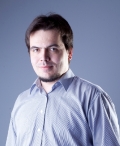
Captain Dr. Eng. Wojciech Dawid is a researcher at the Military University of Technology , affiliated with the Faculty of Civil Engineering and Geodesy and the Department of Image Recognition . He graduated with distinction in Geodesy and Cartography (2019) and has been employed at WAT since then. Education: Military University of Technology (Geodesy and Cartography, 2019) His research focuses on military terrain passability , GIS-based analysis , and spatial data applications for operational planning. He has developed methodologies for route optimization, terrain classification, and military logistics using advanced computational techniques. The analysis of his 15 most recent articles reveals a strong emphasis on geospatial engineering with applications in military navigation, crisis management, and environmental modeling. Key trends include algorithm development for route planning, integration of AI in terrain analysis, and cross-border operational comparisons.
Przemysław Kaszubski serves as a Senior Lecturer at the Faculty of English, Adam Mickiewicz University in Poznań, where he specializes in corpus-based language pedagogy with over two decades of academic contributions. His work bridges theoretical linguistics and practical teaching applications, particularly through digital tools for language learners. His academic credentials include: MA in English, Poznań (1992) Ph.D. in English linguistics, Poznań (2000) Research focuses on English academic writing discourse, applied corpus linguistics, and e-learning technologies. He investigates how corpus analysis reveals patterns in learner language, particularly Polish advanced EFL writers, and develops practical applications like the TestBuilder program. His metaphor studies using the British National Corpus demonstrate cognitive-linguistic approaches to figurative language acquisition. Scholarly output shows consistent evolution from foundational corpus methodology (2000s) toward integrated pedagogical tools (2010s), with recent work emphasizing national curriculum perspectives and collaborative concordancing interfaces. Key themes include learner corpus applications, writing instruction innovation, and technology-mediated language acquisition. Notable honors include: Minister's National Education Award for research (1997) Multiple Vice-Chancellor's Awards for Organizational/Teaching Excellence (2015-2022) Ministerial team award for didactic achievements (2016) Consecutive Particularly Helpful Moodler badges (2015-2022) Dean's Award for faculty promotion (2014) As coordinator of Poland's contribution to the International Corpus of Learner English (PICLE Project), he advances cross-national corpus research while teaching academic writing, corpus linguistics, and TEFL. His conference presentations span 30+ international venues including TaLC and Corpus Linguistics events, reflecting continuous scholarly engagement. Current initiatives focus on enhancing writing instruction through corpus-informed national frameworks and collaborative digital tools.
Piotr Jastrzębski is an Adjunct Professor at the Institute of Mathematics within the Faculty of Mathematics and Computer Science at the University of Warmia and Mazury in Olsztyn (UWM). His research spans both Information and Communication Technology (ICT) and Mathematics, with a focus on applications in game design, software implementation, and programming using C#. Research areas include: Game Development and Design Mathematical Modeling in ICT Software Engineering Programming Languages With 14 documented publications and a ministerial score of 1,055, Piotr has contributed extensively to his fields. He has supervised 104 promoted theses, indicating a strong mentorship role. His work involves collaboration on projects related to game design, implementation, and ICT applications. Email: piojas@matman.uwm.edu.pl
Michał Horodelski is an Assistant Professor at the Department of Applied Computer Science, Faculty of Natural and Technical Sciences, John Paul II Catholic University of Lublin. His research focuses on blockchain technology, cyber-physical systems, and simulation tools, with applications in emergency medical services and healthcare informatics. He utilizes Petri nets and Scilab for modeling and verification. University: John Paul II Catholic University of Lublin School: Faculty of Natural and Technical Sciences Department: Department of Applied Computer Science Academic Rank: Assistant Professor Email: michal.horodelski@kul.pl Horodelski's research spans blockchain for decentralized authorization, smart contracts, and real-time systems in healthcare. His work includes applications of knowledge-based systems for EEG analysis and life-saving algorithms, emphasizing data synchronization and simulation. He has collaborated with institutions like Warsaw School of Economics and Wrocław University of Economics. His projects include methodology development for system behavior description in algebraic environments funded by the National Science Centre. Horodelski is a member of the European Centre for Information Society Technologies (ECIST) and contributes to open-source software adoption in academia.
Jakub Grzeszczak serves as a Lecturer at the Faculty of Mathematics and Natural Sciences (School of Exact Sciences) at Cardinal Stefan Wyszyński University in Warsaw, Poland. His institutional email is jakub.grzeszczak@uksw.edu.pl, with consultation hours for stationary students on Thursdays 11:30-13:00 (room 1228, building 12) and specific non-stationary student sessions throughout the academic year. Dr. Grzeszczak's research is concentrated in Information and Communication Technology (ICT) , comprising 100% of his documented scientific discipline. His work spans: Artificial Intelligence and Machine Learning applications Computer Networks and Systems architecture Unmanned Aerial Vehicles technology Sensor systems and signal processing Software Engineering methodologies Bibliometric analysis reveals 8 scholarly publications with an h-index of 1 in both Scopus and Web of Science databases. His total ministerial score of 390 reflects recognition within Poland's academic evaluation framework, while a SNIP score of 3.5 indicates above-average citation impact for his field. Research trends show consistent focus on practical AI implementations, network optimization, and efficient computational solutions with applications across engineering contexts. His publication pattern suggests early-career development with growing specialization in intelligent systems. Dr. Grzeszczak maintains active scholarly profiles including: ORCID: 0000-0001-8679-9076 Scopus profile Crossref registration Europe PMC presence
Maciej Talaga is an Assistant Professor at the University of Warsaw's Faculty of Artes Liberales, specializing in medieval physical culture and embodied research. With a Doctor of Humanities degree from the University of Warsaw (2023) and a Master of Science in Archaeology (2012), his academic journey includes a research internship as a Visiting Scholar at Universität Bern in 2020. He works as a freelance translator and historical fencing coach alongside his academic career. His educational background includes a Doctor of Humanities from the University of Warsaw (2023), supervised by Prof. Jerzy Kruppe and Prof. Jan Kieniewicz, and a Master of Science in Archaeology from the same institution (2012). His research interests focus on the anthropology of physical culture, material culture of medieval Europe, relationships between bodily practices and community-building, and the phenomenon of 'martiality' in historical contexts. Talaga's research demonstrates a strong interdisciplinary approach, combining archaeology, anthropology, and embodied research methods to explore medieval European physical culture. His work frequently examines how bodily practices shaped community identities and social structures during the medieval period. He has developed innovative methodological approaches including 'archaeology of motion' and applies affordance theory to interpret historical material culture. His research spans both theoretical frameworks and practical applications, often involving embodied research where he physically engages with historical practices to gain deeper insights. His publications reveal a consistent focus on medieval martial practices, physical culture, and innovative research methodologies. The body of work shows progression from specific artifact analysis to broader theoretical frameworks for understanding historical embodiment. His research has increasingly incorporated digital humanities approaches while maintaining strong connections to physical practice and material culture studies. Assistant Professor at University of Warsaw (Faculty of Artes Liberales) Doctor of Humanities (2023), University of Warsaw Master of Science in Archaeology (2012), University of Warsaw Visiting Scholar at Universität Bern (2020) Talaga actively engages in knowledge dissemination through multiple channels, including academic publications, conference presentations, videos, and collaborations with practitioners of historical martial arts. His work bridges academic research and practical application, particularly in the field of Historical European Martial Arts. He maintains significant online presence with over 200 followers on academic platforms, reflecting his active engagement with both scholarly and practitioner communities.
Dr. Łukasz Wiechetek is an Assistant Professor at the Department of Information Systems and Logistics, Faculty of Economics, Maria Curie-Skłodowska University in Lublin. He also serves as the Director of the Analysis and Development Center at the same university. His extensive career spans both academic and industry roles, including positions at Comarch S.A. and various IT consulting projects. Education: Ph.D. in Economics, Maria Curie-Skłodowska University (2014) - Dissertation: "Conditions for Effective Implementation of Information Systems in Small and Medium Enterprises" Postgraduate Studies in Logistics Process Management, Maria Curie-Skłodowska University (2013-2014) Master's degrees in Computer Science and Economics, Maria Curie-Skłodowska University (2001-2006) Research Interests: His research encompasses a broad spectrum of IT-related fields including e-business, mobile technologies, remote work dynamics, knowledge management, and IT project management. He has particular expertise in the application of IT solutions in logistics, cybersecurity education, and the use of academic social networks for research evaluation. Scientific Awards: Medal of the National Education Commission (2020) Bronze Medal for Long Service from the President of Poland (2017) Multiple university awards for outstanding contributions to research and collaboration with industry Professional Services and Grants: Dr. Wiechetek provides extensive IT consulting services to businesses, including system design, implementation oversight, and cybersecurity training. He has participated in numerous research grants and projects, including the "Synergy" project aimed at enhancing student competencies through practical knowledge acquisition. Labs and Teams: As Director of the Analysis and Development Center, he leads initiatives in IT systems analysis and business process optimization. He has been instrumental in developing interdisciplinary research teams and fostering collaboration between academia and industry.
Dr. Nadia Benjelloun is a Researcher affiliated with the Faculty of Sciences Dhar El Mahraz at Université Sidi Mohamed Ben Abdellah , Morocco, and associated with the Interdisciplinary Research Laboratory in Didactics (LIRDED) . Her work focuses on advancing educational practices through technology integration, particularly in Morocco. She explores topics such as personalized learning, distance education, robotics in STEM, and biodiversity education. Her research interests include leveraging educational software (e.g., Java-based tools for optics), interactive simulations, and robotics to enhance student motivation and conceptual understanding. She also investigates the impact of educational scale on system performance and sustainable educational practices. Her work has been supported by institutions like the National Research Foundation , Agence Nationale de la Recherche , and King Saud University , reflecting her collaborative and internationally recognized contributions. Dr. Benjelloun has published 18 papers since 2016, with 52 citations and an H-index of Fair. Her research emphasizes innovation in teaching methodologies, particularly in light of technological advancements and global educational challenges.
Dr. Elżbieta Lewańska is an Assistant Professor at the Department of Information Systems , Poznań University of Economics and Business. Her work focuses on artificial intelligence, blockchain technology, and semantic systems for data analysis and business transformation. Research Interests : AI-driven data visualization (LumiViz, 2025) Blockchain alignment in public registers (2025) Business-IT integration frameworks Publications Trends : 2025: Generative AI for business analytics 2024-2025: Blockchain-enabled business models and adversarial text generation 2020-2022: Supply chain optimization and open data efficiency Awards : Won first place in an international competition for information credibility (2024) Professional Engagement : Active in conferences like BIS 2025, CLEF 2024, ICEIS 2011 Contributed to DIS website development (since 1998)
Dariusz Kralewski serves as a Tutor within the Department of Economic Informatics at the Faculty of Management, University of Gdansk. His role centers on academic student support and development within the university's educational framework. His core responsibilities include facilitating student personal development, monitoring academic progress, ensuring effective communication channels between students and lecturers, maintaining direct personal contact with advisees, and providing problem-solving guidance throughout the learning journey. This structured tutoring approach emphasizes holistic student growth beyond mere curriculum delivery. Research interests focus on emerging technological domains: Internet of Things (IoT) systems and applications Programming methodologies and software development Contemporary trajectories in information technology evolution His work integrates practical IT innovation with academic mentorship, positioning him at the intersection of educational support and technological advancement within management studies.
Jose Sousa is a Research Team Leader of the Personal Health Data Science Group at SANO and former Manager of the Advanced Informatics Core Technology Unit in Queen's University Belfast's Faculty of Medicine, Health and Life Sciences (FHMLS). He holds a PhD from the University of Minho, Portugal, focusing on complex network models for software-requirements alignment. His research spans AI applications in public health, pandemic response (e.g., Northern Ireland's COVID-19 initiatives), genetic modeling, and socio-technical systems analysis. He collaborates with HDRUK, the DEMON Network, and CLAIRE AI, driving AI-driven healthcare innovations. Educations: PhD in Complex Network Models (University of Minho, 2012); prior roles include Information Systems Director at I3S (University of Porto) and IT infrastructure management. His work bridges computer science with healthcare, emphasizing AI's role in non-communicable diseases and public health crises. Research interests include machine learning robustness, healthcare decision support systems, and AI ethics. His recent publications explore feature stability in limited data, early disease classification tools (e.g., CACTUS for macular degeneration), and pandemic adaptability modeling. Collaborations span international health centers and AI consortia, reflecting his interdisciplinary approach to solving complex health challenges. Notable contributions include developing self-learning AI models for pandemic data analysis and advancing genotype-phenotype correlations in age-related macular degeneration. His work emphasizes translating technical innovations into actionable public health strategies.
Dr. Justyna Martyniuk-Pęczek is an Associate Professor at the Department of Urban Design and Regional Planning, Gdańsk University of Technology. Her work focuses on daylighting, lighting design, urban sustainability, and energy efficiency in architectural and urban contexts. She leads research projects funded by programs like MINIATURA and ERASMUS+, emphasizing interdisciplinary collaboration. Education: 2006: dr inż. arch. (PhD) in Architecture and Urban Sciences from Faculty of Architecture 2014: dr hab. inż. arch. (Habilitation) in Architecture and Urban Sciences from Warsaw University of Technology Research interests include: - Link between window views and occupant satisfaction - Virtual reality applications in lighting design - Sustainable urban design frameworks - Daylight metrics in regulatory standards Her recent articles explore: - Computational evaluation of window views using EN17037 standards - Global home office lighting conditions post-pandemic - Case studies in Gdańsk for optimized building design Grants & Projects: - Searching for stakeholders of energy transformation in an Edge city (MINIATURA grant, 2021-ongoing) - New Level of Integrated Techniques for Daylighting Education (ERASMUS+ program) Labs/Teams: Actively involved in interdisciplinary teams at the Department of Urban Design and Regional Planning, collaborating with international researchers in lighting and urban studies.
Dr. Jarosław Wagner is an Assistant Professor at the University of Zielona Góra , affiliated with the Institute of Pedagogy and specifically the Department of Media and Information Technologies . His research spans two primary disciplines: Pedagogy (50%) and Social Communication and Media Sciences (50%). He works within the Information and Communication Technologies Workshop, focusing on digital education frameworks. Email: j.wagner@kmti.uz.zgora.pl, j.wagner@g.elearn.uz.zgora.pl Address: A-16 Teaching Building, al. Wojska Polskiego 69, Zielona Góra Room: 33 His research emphasizes the intersection of pedagogy and information technologies , particularly in designing and evaluating e-learning systems. He explores historical and theoretical foundations of distance learning, its global applications (e.g., Vietnam), and the role of multimedia in education. His work also addresses communication dynamics in virtual classrooms and institutional IT strategies. Recent publications highlight trends in ICT integration into higher education, the evolution of e-learning platforms, and digital tools for pedagogical training. Key subfields include online learning models , educational software , virtual collaboration , and cross-cultural e-learning adaptation . Dr. Wagner contributes to the Information and Communication Technologies Workshop at the University of Zielona Góra, which develops digital solutions for educational institutions. His professional websites include Institute of Pedagogy , Department of Media and Information Technologies , and Workshop resources .
Bartosz Jabłoński is affiliated with the Faculty of Information and Communication Technology at Wrocław University of Science and Technology, specifically the Department of Control Systems and Mechatronics . His research focuses on image processing, signal filtering, motion capture, and partial differential equations. Key research trends across his publications include: Development of quaternion-based algorithms for motion processing and clustering Application of multiscale analysis to improve motion capture systems Implementation of anisotropic filtering techniques for rotational trajectory smoothing Integration of agile methodologies in technical education Use of collaborative tools for Parkinson disease diagnosis His work spans both theoretical algorithm development and practical applications in biomedical engineering and educational reform.
Dariusz Gąsior, PhD is a faculty member at the Faculty of Information and Communication Technology , Wrocław University of Science and Technology , affiliated with the Department of Computer Science and Systems Engineering . His work focuses on network optimization, resource allocation, and machine learning applications in software-defined systems. Research Interests: Software Defined Networks (SDN), Fog/Cloud Computing, Autonomic Systems, Game Theory, Algorithm Design Key Contributions: Developed self-optimizing SD-WAN protocols, game-theoretic resource allocation models, and hybrid fog-cloud computing frameworks Methodologies: Applied algorithm design, machine learning, and stochastic optimization to network management challenges Publications Highlights (2018-2024) cover SD-WAN optimization, QoS in autonomic networks, and hybrid computing systems. His work spans interdisciplinary topics from transportation scheduling to ethical data sharing.