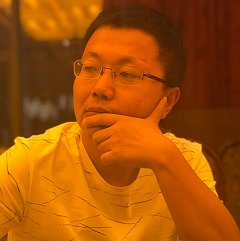
Naranker Dulay is a Professor in the Department of Computing at Imperial College London, part of the Faculty of Engineering. He holds affiliations with the Centre for Cryptocurrency Research and Engineering, Centre for Smart Connected Futures, and the Distributed Software Engineering group. His research focuses on Distributed Computing, Applied Economics, Policy and Administration Law, Computer Software, and Information Systems. His work explores blockchain technologies, smart contracts, consensus algorithms, and distributed systems. Recent research includes optimizing post-trade processing using distributed ledgers and developing adaptive protocols for dispute resolution in smart contracts. He is also involved in cybersecurity and privacy-preserving technologies for data management. Key contributions include frameworks like Chainlog for logic-based smart contracts and FADE for self-destructing data. His articles span over a decade, emphasizing blockchain scalability, energy-efficient neural networks, and decentralized macro-programming in wireless sensor networks. Dr. Dulay collaborates across interdisciplinary domains, blending technical innovation with socio-technical challenges. His affiliations reflect a commitment to advancing smart connected futures through cutting-edge research.
Jedidiah Crandall is an Associate Professor at Arizona State University's School of Computing and Augmented Intelligence, with an affiliation to the Biodesign Center for Biocomputing, Security and Society. His research focuses on Internet censorship, network security, and privacy-preserving technologies. Crandall collaborates with journalists and activists to expose surveillance mechanisms, particularly in politically sensitive regions like Russia and China. His work includes analyzing VPN vulnerabilities , decentralized censorship systems , and cross-border data flows . He teaches advanced courses in computer network security and advises graduate students on thesis/dissertation research. Research trends in his publications emphasize measuring state-level information control , attack vectors in modern networks , and secure communication technologies . Notable work includes TSPU: Russia's censorship infrastructure and Hidden Links: Analyzing Secret Families of VPN Apps . Crandall's teaching spans courses like Advanced Computer Network Security and Applied Cryptography , reflecting his commitment to preparing the next generation of security professionals. His Censored Planet project tracks global Internet censorship patterns through large-scale measurements.
Andreas Ekelhart is a Researcher at TU Wien's Department of Information and Software Engineering. His work focuses on cybersecurity, cyber-physical systems, and industrial control systems. He specializes in developing frameworks like SLOGERT for automated log analysis and Kyrstal for attack discovery using knowledge graphs. His research also explores digital twin technology for threat detection and semantic web applications in machine learning systems. Key contributions include the VloGraph framework for distributed security log analysis and the QualSec approach for automated security risk identification in production systems. He collaborates on standards like AutomationML and emphasizes privacy-preserving data analysis through semantic architectures.
Xin Peng is a Professor and Deputy Dean at the School of Computer Science, Fudan University, China. He leads the CodeWisdom research team focusing on intelligent software engineering techniques for development, maintenance, and operation of software systems. His educational background includes a PhD in Computer Science (2001-2006) and Bachelor's degree in Computer Science (1997-2001), both from Fudan University. He progressed through the academic ranks from Assistant Professor (2006-2010) to Associate Professor (2010-2015) and finally to Professor (2015-present). Professor Peng's research interests span Software Analytics, Intelligent Software Development, Microservice systems, and AIOps. His work leverages AI technologies including deep learning and knowledge graphs to develop intelligent software engineering techniques. A significant portion of his recent work focuses on applying Large Language Models to various software engineering tasks, including vulnerability detection, API usage analysis, and test automation. His publication record shows a clear trend toward increasingly sophisticated applications of AI in software engineering, with recent work heavily featuring LLMs for tasks ranging from vulnerability patch porting to resource leak detection. The research spans multiple domains including microservice systems, automotive software, and Web of Things security. Best Paper Award of ICSM 2011 ACM SIGSOFT Distinguished Paper Award of ASE 2018 and 2021 IEEE TCSE Distinguished Paper Award of ICSME 2018, 2019, and 2020 IEEE Transactions on Software Engineering Best Paper award for 2018 Professor Peng serves in numerous leadership roles including Deputy Director of CCF Technical Committee on Software Engineering, Co-Editor-in-Chief of Journal of Software: Evolution and Process, and Associate Editor for ACM Transactions on Software Engineering and Methodology. He has been actively involved in program committees for major software engineering conferences including ICSE, ASE, ESEC/FSE, and ICSME. He leads the CodeWisdom research team at Fudan University, which has developed several benchmark systems including TrainTicket for microservice research. The team's work bridges academic research with industrial applications, particularly in microservice systems analysis and intelligent software development tools.
Terence Fan is an Assistant Professor of Strategy & Entrepreneurship (Education) and Academic Director of Accreditation Education at the Lee Kong Chian School of Business, Singapore Management University (SMU). He holds a PhD from the Massachusetts Institute of Technology (MIT), USA, and has been with SMU since 2004, serving as an Assistant Professor of Management before his current role. Education: PhD, Massachusetts Institute of Technology (2004) Master of Science in Finance, University of Cambridge (2003) Master of Science in Aeronautics and Astronautics & Technology and Policy, MIT (1999) Bachelor of Applied Science in Mechanical Engineering, University of British Columbia (1997) Research Interests: His work focuses on New Venture Strategy , Inter-firm Collaboration , Evolution of Technology , and International New Ventures . He explores topics such as airline industry dynamics, entrepreneurial learning, and global business expansion strategies. His research bridges strategic management, entrepreneurship, and transportation economics. Awards & Recognition: Best Paper Prize Nominee, Strategic Management Society (2008) Best Paper Award, U.S. Transportation Research Forum (2002-2003) Advising & Grants: While no student names are listed, his research often involves collaborative projects with industry partners. Grants and funding details are not explicitly mentioned in the provided text. Labs/Teams: No specific labs or teams are highlighted in the profile. However, his work contributes to SMU’s academic initiatives in strategy and entrepreneurship education.
Gias Uddin is an Associate Professor at York University's Lassonde School of Engineering and an Adjunct Professor at the University of Calgary . His research bridges Software Engineering (SE) and Artificial Intelligence (AI) , focusing on AI Trustworthiness Assessment (SE4AI) and AI-Driven Productivity Tools (AI4SE) . PhD in Software Engineering & AI, McGill University (2018) MSc in Software Engineering, Queen’s University (2008) BSc in Computer Science & Engineering, Bangladesh University of Engineering and Technology (2004) His research explores: Metamorphic Relations for LLM Hallucination Detection AI-Enhanced Software Documentation Foundational Models for Runtime System Modernization Developer-Centric AI Tooling Recent article trends show expertise in LLM Trustworthiness , Low-Code Platforms , and IoT Developer Communities . Awards include Distinguished Paper at FSE 2025 , multiple IBM Champion recognitions, and York Research Award . He leads the Data Intensive Software Analytics (DISA) Lab and mentors PhD students in SE-AI Intersections .
Paris Avgeriou is a Professor of Software Engineering at the University of Groningen, affiliated with the Faculty of Science and Engineering and the Bernoulli Institute. He leads the Software Engineering and Architecture research group and serves as Editor-in-Chief of the Journal of Systems and Software . His expertise spans technical debt management, software architecture, self-adaptive systems, and embedded systems design. Avgeriou holds an office at Nijenborgh 9, Groningen, and actively advises academic institutions and funding bodies globally. Research Interests: Avgeriou's work focuses on advancing software architecture principles, technical debt lifecycle management, and the integration of AI in software engineering. His research emphasizes practical solutions for improving software quality, maintainability, and system dependability, particularly in embedded and self-adaptive contexts. Recent Contributions: Recent studies include frameworks for benefit-cost-risk decision-making in self-adaptive systems, automated technical debt management using ML, and tools for tracing architecture-related debt. He collaborates internationally, contributing to standards like the Copenhagen Manifesto for human-centered AI in software engineering. Grants & Awards: While no specific awards are listed, his editorial role and frequent conference contributions reflect recognition in the field. He chairs conference tracks and oversees workshops, fostering early-career researchers and artifact evaluation. Labs & Teams: His group is part of the Bernoulli Institute, working on platforms like SDK4ED for embedded systems and tools such as DebtViz for technical debt monitoring. The team explores intersections between systems engineering and software architecture in complex systems-of-systems.
Dr. Gunel Jahangirova is a Lecturer in Computer Science within the Department of Informatics, Faculty of Natural, Mathematical & Engineering Sciences at King's College London. Her research focuses on software testing, software engineering for AI, and search-based software engineering. She earned her PhD through a joint program at Fondazione Bruno Kessler (Italy) and University College London (UK), followed by postdoctoral work on the ERC-funded 'Precrime' project at Università della Svizzera italiana (Switzerland). Software Testing AI Engineering Search-Based Optimization Deep Learning Verification Her recent publications explore fault localization in neural networks, ethical testing of autonomous systems, and environmental impacts of AI code development. Current projects include ITEA GENIUS and ITEA GreenCode , focusing on AI testing and sustainable software practices.
Rasheed Hussain is an Associate Professor of Intelligent Network Security at the Smart Internet Lab and Bristol Digital Futures Institute (BDFI), School of Electrical, Electronic and Mechanical Engineering at the University of Bristol, UK. Previously, he served as a Senior Lecturer at the same institution from December 2021 to July 2025. He has held academic positions at Innopolis University, Russia, where he served as Associate Professor and Director of the Institute of Information Security and Cyber-Physical Systems, and as a guest researcher at the University of Amsterdam, Netherlands. His educational background includes a PhD in Computer Engineering from Hanyang University, South Korea (2011-2015), an MS in Computer Engineering from the same institution (2008-2010), and a B.Sc in Computer Software Engineering from the University of Engineering and Technology, Peshawar, Pakistan (2003-2007). Hussain's research focuses on network and cybersecurity, particularly future network security including 6G, the role of Digital Twins in future networks and systems security, and Responsible AI including fairness, trustworthiness, and explainability. His work spans information security, privacy, applied cryptography, vehicular networks, Internet of Things, Content-Centric Networking, cloud computing, API security, and blockchain applications. Senior member of IEEE Member of ACM ACM Distinguished Speaker Editorial board member for IEEE Communications Surveys & Tutorials, IEEE Access, and other journals His recent publications demonstrate a strong focus on the intersection of AI, networking, and security, with particular emphasis on Digital Twins, blockchain applications, federated learning, and 6G security. His research shows a clear trajectory toward addressing security challenges in emerging network architectures while incorporating responsible AI principles. Scientific Recognition: ACM Distinguished Speaker Netherlands University Teaching Qualification (Basis Kwalificatie Onderwijs, BKO) Hussain serves as a reviewer for major IEEE transactions, Springer and Elsevier journals, and participates in technical program committees for conferences including IEEE VTC, IEEE VNC, IEEE Globecom, and IEEE ICC. He is also certified as a trainer for the Instructional Skills Workshop (ISW) and contributes to the ESRC Centre for Sociodigital Futures (CenSoF) at the University of Bristol. His laboratory work centers around the Networks and Blockchain Lab, which focuses on security solutions for next-generation networks, with particular emphasis on Digital Twins security, blockchain applications, and AI-driven network security solutions. His current projects involve developing secure frameworks for future networks, trustworthy AI models, and privacy-preserving federated learning approaches.
Travis J. Fuerst is an Assistant Professor of Practice at the School of Engineering Technology within the Purdue Polytechnic Institute at Purdue University, West Lafayette. He has held this position since 2022, previously serving in the Department of Computer Graphics Technology from 2016 to 2022. Before returning to academia, he accumulated over 13 years of industry experience at The Boeing Company as an Engineering Workplace Coach, IT Project Manager, and Continuous Improvement Leader, complemented by 21 years of military service in the U.S. Army Reserves where he retired as a Major from USTRANSCOM in 2017. His academic credentials include: Master of Science in Technology (Product Lifecycle Management) from Purdue University (2002) Bachelor of Science in Computer Graphics Technology from Purdue University (2000) with a minor in Organizational Leadership and Supervision Professor Fuerst specializes in Product Lifecycle Management (PLM), Project Management, Continuous Improvement, and Configuration Management, integrating Lean Manufacturing and Six Sigma methodologies into both industrial applications and educational frameworks. His instruction emphasizes practical skill development for industry readiness, leveraging extensive real-world experience to bridge theoretical concepts with professional practice in engineering technology fields. His publication portfolio demonstrates a clear trajectory toward integrating Product Data Management systems into engineering education, with emphasis on digital enterprise solutions and pedagogical innovation. Key themes include parametric solid modeling applications, collaborative project-based learning frameworks, and curriculum development for PLM implementation across undergraduate programs, reflecting his dual focus on technological advancement and educational transformation. His recognition includes: Purdue Polytechnic 2013 Early Career Award Professor Fuerst actively mentors undergraduate and graduate students through project-based design learning that cultivates higher-order thinking skills, directly applying his industry expertise in risk analysis, resource allocation, and cross-functional team leadership. His curriculum development work demonstrates sustained commitment to advancing engineering education practices through practical, industry-aligned methodologies. His leadership experience spans Boeing's continuous improvement initiatives and U.S. Army cyber operations, providing a robust foundation for developing team-based project management approaches that emphasize operational efficiency and strategic problem-solving in academic settings.
Professor Rachel Harrison is a Professor in Computer Science at the School of Engineering, Computing and Mathematics, Oxford Brookes University. Her research focuses on software metrics, machine learning, and requirements engineering with emphasis on empirical and automated software engineering solutions. She has over 160 publications and extensive industry collaborations with organizations like IBM and Philips Research Labs. Her work has been recognized through roles as Editor-in-Chief of the Software Quality Journal and leadership in conferences such as ICSE and ESEM. She leads the Dependable System Engineering Centre (DSERC) and is part of the Artificial Intelligence, Data Analysis and Systems (AIDAS) Institute and the Applied Software Engineering and Data Analytics (ASEDA) Group. Her research projects include AI applications for big data analysis (AIMi), automated review classification (ReClass), and software quality improvement (SEQUIN). Professor Harrison has served on over 50 international program committees and initiated workshops like RAISE and AIRE. Her teaching includes advanced computer science modules and leadership in courses like Essential Maths for University Study and Advanced Software Development . Her work bridges academic research and practical applications, particularly in healthcare technology (e.g., diabetes management systems) and mobile application usability. She advocates for rigorous software quality practices and has contributed to frameworks for requirements validation and risk assessment in software projects.
Claire Dambrin is a Professor of Management Control at ESCP Business School, specializing in qualitative and critical research rooted in the social studies of accounting and control. She investigates performance measurement tools, including accounting systems and incentive frameworks, with a focus on gendered aspects and feminist perspectives. Her work explores how these tools can both empower and constrain individuals. She earned her PhD from Paris Dauphine University in 2005 and previously served as a professor of accounting at HEC Paris (2004–2012). Her research contributions span leading journals in accounting and management. She holds editorial roles at Accounting, Organizations and Society , Management Accounting Research , and Critical Perspectives on Accounting , and co-edits Comptabilité Contrôle Audit / Accounting Auditing Control . Her research interests include performance measurement systems, organizational sociology, and gender studies in business contexts. She critically examines how metrics shape organizational behavior and societal structures, particularly in the pharmaceutical industry and professional service sectors. Her recent work interrogates sustainability, ethical dimensions of control, and technological mediation in management practices. Key projects address topics such as ERP system lifecycle dynamics, CRM software adoption barriers, and the sociopolitical implications of quantification. Her contributions bridge theoretical frameworks (e.g., Latour’s actor-network theory) with empirical insights to challenge conventional managerial practices.
Patricia Wallace serves as a Professor in the Department of Accounting and Information Systems at The College of New Jersey's School of Business. Her office is located in the Business Building with contact information including email pwallace@tcnj.edu and phone (609) 771-2220. During Spring 2023, she held office hours on Mondays and Thursdays from 3:30-4:50pm via Zoom. Her educational background includes: Business Education, B.A., Shippensburg University (1972) Business Education, M.A., Rider College (1975) Business Education, Ed.D., Temple University (1980) Information Science, M.S., Pennsylvania State University (2000) Wallace's research focuses on the intersection of information systems and educational technology, with particular expertise in computer-based assessment methodologies, gender differences in technology adoption, and innovative curriculum development for information systems education. Her work bridges theoretical knowledge structures with practical classroom applications, emphasizing how technology transforms learning outcomes in business education. She has pioneered approaches to virtual internship experiences and developed frameworks for measuring knowledge acquisition in technology-driven environments. Her publication history reveals a consistent trajectory from foundational records management research toward contemporary studies on digital assessment and technology integration. Early work established her expertise in information systems applications, while her most recent publications demonstrate evolving focus on pedagogical innovation, particularly in developing technology minors to enhance student employability and examining structural knowledge elicitation methods. Professional recognition includes: Outstanding Adviser Award for the State of New Jersey for 25 years of service to TCNJ PBL Phi Beta Lambda National Adviser Service Recognition Award Throughout her career, Wallace has maintained active service commitments including chairing the IST Minor Development Committee (2016-2018), serving on the Promotion and Retention Committee (2021-present), and currently leading the DEI Committee (2023-2024). Her advising work with Phi Beta Lambda demonstrates sustained commitment to student development beyond the classroom. While specific grant details aren't provided, her committee leadership on curriculum development and academic affairs suggests significant contributions to institutional advancement.
Pasquale Davide Schiavone holds multiple research and teaching positions at École Polytechnique Fédérale de Lausanne (EPFL), serving as a Lecturer at the School of Computer and Communication Sciences (IC) and as a Scientist at both the Embedded Systems Laboratory (ESL) within the School of Engineering (STI) and PAT Administration. His interdisciplinary work bridges computer architecture, embedded systems design, and biomedical applications, with office located at ELG 136 in Lausanne, Switzerland. Dr. Schiavone's research focuses on ultra-low-power computing systems, particularly RISC-V architectures and TinyML applications for edge devices. His work develops open-source hardware platforms like X-HEEP and HEEPOCRATES that enable energy-efficient AI at the edge, with applications spanning biomedical monitoring, neural interfaces, and wearable computing. He explores innovative hardware-software co-design approaches to overcome energy constraints in resource-limited environments. His recent publications reveal a consistent research trajectory centered on open, configurable computing platforms for specialized applications. The work spans from fundamental RISC-V architecture improvements (ARCANE, e-GPU) to application-specific implementations for biomedical contexts (BiomedBench, neural interfaces). A strong emphasis on energy efficiency permeates all his research, whether through novel arithmetic approaches (Posit), system architecture (near-memory computing), or specialized accelerators (Strela, Quadrilatero). Lecturer, School of Computer and Communication Sciences (IC) Scientist, Embedded Systems Laboratory (ESL), School of Engineering (STI) Scientist, PAT Administration, School of Engineering (STI) Dr. Schiavone teaches courses on hardware compilation, presenting algorithms and methods for transforming hardware description languages into optimized circuit implementations. His Embedded Systems Laboratory work places him at the forefront of developing practical, open-source solutions for next-generation computing challenges in energy-constrained environments.
Eleni Stai is an Assistant Professor at the School of Electrical and Computer Engineering, National Technical University of Athens (NTUA), affiliated with the Division of Communication, Electronic and Information Engineering. She holds advanced degrees in Electrical Engineering, Mathematics, and Applied Mathematical Sciences from NTUA and the National and Kapodistrian University of Athens. Her academic credentials include: Diploma in Electrical and Computer Engineering, NTUA (2009) B.Sc. in Mathematics, National and Kapodistrian University of Athens (2013) M.Sc. in Applied Mathematical Sciences, NTUA (2014) Ph.D. in Electrical Engineering, NTUA (2015) Dr. Stai's research integrates advanced optimization techniques with communications networks and energy systems. She develops stochastic and deterministic optimization frameworks for network resource allocation, data analytics on complex topologies, and smart-grid control applications. Her work bridges theoretical foundations with practical implementations in energy-harvesting networks, network slicing, and reinforcement learning for distributed systems. Analysis of her recent publications reveals dominant research thrusts in AI-driven network management (particularly O-RAN and network slicing), energy-integrated communications, and optimization of energy communities. A significant portion of her work addresses the convergence of 5G/6G networking with power systems, emphasizing real-time control and sustainability. Her scientific contributions have been recognized through prestigious awards: Chorafas Foundation Best Ph.D. Thesis award Thomaidis Foundation Best M.Sc. Thesis award Best Paper Award at ICT 2016 Best Presenter Award at IEEE ENERGYCON 2022 Dr. Stai serves on technical program committees for major international conferences and has co-authored the book "Evolutionary Dynamics of Complex Communications Networks". She teaches undergraduate courses in Queuing Systems, Computer Networks, and Social Network Analysis, reflecting her expertise in network theory and applications. Her research trajectory demonstrates continuous evolution from fundamental network optimization to AI-enhanced solutions for next-generation communication-energy systems. Her work builds upon her postdoctoral experience at EPFL (2016-2020) and ETH Zurich (2020-2023), where she developed advanced frameworks for communications networks and energy systems.