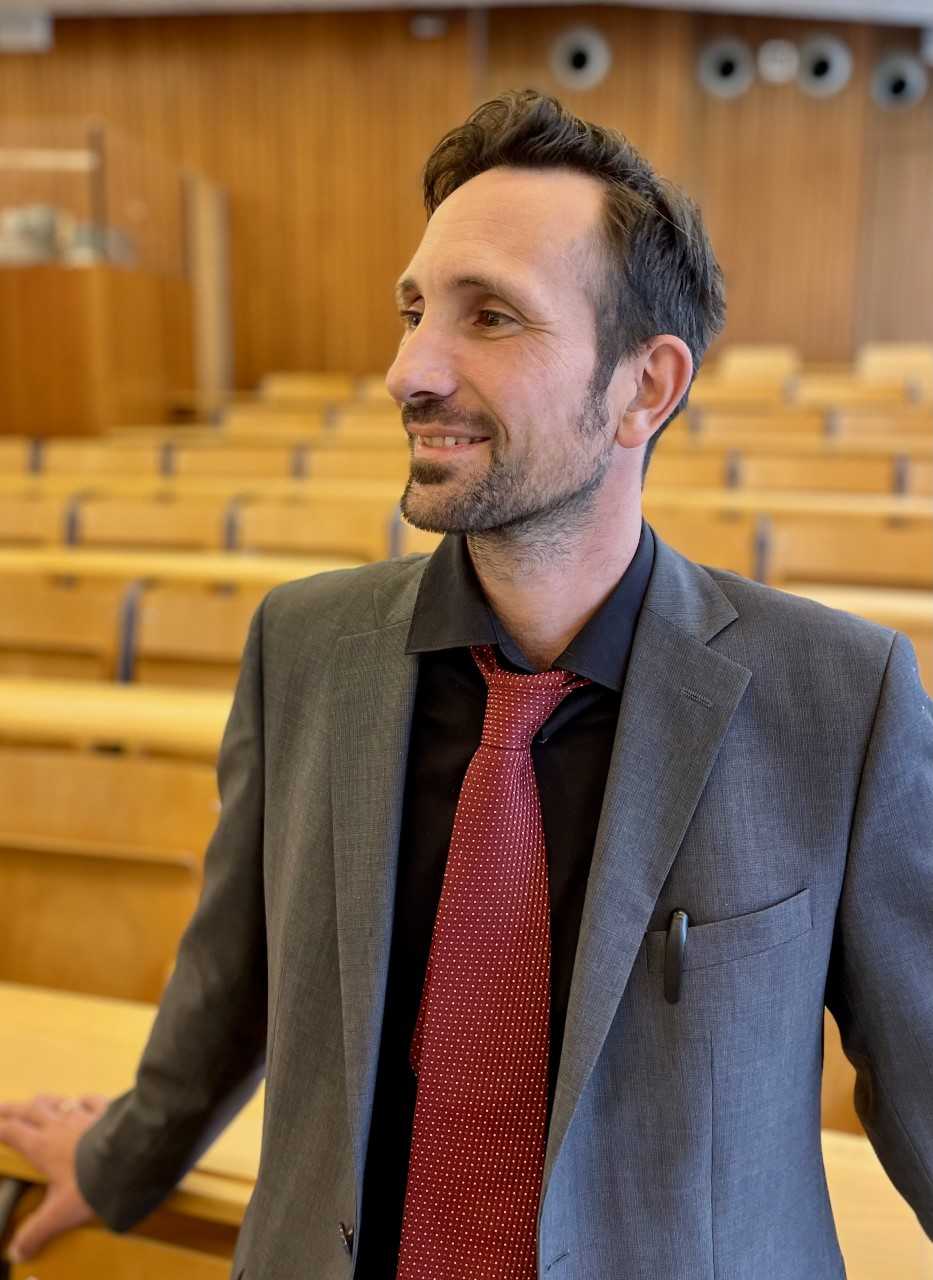
Asad Abdi is a Lecturer in Computer Science at the College of Science and Engineering. His research focuses on deep learning, data mining, and artificial intelligence , with applications in traffic analysis, educational technology, and maritime logistics. He has published extensively on topics like social media-based traffic forecasting, fake news detection, and vessel arrival prediction. Abdi’s work bridges theoretical advancements in machine learning with practical challenges in domains such as transportation systems and education. He has explored hybrid approaches combining deep learning models with linguistic knowledge and knowledge graphs to address real-world problems. Notable contributions include frameworks for feedback analysis in hybrid classrooms and fusion-based prediction models for vessel arrival times. His recent articles highlight trends in leveraging large language models and multi-feature fusion techniques for tasks like opinion summarization and aspect extraction. Abdi’s research often emphasizes interdisciplinary collaboration, integrating insights from computer science, transportation engineering, and educational psychology. While no formal awards or grants are explicitly listed, his publication record demonstrates sustained contributions to applied AI and data-driven solutions across multiple sectors.
Prof. Dr. Ahmet ÖZMEN is a Professor at Sakarya University's Faculty of Computer and Information Sciences, Department of Software Engineering. He has held various administrative positions including Head of the Software Engineering Department (2019-2028) and Director of the Computer Research and Application Center (2019-2022). With extensive experience in academia since 1991, he has made significant contributions to computer vision, traffic monitoring systems, and sensor technologies. Sakarya University: Professor (2019-present), Associate Professor (2011-2019) Dumlupınar University: Assistant Professor (2001-2011), Research Assistant (2000-2001, 1993-1998) Istanbul Technical University: Research Assistant (1991-1993) Prof. ÖZMEN's research spans computer vision applications for traffic monitoring, indoor air quality systems, parallel computing, and sensor technologies. His work bridges theoretical computer science with practical engineering applications, particularly in developing vision-based systems for nighttime vehicle detection, traffic flow monitoring, and environmental sensing. His interdisciplinary approach combines machine learning, image processing, and embedded systems to solve real-world problems in transportation and environmental monitoring. His publication record shows a clear evolution from parallel and distributed systems in his early career to computer vision and sensor applications in recent years. The majority of his recent work focuses on traffic monitoring systems using computer vision techniques, particularly for nighttime conditions, and indoor air quality monitoring systems using sensor networks. His research demonstrates strong industry and societal relevance, with applications in smart transportation, environmental protection, and educational technology. TÜBİTAK Publication Awards (2006, 2008, 2009, 2010) Physical implementation award from TÜBİDER (2008) Microsoft Certified Professional Certificate (2005) YÖK overseas study scholarships (1993, 1998) Elginkan graduate scholarships (1990, 1991) Prof. ÖZMEN has supervised numerous graduate students across multiple institutions, with a focus on practical engineering problems. His research has been supported by various projects including TÜBİTAK projects, institutional research grants, and industry collaborations. He has led significant research initiatives in traffic monitoring systems, indoor air quality monitoring, and educational technology platforms. His administrative leadership has included directing research centers and shaping curriculum development in software engineering. His work has involved establishing research teams focused on computer vision applications, sensor network development, and educational technology. These teams have produced numerous publications, developed practical systems, and trained the next generation of computer engineers. Current research directions include advanced traffic monitoring systems using deep learning and multi-camera setups for urban planning applications.
Christian Newman is an Associate Professor in the Department of Software Engineering at the Golisano College of Computing and Information Sciences, Rochester Institute of Technology (RIT). He serves as the Graduate Program Director and has expertise in software engineering methodologies, refactoring techniques, and source code analysis. His research focuses on improving code quality, developer practices, and automated documentation. Education: Newman holds a BS, MS, and Ph.D. from Kent State University. His academic background aligns with his current research in software engineering and empirical studies. Research Interests: His work emphasizes identifier naming standards, technical debt management, refactoring strategies, and code reuse. He explores how developers perceive and implement refactoring tools, as well as the role of large language models (LLMs) in programming education and code generation. Publications: Newman's recent work includes studies on identifier semantics, part-of-speech tagging for code analysis, and the performance of LLMs in introductory programming tasks. His research often combines empirical studies with tool development, such as SATDBailiff for technical debt tracking and TSDetect for test smell detection. Teaching & Advising: He teaches courses like SWEN-250 (Personal Software Engineering), SWEN-331 (Engineering Secure Software), and graduate-level thesis supervision. His courses emphasize secure development, software design principles, and team-based projects. Tools & Contributions: Newman has developed tools like srcSlice (static slicing), srcType (type resolution), and SCALAR (identifier analysis). These tools support software evolution, code comprehension, and empirical research in the field.
Raymond T. Ng is a Professor of Computer Science at the University of British Columbia (UBC) and serves as Director of the Data Science Institute . In addition, he is the part-time Chief Informatics Officer at the PROOF Centre of Excellence for the Prevention of Organ Failures located at St Paul’s Hospital. Since 2016 he has held the prestigious Canada Research Chair in Data Science and Analytics. Education B.Sc. (Hons.) Computer Science, University of British Columbia, 1986 M.Math. Computer Science, University of Waterloo, 1988 Ph.D. Computer Science, University of Maryland, College Park, 1992 Research Interests Professor Ng’s research lies at the intersection of data mining , text mining , health informatics , sensor analytics , and databases . Over the past decade he has focused on two major domains: Genomics & Biomarker Discovery: Developing multi-omics biomarker panels for heart, lung and kidney transplant rejection and COPD exacerbations using transcriptomics, proteomics and metabolomics data. Natural Language Processing: Mining and summarizing conversational text such as emails, blogs and meeting transcripts to generate structured metadata and actionable insights. Scientific Awards Canada Research Chair in Data Science and Analytics (2016-2026) Best Paper Award, ACM SIGMOD 2004 Best Paper Award, ACM SIGKDD 2001 Selected among Best Papers of VLDB ’99 & ’98 Governor General’s Gold Medal, UBC (1986) Research Funding & Leadership Since joining UBC in 1992, Professor Ng has continuously secured major peer-reviewed funding from NSERC, CIHR, Genome Canada, CFI, MITACS and industry partners (Google, IBM, SAP). He leads or co-leads several large-scale initiatives: HEARTBiT multi-marker blood test for cardiac transplant rejection (CIHR 2018-2021) MERIDIAN ocean acoustic data infrastructure (CFI 2018-2021) Pan-Canadian Early Detection of Lung Cancer (Terry Fox 2018-2021) Business Intelligence Network (NSERC 2009-2014) Multiple Genome Canada programs on biomarker translation (2004-2018) Laboratories & Teams Professor Ng directs the Data Science Institute and works closely with the Natural Language Processing Research Group . At the PROOF Centre he heads a multidisciplinary team of statisticians, computer scientists and clinicians advancing computational biomarker pipelines from discovery to clinical implementation.
Dr. Ben Swift is a Senior Lecturer at the School of Cybernetics, ANU, specializing in AI, computational art, and cybernetics. He leads the Cybernetic Studio, an interdisciplinary collective exploring cybernetic systems through hardware/software/people collaborations. As a livecoding artist, he performs globally and co-founded the ANU Laptop Ensemble. His research spans generative AI, open-source tools like Extempore, and UX design. Education: PhD in Computer Science (ANU) Projects: Australia's Digital Economy (2022), The Augmented Web (2019) Research focuses on AI creativity, biofeedback interfaces, and computational music. His work bridges technical innovation with artistic expression, evident in projects like TSPNet and adversarial camera systems. Key contributions include Extempore’s development and studies in live coding disruption. Awards unspecified but recognized internationally for interdisciplinary impact.
Alejandro Sánchez Gracia is an Associate Professor at the Universitat de Barcelona's Faculty of Biology, affiliated with the Department of Genetics, Microbiology and Statistics. He leads the Molecular Evolutionary Genetics research group and directs the advanced course in 'Phylogenomics and Population Genomics: Inference and Applications.' Education: Llicenciat in Biology (Universitat de Barcelona, 1998), PhD in Biology (Universitat de Barcelona, 2006) Research Focus: Molecular mechanisms of chemosensory gene evolution in arthropods, development of bioinformatics tools for evolutionary and population genomics, and population genomics of adaptation in Drosophila. His work bridges computational methods with evolutionary biology, emphasizing genomic approaches to study adaptation. Key projects include analysis of chemoreceptor gene families across Panarthropoda, genomic studies of Canary Island endemic species, and development of tools like BITACORA for gene family annotation. He has contributed to major genomic resources such as DnaSP 6 and participated in initiatives like the Earth BioGenome Project. Active in collaborative networks like the European Drosophila Population Genomics Consortium and AdaptNET (Adaptive Genomics Network). Grants and Projects: 2021-2024: PID2020-113168GB-I00 (Ministry of Science, Spain) - Poligenic adaptation in Drosophila 2020-2021: Catalan blind scorpion genome project (Institut d'Estudis Catalans) Labs/Teams: Heads the Molecular Evolutionary Genetics group, collaborating on projects involving spider genomics, chemosensory evolution, and population-level adaptation studies.
Dr. Roy Lederman is an Assistant Professor at the Department of Statistics and Data Science , Yale University. He is affiliated with the Quantitative Biology Institute (QBio) , the Applied Math Program , the Institute for Foundations of Data Science (FDS) , and the Wu Tsai Institute (WTI) . He was awarded the Sloan Research Fellowship (2023) . He previously held a Gibbs Assistant Professorship at Yale (2014-2015) and a postdoc at Princeton University (2015-2018) . Education: PhD in Applied Mathematics, Yale University (2014); dual BSc in Physics and Electrical Engineering, Tel-Aviv University. Teaching: Courses include Computational Tools for Data Science, Signal Processing, and Mathematical Machine Learning. Research Areas: Dr. Lederman works at the intersection of computational biology , structural biology , Bayesian inference , numerical analysis , and machine learning . His recent work focuses on cryo-EM and hyper-molecules for studying molecular heterogeneity, alternating diffusion for common variable recovery, and Zernike polynomials for 3D imaging. He also develops Hamiltonian Monte Carlo methods and randomized DNA sequencing algorithms . Publications Trends: His publications (15 most recent) emphasize structural biology and cryo-EM applications, machine learning (Bayesian deep learning, diffusion maps), numerical analysis (Fourier/Laplace transforms), and computational biology (DNA sequencing algorithms). Key sub-fields include heterogeneity analysis , manifold learning , Hamiltonian Monte Carlo , and Zernike polynomials . Scientific Awards: Sloan Research Fellow (2023) Dr. Lederman actively mentors graduate students and postdocs at Yale, and co-organizes the One World Cryo-EM seminar series . His lab develops open-source software (e.g., prolate function implementation ) and explores theoretical bounds on transforms and common variable recovery in multi-sensor experiments.
Istvan David is an Assistant Professor in the Department of Computing and Software at McMaster University , with research expertise spanning Digital Twins , Model-Driven Engineering , and Sustainability . His work bridges theoretical and applied domains, focusing on smart ecosystems , collaborative modeling , and AI-driven simulation . Key contributions include frameworks for digital twin evolution and interoperability in sustainable systems. Education : BSc, MSc, and PhD in Computer Engineering and Computer Science from Budapest University of Technology and Economics, and University of Antwerp. Research Areas : Digital Twins, Model-Driven Engineering, Reinforcement Learning, Smart Ecosystems, Sustainability, Collaborative Modeling, Cyber-Biophysical Systems, and Software Architecture. Recent Article Trends emphasize AI integration with digital twins, collaborative modeling in industrial contexts, and sustainable systems engineering . His work often combines machine learning with formal modeling to address challenges in technical sustainability and smart agriculture .
Konstantin Voigt, Professor of Musicology II , serves at the University of Würzburg within the Faculty of Philosophy and Institute of Music Research. His research spans medieval Latin song traditions, music theory, notation systems, and digital humanities applications. He also explores 20th-century composers like Arnold Schoenberg and the reception of medieval music in popular culture. Current: Chair of Musicology II, University of Würzburg (2024–) Previous: Tenure-track Professor, University of Freiburg (2020–2024) Education: PhD (Würzburg), MA (Erlangen-Nürnberg), Musicology & Art History Voigt's research bridges premodern music history with digital methodologies, focusing on: Medieval Latin song structures (9th–13th centuries) Development of musical notation and visualization Digital editions as tools for manuscript analysis Intermedial relationships in postmodern composition Stefan George’s poetry in Schoenberg’s works His recent publications analyze scribal practices in Paris 1139 manuscripts and digital approaches to monophonic music. He co-leads the Weave Lead project on French music reception in Central Europe before 1350 and contributes to the Corpus monodicum digital edition. Collaborations include PD Dr. Hana Vlhova-Wörner (Prague) and institutions like the Schola Cantorum Basiliensis.
Daniel Pettersson is a Professor at University of Gävle specializing in educational science with a particular focus on international knowledge measurements, comparative education, and curriculum studies. His work critically examines the hegemony of comparisons in education, particularly through large-scale assessments like PISA, and explores how these influence educational policy and practice. Professor Pettersson's research spans several interconnected domains within educational science. He investigates how international comparisons shape educational discourse and policy, examining the historical development of assessment practices and their impact on national education systems. His work frequently analyzes the production of educational knowledge through data visualization and quantification, revealing how numbers become authoritative in educational decision-making. A significant portion of his research focuses on Swedish education within international contexts, exploring how global educational trends are adopted, adapted, and contested in national settings. His extensive publication record reveals several key trends in his scholarly work. Over the past two decades, Pettersson has traced the evolution of international large-scale assessments from marginal research tools to central policy instruments. His recent work increasingly examines data visualization techniques in educational research and the historical construction of educational knowledge through quantification. He also explores the intersection of teacher education with international assessment frameworks, revealing tensions between global educational discourses and local teaching practices. Professor Pettersson has made significant contributions to understanding how educational policy is shaped by international comparisons. His research demonstrates how assessment data becomes transformed into policy narratives that influence educational reform. He has documented the historical trajectory of international assessment research, showing how it evolved from marginal academic interest to central policy instrument. His collaborative work with scholars like Sverker Lindblad, Thomas Popkewitz, and Tatiana Mikhaylova has been particularly influential in critically examining the political dimensions of educational measurement. His research activities include extensive work with international research teams, participation in major conferences including the Nordic Education Research Association (NERA) and the International Standing Conference for the History of Education (ISCHE), and contributions to systematic reviews of international comparative research. Professor Pettersson's work bridges historical analysis, policy studies, and critical examination of educational measurement practices, providing valuable insights into how global educational knowledge is produced and circulated.
Bryan Lilly is a Professor of Marketing at the University of Wisconsin Oshkosh , where he has been affiliated with the College of Business since 1991. His academic journey includes a Ph.D. from Indiana University (1997), an MBA from Northwestern University (1991), and a BS from The Ohio State University (1985). Education : Ph.D. (Indiana University, 1997), MBA (Northwestern University, 1991), BS (The Ohio State University, 1985) Dr. Lilly's research spans Marketing Education, Sales Pedagogy, Consumer Behavior, and Environmental Advertising . He has pioneered collaborative data collection models for regional workforce development and examined counterproductive work behaviors in sales. His 2024 article on student-teacher behavioral dynamics and 2023 work on patient satisfaction in healthcare marketing highlight his interdisciplinary focus. His recent publications (2016-2024) emphasize pedagogical innovation , sales ethics , and consumer psychology , with keywords spanning education, healthcare, and environmental marketing. Articles frequently address behavioral motivations, word-of-mouth dynamics, and experiential learning. Scientific Awards : College of Business Outstanding Faculty of the Year (2018) Dr. Lilly has served as a thesis advisor for UW Honors students, advised marketing clubs, and participated in university governance through committees like the COB Graduate Programs Committee and UWO Faculty Senate Budget Committee. He also contributes to community initiatives like the Neenah youth support group Brigade and Oshkosh Propel.
George Vasilakopoulos is a Professor in the Department of Digital Systems at the University of Piraeus , where he also serves as Vice-Chancellor for Academic Affairs and Personnel. By law, he is President of the Quality Assurance Unit (MODIP) and the Employment and Career Structure (DASTA) of the university, overseeing the development of modern information systems. He earned his PhD from the University of London and has held leadership roles including Department President, Director of Postgraduate Programs, and Scientific Director of the Digital Health Services Laboratory. PhD: University of London Current Roles: Vice-Chancellor, Department of Digital Systems Professor Labs: Digital Health Services Laboratory His research focuses on Health Informatics , Cloud Computing , and Medical Data Security , with key contributions to: Emergency healthcare process automation Privacy-preserving personal health record systems Context-aware authorization models Cloud-based medical service frameworks Machine learning in clinical data analysis Interoperable health information systems The trends in his 15 most recent articles (2010-2015) reveal a consistent emphasis on integrating cloud infrastructure , semantic technologies , and mobile platforms to enhance emergency care, chronic disease management, and patient data security. His work bridges biomedical engineering , software architecture , and public health policy . He has held advisory roles for the Minister of Health on IT issues, served on hospital boards, and contributed to national committees for healthcare technology standards. His professional activities include project evaluation for Greek and European research programs and authoring three books on health informatics.
Susan Scott is an Associate Professor in the Information Systems and Innovation Group at the Department of Management of The London School of Economics and Political Science. Her research focuses on the intersection of digital innovation and organizational change, particularly examining how information systems reshape work practices and risk management in financial services, travel, and publishing sectors. Education : PhD in Management Studies (University of Cambridge, 1993-1998), MSc in Analysis, Design and Management of Information Systems (LSE, 1991-1992), BA in History and Politics (SOAS, 1987-1990) Research Interests Digital Innovation Work Practices and Organizational Structuring Organizational Technologies Strategy, Structures, and Information Infrastructures Managing Change Materiality and Practice Research Her recent publications analyze the materiality of digital systems through case studies in book publishing and travel , while historical studies trace the evolution of financial infrastructure like SWIFT . She explores how metadata, software standards, and social media reshape organizational accountability and risk practices. Scientific Awards ICIS Best Paper in Field Award (2007) Nordic Exchange Scholarship (2000-2001) ESRC PhD Scholarship (1993-1996) Best Paper Nominations (Academy of Management, ECIS, ICIS) Selected for European Research Paper of the Year (2014, 2015) Grants and Professional Roles Recipient of grants from SWIFT , British Academy , and HEFCE . She has served on editorial boards of Information and Organization and Organization Science , and co-chaired conferences like IFIP 8.2 and ICIS .
David A. Plaisted is a Research Professor in the Department of Computer Science at the University of North Carolina at Chapel Hill. He joined UNC-Chapel Hill as a full professor after serving on the faculty of the Computer Science Department at the University of Illinois at Urbana-Champaign until 1984. His academic career spans several decades with significant contributions to automated reasoning and computational logic. Bachelor's degree in Mathematics from the University of Chicago (1970) Ph.D. in Computer Science from Stanford University (1976) Professor Plaisted's research focuses on mechanical theorem proving, term rewriting systems, logic programming, and algorithms. His work in term-rewriting systems investigates methods of combining them with first-order theorem provers, including techniques for applying efficient permutation group algorithms to equational theorem proving. In mechanical theorem proving, he has developed a sequence of methods including clause linking with semantics and ordered semantic hyper-linking. His research in logic programming includes developing tests to eliminate the occurrence check in Prolog while maintaining semantics. His work spans theoretical foundations to practical applications in program verification and generation. His recent publications demonstrate continued innovation in automated reasoning, particularly in semantic guidance for theorem proving. His work shows a consistent focus on improving the efficiency and effectiveness of automated deduction systems, with recent contributions to SGGS (Semantically-Guided Goal-Sensitive) theorem proving and analysis of the relationship between semantics and unification in proof systems. Professor Plaisted has served on numerous program committees and editorial boards including the Journal of Symbolic Computation, Information Processing Letters, Mathematical Systems Theory, and Fundamenta Informaticae. He is currently on the editorial board of ACM Transactions on Computational Logic and the electronic Journal of Functional and Logic Programming. He has organized significant conferences including serving as co-chair of the Second International Conference on Rewriting Techniques and Applications in 1987. He has spent several sabbaticals at prestigious institutions including SRI in Menlo Park (1982-1983), the Max-Planck Institute and University of Kaiserslautern in Germany (1993-1994), and research visits to groups in Grenoble and Nancy, France (1998).
Michael P. O'Brien is an Associate Professor of Information Management at the Department of Management & Marketing, Kemmy Business School, University of Limerick. He teaches undergraduate and postgraduate modules in Information & Knowledge Management, Business Analytics Simulation, and Technical Communication, serving as Course Director for the MA in Business Management programme. PhD in Computer Science (University of Limerick) MSc in Computer Science (by research and thesis, University of Limerick) BSc (Hons) in Information Systems His research bridges Data Analytics , Software Evolution , and Educational Psychology , focusing on empirical studies of programmers, instructional design, and gamification in education. Recent publications explore experiential learning and gamification for strategic thinking . Michael supervises Masters students in topics ranging from Cloud Computing Security to Blockchain in Finance , with a focus on Big Data and AI Impacts . His advising style emphasizes practical applications and technology-driven solutions. 2000 : AGB Dwyer Memorial Award for Excellence in Education 2017 : KBS Seed Funding Competition He actively contributes to academic networks like the Irish Learning Technology Association and Psychology of Programming Interest Group , aligning his work with UN Sustainable Development Goals.