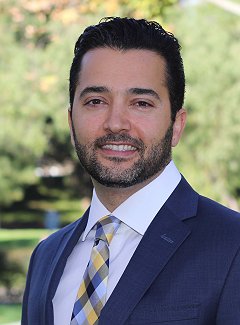
Thijs Roumen is an Assistant Professor at Cornell Tech within the Department of Information Science . He leads the Matter of Tech Lab , focusing on Digital Fabrication and Human-Computer Interaction (HCI) . His work aims to democratize fabrication technology for non-industrial users. PhD from Hasso Plattner Institute MSc in IT Product Design from University of Southern Denmark BSc in Industrial Design from Eindhoven University Research interests include: Laser cutting portability 3D modeling tools Fabrication error prevention Accessible haptic interfaces Recent publications address asynchronous hardware troubleshooting (SplatOverflow, CHI'25), medical robotics (HRI'25), and fabrication artifact data storage (StructCode, SCF'23). His work has received multiple Best Paper Honorable Mentions at CHI and UIST conferences. Scientific contributions include: Key role in CHI meta (2018-present) Chair of German Networking Events at CHI Subcommittee leadership in DIS, CHI, and UIST Active in lab collaborations and invited talks at institutions like Stanford, MIT, and University of Tokyo. Also a World Major Marathon Finisher (Chicago 2023, Berlin 2019).
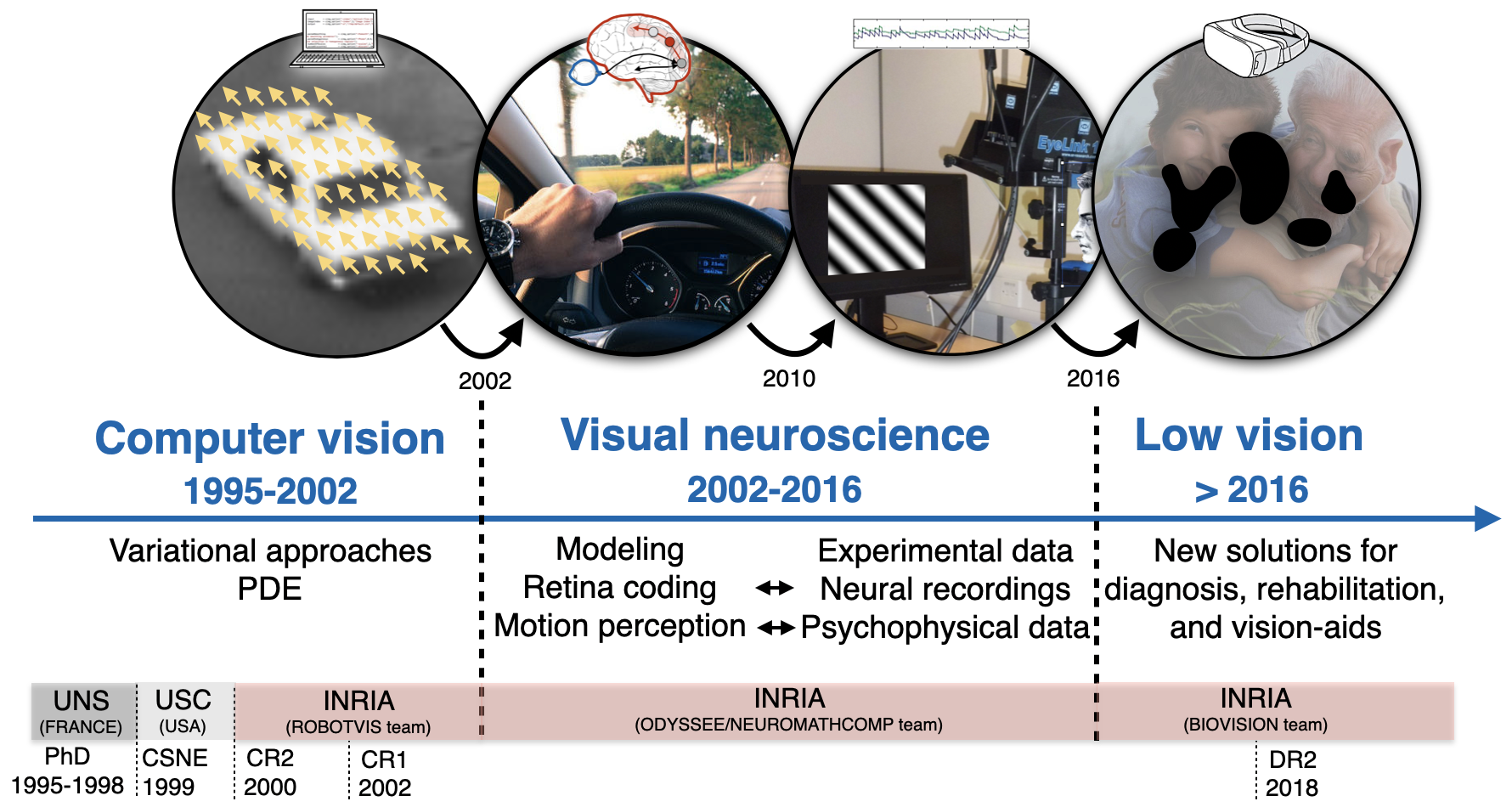
Pierre Kornprobst is a Senior Research Scientist ( Directeur de Recherche ) at Inria Sophia Antipolis – Méditerranée, France. Specializing in vision science and computational neuroscience, he focuses on understanding visual perception mechanisms in visually impaired individuals and developing innovative solutions using virtual reality (VR) and augmented reality (AR). His work bridges biological vision systems with artificial computer vision, emphasizing bio-inspired models. Ph.D. in Mathematics (1998), Nice-Sophia Antipolis University Co-author of a textbook with over 2,000 citations Advisor to 8 Ph.D. and 20+ M.S. students Research interests span bio-inspired computer vision , VR/AR for accessibility , computational neuroscience , and visual perception modeling . Recent publications highlight VR-based assistive technologies, constrained text generation for vision screening, and Python toolboxes for reproducible experiments. His work has been recognized with inclusion in the 21st Annual Best of Computing . He has contributed to five European projects (FACETS, SEARISE, BRAINSCALES, MATHEMACS, RENVISION) and leads work packages in ANR DEVISE (2021–2024).
Ziang Xiao is an Assistant Professor in the Department of Computer Science at Johns Hopkins University's Whiting School of Engineering and a member of the Data Science and AI Institute. His research bridges human-computer interaction, natural language processing, and social psychology to understand human behavior at scale through AI systems. His educational background includes a Ph.D. in Computer Science from the University of Illinois Urbana-Champaign (co-advised by Prof. Hari Sundaram and Prof. Karrie Karahalios), where he also earned dual Bachelor's degrees in Psychology and Statistics & Computer Science under Prof. Dov Cohen. Prior to joining JHU, he was a postdoctoral researcher in the Fairness, Accountability, Transparency, and Ethics group at Microsoft Research Montréal. Xiao's research focuses on three interconnected areas: AI for Social Science (using LLMs to simulate human behavior), Human-centered Model Evaluation (developing frameworks like ECBD for evidence-centered benchmark design), and Information Seeking (studying how AI systems affect information diversity). His work emphasizes democratizing technology to operationalize human intuitions about behavior and decision-making, with notable contributions to LLM evaluation metrics and ethical AI design. Analysis of his recent publications reveals a strong trend toward human-centered AI evaluation, with increasing focus on LLM safety, value alignment, and interdisciplinary applications across social science domains. His work consistently appears in top-tier venues including CHI, ACL, and NeurIPS, with a 2024 CHI Best Paper Award for research on LLM-powered search systems. Best Paper Award at CHI 2024 for 'Generative Echo Chamber? Effect of LLM-Powered Search Systems on Diverse Information Seeking' Multiple publications in ACM/IEEE flagship conferences (CHI, ACL, NeurIPS) Research featured in Johns Hopkins news for social robot interruption handling and chatbot bias studies Xiao actively advises doctoral students and postdocs, with current advisees including Yu Lu Liu, Nikhil Sharma, and Han Jiang. His teaching includes graduate courses on Human-Computer Interaction and Advanced HCI Research Methods. He co-leads research initiatives at the intersection of AI and social science, collaborating with the Data Science and AI Institute to develop frameworks for responsible AI deployment. Current projects examine LLM vulnerabilities in GUI agents, multilingual information disparities, and adaptive decision support systems that balance automation with user control.
Matej Guid serves as an Assistant Professor at the University of Ljubljana's Faculty of Computer and Information Science and conducts research at the Laboratory of Algorithmics. His teaching portfolio includes Topics in Computer and Information Science and specialized Chess instruction. His research spans heuristic search, intelligent tutoring systems, computer game-playing (particularly chess), and argument-based machine learning. He has secured significant funding from the Slovenian Research Agency for projects like 'Artificial intelligence and intelligent systems' (2015-2020) and 'Machine learning for building intelligent tutoring systems' (2011-2014), demonstrating sustained contributions to AI applications in education and gaming. Analysis of his 2012-2016 publications reveals three dominant research trajectories: computational modeling of chess problem difficulty, development of AI-driven educational tools (especially automated chess tutors), and medical knowledge elicitation using argument-based machine learning. His work consistently bridges theoretical AI with practical implementations in game analysis and educational technology. Guid actively participates in research grant initiatives through the Slovenian Research Agency, with current involvement in the 'Artificial intelligence and intelligent systems' program. His laboratory work centers on algorithm development within the Laboratory of Algorithmics, where he collaborates on knowledge refinement systems and adaptive learning tools.
Markus Bick serves as a Junior Professor at ESCP Business School in Berlin, Germany, specializing in Business Information Systems. His academic position focuses on the intersection of information technology and business processes, with particular expertise in knowledge management, convergent systems, e-learning, and simulation technologies. As an active faculty member, he contributes significantly to research and teaching within the business informatics domain at one of Europe's leading business schools. Professor Bick's research interests span multiple interconnected domains within business information systems. His primary focus is Knowledge Management, where he has developed frameworks for sustainable implementation of organization-specific knowledge management systems, as evidenced by his 2004 dissertation from the University of Duisburg-Essen. He also explores Convergent Systems that integrate learning and business information systems, with particular attention to interface standards and integration strategies. His work in E-Learning demonstrates how educational technologies can be effectively embedded within business processes, while his research on Simulation approaches provides methods for modeling complex business scenarios. His publications consistently bridge theoretical frameworks with practical business applications. Analysis of Professor Bick's publication record reveals a clear research trajectory from foundational knowledge management work to increasingly sophisticated explorations of mobile and ubiquitous information systems. His early work focused on knowledge management implementation strategies and building block models, while more recent publications address mobile collaboration systems, ambient intelligence applications, and IT service management in educational institutions. A significant portion of his research investigates the convergence between learning systems and business information systems, particularly how knowledge management principles can enhance both educational and business processes. His work demonstrates consistent attention to practical implementation challenges alongside theoretical development. Professor Bick maintains an active research agenda with publications spanning from 2002 to 2010, showing continued scholarly productivity. His work appears in both academic journals and professional publications, indicating relevance to both theoretical and practical audiences. He has contributed to edited volumes including encyclopedias of business information systems and handbooks on information technologies for education and training, demonstrating recognition by his peers as an expert in his field.
Inès Montaño serves as Associate Professor in the Department of Applied Physics and Materials Science at Northern Arizona University, where she has led cutting-edge quantum research since joining in 2017 after a 13-year career at Sandia National Laboratories. Her work bridges theoretical condensed matter physics with experimental validation through strong interdisciplinary collaborations. Her academic foundation includes a PhD and Diploma in Physics from the Technical University of Berlin, followed by postdoctoral research at Sandia National Laboratories. These experiences established her expertise in quantum phenomena and nanoscale device modeling. Dr. Montaño's research spans transformative quantum domains with particular emphasis on: Quantum network tomography and secure communication protocols Light-matter interactions in hyperbolic metamaterials Quantum information processing with silicon-based qubits Energy transfer dynamics in bio-inspired nanomaterials Many-body quantum systems and quantum simulation Her publication trajectory reveals accelerating contributions to quantum networking (60% of recent work), with significant expansion into quantum education initiatives and bio-quantum interfaces. The 2022-2025 output demonstrates strategic alignment with national quantum infrastructure priorities. Notable recognitions include: Co-PI for NSF's $25M Engineering Research Center for Quantum Networks Leadership in Nanotechnology Collaborative Infrastructure Southwest Back-to-back faculty impact awards for undergraduate mentees (2018-2019) Prestigious Berliner Fellowship for women in research (2002-2004) As director of the Quantum Photonics and Emerging Phenomena (Q-PEP) group, she secures major grants including NSF quantum initiatives while mentoring next-generation scientists. Her SparCQS program actively develops quantum workforce pipelines through K-12 outreach and undergraduate research experiences, positioning NAU at the forefront of quantum education infrastructure.
Christoph Rosenkranz is a Professor of Information Systems at the Faculty of Management, Economics and Social Sciences , University of Cologne. He serves as Academic Director of the Bachelor's program in Business Informatics and Deputy Managing Director of the Cologne Institute for Information Systems . His research focuses on agile software development , digital transformation , and socio-technical systems , with applications in healthcare and business process management. Academic Director, Bachelor's program 'Wirtschaftsinformatik' (2021–present) Founding Director, Master's program 'Business Analytics and Econometrics' (2019–2021) Visiting Researcher at Towson University and Rochester Institute of Technology (2018) His work bridges information systems , project management , and digital innovation , with empirical studies on: Agile practices in software development Time pressure and software quality Communication theory in IS design Electronic healthcare systems Service network effects Recent publications analyze digital market offerings , ethics in machine learning , and psychological safety in teams . He contributes to the ECONtribute: Markets & Public Policy cluster, researching digital transformation's societal impact. Collaborative projects include: HPDnet (DFG-funded child healthcare networks) C-SEB (Social and Economic Behavior research)
Madiha Tabassum is an Assistant Professor of Computer Science at Simmons University with a focus on Human-Computer Interaction (HCI) and Usable Security & Privacy. Prior to joining Simmons, she conducted postdoctoral research at the Cybersecurity and Privacy Institute at Northeastern University . Her academic journey began with a PhD from the University of North Carolina at Charlotte . Her research spans three core projects: (1) Community Custodians examining online moderation dynamics to combat hate speech; (2) Cryptography for Social Good developing interdisciplinary collaboration tools; and (3) Inclusive Design for Neurodivergent Users addressing security/privacy needs through neurodiversity theory. Publications in top venues like USENIX Security, SOUPS, CHI, and IMWUT reveal expertise in smart home privacy, voice assistant risks, and policy communication. 2024: Moderation challenges on Reddit 2024: Moderator mutual support frameworks 2023: Smart home control mechanisms 2020: Community-based access control 2019: Voice assistant data perceptions 2018: Comic-based security policies
David Fonseca Escudero is a Professor at the La Salle Technical School of Architecture within Ramon Llull University . His research focuses on Artificial Intelligence , Learning Analytics , and Generative AI in education, particularly addressing Self-Regulated Learning and Early Dropout Prevention in higher education. Lead researcher in projects like IA3T4DOR (AI & Machine Learning for dropout reduction) PI for ASPA4DOR (Academic Analytics for student profiling) Collaborator in Divintech (Robotics for autism support) His work integrates Augmented Reality and STEAM Education to enhance Student Engagement and Data Privacy in schools. Current projects emphasize GDPR Compliance and Collaborative Learning frameworks.
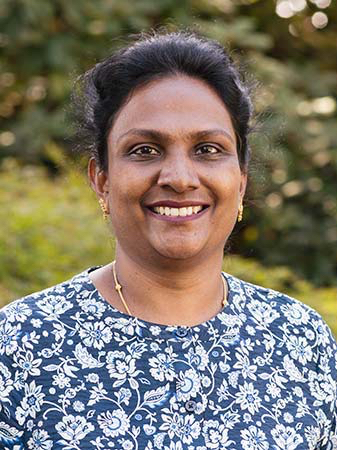
Jasmine Gnanadurai serves as an Associate Professor in the Department of Electrical Engineering & Computer Science at George Fox University's College of Engineering. She teaches a range of courses including Introduction to Computer Science, Software Engineering, Servant Engineering, and Senior Design. Her office is located in Wood-Mar 222, where she holds regular office hours for student consultation. Dr. Gnanadurai's educational background includes: Ph.D. in Computer Science (2017) from Anna University, Chennai, India M.Phil (2006) from Bharathidasan University, Tiruchirappalli, India M.C.A. (2000) from Bharathidasan University, Tiruchirappalli, India B.Sc. in Computer Science (1997) from Bharathidasan University, Tiruchirappalli, India Dr. Gnanadurai's research spans multiple cutting-edge domains in computer science and engineering. Her work in wireless sensor networks has focused on optimization algorithms for zone-based networks, particularly using techniques like DBSCAN clustering and particle swarm optimization. She has made significant contributions to cloud computing architecture, especially in resource allocation and load balancing for peer-to-peer networks. Her expertise extends to machine learning applications across diverse fields including agriculture productivity, student feedback analysis, and crowd behavior recognition. Her recent publications demonstrate a strong interdisciplinary approach, bridging computer science with practical applications in healthcare, education, smart cities, and transportation. She has published extensively on deep learning techniques for EMG-based hand gesture recognition, blockchain applications for electric vehicle charging infrastructure, and immersive technologies for educational settings. These works reflect her commitment to addressing real-world challenges through technological innovation. Dr. Gnanadurai actively contributes to the engineering education mission at George Fox University through multiple channels. She teaches foundational computer science courses, advanced software engineering, and participates in the university's distinctive Servant Engineering program where students develop solutions to humanitarian needs. She also guides senior engineering students through their capstone Senior Design projects, which partner with industry sponsors to solve real-world problems. As part of the College of Engineering, Dr. Gnanadurai works within interdisciplinary teams that collaborate on projects addressing humanitarian needs through the Servant Engineering program. This program connects students with community partners to develop engineering solutions that serve vulnerable populations, reflecting the university's Christian mission of service. Her involvement in Senior Design connects students with industry partners including Xerox, Intel, Garmin, and numerous regional companies, providing students with valuable real-world experience.
Juan Carlos Farah serves as both a Scientific Collaborator and Lecturer at the Fribourg School of Engineering and Architecture, part of the University of Applied Sciences and Arts of Western Switzerland (HES-SO). His academic appointments indicate an active role in both research and teaching within the institution's engineering and technology programs. Dr. Farah holds a PhD in Robotics, Control, and Intelligent Systems from the École Polytechnique Fédérale de Lausanne (EPFL), a Master of Science in Computing from Imperial College London, and a Bachelor of Arts in Economics from Harvard University. This interdisciplinary background spans computer science, engineering, and economics, providing a strong foundation for his current research endeavors. His research focuses on the intersection of human-computer interaction, social neuroscience, and information theory, with particular emphasis on how artificial intelligence with anthropomorphic traits affects human behavior and learning. Farah has made significant contributions to educational technology, especially in the development and evaluation of conversational agents for learning environments. His work examines how chatbots and large language models can be effectively integrated into educational contexts to support students while maintaining pedagogical integrity. An analysis of his recent publications reveals a strong trajectory in human-AI interaction within educational settings, with increasing focus on large language models since their emergence. His research spans multiple dimensions of educational technology including code review systems, computational thinking development, and the psychological impacts of technology on learners. The interdisciplinary nature of his work connects computer science, cognitive science, and educational theory. While no specific scientific awards are mentioned in the provided documentation, Dr. Farah's research has been published in reputable journals and presented at significant international conferences in educational technology and human-computer interaction. His research methodology combines both qualitative and quantitative approaches, often conducting controlled experiments with student populations to evaluate the effectiveness of educational technologies. Farah frequently collaborates with colleagues from multiple institutions, suggesting strong interdisciplinary research networks. His work appears to focus on practical applications of technology in real educational settings rather than purely theoretical investigations. Dr. Farah's research program appears centered around developing frameworks and tools for educational technology, with particular attention to how conversational agents can be designed to support specific learning objectives. His TRACE model for educational chatbot design and work on code review notebooks represent structured approaches to integrating AI technologies into pedagogical practices while addressing the unique challenges of educational contexts.
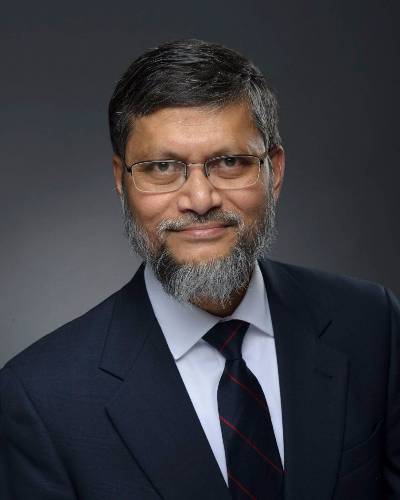
M. Ruhul Amin is a Professor in the Mechanical & Industrial Engineering Department at Montana State University's College of Engineering. His research focuses on heat transfer, fluid mechanics, and energy systems with applications spanning from advanced manufacturing to environmental sustainability. With over three decades of academic experience, he maintains an active research program with numerous publications in leading journals. Dr. Amin's research interests center on computational heat transfer and fluid flow phenomena. His work includes modeling of solidification processes, analysis of nanofluid behavior, development of compact heat exchangers, and investigation of thermal management systems. His research bridges fundamental thermal science with practical engineering applications in energy systems, manufacturing processes, and environmental engineering. His recent publications demonstrate a strong focus on advanced manufacturing techniques including laser welding, friction stir welding, and additive manufacturing processes. He also investigates energy applications ranging from fuel cell systems to solar thermal technologies and emission control systems for developing countries. His work consistently applies computational methods to solve complex thermal-fluid problems. Fulbright Scholar Award, 2008 Montana State University Alumni Association/Bozeman Chamber of Commerce Award for Excellence, 2008 Multiple Outstanding Researcher awards from Montana State University Outstanding Teacher awards in both Mechanical Engineering and Mechanical Engineering Technology Recognition as ASME Faculty Advisor Multiple listings in Who's Who publications across science, engineering, and education Dr. Amin has secured significant research funding for projects including software development for pulse detonation engine optimization, analysis of heat transfer in porous media, thermal management of magnetohydrodynamics systems, and development of compact recuperators for hybrid fuel cell systems. His research has practical applications in space vehicles, aircraft engines, geothermal energy, and manufacturing processes. His laboratory work focuses on computational modeling of thermal-fluid systems with applications in advanced manufacturing, energy systems, and environmental engineering. Current projects include numerical analysis of nanoparticle diffusion during solidification, additive manufacturing process modeling, compact recuperator design for fuel cell systems, and analysis of permanent ice covers in Antarctic lakes.
Wendy Moody is a Senior Lecturer in Fashion Design and Course Leader for the BA (Hons) Fashion Design degree at Anglia Ruskin University (ARU), based at the Cambridge School of Art within the Faculty of Arts, Humanities, Education and Social Sciences. Her academic career spans institutions including Liverpool John Moores University and the University of Manchester, where she managed a Masters in Enterprise program. Her educational background includes a PhD from Liverpool John Moores University (collaborating with University of Liverpool and University of Bangor) on clothing psychology and self-perception, an MPhil in Sensing the Fabric, an MA in Fashion and Textiles from Manchester Metropolitan University, and a BA (Hons) in Fashion and Textiles from Liverpool John Moores University. Wendy's research integrates digital fashion design with psychological neuroscience , examining how self-concept, emotions, and body perception influence wearer behavior. Her work pioneers sustainable digital fashion through CLO3D software, virtual reality, and gaming collaborations to simulate sensory experiences without physical waste. Current projects explore haptic feedback in virtual environments and zero-waste textile applications. Publication trends reveal consistent interdisciplinary evolution from fMRI neuroscience foundations toward digital fashion innovation, with recent work emphasizing sustainability and cross-industry technology integration. Professional recognition includes: Fellow, Higher Education Academy She has supervised doctoral candidates including Mary-Jane Montgomerie Housem (Hausa Wrapper textile research) and Natasha Haswell (plus-size consumer behavior), while securing consultancy grants from Sloggi for product development and Warrington Fashion Week for industry reporting. Her research extends through international fashion illustration exhibitions and active membership in the UK Fashion and Textile Association. Current initiatives focus on advancing digital fashion pedagogy through 3D design modules and expanding gaming collaborations to revolutionize sustainable fashion prototyping.
Dr. Chetan Arora is a Senior Lecturer in Software Engineering at Deakin University's School of Information Technology, part of the Faculty of Science Engineering and Built Environment. He holds a PhD from the University of Luxembourg where he received the best PhD thesis award in the ICT domain. His research focuses on applied Artificial Intelligence in Software Engineering, with particular emphasis on Empirical Software Engineering, Requirements Engineering, and Applied Natural Language Processing. PhD in Computer Science from University of Luxembourg Masters in Software Engineering from Technische Universitat Kaiserslautern (Germany) Bachelors in Engineering (CS) from Thapar University (India) Arora's research interests center on the intersection of AI and Software Engineering, particularly how machine learning and natural language processing can enhance software development processes. His work explores requirements engineering, test automation, software trustworthiness, and human-centric software development. He investigates how large language models can be effectively deployed for tasks like test case generation, requirements analysis, and traceability. His recent publications reveal a strong focus on practical applications of AI in software engineering, with numerous studies examining the real-world implementation challenges and benefits. His publication record shows significant activity in top software engineering venues, with a notable emphasis on AI applications in software engineering processes. His recent work demonstrates expertise in retrieval-augmented generation systems, requirements-driven testing, and human-centric software development approaches. The publications collectively highlight his focus on bridging theoretical AI advancements with practical software engineering challenges. Best Ph.D. thesis award in the ICT domain at University of Luxembourg Arora actively supervises doctoral students working on cutting-edge topics including satellite communication systems, extended reality applications, and human-centered AI requirements engineering. His industry collaborations include work with Department of Defence on projects like Contextually Situated Anomaly Detection and Planning and Optimisation of Resources in Defence Satellite Communication Systems. He previously worked at SES Satellites on applied AI for IoT and Satcom, and as an FNR-PPP research fellow at the University of Luxembourg in software quality assurance. His laboratory work focuses on developing practical AI solutions for software engineering challenges, particularly in requirements engineering and test automation. Current projects involve multi-orbit satellite constellation optimization, dynamic radio resource management, and extended reality enabled human-centric requirements engineering.
Sam Malek is a Professor in the Department of Informatics at the University of California, Irvine's School of Information and Computer Sciences, where he directs the Software Engineering and Analysis Laboratory. Previously serving as Director of the Institute for Software Research (2018-2022), his academic leadership spans software engineering research and institutional management. His research centers on software engineering with specialized expertise in software analysis and testing , mobile computing , security , software architecture , and accessible computing . Malek's work consistently focuses on developing practical techniques and tools for constructing, analyzing, and maintaining large-scale software systems, with recent emphasis on accessibility challenges in mobile and web environments. His publication trends reveal a strategic shift toward accessible computing since 2020, where he pioneered frameworks like Ma11y for web accessibility testing and Groundhog for mobile app crawling. Earlier work established foundations in energy testing (2020), GUI input generation (2021), and architectural analysis, demonstrating methodological evolution from core software engineering to human-centered accessibility solutions. ACM SIGSOFT test-of-time award (2020) National Science Foundation CAREER award (2013) GMU Emerging Researcher/Scholar/Creator award (2013) GMU Computer Science Department Outstanding Faculty Research Award (2011) Malek serves on editorial boards for ACM Transactions on Software Engineering and Methodology and ACM Transactions on Autonomous and Adaptive Systems , while frequently acting as a software expert witness in intellectual property litigation. His research group actively recruits PhD students through UCI's Software Engineering PhD program, with current projects focusing on AI-driven accessibility solutions and mobile testing frameworks. The Software Engineering and Analysis Laboratory under his direction maintains strong industry connections through sponsored research and tool development, particularly in accessibility testing and mobile application quality assurance.