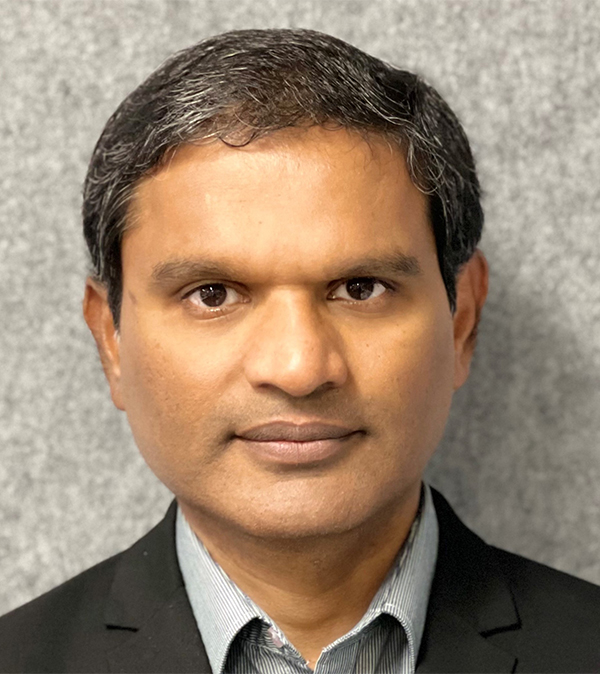
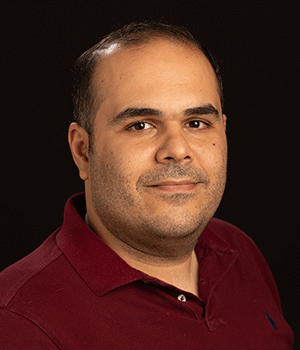
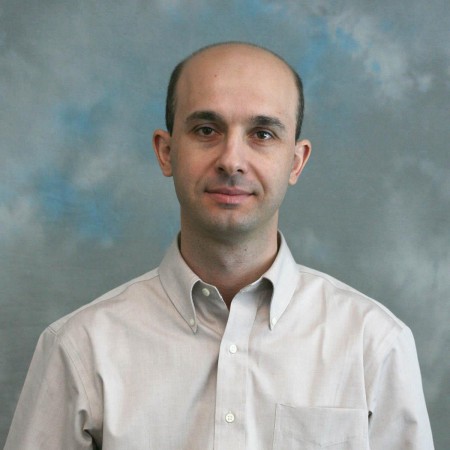
Dr. Todd Humphreys is an Assistant Professor in the Department of Aerospace Engineering and Engineering Mechanics at The University of Texas at Austin. He directs the Radionavigation Laboratory, focusing on software-defined GPS receivers and LEO-based positioning systems. His research emphasizes defending against GNSS spoofing/jamming and exploring satellite navigation innovations. Research interests include satellite navigation, orbital dynamics, and signal processing with applications in ionospheric remote sensing and cybersecurity. He co-founded Coherent Navigation to develop hardened GPS systems using Iridium signals. Recent work focuses on LEO mega-constellations (Starlink, OneWeb) for resilient PNT solutions, spoofing detection via single/dual-satellite geolocation, and multi-modal fusion for urban navigation (TEXR Dataset). His publications address OFDM signal design for ranging, radar-inertial positioning, and anti-spoofing countermeasures. Current projects involve beamforming optimization for LEO terminals and TITAN inertial-terrain navigation.
David Brumley is a Professor of Electrical and Computer Engineering at Carnegie Mellon University with a courtesy appointment in the Computer Science Department. He previously served as Director of CyLab, CMU's Security and Privacy Institute, from 2015 to 2017. His research focuses on developing systems that automatically check software for exploitable bugs using program analysis with security-specific properties. Brumley received his Ph.D. in Computer Science from Carnegie Mellon University, an MS in Computer Science from Stanford University, and a BA in Mathematics from the University of Northern Colorado. Before his academic career, he served as a Computer Security Officer for Stanford University from 1998-2002. Brumley's research focuses on software security techniques that provide users with guarantees. His work sits at the intersection of model checking, formal methods, compilers, and logic, all applied to security problems. He develops efficient symbolic execution, reasoning about bit-level arithmetic in finite fields, sound decompilation, and decision procedures. His research also extends to network security and applied cryptography, focusing on efficient protocols, signature schemes, and privacy-preserving cryptography. A key aspect of his work involves binary code analysis, which allows reasoning about the security of code that actually executes. Brumley's publication record shows a consistent progression from theoretical foundations in program analysis to practical security systems. His work spans symbolic execution, fuzzing, exploit generation, and binary analysis. The Mayhem Cyber Reasoning System, which won the DARPA Cyber Grand Challenge, represents the culmination of his research vision for automated vulnerability detection and patching. His publications demonstrate how theoretical advances in program analysis can be translated into real-world security tools. USENIX Security Best Paper Awards (2003, 2007) International Conference on Software Engineering Distinguished Paper Award (2014) NSF CAREER Award (2010) United States Presidential Early Career Award for Scientists and Engineers (PECASE) (2010) Sloan Foundation Award (2013) DARPA Cyber Grand Challenge Winner ($2,000,000) (2016) Brumley has mentored numerous PhD students who have gone on to successful careers in academia and industry, including co-founders of ForAllSecure. He served as faculty mentor for the CMU Hacking Team Plaid Parliament of Pwning (PPP), which has been ranked #1 internationally and won DefCon 2013. His research has been supported by significant grants including DARPA programs and the NSF CAREER award. He also runs PicoCTF, an annual computer security contest for high school students that has become one of the largest cybersecurity education initiatives of its kind. Brumley leads the development of security systems through both academic research and commercialization. He is the CEO of ForAllSecure, which commercializes the Mayhem system developed through his academic research. His work bridges the gap between theoretical security research and practical security tools used by industry, creating a pipeline from academic innovation to real-world impact.
Mihai Lazarescu is Associate Professor in the School of Electrical Engineering, Computing and Mathematical Sciences at Curtin University. His research focuses on computer networks, cloud computing security, and wireless sensor networks with particular emphasis on energy efficiency and reliability. His research interests include green networking strategies for software-defined networks, energy management in rechargeable wireless sensor networks considering battery imperfections, and developing forensic readiness frameworks for cloud platforms and IoT ecosystems. Recent work addresses multi-stage upgrade optimization for SDNs with budget constraints. Additional research explores anomaly detection in network traffic, real-time industrial monitoring systems for rotary kilns, and robust stream clustering algorithms for dynamic datasets. His work combines theoretical modeling with practical applications in network infrastructure and cybersecurity.
Dr. Ryan Green is an Assistant Professor in the Department of Electrical and Computer Engineering at Mississippi State University. His academic background includes a Ph.D. in Engineering from Virginia Commonwealth University (2019), an M.S. in Electrical and Computer Engineering from Mississippi State University (2013), and a B.S. in Electrical Engineering from the same institution (2011). His research focuses on cutting-edge wireless technologies including: Smart-city communication infrastructures Internet of Things (IoT) network design Optically transparent antennas and RF filters Wireless medical telemetry systems Biocompatible implantable devices Advanced antenna measurement techniques Analysis of his recent publications reveals strong thematic emphasis on: Novel antenna designs using transparent conductive oxides and e-textiles Biomedical applications of wireless technology (implantable devices, biosensors) Environmental monitoring systems using unmanned platforms Innovations in electromagnetic propagation and measurement Smart-city network infrastructure solutions No scientific awards or student advising relationships are documented in the provided materials.
Mert D. Pesé is an Assistant Professor of Computer Science and Founding Director of the TigerSec Laboratory at Clemson University's School of Computing. His research focuses on autonomous vehicle security, adversarial machine learning, generative AI applications in security, and automotive data privacy. He holds a PhD in Computer Science and Engineering from the University of Michigan (2022), an MSc in Electrical Engineering from Technische Universität München (2016), and dual BSc degrees in Electrical Engineering and Computer Science (2015). His work involves collaboration with automotive companies like BMW, General Motors, Ford, Audi, DENSO, and Harman, supported by grants from the US Army GVSC and NSA. Recent projects include DENSO-funded research with Purdue University and leadership in the TigerSec Lab, which has onboarded PhD students Alkim Domeke and David Fernandez and Master’s student Jan de Voor. Key research trends in his publications emphasize securing automotive networks (e.g., CAN Bus vulnerabilities), adversarial attacks on AI-driven systems, and privacy-preserving techniques for vehicular data. His frameworks like FuzzSense and AutoWatch showcase innovations in automotive software testing and driver behavior analysis. Grants and collaborations highlight applied security solutions for modern vehicles, while his TigerSec Lab serves as a hub for exploring cutting-edge automotive cybersecurity challenges.
Dr. Uday Tupakula is Associate Professor in Cybersecurity at the University of New England's School of Science and Technology. With qualifications including BE (Electronics), MIT, and PhD in Cybersecurity from Macquarie University, he previously served as Deputy Director of the Advanced Cyber Security Engineering Centre at University of Newcastle. Research encompasses: Virtualization and cloud security Software Defined Networking (SDN) security Malware analysis techniques 5G network security frameworks Healthcare system security He developed UNE's Master of Cybersecurity and Graduate Certificate programs, creating multiple cybersecurity courses across institutions. With 100+ publications, he chaired ACM ASIACCS 2009 conference and serves on program committees for major cybersecurity conferences. Professional memberships include IEEE, ACM, and Australian Information Security Association.
Wajahat Ali Khan is an Associate Professor in Artificial Intelligence at the University of Derby's College of Science and Engineering. His research focuses on AI-driven solutions for healthcare informatics, cybersecurity, and data integration. He leads interdisciplinary projects involving knowledge graphs, semantic web technologies, and clinical decision support systems. Research interests include applying machine learning to healthcare challenges such as disease subtyping, health data interoperability, and personalized medicine. He also explores cybersecurity in network systems and SDN environments. Key contributions include platforms like the Ubiquitous Health Profile (UHPr) for health data interoperability and the Intelligent Medical Platform for dialogue-based healthcare services. His publications span topics from anti-DDoS models to sentiment analysis for depression detection. Collaborations with institutions like Sungkyunkwan University (South Korea) highlight global impact. Khan’s work emphasizes bridging semantic gaps in healthcare systems through adaptive mediation frameworks and data-driven knowledge acquisition methods.
Hamed Rezaei is an Adjunct Professor in the Department of Computer Science at the University of Wisconsin-Milwaukee, affiliated with the College of Engineering & Mathematical Sciences. He works as a full-time researcher at Rockwell Automation, focusing on computer networks, particularly congestion control and low-latency applications. Education: PhD in Computer Science, University of Illinois at Chicago MS in Computer Science, University of Illinois at Chicago BS in Computer Science, Razi University, Iran His research interests include: Congestion Control Software Defined Networking (SDN) Network Function Virtualization (NFV) Programmable Data Planes Publications highlight expertise in datacenter networking, congestion control, and low-latency systems. Key areas include network protocols, SDN-based traffic management, and security frameworks for large-scale networks. His work spans both theoretical and applied domains, including contributions to datacenter topologies (Superways), flow scheduling (ResQueue), and DDoS detection mechanisms. Contact: rezaeih@uwm.edu
Dr Maryam Bagheri is Senior Lecturer in Cyber Security and Computer Networks at Sheffield Hallam University's School of Computing and Digital Technologies. Her research focuses on Software-Defined Networking (SDN), network automation, and cybersecurity solutions for enterprise environments. Teaching develops industry-aligned skills in network engineering, delivering modules on network automation, enterprise networks, and IoT systems incorporating practical implementation exercises. Research develops adaptive SDN architectures for enterprise security with projects on SASE integration and green networking. Recent publications analyze Wi-Fi standards performance and SDN implementations for campus networks. As Internationalisation Lead, develops global partnerships and student mobility programs. Creates knowledge exchange events connecting students with industry leaders in networking and security.
Dave Denieffe serves as Vice President for Academic Affairs at South East Technological University (SETU), providing strategic leadership across academic operations while maintaining an active research profile in telecommunications infrastructure for developing regions. He accepts PhD students and contributes to SETU's designation as a University of Sanctuary for refugees. His academic credentials include: Masters Degree in Telecommunications Engineering from Dublin City University (awarded January 31, 2003) Bachelors Degree in Electronic Engineering from National University of Ireland, Galway (awarded June 21, 1996) Denieffe's research expertise centers on Internet Exchange Points (IXPs), Network Function Virtualization (NFV), and Software-Defined Networking (SDN), with specialized focus on adapting these technologies for resource-constrained environments in East Africa and Mozambique. His work addresses critical challenges in internet infrastructure deployment through participatory design methodologies and field implementations that bridge theoretical networking concepts with practical development needs. Analysis of his 2017-2020 publications reveals concentrated efforts on distributed IXP architectures, empirical studies of East African internet ecosystems, and elastic network solutions for developing contexts. These works consistently emphasize practical implementation frameworks that enhance connectivity while addressing socio-technical barriers to digital inclusion, demonstrating strong alignment between technical innovation and developmental impact. While no specific scientific awards are documented, his research impact is evidenced by an h-index of 35, substantial Scopus citations, and real-world applications across multiple African countries. As an academic supervisor, Denieffe accepts PhD students and has guided graduate researchers. His current research engagement includes the Pathways Mozambique project (2023-2024) as Team Member, developing technology solutions for women and youth in Niassa province through participatory design approaches addressing agripreneurship and youth unemployment. Operating within SETU's engCORE research environment, Denieffe maintains active international collaborations with institutions in Uganda, Kenya, and Mozambique. His work frequently involves multi-stakeholder partnerships combining academic research with on-ground implementation, particularly through the SETU Digital Education Conference which drives technological transformation in educational practices across the Global South.
Haffay ABREHA is a Doctoral researcher at the University of Luxembourg's Interdisciplinary Centre for Security, Reliability and Trust (SnT), within the SigCom department. His research focuses on advanced networking technologies, including edge computing, satellite communications, and federated learning. He holds a strong interest in network virtualization, resource management, and optimizing mission-critical applications in distributed systems. Contact: haftay.abreha@uni.lu Research Interests: ABREHA’s work spans satellite edge networks, federated learning frameworks, fog computing monitoring, and resource-aware caching strategies. He explores how machine learning can enhance adaptive systems and improve network reliability in dynamic environments. Recent studies emphasize fairness-aware VNF scheduling, SDN/NFV integration, and optimizing content delivery in multi-layer satellite architectures. Labs/Teams: Active member of the SigCom research group at SnT, contributing to interdisciplinary projects on secure and reliable communication systems.
Kamil Sarac is a Professor and Associate Head for Faculty Affairs in the Department of Computer Science at the University of Texas at Dallas (UT Dallas), part of the Erik Jonsson School of Engineering and Computer Science. He holds a Ph.D. in Computer Science from the University of California, Santa Barbara (2002), an M.S. in Computer Science from the same institution (1997), and a B.S. in Computer Engineering from Middle East Technical University (1994). His research focuses on computer networks and protocols, including network monitoring, software-defined network (SDN) security, future Internet architecture, energy-efficient broadcast in ad hoc networks, and overlay networks. He leads projects such as the UTD Cyber Service Academy Scholarship Program and teaches courses like Network Security (CS 6349) and Computer Networks Lab (CS 4396). He directs cybersecurity education initiatives, managing NSF-sponsored CyberCorps and DoD programs, advising scholarship students, and mentoring them toward federal government careers. His lab work includes SDN security exercises and cybersecurity competition management systems like CTF-PM.
Dr. Prasad Calyam is the Greg L. Gilliom Professor of Cybersecurity in the Department of Electrical Engineering and Computer Science at the University of Missouri-Columbia. He also serves as Director of the Center for Cyber Education, Research, and Infrastructure (Mizzou CERI). His research focuses on Cloud Computing, Machine Learning, Artificial Intelligence, Cyber Security, and Advanced Cyberinfrastructure. He has led over $39 million in sponsored projects from NSF, DOE, NSA, and industry partners. Dr. Calyam's work emphasizes interdisciplinary collaboration, particularly in cybersecurity education for neurodivergent populations, drone networking, and blockchain-based systems. He has developed tools like 'Narada Metrics' for network monitoring and contributes to platforms like FlyNet for drone applications. His publications span AI-driven cybersecurity solutions, VR-based learning environments, and edge computing optimization. He holds IEEE Senior Member status and serves as an Associate Editor for IEEE Transactions on Network and Service Management. His recent projects address tactical edge network security, federated learning for drone swarms, and AI-driven anomaly detection. He actively fosters inclusive cybersecurity education through VR curricula and collaborates on medical data governance frameworks.
Dr. Lingfen Sun is a Visiting Associate Professor at the University of Plymouth's School of Engineering, Computing and Mathematics. Previously serving as a Reader (Associate Professor), she specialized in Multimedia Communications and Networks. Her research focuses on Quality of Experience (QoE) management in multimedia services, healthcare technology applications (e.g., EEG/MRI-based biomarkers for Alzheimer’s and Parkinson’s diseases), and cloud security frameworks. She has supervised over 20 PhD/ResM students, contributing to advancements in SDN/NFV networking, AI-driven medical diagnostics, and adaptive video streaming. Teaching responsibilities include Advanced Routing, Machine Learning, and Multimedia Networks modules. Her work addresses critical areas such as QoE-centric network management in 5G systems, healthcare cloud security maturity models, and explainable AI applications in medical imaging. Notable projects include the M2HCS framework for healthcare cloud security and QoEMultiSDN architecture for multimedia service optimization. Her research spans 17+ years, with contributions to video quality prediction over wireless networks, EEG biomarker development, and SDN-based solutions for multimedia traffic. She has maintained academic-industry collaborations in telecommunications and healthcare technology sectors.
Saptarshi Debroy is an Associate Professor of Computer Science at Hunter College and a member of the Doctoral Faculties at The Graduate Center, CUNY. He leads the Distributed Systems and Security (DiSSect) Lab and co-leads the CoSSMO Lab, focusing on resilient distributed systems, edge computing, and cyber security. His research addresses challenges in disaster response systems, federated cloud workflows, and moving target defense mechanisms. He holds a PhD in Computer Engineering from the University of Central Florida and has held roles including Post-Doctoral Fellow at the University of Missouri. Education: PhD (Computer Engineering, UCF, 2014), MTech (Distributed & Mobile Computing, Jadavpur University, 2008), BTech (Information Technology, West Bengal University of Technology, 2006) Research Interests His work spans distributed systems, edge/AI-driven networks, cyber security, and resource optimization in disaster scenarios. Key areas include fog computing frameworks for real-time video processing (EFFECT), secure federated workflows (ADON), and MTD-based cloud defense strategies. He emphasizes practical applications like disaster response and healthcare data security. Grants & Awards Recipient of NSF CAREER Award (2020), NSF grants totaling over $1.1M, and Google Research Award. Notable projects include a trusted framework for health incident response (NSF), volunteer edge-cloud resource allocation (NSF), and DDoS mitigation strategies (NSF). Teaching & Service Teaches graduate courses on distributed systems, cloud computing, and networks at CUNY. Serves on NSF review panels and as chair for IEEE/ACM conferences. Leads initiatives like the Cyber Security Summer School for Women to promote diversity in tech. Labs & Collaborations Directs the DiSSect Lab, which develops edge-native systems for disaster response and secure AI. Collaborates with FDNY, perfSONAR, and NSF-funded testbeds like PAWR. Partnerships include projects with bioinformatics and high-performance computing communities (CyVerse, XSEDE).