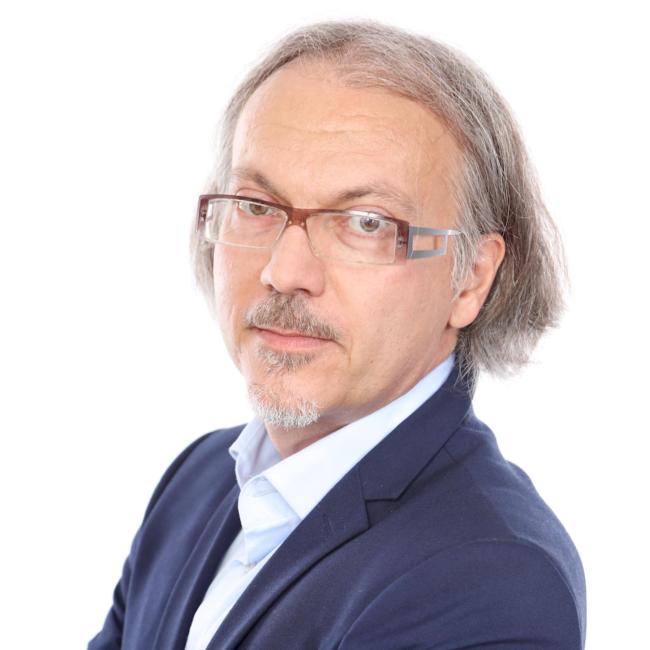
Mariano Scazzariello is a Lecturer at KTH Royal Institute of Technology, Sweden, affiliated with the School of Electrical Engineering and Computer Science and the Department of Network and Systems Engineering. He teaches the course 'Network Systems with Edge or Cloud Datacenters (IK2227)'. His research focuses on advanced networking topics including machine learning in networks, high-speed packet processing, network emulation, and software-defined networking innovations. His work spans contributions to network emulation tools like Kathará and Megalos, stateful packet processing at terabit scales, and leveraging large language models (LLMs) for network configuration and vulnerability detection. Recent research emphasizes low-latency protocols (e.g., SRv6/DetNet integration) and GPU-centric networking on commodity hardware. Mariano’s publications (2020–2025) highlight expertise in network function virtualization, ASIC-based switching, and optimizing network configurations through AI-driven approaches. He has pioneered frameworks for evaluating routing protocols and virtualizing large network scenarios at scale.
Mads Dam is a Professor in Teleinformatics at the School of Computer Science and Communication at Kungliga Tekniska Högskolan (KTH), where he heads the Department of Theoretical Computer Science. His research focuses on computer security, formal methods, and program logics, with particular emphasis on the formal modeling and verification of low-level hardware and software execution platforms for security and application isolation. His educational background includes: PhD in Computer Science from the University of Edinburgh (1990) MSc in Computer Engineering from Aalborg University, Denmark BSc in Information Technology from Aalborg University, Denmark Mads Dam's research interests center on computer security, formal methods, and program logics. His current work focuses on the formal modeling and verification of low-level hardware and software execution platforms such as hypervisors and OS kernels and their underlying hardware. He has made significant contributions to information flow security, verification of microarchitectural systems, and network programming language security. His research bridges theoretical foundations with practical security applications. His recent publications show a strong trend toward verifying low-level systems, with a focus on information flow security for processors, network programming languages (particularly P4), and microarchitectural vulnerabilities. His work combines formal methods with practical security concerns, developing verification techniques that address real-world security challenges in hardware and software systems. The research spans theoretical foundations in temporal and epistemic logics to practical applications in network security and processor verification. His scientific awards and recognition include: Two framework grants from the Swedish Foundation for Strategic Research A junior individual grant from the Swedish Foundation for Strategic Research Project grants and a five-year research fellowship from the Swedish Research Council (VR) Project grants from Ericsson, Microsoft Research, US Air Force, and Vinnova (the Swedish Innovation Agency) Mads Dam has been a principal investigator on numerous research projects and has supervised many graduate students. He has been a partner in several European projects including HATS, S3MS, VerifiCard, LOMAPS, and UaESMC. His research has been supported by substantial grants from major funding bodies, reflecting the significance and impact of his work in computer security and formal methods. He is a founding member of several research centers at KTH, including Access, the CASTOR software research center, and the CDIS center for cyber defense and information security. These centers bring together researchers from multiple disciplines to address complex challenges in cybersecurity and software engineering.
Andreas J. Kassler is a Full Professor of Computer Science at Karlstad University, Sweden, where he has been since 2005. He co-chairs the Distributed Systems and Communication (DISCO) group and focuses on networking, cloud computing, and wireless networks. His research includes software-defined networking, future internet architectures, and network optimization. He has authored/co-authored over 130 peer-reviewed publications, holds 6 patents, and serves on editorial boards of journals like Journal of Internet Engineering . Education : Ph.D. in Computer Science, Universität Ulm (2002) Docent (Habilitation), Karlstad University (2007) M.Sc. in Mathematics/Computer Science, Universität Augsburg (1995) Research Interests : Software Defined Networking (SDN) Programmable Dataplanes Wireless Mesh Networks Time-Sensitive Networking (TSN) Edge Computing Machine Learning for Network Optimization Recent Directions : His work spans TSN scheduling, hybrid P4 solutions for 5G, and explainable AI in energy communities. He explores network resilience, latency optimization, and multi-objective control in microgrids. Service Contributions : Track co-chair for VTC 2015 General chair for Wired/Wireless Internet Communications (WWIC) 2013 Editor-in-Chief of IARIA Journal on Advances in Internet Technology Labs/Teams : Leads DISCO group at Karlstad University. Collaborates with global teams on projects like mmWave backhaul networks and SDN-enabled industrial control systems.
Karl Palmskog is a Lecturer at KTH Royal Institute of Technology in the Division of Theoretical Computer Science and the STEP research group. His work focuses on program verification and proof engineering, with particular emphasis on developing techniques and tools based on proof assistants for constructing functionally correct and secure software systems. Palmskog received his Ph.D. in Computer Science in 2014 from KTH, advised by Mads Dam, and his M.Sc. in Computer Science and Engineering from KTH in 2007. Prior to his current position, he was a postdoc at The University of Texas at Austin and University of Illinois at Urbana-Champaign. His research interests span programming languages, software engineering, and formal verification, with a particular focus on developing techniques and tools based on proof assistants. He is an avid user of the Coq proof assistant for both proving and programming, often complemented by OCaml, and also utilizes HOL4 and other ML family dialects. His work bridges theoretical foundations with practical applications, particularly in the domains of blockchain systems, distributed systems, and automotive software verification. Analysis of his recent publications reveals a strong focus on Coq-based verification, with significant contributions to proof engineering tools and methodologies. His work includes developing tools for regression proving, change impact analysis, mutation testing for Coq projects, and lemma name suggestion using deep learning. There's also a growing trend toward applying formal methods to real-world systems like blockchain protocols and automotive software. Palmskog has been involved in several research projects, including Coq-community Proof Engineering and Distributed Components. His past projects include Trustfull (SSF), Model-based Event Driven Scalable Programming for the Mobile Cloud (NSF), Highly Adaptable and Trustworthy Software (EU FP7), and 4WARD Future Internet (EU FP7). As an educator, Palmskog has served as examiner, course responsible, teacher, and assistant for various courses including Algorithms, Data Structures and Complexity; Degree Projects; Game Theory; Parallel and Distributed Computing; and Programming Paradigms. His work on Chip, a Coq formalization of change impact analysis, demonstrates his commitment to creating practical, certified tools that bridge formal methods with software engineering practice.
Marco Chiesa is an Associate Professor at the KTH Royal Institute of Technology in the Intelligent Network System Lab (INSight) group under the Division of Software and Computer Systems . His research focuses on computer networking, particularly Internet protocols and architectures, with emphasis on security, privacy, network design optimization, and Software Defined Networking (SDN) approaches. Current research areas: SDN, IXPs, stateful packet processing, network monitoring Teaching roles: Advanced Internetworking (IK2215), Computer Hardware Engineering (IS1200), Network Systems with Edge or Cloud Datacenters (IK2227) Email: mchiesa@kth.se Recent publications highlight advancements in high-speed packet processing, network security, and SDN applications. Key trends include leveraging programmable switches for stateful operations, improving BGP hijacking detection, and optimizing network monitoring on multi-pipeline architectures.
Paolo Monti is a Professor and Head of the Optical Networks Unit at Chalmers University of Technology's Department of Communications, Antennas and Optical Networks. With extensive expertise in optical communication infrastructures, he leads research focusing on energy efficiency, network resiliency, programmability, automation, and techno-economics of optical networks. His work spans multiple international collaborations with funding from major research bodies across EU, USA, and Asia. Professor Monti's research interests center around next-generation optical networking technologies. His work explores the integration of artificial intelligence and machine learning with optical networks, quantum-classical network convergence, 6G infrastructure development, and network automation. His research addresses critical challenges in network energy consumption, reliability under failure conditions, and cost-effective deployment strategies for emerging communication technologies. The research group under his leadership develops frameworks for optical network monitoring, security, and resource optimization using advanced computational techniques. Analysis of his recent publications reveals a strong trend toward AI/ML integration with optical networking, with significant focus on quality of transmission estimation, network automation, and 6G readiness. His work increasingly combines quantum technologies with classical optical networks while addressing practical implementation challenges in multi-band elastic optical networks. The publications demonstrate a progression from theoretical network design to practical implementations with real-world validation. Professor Monti has received recognition as a Senior Member of IEEE, highlighting his contributions to the field of communications and networking. As an academic leader, Professor Monti has been involved as Principal Investigator, co-PI, and main technical leader in numerous national and international projects. His educational contributions include teaching courses at undergraduate, Master's, and PhD levels, as well as developing ICT-focused education programs. His research has been supported by major funding bodies including the European Commission, VINNOVA, and Wallenberg Centre for Quantum Technology. The Optical Networks Unit under Professor Monti's leadership operates as a vibrant research environment focusing on both theoretical and experimental aspects of next-generation optical communications. The unit maintains strong collaborations with industry partners and academic institutions worldwide, participating in multiple EU-funded projects and national initiatives focused on quantum communications and 6G infrastructure.
Ehsan Etezadi is a visiting researcher and doctoral student at Chalmers University of Technology, affiliated with the Department of Electrical Engineering (E2) and actively contributing to advancements in Optical Networks . His research focuses on Network Resource Allocation , Deep Reinforcement Learning , and Spectrum Management in Elastic Optical Networks . He has played a pivotal role in the PROTECT project (2021–2024), which addresses resilient and secure networks for critical infrastructures. His recent publications demonstrate expertise in creating AI-driven solutions for spectrum defragmentation, programmable filterless optical network design, and impairment-aware resource allocation in multi-band environments. These works highlight his contributions to WDM Metro Network Optimization , Network Digital Twins , and Transport API Integration . Research Highlights Developing DeepDefrag - a reinforcement learning framework for spectrum defragmentation Advancing Filterless Optical Networks architecture Implementing AI-based Network Control via digital twins Addressing Joint Fragmentation and QoT Challenges
Lena Wosinska is a Research Professor at Chalmers University of Technology, specifically in the field of Optical Networks since June 2019. Prior to her current position, she served as a Professor of Telecommunications at KTH Royal Institute of Technology, where she established and directed the Optical Networks Lab.
Stefan Axelsson is an Associate Professor at NTNU (Norwegian University of Science and Technology) in Gjövik, Norway, and a Senior Lecturer at Blekinge Institute of Technology in Sweden. His research focuses on computer security, digital forensics, and applications of machine learning in intrusion detection and data analysis. He holds a PhD in Computer Science from Chalmers University of Technology (2005), with a thesis on intrusion detection visualization. His work bridges academia and industry, including collaborations with Ericsson. Research interests span forensic file systems analysis (NTFS/ReFS), fraud detection in financial systems, and visualization techniques for security data. Notable contributions include the Bayesvis intrusion detection tool and fraud simulation frameworks like PaySim. He has published extensively in venues like Digital Investigation, DFRWS, and IFIP conferences. Key achievements include a best paper award at EMSS 2013 for forensic agent-based simulation work. His software contributions focus on practical tools for security professionals, emphasizing usability and visualization of complex data patterns.
Slimane Ben Slimane is an Associate Professor and University Lecturer at the Royal Institute of Technology (KTH) in Stockholm, Sweden, where he is affiliated with the School of Electrical Engineering and Computer Science. His academic position combines teaching responsibilities with active research in communication systems. Dr. Ben Slimane's research focuses on critical areas of modern wireless communications: Wireless Communication Systems and 5G/6G Technologies Radio Network Design and Optimization Signal Processing for Communication Systems Network Coding and Cooperative Communications IoT Security and Industrial Wireless Networks Cognitive Radio and Spectrum Management His publication record demonstrates a strong progression from fundamental wireless communication research to addressing contemporary challenges in next-generation networks. Recent work focuses on mmWave communications, beam alignment issues in 3GPP standards, C-RAN architectures for beyond 5G, and security solutions for industrial IoT deployments. His research consistently bridges theoretical frameworks with practical implementation challenges faced by industry. At KTH, Dr. Ben Slimane serves as examiner and course coordinator for numerous advanced courses including Wireless Communication Systems (IK2507), Radio Networks (IK2510), and Signal Processing (II1303). He also oversees degree projects across multiple programs in computer science, electrical engineering, and information technology. Dr. Ben Slimane actively contributes to academic development through examination of bachelor's and master's theses, with particular focus on communication systems, embedded systems, and ICT innovation specializations. His teaching portfolio reflects the interdisciplinary nature of modern communication engineering education at KTH.
Hazem Ali is a Senior Lecturer at Halmstad University's School of Information Technology. He holds a Ph.D. in Electrical and Computer Engineering from Faculdade de Engenharia da Universidade do Porto (FEUP) and an M.Sc. in Computer Science and Engineering from Halmstad University. His research focuses on embedded systems, real-time systems, and dataflow programming models. He has expertise in hardware/software co-design, parallel computing, and optimization of real-time applications. Education: Ph.D. in Electrical and Computer Engineering (FEUP, Portugal) M.Sc. in Computer Science and Engineering (Halmstad University, Sweden) Recent publications highlight his work in cybersecurity for autonomous vehicles, GPU acceleration of MIMO systems, and optimization of dataflow models. His projects include ELLIIT B02 (Beyond 5G Wireless) and CyberInfra (Cybersecure Traffic Infrastructure). Proficiency in tools includes MATLAB, C/C++, Java, VHDL, and dataflow languages like CAL and Sigma-C, with extensive international experience in Sweden, Portugal, and Egypt.
Jonatan Langlet is a postdoctoral researcher at KTH Royal Institute of Technology, affiliated with the Division of Software and Computer Systems (SCS) and the Network Systems Lab (NSLab). Holding a Digital Futures fellowship, his work bridges programmable hardware, network telemetry, and machine learning, with a focus on high-speed monitoring and security technologies embedded in network switches and cards. Education: PhD in Computer Science (2024) from Queen Mary University of London, supervised by Prof. Gianni Antichi Teaching: Distributed Systems (QMUL 2021-2022), Data Structures and Algorithms (Karlstad 2019) Research spans three main areas: In-Network Intelligence : Developing machine learning inference capabilities within programmable switches (P4), optimizing neural networks for hardware constraints Telemetry Systems : Creating RDMA-based telemetry pipelines for zero-CPU, line-rate data collection (Direct Telemetry Access, ACM SIGCOMM 2023) 5G Network Innovation : Designing programmable pipelines for 5G user plane functions (IEEE TMC 2022) His publications in top venues like ACM SIGCOMM, SIGMETRICS, and HotNets demonstrate technical depth in programmable hardware, while community roles (TPC member, reviewer) highlight academic engagement. The Digital Futures fellowship supports his ongoing work on large-scale monitoring technologies.
Adrián Pekár is a Senior Research Fellow at the Department of Networked Systems and Services, Budapest University of Technology and Economics (BME). He holds a PhD in Computer Networks from the Technical University of Kosice (TUKE), Slovakia (2014), and a bachelor's degree from TUKE (2011). His research focuses on optimizing network traffic measurement, monitoring platforms, and enhancing techniques for traffic classification, data reduction, and visualization in traditional and software-defined networks. Adrian's career includes roles as a Virtual Infrastructure Network Engineer at TUKE's Institute of Computer Technology (post-PhD), a Postdoctoral Fellow at Victoria University of Wellington (2016–2019), and an Assistant Professor (Lecturer) at BME (2019–2022). His current work continues to address challenges in network measurement and monitoring systems, leveraging both academic and practical expertise. No scientific awards or grants are explicitly mentioned in the provided text. His research interests emphasize interdisciplinary approaches to network efficiency and scalability.
Edison Pignaton De Freitas is a Professor at the School of Information Technology , Halmstad University. His research focuses on wireless sensor networks and software technologies, particularly in applications involving UAVs and intelligent transportation systems. Research areas include machine learning for energy systems, vehicular network safety protocols, and software-defined networking Recent publications emphasize intelligent infrastructure models (2025), UAV base station positioning (2025), and SDN-based FANET emulation (2025) Key contributions span multiple domains: Scientific Focus: - Machine learning applications in photovoltaic systems and transportation networks - UAV communication optimization and swarm intelligence algorithms - Energy-efficient sensor network design for healthcare and military surveillance - Advanced antenna array positioning methods for vehicular scenarios
Håkan Johansson is a Professor at the Department of Electrical Engineering (ISY) at Linköping University, Sweden, affiliated with the Division of Communication Systems (KS). This division conducts research and education in communications engineering, statistical signal processing, and network science, emphasizing strong industrial collaborations and practical research applications. His research spans Signal Processing , Communications Engineering , and Digital Filter Design , focusing on low-complexity and reconfigurable solutions for communication systems. Key areas include power amplifier linearization, advanced sampling techniques, and equalization algorithms for 5G/6G and massive MIMO systems, with strong emphasis on implementation efficiency and real-world applicability. Recent publications (2024-2025) reveal a concentrated effort on energy-efficient signal processing for next-generation wireless infrastructure. Dominant themes include linearization of power amplifiers in multi-antenna systems, reconstruction of complex signals from nonuniform sampling, and machine learning integration for UAV communications, reflecting industry-driven priorities for 6G development. No scientific awards were documented in the provided materials. Professor Johansson operates within a robust research ecosystem at ISY, supervising PhD students in the Communication Systems division alongside colleagues like Erik G. Larsson (Head of Division). While specific grant details are absent, his extensive publication record indicates sustained funding for high-impact telecommunications research. He contributes to Linköping University's Communication Systems division, a collaborative hub bridging theoretical signal processing with industrial applications. The team specializes in end-to-end communication solutions from algorithm design to hardware implementation, maintaining strong ties with Sweden's telecommunications sector for rapid technology transfer.