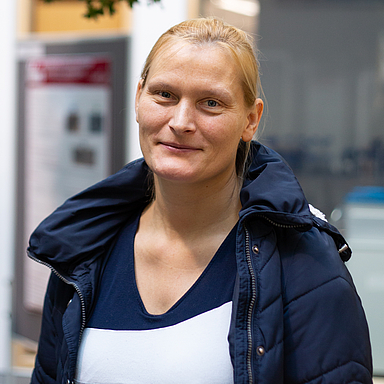
Jonathan Whitmer is a Concurrent Associate Professor at the University of Notre Dame, with appointments in the Department of Chemistry & Biochemistry and Chemical & Biomolecular Engineering. His research spans computational chemistry, materials science, and machine learning applications in physical systems. Education: Ph.D. in Physics (2011), University of Illinois; B.S. in Physics and Mathematics (2005), Kansas State University Whitmer's work focuses on free energy calculations , ionic liquids , and liquid crystal dynamics , with recent studies leveraging machine learning for material discovery. His publications highlight interdisciplinary approaches combining advanced sampling methods , nanomaterials , and GPU-accelerated simulations . Scientific Awards: 2018 NSF CAREER Award 2018 Emerging Investigator in Materials Science, Materials Research Express Whitmer's collaborative projects include host-guest systems , supramolecular hydrogels , and polymer-surface interactions , supported by software development contributions like PySAGES and SSAGES.
Mohammed A. Al-masni is currently serving as an Assistant Professor in the Department of Artificial Intelligence at Sejong University, Seoul, Republic of Korea, a position he has held since September 2022. Prior to this appointment, he worked as a Research Professor at Yonsei University (November 2020-August 2022) and as a Postdoctoral Researcher at the same institution (September 2019-October 2020). His academic journey includes significant research experience in medical imaging and artificial intelligence applications in healthcare. His educational background includes: Bachelor's Degree from Cairo University, Egypt (June 2011) M.Sc. from Cairo University, Egypt (February 2015) Ph.D. in Biomedical Engineering from Kyung Hee University, Republic of Korea (August 2019) Dr. Al-masni's research focuses at the intersection of artificial intelligence and medical imaging. His primary areas of investigation include medical image analysis, deep learning applications for medical diagnostics, and computer-aided diagnosis systems. He has developed innovative approaches for addressing motion artifacts in MRI, cerebral microbleed detection, and skin lesion segmentation. His work demonstrates a consistent pattern of applying cutting-edge deep learning techniques to solve challenging problems in medical imaging, with particular emphasis on improving diagnostic accuracy and efficiency. Analysis of his recent publications reveals a strong focus on medical image processing challenges, particularly in MRI and dermoscopy applications. His research demonstrates an evolution from basic image segmentation techniques to more sophisticated multi-task learning frameworks that address multiple clinical challenges simultaneously. A significant portion of his work targets neurological imaging applications, including cerebral microbleed detection and motion artifact correction in brain MRI. More recently, his research has expanded to include cross-domain applications of deep learning in software engineering and environmental monitoring. While specific awards are not explicitly listed in the provided information, his research impact is evidenced by an h-index of 17 and 2,313 citations according to Scopus metrics. His work contributes to UN Sustainable Development Goals, particularly in the area of good health and well-being. Dr. Al-masni has been actively involved in research collaborations, primarily with Dong-Hyun Kim's Lab at Yonsei University. His research output shows consistent productivity with 57 research outputs documented, including numerous high-impact journal articles in medical imaging and AI venues. His work demonstrates strong industry and academic collaboration, particularly in the development of practical diagnostic tools for clinical applications. His laboratory work has centered around medical imaging applications, with particular focus on the development of deep learning frameworks for medical image analysis. His research group appears to be focused on creating robust, clinically applicable AI tools that can address real-world challenges in medical diagnostics, with emphasis on neurological disorders and skin cancer detection.
Tamás Lovas serves as Associate Professor at the Department of Photogrammetry and Geoinformatics, Faculty of Civil Engineering, Budapest University of Technology and Economics. He teaches advanced courses in Building Information Modeling, Laser Scanning, Remote Sensing, and Intelligent Transportation Systems while supervising diploma theses in Surveying and Geoinformatics Engineering. Education: 1994: High school graduation, Városmajor High School, Budapest 1999: Certified Surveyor and Geoinformatics Engineer, Budapest University of Technology, Faculty of Civil Engineering 2005: PhD (Earth Sciences), Budapest University of Technology and Economics, Faculty of Civil Engineering Research Interests: Dr. Lovas specializes in laser scanning technologies and geospatial data processing with emphasis on airborne and terrestrial point cloud analysis. His work bridges civil engineering applications and computational methods, particularly in infrastructure monitoring and digital representation. Processing, classification, and modeling of airborne laser scanned data Accuracy testing of terrestrial laser scanning Processing and modeling of terrestrial laser scanned data Comparative study of spatial data acquisition technologies His 2022-2025 publications demonstrate accelerating integration of artificial intelligence in point cloud processing, with significant contributions to road surface extraction, urban land cover classification, and BIM automation. Current research trends show strong focus on digital twin development for autonomous vehicles and infrastructure management. Scientific Awards: Republic Scholarship (1998-1999) Karlsruhe Chancellor's Scholarship (1999) ERASMUS scholarship (2000) Korányi Fellowship (2001-2002) János Bolyai Research Scholarship (2008-2011) OHV 1st place (2008) Dean's commendation for ERASMUS committee work (2014) For Students Award - Teaching Department (2017) Advising and Grants: Dr. Lovas mentors students through diploma theses and TDK research projects on topics including object survey with amateur sensors and hull modeling. His research funding includes the prestigious János Bolyai Research Scholarship and international fellowships supporting collaborations with institutions like The Ohio State University. Labs and Teams: As founding member and supervisory board member of the Hungarian BIM Association, he drives industry-academia collaboration. His leadership roles include Deputy Dean of Education at the Faculty of Civil Engineering and responsibility for English language training programs, facilitating international academic exchange.
Hassen AZIZA is a senior Associate Professor and Head of the Memory Team (MEM) within the IM2NP research unit at Aix-Marseille University, specializing in microelectronics and emerging memory technologies. His work bridges academic research and industrial applications through collaborations with ST-Microelectronics, CEA-Leti, Thales, and international universities. He earned both his Master of Science in Electrical Engineering (MSEE) and PhD with honors from Aix-Marseille University. His educational background established the foundation for his expertise in semiconductor devices and memory systems. His research centers on Microelectronics , Emerging Memories , and Neuromorphic Computing , with specific focus on RRAM reliability, computation-in-memory architectures, and hardware security. Current projects address critical challenges in RRAM variability, fault tolerance, and energy-efficient neural network implementations using memristive crossbars. His work spans from fundamental device physics to system-level integration for IoT and biomedical applications. Analysis of his 15 most recent publications reveals dominant trends in RRAM reliability engineering (35% of articles), neuromorphic hardware implementation (30%), and sensor system development (20%). Key subfields include fault-tolerant memory design, variability-aware neural networks, and low-power IoT circuit optimization, demonstrating consistent focus on bridging device physics with practical system requirements. Best Paper Award at IEEE ETS (2021) for RRAM fault analysis CoolGames Silver Medal (2019) for high-altitude balloon project Eiffel Scholarship for PhD student (2018) Guillemin-Cauer Best Paper Award (2014) Multiple IEEE conference best paper awards (2013, 2011) SIMagine contest finalist/silver medalist (2010, 2009) He has supervised 10 PhD students (8 graduated via industry-oriented CIFRE theses), including Eiffel scholarship recipient Hussein BAZZI. His research is funded through strategic industry partnerships with ST-Microelectronics, CEA-Leti, and Thales Silicon Security, plus European initiatives like the French Tech LAB grant for the SMILE air quality monitoring startup project. Current grants focus on RRAM commercialization and neuromorphic hardware development. As leader of the Memory Team (MEM) within IM2NP's Department of Analysis and Design of Electronic Systems, he directs research on resistive memories, neuromorphic circuits, and sensor interfaces. The team maintains strong industry links through joint projects with semiconductor manufacturers and participates in international standardization efforts for emerging memory technologies.
Susanne Gerber is a Professor at iDNA and Adjunct Director at the Institute of Molecular Biology (IMB), Johannes Gutenberg University Mainz (JGU), affiliated with the Faculty of Biology's Bioinformatics department. Her academic journey includes an Assistant Professorship in Bioinformatics at JGU (2015-2020) and postdoctoral research at Università della Svizzera italiana. Her educational background comprises a PhD in Biophysics from Humboldt University of Berlin (2011), an M.Sc. in Bioinformatics from Free University of Berlin and Konrad Zuse Institute (2007), and a B.Sc. in Bioinformatics from Free University of Berlin and Max Planck Institute (2004). Dr. Gerber's research spans Bioinformatics, Computational Genomics, Systems Biology, Molecular Evolution, and Neuroinformatics , focusing on developing computational frameworks for genomic analysis, neurodegenerative disease modeling, and microbiome interactions. Her work integrates machine learning with multi-omics data to address complex biological questions in molecular evolution and neural systems. Analysis of her 15 most recent publications (2024-2025) reveals a strong emphasis on nanopore sequencing applications for RNA modification detection, deep learning frameworks for genomic data enhancement, and neurobehavioral modeling using AI-driven approaches. Key thematic clusters include epitranscriptomics, chromatin dynamics, and computational psychiatry with ethical AI considerations. Her methodological innovations include tools like COMET for network analysis, CCUT for chromatin data enhancement, and ModiDeC for RNA modification classification, demonstrating translational impact across genomics and neuroscience. Dr. Gerber leads research groups at IMB and iDNA focusing on computational genomics, advising students in bioinformatics and securing grants for AI-driven genomic analysis. Her labs develop open-source tools for nanopore data processing and neuroimaging analysis, fostering collaboration between computational and experimental biologists.
Hoa Khanh Dam is Professor and Deputy Head of School (Research) & Head of Postgraduate Studies in the School of Computing and Information Technology at the University of Wollongong, Australia. He serves as Co-Director of the Decision System Lab where he leads research at the intersection of Software Engineering and Artificial Intelligence. His research focuses on developing AI-driven solutions for software quality, cybersecurity, and productivity enhancement. Key interest areas include: AI/IoT autonomous and cyber resilient systems Software Analytics and Mining Software Repositories Large Language Models for software engineering tasks Defect prediction and vulnerability analysis Agile project management optimization Analysis of Dam's 12 publications from 2018-2025 reveals consistent application of machine learning to software engineering challenges. His work shows progressive evolution from traditional ML techniques toward LLM-based frameworks, with major contributions in defect prediction (DeepJIT), vulnerability analysis, microservice recommendation, and agile effort estimation. The research demonstrates strong industry relevance through practical implementations in code review, component prediction, and security systems. Dam co-leads the Decision System Lab at UOW, which develops intelligent decision support systems using AI and data analytics. The lab's work bridges theoretical AI advancements with real-world software engineering applications, particularly in cybersecurity and autonomous systems development.
Zhenyu Chen is a Full Professor and Director of the iSE Laboratory at Nanjing University, specializing in AI-driven software testing methodologies. His research bridges artificial intelligence and software engineering with dual focus areas: leveraging AI to enhance testing processes ( AI for Testing ) and validating AI/ML systems ( Testing for AI ). His research interests center on deep learning framework testing , crowdsourced testing optimization , and Large Language Model applications in verification . Recent work demonstrates innovative approaches to metamorphic testing of neural networks, LLM-based test report analysis, and security hardening of code models against backdoors. Key contributions include the development of mooctest.com and frameworks like DevMuT for mutation testing of deep learning APIs. His publication trajectory reveals evolving focus from crowdsourced testing (2018-2020) to deep learning system validation (2021-2023) and current emphasis on LLM-powered testing solutions. Major venues include ASE, ICSE, and ISSTA where he serves regularly on program committees.
Jacky Wai Keung is an Associate Professor in the Department of Computer Science at City University of Hong Kong with extensive industry connections across the Asia Pacific region. He leads the Artificial Intelligence and Software Engineering Research Group (AiSE) and serves as Chairman of IEEE Computer Society Hong Kong Chapter and Vice-President of Hong Kong STEM Education Alliance. Prof. Keung received his B.Sc.(Hons) in Computer Science from the University of Sydney and Ph.D. in Software Engineering from the University of New South Wales, Australia, before working as a Research Scientist at NICTA (now DATA61, CSIRO) in Sydney. His research spans software engineering, data science, AI, FinTech, machine learning, blockchain systems, and large language models for code generation and analysis. His recent work focuses on applying large language models to software engineering challenges, with publications examining code translation, anomaly detection, and autonomous driving system testing. The research shows a strong trend toward practical applications of AI in software development processes, particularly in FinTech and autonomous systems domains. Among his numerous accolades, Prof. Keung has been named in Stanford's top 2% most highly cited scientists for both 2022 and 2023, received the President's Teaching Excellence Award in 2020, and earned multiple IEEE best paper awards. His editorial service includes roles as Area Editor for Journal of Systems and Software since 2017 and Associate Editor for Information and Software Technology since 2020. Prof. Keung has successfully secured over HK$20 million in research funding through GRF, ITF, and TDG grants, including major projects like 'Smart Intelligent Process Automation for the Mortgage Lending Industry' (HK$2.62 million) and 'Software Data Analytics and Blockchain Technological Advancements' (HK$6 million). His industry collaborations have significantly enhanced student opportunities, with CS student starting salaries increasing by over 15% year-on-year for the past three years. He currently leads multiple research initiatives including RealisticCodeBench for evaluating LLMs in code generation and FedLAD for federated log anomaly detection, with several active projects focused on AI-enhanced InsurTech systems and deep probabilistic reasoning using deep learning.
Gregory Gay is an Associate Professor in the Interaction Design and Software Engineering division within the Department of Computer Science and Engineering at Chalmers University of Technology and the University of Gothenburg, Sweden. His academic profile spans numerous software engineering conferences where he has served as committee member, program chair, and active researcher since at least 2018. Dr. Gay's research focuses on the intersection of software engineering and artificial intelligence, with particular emphasis on: Software Testing and Analysis Search-Based Software Engineering AI for Software Engineering (AI4SE) AI Engineering Automation of development tasks Software Carbon Footprint and sustainability His recent publications demonstrate a strong trend toward applying AI and optimization techniques to software testing challenges, with increasing focus on sustainability aspects of software development. Many studies take an industrial perspective, examining real-world applications in automotive software systems. His work blends theoretical foundations with practical applications, making significant contributions to both academic research and industrial practice in software engineering. Dr. Gay has been actively involved in numerous top software engineering conferences including ASE, ICSE, ESEC/FSE, ISSTA, and ICST, serving on program committees and organizing tracks. His research methodology typically combines optimization, artificial intelligence, and machine learning to help developers deliver complex systems in a safe, secure, and efficient manner.
Yang Yuxiang is an Assistant Professor at the University of Hong Kong's School of Computing and Data Science. His research focuses on software security, adversarial machine learning, and AI safety, with a particular emphasis on formal methods and large language models. He holds a PhD from Hong Kong. Research interests include: Automated program repair using LLMs Cybersecurity in open-source ecosystems Adversarial attacks on vision-language models Formal verification of theorem provers Ethical implications of AI systems Recent publications explore cutting-edge topics such as causality-aware safety testing for autonomous systems , smart contract vulnerability detection , and large model safety at scale . His work bridges theoretical foundations with practical applications in secure software development and AI ethics.
Cyrus Dreyer is an Assistant Professor in Physics and Astronomy at Stony Brook University, with a joint appointment as Associate Research Scientist at the Flatiron Institute's Center for Computational Quantum Physics. His research develops first-principles techniques using density functional theory to study electronic materials, combining condensed matter theories with computational approaches to explore materials properties and device designs. Holds a Ph.D. in Materials from UC Santa Barbara and completed postdoctoral work at Rutgers University. Research focuses on computational methods for predicting electronic properties, defect behavior, and quantum phenomena in materials. Teaches computational physics courses including PHY 604 (Computational Methods in Physics and Astronomy II). Research bridges theoretical models with experimental characterization techniques for materials analysis. Recent publications focus on quantum Monte Carlo methods, 2D materials, defect dynamics, and electronic structure theory. Article trends show progression from fundamental theoretical frameworks to applications in quantum materials and devices.
Kehan Gao serves as a Professor in the Department of Computer Science at Eastern Connecticut State University, teaching Software Engineering, Databases and Information Management, and Data Structures and Algorithms courses. Her research focuses on: Software Engineering and Reliability Software Quality Engineering Data Mining & Machine Learning Computational Intelligence Software Metrics With over 80 refereed publications, she specializes in software defect prediction using feature selection and data sampling techniques to address class imbalance. Recent work (2014-2025) extends these methodologies to Mars image classification and COVID-19 severity assessment, demonstrating cross-domain applicability of her ensemble learning approaches. No scientific awards were documented in available materials. Information regarding student advising, research grants, and laboratory affiliations was not provided in the source text.
Riccardo Cantoro is an Associate Professor in the Department of Control and Computer Science (DAUIN) at Politecnico di Torino, where he is a member of the College of Computer, Film and Mechatronics Engineering and the College of Mechanical, Aerospace and Automotive Engineering. He is affiliated with the CAD - Electronic CAD & Reliability Group and the CARS@PoliTO Interdepartmental Center for Automotive Research and Sustainable Mobility. His work bridges academic research and industrial applications through multiple commercially funded projects. Scientific Disciplinary Sector: IINF-05/A - Information Processing Systems ERC Sectors: PE7_4, PE6_2, PE6_11, PE6_12 His research focuses on functional safety, functional testing, and microprocessor testing, with a strong emphasis on embedded systems and reliability. He applies machine learning and formal methods to enhance test efficiency and system robustness, particularly in automotive and safety-critical domains. His work integrates computer-aided design, fault modeling, and resilience assessment in both hardware and AI systems. The recent publications highlight a trend toward data-efficient and intelligent testing methodologies, combining machine learning (e.g., TabPFN, active learning) with traditional electronic design automation. Topics include microcontroller performance screening, CNN resiliency, FeFET device testing, and system-level test optimization, reflecting a cohesive research agenda in trustworthy computing and hardware reliability. Scientific Awards: No awards explicitly mentioned in the provided texts. Advising and Grants: Dr. Cantoro supervises numerous PhD students in Computer and Systems Engineering, focusing on functional safety, test methodologies, and AI for CAD. He leads multiple industry-funded research projects, including collaborations with Infineon Technologies and Dana-TM4 Italia, on topics such as ATPG tools, speed monitor modeling, and power module reliability. His role as Scientific Manager/Head underscores his leadership in applied research and technology transfer. Labs and Teams: He is a core member of the CAD - Electronic CAD & Reliability Group (DAUIN) and contributes to the CARS@PoliTO center, fostering interdisciplinary research in automotive systems and sustainable mobility.
Mariagrazia Graziano is an Associate Professor at the Department of Applied Science and Technology (DISAT) at Politecnico di Torino, where she also serves as Director of the Teaching and Language Lab (TLLab). Her academic career spans multiple institutions, including her involvement with doctoral colleges at the University of Palermo for 'Technologies and Methods for University Education' from 2022-2025. Her research interests are at the forefront of nanotechnology and quantum computing, focusing on areas including: Molecular field-coupled nanocomputing Logic-in-memory computing architectures Quantum hardware design and optimization Single-molecule devices for logic and memory applications Nanomagnetism and spintronics Micro-for-Nano (M4N) Systems for Single Molecule Sensors Dr. Graziano's work bridges fundamental physics with practical applications in electronics, with particular emphasis on next-generation computing paradigms that address the memory-wall problem and explore alternatives to traditional von Neumann architectures. Her research has significant implications for fields ranging from molecular electronics to quantum information processing. Her recent publications demonstrate a strong focus on molecular field-coupled nanocomputing, quantum optimization techniques, and single-molecule device modeling. These works reveal a consistent research trajectory toward developing novel computing architectures that leverage quantum effects and molecular-scale phenomena to overcome limitations of conventional semiconductor technology. Dr. Graziano has received notable recognition including the prestigious Marie Curie Intra-European Fellowship for Career Development from the European Commission (2014). She serves as Associate Editor for FRONTIERS IN ELECTRONICS (since 2022) and JOURNAL OF COMPUTATIONAL ELECTRONICS (since 2019), and has participated in program committees for major conferences including the IEEE Design Automation and Test Conference Europe. As an advisor, Dr. Graziano mentors numerous PhD students working on cutting-edge research in quantum computing, molecular electronics, and nanotechnology. Her supervision spans multiple doctoral programs at Politecnico di Torino, with students exploring topics from quantum algorithms for urban traffic optimization to single-molecule junctions for next-generation electronics. Additionally, she leads several research projects including TENS (Toward Excellence in Nanocharacterisation of single-molecule Sensors) and previously served as Scientific Leader for the Quantum Computing e Quantum Networking project. Dr. Graziano is actively involved in the VLSILAB research group, where she contributes to advancing the state-of-the-art in electronic design and nanoscale computing technologies. Her work on patents, particularly the 'Device for Realizing Boolean Logic Functions XOR XNOR Inside Racetrack Memory,' demonstrates her commitment to translating theoretical research into practical technological innovations.
Professor Steve Counsell is a distinguished academic in the Department of Computer Science at Brunel University London's College of Engineering, Design and Physical Sciences. Holding a PhD from Birkbeck, University of London (2002), he previously served as a Lecturer at Birkbeck and brings industry development experience to his academic role. As a Fellow of the British Computer Society, his career bridges theoretical research and practical software engineering applications. PhD in Software Engineering from Birkbeck, University of London (2002) Former Lecturer at Birkbeck Department of Computer Science Industry software development experience prior to PhD Professor Counsell's research centers on empirical software engineering with particular focus on software metrics, refactoring techniques, code smells, fault analysis, and agile methodology implementation. His work consistently emphasizes industry collaboration, addressing real-world challenges faced by developers and project managers. A significant portion of his research investigates the relationship between software structure metrics and maintainability, with extensive studies on object-oriented systems evolution and web application engineering. Analysis of his recent publication trends reveals a sustained focus on empirical validation of software engineering practices, with increasing emphasis on industrial case studies and reproducibility of results. His work spans both theoretical metric development and practical application in commercial environments, particularly examining how structural code properties correlate with fault-proneness and maintenance effort. Fellow of the British Computer Society Professor Counsell actively supervises doctoral research, currently guiding three PhD students while having successfully completed nine PhD supervisions since 2004, all within software engineering and information systems domains. His research has attracted significant funding including EPSRC grants EP/E055141/1 (as Co-investigator studying program slicing and faults), EP/H019685/1 (with Moorfields Eye Hospital on glaucoma data analysis), and current project EP/L011751/1 exploring fault prediction techniques in collaboration with industry partners. His research activities are coordinated through the CIDA research group at Brunel, where he maintains strong collaborations with industry partners to ensure practical relevance of his empirical studies. Current projects focus on analyzing industrial fault data to determine which prediction techniques provide the most accurate explanations of software faults in real-world systems.