Stephan Thesmann is a Professor of Business Informatics at Pforzheim University, specializing in multimedia application systems. He holds a doctorate in business administration and has been active in academia since the 1990s. His career includes roles as a visiting professor at ESC Clermont Graduate School of Business and leadership in e-learning initiatives. Focus areas: E-Business, AI applications, human-computer interaction, and SEO/SEM Key projects: University-wide e-learning implementation (2003-2007), international Digital Enterprise Management program (2016-2019) Leadership roles: Dean of Studies for Business Informatics (2013-2020) His research explores digital business process optimization, accessible web design, and search engine strategies. He has authored textbooks including 'Interface Design' and 'Wirtschaftsinformatik für Dummies'. Scientific awards include the 2018 Teaching Award from the Faculty of Business and Law. He actively contributes to program accreditation and serves on Pforzheim University’s IT Advisory Board.
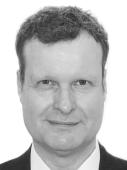
Frank R. Kschischang is a Distinguished Professor of Digital Communication in the Edward S. Rogers Sr. Department of Electrical and Computer Engineering at the University of Toronto, where he has been a faculty member since 1991. He also served as the Associate Chair for Graduate Studies from 2015 to 2018, and is a registered Professional Engineer in Ontario, Canada. Education: B.A.Sc. (Honours) in Electrical Engineering, University of British Columbia, 1985 M.A.Sc. in Electrical Engineering, University of Toronto, 1988 Ph.D. in Electrical Engineering, University of Toronto, 1991 Research Interests: Professor Kschischang’s research is centered on channel coding techniques and their application to wireline , wireless , and optical communication systems . His work spans error-correcting codes , LDPC codes , network coding , and iterative decoding algorithms . He has contributed foundational results in factor graphs , staircase codes , and nonlinear Fourier transform-based communication . Scientific Awards: IEEE Fellow (2006) Fellow of the Royal Society of Canada (2012) Fellow of the Canadian Academy of Engineering (2018) Canada Research Chair (Tier I, 2001–renewed 2008) Killam Research Fellow (2010) IEEE Information Theory Society Paper Award (2018) IEEE Communications Society & IT Society Joint Paper Award (2010) Canadian Award in Telecommunications Research (2012) University of Toronto Distinguished Professor of Digital Communication (2015) Aaron D. Wyner Distinguished Service Award, IEEE ITSoc (2016) Advising & Grants: Professor Kschischang has supervised a large cohort of graduate students and postdoctoral fellows. His recent PhD graduates include Masoud Barakatain, Lei M. Zhang, Christopher G. Blake, Siddarth Hari, and Siyu Liu. Current and former group members are actively supported by NSERC, Canada Foundation for Innovation, and industrial partners. Labs & Teams: He leads an active research group within the Communications Group at the University of Toronto. The group focuses on theoretical and experimental aspects of coding and communication, with strong ties to the Optical Networks Laboratory and Institute for Optical Sciences . The lab maintains open-source software tools such as ZipperSim and ZMG for research and education.
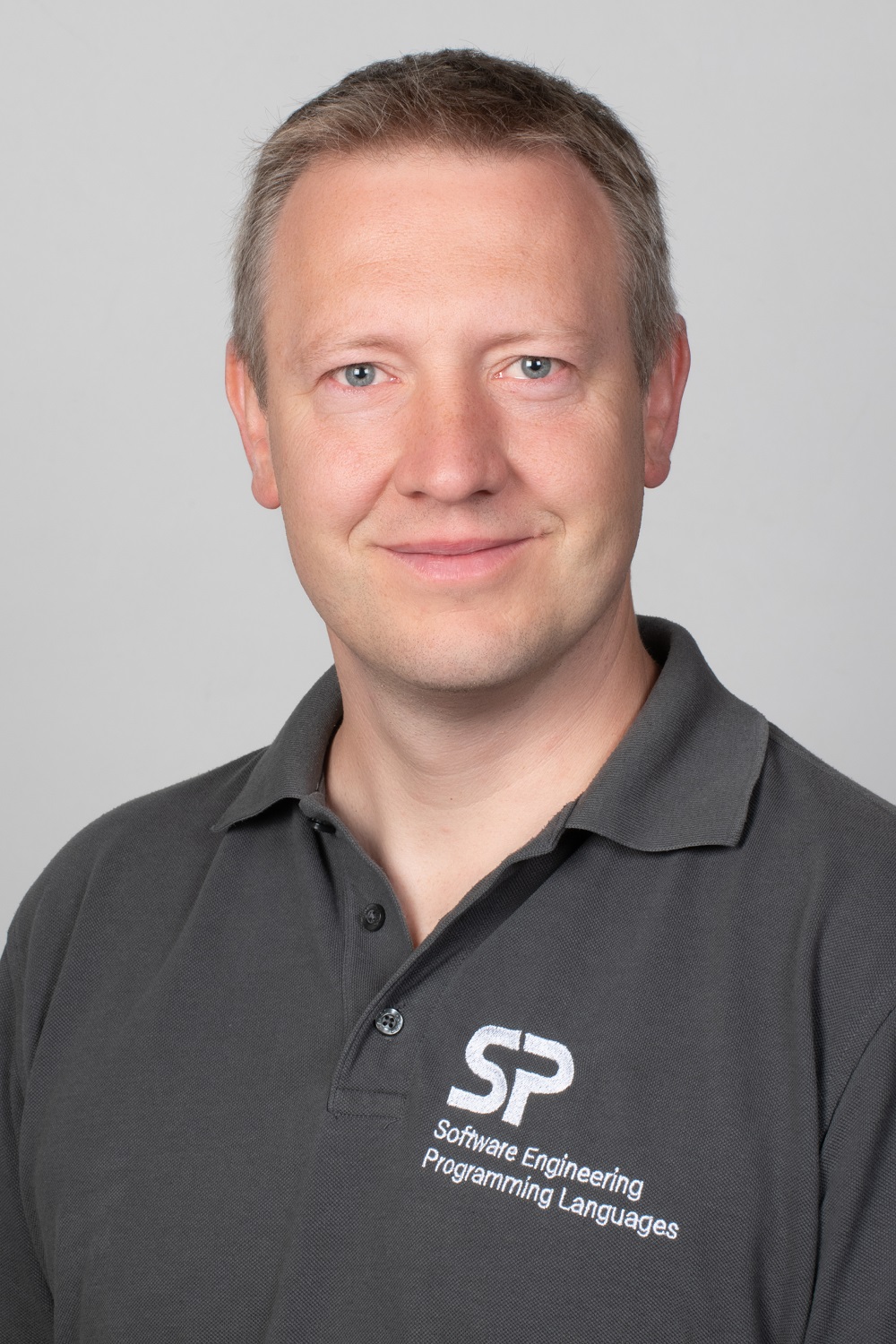
Dr. Alexander Raschke is a Researcher at Ulm University's Institute of Software Engineering and Programming Languages, where he focuses on improving graphical diagram editors' usability through empirical evaluation and novel interaction techniques. His work spans Abstract State Machines (ASMs), software engineering team processes, and functional programming education. His primary research interests include: Usability of graphical diagram editors and modeling tools Abstract State Machines for formal specification Software engineering challenges in team-based development (communication, workload distribution, quality assurance) Functional programming with Haskell (over 10 years of teaching experience) Recent publications (2023-2025) demonstrate a strong focus on collaborative modeling systems, with significant contributions to versioning approaches for blended modeling environments, query languages for evolving models, and empirical studies on diagram editor usability. His work bridges theoretical formal methods with practical software engineering challenges. As responsible for software engineering projects in academic curricula, he actively develops solutions for team-based software development challenges including continuous integration/deployment, communication frameworks, and programming skill development. He leads the CoreASM project focused on debugging support for Abstract State Machines.
Spjeldvik is a Professor in the Department of Physics at Weber State University's College of Science since 1985, with expertise in space science, astronomy, computational physics, and theoretical physics. His career spans multiple prestigious roles including NASA Research Principal Investigator (1991-1997), Senior Research Physicist at Boston College (1983-1985), and Principal Software Developer/CEO at Nordmann Research and Development, Inc. (1997-Present). Education: Not explicitly mentioned but inferred through professional roles including Post.Doc. at National Academy of Science/NRC (1975-1977) Research Interests focus on: Magnetospheric physics and radiation belts Cosmic ray interactions with planetary magnetospheres Computational modeling of space particle environments Atmospheric radiation phenomena (X-rays, gamma rays, neutrons) Space weather impacts on terrestrial systems Plasma dynamics in planetary magnetic fields Recent Publications (2013-2022) demonstrate consistent work in: Magnetospheric antiproton distributions Planetary radiation belt modeling Heavy ion dynamics across solar system bodies Atmospheric radiation monitoring in tropical regions Space weather impacts on particle acceleration Cosmic ray induced radiation phenomena Awards : Post.Doc. Awardee, National Academy of Science/NRC Professional Collaborations span 20+ international institutions including NASA, RIKEN, Boston University, University of Bergen, and Brazilian space agencies. His work bridges theoretical physics, computational modeling, and space environment monitoring with continuous engagement in spacecraft data analysis (POLAR, OHZORA, CORONAS-F) since the 1980s.
Dr. Anna Kahler is a computational researcher at the National High Performance Computing Center Erlangen (NHR@FAU) at Friedrich Alexander University Erlangen-Nuremberg. She specializes in optimizing molecular dynamics simulations on high-performance computing infrastructure, with primary focus on GROMACS performance across diverse hardware architectures including GPUs and CPUs. Her research centers on computational biophysics and high-performance computing, specifically: Runtime parameter optimization for molecular dynamics software GPU acceleration strategies for biomolecular simulations Performance benchmarking across CPU and GPU architectures Support for complex simulation setups including multi-GPU configurations and replica exchange molecular dynamics Dr. Kahler's publication history demonstrates consistent expertise in protein structure modeling and molecular dynamics, particularly regarding G-protein coupled receptors and amyloid-beta oligomerization. Her recent work has shifted toward practical HPC optimization challenges rather than fundamental biological questions. She maintains an active technical blog documenting performance characteristics across modern hardware platforms and provides user support through the NHR@FAU HPC Café initiative. Her current work focuses on hardware-specific optimization for molecular simulation workloads, with recent publications analyzing GROMACS performance on ARM architectures, AMD CPUs, and next-generation GPU hardware. She actively supports researchers with challenging simulation configurations through documented case studies on multi-GPU setups and non-standard REMD implementations.
Navid Zeraatkar, PhD, is a Lecturer at the T.H. Chan School of Medicine within UMass Chan Medical School, specializing in Radiology. His research focuses on advanced imaging technologies and computational methodologies in nuclear medicine. BSc in Electronics Engineering from Ferdowsi University of Mashhad MSc in Medical Radiation Engineering from Shahid Beheshti University PhD in Molecular & Cellular Imaging from Tehran University of Medical Sciences Dr. Zeraatkar's work spans Medical Imaging , Nuclear Medicine , and Biomedical Engineering , with particular emphasis on: Optimization of SPECT/PET systems Image reconstruction algorithms Collimator design and radiation detection Deep learning applications in medical imaging Partial volume correction techniques Small-animal imaging systems His publications (2011-2025) demonstrate expertise in gamma camera technologies, computational modeling, and translational imaging research. Key collaborations include Michael A. King and other experts in biomedical instrumentation. Dr. Zeraatkar contributes to the King Lab at UMass Chan Medical School, working with teams on preclinical and clinical imaging solutions. Current projects focus on adaptive multi-pinhole SPECT systems and AI-driven image enhancement.
Milos Gligoric is an Associate Professor in the Department of Electrical and Computer Engineering at The University of Texas at Austin. His research focuses on software engineering and formal methods, particularly in software testing (test generation and regression testing), proof engineering, systems-supported software engineering, and software engineering for scientific computing. He holds a Ph.D. from the University of Illinois at Urbana-Champaign (2015) and M.Sc./B.Sc. degrees from the University of Belgrade. Research Interests: Improving software quality and developer productivity through automated testing techniques, compiler optimizations, and formal verification methods. Recent work explores applications of large language models in test generation and code evolution. Publication Trends: Recent articles (2023-2025) show strong emphasis on LLM applications for test generation, JIT compiler testing, Python/C++ performance optimization, parallel computing, and innovative testing tools. Work frequently appears at top venues like ICSE, FSE, ISSTA, and OOPSLA. Scientific Awards: ACM SIGSOFT Outstanding Doctoral Dissertation Award David J. Kuck Outstanding PhD Thesis Award Multiple ACM SIGSOFT Distinguished Paper Awards Best Paper Award nominations (ICST 2012, ICS 2021) New Ideas and Emerging Results Distinguished Paper Award Research Support & Advising: Funded by Army Futures Command, Cisco, DOE, Google, Huawei, NSF, Runtime Verification, and Samsung. Mentors 7 PhD students and has graduated 12 PhD/MS students. Maintains industry collaborations with DBT (part-time contractor), Katana Graph, and Samsung. Labs & Tools: Leads UT Austin's software engineering research group. Developed multiple open-source tools including Ekstazi (regression test selection), mCoq (mutation analysis for Coq), Roosterize (lemma suggestion for Coq), and JAttack (JIT compiler testing).
Dr. Arjun Radhakrishna is a Researcher at Microsoft in the PROSE team, specializing in program synthesis and formal methods . His work focuses on developing tools to ensure correctness and optimize soft specifications like performance and energy consumption in concurrent and embedded systems. He previously held post-doctoral positions at the University of Pennsylvania and completed his PhD at IST Austria under Prof. Thomas Henzinger.
Ajay Kumar is a prominent researcher and academic with extensive contributions across multiple domains including Operations Research, Artificial Intelligence, Blockchain, and Biometric Recognition. His work spans a wide range of topics, from digital transformation in supply chains to machine learning applications in healthcare and software engineering. He has collaborated with numerous scholars and published extensively in high-impact journals and conferences. Research Interests: Operations Research, AI in Healthcare, Blockchain Applications, Biometric Recognition, Software Reliability, Digital Transformation Publications: Kumar has authored numerous publications in journals like Annals of Operations Research , IEEE Transactions on Engineering Management , and SN Computer Science , as well as conferences such as CVPR and IC3I. Collaborations: Kumar has worked with leading experts like Kim Hua Tan, Shivam Gupta, Seema Bawa, and others, contributing to interdisciplinary research in supply chain, data science, and IoT. Key Contributions: His research includes innovative frameworks such as blockchain-enabled supply chains, hybrid AI models for diabetes prediction, and scalable tools for genomic data analysis. Emerging Trends: Kumar’s recent work focuses on explainable AI, fake news detection, and integrating IoT with blockchain for secure and efficient systems across health, logistics, and UAV communication.
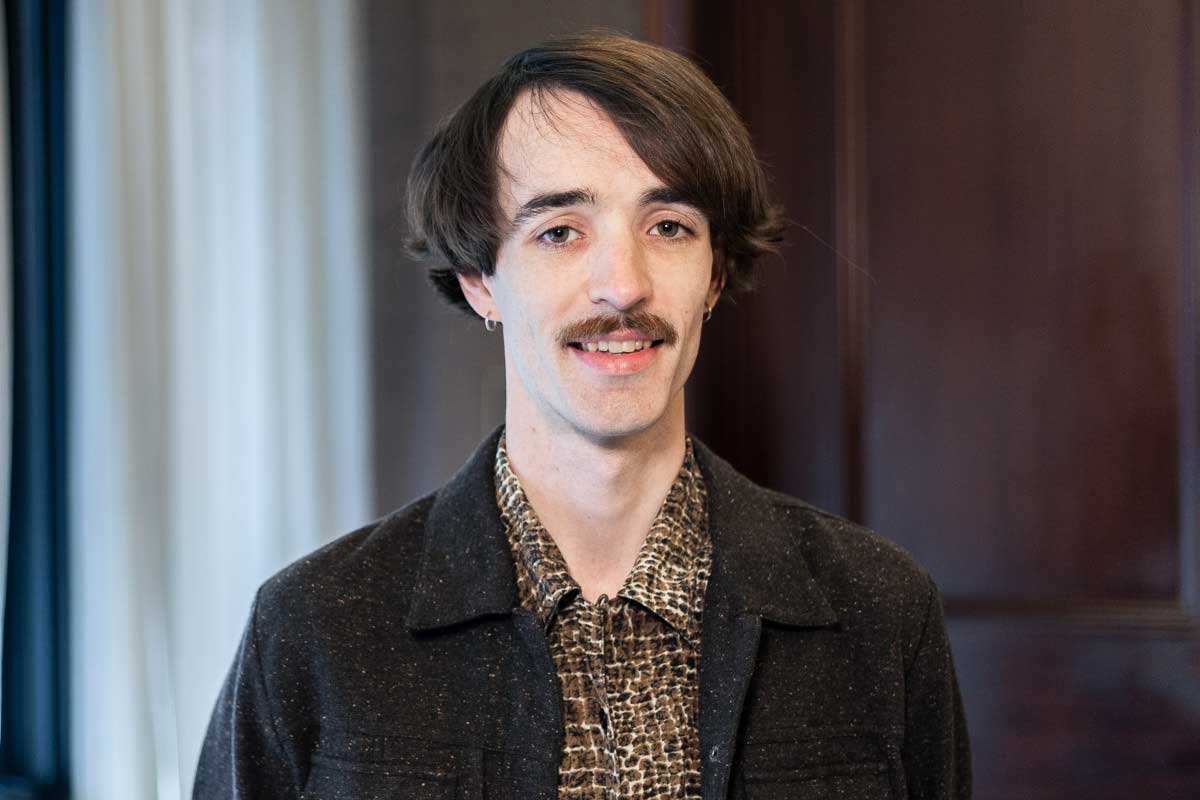
Ryan Doenges is a Distinguished Postdoctoral Fellow at Northeastern University in Boston, working with Amal Ahmed. He holds a PhD from Cornell University under Nate Foster and completed undergraduate studies with Zach Tatlock. His educational background includes: PhD in Computer Science, Cornell University Bachelor's degree, institution unspecified Doenges' research focuses on enhancing programming safety through type systems and verification, specializing in program logics for effects/resources like concurrency and memory. His doctoral work established formal semantics and verification frameworks for the P4 network programming language, ensuring termination and correctness. His publications (2017-2025) show consistent advancement from distributed systems verification to network programming (P4) and foundational program logics, culminating in categorical semantics for separation logic. Key themes include certified equivalence, stateful packet processing, and fibrational weakest preconditions. No scientific awards are documented in available sources. He formally supervised Tia Vu's Master's thesis (Cornell MS, now MIT PhD) and informally mentored eight students including Rudy Peterson (ETH Zürich PhD) and Amanda Xu (UW Madison PhD). No grant details are provided. Doenges collaborates with Amal Ahmed's group at Northeastern and previously worked in Nate Foster's Cornell research team focused on network programming languages.
Sebastien SAUDRAIS serves as an Enseignant-chercheur (Teacher-Researcher) at ESTACA, a prominent French engineering school specializing in aeronautics and automotive systems. He is affiliated with the Pôle S2ET research division and the ESTACA'Lab department, where he bridges academic research with industrial applications in automotive software development. His research spans Software Engineering , Model-Based Systems Engineering , and Automotive Software , with deep expertise in Embedded Systems , Real-Time Systems , and Energy Management for electric vehicles. He focuses on AUTOSAR (Automotive Open System Architecture) frameworks, safety-critical system design, and model-driven approaches for automotive innovation, particularly in steering-by-wire systems and energy optimization. Analysis of his 15 most recent publications (2011-2016) reveals consistent contributions to automotive software engineering, emphasizing model transformations, quality-of-service modeling, and energy-aware system design. His work frequently addresses AUTOSAR integration challenges, physical model incorporation for electric vehicles, and safety analysis in transportation systems, demonstrating strong industry relevance through collaborations with automotive research consortia. SAUDRAIS actively contributes to ESTACA'Lab's mission through educational initiatives like the PIRATE projects, which introduce engineering students to research methodologies, and teaches courses spanning algorithmic foundations to advanced model-based automotive system design.
Professor Heike Trautmann is a distinguished academic at Paderborn University, where she serves as Professor of Machine Learning and Optimisation in the Department of Computer Science within the Faculty of Computer Science, Electrical Engineering and Mathematics. Since April 1, 2025, she also holds the position of Vice President for International Relations at the university. Her academic career spans prestigious institutions including the University of Münster, where she was Professor of Data Science: Statistics and Optimization from 2013 to 2023, and the University of Twente, where she serves as Guest Professor of Data Science until February 2026. Dr. Trautmann's educational background includes: University Studies in Statistics (Diploma), TU Dortmund, Germany (1997-2000) University Studies in Economic Mathematics (First Diploma), TU Dortmund, Germany (1996-1998) PhD student at Graduate School of Production Engineering and Logistics, TU Dortmund University (2002-2004) Habilitation in Statistics, TU Dortmund University, Germany (April 15, 2013) Professor Trautmann's research program centers on cutting-edge topics in artificial intelligence and optimization. Her primary research interests include (Trustworthy) Artificial Intelligence, Machine Learning, Data Science, Automated Algorithm Selection and Configuration, Exploratory Landscape Analysis, (Multiobjective) Evolutionary Optimisation, and Data Stream Mining. She leads the Machine Learning and Optimisation research group at Paderborn University, which develops innovative approaches for understanding and improving optimization algorithms through landscape analysis and automated configuration techniques. Her work bridges theoretical foundations with practical applications, particularly in the domains of trustworthy AI and algorithm selection. Her extensive publication record reveals a clear trajectory toward increasingly sophisticated integration of deep learning with traditional optimization techniques. Recent work demonstrates a strong focus on multi-objective optimization problems, exploratory landscape analysis using deep learning methods, and the development of automated algorithm configuration systems. A notable trend is the application of transformer architectures to landscape analysis, as seen in her Deep-ELA work, which represents a significant innovation in the field. Her research consistently addresses the challenge of characterizing complex optimization problems to enable better algorithm selection and configuration. Professor Trautmann has received notable recognition for her scholarly contributions, including: GECCO Best Paper Award for "Deep reinforcement learning for instance-specific algorithm configuration" As an academic leader, Professor Trautmann has secured significant research funding for projects including "Towards Robustness of Disinformation Campaign Detection Algorithms in Open Online Media in the Context of Trustworthy AI" and "Automated rail transport as a backbone for sustainable, networked mobility in rural areas." She actively mentors students through her teaching of advanced courses in machine learning, optimization, and data science. Her industry connections, stemming from her previous work as an Analytics Consultant at Roland Berger Strategy Consulting, enable her to bridge academic research with practical applications. Professor Trautmann leads the Machine Learning and Optimisation research group at Paderborn University, which collaborates extensively with international partners. She is a key supporter of the Confederation of Laboratories for Artificial Intelligence Research in Europe (CLAIRE) and a member of the European Research Center for Information Systems (ERCIS). Her group maintains strong connections with research centers across Europe, particularly through her involvement with the Transregional Collaborative Research Centre 318.
Francesco Lombardi is an Assistant Professor at the Delft University of Technology (TU Delft) within the School of Technology, Policy and Management , Energy and Industry department. He specializes in computational methods for energy system design, emphasizing social justice and technical robustness. PhD in Energy Engineering from Politecnico di Milano Visiting researcher at ETH Zurich and KU Leuven His research focuses on Modelling to Generate Alternatives (MGA) methods, including the SPORES algorithm , integrated into the open-source energy framework Calliope . He leads the development of RAMP software , a stochastic model for energy demand profiles in data-scarce scenarios like remote areas and future electric-vehicle fleets. Current projects include advancing MGA methods for policy-relevant energy questions and contributing to the PowerWeb Institute , Urban Energy Institute , and Open Energy Modelling Initiative . His work spans urban-to-national scales, addressing multi-energy systems and decarbonization strategies. Notable publications include studies in Joule and Applied Energy on renewable deployment, fossil fuel elimination, and smart charging. Collaborations involve industrial and academic partners, with software like RAMP co-funded by institutions such as Reiner Lemoine Institut and University of Liège.
Sebastian Krieter is a researcher in software engineering and product-line systems, affiliated with Otto-von-Guericke University Magdeburg, Germany. He completed his PhD in 2022 with a dissertation focused on efficient interactive and automated product-line configuration. His research spans software variability, feature modeling, configuration management, and automated software configuration. Research Interests: Software Product Lines and Variability Management Feature Modeling and Analysis Automated Configuration and Sampling Algorithms Combinatorial Testing and Feature Interaction Knowledge Compilation and SAT-based Analysis His recent work includes developing methods for T-wise interaction coverage, improving sampling efficiency in configurable systems, and integrating AI techniques into software variability management. He has contributed to the development of tools like FeatureIDE and UVL (Universal Variability Language). Scientific Contributions: Over 70 peer-reviewed publications in top-tier venues such as ICSE, SPLC, GPCE, and ASE. Key organizer of workshops including the 1st International Workshop on Reverse Variability Engineering (Re: Volution). Active contributor to open-source tools and datasets for benchmarking feature model analyses. Collaborations: He has collaborated extensively with Thomas Thüm, Gunter Saake, Thomas Leich, and a network of international researchers in software engineering and AI.
Pablo Miranda is a Senior Lecturer at the Faculty of Engineering (LTH) at Lund University, specializing in Architecture, Form and Design. His work examines the intersection of technology, architecture, and urban planning. PhD from KTH Royal Institute of Technology (2018) Postdoctoral Fellow at MIT's Department of Architecture (2022) Current research funded by Swedish Research Council (VR) on algorithms in geography Research focuses on how computers reorganize architectural knowledge and transform geography into predictive planning. Expertise aligns with UN Sustainable Development Goals (SDGs) related to sustainable cities and communities. Key collaborations include projects like Urban Arena (2022–) and Architectures of Certitude (2023–2026), exploring digitalization in architecture and planning. Subject classifications: Architecture, Computer Systems, Environmental History Free keywords: Programming, Representation, Technics, History