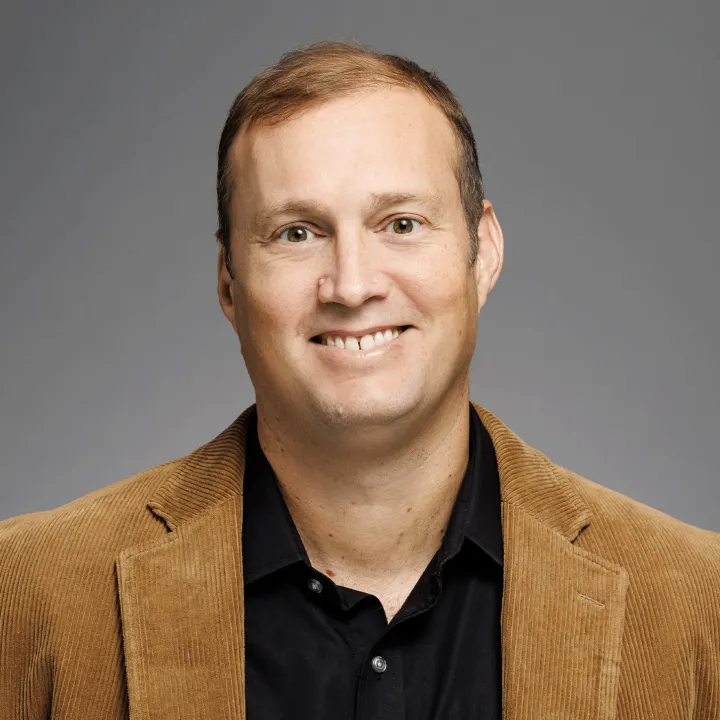
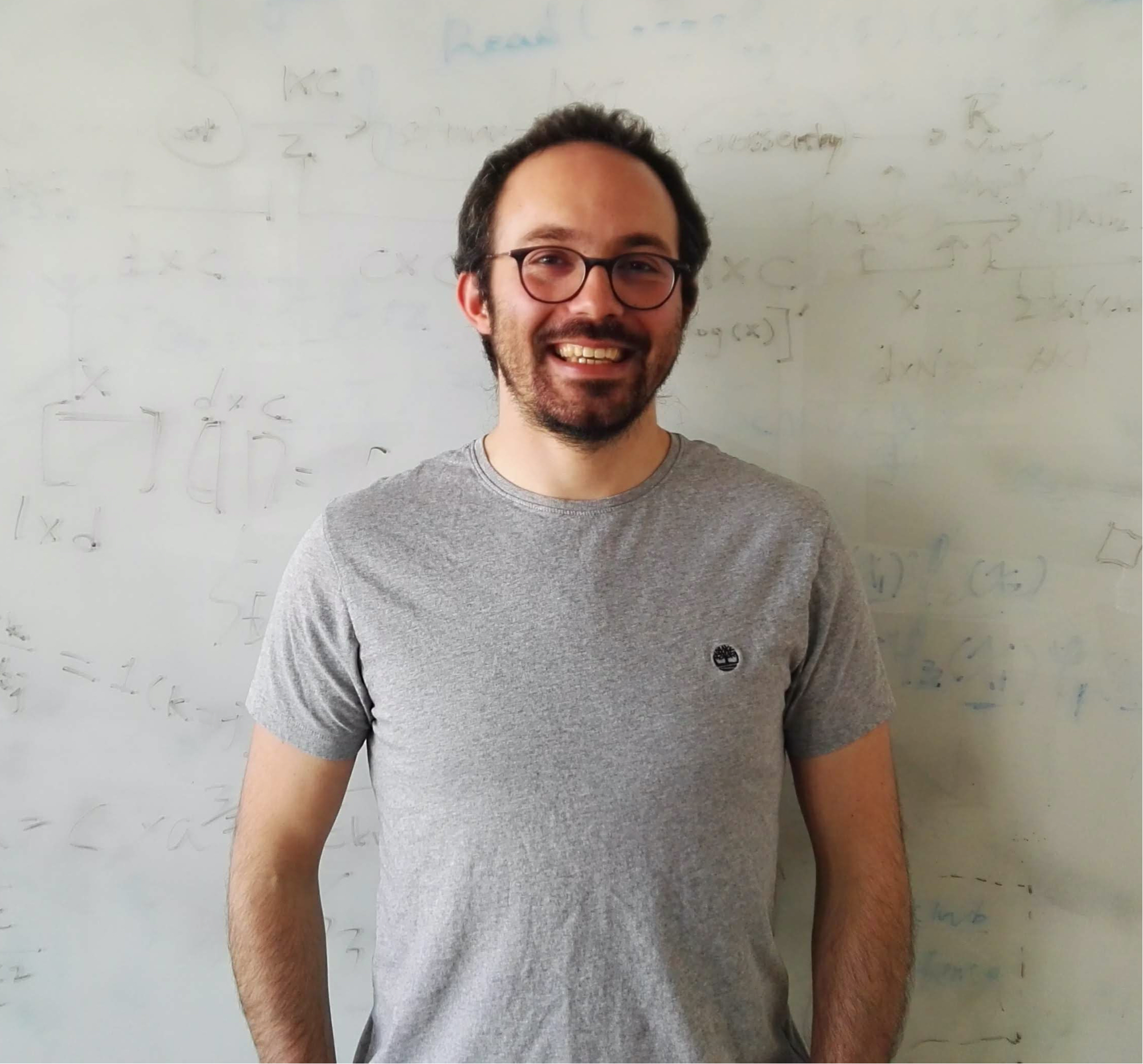
Dean M. Tullsen is a Professor in the Department of Computer Science and Engineering at the University of California, San Diego. He leads the High Performance Processor Architecture and Compilation Lab and focuses on computer architecture, particularly multithreading, multicore processors, secure execution, and energy-efficient design. His research bridges hardware and software for parallel computing, security, and resource optimization. Education: Ph.D. from the University of Washington (1996), B.S. and M.S. from UCLA. Research Interests: Computer architecture, multithreading, speculative execution, hardware security, energy efficiency, and heterogeneous computing. Scientific Awards: Best Paper Awards at USENIX Security Symposium (2024), IEEE S&P (2023), and Distinguished Paper Awards at POPL (2021), ASPLOS (2023), plus the 2020 ACM SIGARCH/IEEE-CS TCCA Influential ISCA Paper Award. Students: Advised 30+ graduate students, including Craig Disselkoen, Mohammadkazem Taram, and Ashish Venkat, who now hold positions at Google, Microsoft, and academia. Lab: Leads the High Performance Processor Architecture and Compilation Lab, advancing techniques in secure execution and parallel computing.
Robert Soulé is an Associate Professor at Yale University, holding dual appointments in Computer Science and Electrical Engineering. He previously served as an Associate Professor at the Università della Svizzera italiana (USI) in Lugano, Switzerland, and retains an Adjunct Professor position there. Soulé earned his B.A. from Brown University and his Ph.D. from New York University, followed by a postdoc at Cornell University. He is a Senior Member of the ACM and IEEE, and his research has been recognized with best paper awards at DEBS 2012, NSDI 2018, and CoNEXT 2020. His research focuses on computer systems, including networking, distributed systems, databases, and programming languages. Notable contributions include work on in-network computing, programmable data planes, and sustainable networking. He teaches advanced courses on databases, networking, and compilers at Yale and has previously taught at USI and Cornell. Soulé advises a team of PhD students and postdocs, with alumni working in industry and academia. His grants include NSF support for sustainable computing initiatives. He leads research efforts in areas like carbon-aware networking, quantum network specifications, and high-performance RPC systems. His work bridges theory and practice, emphasizing system design and verification. Affiliations: Yale University, USI (Adjunct) Education: Ph.D. (NYU), B.A. (Brown) Grants: NSF funding for sustainable computing Lab/Team: Research group focused on systems and networking innovations
Marios Kogias is an Assistant Professor in the Department of Computing at Imperial College London, conducting research at the intersection of operating systems, networking, and distributed systems with a focus on tail-tolerance, fault-tolerance, and confidentiality using emerging datacenter hardware. He holds a PhD in Computer Science from EPFL (2020) supervised by Ed Bugnion, where his thesis won the Dennis M. Ritchie Award and received an Honourable Mention for the Eurosys Roger Needham PhD Award. His undergraduate degree in Electrical and Computer Engineering is from NTUA. His research spans operating systems, networking, distributed systems, cloud computing, and confidential computing, with significant contributions to microsecond-scale computing, serverless architectures, and eBPF applications. Current work emphasizes tail-latency optimization in datacenter environments and confidential computing security. Recent publications reveal strong trends in microsecond-scale systems, confidential computing, and serverless workflows, demonstrating expertise in leveraging hardware innovations for performance and security guarantees across distributed environments. His scientific awards include: Dennis M. Ritchie Award (2021) Honourable Mention for the Eurosys Roger Needham PhD Award (2021) IBM Fellowship Microsoft Swiss JRC Fellowship Distinguished Artifact Award (ASPLOS 2021) Best Student Paper Award (Eurosys 2020) Dr. Kogias actively mentors PhD students including Konstantinos Prasopoulos (co-advised with Ed Bugnion), Scofield Liu, Farzad Mohammadi, and Adel Sefiane. He teaches Networked Systems, Computer Networks and Distributed Systems, and Object-Oriented Design at Imperial, supported by fellowships from IBM and Microsoft during his doctoral research. His collaborative work spans EPFL, Microsoft Research Cambridge, and Imperial College London, focusing on systems architecture for next-generation datacenter applications.
Jens Frederik Dalsgaard Nielsen is an Associate Professor at the Department of Electronic Systems, Aalborg University, within The Technical Faculty of IT and Design. He leads research in mixed-criticality systems, airborne computing architectures, and aerospace engineering education. His work integrates interdisciplinary collaboration with hands-on project-based learning. Primary affiliations: Automation & Control Group, Green Lab, and Aalborg University Space Center Research focuses on: Mixed-criticality system architectures for aerospace applications Real-time multiprocessor systems and on-chip networks Student satellite projects (e.g., AAUSAT series) Interdisciplinary PBL in engineering education Recent work emphasizes reliable airborne systems and platform architecture designs for aerospace applications. His contributions to CubeSat technologies have been highlighted in international media. Awards: 2025 Novo Nordisk Foundation Prize for Excellence in Technical Science Teaching Active in industry collaborations and international space education initiatives, including leadership roles in the DISCO student satellite program.
Sandrine Blazy is a Professor at the University of Rennes , where she teaches mechanized semantics (in Coq), functional programming (in OCaml), formal methods (using Why3), and software vulnerabilities. She is a member of the CELTIQUE and Epicure project-teams, both affiliated with Inria Rennes and IRISA laboratory. Her research focuses on formal verification of compilers and program transformations, notably through the CompCert compiler and Versaco static analyzer. Education : HDR (Habilitation à Diriger des Recherches) in Computer Science, Université d'Évry Val d'Essonne (2008). Research Interests : Her work ensures mathematical guarantees in compiler correctness, preventing security bugs during program translation. She specializes in deductive verification , static analysis , and software security , with applications in critical systems like avionics and cryptography. Scientific Awards : CNRS Silver Medal (2023) Lucas Award from Formal Methods Europe (2023) ACM SIGPLAN Programming Languages Software Award (2022) ACM Software System Award (2021) Best Paper Award at FMTea 2014 La Recherche Award in Information Sciences (2011) Advising and Grants : She has advised numerous PhD students (e.g., Solène Mirliaz, Aurèle Barrière) and led research projects like Scrypt (secure compilation for cryptography), ERC VESTA (verified static analysis), and VERASCO (formal verification of compilers). Her grants include ANR and FNRAE funding. Labs and Teams : Actively involved in IRISA CNRS UMR 6074 as deputy director (2021), and collaborates with Inria Rennes and CNRS project teams.
Reto Achermann is an Assistant Professor in the Department of Computer Science at the University of British Columbia (UBC), affiliated with the Systopia Lab. His research focuses on resilient and efficient systems at the intersection of operating systems, applied formal methods, and hardware models. He holds a PhD from ETH Zurich and previously served as a Postdoctoral Research Fellow at UBC under Prof. Margo Seltzer. Education: PhD in Computer Science from ETH Zurich (advised by Prof. Timothy Roscoe), MSc in Computer Science from ETH Zurich. Research interests include memory and storage systems, formal verification, device drivers, and software synthesis. He contributed to the Barrelfish OS project, particularly in memory management and hardware abstractions. Key achievements: Won distinguished artifact awards at ASPLOS'25 and SOSP'24 for 'Velosiraptor' and 'Verus'. Received UBC's Faculty of Science Excellence in Service Award for educational contributions. Served on program committees for ASPLOS, PLDI, EuroSys, and USENIX ATC. Current roles: Actively supervises graduate students in thesis-based MSc/PhD programs. Engages in interdisciplinary research and collaborates on grants. Previously advised undergraduate research projects and directed studies.
Lucas Vincenzo Davi is a Professor of Computer Science at the University of Duisburg-Essen and Director of the paluno - the Ruhr Institute for Software Technology . He leads the SYSSEC research group and is a Principal Investigator (PI) in the SFB CROSSING and CASA excellence cluster. His work focuses on practical software and systems security, including memory corruption vulnerabilities, exploit mitigation, and blockchain smart contract security. Davi holds an ERC Starting Grant for Smart Contract Security research. Education: PhD in IT Security, TU Darmstadt (2011–2015), Dissertation: "Code-Reuse Attacks and Defenses" Master of Science in IT Security, Ruhr-Universität Bochum (2007–2009) Diplom (FH) in Business Informatics, FOM Neuss (2003–2007) Research: Davi's work emphasizes real-world security challenges like runtime attacks, trusted execution environments (TEE), and secure embedded systems. His contributions include Wemby (WebAssembly security analysis), HCC (smart contract hardening), and rowhammer mitigations like CATT. His research has influenced industry practices, e.g., Microsoft EMET v5.1 improvements. Awards: Best Teacher Award (2025) Finalist German IT Security Prize (2022, 2020) ACM SIGSAC Dissertation Award (2016) CAST Förderpreis (2010) Grants & Leadership: ERC Starting Grant (Smart Contracts), SFB CROSSING PI, CASA Cluster PI, and leadership in interdisciplinary initiatives like Nano Security (DFG Priority Program). Labs/Teams: Director of paluno, SYSSEC group leader, and collaborator in projects like HERA (hotpatching for embedded systems) and DMA’n’Play (DMA-based attestation).
John Regehr is a Professor in the School of Computing at the University of Utah. His research focuses on compilers, formal verification, software testing, and embedded systems. He has contributed to tools like Alive2, YARPGen, and ARMor, which address compiler correctness, fuzz testing, and secure isolation. His work emphasizes uncovering compiler bugs, optimizing low-level code, and ensuring system reliability. Key collaborations include Eric Eide, Yang Chen, and Nuno P. Lopes. His articles span compiler verification, fuzzing techniques, and embedded system safety, reflecting a strong commitment to both academic rigor and practical impact. Research interests include compiler optimization validation, undefined behavior analysis, and program synthesis. His work on peephole optimizations and formal methods has influenced LLVM and industry practices. He also explores scheduling algorithms for real-time systems and memory safety in constrained environments like TinyOS. Notable contributions include foundational papers on compiler bug detection (e.g., 'Finding and understanding bugs in C compilers') and tools like Minotaur for SIMD optimization. His lab's work often bridges theory and practice, with applications in security, performance, and embedded software reliability.
Dr. Marten van Dijk is a Full Professor in the Computer Security department at Vrije Universiteit Amsterdam (VU) since 2022 and a Group Leader for Computer Security at CWI since 2020. He also holds a Gratis Full Research Professor position at the University of Connecticut's ECE Department since 2020. Previously, he served as Associate and Full Professor at the University of Connecticut and held research roles at MIT CSAIL, RSA Laboratories, and Philips Research. PhD in Mathematics (1997, Eindhoven University of Technology) M.S. in Mathematics (Cum Laude, 1993) M.S. in Computer Science (Cum Laude, 1991) His research focuses on foundational computer security problems using cryptographic principles, including secure processor design, oblivious computation, and privacy-preserving machine learning. Notable contributions span Physical Unclonable Functions (PUFs), Aegis secure processor architecture, and oblivious RAM protocols. 15+ publications in 2023-2025 address topics like PUF cryptanalysis, differential privacy in federated learning, and Byzantine fault tolerance Key journals: IEEE Transactions on Computers, Journal of Cryptology, ACM CCS Conference Award highlights include: IEEE Fellow (2022) for secure processor design and encrypted computation IEEE Technical Achievement Award (2023) Intel Test of Time Award (2022) ACM CCS Best Paper (2013) A. Richard Newton Technical Impact Award (2015) His technical leadership spans hardware security (blu-ray error correction codes), cryptographic protocol design, and machine learning privacy frameworks. Current projects focus on secure processors with hardware-enforced isolation and differential privacy optimization.
Dr. Vladimir Stankovic is a Senior Lecturer in the Department of Computer Science at City, University of London, where he has been employed since 2003. He progressed through academic ranks from Research Assistant to his current position as Senior Lecturer (since August 2019). From August 2019 to July 2024, he served as Deputy Head of Department of Computer Science, including a transitional period as Head in autumn 2024. He has held several leadership roles including NSS and Employability Director (2019-2023) and Undergraduate Programme Director (2017-2019). His educational background includes a PhD in Software Engineering (2008) and a BEng in Computing (2003), both from City, University of London. He is a member of professional organizations including IEEE, ACM, and is a Fellow of the Higher Education Academy. Dr. Stankovic's research focuses on dependability and security assessment of computer-based systems, software fault tolerance, diverse redundancy, distributed systems algorithms, and database replication protocols. His work contributes to the department's research areas in Software and Systems Engineering. He has been particularly active in designing and evaluating diverse database replication protocols and security assessment methodologies. His recent publications (2011-2025) show a consistent focus on database replication, security assessment, and distributed systems. The research trend demonstrates increasing integration of machine learning techniques with traditional dependability approaches, particularly in security applications. His work spans theoretical modeling, empirical studies, and practical implementations with growing emphasis on real-world applications in critical infrastructure protection. Patent EP2470994 (EU) for Improvements Relating to Database Replication Protocols Patent 8793216 (USA) for Database replication Dr. Stankovic has supervised multiple PhD students including Saidu Sokoto (focused on decentralized networks), Kaleem Peeroo (focused on Data Distribution Service performance), and Konstantin Pozdniakov (focused on security penetration testing). He has served as Principal Investigator for the EPSRC-funded DIDERO-PC project and co-investigator in several EU-funded projects including AQUAS, SESAMO, and AFTER. His enterprise activities include co-founding ResilSoft Ltd (2012-2021), a university spin-off company focused on dependability solutions. He has been actively involved in the academic community as Program Committee member for conferences including CRITIS (2020-present), IEEE Cyber Security and Resilience (2025), and ISSRE (2015), and as reviewer for premier journals including IEEE Transactions on Dependable and Secure Computing and IEEE Security & Privacy.
Thomas P. Jensen is a Researcher at INRIA Rennes , France, specializing in program analysis , software security , and abstract interpretation . With a Cand. scient. in Computing and Mathematics from the University of Copenhagen (1990) and a PhD from Imperial College, University of London (1992), he has led research teams at INRIA, including the Celtique project-team (2010-2022) and currently the Epicure project-team (since 2022). He holds a Habilitation à diriger des recherches from Université Rennes 1 (1999). Research Focus Program analysis with type-based and big-step semantics approaches Certification of static analysis tools for embedded systems Software fault isolation and language-based security Information flow control through hybrid static-dynamic analysis His work spans Java security (including Java Card and mobile telephony) and formal verification of compilers and sandboxes. Notable projects include JavaSec , AJACS , and the CominLabs cybersecurity network. He received a Best Paper Award at GPCE 2018. Publications & Editorial Recent publications focus on algebraic data types , automata-based verification , and control-flow analysis with applications in cybersecurity . He has contributed to the Strategic research and innovation roadmap for SPARTA (2022) as editor. His work appears in top venues like POPL , PLDI , ICFP , and ESOP . Leadership Director of Laboratoire d'Excellence CominLabs (since 2022) Co-chair of VMCAI 2026 and member of PriSC 2024 Program Committee
Koushik Sen is a Professor in the Department of Electrical Engineering and Computer Sciences at the University of California, Berkeley. His academic career spans major contributions to software engineering and programming languages research through active participation in premier conferences including PLDI, ICSE, and ISSTA. His research focuses on Software Engineering , Programming Languages , and Formal Methods , with particular emphasis on developing software tools that enhance programmer productivity and software quality. Key research thrusts include automated test generation , symbolic execution , fuzzing techniques , and program synthesis . His work bridges theoretical foundations with practical tool development for real-world software verification challenges. Analysis of his publication record reveals consistent contributions to automated testing methodologies, with recent work integrating machine learning (particularly large language models) into traditional program analysis techniques. His research shows strong continuity in improving software reliability through innovative input generation and vulnerability detection approaches. As an active academic leader, he has served as General Chair for MAPL (2020), Program Chair for ISSTA (2017), and committee member for numerous top-tier conferences including PLDI, ICSE, and SPLASH across multiple years. His academic advising manifests through collaborative publications with students on topics like test corpus expansion (Bonsai Fuzzing), visualization synthesis (VizSmith), and smart contract auditing (ItyFuzz), though specific student names aren't listed in the source material. His research has been supported through conference participations and likely associated grants given his extensive publication record.
Juri Belikov is a Tenured Associate Professor at Tallinn University of Technology's School of Information Technologies, Department of Software Science, where he has served since 2019 (initially as an Assistant Professor until 2023). Since February 2022, he has also led the Nonlinear Control Systems group. His academic journey began with a B.Sc. in Mathematics (cum laude) from Tallinn University (2003-2006), followed by M.Sc. and Ph.D. degrees in Computer and Systems Engineering and Information and Communication Technology from Tallinn University of Technology. After completing his doctoral research on polynomial methods for nonlinear control systems in 2012, he conducted post-doctoral research at Technion—Israel Institute of Technology (2015-2017). Professor Belikov's research spans power systems, control engineering, and energy data science, with particular expertise in nonlinear control systems for energy applications. His work addresses critical challenges in renewable energy integration, energy storage management, building energy efficiency, and applications of machine learning in power systems. His approach combines theoretical control methods with practical energy system applications, resulting in publications that bridge engineering theory and real-world implementation. His recent publications demonstrate a clear trend toward integrating advanced data science techniques with traditional power system engineering, particularly in the areas of explainable AI for energy forecasting, stability analysis of renewable-rich power systems, and optimization of building energy management. This interdisciplinary approach has positioned him at the intersection of computer science, control theory, and energy systems engineering. Best paper award from International Conference on Power, Control, and Computing Technologies (2024) Tallinn University of Technology, Young scientist of the 2020 year (awarded 2021) Best-of-the-best conference paper award from IEEE PES General Meeting (2020) Estonian Cultural Foundation of the President, Young IT-scientist award (2019) As an educator, Professor Belikov teaches 'Energy Data Science' (ITS8080), equipping students with IT knowledge and skills for energy sector solutions using data science tools. His administrative roles include membership on the evaluation committee of the Estonian Research Council (ETAG) since 2023, Senior Member of IEEE since 2019, and full membership in Sigma Xi since 2024. His leadership of the Nonlinear Control Systems group demonstrates his commitment to advancing research in control methodologies for modern energy systems, particularly as they integrate increasing amounts of renewable generation and digital technologies.
Conrad Watt is an Assistant Professor at Nanyang Technological University in Singapore. His research focuses on the formal verification and mechanisation of WebAssembly, particularly its concurrency and security features. He previously held a Research Fellow position at Peterhouse, University of Cambridge. His work bridges theoretical formal methods with practical systems implementation, contributing to standards proposals for WebAssembly's evolution. He co-chairs the W3C WebAssembly Community Group and has served on program committees for POPL, PLDI, and SPLASH. Education: PhD in Computer Science (University of Cambridge, 2021), supervised by Peter Sewell Research interests include mechanisation of programming language specifications, relaxed-memory concurrency, and domain-specific languages for formal semantics. His projects like SpecTec aim to unify WebAssembly's specification across documentation, implementations, and mechanisations. Selected contributions to WebAssembly include: Designing its initial concurrency specification Developing WasmRef-Isabelle as a verified interpreter and fuzzing oracle Creating Iris-Wasm for modular program verification Scientific recognition includes: ACM Doctoral Dissertation Award Honorable Mention EAPLS Best Dissertation Award He advises PhD students in WebAssembly-related topics and leads collaborations with industrial partners like Wasmtime. Current research explores irreducible control flow in WebAssembly, richer concurrency models, and performance optimization through mechanised specifications.