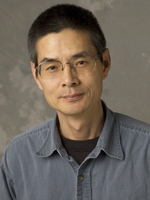
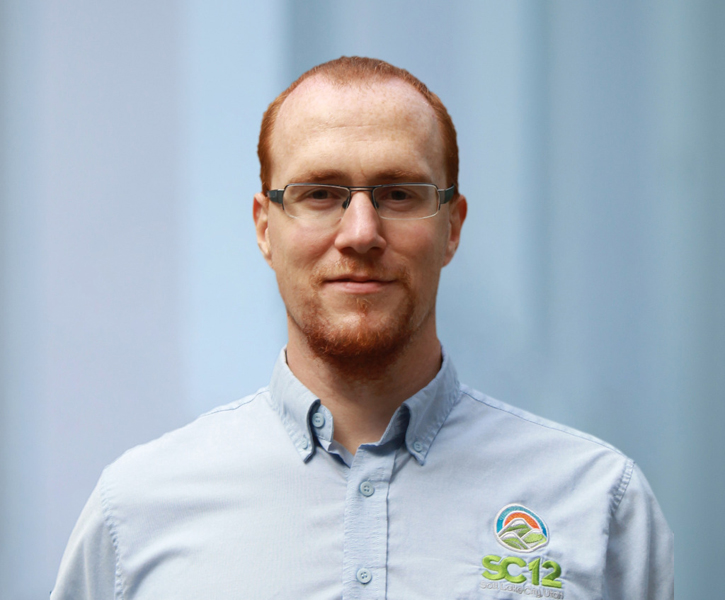
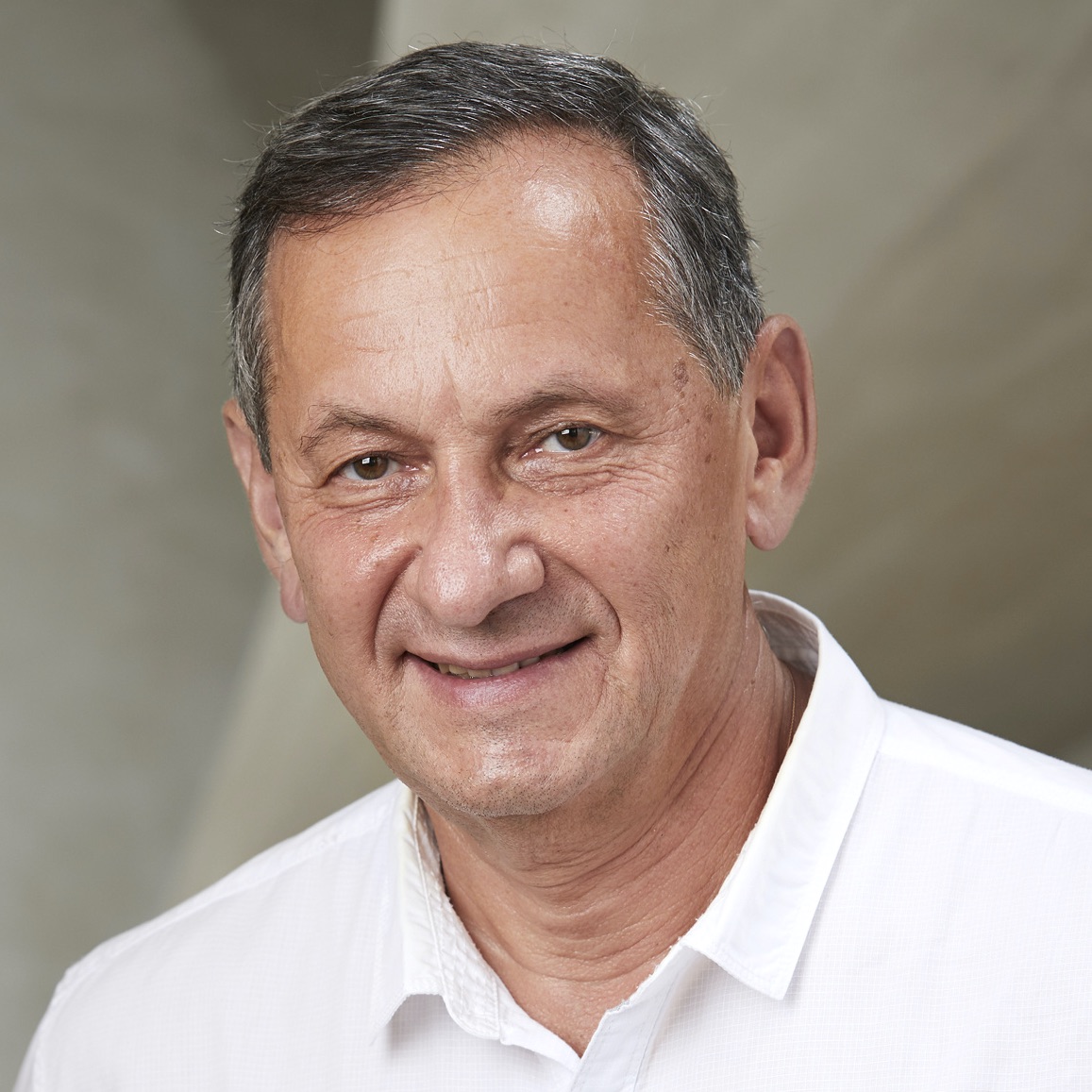
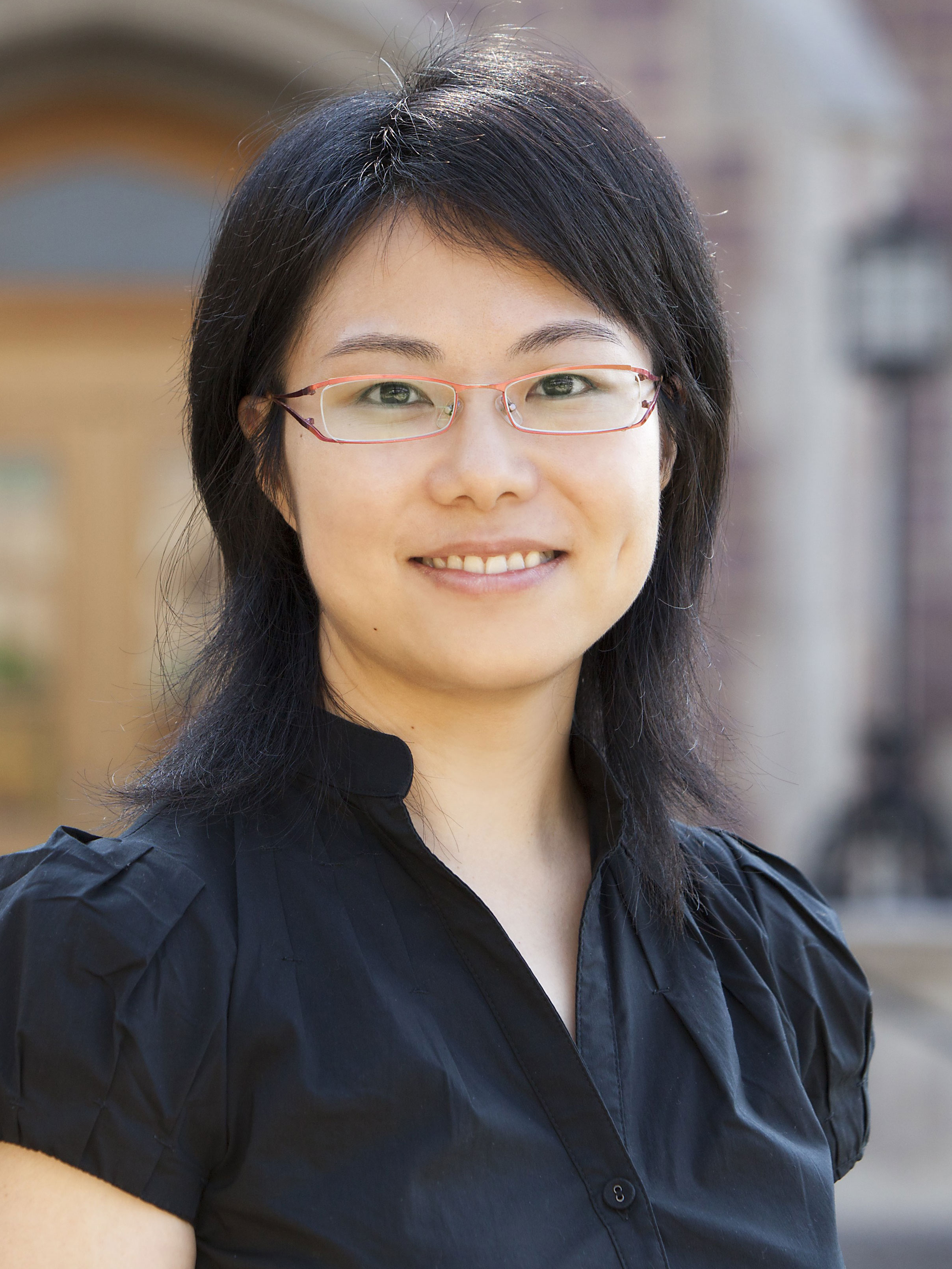
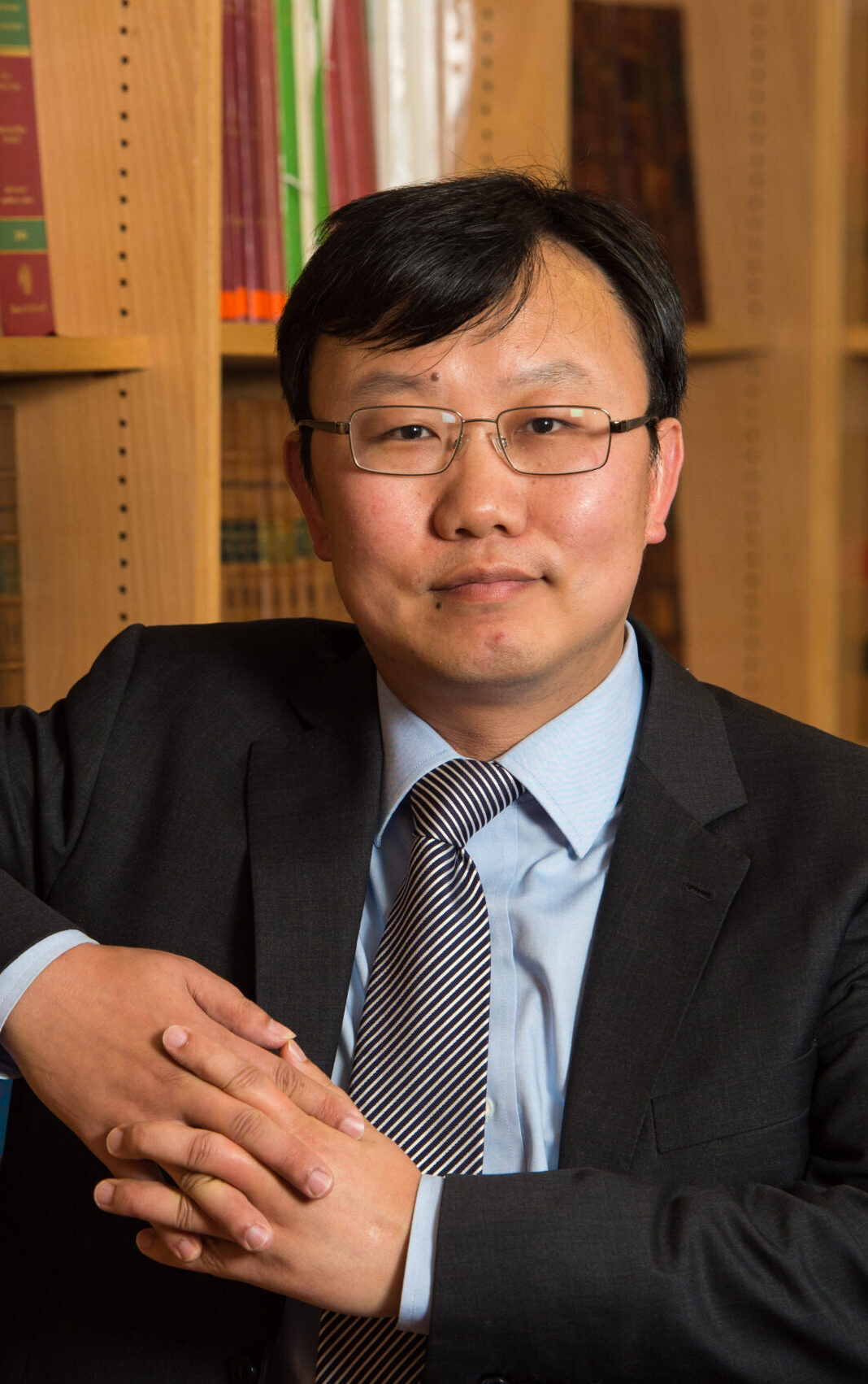
Angel Merchan Perez is a faculty member at the Universidad Politécnica de Madrid , affiliated with the College of Computer Science and the Computer Systems Architecture and Technology Department . He is a key member of the Center for Biomedical Technology (CTB) since 2011 and the Technologies for Health Sciences Research Group since 2018. His work bridges neuroscience and computational technologies, focusing on ultrastructural analysis of the brain. Doctoral Postdoc: Harvard Medical School (1992-1995) Current Projects: Cajal Blue Brain Project, Human Brain Project His research focuses on developing advanced 3D electron microscopy techniques (FIB-SEM) for synaptic reconstruction, enabling quantitative analysis of synapse distribution and density in rat, mouse, and human cerebral cortex . He also contributed to image-analysis software like Espina for automated synapse detection. Recent publications highlight his expertise in: 3D Synaptic Mapping in Hippocampal Neurons Neurodevelopmental Disorder Pathology (Schizophrenia, Autism) Thalamocortical Circuit Complexity Mitochondrial Distribution in Neuropil Software Tools for Electron Microscopy
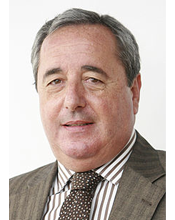
Gérard Berry (born December 25, 1948) is a distinguished French computer scientist currently serving as Professor at the Collège de France, holding the permanent chair Algorithmes, machines et langages (Algorithms, Machines, and Languages) since 2012. He previously held the Informatique et sciences numériques chair (2009-2010) and the Technological Innovation Liliane Bettencourt chair (2007-2008) at the same institution. Before joining Collège de France full-time, he served as Director of Research at INRIA Sophia Antipolis (2009-2012) and at École des Mines de Paris (1977-2001). His research spans over 30 years in three main fields: lambda calculus and functional programming, parallel and real-time programming languages, and design automation for synchronous digital circuits. He is particularly renowned for developing the Esterel programming language. His work bridges theoretical computer science with practical industrial applications. Berry's research has evolved to include current work in Hop and HipHop for Web programming, formal verification of compilers, and languages for computer music. His publications demonstrate consistent contributions to programming language theory, formal methods, and their applications in hardware and software systems. Gold Medal of CNRS (2014) Chevalier de l'Ordre de la Légion d'Honneur (2012) Member of French Academy of Sciences (2002) Member of Academia Europaea (1993) Monpetit Prize of Académie des sciences (1990) Berry has advised 17 PhD students and reviewed numerous theses. His industrial experience includes serving as Chief Scientist Officer of Esterel Technologies (2000-2009), where he directed the implementation of the Esterel v7 compiler. He has also held significant leadership roles including President of the Scientific Council of IRCAM and membership on the Scientific Council of the National Education. His teaching at Collège de France has covered topics ranging from the foundations of computation to the societal impact of digital technology, with courses including The Informatics of Time and Events and Proving Programs: Why? When? How? His laboratory work has focused on developing practical applications of theoretical computer science concepts.
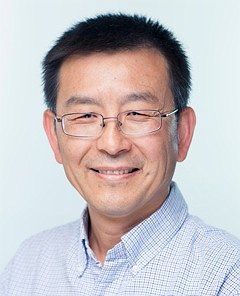
Zhiyuan Li is a Professor in the Department of Computer Sciences at Purdue University's College of Engineering. His primary research and teaching focus on program analysis, transformation, and run-time management for high-performance computing and multicore systems, as well as reliable software for networked embedded systems. Professor Li teaches graduate-level courses including CS502: Compiling and Programming Systems and CS591RS1: Research Seminar for First-year Graduate Students. Office: LWSN 3154H Contact: li@cs.purdue.edu Phone: +1 765-494-7822 Professor Li's research spans multiple areas within computer science, with particular emphasis on compiler design, program analysis, and parallel computing. His work addresses fundamental challenges in enabling efficient execution of applications on modern parallel architectures, including multicore processors and large-scale distributed systems. He has made significant contributions to techniques for data dependence analysis, loop parallelization, array privatization, and memory optimization in compilers. His research also extends to reliable software development for embedded and sensor network systems, where resource constraints and reliability requirements present unique challenges. Professor Li's publication record demonstrates consistent contributions to top-tier conferences and journals in computer science, particularly in the areas of parallel computing, compiler optimization, and high-performance numerical methods. His work shows a progression from foundational compiler techniques to applications in scientific computing domains such as computational fluid dynamics for jet engine noise simulation. This interdisciplinary approach connects low-level program analysis with real-world engineering applications requiring petascale computing resources. Principal Investigator for NSF/PetaApps project on jet engine noise simulation Principal Investigator for Intel-sponsored research on data dependence profiling Extensive service on program committees for major conferences including ICS, PPoPP, and LCTES Professor Li has been actively involved in mentoring graduate students through research projects and course instruction. His jet engine noise simulation project specifically mentions training three Ph.D. graduate students and involving undergraduate research assistants. As coordinator for the first-year graduate research seminar, he plays a significant role in guiding new students through the transition to graduate research work in computer science. His laboratory work focuses on developing compiler techniques and runtime systems for parallel and high-performance computing. The research infrastructure includes implementations in GCC for fast data dependence profiling and support for SIMD/SSE instructions, demonstrating practical applications of theoretical compiler techniques.
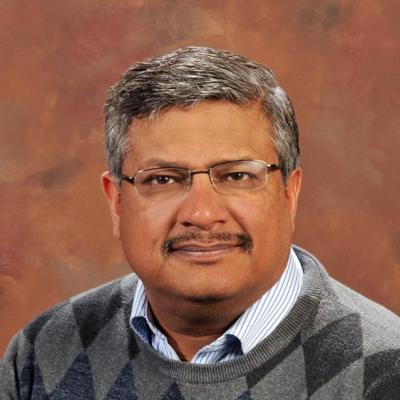
Pedro M. B. Silva Girão is a Full Professor in the Department of Electrical Engineering at Instituto Superior Técnico (IST), University of Lisbon (UL), and a Senior Researcher at Instituto de Telecomunicações where he heads the Instrumentation and Measurements Group and coordinates the Basic Sciences and Enabling Technologies area. His dual institutional roles position him at the forefront of academic research and technological innovation in Portugal. His research program focuses on instrumentation, transducers, and measurement techniques with specialized applications in biomedical and environmental domains. Key interests include wireless sensor networks for health monitoring, metrology standards, and digital data processing methodologies. This work bridges engineering principles with real-world healthcare and ecological challenges, emphasizing practical implementations in diagnostic systems and environmental sensing. Analysis of his 2019-2024 publications reveals a strong thematic trajectory in IoT-enabled healthcare solutions and precision environmental monitoring. Recurring motifs include gait rehabilitation through mixed reality systems, advanced dosimetry for liver cancer radioembolization, microvascular reactivity assessment, and water quality sensor networks. His output demonstrates consistent interdisciplinary collaboration between engineering, medical, and environmental science communities. Dr. Girão's scientific recognition includes: IEEE Senior Member status IEEE IMS Distinguished Lecturer appointment Honorary Chairmanship of IMEKO TC19—Environmental Measurements As leader of the Instrumentation and Measurements Group at Instituto de Telecomunicações, he directs a multidisciplinary team developing next-generation measurement systems. Current initiatives integrate microwave Doppler radar, wearable biopotential sensors, and wireless networks for unobtrusive health monitoring and environmental assessment, with active partnerships across medical institutions and ecological agencies.
Miryung Kim is a Professor and Vice Chair of Graduate Studies in UCLA's Computer Science Department, where she directs the Software Engineering and Analysis Laboratory. She is renowned for her pioneering work in software evolution, code clone management, and establishing the emerging field of Software Engineering for Data Intensive Computing (SE4DA and SE4ML). Her research focuses on automated testing and debugging for Apache Spark, developer tools for heterogeneous computing, and conducting systematic studies of refactoring practices in industry. She led the first large-scale study of data scientists in industry and developed JDebloat, a Java bytecode debloating tool that made significant tech transfer impact to the Navy. Her recent publications demonstrate strong trends in fuzz testing for big data analytics and heterogeneous computing, with a focus on natural input generation, co-dependence awareness, and leveraging hardware probes for acceleration. Her work bridges software engineering with data-intensive and heterogeneous computing paradigms. ACM SIGSOFT Influential Educator Award (2022) ICSME Most Influential Paper Award (2023 and 2020) NSF CAREER award Google Faculty Research Award Okawa Foundation Research Award Humboldt Fellow ACM Distinguished Member As an academic advisor, she has produced eight tenure-track faculty members at institutions including Columbia, Purdue, and Virginia Tech. Her research has been supported by National Science Foundation, Air Force Research Laboratory, Google, IBM, Intel, Okawa Foundation, Samsung, and Office of Naval Research. She previously served as Program Co-Chair of ESEC/FSE 2022 and has delivered keynotes at ASE 2019 and ISSTA 2022. She maintains active industry collaborations, serving as an Amazon Scholar at Amazon Web Services and having spent time as a visiting researcher at Microsoft Research.
Jingling Xue is a Scientia Professor at the School of Computer Science and Engineering at the University of New South Wales (UNSW) in Sydney, Australia. As an IEEE Fellow of the Computer Society, he leads the Programming Languages and Compilers research group, focusing on practical applications of compiler optimization and program analysis techniques. His work bridges theoretical foundations with real-world software systems, particularly in developing open-source tools for large-scale program analysis. Professor Xue received his B.Eng and M.Eng degrees from Tsinghua University in 1984 and 1987, respectively, followed by a PhD from the University of Edinburgh in 1992. His academic journey has established him as a leading figure in programming languages and compiler technology. Xue's research spans programming languages, compiler technology, and program analysis with emphasis on practical relevance. His current projects include compiler techniques for improving parallelism and locality, pointer/alias analysis for million-line-scale programs, and static/dynamic analysis for detecting bugs and security vulnerabilities in real-world applications like web browsers and Android apps. His group actively develops open-source tools to support scientific replicability and reproducibility in these areas. His recent publications demonstrate a strong focus on applying program analysis techniques to modern challenges including AI compilers, homomorphic encryption, security vulnerability detection, and graph processing systems. The work shows evolution from traditional compiler optimization to addressing emerging domains like privacy-preserving computation and deep learning systems while maintaining rigorous theoretical foundations. Scientific Awards: Best Paper Award at CGO'13 Best Paper Award at CGO'16 Distinguished Paper Award at ECOOP'16 Distinguished Paper Award at ICSE'18 Distinguished Paper Award at ISSTA'19 Distinguished Paper Award at ASE'19 Distinguished Artifact Award at ISSTA'23 Best Artifact Award at FSE'23 Distinguished Paper Award at ASE'23 Test-of-Time Award at CGO'21 Professor Xue has successfully supervised 30 PhD students to completion, many of whom now work as professors or researchers in academia and industry. He has served as Program Chair for major conferences including LCTES'13, CC'18, CGO'20, and General Chair for LCTES'20. His group currently focuses on memory safety in Rust, smart contract analysis, AI compilers, compilation for privacy-preserving computation, and adversarial attacks in deep learning. The Programming Languages and Compilers group maintains strong connections with industry partners, translating theoretical advances into practical tools for real-world software development challenges. Their work on pointer analysis, memory safety, and compiler optimizations continues to influence both academic research and industrial practice.
Gagan Agrawal is the UGA Foundation Professorship in Computing and a Professor at the School of Computing, University of Georgia. He serves as Director of the School and is affiliated with the Franklin College of Arts & Sciences. Agrawal holds a PhD and MS in Computer Science from the University of Maryland (1994-1996). His research focuses on high-performance computing, parallel algorithms, compiler optimization for deep learning, GPU acceleration, and interdisciplinary applications in health informatics. Notable contributions include frameworks like ForensiBlock (blockchain for data forensics) and DELITE (tensorized instruction compilation). Agrawal has secured over $2.5M in NSF grants for projects addressing extreme-scale computing challenges. Recent grants include: SHF: Small: Memory Hierarchy Optimizations Meet Transformers (MITTEN) ($600K, 2024-2027) DELITE compilation system for deep learning models ($600K, 2023-2026) Publications span parallel computing methodologies, cybersecurity frameworks, and health outcomes analysis. His work on social determinants of health in cancer survival has been systematically reviewed in top-tier medical journals. Agrawal leads UGA's computing initiatives, emphasizing interdisciplinary research and student mentorship in HPC and AI domains.
Ulrich Schmid is a Full Professor and Head of the Research Unit for Embedded Computing Systems at TU Wien. He holds a position in the Faculty of Informatics and leads the department of Embedded Computing Systems (E191-02). His roles include Curriculum Coordinator for the Bachelor and Master programs in Computer Engineering, as well as the Excellence Program Bachelor with Honors. He is also the Chair of the Curriculum Commission for Computer Engineering and a Substitute Member of the Informatics Commission. His research focuses on fault-tolerant distributed algorithms, digital integrated circuits, and topology-based approaches to distributed systems. He coordinates major projects such as the FWF-funded DMAC (2019–2024) and ByzDEL (2020–2025), which integrate topological semantics and hybrid delay models for robust hardware design and distributed system analysis. Schmid has contributed to groundbreaking work in Byzantine fault tolerance, epistemic logic for system recovery, and real-time scheduling through collaborations with researchers like Chatterjee, Függer, and Rajsbaum. Notable awards include the 2018 Edsger W. Dijkstra Prize and the 2021 Principles of Distributed Computing Doctoral Dissertation Award. His research also bridges formal verification techniques with physical hardware implementations, exemplified by projects like HEX (a Byzantine-tolerant clock distribution system) and the Involution tool for timing analysis. Schmid actively contributes to academic governance, advancing rigorous education and research standards in computer engineering. His advising and grant work involve mentoring on fault-tolerant architectures and securing funding from agencies like FWF and the European Commission. Labs and teams under his leadership include the Embedded Computing Systems group, specializing in hardware-software co-design for dependable systems-on-chip, and collaborations with institutions like GSI Helmholtzzentrum and the University of Amsterdam.
Torsten Hoefler is a Full Professor of Computer Science at ETH Zurich, Switzerland, with an adjunct appointment in Electrical Engineering. He previously held roles at the National Center for Supercomputing Applications (University of Illinois at Urbana-Champaign) and Indiana University. Full Professor of Computer Science, ETH Zurich (2020–present) Adjunct Professor of Electrical Engineering, ETH Zurich (2020–present) Member at Large, ACM SIGHPC Executive Committee (2013–present) Leadership roles in the MPI Forum and Blue Waters project His research focuses on performance-centric system design , with emphasis on scalable networking, parallel programming models, and performance modeling. Key contributions include the Slim Fly network topology, Data-Centric Python framework, and innovations in parallel graph computations and RDMA-based systems. Recent publications span topics like LLM training networks , quantization geometry , chiplet interconnects , and AI-driven climate modeling , reflecting his interdisciplinary approach combining HPC, AI, and hardware-software co-design. ACM Gordon Bell Prize (2019) ERC Consolidator Grant (2020) IEEE TCSC Award for Excellence (2019) SIAM SIAG/SC Junior Scientist Prize (2012) Latsis Prize of ETH Zurich (2015) He has received multiple best paper awards at top conferences (SC10, SC13, SC14, SC19, IPDPS'15, HPDC'15, OOPSLA'16) and contributed to MPI-3 standardization.
Mark Heinrich is an Associate Professor in the Department of Computer Science at the University of Central Florida (UCF), where he also serves as Undergraduate Coordinator for CS and IT, and Senior Design Coordinator. He previously held roles at Cornell University and has industry experience co-founding companies like Phanfare and Flashbase. His research focuses on parallel computer architecture, heterogeneous systems, cache coherence protocols, and multiprocessor simulation. Heinrich holds a Ph.D. in Electrical Engineering from Stanford University (1998) under John Hennessy, and a B.S. in Electrical Engineering and Computer Science from Duke University (1991). Research Interests His work spans parallel architectures, active memory systems, scalable cache coherence protocols, and hardware/software co-design. Recent efforts include innovations in persistent memory technologies and multiprocessor simulation methodologies. Teaching In Spring 2020, he taught CS Senior Design I and II courses (COP 4934/4935), with office hours focused on senior design and undergraduate coordination. Professional Background Associate Professor at UCF since 2003 Past roles: Director of UCF's School of Computer Science (2005), Associate Director of EECS (2005-2007) Co-founder of the Cornell Computer Systems Laboratory Contributed to the FLASH multiprocessor architecture and its simulation tools Labs & Projects He has been involved in projects like Active Memory Clusters and architectural support for multiprocessor systems. His work often bridges theoretical computer architecture with practical hardware implementations.
Divya Mahajan is an Assistant Professor holding dual appointments in the College of Computing and College of Engineering at Georgia Institute of Technology. She directs the Systems Infrastructure and Architecture Research Lab, focusing on sustainable computing platforms for large-scale AI, machine learning, and data storage systems. Her research integrates computer architecture, distributed systems, and database technologies to optimize end-to-end data pipelines. Mahajan earned her PhD from Georgia Tech and Bachelor's from IIT Ropar (President's Gold Medal). Prior to academia, she was a Senior Researcher at Microsoft Azure, leading communication collective designs for distributed DNN training. Awards include NCWIT Collegiate Award (2017) and HPCA Distinguished Paper Award (2016). Research spans hardware-software co-design for ML systems, efficient recommendation architectures, federated learning optimization, and PIM/NPU acceleration. Recent projects address challenges in large-scale model serving, edge-cloud integration, and sustainable computing. Student advisees include PhD and MS researchers in systems and architecture. Publications demonstrate consistent innovation in accelerating ML workloads through novel hardware/software techniques, with work appearing in ISCA, MICRO, ASPLOS, NeurIPS, and VLDB. Current projects explore energy-efficient AI infrastructure and domain-specialized systems for emerging economies.
Dr. Vladimir Vlassov is a full Professor in Computer Systems at the Division of Software and Computer Systems (SCS) , Department of Computer Science (CS) , School of Electrical Engineering and Computer Science (EECS) , KTH Royal Institute of Technology , Stockholm, Sweden. He leads the AVA project in ALEC2, an AI-powered system for mental health care. He is a member of the Distributed Computing research group (DC@KTH) . Education & Roles: Holds a PhD and is a member of ACM and IEEE. Previously visited MIT (1998) and UMass Amherst (2004). Teaches courses on Data Mining , Distributed Systems , and Concurrent Programming . Research Interests: Focus on scalable AI, Cloud computing, distributed systems, and NLP for mental health. Projects include ExtremeEarth (Copernicus data analytics) and EMJD-DC (distributed computing PhD program). Grants & Projects: Principal Investigator in ALEC2 (adaptive mental health care) and ExtremeEarth (EU H2020). Led EU projects like ENCORE (manycore systems) and PaPP (embedded systems). Labs & Teams: Directs the Distributed Computing group, contributing to Hopsworks (machine learning feature store) and Maggy (hyperparameter optimization).
Pieter Simoens is an Assistant Professor at Ghent University and affiliated with the imec research institute. He works at the intersection of distributed artificial intelligence, edge computing, and collective intelligence, with a focus on AI applications for resource-constrained environments and robotic systems. His research explores innovative approaches to machine learning deployment in heterogeneous infrastructures, task planning for IoT-integrated robotics, and modeling collective decision-making processes. He has contributed to frameworks like DIANNE for distributed deep learning and developed methods for cognitive modeling in reinforcement learning scenarios. With over 100 publications, his recent work spans adaptive neural networks, privacy-preserving surveillance, UAV hyperspectral data analysis, and computational fairness in AI systems. He leads research initiatives within the Internet Technology and Data Science Lab (IDLab) and contributes to educational programs in software engineering and applied machine learning. Responsible for courses on software engineering, mobile development, system design, and applied machine learning Active in edge computing and neuromorphic algorithms research Develops AI solutions for robotics, surveillance, and industrial IoT applications
Xuan Zhang serves as Associate Professor in Electrical and Computer Engineering at Northeastern University, leading the Sensory AI Lab since joining in January 2024. Her research bridges computer architecture, integrated circuits, and artificial intelligence to develop miniaturized AI systems for autonomous physical platforms. She earned her PhD in Electrical and Computer Engineering from Cornell University in 2012. Her educational background forms the foundation for her interdisciplinary work spanning hardware and software co-design. Dr. Zhang's research focuses on artificial intelligence hardware, machine vision sensors, and security for autonomous systems. She pioneers techniques for efficient in-sensor computing, analog circuit optimization via machine learning, and hardware-level privacy preservation. Her work addresses critical challenges in energy efficiency, robustness, and security for edge AI deployment, particularly in resource-constrained environments like medical devices and autonomous vehicles. Analysis of her 2023-2025 publications reveals three dominant trends: (1) hardware-accelerated privacy mechanisms for sensors, (2) machine learning-driven analog circuit design automation, and (3) energy-efficient architectures for neural network inference. These works consistently target real-world applications in healthcare, autonomous systems, and semiconductor design. Her accolades include the prestigious NSF CAREER Award (2020) and leadership in a $10 million federal semiconductor initiative. She contributes to national efforts in AI-powered chip design through the National Center for the Advancement of Semiconductor Technology. Dr. Zhang advises graduate researchers in the Sensory AI Lab, securing significant funding for projects spanning hardware security, in-sensor computing, and autonomous system assurance. Her lab collaborates with federal agencies and industry partners on cutting-edge semiconductor research. The Sensory AI Lab operates at the hardware-software interface, developing novel architectures for intelligent edge devices. Current projects include optical privacy preservation, robust analog design tools, and energy modeling frameworks for in-sensor visual computing systems.
Professor DU Ming is a Visiting Professor in Chinese Law and Co-Director of the Global Policy Institute at Durham University. He holds an LLM from Harvard Law School and a DPhil from the University of Oxford. His research focuses on global economic governance, China's approach to international law, and the development of legal frameworks in contemporary China. He advises on complex international disputes and sits on editorial boards of leading law journals. **Education:** Tsinghua University School of Law (China) LLM, Harvard Law School (Victor and William Fung Fellow) DPhil, University of Oxford (Clarendon Scholar) **Research Interests:** His work bridges legal theory and practice, particularly in cross-border trade/investment law, corporate governance, and the ethical implications of emerging technologies. Recent publications explore federated learning governance, model licensing, and AI ethics within legal systems. **Awards:** Victor and William Fung Fellowship (Harvard) Clarendon Scholarship (Oxford) His advisory roles and legal practice in New York and Beijing inform his research on transnational legal challenges. Collaborations span technical and legal domains, addressing issues like data privacy in federated learning systems.