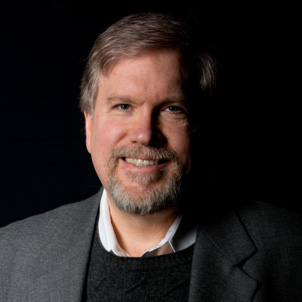
Henry KautzView profile
Professor
Henry Kautz is a Professor in the Department of Computer Science at the University of Rochester, where he has held leadership roles including Director of the Institute for Data Science (2014–Present) and Chair of the Department of Computer Science (2007–2014). Previously, he served as Director of Intelligent Systems at Kodak Research (2006–2007), and held academic positions at the University of Washington and AT&T Laboratories. He currently serves as a Fellow of the AAAS, ACM, and AAAI. His research focuses on artificial intelligence, pervasive computing, and data science, with applications in public health monitoring, natural language processing, and social media analysis. He has over 20,000 citations with an h-index of 65 and i10-index of 124. His research interests include data mining social media for disease tracking, grounded language learning through text-video alignment, and knowledge representation systems combining logic and probability. Notable projects include deploying the 'nEmesis' system to prevent foodborne illness via social media analysis and developing tools like OPUS for social media user studies. His work bridges theoretical AI advancements with real-world societal challenges, emphasizing ethical and practical applications of technology. Dr. Kautz has received prestigious awards including the AAAS and ACM Fellowships, reflecting his contributions to advancing AI and computational science. His research trends show a strong focus on leveraging big data and machine learning for societal good, particularly in health surveillance, mental health monitoring, and urban mobility analysis. Collaborations with interdisciplinary teams highlight his commitment to applying AI to solve complex global problems. In terms of leadership, he has directed major initiatives in data science education and research, fostering innovation at the University of Rochester. His career spans academia and industry, with impactful contributions to both theoretical and applied domains of computer science.