Dr. Allan Steel is a Senior Research Fellow in the Computational Algebra Group at the School of Mathematics and Statistics, University of Sydney. He earned his PhD from the University of Sydney in 2012, specializing in the construction of irreducible representations of finite groups. His research focuses on computational algebra, symbolic computation, and the development of algorithms for computer algebra systems, particularly the Magma system. Key areas include: Polynomial factorization over global and function fields Groebner basis computation (e.g., dense F4 variant) Algebraic closure implementations Applications to cryptography (e.g., Minrank problem) His publications demonstrate a strong emphasis on algorithm design for symbolic computation, with recurring themes in algebraic structures, high-performance computing (GPU-accelerated methods), and software development for mathematical systems. His work on Magma has led to breakthroughs in solving large-scale algebraic problems. He leads the Computational Algebra Research Group and contributes to Magma's core architecture, including packages for exact linear algebra and Groebner basis computation.
Professor Regina Berretta is an Honorary Professor at the University of Newcastle's School of Information and Physical Sciences, specializing in Computing and Information Technology. With expertise spanning computer science, mathematics, and applied optimization, she has established herself as a leading researcher in metaheuristic methods for solving complex combinatorial problems. Currently serving as a Chief Investigator at the ARC Training Centre for Food and Beverage Supply Chain Optimisation, she applies her mathematical modeling skills to address critical challenges in food industry supply chains, with the Centre receiving over $2 million in funding to train next-generation researchers. Professor Berretta earned her PhD, Master of Engineering (Electrical), Bachelor of Mathematics, and Teachers Certificate from Universidade Estadual de Campinas in Brazil. Her educational background in computational and applied mathematics has provided the foundation for her extensive research career focused on integer programming and metaheuristic approaches to optimization problems. Her academic journey includes progression from Lecturer at the University of Newcastle (2003-2007) to various leadership positions including Head of Discipline of Computer Science and Software Engineering (2011-2014) and Assistant Dean of Equity, Diversity and Inclusion (2019-2022). Her research expertise centers on the design of mathematical models and development of efficient computational techniques to tackle large and complex combinatorial optimization problems across diverse application areas. Professor Berretta has made significant contributions to bioinformatics through her work on genetic signature identification from gene expression datasets, and to supply chain optimization through her research on perishable food inventory management, lot sizing, and scheduling problems. Her methodological specialties include memetic algorithms, evolutionary computation, and integer programming approaches that have proven effective for problems that are otherwise computationally intractable. Analysis of her recent publications reveals a strong interdisciplinary focus, with optimization techniques increasingly applied to food supply chain challenges while maintaining connections to bioinformatics applications. Her work demonstrates a consistent pattern of translating theoretical optimization methods into practical solutions for industry problems, particularly in the agricultural sector. Additionally, her more recent publications show growing engagement with gender equity issues in STEM fields, reflecting her leadership in relevant initiatives. Co-founder of HunterWISE, promoting girls and women in STEM Leader of Google CS4HS project for five consecutive years Recipient of over $4 million in research funding through 35 grants Author of more than 80 papers and book chapters Chief Investigator at ARC Training Centre for Food and Beverage Supply Chain Optimisation Professor Berretta has demonstrated exceptional leadership through her administrative roles and community initiatives. As co-founder of HunterWISE, she has developed a comprehensive approach to increasing female participation in STEM through school programs and professional networking events. Her leadership of the Google CS4HS project has directly impacted high school computer science education in the Hunter region. Her research collaborations span multiple disciplines and institutions, reflecting her ability to bridge theoretical computer science with practical industry applications, particularly in the food supply chain sector where her optimization models have demonstrated significant cost and waste reduction potential.
Associate Professor Jianfeng Xue is a faculty member in the School of Engineering and Technology at the University of New South Wales (UNSW) Canberra. He holds the position of Associate Professor in Geotechnical Engineering and is a Fellow member and Chartered Professional Engineer accredited by the Institution of Engineers Australia. With extensive experience in both academia and industry, Professor Xue previously worked at Coffey Geotechnics (Perth), Tongji University, Monash University, and Federation University Australia before joining UNSW Canberra. Professor Xue completed his PhD at University College Dublin in 2007. His educational background has provided a strong foundation for his research and teaching career in geotechnical engineering. Professor Xue's research spans multiple critical areas in geotechnical engineering with a focus on practical applications. His work addresses fundamental challenges in soil mechanics, foundation engineering, and sustainable infrastructure development. He has made significant contributions to understanding soil-structure interaction, reinforced soil systems, and the behavior of landfill waste materials. His research integrates advanced computational methods with experimental approaches to solve complex geotechnical problems. Recent publications demonstrate his continued leadership in areas such as geogrid-reinforced pavements, sustainable construction materials, and numerical modeling of soil behavior under various loading conditions. Chartered Professional Engineer, Institution of Engineers Australia (2014-present) Fellow, Institution of Engineers Australia (2019) Committee member, Institution of Engineers Australia, ACT Civil/Structural Branch (2017-present) Member, International Society for Soil Mechanics and Geotechnical Engineering Secretary, Australian Geomechanics Society, ACT group (2019) Professor Xue actively supervises PhD students including CHAI Fei (focusing on pile capacity estimation using CPT database), XIAO Li (improving pavement performance with geogrid reinforced asphalt), Ziheng Wang (cyclic behavior of reinforced soils), and others. His research portfolio includes significant grants from the Australian Research Council and industry partners, totaling over $1.5 million in the past five years. His laboratory is well-equipped with modern geotechnical testing facilities including monotonic and cyclic triaxial cells, unsaturated triaxial equipment, and large direct shear boxes. He also has access to advanced computational tools including Abaqus, ANSYS, FLAC, Plaxis, and discrete element modeling software.
Dana Al Mousa serves as Senior Lecturer in Diagnostic Radiography at Charles Sturt University's School of Dentistry and Medical Sciences, Department of Medical Radiation Sciences. Holding a PhD in Medical Radiation Sciences from the University of Sydney (2015), she previously held an Associate Professor position at Jordan University of Science and Technology. Her educational qualifications include: BSc in Radiologic Technology, Jordan University of Science and Technology MSc in Medical Imaging (with distinction), University of Leeds, UK (2008) PhD in Medical Radiation Sciences, University of Sydney (2015) Al Mousa's research centers on medical image optimization with emphasis on breast cancer detection, mammographic density assessment, and radiologists' visual search patterns. She investigates ROC analysis of imaging performance, software display optimization, and radiation protection protocols. Her work bridges clinical practice and technological innovation, particularly in Jordanian and Australian healthcare contexts. Current teaching focuses on anatomy, breast imaging, and non-ionising techniques across undergraduate and master's programs, emphasizing deep learning and critical problem-solving. Analysis of her 2022-2025 publications reveals three dominant trends: 1) Breast imaging advancements focusing on density assessment and cancer detection optimization; 2) Radiation safety protocols for diverse populations including cardiac device patients; 3) Integration of soft skills and AI in radiography practice. Her work demonstrates strong international collaboration patterns between Jordan and Australia, with increasing emphasis on patient-centered care and emerging technologies. Her research grants include: Diagnostic monitors quality control in Jordanian Hospitals (2019) Breast cancer screening practices among Jordanian women (2018) Mammographic breast density in Jordan (2016) Al Mousa actively contributes to academic discourse through peer review for Scientific Data, Asia-Pacific Journal of Public Health, SAGE Publications, PLoS One, and Journal of Cancer Education. Her teaching philosophy cultivates student-driven knowledge creation with emphasis on creative problem-solving in medical radiation science education. While specific laboratory affiliations aren't detailed in source materials, her research fingerprint indicates strong collaboration networks in breast imaging optimization and radiation safety across Australian and Jordanian institutions.
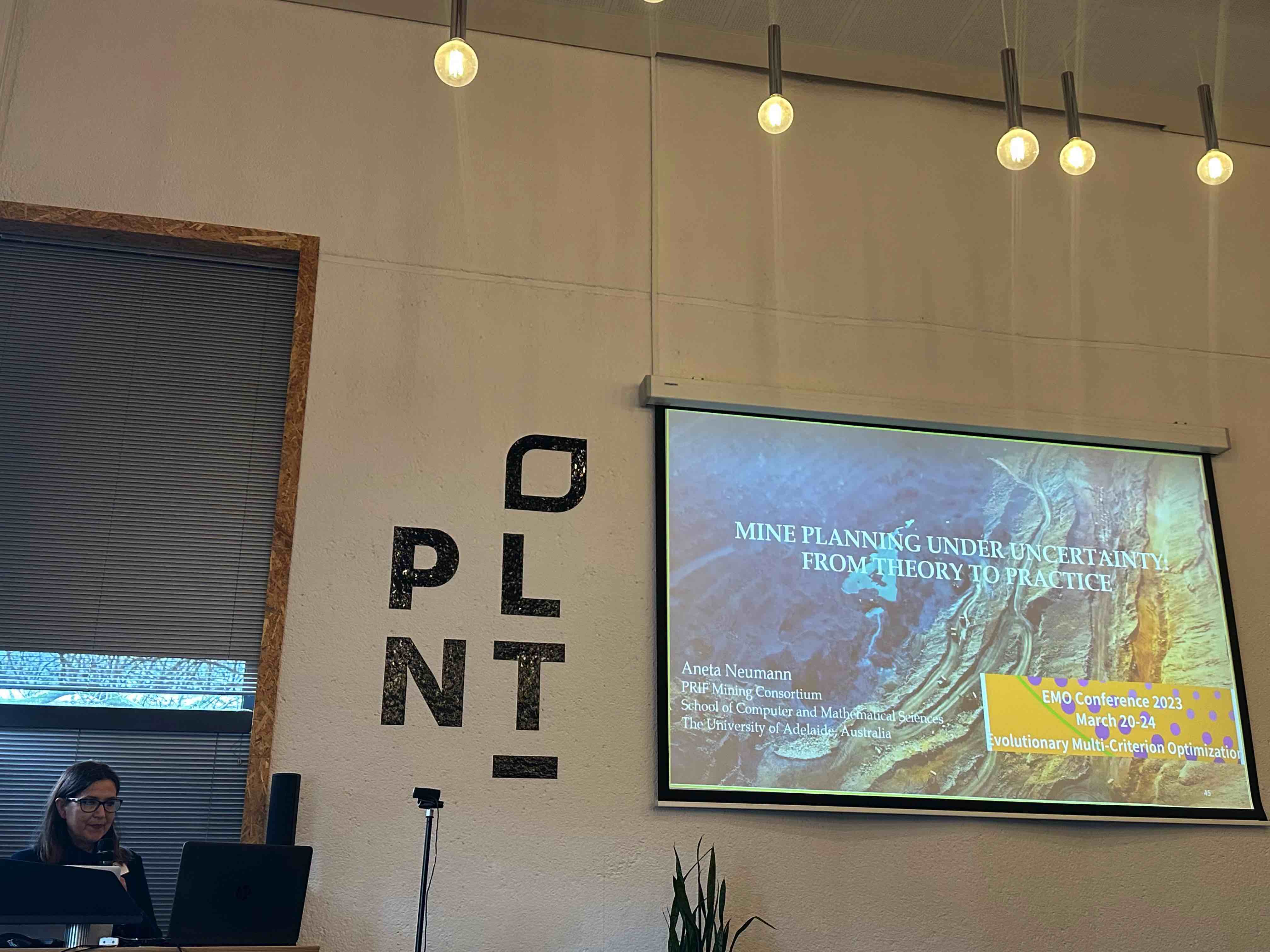
Aneta Neumann is a Researcher at the School of Computer and Mathematical Sciences within the University of Adelaide. Her work bridges bio-inspired computation with machine learning and computational creativity , focusing on dynamic and stochastic multi-objective optimization for real-world applications in mining, renewable energy, cybersecurity, and public health. Education : B.Sc. in Computer Science from Christian-Albrechts-University of Kiel, Germany; Ph.D. from University of Adelaide, Australia. Her research explores evolutionary diversity optimization to generate innovative solutions for complex problems like the Traveling Thief Problem , Chance-Constrained Knapsack , and Time-Use Planning . She investigates theoretical foundations through runtime analysis and applies these insights to industrial software integration in mining and energy sectors. Recent work emphasizes AI-based optimization trends , particularly in quantum computing benchmarks (e.g., Maximum Cut) and health outcomes via time-use scheduling. Her publications span top venues like GECCO , AAAI , NeurIPS , and Algorithmica . Scientific Awards : ACM-W Scholarship (2018), Hans-Juergen and Marianna Ohff Research Grant, Best Paper Award at GECCO 2024, multiple Best Paper Nominations at GECCO (2019, 2021, 2022). She co-organizes key conferences ( AI-OPT 2025 , EMO 2025 ) and serves as track co-chair for Genetic Algorithms at GECCO. Her teaching includes the Big Data Fundamentals course in the University of Adelaide's MicroMasters program.
Zachari Swiecki is a Senior Lecturer in the Department of Human Centred Computing at Monash University's Faculty of Information Technology. He holds a PhD and MS in Educational Psychology from the University of Wisconsin-Madison and a BS in Mathematics & Physics (summa cum laude) from the University of Alabama. His research focuses on Learning Analytics, emphasizing collaborative settings, and he co-developed Quantitative Ethnography, a methodology integrating qualitative analysis, statistics, and data science. Key areas include modeling collaborative processes in engineering, medicine, and military contexts, real-time team monitoring systems, and educational simulations. Swiecki leads or collaborates on projects such as the 'Assessment Framework for Generative AI in Writing' (2024–2027) and 'Hierarchical Abstractions for Neuro-Symbolic Systems' (2023–2027). His work addresses UN Sustainable Development Goals related to education. He advises PhD students and has contributed to tools like the 'Epistemic Analytics Lab’ and 'Co-design Knowledge Management Systems' for educator communities. Publications span multimodal learning analytics, automated discourse analysis, and AI-driven educational tools, reflecting his interdisciplinary approach to advancing learning technologies. His research bridges theory and practice, with applications in adaptive scaffolding, stress analytics visualization ('StressViz'), and collaborative design interfaces.
Professor Jane Le is a Visiting Professor of Strategic Management at the University of Sydney, specializing in the Strategy, Innovation and Entrepreneurship Discipline. She holds an honorary professorship and has a PhD from Aston University. Her research focuses on strategic complexity, particularly how organizations navigate competing goals through strategy as practice, paradox management, and innovative research methods. Jane serves on editorial boards for journals like Organization Studies and Strategic Organization , and is an Associate Editor for Organizational Research Methods (2020–2024). Her research interests include strategy implementation, paradox in organizations, and qualitative research methods. Notable achievements include the SO! WHAT Best Paper Award (2018) and an Organization Studies Editorial Pick (2017). Jane has authored books such as How to Survive Your Doctorate and contributed to handbooks on organizational paradox and strategy as practice. Her work has been supported by grants like the ARC Discovery Grant (2016–2019). Jane teaches the WORK6002 Strategic Management course and has pioneered methods in qualitative data analysis, emphasizing process research and materiality in strategy. Her recent projects address governance challenges in grand societal challenges and methodological innovations in qualitative inquiry.
**Dr. Lihong Zheng** is an Associate Professor in the School of Computing, Maths and Engineering at Charles Sturt University (CSU), specializing in Data Science and Engineering. Her research focuses on applying Artificial Intelligence, Computer Vision, and Machine Learning to solve real-world problems in agriculture, viticulture, and environmental management. She has secured over $7.4 million in industry grants since 2018, leading projects such as IoT-based agricultural solutions, cyber security for farms, and robotic systems for highway monitoring. Dr. Zheng is a recipient of prestigious awards including the Cisco Women in IT Academia Award (2019) and two Charles Sturt Research Awards. She actively contributes to IEEE committees, organizes international conferences, and serves on editorial boards. Her work emphasizes translating research into practical applications, such as the IoT Spartans Challenge 2017 (Runner-up with a global team of 250 universities) and developing the Vitidoc smartphone app for vine health assessment. Key research areas include intrusion detection in robotics, livestock data management, and precision agriculture through AI-driven systems. She collaborates with industry partners to enhance STEM awareness and mentors students in national/international competitions.
Jon Whittle Jon Whittle is a Professor and Director at CSIRO's Data61, Australia's national research center for data science, digital technologies, and AI. He leads a team of over 800 staff and affiliates, fostering collaborations with industries and over 30 universities. His work focuses on translating cutting-edge research into societal benefits through AI, cybersecurity, robotics, and computational science. Research Interests Whittle's research emphasizes Responsible AI , including ethical design patterns, governance frameworks, and human-values integration in software systems. He explores topics like AI risk assessment, foundation model architectures, and user-centric development for mobile apps and enterprise tools. His work bridges theory and practice, addressing challenges in AI adoption, transparency, and societal impact. Collaborations & Impact Data61 operates across CSIRO's interdisciplinary domains (e.g., health, agriculture, energy) to solve real-world problems. Whittle’s initiatives aim to operationalize ethical principles into AI systems, ensuring trustworthiness and compliance across sectors like finance and healthcare. Grants & Projects While specific grants are not detailed, his leadership role suggests involvement in large-scale national and industry-funded projects focused on AI innovation and responsible technology development.
Dr. Jun Ng is a Visiting Professor at the John Curtin School of Medical Research (JCSMR) at the Australian National University (ANU). He is affiliated with the Clinical Hub for Interventional Research (CHOIR) as a visitor and is part of the Polizzotto Group. His research focuses on genomics, bioinformatics, and comparative genomics, with particular interests in structural variation analysis, marine organism genetics, and environmental adaptation mechanisms. He has contributed to projects involving genome assembly and annotation for diverse species such as oysters, reptiles, and fish. His work spans disciplines including molecular genetics, transcriptomics, and evolutionary biology, with a strong emphasis on applying genomic tools to solve biological problems. Notable projects include the development of multi-omic resources for Nicotiana benthamiana and studies on gravitropic gene expression in plants. Dr. Ng also collaborates on software tools for genomic data management, such as the easyfm suite. His publications highlight advancements in genome sequencing technologies, including long-read approaches and multi-platform comparisons. He has explored adaptation mechanisms in organisms facing environmental challenges, such as heat stress in fish and salinity tolerance in catfish. Dr. Ng’s research bridges fundamental biology with applied biotechnology, contributing to fields like aquaculture and plant science.
Mark Lindsay serves as an Adjunct Senior Research Fellow at the Centre for Exploration Targeting within the School of Earth and Oceans at The University of Western Australia. His academic career focuses on geological interpretation, mineral exploration, and advanced modeling techniques. Lindsay actively contributes to multiple research initiatives, including the ARC Centre for Data Analytics for Resources and Environments (DARE), where he serves on the executive team and education committee. He also co-leads Project 6 (Automated 3D Modelling) within the MinEx Cooperative Research Centre and participates in the Loop Consortium, which connects research organizations, government agencies, and industry partners in mineral exploration. Lindsay's research interests center on the complexities of uncertainty and ambiguity in 3D geological and mineral exploration modeling, with particular emphasis on the process and psychology of data interpretation. His work explores a stochastic approach to modeling that assesses the importance of different data types in answering geoscientific questions. Key research areas include interpretation of geology from geophysics, mineral systems analysis, complex systems, uncertainty analysis, 3D modeling, value-of-information assessment, and applications of machine learning and Bayesian methods to geosciences. His research has significant industrial relevance through collaborations with the DARE ARC Industrial Transformation Training Centre, MRIWA industry/state government projects, and the MinEx Cooperative Research Centre. His recent publications demonstrate a strong focus on integrating advanced computational methods with traditional geological analysis. The research shows increasing application of machine learning techniques to geoscience problems, particularly in the areas of 3D modeling, mineral prospectivity analysis, and geophysical interpretation. His work frequently addresses the challenge of uncertainty quantification in geological models and explores how different data types contribute to more robust interpretations. The research spans multiple geographical contexts including Western Australia, the Capricorn Orogen, Yamarna Region, Paterson Orogen, and international locations such as the West African Craton and Eastern India. Lindsay has received notable recognition for his research contributions: MinEx CRC 2022-2023 publication prize MinEx CRC 2019-2020 publication prize Discovery Early Career Researcher Award (2018) His research is supported through multiple significant grants, including active leadership roles in the ARC Training Centre in Data Analytics for Resources and Environments (DARE) and the Evolution of Proterozoic multistage rift basins project. He also contributes to the MinEx CRC Project OP 6, which focuses on automated 3D geological modeling. While specific student supervision details aren't explicitly listed in the provided information, his involvement in training initiatives through the DARE Centre's education and training committee suggests active participation in academic mentorship. Lindsay maintains strong industry connections through multiple government and industry collaborations, enhancing the practical application of his research findings. Lindsay is actively involved in developing and applying advanced tools for geological modeling and interpretation. His work with the Loop Consortium and MinEx CRC demonstrates commitment to creating practical solutions for mineral exploration challenges. The research environment he operates within emphasizes collaboration between academia, government agencies, and industry partners, ensuring that theoretical advances translate into practical applications for resource exploration. His recent focus on integrating machine learning with traditional geological methods represents a cutting-edge approach to solving complex exploration problems.
Dr. Sebastian Rodriguez is a Senior Lecturer in Computer Science at RMIT University's School of Computing Technologies in Melbourne, Australia. He specializes in Software Engineering for AI, Intelligent Agents, and Human-Machine Teaming. His research focuses on methodologies for agent system design, modeling, and programming languages, with practical applications in energy management, logistics, and human-AI interaction. He leads projects such as agent-based modeling for emergency evacuations and frameworks for software capability analysis. Rodriguez collaborates with industry and government, emphasizing real-world problem-solving. He is open to supervising Masters and PhD students in relevant fields and actively contributes to the development of the SARL agent-programming language through initiatives like the Janus platform. His work bridges theoretical advancements and industrial applications, fostering innovation in AI-driven systems. Research interests include agent-oriented software engineering, complex systems modeling, and industrial AI applications. He is affiliated with RMIT's AI Innovation Lab and previously held roles at the Universidad Tecnológica Nacional in Argentina, leading the GITIA research group. Rodriguez emphasizes translating research into practical solutions, demonstrated through collaborations on smart grids, demand-side management, and disaster response strategies.
Barnard Clarkson is an Honorary Senior Research Fellow at Edith Cowan University's School of Arts and Humanities. He holds a PhD from ECU, a Bachelor of Engineering (UWA), Grad Dip in Computing (Curtin), and a Bachelor of Education with Honours (UWA, 1981). PhD, Edith Cowan University Bachelor of Engineering, The University of Western Australia Grad Dip in Computing, Curtin University of Technology Bachelor of Education with Honours, The University of Western Australia, 1981 His research focuses on ICT integration in education, emergency management systems, and multidisciplinary project management. Key interests include technology-enhanced learning environments, human-computer interaction in education, and community-centered design of crisis communication tools. He has contributed to frameworks for ICT implementation in schools and led projects on bushfire planning interfaces. His articles highlight trends in educational technology, such as leveraging ICT for leadership in schools, optimizing map interfaces for disaster management, and fostering social-emotional design in HCI education. His work bridges technical innovation with pedagogical and community engagement needs. Australian Research Council Grant (2012–2016): $215,982 100 Schools Project (2003–2009): $502,727 Balga Senior High School ICT Evaluation (2006–2007) ECU Early Career Researcher Grant (2005–2007): $14,000 Clarkson has supervised one completed PhD as an associate supervisor, focusing on bushfire-prone community interface design. He collaborates with interdisciplinary teams on projects addressing educational technology adoption and emergency preparedness. His involvement in labs/teams includes the School of Arts and Humanities' research groups and collaborations with institutions like the Australian Computer Society and AST Management Pty Ltd.
Ann Heirdsfield is an academic affiliated with the School of Education at Queensland University of Technology (QUT). Her research primarily focuses on mathematics education, early childhood learning, and teacher professional development. She has contributed extensively to understanding mental computation strategies, the role of technology in teacher education, and peer mentoring programs for students transitioning into university. Education: Dr. Heirdsfield holds a PhD from QUT (2001) and a Master's in Mathematics Education (1996). Her work spans over two decades, emphasizing practical applications of educational research in classroom settings. Research Interests : Her key areas include mental computation strategies in early mathematics, the integration of online learning environments in teacher education, and the implementation of effective professional development for educators. She has explored how teacher practices influence student learning and the challenges faced by diverse learner groups, particularly in culturally and linguistically diverse settings. Publications Trends : Her articles frequently address pedagogical strategies in mathematics education, the design of peer mentorship programs, and the evaluation of educational technologies. Notable works include analyses of Queensland mathematics syllabus implementation and studies on cultural competency in early childhood teacher training. Awards : No specific awards or fellowships are mentioned in the provided materials. Grants & Teams : Collaborations include projects with Susan Walker and Kerryann Walsh on peer mentoring and with Janeen Lamb on teacher professional development. Her research often involves multidisciplinary teams addressing practical educational challenges. Labs/Teams : While specific labs aren't named, her work aligns with QUT's focus on educational innovation and teacher education research initiatives.
Mohammed Eunus Ali is a Senior Lecturer in the Department of Software Systems & Cybersecurity within the Faculty of Information Technology at Monash University, Australia. He holds a PhD in Computer Science and Software Engineering from the University of Melbourne and has previously served as a Professor at the Bangladesh University of Engineering and Technology (BUET), where he led a research group in Data Science and Engineering for over a decade. He has also held research positions at Monash University, Swinburne University, the University of Melbourne, and RMIT University. PhD : Computer Science and Software Engineering, University of Melbourne (2010) M.Sc. Engg. : Computer Science and Engineering, Bangladesh University of Engineering and Technology (2002) B.Sc. Engg. : Computer Science and Engineering, Bangladesh University of Engineering and Technology (1999) Dr. Ali’s research spans data management, analytics, and learning , with a strong focus on spatio-temporal data, geo-social networks, and multimodal high-dimensional data . His work enables applications in urban computing, intelligent transportation systems, and smart, sustainable cities . In recent years, he has expanded into Generative AI and large language models (LLMs) , exploring their role in enhancing geo-spatial query processing, SQL generation, and data engineering tasks. His publications appear in top-tier venues such as ACL, TKDE, VLDB, ICDE, SIGSPATIAL, and IEEE Access . His recent publications reflect a strong trend toward AI-driven solutions for real-world spatial and health problems , including blood glucose prediction for diabetics, seismic intensity forecasting, eco-friendly route planning, and LLM-based code generation. These works demonstrate a convergence of deep learning, spatio-temporal analytics, and real-world system design . Scientific Awards: Bangladesh University Grants Commission Award (2012) ADC Best Poster Award (2016) SSTD Best Demo Award (2017) ADC Best Paper Award (2022) Dr. Ali actively contributes to the research community as a Program Committee Member for premier conferences including SIGMOD, VLDB, ICDE, and SIGSPATIAL . He is a Senior Member of the ACM and currently supervises PhD students, focusing on cutting-edge topics in data science and AI. His collaborative research network spans institutions in Australia and Bangladesh, contributing to advancements in both academic and applied domains. His work aligns with the UN Sustainable Development Goals , particularly in the areas of sustainable cities, innovation, and quality education.