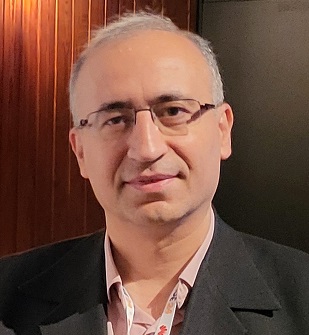
Dr. Luiz Augusto Nobrega Barroso is a Research Affiliate at Comillas Pontifical University's Institute for Research in Technology (IIT), where he has been a visiting researcher since 2007. He is also the CEO of PSR Energy Consulting and Analytics, a global firm specializing in energy economics, consulting, and software development. His career spans industry, government, and academia, with expertise in energy policy, power system economics, and stochastic optimization. Barroso holds a PhD in Systems Engineering from COPPE/UFRJ (2006) and has served as Director General of Brazil’s Energy Research Office (EPE), a visiting fellow at the International Energy Agency (IEA), and editor for top journals like IEEE Power and Energy Magazine . He is an IEEE Fellow and recipient of the 2010 IEEE PES Outstanding Young Engineer Award. His research focuses on energy market design, renewable integration, and grid resilience. Notable contributions include studies on capacity mechanisms, retail liberalization, and pandemic-era grid operations. He has authored over 50 peer-reviewed articles and contributed to global energy policy frameworks through roles in CIGRE and the Florence School of Regulation.
Aaron Maxwell is an Associate Professor in the Department of Geology and Geography at West Virginia University (WVU). He serves as the principal investigator of West Virginia View, a member of AmericaView, and director of the WV GIS Technical Center. His research focuses on spatial predictive modeling, geohazard mapping, machine/deep learning applications in remote sensing, and thematic map accuracy assessment. He holds degrees from Alderson Broaddus University (B.S. in Biology, Chemistry, Environmental Science) and WVU (M.S. and Ph.D. in Geology), with a GIS Professional (GISP) certification. Education: Bachelor of Science in Biology, Chemistry, and Environmental Science – Alderson Broaddus University Master of Science in Geology – West Virginia University Doctor of Philosophy in Geology – West Virginia University Research Interests: Dr. Maxwell’s work emphasizes computational methods to extract insights from geospatial data. Key areas include: Deep learning for geomorphic feature extraction (e.g., LIDAR-based semantic segmentation) Machine learning applications in forest fuel load estimation and slope failure modeling Best practices for assessing deep learning outputs in remote sensing Synthetic data generation for predictive modeling Community flood resiliency and participatory GIS Publications: His recent work highlights advancements in geospatial deep learning (e.g., the geodl R package), accuracy assessment metrics for imbalanced datasets, and modeling post-mining landscape evolution. Articles often blend theoretical frameworks with applied case studies across environmental and geotechnical domains. Grants & Funding: Supported by NSF (CAREER Award) and AmericaView, his work trains students and develops open-source geospatial tools. Current projects include synthetic forest stand modeling and flood resiliency initiatives. Labs & Teams: Leads WV View, fostering remote sensing education and data sharing. Collaborates on geospatial workforce development and open-source software initiatives (e.g., GIScience courses, ArcGIS Pro labs).
Bettina Kemme is a faculty member at McGill University in Montreal, Canada. Her research focuses on database systems , distributed computing , and cloud data management . She has made significant contributions to database replication, consistency models, and middleware frameworks for scalable applications. Research Themes : Database replication, distributed systems, cloud computing, and software engineering. Notable Collaborations : Jörg Kienzle, Joseph Vinish D'silva, Yunjia Zheng, and Marta Patiño-Martínez. Publications span critical areas such as graph database view management, transactional recovery in key-value stores, and latency-aware publish/subscribe systems. Her work is published in venues like VLDB , ICDE , Middleware , and SRDS .
Abbas Heydarnoori is an Assistant Professor in the Department of Computer Science at Bowling Green State University (USA) since 2022, and previously held a faculty position at Sharif University of Technology (Iran) from 2012 to 2022. He earned his Ph.D. in Computer Science from the University of Waterloo (Canada, 2009), and M.Sc. and B.Sc. in Software Engineering from Sharif University of Technology (2001 and 1999). His research focuses on AI-driven software engineering (AI4SE/SE4AI), leveraging data science and AI to address challenges like fault localization, bug prediction, and code comprehension. He analyzes software repositories (e.g., GitHub, Stack Overflow) to improve developer productivity and software quality. He has contributed to tools like CrowdSummarizer and ExceptionTracer, and his work spans topics such as microservices architecture, API usage analysis, and code summarization. Teaching includes graduate/undergraduate courses on AI for Software Engineering, Database Systems, and Software Engineering. His service roles include editorial board membership at Science of Computer Programming , and PC membership in conferences like MSR, SANER, and FSE. His research group actively publishes on automated code analysis, documentation generation, and developer productivity tools, with a focus on empirical and data-driven approaches.
Talal Shaikh is an Associate Professor at Heriot-Watt University's School of Mathematical and Computer Sciences in Dubai. He serves as Director of Undergraduate Studies and Programme Director for BSc Computer Science, BSc CS (AI), and MSc Software Engineering. With a decade of industry experience as a Chief Information Officer and Software Engineer, he bridges practical insights with academic research. Research Interests: Pervasive Computing, IoT/M2M, AI/ML, WiFi Sensing for Healthcare, Financial Machine Learning, Educational Technology Awards: Teaching Excellence Awards (2017/18), Fellow of the Higher Education Academy (FHEA), multiple Learning and Teaching Oscars (2016, 2017, 2018) His work spans Ubiquitous Computing and IoT , focusing on sensor networks and WiFi-based sensing for healthcare. In Artificial Intelligence , he applies ML to robotics, financial analytics, and educational innovation. Recent articles analyze Reinforcement Learning , Emotion Recognition , and WiFi Sensing applications. His teaching emphasizes student-centric learning, with over 100 supervised dissertations achieving distinctions. Collaborations include international conferences and interdisciplinary research in smart environments and adaptive systems.
Adlen Ksentini is a Professor at EURECOM, a leading graduate school and research center in Sophia Antipolis, France, specializing in digital science and communication systems. His extensive research focuses on next-generation mobile networks (5G/6G), network management, and the integration of artificial intelligence with telecommunications infrastructure. Dr. Ksentini actively contributes to major EU research initiatives including 6G-BRICKS and AC3, serving as a key researcher and project leader in the development of future network architectures. Dr. Ksentini's research interests center around network slicing, intent-based networking, edge computing, and the application of machine learning to network management problems. His work bridges theoretical advancements with practical implementations in 5G/6G systems, with particular emphasis on zero-touch network management, energy efficiency optimization, quality of service assurance, and the integration of large language models with network operations. His research has significantly contributed to the development of O-RAN (Open Radio Access Network) frameworks and the evolution of network automation. His recent publication trends reveal a strategic shift toward AI-native network architectures, with increasing focus on integrating large language models (LLMs) with network management systems. His work demonstrates a clear progression from traditional network management approaches to more autonomous, AI-powered systems capable of intent-based configuration, self-optimization, and predictive maintenance. The publications show strong emphasis on practical implementations within the 6G research ecosystem, addressing critical challenges in network slicing, resource allocation, and energy efficiency. As a research supervisor, Dr. Ksentini mentors several PhD students including Abdelkader Mekrache, Karim Boutiba, Bouziane Brik, and Houda Hafi, who frequently appear as co-authors on his publications. His research is primarily funded through major EU research projects such as 6G-BRICKS (Building Reusable Testbed Infrastructures for Cloud-to-Device Breakthrough Technologies) and AC3 (which focuses on Cloud Edge Continuum). Dr. Ksentini is actively involved with the 6G-BRICKS project consortium and the AC3 project team, where he contributes to developing next-generation network architectures that integrate communication, computing, and sensing capabilities. His work within these projects focuses on creating reusable testbed infrastructures and addressing security and trust management challenges in the cloud-edge continuum.
Mauro Pezzè is a Full Professor of Software Engineering at the Università della Svizzera italiana (USI) and Università di Milano Bicocca, leading the STAR research group since 2006. He holds a laurea from the University of Pisa and a PhD from Politecnico di Milano. His research focuses on software testing, analysis, self-adaptive systems, and cloud systems. He has held editorial roles, including Editor-in-Chief of ACM Transactions on Software Engineering and Methodologies (TOSEM), and served on numerous program committees. Education: Laurea (Pisa), PhD (Politecnico di Milano). Professional roles include Dean of the Faculty of Informatics at USI (2009-2013), visiting scientist at UC Irvine and Edinburgh, and technical lead for international projects. He co-authored a seminal book on software testing (Wiley, 2007), with over 670 citations. Research Interests: Software Testing, Self-Adaptive Systems, Cloud Computing, AI in SE, Sustainable Software. Projects include work on field-based testing, failure prediction in distributed systems, and neuro-symbolic approaches for test oracles. Grants and Advising: Led STAR Lab projects in self-healing systems, GUI testing, and semantic matching. Advised numerous PhD/postdoc students (e.g., Ciniselli, Di Grazia, Qiu). Collaborations with European tech firms on R&D initiatives. Labs/Teams: STAR Group at USI/Constructor Institute, Bicocca, and Politecnico di Milano. Current members include postdocs and PhD students working on AI-driven testing and cloud reliability.
Alva L. Couch is an Associate Professor at Tufts University's School of Engineering, Department of Computer Science, with a career spanning over 30 years. His work bridges network/system administration, autonomic computing, and hydrologic data science, focusing on scalable solutions for data management and automated system administration. Education: Ph.D. in Mathematics (1988), B.S. in Architecture (1978), and B.A. in Bassoon/Contrabassoon Performance (1978). Research Interests His research centers on: Network and System Administration: Tools like SLINK, Maelstrom, and Babble for dependency analysis, cloud migration, and policy enforcement. Geo-informatics: MEDFORD metadata language and HydroShare platform for hydrologic data curation and discovery. Autonomic Computing: Promise theory, convergent operators, and closure models for self-managing systems. Recent Work Trends His 2024-2018 publications emphasize: Cloud-based hydrologic data management (AnVILMEDFORD, HydroShare) Metadata standards for interdisciplinary research Machine learning for system administration Agent-based resource sharing models Scientific Awards Liebner Teaching Award (1996) Seymour Simches Advising Award (2017) Best Paper Awards: LISA 1996, AIMS 2008, LISA 2001 LISA 2000 Best Student Paper (with Michael Gilfix) Contributions He developed key software like Peep (network auralization) and Slink (configuration management), supported by NSF grants and industry partnerships. His work with CUAHSI's Water Data Center shapes national hydrologic data infrastructure. He also advocates for science education and privacy in computing.
Anja Feldmann is Director at the Max Planck Institute for Informatics in Saarbrücken and Professor of Internet Network Architectures at Technische Universität Berlin (since 2006). Previously she held a full professorship at Technische Universität München (2002–2006) and conducted research at AT&T Labs Research , Saarland University , and Carnegie Mellon University , where she earned her Ph.D. in 1995. Education Ph.D. in Computer Science, Carnegie Mellon University, 1995 M.Sc. in Computer Science, Carnegie Mellon University, 1991 Diplom in Computer Science, Universität Paderborn, 1990 Research Interests Anja Feldmann’s research centers on measurement-driven understanding of the Internet. She tackles challenges such as software-defined networking , cloud-network interactions , performance debugging , and traffic characterization . A growing focus is the privacy and security of networked systems, evidenced by recent studies on online tracking, DNS security, and disinformation ecosystems. Her group designs scalable measurement platforms that combine passive and active monitoring , programmable data planes , and machine-learning analytics to dissect phenomena ranging from terabit-scale traffic to covert tracking on illegal streaming sites. Recent Publication Themes The 2021-2025 publications reveal a methodological evolution toward large-scale, longitudinal measurement . Topics include: Impact of global events (COVID-19, CrowdStrike outage) on Internet traffic Cross-country tracking ecosystems and privacy leaks DNS root and routing plane stability and security ML-driven real-time monitoring at terabit speeds Disinformation campaigns on encrypted messaging platforms Scientific Awards Gottfried Wilhelm Leibniz Prize (2011) – Germany’s highest research honor Berliner Wissenschaftspreis (2011) Elected Member of the German National Academy of Sciences Leopoldina (2009) Advising & Grants While individual student names are not listed, Prof. Feldmann leads a vibrant team at MPI-INF’s Internet Architecture department. She has supervised numerous doctoral candidates and post-doctoral researchers whose work is reflected in the co-authored papers. Funding sources include the German Research Foundation (DFG) via the Leibniz Prize and EU Horizon projects, although explicit grant numbers are not provided in the source material. Labs & Teams She heads the Internet Architecture department at MPI-INF, located at the Saarland Informatics Campus . The department operates state-of-the-art measurement infrastructure—including programmable switches, honeynets, and global vantage points—to support empirical network science.
Anqi Zhao is an Assistant Professor at Duke University's Fuqua School of Business and the Department of Statistical Science in Trinity College of Arts & Sciences. She holds a Ph.D. in Statistics from Harvard University (2016) and a B.S. from Peking University (2010). Her research focuses on causal inference, experimental design, survey sampling, and missing data analysis, with applications in social, biomedical, and business sciences. She has co-authored grants such as the 'Principal stratification methods and software for intercurrent events in clinical trials' (2023–2028). Her recent work includes studies on covariate adjustment in randomized experiments, rerandomization techniques for covariate balance, and factorial experiments. She teaches DECISION 610: Foundations of Business Analytics at Fuqua. Prior to Duke, she worked at McKinsey & Company and served as an assistant professor at the National University of Singapore. Key contributions include methodological advancements in split-plot designs, difference-in-differences frameworks, and instrumental variable approaches. Her work emphasizes bridging design-based and model-based causal inference to enhance practical applicability in complex experimental settings.
Luigina Ciolfi is a Professor of Human Computer Interaction in the School of Applied Psychology at University College Cork (UCC), Ireland. She is a Co-Principal Investigator at Lero, the Science Foundation Ireland Research Centre for Software. Her academic journey includes roles at Sheffield Hallam University, University of Limerick, and visiting positions at Maynooth University and University of Rome Tor Vergata. She holds a Laurea (summa cum laude) from the University of Siena and a PhD from the University of Limerick, both in Human-Computer Interaction. Her research focuses on human experiences with digital technologies in collaborative contexts, particularly in cultural heritage and work practices. She contributes to fields like CSCW, participatory design, and qualitative methodologies. Ciolfi has led over €8M in research grants, authored/co-authored numerous books and journal articles, and served on editorial boards and international committees. She is a Senior Member of the ACM and an ACM Distinguished Speaker (2021-2024). Her current roles include Vice-Head of the School of Applied Psychology and Chair of UCC's Academic Council Research and Innovation Committee. She leads the Digital Cultures, New Media, and Cultural Analytics research cluster under the Future Humanities Institute. Ciolfi’s work emphasizes ethical and inclusive technology design, with projects addressing cultural heritage, nomadic work practices, and digital wellbeing.
Joseph Devietti is an Associate Professor in the Department of Computer & Information Science at the University of Pennsylvania. His research focuses on improving programmability and performance of multiprocessor systems through architectural and programming model innovations. He actively advises PhD students and has supervised numerous graduates now employed at leading tech companies and academic institutions. Education: PhD (2012), MS (2009) in Computer Science and Engineering from University of Washington; BSE (2006) in Computer Science and BA (2006) in English from University of Pennsylvania. Employment: Associate Professor (2020–present), Assistant Professor (2013–2020) at University of Pennsylvania; Principal Scientist & Co-founder at Cloudseal, Inc. (2018–2020). Devietti’s research spans computer architecture, parallel programming, and deterministic execution. Key areas include cache/memory optimization (prefetching, false sharing repair), GPU programming models (race detection, block-size independence), and hardware-software co-design for concurrency safety. His recent work addresses dynamic runtime prefetch tuning (RPG 2 ), online code layout optimization (OCOLOS), and intelligent BTB prefetching (Twig) for data center applications. His publications from 2024–2017 reveal trends in instruction/cache optimization (2024–2020), GPU determinism (2018–2017), and race detection (2018–2016). Awards include the 2024 Penn Engineering Ford Motor Company Award, Radhia Cousot Best Paper (2018), and IEEE Micro Top Picks recognition (2023, 2009, 2008). Scientific Awards : 2024 Penn Engineering Ford Motor Company Award Radhia Cousot Young Researcher Best Paper Award (SAS 2018) IEEE Micro Top Picks (2023, 2009, 2008) Intel Early Career Faculty Honor Program (2013) Intel Ph.D. Fellowship (2011) Advising : Supervised 15+ PhD/Master’s students with placements at Google, Microsoft, Amazon, NYU, and the United States Naval Academy. Collaborations : Works with industry leaders (NVIDIA, Facebook) and academic institutions (University of Washington, Penn).
Gomez Melis, Guadalupe is a Professor at the Universitat Politècnica de Catalunya (UPC), affiliated with the GRBIO research group (Bioestadística i Bioinformàtica) and the Department of Statistics and Operations Research. She collaborates with the Institut de Recerca i Innovació en Salut (Health Research Institute) and the Faculty of Mathematics and Statistics (FME). Her work focuses on biostatistics, survival analysis, multistate models, and clinical trial design, with significant contributions to understanding disease progression and outcomes, particularly in pandemic-related studies. She has supervised doctoral theses and leads various research projects funded by EU and national grants. Her research spans statistical methodologies for healthcare data, including censored data analysis and adaptive clinical trial designs. Key activities include leading over 450 research outputs, including articles in high-impact journals like Biostatistics and BMC Medical Research Methodology , and collaborations on projects like the EU-funded Siemens Energy AI Chair initiative. Her work often integrates statistical modeling with real-world health data, addressing challenges in infectious disease dynamics, elderly patient care, and genomic analysis. Notable contributions include developing the GofCens package for goodness-of-fit methods and the MSMpred interactive tool for predicting patient trajectories via multistate models. She actively participates in international conferences and serves on scientific committees, demonstrating her role in advancing biostatistical methodologies globally.
Dr. Sharon O'Rourke is an Assistant Professor and Ad Astra Fellow at the University College Dublin (UCD) School of Biosystems and Food Engineering since 2019. Previously, she held roles at the University of Sydney and UCD's School of Agriculture and Food Science, focusing on soil science and environmental protection. She holds a BAgrSc from UCD and a PhD in Soil Nutrient Management from Queen's University Belfast. Research Interests: Her work centers on sustainable soil management, soil carbon sequestration, and environmental protection. She employs spectral techniques (e.g., mid-infrared, hyperspectral imaging) and modeling to study soil geochemistry, carbon dynamics, and climate change mitigation. Current projects include ClimateCropping (EU-wide soil carbon management), PRISM (in-field soil sensors), and CFunction (carbon-nutrient stoichiometry). Grants & Projects: Key grants include funding from Teagasc, the Department of Agriculture, and the Sustainable Energy Authority of Ireland. Notable projects include proximal soil sensing for carbon monitoring and bio-based product development via pyrolysis. Teaching: She coordinates modules such as 'Carbon & Sustainability,' 'Soil Technology,' and 'Research Skills,' emphasizing agricultural systems and climate-smart practices. Awards: Recognized as an Ad Astra Fellow, highlighting her contributions to innovative soil science research.
Dr. Shirin Nilizadeh is an Associate Professor in the Department of Computer Science and Engineering at The University of Texas at Arlington's College of Engineering. She leads the Security and Privacy Research Lab, conducting interdisciplinary research at the intersection of cybersecurity, privacy, machine learning, and social media analysis. Her work addresses critical societal issues related to online security, privacy, and safety through data-driven approaches. Dr. Nilizadeh received her PhD in Computer Science from Indiana University in 2014, followed by MS in Computer Science from Amirkabir University (2007) and BS in Computer Engineering from Islamic Azad University (2004). Her research focuses on security and privacy in systems and social networks, employing techniques from machine learning and big data analytics. She takes a highly interdisciplinary approach, integrating AI, NLP, social sciences, and public health to address societal issues in cybersecurity and privacy. Her research objectives include: (1) detecting and characterizing emerging threats in online social networks like social engineering attacks, misinformation, and online hate speech; (2) advancing the adversarial robustness and fairness of ML and NLG systems; and (3) studying humans' online behaviors through data-driven interdisciplinary research. Analysis of her recent publications reveals a strong focus on AI-generated security threats, particularly phishing scams using LLMs, NFT fraud detection, social media toxicity analysis, and content moderation systems. Her work bridges theoretical security research with practical applications, often addressing real-world security challenges through innovative technical solutions. Among her notable scientific achievements are the prestigious NSF CAREER award (2023), Comcast Innovation Awards (2022 and 2024), College of Engineering Outstanding Early Career Research award (2024), and IEEE SP 2024 Distinguished Paper Award. Her work has also received best paper and technical poster awards at eCrime 2021 and NDSS 2022. Dr. Nilizadeh has successfully mentored numerous doctoral and master's students while securing significant research funding, including multiple NSF grants and Comcast Innovation Fund awards. She leads a vibrant research group that has produced impactful work cited in official reports submitted to The Supreme Court and the EU Committee on Civil Liberties, Justice, and Home Affairs. Her lab has also received coverage from WIRED, MIT Technology Review, Orange's Hello Future, and Communications of the ACM. She serves on numerous program committees for top international conferences including ACM CCS, USENIX Security, and POPETS, and has organized outreach programs like OurCS@DFW to broaden participation of underrepresented students in computing.