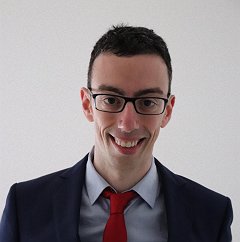
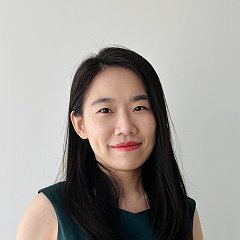
Prof. Dr. Matthias Weidlich is a faculty member at Humboldt University of Berlin within the Institute of Computer Science under the Faculty of Mathematics and Natural Sciences . His research focuses on Process Mining , Complex Event Processing , and Data Privacy with applications in Business Process Management and Scientific Workflows . Research Interests: Business Process Management and Process Mining Complex Event Processing and Stream Data Analysis Data Privacy and Security in Process Systems Scientific Workflow Systems and User Behavior Heterogeneous Network Embeddings Algorithm Design and Optimization Recent Publications (2023-2025) demonstrate expertise in: Efficient stream processing techniques Privacy-preserving process mining frameworks Scientific workflow analysis tools Graph neural network applications Multi-modal data integration Adaptive querying systems Contact: Office: Unter den Linden 6, 10099 Berlin Phone: 030 2093-41277 Email: matthias.weidlich@hu-berlin.de Web: hu.berlin/data
Gabriele Bavota is an Associate Professor at the Software Institute of Università della Svizzera Italiana (USI) in Lugano, Switzerland. He leads the SEART (Software Engineering Advanced Research Team) group and serves as Principal Investigator for the DEVINTA ERC starting grant focused on developer intelligence through mining software artifacts. Dr. Bavota's research spans Software Quality, Empirical Software Engineering, and Mining Software Repositories. His work has evolved from foundational studies on code smells and technical debt to cutting-edge research at the intersection of artificial intelligence and software development. He has made significant contributions to understanding API usage patterns, software quality metrics, and developer behavior through empirical studies of large software repositories. His recent publications reveal a strong focus on AI-assisted software development, with extensive research examining code generation, code summarization, and code review automation using large language models. He has also expanded his research to include quality assurance in game development (detecting game stuttering and low engagement events) and voice user interface testing. His work consistently bridges theoretical insights with practical applications for software developers. ACM SIGSOFT Distinguished Paper Award for API compatibility research (MSR 2019) ACM SIGSOFT Distinguished Paper Award for Hugging Face model documentation study (ICPC 2024) ACM SIGSOFT Distinguished Artifact Award for deep learning fault taxonomy (ICSE 2020) As an active member of the software engineering research community, Dr. Bavota serves on program committees for major conferences including ICSE, ASE, FSE, and MSR. He has held leadership roles such as Program Co-Chair for ICSME 2023 and Vision/Reflection Track Co-Chair for ICSE. His SEART research group develops practical tools like the SEART Data Hub that streamline large-scale source code mining and preprocessing for empirical software engineering research.
Hoa Khanh Dam is Professor and Deputy Head of School (Research) & Head of Postgraduate Studies in the School of Computing and Information Technology at the University of Wollongong, Australia. He serves as Co-Director of the Decision System Lab where he leads research at the intersection of Software Engineering and Artificial Intelligence. His research focuses on developing AI-driven solutions for software quality, cybersecurity, and productivity enhancement. Key interest areas include: AI/IoT autonomous and cyber resilient systems Software Analytics and Mining Software Repositories Large Language Models for software engineering tasks Defect prediction and vulnerability analysis Agile project management optimization Analysis of Dam's 12 publications from 2018-2025 reveals consistent application of machine learning to software engineering challenges. His work shows progressive evolution from traditional ML techniques toward LLM-based frameworks, with major contributions in defect prediction (DeepJIT), vulnerability analysis, microservice recommendation, and agile effort estimation. The research demonstrates strong industry relevance through practical implementations in code review, component prediction, and security systems. Dam co-leads the Decision System Lab at UOW, which develops intelligent decision support systems using AI and data analytics. The lab's work bridges theoretical AI advancements with real-world software engineering applications, particularly in cybersecurity and autonomous systems development.
Irina Nikishina is a postdoctoral researcher at the University of Hamburg's Department of Informatics, working in the Language Technology Group under Prof. Chris Biemann. As a researcher in computational linguistics and natural language processing, she contributes to projects like ACQuA-2.0, focusing on semantics, argument mining, taxonomies, and knowledge graphs. PhD in Computational and Data Science and Engineering (2022), Skolkovo Institute of Science and Technology Bachelor's and Master's degrees from National Research University Higher School of Economics (NRU HSE) Her research spans taxonomy enrichment, comparative question answering systems, and biomedical concept representation. She organizes shared tasks like RUSSE’2020 and RuArg-2022, and co-founded the RusNLP semantic search engine for Russian NLP conferences. She chairs the Network Analysis track at the International Conference on Analysis of Images, Social Networks and Texts (AIST) and has served as secretary for AIST 2020 and 2021. Recent publications focus on large language models' performance in lexical semantics, multilingual comparative argumentation systems, and knowledge graph integration for QA tasks. Her work includes developing tools like TaxFree for candidate-free taxonomy enrichment and exploring cross-modal approaches for taxonomic graph expansion.
Prof. Dr. Sandro Schulze is a Professor in the Department of Computer Science and Languages at Anhalt University of Applied Sciences. His research focuses on software engineering, particularly in areas such as software architecture analysis, software product line engineering, and variability management. He leads efforts in developing tools for visualizing fork ecosystems and tracking architecture smells. His work bridges theoretical research with practical applications in open-source systems and industrial software. Responsibilities include overseeing the Software Engineering research group within the department. He is actively involved in academic activities, including organizing workshops like WSRE and contributing to initiatives like the Software Reengineering Body of Knowledge (SREBOK). Publications highlight advancements in fork ecosystem visualization (e.g., VisFork toolsuite), empirical studies on architecture smells, and techniques for feature extraction from requirements. His work often emphasizes tool development and empirical validation of software engineering practices.
Lili Wei is an Assistant Professor in the Department of Electrical and Computer Engineering at McGill University's Faculty of Engineering. She specializes in software engineering research with a focus on Android applications, smart contracts, and IoT software. Prior to joining McGill, she completed her PhD at HKUST under Prof. S.C. Cheung and was a Postdoctoral Fellow in the CASTLE group at HKUST, receiving the Hong Kong Research Grant Council Postdoctoral Fellowship. Her research interests center on software analysis, testing, and mining code repositories, particularly addressing compatibility issues in Android applications, security vulnerabilities in smart contracts, and testing methodologies for mobile software. She has made significant contributions to understanding and solving fragmentation-induced compatibility issues in Android apps, which has been a persistent challenge for developers due to the diverse ecosystem of Android devices and OS versions. Dr. Wei's publication record shows a consistent trajectory of impactful research in top software engineering venues including ASE, ICSE, FSE, ISSTA, and IEEE Transactions on Software Engineering. Her recent work has expanded into blockchain security with a focus on front-running vulnerabilities in smart contracts. Her research combines empirical studies with practical tool development to address real-world software engineering challenges. Peter Silvester Faculty Research Award in Electrical & Computer Engineering (McGill University) Distinguished Reviewer (ASE 2022) Hong Kong RGC Postdoctoral Fellowship Scheme (2020) ACM SIGSOFT Distinguished Artifact Award (ICSE 2019) Google PhD Fellowship (in Mobile Computing, 2018) Microsoft Research Asia PhD Fellowship (2018) ACM SIGSOFT Distinguished Paper Award (ASE 2016) Dr. Wei has been actively involved in the academic community, serving on program committees for major software engineering conferences including ICSE, ASE, FSE, ISSTA, and MOBILESoft. She has held leadership roles such as Tutorials Track Chair for ASE 2023, PC Chair for MOBILESoft 2023, and is currently seeking PhD students interested in software engineering research, particularly in program analysis, test generation, and mobile computing. Her teaching at McGill includes ECSE 250: Fundamentals of Software Development, ECSE 321: Introduction to Software Engineering, and ECSE 688: Automated Software Testing and Analysis.
Ahmet Soylu is a researcher at Oslo Metropolitan University , Norway, with a focus on Semantic Web , Knowledge Graphs , and Machine Learning applications in Cloud Computing and Smart Manufacturing . His work bridges semantic technologies with data-driven solutions for industrial contexts, particularly in collaboration with Bosch . Key research themes: Knowledge Graph Embeddings, Cloud Cost Optimization, Industrial Data Analytics Collaborations: Dumitru Roman, Evgeny Kharlamov, Radu Prodan Recent publications (2024–2025) explore hyperbolic knowledge graph embeddings, sustainable LLM inference, and cloud storage optimization. These works integrate semantic modeling with ML for edge-cloud systems and industrial data extrapolation. His methodology emphasizes graph-based approaches for cloud cost modeling, microservice scheduling, and AI innovation discovery in open-source repositories. Applications include welding quality monitoring, maritime supply chain optimization, and semantic ML pipelines.
Gustavo A. Oliva is an Adjunct Professor at Queen's University in Canada, where he leads the blockchain research team at the Software Analysis and Intelligence Lab (SAIL). His research focuses on enabling cost-effective decentralized applications on programmable blockchain platforms like Ethereum, alongside empirical studies in software ecosystems, code analytics, and explainable AI. Dr. Oliva earned his PhD from the University of São Paulo (USP) in Brazil under Professor Dr. Marco Gerosa. Prior to his current role, he was a Post-Doctoral Fellow at Queen's University supervised by Professor Dr. Ahmed Hassan. His primary research spans programmable blockchains, software ecosystems (particularly npm), code analytics, and explainable AI. He employs static analysis, historical repository mining, and machine learning to investigate software evolution, dependency management, and smart contract development. Current projects address gas efficiency challenges in Ethereum, upgradeability patterns in smart contracts, and the impact of foundation models on software engineering practices. Recent publications reveal a dominant focus on blockchain systems (70% of recent work), with growing emphasis on foundation model challenges (FMware). His Ethereum research explores transaction processing, gas optimization, and technical debt, while newer work catalogs software engineering challenges in trustworthy AI-powered systems. Scientific recognition includes: Microsoft Azure for Research sponsorship Capes/CNPq scholarship for Visiting Research at Queen's University (2014) HPE scholarships for Smart Cities and Cloud Service Choreography projects European Commission FP7 funding for CHOReOS project Dr. Oliva actively mentors 8+ students across academic levels. His PhD advisees include Muhammad Ahasanuzzaman (ongoing), Amir Mohammad Ebrahimi, and Filipe Cogo (now at Huawei). Master's students Michael Pacheco and Ahmad Abdullah Zarir now work at Huawei and Amazon respectively. He also supervises visitor and undergraduate researchers in blockchain projects. His service includes program committees for ICSE, SANER, and MSR conferences, plus tutorial leadership at ASE, KDD, and FSE. As director of SAIL's blockchain research team, he manages projects on Ethereum smart contract analysis, npm dependency ecosystems, and AI-driven software engineering. Current initiatives include SPICE (automated issue labeling) and foundational work on trustworthy FMware development, with industry collaborations at Huawei and Amazon.
Massimiliano Di Penta is a Full Professor at the University of Sannio, Italy, working within the Department of Engineering. He has established himself as a prominent researcher in software engineering with extensive contributions to software evolution, software analytics, DevOps, and software engineering with/for AI. His academic leadership is evident through his roles as program co-chair of major conferences including ICSE 2023 and ESEC/FSE 2021, and his editorial positions as associate editor-in-chief of IEEE Transactions on Software Engineering and co-editor-in-chief of the Journal of Software: Evolution and Processes. His research interests span multiple critical areas in modern software engineering: Software evolution and maintenance Software analytics and mining software repositories DevOps practices and tooling Integration of AI in software engineering processes Technical debt management Software testing and quality assurance Analysis of his recent publications (2024-2025) reveals a strong focus on the intersection of AI and software engineering, particularly examining how large language models impact development practices, the challenges in software supply chain security through Software Bills of Materials (SBOM), and the application of AI techniques to traditional software engineering problems. His work demonstrates a consistent emphasis on empirical validation and practical applicability to real-world development scenarios. Notable scientific recognition includes: Four ACM SIGSOFT Distinguished Paper awards Multiple distinguished reviewer awards Extensive service on program committees for over 100 conferences Professor Di Penta has advised numerous students and has been instrumental in shaping research directions through his editorial work and conference leadership. His lab and research team at the University of Sannio focus on empirical studies of software development practices with particular attention to modern challenges in AI-assisted development and software supply chain security. His future work appears to be increasingly focused on the implications of generative AI for software engineering practices and the evolving landscape of software supply chain management.
Tapajit Dey is a Researcher at the Software Engineering Institute (SEI) of Carnegie Mellon University, where he is a member of the Architecture Design Analysis and Automation Team. Previously, he was a Research Fellow at Lero, the Science Foundation Ireland Research Centre for Software, collaborating with Prof. Brian Fitzgerald. He holds a Ph.D. in Computer Science from the University of Tennessee, supervised by Dr. Audris Mockus, and earned his Bachelor's and Master's degrees from the Indian Institute of Technology (IIT), Kharagpur. Before his Ph.D., he worked for three years at IBM India Software Lab. He is actively involved in the software engineering research community, serving on program committees of major conferences including ICSE, FSE, and MSR. His educational background includes: Ph.D. in Computer Science, University of Tennessee M.S., Indian Institute of Technology (IIT), Kharagpur B.S., Indian Institute of Technology (IIT), Kharagpur Tapajit Dey's research focuses on empirical software engineering, with particular emphasis on open source and InnerSource development practices. He applies data analytics and mining software repositories techniques to understand developer behavior, code review processes, and the sustainability of software projects. His work often involves large-scale data analysis from version control systems and issue trackers to derive insights for improving software development processes. His recent publications demonstrate a strong trend in leveraging data mining and machine learning to address challenges in software engineering, particularly in the areas of developer expertise modeling, bot detection in code contributions, and the impact of code review on software quality. These works span both academic conferences (ICSE, ESEC/FSE, MSR) and workshops (PROMISE), highlighting his active engagement with the software engineering research community. He is currently active in the Architecture Design Analysis and Automation Team at the SEI, which focuses on advancing the state of the art in software architecture and automated analysis techniques. His work bridges empirical research with practical applications in software engineering.
Tim Menzies is a Full Professor at North Carolina State University with a diverse professional background that includes previous careers as a nurse, rocket scientist, taxi driver, and journalist. His primary research focuses on Search-Based Software Engineering (SBSE), software analytics, software product lines, Mining Software Repositories, and data mining and machine learning applications in software engineering. Dr. Menzies has maintained an active research profile with publications spanning from 2018 through 2026, serving on program committees and organizing tracks at major conferences including ASE, ICSE, and ESEC/FSE. His work consistently bridges theoretical research with practical applications, emphasizing solutions that are both technically sound and implementable in real-world settings. His research interests include: Search-Based Software Engineering (SBSE) Software analytics and data-driven approaches Software product lines and configuration Mining Software Repositories Machine learning applications in software engineering Fairness in software engineering tools Interpretable and explainable AI for software engineering His recent publications (2023-2026) reveal a strong trend toward making complex software analytics more accessible and understandable while maintaining performance. He has pioneered approaches that simplify models without sacrificing effectiveness, directly addressing the 'black box' problem that often hinders adoption of machine learning in practice. Dr. Menzies is known for his critical perspective on software engineering research, challenging assumptions in the field, particularly regarding deep learning applications. His work emphasizes practical, evidence-based approaches over theoretical elegance alone, reflecting his commitment to improving the research-practice connection in software engineering.
Thomas Bock is a Post-doctoral researcher at the Software and Societal Systems Department (S3D) within the School of Computer Science at Carnegie Mellon University. He completed his Ph.D. in Computer Science from Saarland University, Germany in 2024, with a dissertation focusing on organizational patterns in open-source software projects. Dr. Bock's educational background includes a Ph.D. in Computer Science from Saarland University (2024) and a Master's degree in Informatics and Mathematics from the University of Passau (2016). His academic journey reflects a strong foundation in both theoretical computer science and empirical research methods. His research program centers on empirical software engineering, with particular emphasis on understanding coordination and communication dynamics in open-source software ecosystems. Dr. Bock investigates organizational structures, developer networks, and role evolution in large-scale software projects, employing sophisticated analytical methods including tensor decomposition for modeling group dynamics. He also explores the intersection of software engineering and scientific computing, examining how software is developed and used in scientific contexts, especially with the rise of machine learning and AI systems. His work bridges technical and social dimensions of software development, offering insights into both the engineering practices and human factors that shape successful software projects. Dr. Bock's publication trajectory reveals a consistent focus on empirical analysis of open-source development processes, with increasing sophistication in methodological approaches. His recent work on aggressiveness perception in the Linux Kernel Mailing List demonstrates his ability to tackle complex social phenomena in software engineering contexts, revealing significant challenges in human agreement about communication behaviors. This research exemplifies his broader interest in the social aspects of software engineering and the application of rigorous empirical methods to understand developer interactions. Program Committee Member, IEEE/ACM International Conference on Automated Software Engineering (ASE), Research Papers track (2025) Program Committee Member, International Conference on Mining Software Repositories (MSR), Technical Papers track (2026) Reviewer for Empirical Software Engineering (EMSE), Transactions on Software Engineering and Methodology (TOSEM), ACM Transactions on Software Engineering (TSE), and other leading software engineering venues Dr. Bock has extensive teaching experience, having served as chief organizer of the Software Engineering Lab (a 7-week block course for approximately 200 students) at Saarland University from 2019-2022, and as a reviewer through 2023. His teaching portfolio also includes seminars on Software Analytics, Software Engineering Research in the Neuroage, and supervision of software engineering projects at both Saarland University and the University of Passau. His educational contributions span multiple institutions and demonstrate his commitment to training the next generation of software engineers through both large-scale courses and specialized seminars.
Stephen H. Edwards is a Professor in the Department of Computer Science at Virginia Tech, specializing in computing education and automated grading systems. His work focuses on improving programming pedagogy through tools like Web-CAT, CodeWorkout, and Sofia Framework, emphasizing equitable assessment, mutation analysis, and behavioral nudges in CS1/CS2 courses. Research Themes : Automated feedback, software testing education, educational data mining, gamification for learning. Collaborations : Manuel A. Pérez-Quiñones, Adrienne Decker, Clifford A. Shaffer, Bob Edmison. Trends : Recent publications highlight grading equity (2024-2025), student testing behaviors (2020-2022), and tool development (2007-2017).
Prof. Dr. Artur Andrzejak is a full professor (W3) at Heidelberg University since 2010, serving as the Head of the research group Artificial Intelligence for Programming (AIP), and currently as Executive Director of the Institute of Computer Science. He has held significant academic roles including Deputy Dean of the Faculty of Mathematics and Computer Science (2019-2024), Dean of Studies for Computer Science (2015-2017), and Liaison Professor of the German National Academic Foundation (2014-2023). Habilitation in Computer Science (2009), Freie Universität Berlin Ph.D. in Computer Science (2000), ETH Zurich Diploma in Mathematics (1995), Freie Universität Berlin His research focuses on artificial intelligence applications in software engineering, particularly code generation and error correction techniques. He has also made significant contributions to software aging analysis, distributed systems, and cloud computing, with publications spanning federated learning, secure computation, and software rejuvenation. Recent publications demonstrate a strong focus on code generation and error correction methods using large language models, while earlier work includes foundational studies in distributed systems, grid computing, and software rejuvenation techniques. His research combines theoretical computer science with practical applications in enterprise software systems. As an academic leader, he has organized Dagstuhl Seminars on Parallel Data Analysis (2013) and Self-Healing Systems (2009), and served on editorial boards for the journals Parallel Processing Letters and Multiagent and Grid Systems. He has held various leadership roles in academic institutions and research networks.
Akon Dey is a researcher affiliated with the University of Sydney , Australia. His career spans database systems, distributed transactions, and scholarly knowledge graphs, with a PhD thesis titled Cherry Garcia: Transactions across Heterogeneous Data Stores (2015). He has extensively published in conferences like CIDR, ICSOC, IC2E, and TPCTC, focusing on scalable transactions, benchmarking frameworks, and cloud processing. Education : PhD in Computer Science, University of Sydney (2015) Research Interests include heterogeneous data stores, cloud computing, FAIR data principles, and knowledge graphs. His work addresses transaction scalability, benchmarking standards, and semantic publishing of research artifacts. Article Trends (2023–2025) reveal a shift toward large language models (LLMs), knowledge graph question answering, software engineering metadata, and open science practices. He contributes to FAIR digital objects, RO-Crate, and machine-actionable metadata standards.